
Me and Joan Baez

“Well, I’ll be damned.” 

Loathe as I was to admit it, Amazon hooked me last week, getting me to check out another “product.” Not a new guitar strap, but a podcast, “Wiser Than Me,” hosted by Julia Louis-Dreyfus. (https://podcasts.apple.com/us/podcast/wiser-than-me-with-julia-louis-dreyfus/id1678559416.)

I normally would have passed on the “opportunity,” but, hey, she was interviewing Joan Baez, “a voice I’d known a couple of light years ago.” 
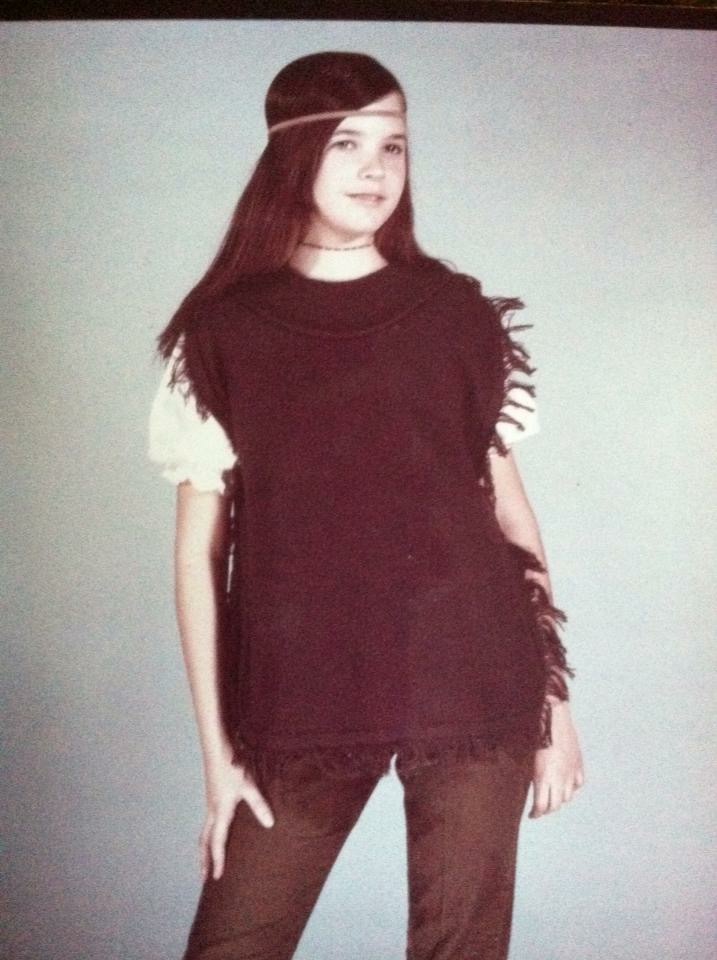
As a teen, I wanted to be Joan Baez when I grew up.

What I didn’t realize until I listened to the podcast was just how much of my personal life really did mirror hers …

(minus the whole fame and talent thing.) 

As a child, for example, all three of us lived in countries where we witnessed abject poverty. Both Baez and Louis-Dreyfus told stories of giving away food, for example, to children they encountered.  Louis-Dreyfus even gave her own shoes to a little girl she saw who was begging. My family lived in Pakistan when I was a child, but we did not see beggars as often as Baez said she did, if only because we were a bit younger and I know my father was adamant that we be “protected” from that. Nevertheless, we did see children who were begging and we struggled to know what to do with that. Baez was old enough to process what she was seeing at least, realizing how closely their lives were actually intertwined. Helping or protecting this other little girl she met was as essential as breathing. 

My childhood memories of seeing children beg on the streets had been rekindled some twenty years ago when, during a Vanderbilt Divinity School study tour, I encountered children on the street in Nicaragua. There, like Baez and Louis-Dreyfus said they had been, we were admonished  not to give more than was the  “going rate” for anything we bought from street people for fear we would be mobbed, inundated with requests, unable to move about even. We were studying responses to poverty, but clearly the poverty there still overwhelmed the response, at least twenty-some years ago. 

I remember I bought a lifelike grasshopper, hand-crafted from straw, from a child who ought to have been in school but school was not free and this child and his family appeared to live on the street. I really struggled with that and realized I carried far more wealth to my daypack than so many of the people I met owned at all. When we returned to the U.S., several of us sent care packages to those whom we had met and especially those who had opened their homes to us. I sent notebooks, pencils, and my baseball glove to the little boy whose family had shared their home with us. I remember extra salty everything, that his parents walked seven miles each day on the weekends to go to school themselves. The women of the village did run their own elementary school in the village reserve, an area they hoped would become an eco-tourism destination. I remember there were three rooms in the cinder block home, a kitchen with an open grill to the sky, a room for the family and the guest room. 

We were embarrassed to realize we took up one-third of their home while we stayed there and toured the reserve. We were warned about scorpions, too, so we slept in our boots, but the seven-year-old who lived there, when asked about running around barefoot, just shrugged and said the sting didn’t hurt that much. “You get used to it,” he offered. You shouldn’t have to, I thought.

I appreciated hearing from Julia Louis Dreyfus and Baez about their own struggles to understand such poverty and inequity as a child. Baez said she had written home to friends about it but none had responded. She speculated it had been so out of their own realm of understanding, they didn’t know what or how to respond? 

I’ve long felt that our time in Pakistan affected me, or perhaps better to say it infected me. I wondered as soon as she said it if that “infection” was part of why I have long felt lonely, as if I’ve seen something others don’t seem to have seen or have seen and don’t want to talk about if only because the problem seems to mob us, to overwhelm us, as surely as a group of beggars would have.


As a teen, young woman and beyond, Baez participated in protests and was even arrested when she protested the draft. As a teen, I protested as well. I spoke about women’s rights and even lost out on studying at the Sorbonne because the group who’d have funded the scholarship didn’t want to run the risk that I’d say something that would embarrass them. “What are you so worried about?” I asked the spokesman tasked with telling me why I’d lost out. “You think I’m gonna burn my bra?” He admitted they were.

I find now that I am curious if Baez felt others were often afraid she’d say something to embarrass them. My gut is she’d hope she might embarrass folks if that was what was necessary. If speaking up about abuse or injustice embarrassed folks, then so be it. It’s a lonely way to live unless you can find and surround yourself with others who will say what others are thinking, but sometimes, staying silent is more painful.

Turns out, much of my personal life really did mirror hers…minus the whole fame and talent thing.

Baez made me think then of a Nashville area pastor–an activist whom I have long admired for her passion and willingness to speak up and speak out. I ran into her this week after a long while and I offered a friendly hello but she surprised me by offering a more enthusiastic greeting, saying how much she appreciated all the support she has felt from me. (I felt like I needed to look around for someone else she might be pointing to and still wonder if she wasn’t mistaking  me for some other old lady pastor.)

I did ask her, though: was she taking care of herself? Her reply demonstrated how much wiser she is than I and maybe even that young woman on that stage so long ago, guitar slung over her shoulder, singing for civil rights, being part of such an historic event. My colleague said simply there’s really no separation for her between doing the work and self-care: doing the work is her self-care.

Her own soul finds healing when she speaks out, speaks up, when she stands with those who need her support and voice. 

I was amused by one final irony as I listened to the interview. Louis-Dreyfus referred to “Diamonds &Rust” as the breakup song of our generation. I would be surprised if anyone playing it did not have someone in mind while they sang. I realized a few months ago I needed to learn to play that song when I discovered I still remembered all the words 50 years after my own “Diamonds & Rust” breakup. His eyes were blue and yes, he did say my poetry was bad. Nevertheless, the relationship was romantic and exotic and painful when it ended, very much “Diamonds & Rust.”

Learning D&R has been painful, but not because of memories. It’s frustrating and physically painful because of the barre chords in the bridge. Sigh. I may be heading quickly to seventy but I am only a guitar beginner. Barre chords are a rite of passage in playing guitar, a kind of wall that prevents a guitarist from playing a lot of music that is meaningful and beautiful if you cannot strengthen your fingers enough to carry you over.

As I listen again to this interview of a wise woman, though, I realize how the possibility one day of playing my favorite Joan Baez song and seamlessly moving into that barre chord will bring me immense joy. I doubt Baez would have ever expected that when she wrote it, but I am inspired and I know I’ll be grinning when I nail it.

Perhaps what is most inspiring about Joan Baez is that she has a voice and she has always known it. She talked about how her vocal range had changed over the years, moving from that soprano vibrato to a much lower pitch, but I don’t mean she had a voice that was beautiful.

I mean she had a voice that made us want to listen and she used it.

So many of us listened to what she said, and she knew it and so she used that voice to help bring changes, to help bring awareness, to help make this world a better place for everyone. I suspect then Joan Baez would not be so impressed with me being able to play the bridge to Diamonds & Rust; I suspect she’d be more pleased to know she has encouraged at least one aging hippie to learn to play those old protest songs I used to sing along to before I took up guitar. Sadly, she lamented, the current state of our country may even be more discouraging than it was when she joined the Rev. Dr. Martin Luther King on the mall in 1963.  

We can all use the excuse that we are just one voice.

What if, though, what the world needs is just one more voice, maybe yours, to sing out, to ask for those songs, to write those songs, to share them? What if just one more voice is exactly what the world needs to tip the balance? 

Turns out, there are still opportunities for us to be Joan Baez. Sing out. High soprano, raspy tenor, we need all the voices now more than ever. 

It’s not too late.

Be like Joan.

You have a voice.

The world still needs to hear it. 
Lessons from the Plastic Grass in Sushi

The details? They are where we live.

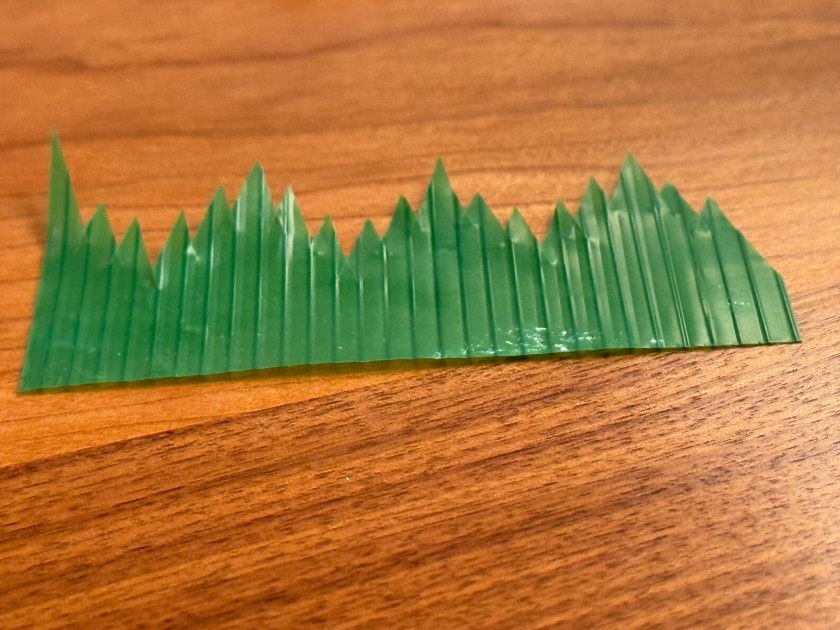
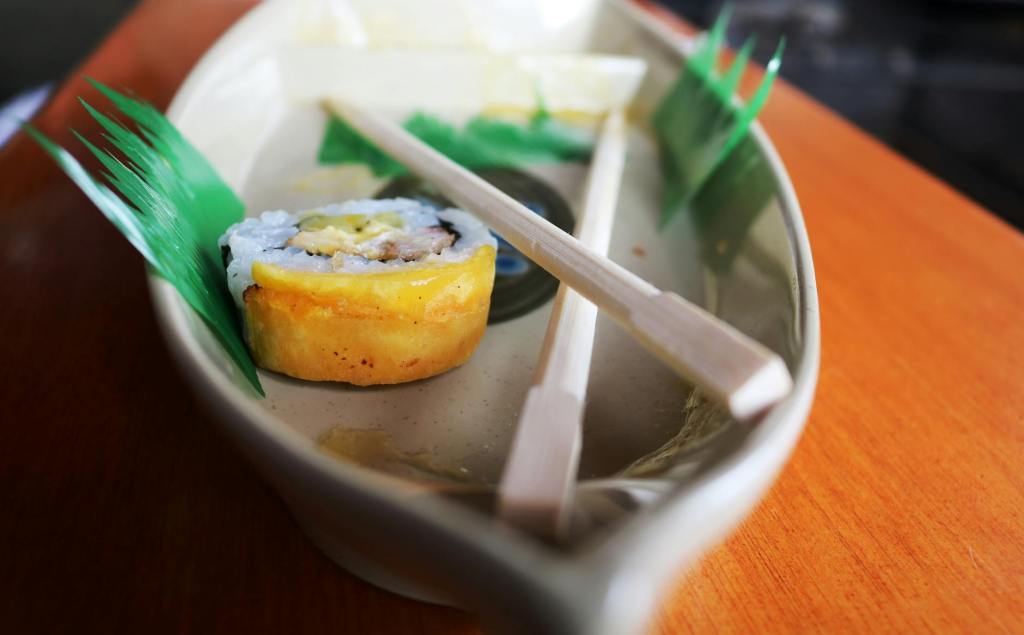
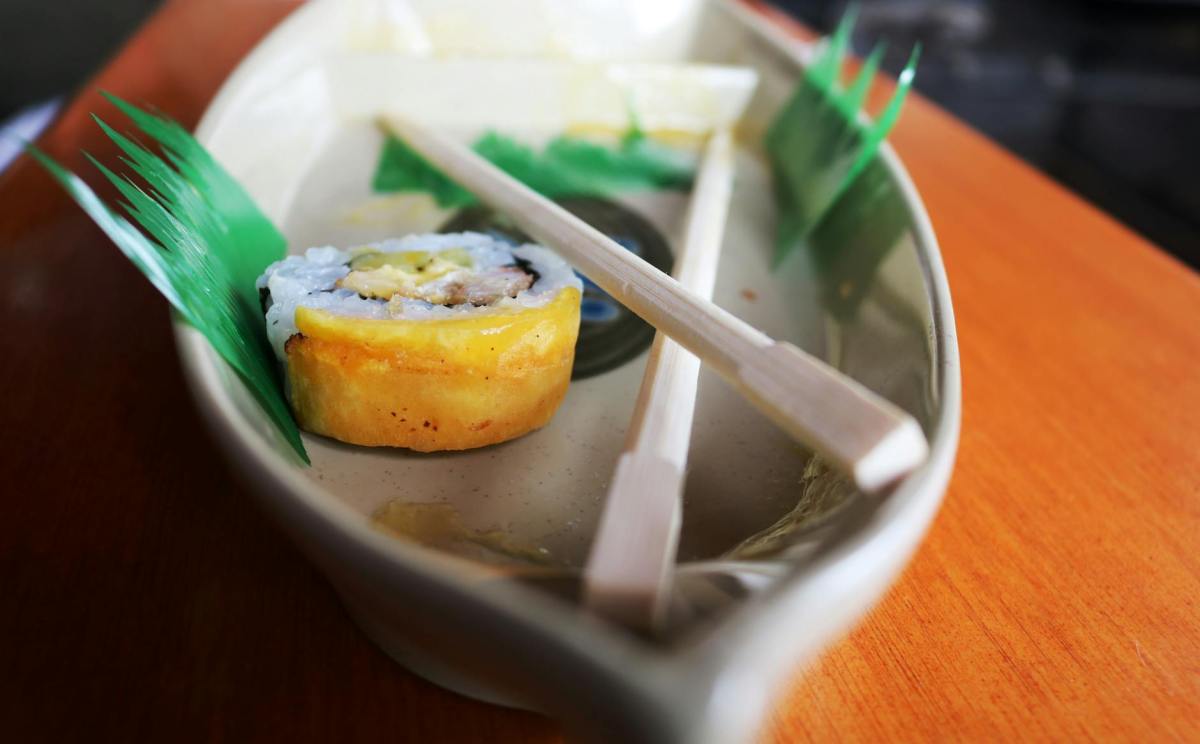
IF you’ve ever bought sushi or sashimi “to go,” you’ve encountered, likely without much thought, those green Japanese bento box dividers. that look (kinda) like grass.

These ubiquitous decorations, called Haran (pronounced Hah-Rah-uN) have graced nearly every sushi or sashimi carryout or bento box since the Edo Period (1600’s). That’s billions of bentos.

(This plastic grass is available, of course, in packages of 1000 pieces from your favorite “they really do sell everything” online shop.)

Of course, they didn’t start out as plastic; in the beginning-the bento beginning, that is – those dividers that kept your wasabi from contaminating your ginger were orchid leaves (ha meaning leaf and ran meaning orchid or lily.) No sushi container, it seems, would have been complete without Haran for now, well, centuries. Certainly, they have to be, with plastic straws and balloons, one of the mainstays of landfills today, at least in Japan.

Now, I would not personally find it an affront or a calamity if I should pull the plastic wrap off my carryout California roll and find there’s no haran separating my ginger from my wasabi. Having lived several years in Japan, however, I can tell you that you could expect a very different reaction from a factory worker or primary school child popping the lid off a plastic (now), or lacquer (historically) bento box and, finding (ACK!) no green divider resembling grass. Their immediate fear? What else might have been left out? How long has that tuna sashimi been touching the packet of soy sauce or dollop of wasabi?

Point is: the details matter.

Me, I tend not to notice. The details, that is.

I have always thought I might want to be a detective but a good sleuth needs to notice details. I’d be a lousy witness, too, because I’d either miss critical details or, and I think this is
because I love to tell stories, my mind quickly fills in missing details, even though my details may have been gleaned from memory or another setting entirely. Not great for being a detective or witness.

This week, though, a plastic piece of grass in my sushi got aggressive and confronted me about all the many little details I do not notice. Every day. Busted.

I can say today that one of my life lessons will be developing an appreciation for the rich palette of color and flavor and sound I miss every moment simply because I am not a detail person.

I have painted much of my life with a wide brush, mostly seeing the big picture and largely missing details but I am now becoming more aware daily of how this affects most of my favorite activities, including, for just two examples, writing and guitar.

When I get excited about telling a story, for example, I can easily bulldoze through a narrative rather than take the time to first set a concrete scene for the reader to settle into. A good memoir brings the reader into the moment with concrete details from all the senses. Sight, sound, touch, smell, even taste. Those are how we are meant to experience our world. Burning your tongue on the hot chocolate or feeling the mud between your toes or covering your ears when the fingernails squeak on the blackboard, these details place us in the moment, whether squishy, irritating, painful or lovely.

To slow her students down, to help us focus on the minute differences that create such variety in our world, one writing instructor suggested each day we take some time to learn about the many varieties of birds or autos or cheeses. Our task is to learn to recognize their differentiating characteristics, and their habits or uses, for example. The discipline was to help us become detail-oriented, a challenge for me.

The writer or storyteller being specific and precise can help readers place themselves in the story, help them take a seat in the action and, with some work and luck, help them be swept up into the tale.

Getting the details right can make life a lot less difficult and help us get where we want to go, be it in a story, a song or a daily chore. I’ve certainly found the opposite to be bonafide.

I once shared an anecdote in worship, referring to a silo.

Oops.

Turns out, I should have said a grain bin.

Same thing, right?

The result of my imprecise language was that the entire congregation of farmers was so distracted that they stopped listening to any more of the sermon.

Not noticing differences has long hampered my participation in substantial conversations as well as my ability to relate evocative stories. I used to simply describe cars as either sedans or station wagons – or the occasional Beetle/Bug. Respecting the details, though, means I can fully participate in the story and so can my reader.

A sedan is a wide brush stroke, an image that may float by offering little reason to listen or read on. Conversely, a reader can almost imagine polishing the headlights on the 1970 Dodge orange Super Bee. Wide brush strokes keep the vehicle in the side view mirror while a more detailed image causes the reader to want to pull over and jump into your ride.

The same is true of music – one of the first rules of participating in a music jam, of being part of making the music, is respecting the details enough to play in the same key and tempo as everyone else. Simply strumming a guitar without placing the right fingers on the right frets and strings – NOT just in the vicinity – was only cute when you were three.

What the plastic piece of grass made me realize is that my lack of attention to detail affects my guitar playing in some powerful ways. Remedying this though will again require me to slow my roll. I know the other folks I play music with will very much appreciate my respect for the pertinent details because they often already notice when one finger needs to be closer to the fret or if my rhythm playing is significantly different from the original.

Failing to appreciate the details, I realized, has driven me to use my guitar as a tool. I have reduced my guitar to being simply a means, a tool for making music, regardless of whether or not I can do that decently.

Being respectful of the details isn’t just being picky, though; it means being respectful of the other musicians, the composer and even the music itself.

I know I tend to barrel through my days. When I can slow my roll long enough to notice whatever I fly past on the way to my car or the next gathering or activity, I begin to grasp – and thus respect – the differences that change a melody or invite a deliciously unique solo lead during the instrumental break.

And I am trying to use the tools I have for feedback. I have rushed, but again, I am aware, and am working at slowing down, at being more precise and creating cleaner notes.

One piece of advice I appreciated when I first picked up a guitar three years ago was to wander more. Just wander on the guitar. I can grasp that concept. I struggle to do it but I can I can appreciate wandering. Any time I have moved to a new place, I have enjoyed walking and wandering with no particular destination in mind, just meandering to explore. When I first started studying guitar, I asked a friend for advice and he said simply, “Don’t rush the process.” And it does seem to be a process.

Like anything else in our culture today, hawkers on social media have worked to reduce playing guitar to mastering three chords, two if you want to play bluegrass. Play these three chords and you can start playing paid gigs next week!

I heard last night about a kid who when he began playing, though, played six hours a day for two years. It occurred to me that by the end of that period the guitar must have felt like an extension of his hands- he would have been so comfortable with his guitar. I still hold mine awkwardly I know. Taking the time focus on getting the F or the C chords every time. Knowing how to curve your fingers and using the tips not the pads of your fingers, the many ways to play each scale and the variations all factor into making that instrument sing.

Why does it matter? Why should you care?

Maybe it’s as simple as knowing that your attention to detail shows you care.

When I respect that details do matter, others around me feel seen, important if just for the moment, like I get what’s important to them. We all need that now more than ever.

Open Mozart sheet music with paintbrush and handwritten note

Receiving a handwritten note, attending a well-prepared meeting, or taking time to prepare or notice a thoughtfully designed object is a powerful and much-needed tonic.

When others don’t care about getting the details right, it can feel like nothing we do matters.

When details are ignored, we can feel discouraged and even powerless. We are familiar with those repeated small failures — confusing paperwork, unanswered questions, broken promises, sloppy communication and they simply create the sense that nothing we do matters.

Good teachers, artists, good leaders and craftspeople know, though, that details are not “extra.”

I may get sushi for supper tonight on my way to the jam session if only to remind myself of what the haran-sensei teaches me:

Details, my child, are not just for pretty.

The Irony of Music: A Family’s Guitar Journey

A family comes full circle with a classic guitar.

Nov 24, 2025

“Puleeeze…put that thing away til you learn how to play it!!”

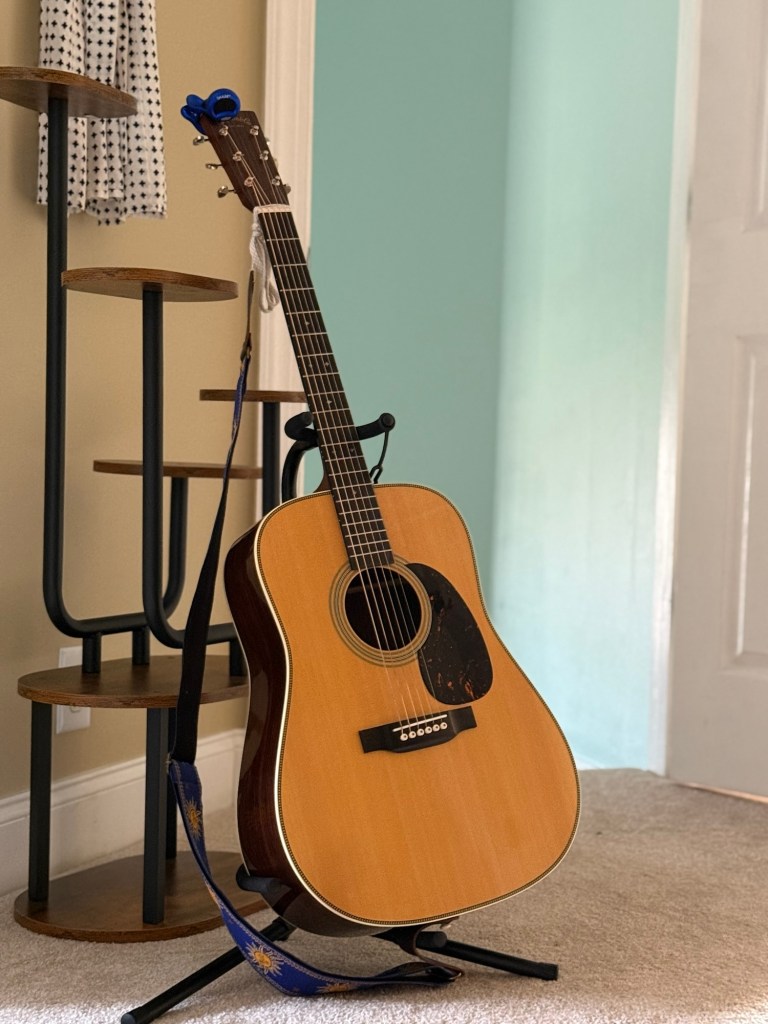
“If I don’t inherit at least one Martin D-28,” my oldest son Arlo declared recently, “We’ve got serious relationship issues here.” We were both noting the irony. He had come along with me to pick out a new guitar for a birthday gift from my husband. Now, both of his parents own Martin D-28 guitars – beautiful, classic, what Arlo called the Porsche of the guitar world. This is in spite of the fact that Arlo is the best guitarist of us all, and if anyone deserves one, it’d be a kid named Arlo anyway, right? Seriously, I will never in my life be as good a player as he is, for sure.

That wasn’t the most ironic part of the story, though, we had to admit as we wandered around that candy store for musicians.

For twenty-plus years, while I was married to his father, Mick, I was the one who dropped the two of them off at the music store then wandered elsewhere killing time while they tried out guitar after guitar, both acoustic and electric, drum kits, steel drums, banjos and even the occasional glockenspiel. Now, though, I’m doing plenty of my own wandering around these stores trying percussion instruments and now guitars.

I sure didn’t see it coming, though, that I’d be part of the pack inside the music store, always searching, wondering, collecting. According to a plethora of guitarists I know, though, I am way behind though with only five guitars to my name. Don’t ask about the drums.

This past week, at the music store, I was trying out some of the models that were above the budget just to dream when one of the sales people walked by and asked if we’d seen that used Martin HD 28 that they’d just put out? And just like that, a Martin D-28 was within reach.

Let me say first of all that I do not feel at all deserving-in fact if I don’t work hard and improve noticeably before I get to play music with others besides my son, I may hide it “til I can play that thing!”

The real irony that amused us so much that day, though, is that Mick and I have a history with musical instruments, in general, and Martin guitars in particular.

Well before we were married, after he’d been in the military, he hitchhiked across country and halfway back, stopped in Missouri to use some of his GI bill at the college where we met in a poetry/song-writing class.

We became friends first, then started dating and eventually moved in together. For much of that time, he was traveling the midwest in a country band and we’ve got the pictures of him in a 10-gallon hat to prove it. It was difficult time trying to build a new relationship and we struggled a bit as new couples do, especially when he began touring for six or eight weeks at a time.

We lived in an old fourplex, on the second floor. It was actually pretty roomy with two big balconies and a claw-foot tub. The frig door sported a bottle opener. Meals as often as not were macaroni and cheese and beanie weenies. A local carryout provided a shared meal of cashew chicken with two egg rolls for under $5 at the time, a real treat. Dishes and lamps and blankets and, well, most of our furnishings, were hand-me-downs, except for glasses. Every time we bought jelly, we got a new glass.

The rent in 1980 was $100 a month and with him on the road barely making expenses and me in school full time and working part time, some months we barely scraped together that last $10.

We considered it a step up, though, from my first apartment where the kitchen was so tiny I could not open the oven door more than six inches. In his previous apartment, paid for largely by tips from waiting tables before he went on the road, the door wouldn’t unlock so the only way in and out was to climb through a window next to the door. When I rode anywhere with him in his car at the time, I had to put a piece of cardboard under my feet to cover the hole in the floor.

The idea of dating a musician seemed romantic at first, but the reality, especially the constant schedule changes, expenses and no income to speak of became wearying.

Because of the stress of being broke and apart much of the time, we ended up separating for several months. One reason in particular came to mind on my birthday this year as we stood in the music store: the day Mick came home to show me his new Martin D-28. At the time, forty-some years ago, it cost $1200, or one year’s rent for us. He was so proud of that admittedly gorgeous instrument; he played it well and still owns it. I was livid, though, in large part because there was no discussion, i.e., one of those red flags I am so adept at ignoring. Eventually, we did split up for several months, and the Martin was definitely still a sore point for me.

We did get back together, married, moved to California and then to Japan where we had two sons.

“You almost never happened because of a Martin D-28.” I reminded Arlo at the store, though.

We spent twenty-one years married, and Mick played that guitar often and well. I boast today I know almost every John Prine song-the lyrics, at least-because he played so many of them. For my own playing, knowing all those lyrics makes it easier to learn to play the songs I like by Prine – and there are many -except that when I learned them, I mostly learned by singing along on the harmony parts, so I’m working on learning the melodies.

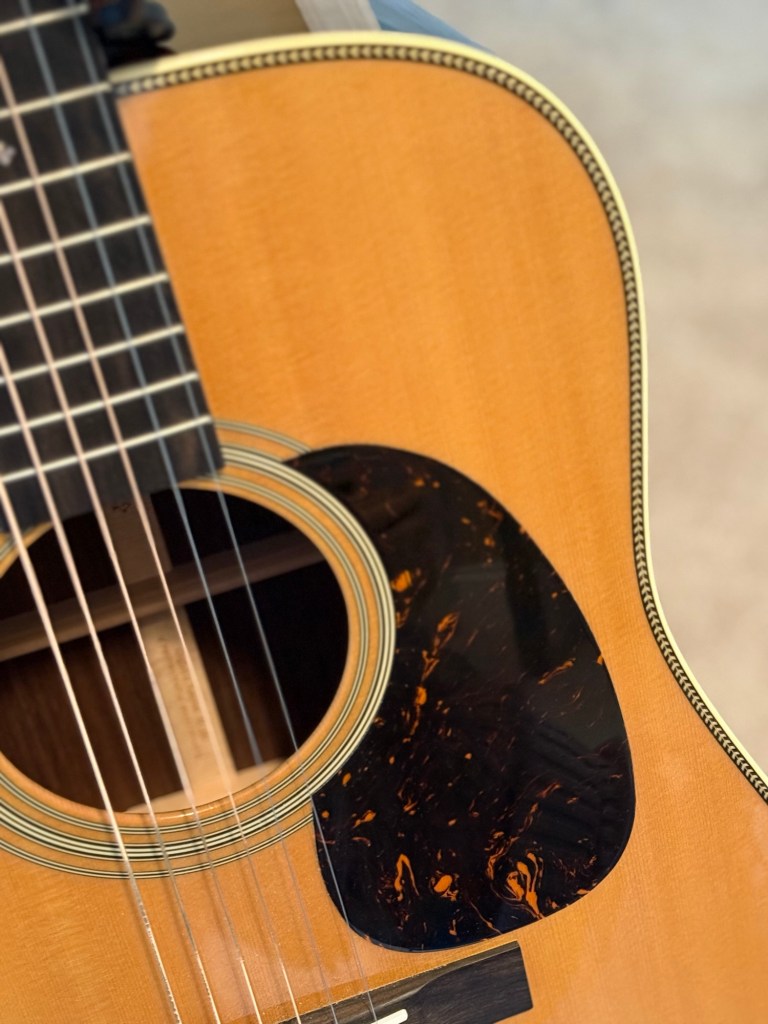
We could not deny the irony, though, a few weeks ago, as we pulled up some stools and played the Martin HD28 that I eventually picked out. It is a gift from my amazing and generous husband, who is not a musician. I will tell you that he’s a much more generous person than I have ever been. He doesn’t necessarily understand why I hole up in another room every day to practice or lament any time I have to miss playing with others, but he feeds my addiction anyway. Two years ago, when I was just starting to be able to put together some chords and play a song or two, he asked me on a trip out west to think about what I’d like him to buy me something as a souvenir of the trip. I immediately took him to a pawn shop where we bought a used guitar so I could play while we were traveling. He never questioned that.

I certainly did NOT understand, though. None of my ex-husband’s and then my son’s desires to play and learn and practice and look at other instruments registered for me before, though I was curious and a bit jealous. I understood another guy who, a decade ago, asked me why on earth I might want to play drums. “Other than hitting things with sticks,” he asked, “what’s the draw?” I couldn’t explain it then but remember I considered hitting him with a stick….

Until I started making music with percussion, then picked up a guitar, though, I didn’t know much about the desire to play. I certainly had not anticipated that becoming a need, that there was a hunger I wasn’t feeding or that a part of my soul was being starved. Had you asked me even ten years ago if would I be allowed to play with other musicians as a group with no one telling me to put that instrument down until I learned how to play it, I would’ve laughed. Last month, after being part of a group at a house party, though, another musician told me when he looked at me during the evening, he could see so much joy. I always thought it’d be cool to play guitar; I never expected I could feel such joy though as I do when I get to be part of making the music.

Arlo certainly makes my new Martin sound prettier, but the Martin makes me sound a bit better, and I admit I could play it for hours.

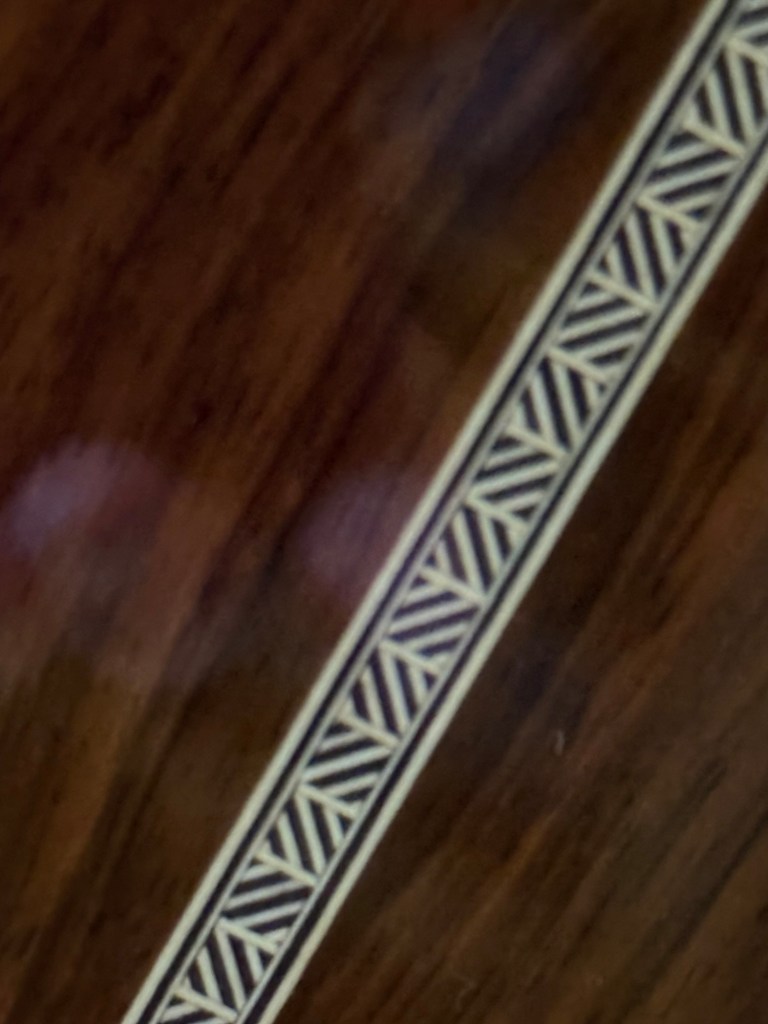
The irony that we had to acknowledge, as we stood in the music store a couple of weeks ago, was how my life had led me to my own fabulous Martin HD 28. (Mine is prettier, too, which matters some, with Herringbone inlay, and abalone diamond and square inlays, prettier than the instrument that vexed me all those decades ago.)

I’ll never play as well as my son or my ex-husband, I know, and yes, when other musicians I know see me pull it out of its case at a jam, I will feel sheepish and even feel something of an imposter. Nevertheless, I cherish the joy fix I get even as I expect I will smile at the irony every time I take my Martin down and start to play.

And yes, absolutely, Arlo will inherit at least one Martin some day.