Bullies 101 – The World is a Playground

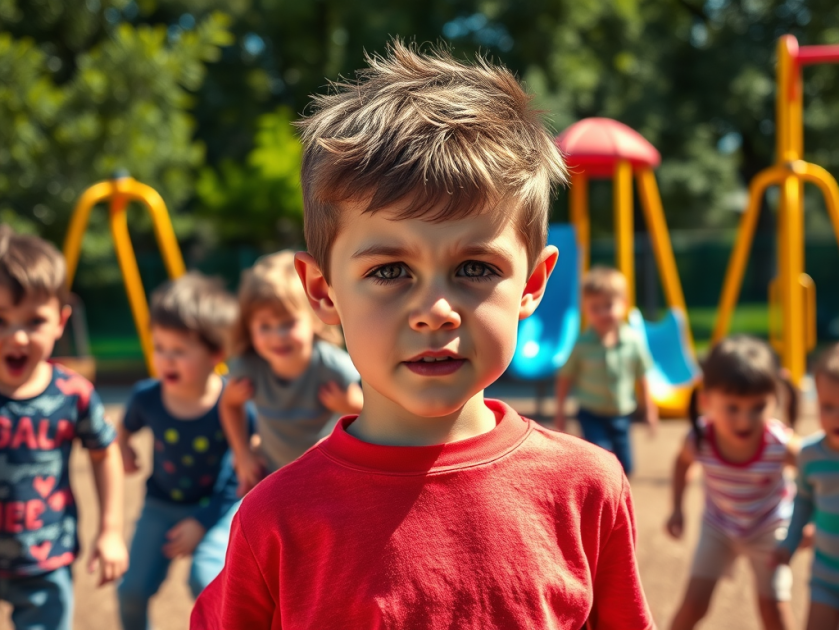
I can see you cringing already. You know a bully. Your face scrunches when you remember that pudgy face OR the ubiquitous striped t-shirt. Seared into your memory is color the color of his (or her) hair: bright blond OR maybe jet black and slicked back, maybe a buzzcut. You can still hear the other kids standing around as they watch and snicker while you scramble to get back up off the ground and gather your backpack or your lunch tray and your dignity.

We learned hard lessons on those playgrounds.

Lesson One:

One of the first – and most powerful – lessons was that the punch to the back of your head was so perfectly timed that your retaliation meant that the victims were the ones who would be caught…and punished. Sadly, even though our teachers ought to have known this from their own childhoods, somehow this injustice is generationally repeated: it’s the person who strikes back that gets in trouble, not the one who threw the first punch.

Lesson two:

Bullies are frighteningly adept at finding those soft places we instinctively protect, where we feel weakest. What we mostly remember is the terror, a very personal terror. You likely can feel it in your stomachs right now: standing alone before a bully and his or her posse, tensing up, preparing for the punch or the shove or the kick or the name calling that highlighted how imperfect we were, waiting for the pain to be inflicted. The bully in our midst, whether we were the target or not, preyed upon their victims’ own sense of inadequacy; we often then and even now agree with our tormentors that we are weak, stupid, inept, ugly or bad at whatever it is we’re doing at the moment.

Lesson three:

Only in the movies was there anyone to have your back. More painful than the fist to the belly, more lasting than trying to get your breath back, was the moment you looked up at those standing around and realized no one there felt brave enough to help. The other classmates or co-workers or church council members were afraid of being the next victim and so they were either silent, or worse, they saved themselves preemptively by joining the enemy.

Most of us remember the sickening feeling of being alone with our bully. No one else would help.

We never got over it and we pray we never have to go there again. And yet here we are.

Last lesson:

The bully was not always bigger than the other classmates; but good luck picking a bully out of a crowd before they spotted you. You could forget trying to get your parents to believe that the darling little girl with the pigtails was the thug who had punched you for your lunch money. Worse, it can be nearly impossible to spot a seasoned bully until they have smacked you.

HERE WE GO AGAIN

Sadly, our childhood nightmares have grown up with us, but not matured, mind you.

Part and parcel of a national epidemic of bullying has been our dismay and surprise when those whom we had thought were kind, thinking, generous, have shown us that they may in fact be tired of “sharing” and they are just fed up enough to not care about being civil any more.

Bullying on the pickleball court? Seriously?

I am amazed where this shows up. Recently, while a number of older women were playing pickleball, I asked if we couldn’t change our language. After each match, one woman persisted in directing all of the losers to one court and the winners to another. Losers ended up only playing the same folks over and over (not a great way to improve).

Worse, every new game losers were reminded they were just that. Losers. As if they weren’t aware they’d lost. This language persisted even though we had at least one new person there who needed to be made to feel welcome – or so I thought. There easily exist a variety of ways to rotate play that allow everyone to play with friends they haven’t played with yet, so long as we’re just having fun.

“It’s just a game,” the defacto leader said but not until she had declared with some disgust, “We’re not going to worry about being politically correct here.” Well, there’s politically correct and there’s kind and friendly. These were not folks trying to win any prizes; these were friends out on a beautiful day and yet the atmosphere had begun to resemble a playground where a bully might find some traction. (You might be skeptical, but the dynamics are the same as any group where a few folks who have perhaps been treated with disdain themselves will start to turn that outward.)

Rather than learning to play nice, now, more so at least than in those “kindler, gentler, points of light, we go high” decades, the bullies of our nation are empowered, encouraged in our streets, in our social circles and forgiven (read “pardoned”) when they go too far and actually hurt and become destructive and violent. We have -once again- institutionalized our bullies and that might be the most discouraging aspect of all.

HERE WE GO AGAIN

Bullies who wear masks – or robes and hoods made of old sheets – had, we thought, gone away. The truth is they never went away completely. They have simply grown up and waited for their moment.

At one time, as a society, we were able to enlist the powers that be to make it clear bullying was not acceptable on our playground; but here we are again. Bullying has returned with a bad attitude and an ax to grind, showing up in creative ways as a social and political skill today and is gaining strength with every punch successfully landed.

We thought we’d declared to the world this is not who we are and yet, we are dismayed to find this is in fact who we are: people who want someone else to make the bullies go away. We may point it out and complain, but collectively we do not believe our power to stop it exists, but is that simply because we haven’t tried?

SUGAR BULLIES

I wrote a couple of years ago about a bully I faced in the first church I served, one whose power and tactics nearly drove me to leave ministry. For more on bullies in social groups like churches, see “Here Lies Jimmie’s Arm,” (available on Amazon).

Perhaps most interesting to the study of bullies in general was that the realization that our church’s bully had practiced for years being maudlin and using false compassion to manipulate and bully in a gentle-seeming way. He was a “sugar bully.”

Everybody loved him, until they became a target.

Tactics of bullies in churches (and workplaces, too) include sabotage, subverting worthy causes, enlisting others to do their “dirty work,” and causing victims to self-destruct.

The good news is there are effective ways to stand up to bullies. First, though, some rules.


Rules of the Playground:


Give the bully what they want and they’ll only demand more. Appeasement never works. Never. Just ask Europe.

Bullies seldom act alone. Just like squirrels are just rats with great tails and good PR, bullies are just cowards who are loud. They don’t do well alone.

Effective Tactics

Shine a Light

Specifically, understand the use of half-truths: A half-truth is a deceptive statement that includes some element of truth and that morsel of truth can lead us to a false conclusion. We hear it and assume the second half of the equation is true if the first one is. Being aware of the use of lies by bullies, especially half-truths, is a powerful way to stop them – it can be exhausting but I have found it effective to point out they are lying or their “facts” are false over and over if necessary. Declare their lies for what they are and keep repeating that like a broken record if necessary. They don’t know what to do, especially if you respond softly.

Bullies behave like cockroaches in that they scurry away when a light is shined on them, seemingly fearful that exposure might weaken their power.

Safety in Numbers

Enlist the help of others. Safety in numbers. Depending on how loud and powerful the enemy is, this may be tough, but keep asking and trying and standing your ground and there will be others to stand with you. Sadly, in our political climate right now, some folks have died to get others to stand up and stand against our bullies.

Model Vulnerability BUT Stand Your Ground

Admit you aren’t perfect and you know it but, surprise, no one is. Be humble enough to own your flaws; this will removed the power a bully has over you. This is different from backing down or standing by quietly. Vulnerable means demanding to be treated with dignity while offering the same to the person bullying us.

Finally, realize getting rid of the bully does not get rid of the problem; there remains an atmosphere that nurtured that bully in the first place. Plenty of others are ready and willing to step onto the playground. These folks will be weaker so long as they are not allowed to get a foothold. Once we have cleaned up the playground, we have to stay around and stay vigilant for new and creative ways bullies might try to slip in and gain support.

Prevention

Finally, start to look at the crowd that egged on the bully. No bully stands alone; their needs for control, revenge, attention will have been fed by those around them. We’ve got to wade into the crowd and be willing to address how the mean-spirited behavior was encouraged.

In “Here Lies Jimmie’s Arm,” we had to confront the behavior of the rest of the church that nurtured that bully.

We might impeach the President but that does not guarantee the government will change.

Study Non-Violence – At least read up on it. It has been surprisingly effective.

The older I get, the more I understand this to be the key. We must have a few children on our playground who are willing not to strike back.

We must be those children.

When you stand on your playground in front of a bully, look at the crowd around you and realize that every member of the crowd who taunted you, who stood squarely behind the bully, more often than not was a victim of bullying themselves or, at the very least, was one who got in trouble for hitting in retaliation. This means they also have a desire for vengeance, maybe deep down but unhealed.

Until we all start using our kind words and stop the violence that starts when we are young, we will continue to create more angry people – often whole nations – ready to retaliate and get their own revenge on the bully who hurt them.

Like it or not, the whole bullying thing stops with you, with me, with us. At work, at the dinner table, in church, in our neighborhoods, we must realize that the whole world is a playground and we can learn how to make it safer.

It really is pretty simple.

My Alamo

Individually, collectively, as a nation, there have been times when we’ve needed to draw a line. This is one of those times.

“Those who would give up essential Liberty, to purchase a little temporary Safety, deserve neither Liberty nor Safety.” Benjamin Franklin

Much of the time when any of us need to draw a line in the sand, as they say, I suspect it is a surprise. I say that because we are often not expecting the person moving aggressively towards us; thus, we are not prepared to mark any line. When we do draw a boundary, when we insist that the next step the person in front of us takes will be too far and we will stand in their way, it can feel jarring and aggressive, like we are the ones being combative. We are simply not prepared to counter aggression or abuse, individually or collectively. 

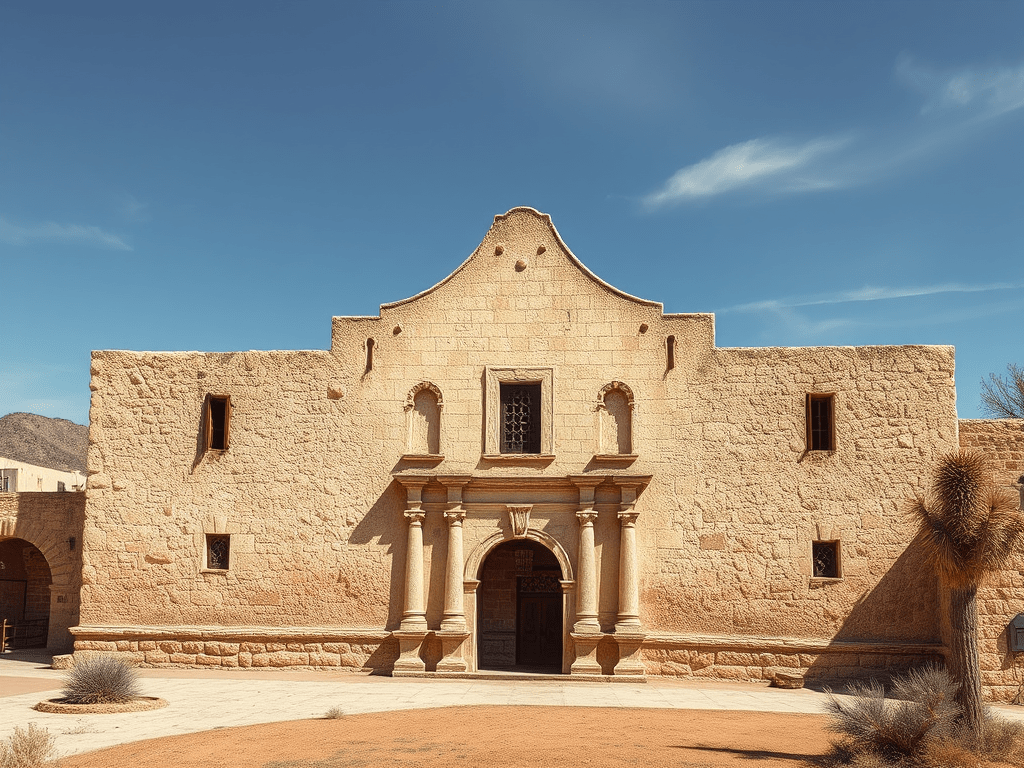
This is somewhat ironic, at least in the United States, though. Remember the Alamo? Legend has it that when Lieutenant-Colonel William “Buck” Travis, Texian Army officer and his fighters faced overwhelming forces at the famed fort, Travis drew a line in the sand with his sword and told his fighters to cross it if they were willing to stay and fight. Nearly all of them did. While that story is possibly more fiction than fact, it is nevertheless the lore many of us were inspired by, taught to emulate, part of the “GIve me liberty or give me death!” understanding of the cost of freedom of speech, freedom of religion, freedom from tyranny. We know what’s right. We know abuse when we see it. We know when someone is trying to frighten us into not fighting for those freedoms. We know and yet we are reticent, loathe to draw our line in the sand, whether personally, as a family or as a community and nation. We want it to all go away. But it won’t.

Years ago, an experience from the first church I served paved the way for an extended family finally to take a stance, to draw their line in the sand to stop the abuse that had been harming women in that family for at least a generation. In this case, what had been a family secret became quite public because the abuser got reckless and over-confident and, in some ways, that arrogance made taking a stand easier for the family.

“Herb” (name changed to protect his victims) wasn’t a regular attendee at the church I served, so my radar was not pinging when I greeted him that Sunday morning. He was a 60-something married man who always dressed in seersucker and bow ties and prided himself still sporting a full head of hair, even if it was graying. I’d brushed off his previous suggestions about how my congregation would like it, he was sure, if I wore more colorful outfits when I stood in the pulpit. I glared at him and walked away when he suggested I unbutton a button or two on my blouse, but nowhere was there any guidance on responding to such behavior from this man whose family members occupied nearly one-third of the pews. I wondered why his wife never attended with him and started avoiding him, thinking he would remember he was talking to the preacher. Turns out, I should have opted for outrage from the beginning. At least I might have been prepared for battle when I walked out of the little white building one Sunday afternoon to see him seated in his big old Buick in the parking lot across the road. I waited for two cars to speed by, then crossed the two-lane blacktop warily, my chest tightening. My arms were full with my Bible, sermon notes, my purse and some funeral home fans that I’d grabbed off the table in the back of the sanctuary. The cardboard fans helped you breathe on the days when the humidity was looking for an excuse to break into a summer shower. 

Already sweaty, and looking forward to an afternoon of visiting the shut-ins, I moved cautiously across the road, hoping he would stay in his car. I had been headed to the fellowship hall to lock up before I started the afternoon’s visits. Herb exited his car and was next to me nearly as soon as I stepped off the highway onto the parking lot. I had to stop mid-stride to avoid running into him; I was off-balance as I tried to look behind me before stepping back because that would put me back onto the highway. 

Turning towards him, I stumbled to my right just in time to miss him grabbing my arm. I looked at him in confusion as he reached out again and said, “Why don’t we go inside?” 

In an uncharacteristic flash of assertiveness, I shoved him with my books. He stumbled back a bit, startled. I darted as quickly as I could around to the passenger side of his car. Did he really just grab at me? Herb started around the side of the car and reached for me again, so I threw my books at the ground near his feet to stop him long enough for me to move around the car until I was back on the driver’s side. I know my hands would have been shaking if I had not been clutching my black leather purse, instinctively wrapping the strap around my hand in case I needed to use it as a weapon. 

I would never have expected a man from my church to be bold enough to try to grab me in the church parking lot in broad daylight. That simply was not something I expected. Worse, he acted with such confidence, as if he would face no opposition.

Herb laughed. “Don’t be so silly,” he said, putting one hand on the trunk of the car as he slowly headed back around towards me. He seemed quite amused, at first, that I managed to run around his car—a rather large late model car–but all I could think about was the fact that, thank God, he could not reach across. When he snatched his hand back quickly in pain because the metal was hot enough to sting his hand, I bolted. 

He was moving around the car towards me again; I managed to dart into the fellowship hall, drop my purse and the ridiculous fans, and turn the lock on the wooden door. Maybe it was the sound of the door locking–maybe something else–but, apparently something brought Herb back to reality; he “came to himself,” like the prodigal son in Luke, and stopped grinning. Unlike the repentant son who asks forgiveness of the father, though, Herb stood before me, his fist raised, threatening to bust through the window of what seemed suddenly like a very flimsy door. I tried to breathe. Even though he was a member of my church with a large and influential family and now he was angry, I had clearly—finally—drawn a line in the sand. 

When he finally got back into his car and drove away, I leaned against the wall and let out a scream, then frantically ran to the other door, grateful to find it was locked. He hadn’t tried opening it anyway. He’d just driven off. 

I couldn’t catch my breath.

I gave myself the afternoon off from visiting parishioners. I did not let myself cry until I got home; navigating back roads is difficult enough when you’re watching the rearview mirror for a Buick the whole time.

The next Sunday, and for several Sundays after that, I was greatly relieved that Herb did not return to the church. For months, I would imagine his hand grabbing for me. While I was grateful not to see Herb for a while, I also felt quite alone and indulged in some hefty self-pity as I pondered how large a contingent his family was in our congregation. His wife, for example, was one of several sisters, many of whom attended the church. Herb had married the oldest sister when most of the sisters were still children. At least his wife was not attending our church. A few months later, though, his wife was scheduled for surgery and the prognosis was not good. A pastoral visit to the hospital was in order, if only to console her sisters.

I arrived at the hospital intentionally late. Even after the family was sent to the waiting room before surgery, nursing staff was willing to allow clergy in to pray. I smacked the oversized button to open the doors just in time to go back into the surgical prep area to see her alone. She was still awake and aware enough and thanked me for praying with her. Then I made my way through the winding hallways to the family waiting room. 

Nearly every seat was taken by a sister, but I spotted Herb on a chair in the far corner. I took a breath, said a silent prayer, and walked over to him. I leaned down to offer him my hand in greeting but, before I knew it, he was laughing because he’d managed to pull me onto his lap and wrap his arms around me. Even now when I think about how shamelessly he seemed to operate, how little he feared anyone’s disapproval, how brazenly he disregarded the line I had drawn, I want to scream. I’d been pretty damn clear, I thought, that his behavior was not welcome.

I jumped up as quickly as I could and found a chair on the other side of the room, next to one of the sisters. I did not look at anyone for several minutes; I was afraid they would have seen how hot my cheeks were with anger and embarrassment. I was grateful, finally, to look up and notice that sister number two, one of my regular members, was sitting next to me. Voices soft, we chatted quietly about how long the surgery was expected to last. I was grateful she quickly offered to call me when the surgery was over. “We know you have other calls to make, Pastor,” she offered. I thanked her, chose the fastest way out of the room and made it to my car before the tears began. 

I drove home discouraged. How could I keep being the pastor at that church? Even if they wanted me to continue, could I keep dealing with this man and his aggressive behavior? I could not shrug it off, and I did not find it amusing, like he did. Worse, I feared other congregation members might also find it amusing. 

Everyone in that waiting room had seen Herb pull me onto his lap and me pushing his arms off of me and jumping up but no one had said a word. I’d not received help when I’d spoken to my mentor: “It’s part of the job,” I was told. I did not sleep well that night; I was drafting my letter of resignation from the ministry and imagining the sensation that would ensue within the church once it was made public.  

The next morning, I was praying about the letter when sister number two called me, I assumed, to tell me how recovery was going. The conversation was so short I almost didn’t remember it.  

“You need to know,” she said quietly but deliberately, “Bobby has spoken to Herb,” she said. “He won’t be bothering you anymore.” She paused. “He won’t be bothering anyone any more.” She paused again. “We’ll see you Sunday.” 

Suddenly, I was not alone. One of the other men in the church had stood up to Herb. Sadly, though, slowly, I began to imagine several young women standing next to me with tears in their eyes. I had not considered how many others Herb probably had “bothered” over the years but they were suddenly standing next to me.  

All those younger sisters and their daughters would have been easy targets. No one had stood up to him before then. Evidently, no one had even spoken in any voice louder than a whisper about his behavior for decades until that day in the waiting room when he accosted the preacher. The family finally found the line they would not let him cross.   

Likely, in the past, the family had hoped Herb’s behavior, something most of them could not even fathom, would have just gone away on its own. Challenging one of the patriarchs of the family had been too painful and even frightening for them to consider. What would they do if he said “she” initiated it? Who might he go after next? What if he suddenly turned the tables and claimed he was a victim? How many of the neighbors might take his side because THEY were already victims and afraid or feared becoming targets? 

Because they had never expected to even contemplate such abuse from one of their own, the family could not choose a line. 

Because they were afraid to talk to one another about what was going on, no line was drawn.

Because no line was drawn, the abuse continued, unchecked.

Trouble is, this is a common pattern. Whether the abuse is of a person or a group of persons, though, not wanting to talk about it only aids and abets the abuser. Not wanting to talk about what we know is wrong because we are afraid or because it is not our family or because we’re not sure the child maybe “deserved” some punishment or worst of all because we simply don’t want to believe what is happening only emboldens and strengthens the aggressor.

Do not be fooled. These lessons apply to us—to our families and our nation. 

We know in our guts how this goes. We know but we are hoping we won’t be asked to draw any lines ourselves.

We wish some people would stop constantly reminding us how more and more boundaries are being crossed every day, how free speech and due process, decency and respect for others are being blatantly, publicly disregarded, then even applauded. We are afraid and tired. Didn’t we move past this decades ago? 

Are we waiting for another Colonel Travis to draw the lines for us? Have you admitted you need to think about those now, like it or not?

Are we waiting for another Colonel Travis to draw the lines for us? Have you admitted you need to think about those now, like it or not?

A public school teacher told me today she had decided she would obstruct any immigration authorities who tried to take her students – children – from their classroom. She has admitted to herself what is possible, even as horrific as it sounds, and she decided where to draw her line.

Where is your line?


Understanding Fragility: The Hidden Lessons of Power Outages

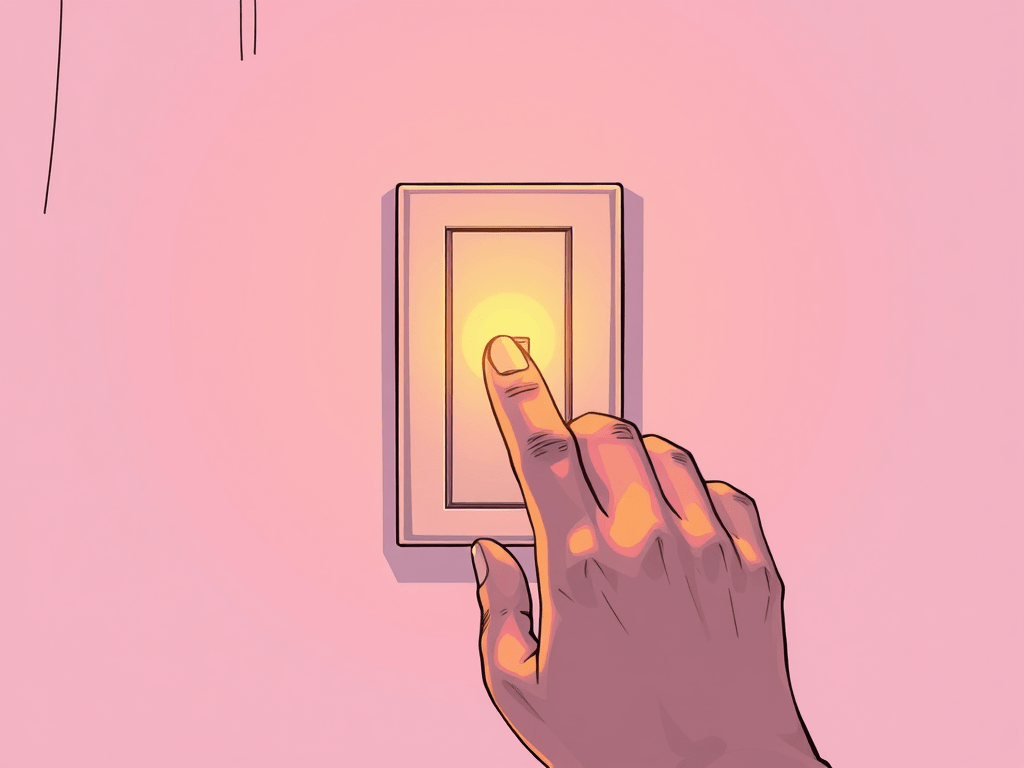
We forget we operate on trust. That is, until the light switch doesn’t respond and we are left sitting in darkness.

You’ve been there. You flip the light switch but nothing happens. You push the covers back and scurry across the chilly floor only to realize the thermostat doesn’t respond with some heat, so you curse yourself for not investing in throw rugs, slippers, a generator.

As minutes become hours, what started out as annoying can become a serious hurdle to starting your day with the looming potential to morph into danger for you and your family though. We’ve seen how easily a home without heat can become deadly. 

In the case of my granddaughter, who has Cystic Fibrosis, lack of power for any length of time means someone has to beat her on the back and chest for thirty minutes twice a day to break up deadly mucus that can build up. At night, because she has a feeding tube, losing  power for more than a couple of days means she cannot consume enough calories to provide the nutrition her body needs.

In the United States, though, most of us operate on the assumption that the things we trust will be there. Switches provide light. Cars start. Ambulances come. Social Security checks are deposited. We will be able to buy insulin. The medicine will be available and safe.

We forget we operate on trust. 

That is, until the light switch doesn’t respond—until we are left sitting in darkness. 

Again, it’s mostly just annoying in the short term for most of us because our experience is that we can have faith someone out there is working on it. Maybe we call the power company to report the outage to verify the powers that be know our predicament, but our expectation, our experience has been that someone out there is doing their job and working to restore our power. 

Until we realize they aren’t. 

Until we realize no one is on the job, maybe because they cannot get there, maybe because there is no way to fix the problem, or maybe, we fear, there is someone in control who feels empowered to decide who gets attention and service and who doesn’t, who deserves light and food and civil rights and who isn’t worthy of those things.  

It’s terrifying to realize you might not be able to pay your rent next month if you do not, in someone else’s opinion, deserve to be paid. To add insult to injury, that same someone and his cronies even demonize you for the audacity to work for a non-profit whose aid reaches outside the country.

It’s even more terrifying to wonder if there is anyone doing anything about the chaos since reporting is sporadic and mostly limited to U.S. news sources. Visit another country and watch the news, though; we are not only not alone, but neighbors the world over grasp how interconnected we all are.

Few of us in the U.S. are aware of how incensed our friends in other countries are in reaction to the chaos in our country. 

We, on the other hand, seem to be simply baffled.

We’re watching those in power operate in a way we’ve not experienced, maybe ever. They are moving aggressively, not collaboratively. Hell, they are starting the conversation by turning off the power, then daring us to come and stop them. We are baffled.

When did we decide we needed to regress socially? When did we agree to dismantle all the social advances of the past century? What’s next? Smokey the Bear is homeless? Littering is okay? Seriously, will we be told soon that teachers, libraries, recycling centers, veterans’ services are the problem? How long before we’re being told child labor laws are unnecessary? All it takes – all it has taken – for most of us is a few weeks of watching this behavior around us before the fear, the terror we feel, is that no one will try now and eventually no one will be able to stop him.

The rug has been pulled out from under us. 

We have been reminded as of late just how fragile our lives and how vital are our interactions. I’m thinking this painful recognition, though, is a gift. That may sound incredible, but I believe that those of us who are pretty secure most of the time are blessed when we become painfully aware of the tenuous nature of those threads that hold us together.  I believe we more fully join the ranks of humanity when we who do not usually go hungry or worry that someone will start shooting at us when we are in the market, feel that sudden sick feeling in our stomach and become acutely aware of how easily our bones break and our breathing can stop. Fragile. Vulnerable. In denial until we aren’t able to be any longer.

So many people in our world cannot rely on a light switch to have any effect. So many might not even have a light switch at all. 

Reminding myself of that, though, does slow me down, make me look around, and help me think about the countless others in this world who are struggling. Two decades ago, I visited Nicaragua with a study group for Vanderbilt Divinity School.  In Nicaragua, the literacy rate at the time was 50%, and the material conditions are worse than that: no one, for example, not even in the government offices, had toilets down which you can flush paper because there existed no viable sewage treatment facilities; no one had clothes washers, let alone dryers; everyone did their wash on a washboard. Because there are no emissions standards to speak of, air pollution was a palpable problem. In that tropical heat, only major buildings could be air-conditioned; most houses had no screened windows, and the majority of the people living outside of towns lived without electricity or running water, let alone sewage.  A family with a new cinder-block, two-room house was considered rich, even though the floors were dirt and there was no electricity, even though they used an outhouse and got their water from a well.

The family I stayed overnight with in the countryside had a five-year-old son.  The parents–in their twenties– both worked five days a week in the coffee fields or the local elementary school; then, on Saturdays, they both walked seven kilometers to the bus stop to ride into town to attend high school because neither of them had had the money to attend high school when they were teens.  The elementary school which their son attended had 120 children, in three rooms with 25 desks; it had three teachers, few supplies, no water and no toilet, and no heat or air conditioning. 

Medical care was rare; most people in the countryside would walk an entire day sometimes to see a doctor and get a tube of antibacterial cream.  In Managua, children who lived on the streets (the numbers were in the thousands) sniffed airplane glue every day because the glue and the high they got was the only thing that would dull their constant hunger. Tragically, while the glue, which numbed their hunger, also killed their brain cells; most of those street children would die from the damage within ten years. This is their reality, the reality of more than ¾ of our world still today, a reality we neither see nor want to see and yet most of the world has no choice in the matter like we do.

One of the first things I learned on this trip to Nicaragua was that I am rich. I realized I carried more in my daypack than most of our hosts owned altogether. I can afford to throw away food when it goes bad or when I don’t finish my plate. I do so every day. I’m not considered a particularly wasteful person, but I have learned to take for granted that I am not going to starve and so I did not feel much guilt throwing food away. Until I started noticing how carefully people in Nicaragua prepared and kept food in order not to waste it. We would never eat food that came off a stranger’s plate; many of us will not even share food with family members. Once it’s been touched, we tend to toss it because it is contaminated with germs, bacteria, who knows what. Now I realize what a “luxury” it is to be able to throw food away. Far too many of our international neighbors cannot afford such a luxury. The people who fed us in Nicaragua took whatever was left on our plates and put it back in with the other leftovers to be eaten at the next meal. This luxury to waste, though, I realize now, is part of what isolates us.

When we do not recognize a need for one another, sitting alone on our own couch binging movies is just easier.

This is particularly evident in the U.S., I believe, and the COVID lockdowns of 2020 only exacerbated our tendency to isolate. It simply does not occur to us here as easily as it seems to in other countries that, together with our neighbors, we could figure out how to find – and take – some power. 

One of the questions we got most often in Nicaragua was how it was that so few of us were active in politics; grassroots movements and neighborhood groups were the norm there and everyone played a part in helping make decisions about governance. When I offered that I was impressed with how everyone played a part, they asked, “How is it that you don’t?”

How is it that we do not reach out naturally, do not work together, do not at least recognize we are not alone? Why does that idea seem so foreign to us? 

When I returned home to preach in the rural church I served, I shared with my congregation this local legend I’d found while researching poverty.

A poor peasant lived daily on the verge of starvation. One evening, the old man found a basket of apples on the doorstep of his tiny hovel. Delirious with hunger and joy, he sat down to eat in the light of his one flickering candle. You can imagine his disappointment when he bit into the first apple and found it rotten and wormy. He tossed it aside and tried a second only to find it in the same condition. Again, a third and fourth apple were rotten. Torn by hunger and disgust at what he saw in the apples, the starving peasant paused to consider his choices. Hesitating for only a moment, he blew out his candle and ate.  

I’m grateful to report that such stories and meetings with those living in poverty changed much of how I see our world. Even twenty years later, lessons emerge regularly from unexpected places. Recently, I experienced an epiphany while riding my bicycle that moved my understanding of this story and connected it to the questions we’d been asked by our hosts in Nicaragua.  One of the reasons I live where I live is because I can ride my bicycle or walk to much of what I need. Walkability. Walkability scores in most of the places I’ve lived in this country are low. Not that there aren’t plenty of motorized vehicles of all sorts in my neighborhood, but riding during the day is only frightening to me when I need to cross the main 4-lane road. The usual vigilance does take some of the joy out of the ride: drivers who don’t see you as they pull out of a home or parking lot, grates in the road, debris in the road, rocks in the road. Just to be safe, I often will walk my bike across this road even while I’m in the crosswalk, furtively watching for that racing driver who might not see me even though I am in the marked crosswalk and have the green light. 

Recently, I left an event later than I had planned, though, and so the ride home at dusk was more dangerous than normal and the spectacular sunset wasn’t helping visibility. My mood was darkening as well, until I looked around me (while stopped and waiting for the light).  I was spiraling from frustration to self-pity, I realized, then from defensive to angry. I began to wonder if the people around me were feeling the same; my tendency has been to believe I am the only one. 

My epiphany, though, was that I was not alone. Older couples were waiting for trolleys, a neighbor who commuted by bike to work was waiting to walk across the road, a couple trying to get to the grocery store across the road was stepping over debris left from the last storm; all of them were vulnerable like me. I did not know if any of them were consciously feeling fragile or in danger, because we were not communicating; hell, we barely made eye contact. If we had been at least acknowledging one another, though, perhaps we would eventually discover one or two of us had ideas about making the commute safer for bikes or pedestrians. We might even have discovered in some locales, for example, that there exist efforts for community organizing around safe travel for non-motorized travelers. Because they do; it’s just that so many of us in this country do not know about them because community organizing has not been a necessary part of our lives until recently. 

Stopping to get to know a pedestrian at that moment simply did not seem like it would have been welcome, though, so I did the next best thing I could think of to connect: I prayed. I began to pray for not only my own safety but that of others as they passed me on the way. I could connect, I realized, at least for a moment and still allow all of us to focus on safely completing our journeys. 

Moving out of myself required a conscious effort, but that is where I will find others struggling just like me. When I am most afraid or feeling most alone, the best thing for me to do is to get out of myself because I am seldom as alone as I think in my grief or fear or struggles. 

Turns out, what seems most personal is quite often universal. If I am hurting, others around me are, too.

For the first time, it occurred to me to wonder why the  farmer in the story had not considered taking his apples next door to see what the neighbors had, a kind of stone soup potluck sharing. Maybe we can find our neighbor and compare notes about what has worked in the past when the lights went out. Maybe we can pool our resources for when generators are needed. Maybe we go together to speak to our representatives or, when they do not listen, organize to elect new ones because together we now more keenly recognize that keeping the light switches working might require some effort on our part. Maybe that’s not all bad. 

Realizing how fragile we are, then, is a gift, one that can isolate us or bring us together.

At the very least, when the lights go out and we can no longer assume we are safe, perhaps we take a breath, greet our fear with gratitude and look around us, recognizing that we are, in fact, most fully human when we feel the most fragile.