Lessons from the Plastic Grass in Sushi

The details? They are where we live.

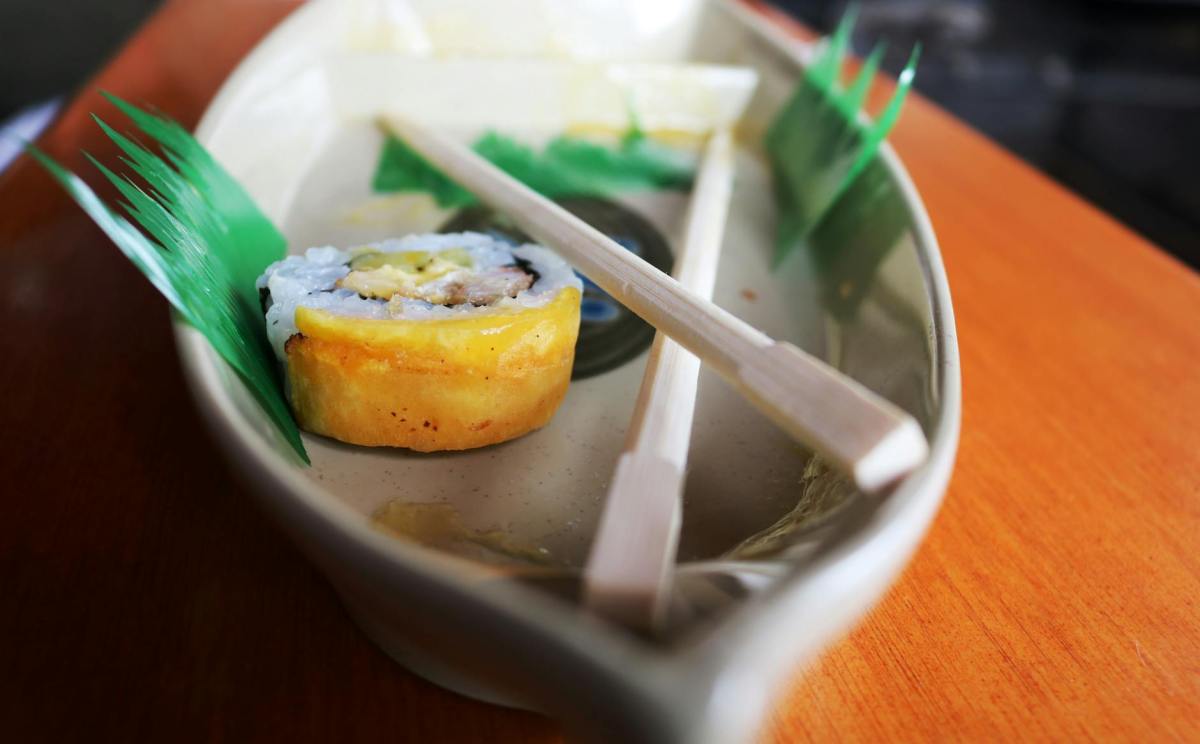
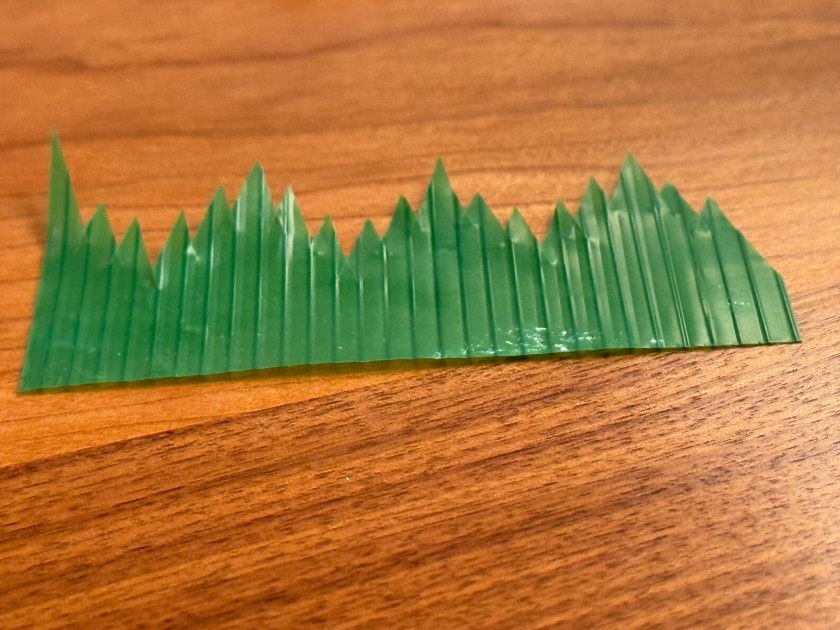
IF you’ve ever bought sushi or sashimi “to go,” you’ve encountered, likely without much thought, those green Japanese bento box dividers. that look (kinda) like grass.

These ubiquitous decorations, called Haran (pronounced Hah-Rah-uN) have graced nearly every sushi or sashimi carryout or bento box since the Edo Period (1600’s). That’s billions of bentos.

(This plastic grass is available, of course, in packages of 1000 pieces from your favorite “they really do sell everything” online shop.)

Of course, they didn’t start out as plastic; in the beginning-the bento beginning, that is – those dividers that kept your wasabi from contaminating your ginger were orchid leaves (ha meaning leaf and ran meaning orchid or lily.) No sushi container, it seems, would have been complete without Haran for now, well, centuries. Certainly, they have to be, with plastic straws and balloons, one of the mainstays of landfills today, at least in Japan.

Now, I would not personally find it an affront or a calamity if I should pull the plastic wrap off my carryout California roll and find there’s no haran separating my ginger from my wasabi. Having lived several years in Japan, however, I can tell you that you could expect a very different reaction from a factory worker or primary school child popping the lid off a plastic (now), or lacquer (historically) bento box and, finding (ACK!) no green divider resembling grass. Their immediate fear? What else might have been left out? How long has that tuna sashimi been touching the packet of soy sauce or dollop of wasabi?

Point is: the details matter.

Me, I tend not to notice. The details, that is.

I have always thought I might want to be a detective but a good sleuth needs to notice details. I’d be a lousy witness, too, because I’d either miss critical details or, and I think this is
because I love to tell stories, my mind quickly fills in missing details, even though my details may have been gleaned from memory or another setting entirely. Not great for being a detective or witness.

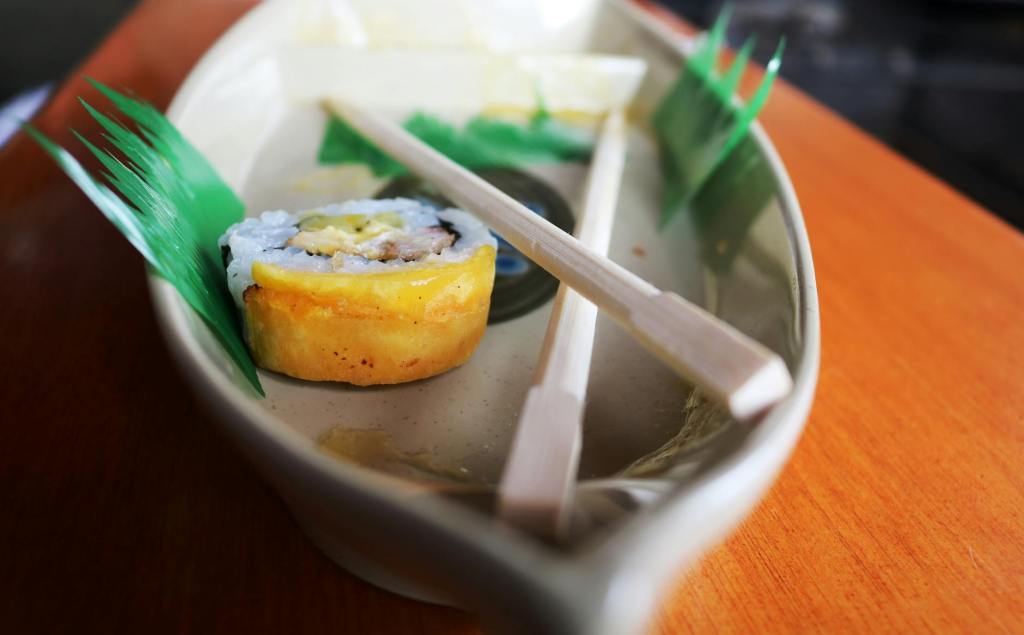
This week, though, a plastic piece of grass in my sushi got aggressive and confronted me about all the many little details I do not notice. Every day. Busted.

I can say today that one of my life lessons will be developing an appreciation for the rich palette of color and flavor and sound I miss every moment simply because I am not a detail person.

I have painted much of my life with a wide brush, mostly seeing the big picture and largely missing details but I am now becoming more aware daily of how this affects most of my favorite activities, including, for just two examples, writing and guitar.

When I get excited about telling a story, for example, I can easily bulldoze through a narrative rather than take the time to first set a concrete scene for the reader to settle into. A good memoir brings the reader into the moment with concrete details from all the senses. Sight, sound, touch, smell, even taste. Those are how we are meant to experience our world. Burning your tongue on the hot chocolate or feeling the mud between your toes or covering your ears when the fingernails squeak on the blackboard, these details place us in the moment, whether squishy, irritating, painful or lovely.

To slow her students down, to help us focus on the minute differences that create such variety in our world, one writing instructor suggested each day we take some time to learn about the many varieties of birds or autos or cheeses. Our task is to learn to recognize their differentiating characteristics, and their habits or uses, for example. The discipline was to help us become detail-oriented, a challenge for me.

The writer or storyteller being specific and precise can help readers place themselves in the story, help them take a seat in the action and, with some work and luck, help them be swept up into the tale.

Getting the details right can make life a lot less difficult and help us get where we want to go, be it in a story, a song or a daily chore. I’ve certainly found the opposite to be bonafide.

I once shared an anecdote in worship, referring to a silo.

Oops.

Turns out, I should have said a grain bin.

Same thing, right?

The result of my imprecise language was that the entire congregation of farmers was so distracted that they stopped listening to any more of the sermon.

Not noticing differences has long hampered my participation in substantial conversations as well as my ability to relate evocative stories. I used to simply describe cars as either sedans or station wagons – or the occasional Beetle/Bug. Respecting the details, though, means I can fully participate in the story and so can my reader.

A sedan is a wide brush stroke, an image that may float by offering little reason to listen or read on. Conversely, a reader can almost imagine polishing the headlights on the 1970 Dodge orange Super Bee. Wide brush strokes keep the vehicle in the side view mirror while a more detailed image causes the reader to want to pull over and jump into your ride.

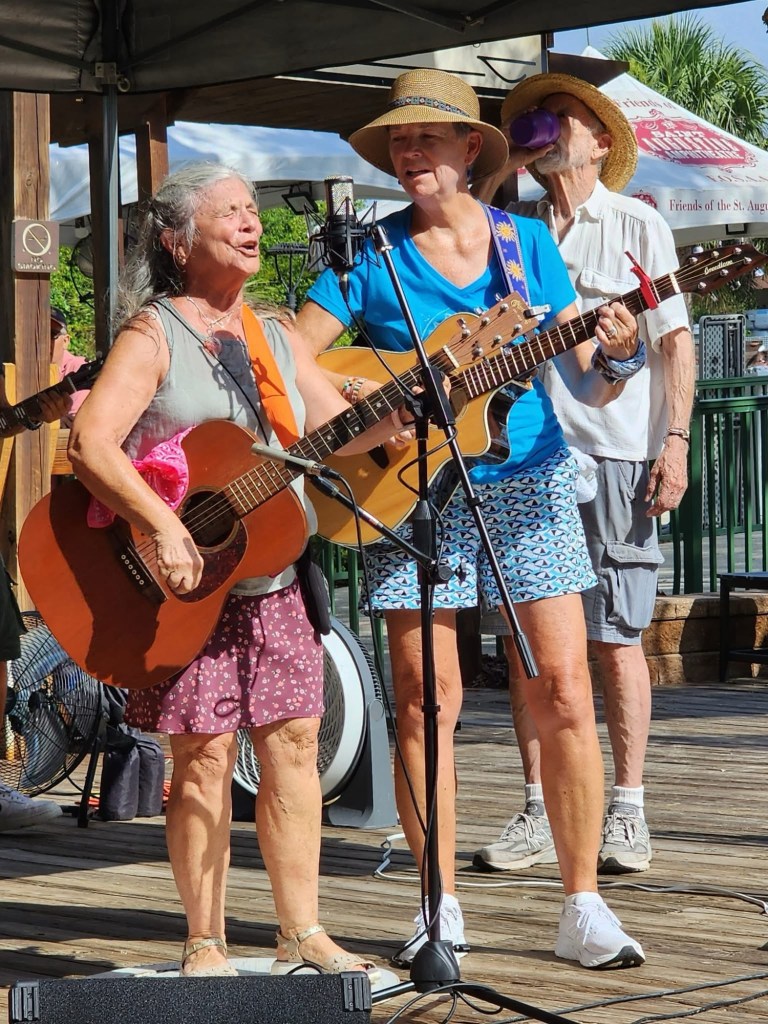
The same is true of music – one of the first rules of participating in a music jam, of being part of making the music, is respecting the details enough to play in the same key and tempo as everyone else. Simply strumming a guitar without placing the right fingers on the right frets and strings – NOT just in the vicinity – was only cute when you were three.

What the plastic piece of grass made me realize is that my lack of attention to detail affects my guitar playing in some powerful ways. Remedying this though will again require me to slow my roll. I know the other folks I play music with will very much appreciate my respect for the pertinent details because they often already notice when one finger needs to be closer to the fret or if my rhythm playing is significantly different from the original.

Failing to appreciate the details, I realized, has driven me to use my guitar as a tool. I have reduced my guitar to being simply a means, a tool for making music, regardless of whether or not I can do that decently.

Being respectful of the details isn’t just being picky, though; it means being respectful of the other musicians, the composer and even the music itself.

I know I tend to barrel through my days. When I can slow my roll long enough to notice whatever I fly past on the way to my car or the next gathering or activity, I begin to grasp – and thus respect – the differences that change a melody or invite a deliciously unique solo lead during the instrumental break.

And I am trying to use the tools I have for feedback. I have rushed, but again, I am aware, and am working at slowing down, at being more precise and creating cleaner notes.
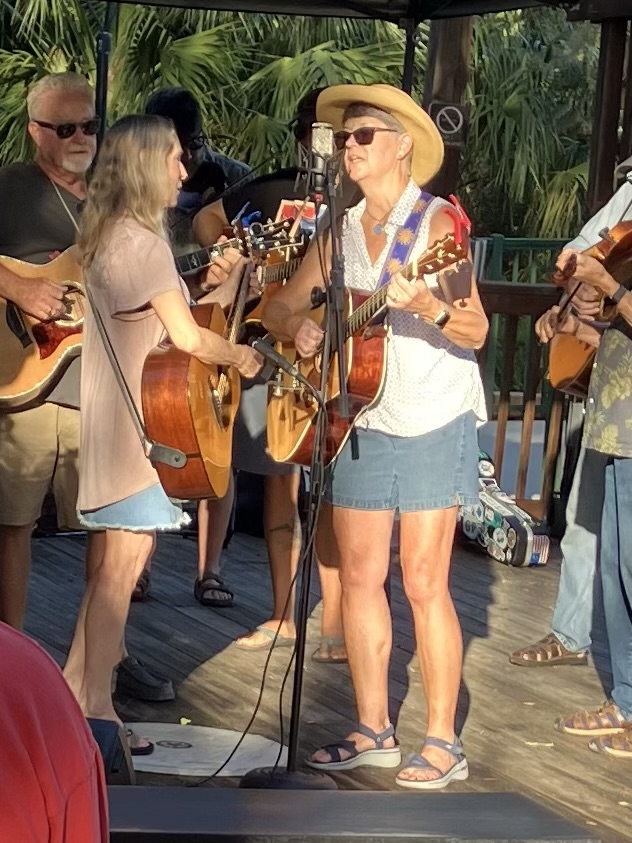
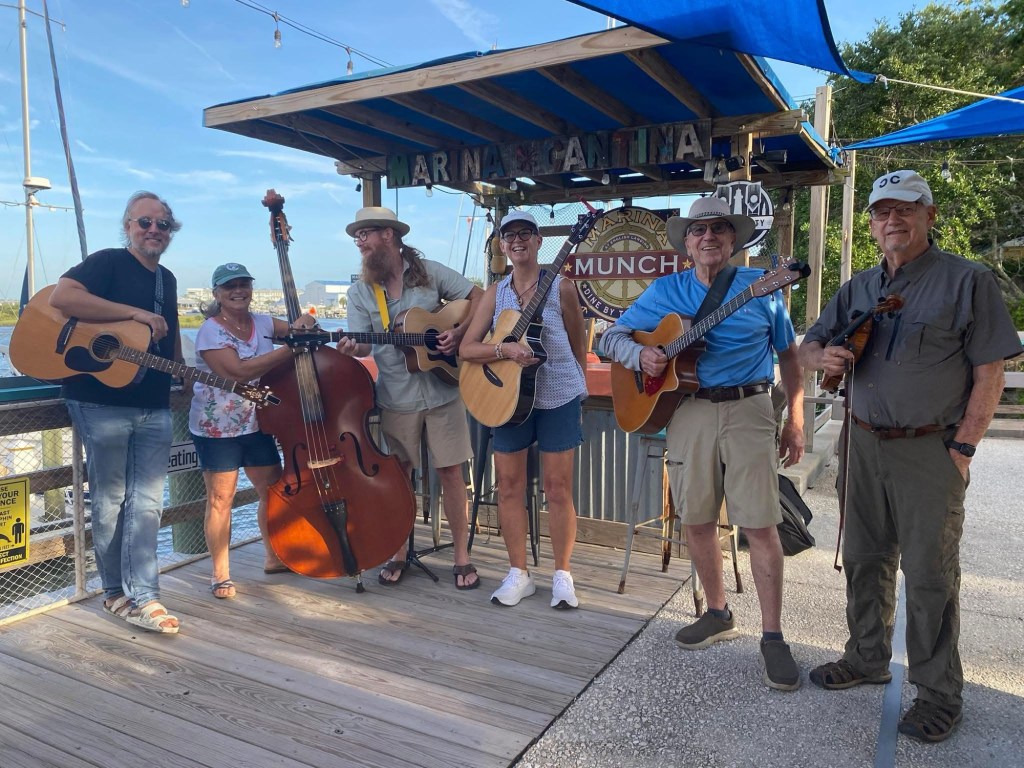
One piece of advice I appreciated when I first picked up a guitar three years ago was to wander more. Just wander on the guitar. I can grasp that concept. I struggle to do it but I can I can appreciate wandering. Any time I have moved to a new place, I have enjoyed walking and wandering with no particular destination in mind, just meandering to explore. When I first started studying guitar, I asked a friend for advice and he said simply, “Don’t rush the process.” And it does seem to be a process.

Like anything else in our culture today, hawkers on social media have worked to reduce playing guitar to mastering three chords, two if you want to play bluegrass. Play these three chords and you can start playing paid gigs next week!

I heard last night about a kid who when he began playing, though, played six hours a day for two years. It occurred to me that by the end of that period the guitar must have felt like an extension of his hands- he would have been so comfortable with his guitar. I still hold mine awkwardly I know. Taking the time focus on getting the F or the C chords every time. Knowing how to curve your fingers and using the tips not the pads of your fingers, the many ways to play each scale and the variations all factor into making that instrument sing.

Why does it matter? Why should you care?

Maybe it’s as simple as knowing that your attention to detail shows you care.

When I respect that details do matter, others around me feel seen, important if just for the moment, like I get what’s important to them. We all need that now more than ever.

Open Mozart sheet music with paintbrush and handwritten note

Receiving a handwritten note, attending a well-prepared meeting, or taking time to prepare or notice a thoughtfully designed object is a powerful and much-needed tonic.

When others don’t care about getting the details right, it can feel like nothing we do matters.

When details are ignored, we can feel discouraged and even powerless. We are familiar with those repeated small failures — confusing paperwork, unanswered questions, broken promises, sloppy communication and they simply create the sense that nothing we do matters.

Good teachers, artists, good leaders and craftspeople know, though, that details are not “extra.”

I may get sushi for supper tonight on my way to the jam session if only to remind myself of what the haran-sensei teaches me:

Details, my child, are not just for pretty.

Wait! Which day is Thanksgiving?

Nov 17, 2025

Photo by Nancy Zjaba on Pexels.com

Thanksgiving is next week. 

Not this week. 

Thanksgiving is next week. Not this week. Nevertheless, at least a handful of folks will show up at Aunt Frankie’s door, cranberry jello mold and Mrs.Schubert’s rolls in hand this Thursday, convinced that holiday we set aside for football and eating is indeed upon us.

I believe we can blame the whole “4th Thursday” rule. That formula for football and the fixins’ was reportedly set by Franklin Delano Roosevelt in order that retailers could establish a set shopping schedule. 

Good for them. For us, it may be too complicated. It reminds me of that strange game we played on our knuckles that was supposed to help us remember which months have 30 days, not 31. Even if we take the time to look at a calendar and count, well, it’s math. In our heads. 

Find a calendar (hint – might be a handy one on your phone). Find the 1st Thursday of November 2025, which is the 6th, then count…so 13th, 20th, oops, yeah, Thanksgiving is the 28th.  Not this week. 

Given half a chance, some of us still standing on the stoop might try to convince Aunt Frankie. She has, by this time, rummaged around and found an actual paper calendar to prove to us how wrong we are. 

Maybe we would  cajole her while the jello mold wiggled in our hands. “How do you feel about two celebrations? I mean, here we are on the stoop, maybe a fresh pie in hand. You know those pumpkin pies don’t keep well.”

Sadly, we’re probably not the only idiots who didn’t show up for work…on the wrong holiday.

Getting the day right for Thanksgiving is not as easy as if the date were set, like how Christmas is December 25. Nevertheless, having a set day doesn’t guarantee a stressless holiday either. Just ask any pastor or priest. 

When I served a church, I was swept up into a fierce debate more than once because, that year, Christmas fell on a Sunday. Gasp!

“You’re not planning on having Church on Christmas, are you Pastor?”

“You’re not planning on having Church on Christmas, are you Pastor?”

“Well, it is a Sunday. And we would be celebrating Christ’s birth in worship. Wouldn’t that be great?”

“We can celebrate the baby Jesus the week before” was the retort. 

“Let me get this straight. You want to celebrate the baby Jesus, the birth of Jesus, a week early so it won’t interfere with Christmas?”

“Precisely. All the grandchildren will be waking up at our house and running downstairs to open presents on Christmas morning!”

“How about you come after opening the presents?”

“I’ll be cooking the Christmas meal.”

“But it’s Sunday.”

“Right. It’s Sunday AND Christmas. You cannot expect us to come to church on Christmas.”

The logic still escapes me.

I personally have been needing to remind myself for two weeks now to hold off on the turkey because I keep wanting to make crescent rolls a week early. Actually, the whole confusing holiday discussion started in my home this year at the beginning of November when I explained to my husband that, while we often remember veterans on the Sunday before the actual day, Veterans Day is always on 11/11. November 11. Always. Actually at 11 a.m. on 11/11. This discussion quickly devolved, though, into the confusing world of holiday “days versus dates, fixed days versus floating dates.”   

Fixed date holidays occur on the same calendar date every year regardless of the day of the week: New Year’s is always January 1 and Independence Day is always July 4. We generally don’t mess with those. 

“Labor Day is always a Monday but it’s the first Monday, just like Halloween is the last Friday in October,” my husband offered. 

Actually, the holiday of Halloween is always October 31st, but that’s really confusing because sometimes the day is celebrated earlier to allow kids to “trick or treat” when it isn’t a school night. That can be especially confusing, though and I suspect we’re not the only family who has had people show up on a random day in the week of Halloween annoyed when we didn’t have candy to offer them.  

“One way we can mark Thanksgiving might be to remember it comes the day before Black Friday,” my husband suggested, “except now Black Friday sales start before Halloween, so there’s that.”

As if the whole fourth Thursday thing isn’t complicated enough, our son is playing fast and loose with the need for a set calendar date for his wedding anniversary (2nd one coming up soon). Our daughter-in-law points out it is November 17, but our son suggests it’s easier for him to remember to celebrate on the Friday before Thanksgiving, since that was when they got married. Granted that’d be easier in some respects since this year the anniversary is on a Monday, but, in the future, that’s gonna make things even more complicated because they’ll be figuring out the 4th Thursday then back tracking 6 days! And if he gets Thanksgiving wrong….

Maybe we just all need Alexa to tell us-like those white boards do in eldercare facilities. We used one during COVID when we did not leave home or see another soul for days. We wrote on it every evening before we went to sleep and kept it posted on the refrigerator. We relied on that white board all those mornings when the calendar and days seemed to just float all around us without any tether. Our trusty, dusty white board told us the day of the week, the date and month and any upcoming holidays. Sometimes we even reminded ourselves the forecast was for rain or that supper would be chicken.  The calendar and especially the upcoming holiday reminders mattered during COVID because it kept us oriented, kept us from flying off into holiday madness or forgetting an important birthday.

We just finished the daylight savings debates, so, maybe we need the date versus day of the week/month debate for holidays. I could make that argument for pastors and priests, for sure. Those among us who don’t attend church and even a few churchgoers have no idea how complicated it is for pastors to plan some of the holidays. Take Easter, for example. Pastors and priests must first find Easter on the calendar which means finding the first Sunday after the first full moon after the spring equinox. From there they count back the six weeks prior to mark Ash Wednesday and Maundy Thursday. And yes, these occur on a Wednesday and a Thursday. People really do ask. Fewer still seem to realize that there is counting  involved before you can start lighting Advent candles on Sundays in Advent.

Perhaps we just need to copy Advent calendars and eat a piece of chocolate each day to lead us up to any given holiday.  Or see if Alexa has a countdown to holidays application?

Better yet, maybe we need to go back to the Town Crier who would walk through the streets of European villages, ringing a bell and shouting, “Oyez, oyez, oyez!” That’s French for “Hear ye, Hear ye, Hear ye!” People in the community would recognize that the bell ringing and the crying of those words would warn us that the crier brought us big news. Or perhaps told us of an impending holiday. 

I’m certain a town crier ringing a bell, waking us in the early hours to warn us that “Today is NOT Thanksgiving!” might have saved a few of us some time, money and embarrassment.

For Combat Veterans, Memorial Day is No Picnic

For those who survive combat and return home, the duty to keep the memory alive of the ‘true heroes’ can become a lifelong, sacred mission lived out daily.

Conversations with veterans of war will teach you one thing quickly: for many, the only true “hero” is the one who didn’t come home. Thus, for so many combat veterans who have lost a battle buddy, a friend, even an enemy, in war, the duty to keep the memory of the “true heroes” alive can become a lifelong, sacred mission lived out daily.

Sadly, Survivors’ Guilt is one of the main contributors to veteran suicides that continue to plague this country. Living with the fact that you survived when so many others did not then means Every Day Becomes Memorial Day. 

For many combat veterans, the survivor’s guilt, or the belief that you have done something wrong by surviving a traumatic event when others did not, can be debilitating and disturbing. Survivors of all sorts of traumas will question, feel guilty, and often even begin to believe their survival makes them somehow responsible for the other person’s death. 

“Why did I survive?” 

“I stepped one way and my buddy went another. He took the bullet.”

“I switched seats with another pilot and he was killed. It should have been me.”  

“If I’d leaned forward, I would have been the one hit, not him.” 

The grief of losing those under your command or knowing that another person died saving you is a particularly heavy burden. Especially plaguing for so many combat veterans is the reality that they were responsible for taking the life of a child, whether a combatant or just an innocent bystander.

Even just returning when so many others did not, though, can feel like too much to bear. Thus, remembering and honoring the “real” heroes with some kind of meaningful ritual or task that honors the fallen then becomes the new mission.  

Eddie G.

His Sergeant Major brought Eddie G. to my campus ministry one rainy day in 2011. He’d already deployed into combat as an engineer three times and he was only 25-years-old.

“Got any work our guy can help with?” Eddie stood by his truck across the parking lot, out of earshot.

“Well, I was needing to make this entrance accessible. Probably a ramp….” I nodded to the young vet leaning against his truck.

Seems Eddie was sleeping in that truck. He was not allowed to see his daughter or go home. Sergeant Major was running out of ideas and Eddie was not the only vet in crisis in Clarksville, which is adjacent to Fort Campbell, Kentucky, home to the 5th Special Forces Group and 101st Air Assault. At that time, the base was dealing with more active duty suicides than any other U.S. military base. Eddie was just one of many vets in crisis but he’s the one Sergeant Major brought to see me that day.

“You need something built; Eddie’s your man,” said Sergeant Major. Eddie had been building bridges for combat transport. Never having done that, I could not and did not at the time realize the frustration and grief of building a bridge to transport your unit into combat only to watch them be destroyed almost immediately. Too often at the cost of the lives of your buddies. “He just needs a task. To be useful. Helpful.”

And just like that, a hurting vet was building a ramp for our campus ministry. He showed up at an ungodly hour the next morning in the pouring rain. For the next four days, our only conversation was me asking him if he wanted a cup of coffee or needed anything. He never needed anything but the coffee. I’d stand out there with him, attempting to make some small talk but everything I said seemed pretty lame.

He worked silently. Alone. In the rain. For four days. Didn’t need any help. Didn’t want to talk to anyone much. I watched him a lot those four days, wondering about how we could help him. I called another, older veteran I knew and asked him for suggestions, ways we could help this guy who worked so methodically, silently, almost prayerfully to build a ramp to make our building accessible.

“Leave him alone, and let him build,” my friend said. “You ARE helping him.”

For four days, Eddie worked in the rain, silently, taking only the occasional break to smoke a cigarette and stare at the ramp as it took shape. The day he finished, he sat for a couple of hours, I guess, in his truck, smoking and looking at the finished ramp.

I was afraid to let him leave, afraid he needed so much more, but painfully aware I didn’t know what that might be. I went out and took some pictures and he said I could send them to Sergeant Major and he’d get them. I said thank you and he stabbed his cigarette out, then said goodbye. As he turned to leave, though, he added so quietly I almost didn’t hear it: “At least nobody is gonna blow this up.” I never saw him again. I pray he found another project.

“Survivor’s guilt is a complicated kind of grief and treating it needs to be very individual,” says counselor and combat veteran Lantz Smith, former Executive Director of Soldiers And Families Embraced (SAFE), a free counseling program near Fort Campbell.

Often, he says, the kind of complicated grief carried by war survivors is never finished. Certainly, he says, there seems to be no straight progression through the many stages of grief, and little hope of the grief ending neatly with any sense of closure.  

“Quite often,” Smith says, “survivors of combat are more afraid of forgetting than anything else. Their fear is that NOT feeling grief intensely is dangerously close to forgetting, and forgetting would be unforgivable.”   

Ask any combat veteran and they will tell you whose memories they personally are keeping alive.

In his invaluable book, “Warriors Return,” Dr. Edward Tick of Soldier’s Heart explains, “Survivors shape their lives and suffer their nightmares as ways to not break faith with the fallen. Canadian Lt. Colonel John McRae’s World War I poem, ‘In Flanders Fields,’ reads, ‘If you break faith with us who die / We shall not sleep…’” 

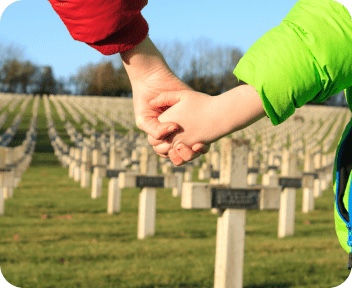
Poppies are still reminders of those who have fallen in conbat.

“Civilians taking oaths of military service become bound to serve and sacrifice no matter what is asked of them, even unto killing or being killed,” says Tick. “Combat also binds, producing an intense intimacy between brothers-and sisters-in-arms and with foes. Survivors often take oaths to remain loyal forever to those with whom they have shared the experience of hell. They strain to honor the memories of their fallen, prove themselves worthy of their sacrifices, and fulfill last promises, such as delivering messages home,” he explains.

Tick, Edward, PHD, Warrior’s Return: Restoring the Soul After War, Sounds True Publications, Boulder, Colorado.

Helping these survivors find ways to remember a fellow service member’s death without constantly emotionally reliving the trauma is the challenge for trauma counselors.  

The New Mission

While many combat veterans will never finish the healing process after they return home when their brother- or sister-in-arms did not, they can find ways to make peace with and live with this new mission in life. Memorializing is one effective method, says Smith. Like Eddie G., for example, they can build something that will not be destroyed.

Memorializing means creating places and activities to hold part of the grief and help the veteran find a healthy way to keep alive the memory of those who have fallen in battle.  

One veteran, a fighter pilot, was haunted by the way he could take another life while staying “above the fray,” and be an anonymous danger to those below him. His memorial? He has loaded as many pennies as he can in a large bowl; each one represents a life lost in a bombing raid.

He regularly picks up the weighty reminder because, he says, he needs to feel a physical weight to accompany the emotional burden of those whose lives he took, who shared the hell of war with him but who did not ever see him. He feels the weight of this grief and does his part to remember the weight of war.

A sailor who cannot “unhear” the voices of those who could not be saved from drowning becomes a counselor to help those who are drowning emotionally like he once was.

Some veterans find help for the guilt of surviving by sharing it in music or stories. Ancient cultures are said to have brought warriors home and, after a time of cleansing, asked them to tell the rest of the community everything they saw and felt and all that they did. When they finished, the community then helped them carry the burden of their memories and guilt. Sharing is also a way of keeping a memory alive, of honoring the fallen.

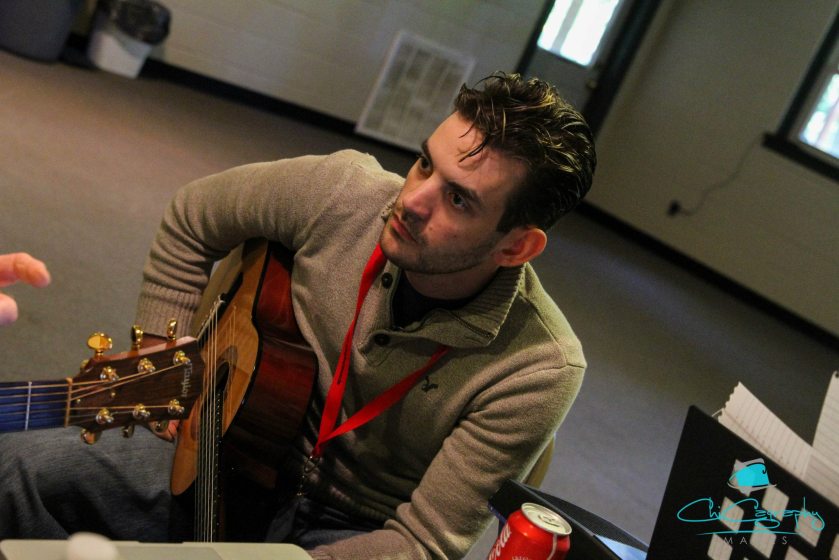
Aaron Voris, combat veteran, attending a SAFE songwriting retreat. Used with permission.

One young soldier, who was wounded himself when he returned, was haunted by the memory of having to carry the body of a small child to a burn pile after a battle. He knew nothing about her, and her family could not be found. Perhaps they did not survive either. For the longest time, that memory was disturbing and his greatest desire was to drive the pain of that moment from his mind.

With the help of a counselor, however, he chose to see the memory not as a haunting spectre but as a desire to be honored and remembered. That child – whoever she was – deserved to be honored and remembered, too, and, he realized, there might be no one else to do that. Remembering this innocent victim of war was his new mission and embracing that gave him some peace. He gave her a name and then he planted a tree dedicated to her in the field behind his home. He tends to it and hopes she is at peace as well, knowing she was remembered.

“If you break faith with us who die / We shall not sleep…’” 

Canadian Lt. Colonel John McRae’s World War I poem, “In Flanders Fields.”

These rituals will never erase the profound sense of loss or the survivors’ guilt, but they can keep the veteran from turning the grief and guilt inward in destructive ways, Smith says.

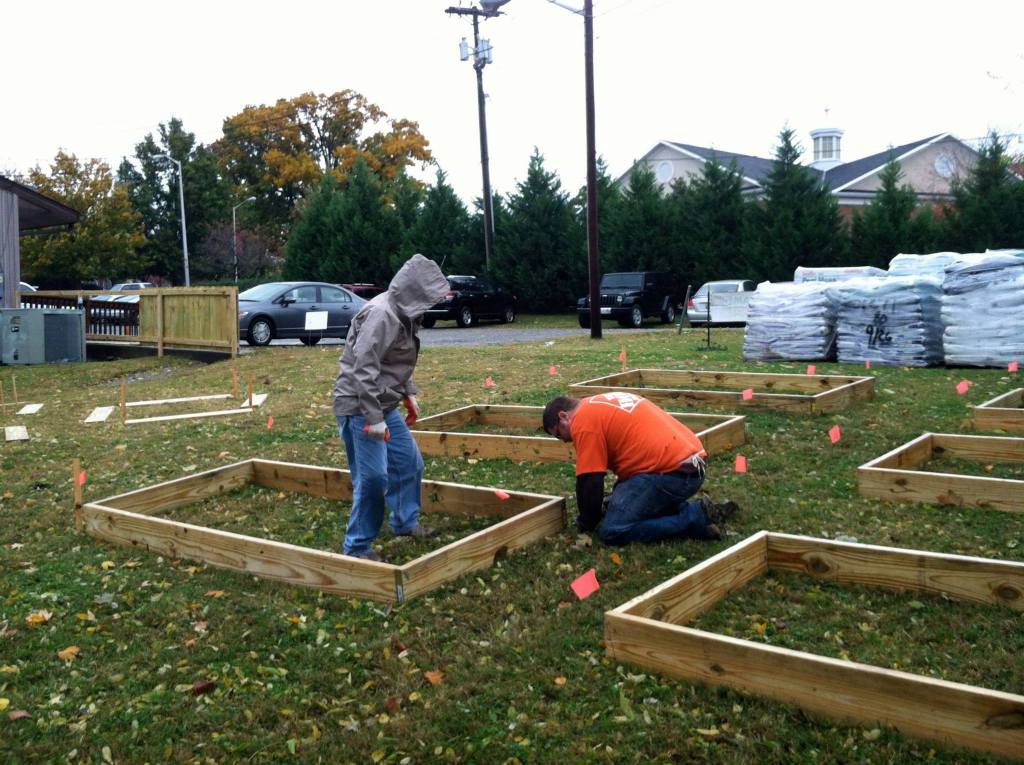
Veterans build raised gardens to provide hands on therapy “giving life,” rather than taking it .

Finding Meaning in Survival

Rituals also serve as regular reminders that survivors were likely spared for some reason. These acts and memorials become the new missions that can help combat survivors bear the duty of remembering.

I believe Eddie was deep in thought the entire time he was building our new ramp, promising his fallen buddies that each nail driven and each step taken on this ramp was a reminder that war was not all there was and that those who fell would be remembered and honored every time someone entered that campus ministry building.

Accepting their new mission, embracing this sacred duty to remember and honor, can, with the help of families, friends, counselors and ministers, ease the survivors’ guilt enough for today and help them cope with the fact that, once a combat veteran returns home from battle, every day becomes Memorial Day. 

Thank a veteran next time you see him or her but remember, they don’t think of themselves as the heroes. In fact, it may disturb them to be called a hero. “Thank you for your service” is enough. Even better, how about we all just take a minute and reflect on why we have designated a Memorial Day in the first place?


This is first of a series of posts about war, loss and healing.

I am a veteran, retired United Methodist Minister and co-founder of Soldiers And Families Embraced (SAFE), a non-profit offering free counseling to combat veterans and their families.  In 2011, at the height of the US military’s largest scale armed conflicts since the Vietnam War in Iraq and Afghanistan, I served as the campus minister at Austin Peay State University in Clarksville, Tennessee, which is adjacent to Fort Campbell, Kentucky.  At the time, more than 17,000 Soldiers were deployed into combat from the fort, which had the highest suicide rate of any other base in FORSCM.  Veterans, their spouses and their children began bringing to campus the effects of multiple, year-long combat deployments, including Post-Traumatic Stress Disorder and Traumatic Brain Injuries.  In response, with the help of a veteran studying social work, we began a free and totally confidential counseling program based on the story of Lazarus emerging from the tomb, still wrapped in the trappings of war and death.  SAFE continues today providing free counseling to those affected by all wars.

Leave a comment