
“Well, I’ll be damned.”
Loathe as I was to admit it, Amazon hooked me last week, getting me to check out another “product.” Not a new guitar strap, but a podcast, “Wiser Than Me,” hosted by Julia Louis-Dreyfus. (https://podcasts.apple.com/us/podcast/wiser-than-me-with-julia-louis-dreyfus/id1678559416.)
I normally would have passed on the “opportunity,” but, hey, she was interviewing Joan Baez, “a voice I’d known a couple of light years ago.”
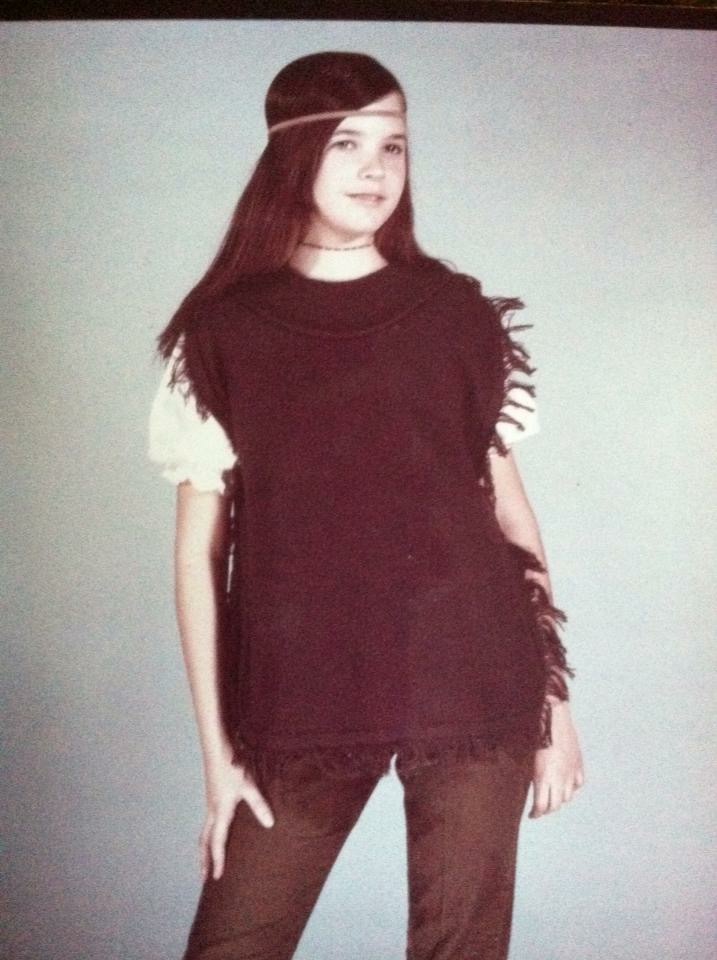
As a teen, I wanted to be Joan Baez when I grew up.
What I didn’t realize until I listened to the podcast was just how much of my personal life really did mirror hers …
(minus the whole fame and talent thing.)
As a child, for example, all three of us lived in countries where we witnessed abject poverty. Both Baez and Louis-Dreyfus told stories of giving away food, for example, to children they encountered. Louis-Dreyfus even gave her own shoes to a little girl she saw who was begging. My family lived in Pakistan when I was a child, but we did not see beggars as often as Baez said she did, if only because we were a bit younger and I know my father was adamant that we be “protected” from that. Nevertheless, we did see children who were begging and we struggled to know what to do with that. Baez was old enough to process what she was seeing at least, realizing how closely their lives were actually intertwined. Helping or protecting this other little girl she met was as essential as breathing.
My childhood memories of seeing children beg on the streets had been rekindled some twenty years ago when, during a Vanderbilt Divinity School study tour, I encountered children on the street in Nicaragua. There, like Baez and Louis-Dreyfus said they had been, we were admonished not to give more than was the “going rate” for anything we bought from street people for fear we would be mobbed, inundated with requests, unable to move about even. We were studying responses to poverty, but clearly the poverty there still overwhelmed the response, at least twenty-some years ago.
I remember I bought a lifelike grasshopper, hand-crafted from straw, from a child who ought to have been in school but school was not free and this child and his family appeared to live on the street. I really struggled with that and realized I carried far more wealth to my daypack than so many of the people I met owned at all. When we returned to the U.S., several of us sent care packages to those whom we had met and especially those who had opened their homes to us. I sent notebooks, pencils, and my baseball glove to the little boy whose family had shared their home with us. I remember extra salty everything, that his parents walked seven miles each day on the weekends to go to school themselves. The women of the village did run their own elementary school in the village reserve, an area they hoped would become an eco-tourism destination. I remember there were three rooms in the cinder block home, a kitchen with an open grill to the sky, a room for the family and the guest room.
We were embarrassed to realize we took up one-third of their home while we stayed there and toured the reserve. We were warned about scorpions, too, so we slept in our boots, but the seven-year-old who lived there, when asked about running around barefoot, just shrugged and said the sting didn’t hurt that much. “You get used to it,” he offered. You shouldn’t have to, I thought.
I appreciated hearing from Julia Louis Dreyfus and Baez about their own struggles to understand such poverty and inequity as a child. Baez said she had written home to friends about it but none had responded. She speculated it had been so out of their own realm of understanding, they didn’t know what or how to respond?
I’ve long felt that our time in Pakistan affected me, or perhaps better to say it infected me. I wondered as soon as she said it if that “infection” was part of why I have long felt lonely, as if I’ve seen something others don’t seem to have seen or have seen and don’t want to talk about if only because the problem seems to mob us, to overwhelm us, as surely as a group of beggars would have.



As a teen, young woman and beyond, Baez participated in protests and was even arrested when she protested the draft. As a teen, I protested as well. I spoke about women’s rights and even lost out on studying at the Sorbonne because the group who’d have funded the scholarship didn’t want to run the risk that I’d say something that would embarrass them. “What are you so worried about?” I asked the spokesman tasked with telling me why I’d lost out. “You think I’m gonna burn my bra?” He admitted they were.
I find now that I am curious if Baez felt others were often afraid she’d say something to embarrass them. My gut is she’d hope she might embarrass folks if that was what was necessary. If speaking up about abuse or injustice embarrassed folks, then so be it. It’s a lonely way to live unless you can find and surround yourself with others who will say what others are thinking, but sometimes, staying silent is more painful.
Turns out, much of my personal life really did mirror hers…minus the whole fame and talent thing.
Baez made me think then of a Nashville area pastor–an activist whom I have long admired for her passion and willingness to speak up and speak out. I ran into her this week after a long while and I offered a friendly hello but she surprised me by offering a more enthusiastic greeting, saying how much she appreciated all the support she has felt from me. (I felt like I needed to look around for someone else she might be pointing to and still wonder if she wasn’t mistaking me for some other old lady pastor.)
I did ask her, though: was she taking care of herself? Her reply demonstrated how much wiser she is than I and maybe even that young woman on that stage so long ago, guitar slung over her shoulder, singing for civil rights, being part of such an historic event. My colleague said simply there’s really no separation for her between doing the work and self-care: doing the work is her self-care.
Her own soul finds healing when she speaks out, speaks up, when she stands with those who need her support and voice.
I was amused by one final irony as I listened to the interview. Louis-Dreyfus referred to “Diamonds &Rust” as the breakup song of our generation. I would be surprised if anyone playing it did not have someone in mind while they sang. I realized a few months ago I needed to learn to play that song when I discovered I still remembered all the words 50 years after my own “Diamonds & Rust” breakup. His eyes were blue and yes, he did say my poetry was bad. Nevertheless, the relationship was romantic and exotic and painful when it ended, very much “Diamonds & Rust.”
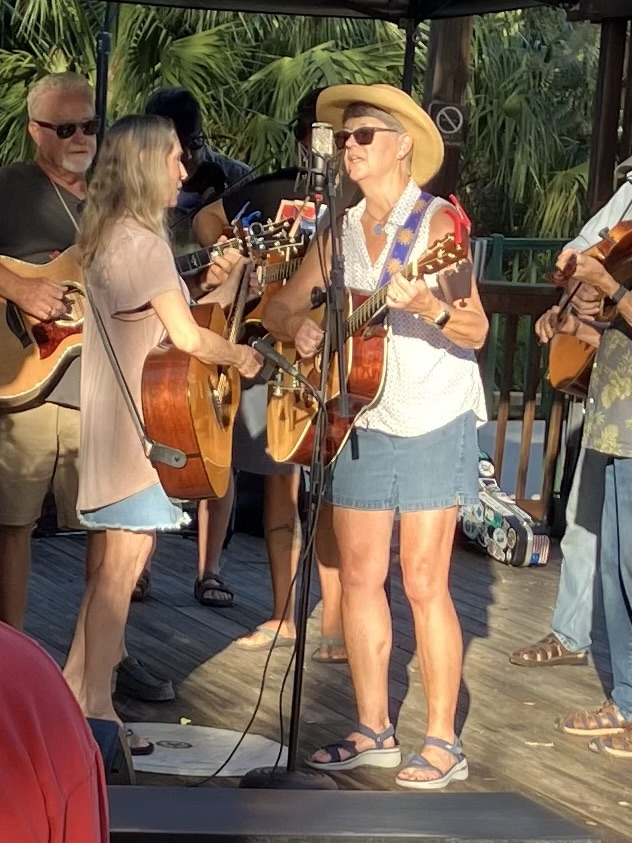
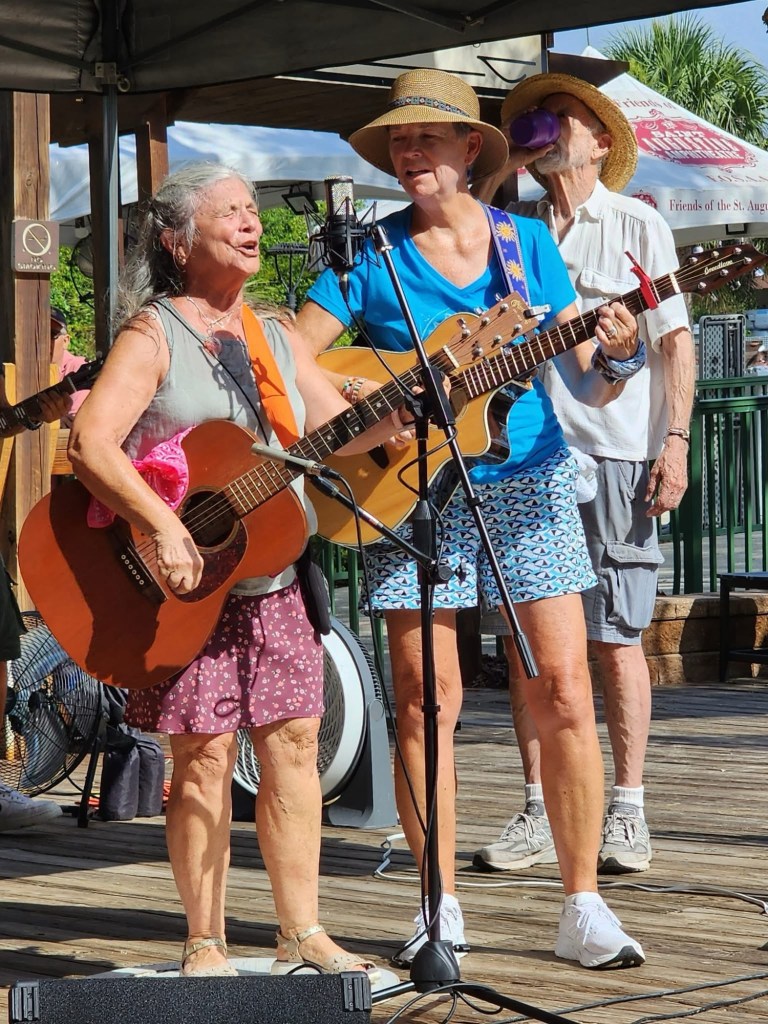
Learning D&R has been painful, but not because of memories. It’s frustrating and physically painful because of the barre chords in the bridge. Sigh. I may be heading quickly to seventy but I am only a guitar beginner. Barre chords are a rite of passage in playing guitar, a kind of wall that prevents a guitarist from playing a lot of music that is meaningful and beautiful if you cannot strengthen your fingers enough to carry you over.
As I listen again to this interview of a wise woman, though, I realize how the possibility one day of playing my favorite Joan Baez song and seamlessly moving into that barre chord will bring me immense joy. I doubt Baez would have ever expected that when she wrote it, but I am inspired and I know I’ll be grinning when I nail it.
Perhaps what is most inspiring about Joan Baez is that she has a voice and she has always known it. She talked about how her vocal range had changed over the years, moving from that soprano vibrato to a much lower pitch, but I don’t mean she had a voice that was beautiful.
I mean she had a voice that made us want to listen and she used it.
So many of us listened to what she said, and she knew it and so she used that voice to help bring changes, to help bring awareness, to help make this world a better place for everyone. I suspect then Joan Baez would not be so impressed with me being able to play the bridge to Diamonds & Rust; I suspect she’d be more pleased to know she has encouraged at least one aging hippie to learn to play those old protest songs I used to sing along to before I took up guitar. Sadly, she lamented, the current state of our country may even be more discouraging than it was when she joined the Rev. Dr. Martin Luther King on the mall in 1963.
We can all use the excuse that we are just one voice.
What if, though, what the world needs is just one more voice, maybe yours, to sing out, to ask for those songs, to write those songs, to share them? What if just one more voice is exactly what the world needs to tip the balance?
Turns out, there are still opportunities for us to be Joan Baez. Sing out. High soprano, raspy tenor, we need all the voices now more than ever.
It’s not too late.
Be like Joan.
You have a voice.
The world still needs to hear it.

