Thanksgiving is next week. Not this week. Nevertheless, at least a handful of folks will show up at Aunt Frankie’s door, cranberry jello mold and Mrs.Schubert’s rolls in hand this Thursday, convinced that holiday we set aside for football and eating is indeed upon us.
I believe we can blame the whole “4th Thursday” rule. That formula for football and the fixins’ was reportedly set by Franklin Delano Roosevelt in order that retailers could establish a set shopping schedule.
Good for them. For us, it may be too complicated. It reminds me of that strange game we played on our knuckles that was supposed to help us remember which months have 30 days, not 31. Even if we take the time to look at a calendar and count, well, it’s math. In our heads.
Find a calendar (hint – might be a handy one on your phone). Find the 1st Thursday of November 2025, which is the 6th, then count…so 13th, 20th, oops, yeah, Thanksgiving is the 28th. Not this week.
Given half a chance, some of us still standing on the stoop might try to convince Aunt Frankie. She has, by this time, rummaged around and found an actual paper calendar to prove to us how wrong we are.
Maybe we would cajole her while the jello mold wiggled in our hands. “How do you feel about two celebrations? I mean, here we are on the stoop, maybe a fresh pie in hand. You know those pumpkin pies don’t keep well.”
Sadly, we’re probably not the only idiots who didn’t show up for work…on the wrong holiday.
Getting the day right for Thanksgiving is not as easy as if the date were set, like how Christmas is December 25. Nevertheless, having a set day doesn’t guarantee a stressless holiday either. Just ask any pastor or priest.
When I served a church, I was swept up into a fierce debate more than once because, that year, Christmas fell on a Sunday. Gasp!
“You’re not planning on having Church on Christmas, are you Pastor?”
“You’re not planning on having Church on Christmas, are you Pastor?”
“Well, it is a Sunday. And we would be celebrating Christ’s birth in worship. Wouldn’t that be great?”
“We can celebrate the baby Jesus the week before” was the retort.
“Let me get this straight. You want to celebrate the baby Jesus, the birth of Jesus, a week early so it won’t interfere with Christmas?”
“Precisely. All the grandchildren will be waking up at our house and running downstairs to open presents on Christmas morning!”
“How about you come after opening the presents?”
“I’ll be cooking the Christmas meal.”
“But it’s Sunday.”
“Right. It’s Sunday AND Christmas. You cannot expect us to come to church on Christmas.”
The logic still escapes me.
I personally have been needing to remind myself for two weeks now to hold off on the turkey because I keep wanting to make crescent rolls a week early. Actually, the whole confusing holiday discussion started in my home this year at the beginning of November when I explained to my husband that, while we often remember veterans on the Sunday before the actual day, Veterans Day is always on 11/11. November 11. Always. Actually at 11 a.m. on 11/11. This discussion quickly devolved, though, into the confusing world of holiday “days versus dates, fixed days versus floating dates.”
Fixed date holidays occur on the same calendar date every year regardless of the day of the week: New Year’s is always January 1 and Independence Day is always July 4. We generally don’t mess with those.
“Labor Day is always a Monday but it’s the first Monday, just like Halloween is the last Friday in October,” my husband offered.
Actually, the holiday of Halloween is always October 31st, but that’s really confusing because sometimes the day is celebrated earlier to allow kids to “trick or treat” when it isn’t a school night. That can be especially confusing, though and I suspect we’re not the only family who has had people show up on a random day in the week of Halloween annoyed when we didn’t have candy to offer them.
“One way we can mark Thanksgiving might be to remember it comes the day before Black Friday,” my husband suggested, “except now Black Friday sales start before Halloween, so there’s that.”
As if the whole fourth Thursday thing isn’t complicated enough, our son is playing fast and loose with the need for a set calendar date for his wedding anniversary (2nd one coming up soon). Our daughter-in-law points out it is November 17, but our son suggests it’s easier for him to remember to celebrate on the Friday before Thanksgiving, since that was when they got married. Granted that’d be easier in some respects since this year the anniversary is on a Monday, but, in the future, that’s gonna make things even more complicated because they’ll be figuring out the 4th Thursday then back tracking 6 days! And if he gets Thanksgiving wrong….
Maybe we just all need Alexa to tell us-like those white boards do in eldercare facilities. We used one during COVID when we did not leave home or see another soul for days. We wrote on it every evening before we went to sleep and kept it posted on the refrigerator. We relied on that white board all those mornings when the calendar and days seemed to just float all around us without any tether. Our trusty, dusty white board told us the day of the week, the date and month and any upcoming holidays. Sometimes we even reminded ourselves the forecast was for rain or that supper would be chicken. The calendar and especially the upcoming holiday reminders mattered during COVID because it kept us oriented, kept us from flying off into holiday madness or forgetting an important birthday.
We just finished the daylight savings debates, so, maybe we need the date versus day of the week/month debate for holidays. I could make that argument for pastors and priests, for sure. Those among us who don’t attend church and even a few churchgoers have no idea how complicated it is for pastors to plan some of the holidays. Take Easter, for example. Pastors and priests must first find Easter on the calendar which means finding the first Sunday after the first full moon after the spring equinox. From there they count back the six weeks prior to mark Ash Wednesday and Maundy Thursday. And yes, these occur on a Wednesday and a Thursday. People really do ask. Fewer still seem to realize that there is counting involved before you can start lighting Advent candles on Sundays in Advent.
Perhaps we just need to copy Advent calendars and eat a piece of chocolate each day to lead us up to any given holiday. Or see if Alexa has a countdown to holidays application?
Better yet, maybe we need to go back to the Town Crier who would walk through the streets of European villages, ringing a bell and shouting, “Oyez, oyez, oyez!” That’s French for “Hear ye, Hear ye, Hear ye!” People in the community would recognize that the bell ringing and the crying of those words would warn us that the crier brought us big news. Or perhaps told us of an impending holiday.
I’m certain a town crier ringing a bell, waking us in the early hours to warn us that “Today is NOT Thanksgiving!” might have saved a few of us some time, money and embarrassment.
Individually, collectively, as a nation, there have been times when we’ve needed to draw a line. This is one of those times.
“Those who would give up essential Liberty, to purchase a little temporary Safety, deserve neither Liberty nor Safety.” Benjamin Franklin
Much of the time when any of us need to draw a line in the sand, as they say, I suspect it is a surprise. I say that because we are often not expecting the person moving aggressively towards us; thus, we are not prepared to mark any line. When we do draw a boundary, when we insist that the next step the person in front of us takes will be too far and we will stand in their way, it can feel jarring and aggressive, like we are the ones being combative. We are simply not prepared to counter aggression or abuse, individually or collectively.
This is somewhat ironic, at least in the United States, though. Remember the Alamo? Legend has it that when Lieutenant-Colonel William “Buck” Travis, Texian Army officer and his fighters faced overwhelming forces at the famed fort, Travis drew a line in the sand with his sword and told his fighters to cross it if they were willing to stay and fight. Nearly all of them did. While that story is possibly more fiction than fact, it is nevertheless the lore many of us were inspired by, taught to emulate, part of the “GIve me liberty or give me death!” understanding of the cost of freedom of speech, freedom of religion, freedom from tyranny. We know what’s right. We know abuse when we see it. We know when someone is trying to frighten us into not fighting for those freedoms. We know and yet we are reticent, loathe to draw our line in the sand, whether personally, as a family or as a community and nation. We want it to all go away. But it won’t.
Years ago, an experience from the first church I served paved the way for an extended family finally to take a stance, to draw their line in the sand to stop the abuse that had been harming women in that family for at least a generation. In this case, what had been a family secret became quite public because the abuser got reckless and over-confident and, in some ways, that arrogance made taking a stand easier for the family.
“Herb” (name changed to protect his victims) wasn’t a regular attendee at the church I served, so my radar was not pinging when I greeted him that Sunday morning. He was a 60-something married man who always dressed in seersucker and bow ties and prided himself still sporting a full head of hair, even if it was graying. I’d brushed off his previous suggestions about how my congregation would like it, he was sure, if I wore more colorful outfits when I stood in the pulpit. I glared at him and walked away when he suggested I unbutton a button or two on my blouse, but nowhere was there any guidance on responding to such behavior from this man whose family members occupied nearly one-third of the pews. I wondered why his wife never attended with him and started avoiding him, thinking he would remember he was talking to the preacher. Turns out, I should have opted for outrage from the beginning. At least I might have been prepared for battle when I walked out of the little white building one Sunday afternoon to see him seated in his big old Buick in the parking lot across the road. I waited for two cars to speed by, then crossed the two-lane blacktop warily, my chest tightening. My arms were full with my Bible, sermon notes, my purse and some funeral home fans that I’d grabbed off the table in the back of the sanctuary. The cardboard fans helped you breathe on the days when the humidity was looking for an excuse to break into a summer shower.
Already sweaty, and looking forward to an afternoon of visiting the shut-ins, I moved cautiously across the road, hoping he would stay in his car. I had been headed to the fellowship hall to lock up before I started the afternoon’s visits. Herb exited his car and was next to me nearly as soon as I stepped off the highway onto the parking lot. I had to stop mid-stride to avoid running into him; I was off-balance as I tried to look behind me before stepping back because that would put me back onto the highway.
Turning towards him, I stumbled to my right just in time to miss him grabbing my arm. I looked at him in confusion as he reached out again and said, “Why don’t we go inside?”
In an uncharacteristic flash of assertiveness, I shoved him with my books. He stumbled back a bit, startled. I darted as quickly as I could around to the passenger side of his car. Did he really just grab at me? Herb started around the side of the car and reached for me again, so I threw my books at the ground near his feet to stop him long enough for me to move around the car until I was back on the driver’s side. I know my hands would have been shaking if I had not been clutching my black leather purse, instinctively wrapping the strap around my hand in case I needed to use it as a weapon.
I would never have expected a man from my church to be bold enough to try to grab me in the church parking lot in broad daylight. That simply was not something I expected. Worse, he acted with such confidence, as if he would face no opposition.
Herb laughed. “Don’t be so silly,” he said, putting one hand on the trunk of the car as he slowly headed back around towards me. He seemed quite amused, at first, that I managed to run around his car—a rather large late model car–but all I could think about was the fact that, thank God, he could not reach across. When he snatched his hand back quickly in pain because the metal was hot enough to sting his hand, I bolted.
He was moving around the car towards me again; I managed to dart into the fellowship hall, drop my purse and the ridiculous fans, and turn the lock on the wooden door. Maybe it was the sound of the door locking–maybe something else–but, apparently something brought Herb back to reality; he “came to himself,” like the prodigal son in Luke, and stopped grinning. Unlike the repentant son who asks forgiveness of the father, though, Herb stood before me, his fist raised, threatening to bust through the window of what seemed suddenly like a very flimsy door. I tried to breathe. Even though he was a member of my church with a large and influential family and now he was angry, I had clearly—finally—drawn a line in the sand.
When he finally got back into his car and drove away, I leaned against the wall and let out a scream, then frantically ran to the other door, grateful to find it was locked. He hadn’t tried opening it anyway. He’d just driven off.
I couldn’t catch my breath.
I gave myself the afternoon off from visiting parishioners. I did not let myself cry until I got home; navigating back roads is difficult enough when you’re watching the rearview mirror for a Buick the whole time.
The next Sunday, and for several Sundays after that, I was greatly relieved that Herb did not return to the church. For months, I would imagine his hand grabbing for me. While I was grateful not to see Herb for a while, I also felt quite alone and indulged in some hefty self-pity as I pondered how large a contingent his family was in our congregation. His wife, for example, was one of several sisters, many of whom attended the church. Herb had married the oldest sister when most of the sisters were still children. At least his wife was not attending our church. A few months later, though, his wife was scheduled for surgery and the prognosis was not good. A pastoral visit to the hospital was in order, if only to console her sisters.
I arrived at the hospital intentionally late. Even after the family was sent to the waiting room before surgery, nursing staff was willing to allow clergy in to pray. I smacked the oversized button to open the doors just in time to go back into the surgical prep area to see her alone. She was still awake and aware enough and thanked me for praying with her. Then I made my way through the winding hallways to the family waiting room.
Nearly every seat was taken by a sister, but I spotted Herb on a chair in the far corner. I took a breath, said a silent prayer, and walked over to him. I leaned down to offer him my hand in greeting but, before I knew it, he was laughing because he’d managed to pull me onto his lap and wrap his arms around me. Even now when I think about how shamelessly he seemed to operate, how little he feared anyone’s disapproval, how brazenly he disregarded the line I had drawn, I want to scream. I’d been pretty damn clear, I thought, that his behavior was not welcome.
I jumped up as quickly as I could and found a chair on the other side of the room, next to one of the sisters. I did not look at anyone for several minutes; I was afraid they would have seen how hot my cheeks were with anger and embarrassment. I was grateful, finally, to look up and notice that sister number two, one of my regular members, was sitting next to me. Voices soft, we chatted quietly about how long the surgery was expected to last. I was grateful she quickly offered to call me when the surgery was over. “We know you have other calls to make, Pastor,” she offered. I thanked her, chose the fastest way out of the room and made it to my car before the tears began.
I drove home discouraged. How could I keep being the pastor at that church? Even if they wanted me to continue, could I keep dealing with this man and his aggressive behavior? I could not shrug it off, and I did not find it amusing, like he did. Worse, I feared other congregation members might also find it amusing.
Everyone in that waiting room had seen Herb pull me onto his lap and me pushing his arms off of me and jumping up but no one had said a word. I’d not received help when I’d spoken to my mentor: “It’s part of the job,” I was told. I did not sleep well that night; I was drafting my letter of resignation from the ministry and imagining the sensation that would ensue within the church once it was made public.
The next morning, I was praying about the letter when sister number two called me, I assumed, to tell me how recovery was going. The conversation was so short I almost didn’t remember it.
“You need to know,” she said quietly but deliberately, “Bobby has spoken to Herb,” she said. “He won’t be bothering you anymore.” She paused. “He won’t be bothering anyone any more.” She paused again. “We’ll see you Sunday.”
Suddenly, I was not alone. One of the other men in the church had stood up to Herb. Sadly, though, slowly, I began to imagine several young women standing next to me with tears in their eyes. I had not considered how many others Herb probably had “bothered” over the years but they were suddenly standing next to me.
All those younger sisters and their daughters would have been easy targets. No one had stood up to him before then. Evidently, no one had even spoken in any voice louder than a whisper about his behavior for decades until that day in the waiting room when he accosted the preacher. The family finally found the line they would not let him cross.
Likely, in the past, the family had hoped Herb’s behavior, something most of them could not even fathom, would have just gone away on its own. Challenging one of the patriarchs of the family had been too painful and even frightening for them to consider. What would they do if he said “she” initiated it? Who might he go after next? What if he suddenly turned the tables and claimed he was a victim? How many of the neighbors might take his side because THEY were already victims and afraid or feared becoming targets?
Because they had never expected to even contemplate such abuse from one of their own, the family could not choose a line.
Because they were afraid to talk to one another about what was going on, no line was drawn.
Because no line was drawn, the abuse continued, unchecked.
Trouble is, this is a common pattern. Whether the abuse is of a person or a group of persons, though, not wanting to talk about it only aids and abets the abuser. Not wanting to talk about what we know is wrong because we are afraid or because it is not our family or because we’re not sure the child maybe “deserved” some punishment or worst of all because we simply don’t want to believe what is happening only emboldens and strengthens the aggressor.
Do not be fooled. These lessons apply to us—to our families and our nation.
We know in our guts how this goes. We know but we are hoping we won’t be asked to draw any lines ourselves.
We wish some people would stop constantly reminding us how more and more boundaries are being crossed every day, how free speech and due process, decency and respect for others are being blatantly, publicly disregarded, then even applauded. We are afraid and tired. Didn’t we move past this decades ago?
Are we waiting for another Colonel Travis to draw the lines for us? Have you admitted you need to think about those now, like it or not?
Are we waiting for another Colonel Travis to draw the lines for us? Have you admitted you need to think about those now, like it or not?
A public school teacher told me today she had decided she would obstruct any immigration authorities who tried to take her students – children – from their classroom. She has admitted to herself what is possible, even as horrific as it sounds, and she decided where to draw her line.
When I shared the following events with my writer’s group and asked them to put a timeline on them, most guessed the 1950’s. Learning this occurred in 2002 disturbed them. Truly disturbing, though, is that, sadly, no one in this country right now would be surprised to enter a town square in nearly any southern state in the US and see again today what I saw then.
Sacred Bears
“Some old lady got my buddy in trouble!” was what I heard another pastor declare as I sat down at the weekly lunch of local United Methodist pastors in the county. (“Local Pastors” do not attend seminary but rather several years’ worth of courses in order to be allowed to preach from United Methodist pulpits.) I was running late, but I knew immediately what he was complaining about and I was annoyed to realize quickly he had only heard part of the story. “He was at the weekend school…”
“Course of Study,” I offered.
“Yeah. The Course of Study. Anyway, there was this festival on the square down there in Pulaski….”
“They called it ‘White Christian Heritage Festival’ but they were handing out KKK literature,” I added. He frowned.
“Okay…. so, this old lady just took what my buddy said all wrong. Then…then, she told the guy in charge.”
“Grady?”
My colleague stared at me, determined to finish the story. “That old lady told Grady my buddy was part of the KKK!”
“Actually,” I said after I ordered my chicken salad with ranch on the side, “that‘old lady’ told Grady that your buddy confessed to her that he could see where their teachings made sense. He said they made sense.’ So, since he is allowed to preach at a United Methodist church and to teach children and youth….”
“She probably just misunderstood.”
Surely, I thought, this guy will catch on soon. I sighed. “So, I shoulda just let that slide?”
The others at our table were clearly amused that my colleague didn’t get why I knew the story so well. In his defense, he attended a different Course of Study, lasting four weeks, in Atlanta for full time pastors in the United Methodist Church. His buddy and I were part time, which meant only 60 hours a week of work. Our Course of Study classes met over eight weekends a year with reading and papers in between those weekends, sometimes in Jackson and other times at Martin Methodist College in Pulaski. Pulaski, if you aren’t aware, is known for being home to some members of the Mars candy family (think Milky Way) and is also generally credited with being the birthplace of the Knights of the Ku Klux Klan, the KKK.
I especially hated the overnight stays at these weekend schools. That particular weekend, I do not remember another woman in attendance. Not only was I away from my sons, but I was alone. In a motel room. In a strange town. A single woman. Newly in recovery from trauma. In other words, someone who knew bad people did lurk in the shadows. Assuming all the men around were trustworthy was a luxury. So, I slept not at all. I took to wedging whatever chairs were in the room in front of the door in an effort to at least rest.
On one particular Saturday, several of us left class to make a lap around the nearby downtown square on our lunch break only to encounter what was that day touted as a “Celebration of Southern Culture.” Displayed on the assorted tables were handtooled leather goods, canned peaches, okra and pickles. A brochure I found had previously invited area residents to join in the “family fun,” including a cakewalk.
Pretty quickly, though, I was stopped, jolted a stuffed teddy bear sitting among the books and maps under the magnolia trees. I believe God created Teddy Bears to provide a tactile reminder of love and affection, of comfort.This bear, though, had, through no fault of his own, become aligned with pure evil: he wore a white cotton robe and a white pointed cap that covered his face. This child’s toy was disguised, as if he, too, needed to hide his collusion with evil, like the men who had donned those robes and hoods in the night for so long. I thought they were a thing of our past and yet there they were, not hiding their affiliation at all and they had brochures, newsletters, books and even maps, the texts and visual aids to present these “Southern” beliefs. The first murmurs from the other pastors with me were indignant: how did these folks get to determine the definition of what was “southern”?
Eager to share with us about how God meant to order society, one of the men began to carefully explain the rationale for hatred, including their understanding that God, of course, looked just like them. In that moment, the inference was that God most resembled a skinny, pasty middle-aged man in black slacks, a white shirt and a decades-old tie. A couple of pastors seemed interested in engaging. I was far from confident in my ability to face evil head on though; I, instead, focused on the contents of the tables.
Besides books and t-shirts, decals, key rings, watches, pins and flags, there were maps. I would not give them my money for books but I did consider buying one of the maps, a large laminated wall map designed to settle once and for all the mystery of the disappearance of the two “Lost Tribes” of Israel. Finally, I chuckled. They’d migrated, it seemed, from the Middle East and crossed over the Caucasus Mountains, stopping, of course, in Scotland before heading into North America. My ancestors were among those Scots who came through the Cumberland Gap and moved on into Kentucky, Tennessee, Missouri. I hadn’t known, however, that we were either lost or a tribe of Israelites. This journey was credited with solving the mystery: the Lost Tribes were now known as “Caucasians,” according to the map, by virtue of having traversed the Caucasus Mountains. I kick myself now for not purchasing that map, but, at the time, I could not stomach giving these people my money.
I did try to offer them money for the Teddy Bear, for the sake of the children these men likely influenced, for the sake of the legacy of Teddy Bears the world over, and for the comfort and benevolence children had so long depended on them to provide, I wanted to scream, “How dare you?!”
Gotta hand it to the KKK, though. Aligning an innocent source of comfort and safety with the evil of the KKK, twisting what a child loves and trusts and using it to promote hatred and exclusion is socially and theologically powerful. Teddy Bears are bordering on sacred, as far as I’m concerned, objects that carry children through those times when the adults are absent or preoccupied or already asleep.
The Teddy Bear in the hood and robe makes more sense when you recognize how much of the most destructive theology through the ages has been born out of childhood pain. We may never know who was the child who’d been hurt enough that he grew up and somehow chose to cover himself and his head and face with a white hood so his grandmother or his neighbors or his children did not see him when he was cruel and ugly. I wanted so badly to rescue that child, or at least rescue the Teddy Bear, to allow God to do what God does best: redeem both that Teddy Bear and whomever it was who dressed him up.
I wanted so badly to rescue that child, or at least rescue the Teddy Bear, to allow God to do what God does best: redeem both that Teddy Bear and whomever it was who dressed him up.
“He is not for sale” was the response, though, and so I left behind that embodiment of evil and prayed for the trust and spirits of all the children these pasty white men were teaching or had taught so far.
I did pick up some brochures and printed newsletters and walked away before they realized I did not, in fact, agree with their understanding that our country was designed as a White Christian nation or that we ought to somehow respect men who hid behind masks to terrorize others. Later, I would discover the literature went so far as to advocate for internment facilities for those who had contracted AIDS, for example, or that we all were invited to a worship service that night, complete with “great white Christian fellowship” and a “brilliant cross-burning!”
I was no longer hungry, so I walked back with one of the younger pastors. After a few moments’ walk in silence, I said simply, “I was not expecting that.” I was feeling shaken that this evil was so openly displayed and discussed; I’d been blissfully ignorant, I realized. I had honestly thought these clowns in hoods were anachronisms, relics of a bygone era, that they were no longer active, like the sundown signs I would later learn sat as sentinels along the highways at the edges of the town where I preached. Those signs–simple painted sunsets on road signs–were nonverbal warnings: if you were a person of color, you’d best not be found in this town after sunset. The signs had been taken down, but the sentiments, fears and prejudices were not so deeply buried. I would later be disturbed to find out, for example, that two members of my congregation had been “card-carrying” KKK members while I was pastor there. As a white woman, I had been ignorant and thus, negligent.
As we walked back to classes that weekend, though, my companion, a pastor who was about 15 years my junior, pointed out that “southern culture” was his culture. Then he added, “They did make some valid points. Did you realize they’re Christian?”
The hair on the back of my neck stood up.
“If you listen to what they are saying,” he went on, “you will discover that they make a lot of sense.”
He was a pastor.
He taught a children’s Sunday School class, too, and he seemed interested, not disturbed, but interested in the Teddy Bear in the robe and hood.
“How,” I asked as calmly as I could while placing one foot in front of another, “would you go about teaching this to children?” I wanted him to clarify, to make me realize I’ve misunderstood, to tell me he wasn’t teaching ‘southern culture’ to the children, but he didn’t say any more. As we approached the classroom for our last afternoon that weekend, I wondered what the other pastors might say. Turns out, very little. I remember watching the others in the rest of the day’s lecture and discussion, wondering why no one mentioned what we’d seen. Had they debated at lunch? Had they discovered others open to these ideas? No one seemed angry, at least not that they’d admit. I felt like I was playing a game my sons liked where you had to pretend that the floor was lava, so don’t dare put your feet down; it was dangerous. I hoped that the overt racism we’d witnessed had shocked them too. I feared, though, they knew from experience not to admit out loud they “got” where these guys were coming from, that, like my walking companion, they knew to simply shut down the conversation if they thought they’d shown their own hood to the wrong person.
Once we’d finished for the day and each of the pastors was headed home to prepare to preach the next morning, I found Grady, the professor in charge. I explained I did not want to cause an issue for a colleague but I was disturbed about what this pastor might be teaching, especially in Sunday school for children. I wasn’t sure what to do and had not felt safe addressing him directly. Grady listened, got the particulars, then told me it was his place to address it.
I heard nothing else for a month until I received an email from Grady; he’d spoken to the younger pastor’s District Superintendent, who evidently had found “no reason to believe such reports” and had never even spoken to the guy. This information hit my inbox just before leaving for the next weekend class. Once there, I was dismayed to find that the young pastor was there before me, annoyed, and looking for me. He was pretty sure I was the one who had ratted him out. I was the only “old lady” there.
He greeted me with “I got called on the carpet by my DS,” which was a stark departure from what my professor had been told. “When can we talk about this alone?” he wanted to know.
“Excuse me,” I said, walking away; that was as much as he got for the rest of the weekend from me.
I still count that entire episode a disappointing failure, though I didn’t know how to do anything differently at the time. Not tossing my books and overnight bag in my car and leaving right away seemed the best I could manage for the time being. Clearly, I needed to learn how to counter this twisting of theology openly, to be prepared to teach the children and youth in the churches I served that Jesus really meant it when He said He loved every body. So I stayed. For the rest of that weekend, I kept my distance. I kept my guard up. I didn’t sleep.
I wasn’t surprised then a few weeks later at lunch, though, when this “old lady” was being castigated and labelled a busybody sticking her nose in other people’s business.
Just to be clear, I asked my angry colleague, “That old lady ought to have simply looked the other way?”
“Exactly!” he said. “It was none of her…your business.”
With your support and encouragement, Here Lies Jimmie’s Arm, my first book, is out and ready for consumption.
Click here to go to my Amazon author page. From there you can Follow the Author and be the first to hear about new books.
Or, point your phone’s camera to this QR code to be taken to the book’s page. (Available in paperback or Kindle download.)
Be sure to leave me a review if you liked what you read!
An excerpt:
From “The Women’s Kitchen Jug Band.”
Lela, Rebecca, Molly and Sally were all part of this impressive gaggle of hardy women who had lived long enough and worked hard enough to say they didn’t really care what anyone else thought any more, though they were not shy about telling you what they thought. What they “thought” often and vocally was that “Mildred was goin’ to hell.” That was because Mildred, who lived across the street from Lela, never let the shadow of the steeple at church fall across her path, even though she was mobile and still drove when she wanted.
The first time I tried to visit Mildred, I called to ask if she’d mind a visit and she proceeded to cuss me out and tell me with every imaginable expletive why I needed to leave her the #*#* alone! Then she stopped and took a breath, but before I could apologize for bothering her, she asked, “Now, who IS this?”
“Your new preacher,” I offered.
“Well, damn.”
Like many of the elderly I visited, Mildred, who was even tinier than Rebecca, and even more impatient with the younger folks around her, complained about the same issues every time. She also told me about her “constitutional.” Her need for me to know her bowel habits was, strangely, not unusual for this congregation which was, admittedly, mostly populated with folks old enough for regularity to be an issue. Nevertheless, I never knew so many people in one congregation who needed their pastor to know they were regular. I was not prepared for that. I expected they’d share what they were ashamed of or when they’d strayed from the straight and narrow, but not this. If I’d had a bingo board to take to every visit, “regular bowel movement” would have been the center spot. Mildred was no different.
I learned quickly to move to another topic in those visits. If I’d been willing, I could have shared what was working or not working for others in the congregation and even wondered if I needed to copy those old timey door-to-door peddlers and carry with me a big black valise filled with stool-softeners, laxatives and Pepto-Bismol. I decided instead that this line of conversation was simply a warped reminder of my responsibility to keep boundaries and not share what was not mine to share. I chose not to take the bait in those conversations.
All of these women, at different times, worried me to no end, and the challenge was to try to talk them down off those ladders at their age. Mildred prided herself on a perfect lawn, and no one could do it as well as she could. She was so tiny, though, that the brand new “Yardman” riding mower she bought would not start for her because she was not heavy enough for the seat to register that she was actually riding the mower. Undeterred, she doctored the spring system and drove around her steep and hilly lawn at least twice a week during the warmer months while the neighbors cringed and begged her to let one of their sons help her out. Her own son would not help, however, so she was damned if she would let someone else’s son show him or her up. She would not stop mowing, not even after she tipped the mower because she found a new gopher hole. One tire dropped into the hole but kept going even after Mildred fell off. Thankfully, it did not get far before it rested against a small tree and burned itself out. The jolt sent Mildred tumbling and she found herself stuck, headfirst, in a hole. It wasn’t a tight hole and her head had fallen into it so she hadn’t gotten hurt too badly. She would have easily been capable of extricating herself from the offending hole except she didn’t have the arm strength to push herself back upright and so she had to wait, head first in that hole, listening to her precious mower burn itself out against the silver maple tree until one of the neighbors smelled the engine burning and came over to see what was what. That neighbor got cussed out, too. Mildred was nothing if not consistent.
A couple of years later, Mildred died, still alone, and still cussing out anyone in her way, but also still quite regular. All she wanted was a short graveside service and that was certainly her choice except that she died during the coldest February I could remember. Only the Kitchen Band ladies attended and, as was to be expected, each dressed “to the nines” to send Mildred off to her fiery eternal home. Because the only people who would be attending on that frigid morning were these ladies in their nineties, I was grateful the funeral home was prepared with a small tent and some space heaters. I assured the Directors I would keep things brief, and only included a prayer and Proverbs 31. “Who can find a virtuous woman?” In retrospect, I had to admit Mildred had only sparsely shared about her past issues so talking about her as an excellent wife might have seemed disingenuous to the women who knew her well. At the time, though, we all were simply grateful to recite the 23rd Psalm and The Lord’s Prayer and be done with it. Unfortunately, as I took a flower from the pall and broke it up to crumble onto her casket, while I prayed, “Ashes to ashes,” a foul and acrid smell made me choke. I looked up to see one funeral director frantically trying to swat sparks while the other gagged. Rebecca, who’d ventured too close to the heater, had decided friends don’t die every day, so she would celebrate the occasion by resurrecting her fox fur stole, its head hanging where a nice brooch ought to have been. The beady eyes of the dead fox haunted me throughout the short service, but it was the smell that was most memorable. It was not just the smell of hair burning, which is foul enough; it was seventy-year-old fox hair we were smelling, an odor that stayed with me for days. I know, as we moved as fast as we could to get the ladies back into their cars, Mildred was either cussing up a storm or, perhaps, cackling gleefully. Maybe both.
Not convinced? How about some advance reviews?
“Here Lies Jimmie’s Arm is a treasure of a book, especially if you have ever attended a small church. The author describes her experiences growing up and becoming a pastor with much humor and great style. The reader is drawn into the dramas of small towns, small churches and in some cases small minds. How she survives and thrives and laughs along the way is truly brilliant and entertaining.” ~ Nancy B.
“Very readable. And engaging. These pieces welcome the reader into this country setting, with all its charms, peculiarities and characters. The author juxtaposes the troubled histories of her parishioners with her own, inviting readers into a novice pastor’s inner thoughts, worries and fears. Should be required reading for all would-be pastors.” ~ Charlie M
“Why,” I asked the woman seated next to me, both of us with arms outstretched being squeezed by thin rubber tourniquets, “would someone go to the trouble of giving blood to that venerable institution called the Red Cross expecting that their blood would be rejected?” I kept my eyes trained on hers to avoid witnessing either needle being inserted, grateful for the distraction.
“To see if they’re still clean,” was the answer she gave that summer afternoon in the Red Cross’s makeshift donation center in our little town’s City Hall. From the looks of it, the BloodMobile staff had the travel and setup routine down and, on this particular afternoon, business was booming in that air-conditioned meeting room. Word was out and neighbors in the Highland Rim town of Portland, Tennessee, population just over 5,000, were lining up, enticed perhaps by some visiting and sharing of the cookies and orange juice handed out to donors, all playing out indoors where there was air that you could breathe in August. The tech loosened the rubber tourniquet around my arm and the young woman in the next chair leaned over and explained. “If you suspect you have AIDS, you can let the Red Cross diagnose you. They’ll only use your blood if it’s clean,” she said. “Lots cheaper than paying for a test. And no one asks you questions you don’t want to answer.”
Plus, there are cookies.
People amaze me. I sat back as the blood flowed and reviewed how creative types could see what the rest of us cannot, who find ways to work around existing services to fit their needs, even if the services were not intended to diagnose, for example. These workarounds can be quite ingenious, but less about artistic visions and more often the child of necessity. Were folks adapting the services of the Red Cross the way others did those phone hotlines, I wondered? The ones where you could find someone to talk to you for free? Maybe not, I thought, more like 2-1-1. Used to be, if you wanted to talk to someone but you don’t want two police officers showing up at your door to do a “well check,” you could dial, or rather, punch in “2-1-1.” The idea washed over me that our culture used to, at least, have a number of systems, screenings and alert systems apparently in place. Some were designed to separate the lonely from the disturbed, some alerted us when we needed to see a doctor, still others, a process of interest to me at the time, offered to determine if you were among the “called” or simply delusional. As someone whose life path led me into ordained ministry by way of teaching, social work and writing, I was becoming familiar with this web of services.
You’ve Got a Friend….
I was serving Neeley’s Bend UMC by this point and our proximity to Nashville meant we had access to a 211 directory. Our little town of Portland, nearer the Kentucky state line, where my son and I still lived as he finished out high school, did not have such service, a system where anyone could call and chat with another, live person for a bit at no cost and about pretty much anything. Designed to help steer local residents towards food pantries or accessible ride programs, the lines were answered by folks who became, at least for a while, the only friends some could claim. Turns out, lonely people were also creative and many of them figured out they could call every day. In fact, lonely callers so overwhelmed the 211 system that a few rules became necessary: callers were limited to one call a day per person for a limited duration. Rules ruin it for everyone, some lamented, but, then again, even if only for ten minutes a day, you still had a friend who’d listen to you, for “free.” No strings attached. The beauty for many was that there was no real effort on the caller’s part except to dial the phone; no quid pro quo was necessary and no relational reciprocation was required. Someone was always at your (beck and) call. At least once a day. Whether we were annoyed with the smell of our pet’s kitty litter or the price of avocados, we could talk to a person through 211 about anything for ten minutes and they’d listen. They could even tell you where to get free groceries and usually there’d be cookies. All for free. Not sure how many towns have those systems in place now, but they definitely serve a purpose.
Along the same vein, (pun intended), while I sat in that chair watching the bag fill with blood, I had learned that, if you believed God talked to you and you wanted to know if you were sane, there were workarounds; in particular, there were helpful gatekeepers. While some folks slide easily into ordained ministry, others of us step onto the path shakily, unsure for ourselves and aware that those around us will be more than a little skeptical. For me, the first step was admitting to my husband that I prayed. We had been married more than a decade when I sat on the edge of the bed we shared, clutching a lumpy pillow, cringing as I told him that swearing was not in fact the only time I used the word “God” (with a capital ‘G.”) This was the man who was outspoken about his belief that only mental weaklings believed in a deity of any kind.
God talks to you?!?! Of all people…?
For years as a teen, long before I’d met my husband or considered turning to the church for a vocation, I had struggled with anxious thoughts, worries that felt like there was one of those old mimeograph machines in my head. Perhaps you are old enough to remember those: the kind with the drum that you cranked by hand while the paper revolved around and your words were printed on multiple pages, the precursor to a copy machine. For most of my life, I’d been trying to make decisions absent any sage advice from my parents who, when approached for advice, waved me and my siblings off, annoyed, as if to remind us they were overwhelmed enough already by our existence and life in general. My father once described to me his own anxieties by sharing that he had spent most of his adult life feeling like he was hanging dangerously onto a ledge and, above him, people were constantly stepping on his fingers to make him let go, give up, go away. He could offer no guidance or help to anyone else while he was just hanging on.
“God grant me the serenity to accept the things I cannot change, the courage to change the things I can and the wisdom to know the difference.”
On occasion, because of my own anxieties, on the mimeograph machine in my mind, it seemed like a couple of pieces of paper would come loose and flap wildly as the drum turned. My mind was that drum and my thoughts were that paper flapping uncontrollably. I had tried a variety of ways to ease my anxieties: visualizing silly images like a cat with a stop sign attached to its tail or locking my worries in a dumpster, but nothing helped much until I found my way into an Al-Anon meeting one day. I was nineteen and dating David, a man who shared early on that he was a member of Alcoholics Anonymous and, who, after having known my mother for a few weeks, thought he ought to tell me about Al-Anon. “I don’t know much about that group except they used the same 12 Steps we use in AA. Who knows? It might just be a lot of old women complaining about their drunk husbands, but it’s there and worth a try.”
You could always try those meetings….
He shared this one morning over coffee; I’d sought him out, distraught after encountering my mother drunk that morning. His suggestion hit me at the right moment and I found a meeting that evening at the back of the small storefront where the AA meeting was held. I was too worn out with navigating the alcohol and moods to be nervous about walking into a room where I knew no one. What happened then was that I walked into a roomful of loving, wise, patient surrogate parents who shared with me the Twelve Steps. Members of Al-Anon are, like me, those who have lived with or currently in relationship with alcoholics. The first three steps to that philosophy are designed to help you recognize that your life is unmanageable; likely if you grew up in an alcoholic home, your life had always seemed pretty unmanageable. The Third Step talks about believing in and trusting that there was a God and that God could help. The idea of letting go of control of my life seemed dangerous but I kept going back and sharing how stressful and chaotic my family’s day to day life was. My own life at that time was a mess as well: I couldn’t tell you what I believed or what I needed to do for my next job, let alone as a career. So, per their suggestion, I attended 90 meetings in 90 days, letting those people love on me and studying the Steps. In contrast to everything around me, the Twelve Steps were not chaotic, but rather offered a different way to make decisions and live life. Then, one afternoon, I was curled up on my bed, emotionally exhausted and lost. It seemed a voice in my head, a benevolent voice, said, “You just need to sit down and shut up.” Suddenly, it felt like I was not alone in making decisions. I took a breath and stopped asking myself or God or anyone who’d listen; I just sat quietly, suddenly reassured the answer would find me if I sat still and waited. A revelation. There would be more. Eventually. I stopped dating David, but I kept coming back to the meetings regularly for nearly two decades, wherever I lived, and I know that that program and those people saved my life and even helped me grow up, at least a bit.
A decade later, married and teaching with two small boys, I finally told my then husband that I prayed and, when he didn’t laugh at me, I admitted that God not only talked to me but that I believed I was meant to be involved full time in some ministry. You might think that everyone around you would celebrate if you announced your call to church ministry, and that’s true in some circles. I’d been attending a Methodist Church regularly with our sons, but most of our friends at that time were not attending any church; most were agnostic at best. Thus, I felt the need to be selective when telling anyone that I had regular conversations with God, even those that are only in my head. It didn’t help that God and I were negotiating what ministry for me might look like and I was still quite leery of admitting God wanted anything from me, of all people. If nothing else, at the time, I cussed like a sailor. I had to wonder how that would work!
Moving forward into what would become an increasingly complicated path towards ordination, it was clear that I had to be subtle about my next steps, and at least appear sane and convincing enough to be taken seriously. The first step was to write a letter to the Methodist Superintendent of the district I lived in and declare my desire to “explore ministry.” Somewhere in there, it was necessary to admit publicly – to say out loud in front of others – that God spoke to me and told me that I was “called” to ministry. Another chance to cringe.
My First Church
The process of moving towards ordination (in the Methodist Church at least) had certainly been more involved than dialing 211, but it was not dissimilar. I’d written that letter and one of the first things the church did was assign me someone to be my mentor, someone who would listen to me and ask lots of questions. Kind of like a free friend, but with a purpose. From then on out, as I went through the process, there were plenty of folks who were ready and willing to swim in the deep end of thoughts and emotions with me, like those free friends, or better, like counselors I didn’t have to pay. The first thing they did, though, was send me to a psychologist’s office because there was a test in my future. Not free, I remember thinking, but a whole lot less dramatic than calling the local hotline and telling them I talk to God, I guess.
The psychological exam was just one of the many steps involved in becoming a Methodist minister, a process that is quite long and involved, and can become expensive for many. I had to laugh when I found out, though, that people also used this process, or at least the psychological testing, as a workaround for their own mental screening; it wasn’t free and was far more involved than a simple phone call. I had to wonder: Did they want to be stopped before they hurt someone? I remember sitting in a leather chair in a paneled office with a massive wooden desk between me and the psychologist. I will be forever grateful he started the conversation with, “First, your test reveals you are mentally strong and resilient. All good.”
Relieved, I sat back in the leather chair, and let out a laugh, then admitted, “I’ve got to ask about one of the questions in that test.”
“Sure,” he said.
“It was something like, ‘Do you like to smell other people’s shoes? Do some people actually admit to enjoying aroma of another person’s shoes?’”
“You’d be surprised,” the psychologist said.
“Why on earth would you do that?”
“It’s a way to ask for help, ostensibly without actually asking. They want us to catch them before they do something dangerous,” he explained.
I sure understand that, I thought, making a mental note to be, as a minister, more focussed on the reasons behind those workarounds than the tricks themselves. The reasons were where ministry would happen, I realized. Sometimes people need someone to help them figure out if they are crazy because they talk to – and hear from – God. Just as often, though, folks need to be encouraged to share what they believe God is telling them. Walking people through that process for the United Methodist Church requires years of discernment, writing, interviews and 84 hours of seminary. In other churches, you simply walk up to the front of the sanctuary and declare that God talks to you, indeed, that God is calling you to ministry. I get why it’s so tough to get through the ordination process for the UMC, though, and, don’t get me wrong: I respect it. Even after all the schooling and the discerning and retreats and writing and interviews, after all that I learned about myself and about ministry, I still stood behind the pulpit of my first church and wondered if I was in the right place. I suspect though that God is more able to use us when we are not so sure of ourselves, when we remember we need God. And, my experience has been that, often, we learn we need God through recognizing we need one another, whether we find one another through a phone call, a church or a self-help meeting.
Sometimes, in perverse moments, though, I will admit, I’ve wondered if we don’t just need to suggest people start with dialing 211. It’s a whole lot faster and cheaper and they will even tell you where to get free cookies.
In a previous post, (“You Can Have My Seat on the Mourner’s Bench,”) I introduced James, (not his real name), who struggled mightily with ongoing guilt and grief about his past actions. For years, I didn’t have a clue what those might be.
I did not know what troubled James, only that he was miserable, but when the Lady Preacher came by, he focussed on how I wasn’t preaching or leading worship in a way that would help him feel like he’d “been to church.” Apparently, as I explained in that eariler post, he was convinced that IF that Lady Preacher could dish up some good old-fashioned confession, that would fix things for him, at least temporarily.
My job, as he saw it, was to offer him a chance to relieve his guilt (for at least a week) through confession and some time on that mourner’s bench. There was no mourner’s bench at Wartrace UMC by the time I was sent there as pastor, though, and, unfortunately for James, I was not on board with the kind of spiritual bloodletting he seemed to want.
Wartrace United Methodist Church circa 1850 where a split log bench wih no back was reportedly the “mourner’s bench.”
Sadly, though, James, perhaps more than anyone at Wartrace needed his Preacher to see how guilty he believed he was, to convict him and then to help him leave that guilt on there, even if he never actually graced the church with his presence. I tried a few times to reprise my sermon from my perch on a sticky metal kitchen chair on his back porch, but the sad truth was that even if James had been able to feel forgiven by God every week, even if he had felt Scriptural preaching wash over him every Sabbath morning, he was in grave danger of never being able to forgive himself.
For years, I was unaware this was what he felt he needed. I would visit him regularly but we were not speaking the same spiritual language for the longest time. Until I preached about D-Day.
Wartrace United Methodist Church, Greenbrier, Tennessee (Photo Property of Rev Jodi McCullah) 2023
I finally learned why James was continually unhappy with my preaching on a sticky Sunday afternoon in June when I was directed to lift some old blankets and newspapers and take a seat on a sagging recliner in the corner of the porch at James’ house, a corner too dark and hidden even to be seen before. James had decided I was to be trusted finally, not because I had finally made him feel like the worm he thought he was; rather, on that sweltering Sunday in June, his son had called right after worship let out to tell Daddy that the Preacher Lady had shared a D-Day story in her sermon.
D-Day Promises
I had told the story of Rev. Herman Yates, a retired pastor connected to the church; he and his wife had moved there a few months earlier. He had never preached at Wartrace, not even in revivals, and he and his wife were homebound, too, but Wartrace claimed him because he’d grown up in the area. He was on my list of shut-ins to visit, and he had given me permission to share his story on the first Sunday in June. Herman, a sergeant in the United States Army on D-Day sixty years before, had joined other NCO’s who strapped on flimsy orange and white vests with large crosses on them in order to lead their platoons’ landing crafts and soldiers onto the shore. Eyes and throat burning from the acrid smoke, trying to drown out the screams, they were halted time and time again by the force of nearby explosions. Herman and the other Sergeants moved methodically forward, though, careful to move slowly enough for their men to follow and, of course, he said, slowly enough to be a perfect target. When I met him, Herman was able to tell the story calmly after relating it hundreds of times from pulpits across the area. He told powerfully of how he had bargained with God that day that, should he survive, he would dedicate the rest of his life to preaching. God took him up on the deal.
For those unfamiliar with World War II, “The D-Day operation of June 6, 1944, brought together the land, air, and sea forces of the allied armies in what became known as the largest amphibious invasion in military history,” according to the Eisenhower Presidential Library. “The operation, given the codename OVERLORD, delivered five naval assault divisions to the beaches of Normandy, France. The beaches were given the code names UTAH, OMAHA, GOLD, JUNO, and SWORD. The invasion force included 7,000 ships and landing craft manned by over 195,000 naval personnel from eight allied countries. Almost 133,000 troops from the United States, the British Commonwealth, and their allies, landed on D-Day. Casualties from these countries during the landing numbered 10,300.” Combat would continue for nearly another year in Europe. (eisenhowerlibrary.gov)
Knowing what little I do about the massive undertaking that was D-Day, I have long been amazed at the instructions Herman received that morning before the terrifying landing began. “If you make it to the beach,” Herman’s orders had been to “go to the ‘big’ tree, turn right and meet up a mile down.” Herman and at least a few of his platoon somehow safely made their way onto the beach, somehow found some trees still standing on that battlefield, and somehow chose the right big tree from among many. Herman always knew how all that happened and how he had survived the rest of the war. He went on to serve churches for some forty years.
James was proud, he said that Sunday, proud I’d shared Herman’s story. For the first time since I’d arrived at Wartrace, sitting in the old recliner, I did the math and realized James was shaking because he’d been there as well. Tragically, though, James’ story was neither heroic nor admirable.
“I sent them all out there,” he said with litte introduction, “out there to die.” He paused and looked at the flickering television screen, his only constant companion for years. “One by one,” he continued, “the boats went out. We heard and we knew. We were wishing them a safe journey. We knew though. We didn’t know how many, but we knew, we knew. We were safe, right where we were.” He wasn’t in danger but he was painfully certain that his actions were killing soldiers – his own soldiers – on that beachhead as brutally as any bullet or exploding shell. After he shared his story, his voice trailed off and he mumbled to himself for a bit before I made a pitiful attempt to be helpful.
An estimated 20 percent of all combatants historically suffer from the effects of “combat trauma.”
Soldier’s Heart
nostalgia
“to be broken”
shell shock
“The affliction (Post-Traumatic Stress Disorder) has had many names over the centuries, demonstrating that it is a condition accompanying not just modern wars but all wars. Its cluster of symptoms was first diagnosed as ‘nostalgia’ among Swiss soldiers in 1678. German doctors at that time called the condition Heimweh, and the French called it maladie du pays; both mean homesickness. The Spanish called it estar roto, ‘to be broken.’ Civil War Americans called it soldier’s heart, irritable heart, or nostalgia. In World War I, it was called shell shock; in World War II and Korea, combat fatigue. ‘Soldier’s heart’ indicates that the heart has been changed by war. ‘Nostalgia’ and ‘homesickness’ bespeak the soldier’s anguished longing to escape from the combat zone and return home. Estar roto describes the psyche’s condition after war—broken.”
(War and the Soul: Healing our Nation’s Veterans from Post-Traumatic Stress Disorder, by Edward Tick, Ph.D, p. 99)
I doubt James heard anything I said that afternoon. I’d like to believe I offered him some kind of relief from his guilt but I’m pretty sure my words were wasted. I couldn’t do what he wanted, couldn’t agree with him that he should feel guilty, couldn’t acknowledge that he was indeed as guilty of killing Allied soldiers as any German bullet, bomb or soldier. I toyed with the idea of offering him one of the confessions we regularly used from the hymnal on Communion Sunday, but not one word I could think of was gonna do.
In every house of worship in the nation, veterans of wars are in the pews. Many have spent decades grappling with grief from their wartime experiences. Few of them feel like their part was heroic or admirable. Maybe they “won,” but too often, they are leary of telling us how ugly the “winning” was.
Evidently, James had been needing to visit that mourner’s bench for decades, so maybe telling Herman’s D-Day story created a space for James, as if we gave him permission to risk sharing the shame he felt. Perhaps being able finally to tell his story out loud was the confession James craved. Like too many combat veterans, though, he needed not only to share but also to not be shunned.
Years later, I would sit in a veteran’s retreat and listen to veteran after veteran tell their combat stories, usually with trepidation. So many were like the Iraq war veteran who shared his story of killing “anything that moved” from the helicoptor he piloted. That veteran believed himself to be a “monster” and was certain he should no longer be allowed in our midst. Like this combat veteran and so many others, James needed to tell his story and not have anyone, as one veteran feared, “run screaming from the room.” He needed to know I didn’t see him as a monster and that I would still visit, still speak to him, still consider him part of the flock. He had been needing to visit that mourner’s bench for decades, and telling Herman’s D-Day story gave him permission, at least in his mind, to risk telling his story out loud. Maybe Herman knew what would happen when I shared his D-Day story. God certainly did.
How a delicatessen menu taught me how to understand how my son – and my church members – learn.
While I was writing this, I had several conversations, mostly with my oldest son, Arlo, a college instructor, about the third grade retention law in Tennessee and how students often do well in reading or math skills but not in testing even though it is through standardized testing that it is determined whether or not they will advance or be held back to repeat third grade. The teachers I know work so very hard to help each student and if we are going to have standardized learning (i.e., all students of an age studying the same thing at the same time) then we will have standardized testing is a necessary evil. Having taught the students who ended up in Study Skills classes in a community college because after high school they were still not ready for college-level work, though, I know that brilliant people may never learn to test well. Many among us will go through life believing they are not smart when in fact it is simply because they learn differently and do not have access to the learning environment that suits them. We certainly cannot expect our teachers to be able to teach to all learning styles, but all of us can learn from those around us how they – and we – learn better, i.e., we can figure this out together.
Always Learning
No one was more surprised than I was when my youngest son – the shy one, the one who barely spoke until he was three – agreed at around age nine to be the puppeteer for our children’s time in worship. Until that point, most of the church knew him only as the child peeking out from behind the pastor. Turns out, Spencer didn’t speak much until he was three for a couple of reasons: first, he couldn’t get a word in edgewise with three non-stop talkers also at the dinner table; and second, like his older brother, he was born when we lived in Japan where he heard less English than Japanese. We moved back to the states before he was one, so he was uprooted and plopped down in Tennessee just when he was learning to speak. Changing how his brain was wired likely took a minute. The first real words he uttered came as a full sentence, though, or actually, as a question from his favorite movie: “Who ya gonna call?”
The many faces of Spencer (now a lawyer, married, expecting his own child.)
Once he started talking, we would find out what a quick and dry wit he had developed. I had introduced a children’s time during worship early and I was reminded regularly I was not in control, often by my own children. The morning I told the children about Jonah being swallowed by a giant fish, then “thrown up” onto the beach, Spencer jumped in with his commentary.
“Could have been worse,” he said. “Could have come out the other end.”
He was eight when we got to the first church I served, just old enough to go to see his friend Charlie one town over for an overnight stay. Evidently, however, he could not sleep, he confessed when I picked him up the next day. Charlie’s mother was as surprised and concerned as I was; what had he done all night while everyone else slept?
“Watched infomercials,” he said.
I looked to Charlie’s mom who seemed worried I might be upset. “Well, you’ll get a nap in the car ride home,” I offered, shrugging.
My son said thanks and goodbye, then stopped at the back door long enough to tell Charlie’s mom, “Oh, your George Foreman grill will be here in three weeks.” Then he walked out the door, leaving both adults bewildered.
That dry sense of humor and sense of timing would serve him well as a puppeteer. I planned to use the Children’s Time to both entertain and teach. We had a large red dog puppet, whom we renamed Jeffrey and whom we decided would be allowed to ask questions no one else dared ask. In his debut, our puppet first told what would become my favorite joke.
“What’s the difference between roast beef and pea soup?” he asked.
I shrugged and asked, “What?”
“Anyone can roast beef.”
It took a minute, but we both waited, expecting to hear the chuckles move across the room slowly; first, though, we heard the roar from the back pew. One of my church members, Ray, loved the joke apparently. A few months later, I would visit him in the hospital and laugh myself because nearly every person who helped me find him that day would ask, “You mean the guy with the pea soup joke?” A year later, he would succumb to the illness that had sent him to the hospital. Sitting in the visitation parlor of the funeral home, I would hear the joke enough to prompt me at the funeral service the next day to ask how many in that room knew the difference between roast beef and pea soup. Nearly everyone raised a hand.
On that first Sunday of the puppet’s debut, once the ripples of laughter had died down, Jeffrey asked me, the pastor, what I was wearing under that robe? I had not worn a robe before that, but frankly hoped the robe would solve the ever-challenging task of what to wear when preaching.
“Why, I’m glad you asked,” I said. Then, as I reached down to lift up the hem of my robe, I saw Jeffrey had covered his eyes and was exclaiming, “No, no, no…!” Jeffrey was a hit and became one of our most effective teaching tools. Using a puppet was in part a response to all I had been learning about how to help my people learn something about themselves and their God.
Lessons from the Deli
Opportunities to learn what worked for teaching and what didn’t flew at me from all directions at that church; the toughest part was catching all of them and seeing how they were related. A delicatessen menu, for example, taught me about my son, my sister, father and my church. I knew my son was smart; I just didn’t know why he was so often angry until we visited the new delicatessen in Gallatin. We met up with some friends for lunch and we were standing at the counter as a group, staring at the menu, which was written on the back wall of the restaurant behind the counter where the sandwiches, soups and salads were prepared. Usually, when we ate lunch at drive through restaurants, menus sported pictures and we all knew what they were called because we could all sing the jingles we heard during commercial breaks while we watched our favorite television shows. At the new deli, even I felt the pressure to peruse the menu quickly, so I turned to my youngest son and asked if he saw anything he might want for lunch. He looked at me, bewildered. It was a glorious moment of vulnerability; normally, he would have barked at me for singling him out for help. At that moment, though, I realized he did not see what I saw. I saw “Salads,” in larger, bold lettering, for example, then “Chicken,” “Tuna” and “Garden” salad categories in smaller lettering followed by even smaller paragraphs with descriptions for each salad. He saw lots and lots of jumbled letters.
“Want a ham sandwich?” I offered, knowing what he liked, and told him he could have it on white, wheat or rye bread and he chose rye just to be adventurous.
“Can I have mayonnaise on it?” he asked.
“Absolutely,” I said, “and no tomatoes. Chips?” He agreed to chips and soda.
I made a note, though, to visit our local library and there I was grateful to find out about different learning styles and how those often mirror and/or drive the different ways we relate socially in the world. Some of us learn just fine the way most subjects are taught in school; others struggle. I personally learn by taking what is presented and being able to then restate it in my own words. In Chemistry in high school, for example, my teacher would walk me through the problem at hand and it always made sense to me in that moment. If I did not get a chance to retell within a short time the solution to the chemistry problem, though, it would be lost to me. I may have initially understood it but I would quickly lose grasp of the solution if I had not written it down and been able to explain it myself. Only if I wrote something down, then retold it in my own words, would I learn what had been presented. Fortunately, that was easy enough to do in most classes growing up. I personally kept great notes and studying for an exam was a matter of going over and over my notes until I could nearly recite them word for word and then recreate them for an exam. Just explain something to me orally, though, then exit and the understanding would leave the room with you.
My son, I realized, learned by watching and repeating what he’d seen as well, but by doing, not writing and reading. When he was five, we watched him recreate a rocket tower with his plastic building toys while watching one of his favorite movies about the Apollo 13 moon mission. When the rocket took off during the movie, we realized that our son’s rocket tower fell away in stages in exactly the same way the real tower did, something none of the rest of us had even noticed. I do believe that he would have been likely labeled with some sort of “learning disorder” had we not homeschooled our sons. As it was, what I read suggested he simply needed some understanding of his learning style and what might be getting in the way of his learning. He needed me to recognize, for example, that he found distracting those modern textbooks with their colorful pages and art interspersed with words. Simply placing a piece of colored plastic across a textbook page, though, rendered the colors and art less distracting. Turns out, he was among many who struggled because we as a culture had decided it was somehow helpful to readers to spice up the visuals in our textbooks and magazines. Some of us enjoyed the art; some of us were too distracted to be able to read. Different styles.
Some of us will find a page like this helpful. Others might be distracted by the art. Page from “The Way Life Works,” by Mahlon Hoagland and Bert Dodson, Times Books, 1995.
Spencer also needed information: when you read a textbook, a menu or a newspaper, you start with the largest letters. Might seem intuitive, but not everyone approaches the world in an intuitive manner and our world is richer precisely because we are not all the same. To read a newspaper, you look first at the headlines; on a menu, you choose categories like soup or sandwiches. Once you decide whether or not you want a sandwich or sports, you look to the next largest groups of letters and decide if you want a tuna sandwich or if you want to read the previous days’ scores. Smaller letters give you details about the avocado sandwich you chose, or where the baseball scores can be found. Even smaller lettering leads you to what else you could have on the sandwich or which team won the game or match.
Learning styles also affect our approach to the world and our relationships. Often, my son simply needed information to help him navigate.
Turns out, when it came to relationships, the same was true. Often, he simply needed information to help him navigate. He asked once what to do when someone was crying. Before, his tactic was to walk away and get someone to help. He wasn’t uncaring. Far from it. He was worried he’d hurt someone more by saying or doing the wrong thing when they were already vulnerable. I suggested a plan: stay close by, and, if you know them well enough, put a hand on their shoulder or arm and ask if there is anything you can do to help. He said thanks and that was that; I thought he’d forgotten about it really until a couple of years later when said he had tried that with a friend and had been relieved to find it had really worked.
What I had learned was that my son needs information while others learn visually or by hearing. Tragically, seldom do pastors learn how the people around them learn. My son taught me why so many of my family members and congregants might be frustrated. Suddenly, for example, my understanding of one member bragging that he’d finished college “without ever cracking a textbook,” changed. He’d turned that into a plus when it had actually been a hint to his learning style, one not often supported in schools then. Quickly, I understood why our children’s time was often the only part of the worship service people remembered in the beginning. The story or our puppet wasn’t teaching theology; it was just funny, but funny can be theological if you’ve let your guard down expecting a funny joke.
On one of the first Sundays using Children’s Time, I talked in the sermon about “schadenfreude,” the idea that we take some joy in others getting their due or at least not getting more than us. For the children’s time, I had brought wrapped pieces of hard candy and shared it with the children, but I only had three pieces, so the last child in line got none. When he protested, I explained, “I ran out but at least three of the children get some so we can be happy for them, right?”
“That’s not fair,” he wailed.
“Well, then, perhaps no one should have candy,” I suggested, snatching back the candies from the other children before they knew what was happening. They were, of course, bewildered by quickly changing fortunes. “Is that better?” I asked.
He grinned. “Yes!”
Of course, everyone laughed (but I immediately regretted the lesson we were all learning at his expense.) In that moment, the pastor learned to think through the children’s messages more carefully. The child felt better but the others were sad and bewildered until I said, “Wait. Look! There’s another piece of candy here after all.” All the children eagerly accepted their candy and went back to sit with their families. before their fortunes changed again.
Likely none of the children heard the sermon that day but the adults were primed to hear my sharing about my own schadenfreude.
Ironically, I admitted, I had seen this in myself that morning driving to church. I was sideswiped and nearly run off the road by a speeder. My reaction to that bit of driving aggression had been far from pastoral. To make matters worse, when I passed the same guy a little later getting a ticket just a few miles down the road, I gloated loudly! My schadenfreude, or joy, was that he was “getting his due.” The adults in the room understood the idea better and had it reinforced because of Children’s Time. They understood better then the prophet Jonah who was not happy to discover that God wanted to forgive all the sinners in Nineveh; Jonah wanted to see them “get their due.” We usually want others to get justice while we ourselves get mercy and forgiveness. That’ll preach, as they say.
Over the years, then, using all I learned, I not only used the Children’s Time and our snarky puppet, but also worked to craft sermons heavy with stories and illustrations because so many of us only remember the stories we hear or the “word pictures” we encounter. “Show. Don’t tell,” works. Maybe too well. After a couple of years of working to find and add stories to the sermons in hopes people would take something away from worship, I got one of what would feel like daily lessons in humility. At an Administrative Council meeting, a member offered the devotion before the meeting proper using a story I’d told three weeks earlier in my sermon. “Ah,” I thought, sitting back and smiling, “they DO listen.” But no. Once she’d finished her devotion, she handed me her notes.
“Feel free,” she said, “to use that in a sermon. It’s a great story.” Sigh.
Bonus free joke from the adult Spencer:
What is the difference between a tuna, a piano and a glue stick?
I don’t know. What is the difference between a tuna, a piano and a glue stick?
In a previous post, (“You Can Have My Seat on the Mourner’s Bench,”) I introduced James, (not his real name), who struggled mightily with ongoing guilt and grief about his past actions. For years, I didn’t have a clue what those might be.
I did not know what troubled James, only that he was miserable, but when the Lady Preacher came by, he focussed on how I wasn’t preaching or leading worship in a way that would help him feel like he’d “been to church.” Apparently, as I explained in that eariler post, he was convinced that IF that Lady Preacher could dish up some good old-fashioned confession, that would fix things for him, at least temporarily.
My job, as he saw it, was to offer him a chance to relieve his guilt (for at least a week) through confession and some time on that mourner’s bench. There was no mourner’s bench at Wartrace UMC by the time I was sent there as pastor, though, and, unfortunately for James, I was not on board with the kind of spiritual bloodletting he seemed to want.
Wartrace United Methodist Church circa 1850 where a split log bench wih no back was reportedly the “mourner’s bench.”
Sadly, though, James, perhaps more than anyone at Wartrace needed his Preacher to see how guilty he believed he was, to convict him and then to help him leave that guilt on there, even if he never actually graced the church with his presence. I tried a few times to reprise my sermon from my perch on a sticky metal kitchen chair on his back porch, but the sad truth was that even if James had been able to feel forgiven by God every week, even if he had felt Scriptural preaching wash over him every Sabbath morning, he was in grave danger of never being able to forgive himself.
For years, I was unaware this was what he felt he needed. I would visit him regularly but we were not speaking the same spiritual language for the longest time. Until I preached about D-Day.
Wartrace United Methodist Church, Greenbrier, Tennessee (Photo Property of Rev Jodi McCullah) 2023
I finally learned why James was continually unhappy with my preaching on a sticky Sunday afternoon in June when I was directed to lift some old blankets and newspapers and take a seat on a sagging recliner in the corner of the porch at James’ house, a corner too dark and hidden even to be seen before. James had decided I was to be trusted finally, not because I had finally made him feel like the worm he thought he was; rather, on that sweltering Sunday in June, his son had called right after worship let out to tell Daddy that the Preacher Lady had shared a D-Day story in her sermon.
D-Day Promises
I had told the story of Rev. Herman Yates, a retired pastor connected to the church; he and his wife had moved there a few months earlier. He had never preached at Wartrace, not even in revivals, and he and his wife were homebound, too, but Wartrace claimed him because he’d grown up in the area. He was on my list of shut-ins to visit, and he had given me permission to share his story on the first Sunday in June. Herman, a sergeant in the United States Army on D-Day sixty years before, had joined other NCO’s who strapped on flimsy orange and white vests with large crosses on them in order to lead their platoons’ landing crafts and soldiers onto the shore. Eyes and throat burning from the acrid smoke, trying to drown out the screams, they were halted time and time again by the force of nearby explosions. Herman and the other Sergeants moved methodically forward, though, careful to move slowly enough for their men to follow and, of course, he said, slowly enough to be a perfect target. When I met him, Herman was able to tell the story calmly after relating it hundreds of times from pulpits across the area. He told powerfully of how he had bargained with God that day that, should he survive, he would dedicate the rest of his life to preaching. God took him up on the deal.
For those unfamiliar with World War II, “The D-Day operation of June 6, 1944, brought together the land, air, and sea forces of the allied armies in what became known as the largest amphibious invasion in military history,” according to the Eisenhower Presidential Library. “The operation, given the codename OVERLORD, delivered five naval assault divisions to the beaches of Normandy, France. The beaches were given the code names UTAH, OMAHA, GOLD, JUNO, and SWORD. The invasion force included 7,000 ships and landing craft manned by over 195,000 naval personnel from eight allied countries. Almost 133,000 troops from the United States, the British Commonwealth, and their allies, landed on D-Day. Casualties from these countries during the landing numbered 10,300.” Combat would continue for nearly another year in Europe. (eisenhowerlibrary.gov)
Knowing what little I do about the massive undertaking that was D-Day, I have long been amazed at the instructions Herman received that morning before the terrifying landing began. “If you make it to the beach,” Herman’s orders had been to “go to the ‘big’ tree, turn right and meet up a mile down.” Herman and at least a few of his platoon somehow safely made their way onto the beach, somehow found some trees still standing on that battlefield, and somehow chose the right big tree from among many. Herman always knew how all that happened and how he had survived the rest of the war. He went on to serve churches for some forty years.
James was proud, he said that Sunday, proud I’d shared Herman’s story. For the first time since I’d arrived at Wartrace, sitting in the old recliner, I did the math and realized James was shaking because he’d been there as well. Tragically, though, James’ story was neither heroic nor admirable.
“I sent them all out there,” he said with litte introduction, “out there to die.” He paused and looked at the flickering television screen, his only constant companion for years. “One by one,” he continued, “the boats went out. We heard and we knew. We were wishing them a safe journey. We knew though. We didn’t know how many, but we knew, we knew. We were safe, right where we were.” He wasn’t in danger but he was painfully certain that his actions were killing soldiers – his own soldiers – on that beachhead as brutally as any bullet or exploding shell. After he shared his story, his voice trailed off and he mumbled to himself for a bit before I made a pitiful attempt to be helpful.
An estimated 20 percent of all combatants historically suffer from the effects of “combat trauma.”
Soldier’s Heart
nostalgia
“to be broken”
shell shock
“The affliction (Post-Traumatic Stress Disorder) has had many names over the centuries, demonstrating that it is a condition accompanying not just modern wars but all wars. Its cluster of symptoms was first diagnosed as ‘nostalgia’ among Swiss soldiers in 1678. German doctors at that time called the condition Heimweh, and the French called it maladie du pays; both mean homesickness. The Spanish called it estar roto, ‘to be broken.’ Civil War Americans called it soldier’s heart, irritable heart, or nostalgia. In World War I, it was called shell shock; in World War II and Korea, combat fatigue. ‘Soldier’s heart’ indicates that the heart has been changed by war. ‘Nostalgia’ and ‘homesickness’ bespeak the soldier’s anguished longing to escape from the combat zone and return home. Estar roto describes the psyche’s condition after war—broken.”
(War and the Soul: Healing our Nation’s Veterans from Post-Traumatic Stress Disorder, by Edward Tick, Ph.D, p. 99)
I doubt James heard anything I said that afternoon. I’d like to believe I offered him some kind of relief from his guilt but I’m pretty sure my words were wasted. I couldn’t do what he wanted, couldn’t agree with him that he should feel guilty, couldn’t acknowledge that he was indeed as guilty of killing Allied soldiers as any German bullet, bomb or soldier. I toyed with the idea of offering him one of the confessions we regularly used from the hymnal on Communion Sunday, but not one word I could think of was gonna do.
In every house of worship in the nation, veterans of wars are in the pews. Many have spent decades grappling with grief from their wartime experiences. Few of them feel like their part was heroic or admirable. Maybe they “won,” but too often, they are leary of telling us how ugly the “winning” was.
Evidently, James had been needing to visit that mourner’s bench for decades, so maybe telling Herman’s D-Day story created a space for James, as if we gave him permission to risk sharing the shame he felt. Perhaps being able finally to tell his story out loud was the confession James craved. Like too many combat veterans, though, he needed not only to share but also to not be shunned.
Years later, I would sit in a veteran’s retreat and listen to veteran after veteran tell their combat stories, usually with trepidation. So many were like the Iraq war veteran who shared his story of killing “anything that moved” from the helicoptor he piloted. That veteran believed himself to be a “monster” and was certain he should no longer be allowed in our midst. Like this combat veteran and so many others, James needed to tell his story and not have anyone, as one veteran feared, “run screaming from the room.” He needed to know I didn’t see him as a monster and that I would still visit, still speak to him, still consider him part of the flock. He had been needing to visit that mourner’s bench for decades, and telling Herman’s D-Day story gave him permission, at least in his mind, to risk telling his story out loud. Maybe Herman knew what would happen when I shared his D-Day story. God certainly did.
For those who survive combat and return home, the duty to keep the memory alive of the ‘true heroes’ can become a lifelong, sacred mission lived out daily.
Conversations with veterans of war will teach you one thing quickly: for many, the only true “hero” is the one who didn’t come home. Thus, for so many combat veterans who have lost a battle buddy, a friend, even an enemy, in war, the duty to keep the memory of the “true heroes” alive can become a lifelong, sacred mission lived out daily.
Sadly, Survivors’ Guilt is one of the main contributors to veteran suicides that continue to plague this country. Living with the fact that you survived when so many others did not then means Every Day Becomes Memorial Day.
For many combat veterans, the survivor’s guilt, or the belief that you have done something wrong by surviving a traumatic event when others did not, can be debilitating and disturbing. Survivors of all sorts of traumas will question, feel guilty, and often even begin to believe their survival makes them somehow responsible for the other person’s death.
“Why did I survive?”
“I stepped one way and my buddy went another. He took the bullet.”
“I switched seats with another pilot and he was killed. It should have been me.”
“If I’d leaned forward, I would have been the one hit, not him.”
The grief of losing those under your command or knowing that another person died saving you is a particularly heavy burden. Especially plaguing for so many combat veterans is the reality that they were responsible for taking the life of a child, whether a combatant or just an innocent bystander.
Even just returning when so many others did not, though, can feel like too much to bear. Thus, remembering and honoring the “real” heroes with some kind of meaningful ritual or task that honors the fallen then becomes the new mission.
Eddie G.
His Sergeant Major brought Eddie G. to my campus ministry one rainy day in 2011. He’d already deployed into combat as an engineer three times and he was only 25-years-old.
“Got any work our guy can help with?” Eddie stood by his truck across the parking lot, out of earshot.
“Well, I was needing to make this entrance accessible. Probably a ramp….” I nodded to the young vet leaning against his truck.
Seems Eddie was sleeping in that truck. He was not allowed to see his daughter or go home. Sergeant Major was running out of ideas and Eddie was not the only vet in crisis in Clarksville, which is adjacent to Fort Campbell, Kentucky, home to the 5th Special Forces Group and 101st Air Assault. At that time, the base was dealing with more active duty suicides than any other U.S. military base. Eddie was just one of many vets in crisis but he’s the one Sergeant Major brought to see me that day.
“You need something built; Eddie’s your man,” said Sergeant Major. Eddie had been building bridges for combat transport. Never having done that, I could not and did not at the time realize the frustration and grief of building a bridge to transport your unit into combat only to watch them be destroyed almost immediately. Too often at the cost of the lives of your buddies. “He just needs a task. To be useful. Helpful.”
And just like that, a hurting vet was building a ramp for our campus ministry. He showed up at an ungodly hour the next morning in the pouring rain. For the next four days, our only conversation was me asking him if he wanted a cup of coffee or needed anything. He never needed anything but the coffee. I’d stand out there with him, attempting to make some small talk but everything I said seemed pretty lame.
He worked silently. Alone. In the rain. For four days. Didn’t need any help. Didn’t want to talk to anyone much. I watched him a lot those four days, wondering about how we could help him. I called another, older veteran I knew and asked him for suggestions, ways we could help this guy who worked so methodically, silently, almost prayerfully to build a ramp to make our building accessible.
“Leave him alone, and let him build,” my friend said. “You ARE helping him.”
For four days, Eddie worked in the rain, silently, taking only the occasional break to smoke a cigarette and stare at the ramp as it took shape. The day he finished, he sat for a couple of hours, I guess, in his truck, smoking and looking at the finished ramp.
I was afraid to let him leave, afraid he needed so much more, but painfully aware I didn’t know what that might be. I went out and took some pictures and he said I could send them to Sergeant Major and he’d get them. I said thank you and he stabbed his cigarette out, then said goodbye. As he turned to leave, though, he added so quietly I almost didn’t hear it: “At least nobody is gonna blow this up.” I never saw him again. I pray he found another project.
“Survivor’s guilt is a complicated kind of grief and treating it needs to be very individual,” says counselor and combat veteran Lantz Smith, former Executive Director of Soldiers And Families Embraced (SAFE), a free counseling program near Fort Campbell.
Often, he says, the kind of complicated grief carried by war survivors is never finished. Certainly, he says, there seems to be no straight progression through the many stages of grief, and little hope of the grief ending neatly with any sense of closure.
“Quite often,” Smith says, “survivors of combat are more afraid of forgetting than anything else. Their fear is that NOT feeling grief intensely is dangerously close to forgetting, and forgetting would be unforgivable.”
Ask any combat veteran and they will tell you whose memories they personally are keeping alive.
In his invaluable book, “Warriors Return,” Dr. Edward Tick of Soldier’s Heart explains, “Survivors shape their lives and suffer their nightmares as ways to not break faith with the fallen. Canadian Lt. Colonel John McRae’s World War I poem, ‘In Flanders Fields,’ reads, ‘If you break faith with us who die / We shall not sleep…’”
Poppies are still reminders of those who have fallen in conbat.
“Civilians taking oaths of military service become bound to serve and sacrifice no matter what is asked of them, even unto killing or being killed,” says Tick. “Combat also binds, producing an intense intimacy between brothers-and sisters-in-arms and with foes. Survivors often take oaths to remain loyal forever to those with whom they have shared the experience of hell. They strain to honor the memories of their fallen, prove themselves worthy of their sacrifices, and fulfill last promises, such as delivering messages home,” he explains.
Tick, Edward, PHD, Warrior’s Return: Restoring the Soul After War, Sounds True Publications, Boulder, Colorado.
Helping these survivors find ways to remember a fellow service member’s death without constantly emotionally reliving the trauma is the challenge for trauma counselors.
The New Mission
While many combat veterans will never finish the healing process after they return home when their brother- or sister-in-arms did not, they can find ways to make peace with and live with this new mission in life. Memorializing is one effective method, says Smith. Like Eddie G., for example, they can build something that will not be destroyed.
Memorializing means creating places and activities to hold part of the grief and help the veteran find a healthy way to keep alive the memory of those who have fallen in battle.
One veteran, a fighter pilot, was haunted by the way he could take another life while staying “above the fray,” and be an anonymous danger to those below him. His memorial? He has loaded as many pennies as he can in a large bowl; each one represents a life lost in a bombing raid.
He regularly picks up the weighty reminder because, he says, he needs to feel a physical weight to accompany the emotional burden of those whose lives he took, who shared the hell of war with him but who did not ever see him. He feels the weight of this grief and does his part to remember the weight of war.
A sailor who cannot “unhear” the voices of those who could not be saved from drowning becomes a counselor to help those who are drowning emotionally like he once was.
Some veterans find help for the guilt of surviving by sharing it in music or stories. Ancient cultures are said to have brought warriors home and, after a time of cleansing, asked them to tell the rest of the community everything they saw and felt and all that they did. When they finished, the community then helped them carry the burden of their memories and guilt. Sharing is also a way of keeping a memory alive, of honoring the fallen.
Aaron Voris, combat veteran, attending a SAFE songwriting retreat. Used with permission.
One young soldier, who was wounded himself when he returned, was haunted by the memory of having to carry the body of a small child to a burn pile after a battle. He knew nothing about her, and her family could not be found. Perhaps they did not survive either. For the longest time, that memory was disturbing and his greatest desire was to drive the pain of that moment from his mind.
With the help of a counselor, however, he chose to see the memory not as a haunting spectre but as a desire to be honored and remembered. That child – whoever she was – deserved to be honored and remembered, too, and, he realized, there might be no one else to do that. Remembering this innocent victim of war was his new mission and embracing that gave him some peace. He gave her a name and then he planted a tree dedicated to her in the field behind his home. He tends to it and hopes she is at peace as well, knowing she was remembered.
“If you break faith with us who die / We shall not sleep…’”
Canadian Lt. Colonel John McRae’s World War I poem, “In Flanders Fields.”
These rituals will never erase the profound sense of loss or the survivors’ guilt, but they can keep the veteran from turning the grief and guilt inward in destructive ways, Smith says.
Veterans build raised gardens to provide hands on therapy “giving life,” rather than taking it .
Finding Meaning in Survival
Rituals also serve as regular reminders that survivors were likely spared for some reason. These acts and memorials become the new missions that can help combat survivors bear the duty of remembering.
I believe Eddie was deep in thought the entire time he was building our new ramp, promising his fallen buddies that each nail driven and each step taken on this ramp was a reminder that war was not all there was and that those who fell would be remembered and honored every time someone entered that campus ministry building.
Accepting their new mission, embracing this sacred duty to remember and honor, can, with the help of families, friends, counselors and ministers, ease the survivors’ guilt enough for today and help them cope with the fact that, once a combat veteran returns home from battle, every day becomes Memorial Day.
Thank a veteran next time you see him or her but remember, they don’t think of themselves as the heroes. In fact, it may disturb them to be called a hero. “Thank you for your service” is enough. Even better, how about we all just take a minute and reflect on why we have designated a Memorial Day in the first place?
This is first of a series of posts about war, loss and healing.
I am a veteran, retired United Methodist Minister and co-founder of Soldiers And Families Embraced (SAFE), a non-profit offering free counseling to combat veterans and their families. In 2011, at the height of the US military’s largest scale armed conflicts since the Vietnam War in Iraq and Afghanistan, I served as the campus minister at Austin Peay State University in Clarksville, Tennessee, which is adjacent to Fort Campbell, Kentucky. At the time, more than 17,000 Soldiers were deployed into combat from the fort, which had the highest suicide rate of any other base in FORSCM. Veterans, their spouses and their children began bringing to campus the effects of multiple, year-long combat deployments, including Post-Traumatic Stress Disorder and Traumatic Brain Injuries. In response, with the help of a veteran studying social work, we began a free and totally confidential counseling program based on the story of Lazarus emerging from the tomb, still wrapped in the trappings of war and death. SAFE continues today providing free counseling to those affected by all wars.
Rituals are meant to be the beginning of the healing process, not the end of it.
Rituals can be powerful for healing, and we need them to help us heal after loss and tragedy. That memorial service we hold when someone dies? It is for the living, not the person who died. Those impromptu memorials after shootings? They help us come together to start the healing.
Rituals are just the beginning, though. This is especially true when our own behavior is part of the problem, when we keep doing the same things and expecting different results. At that point, our rituals are pointless and empty. Visiting a shut-in about once a month for nearly a decade taught me this.
By the time I started preaching, James (I changed his name for this post.) and his wife of close to 60 years were both homebound shut-ins and so were on a rotation of homes for the pastor to visit after worship. Visiting their home was ever the adventure, though.
The entry of the home was a strange mix of antebellum and 70’s influences. A folding metal lawn chair leaned up against one of the original plaster columns that framed the ten-foot-high wooden doors, for example. Heavy enough to kill you if they fell on you, the doors were never allowed to completely close as long as I knew James; opening them would have required at least two grown men. A makeshift screen door was all that separated visitors from the cluttered yard and the porch strewn with more folded lawn chairs, some dead potted plants and a half-empty bag of mulch.
The first time I visited, after knocking several times, I gingerly pushed the screen door open and started towards the voice of a television newscaster beckoning me from the farthest end of the great entry hall. On my right, was a set of partially closed doors, and from them I could see Jame’s wife, whom I also had not met, but whom I was told was not interested in visitors. I later did manage to introduce myself and be admitted to her room but that was apparently only out of necessity: I was allowed in long enough to change the channel on her nearly-antebellum black and white television for her. I was only in her room long enough to realize that, though she was hooked up to an oxygen machine, sitting next to her on the bedside table was a pack of cigarettes and a full ashtray. I declined to empty the ashtray for her, and she waved me out of the room.
I passed two more sets of floor-to-ceiling wooden doors on either side of the great hall before arriving at what must have originally been the site of the grand staircase. Evidently, the top floor of the old home had been caving in, so James’ predecessors had lopped it off before moving it to the current site facing a four-lane highway. The opening to the old stairwell had been boarded up with thin, dark paneling, creating a wall for a now-enclosed back porch. From an opening on the far left I could see the shadows from the television news cast flickering. I peeked around the opening to see the now rather annoyingly loud black and white television, a tv tray lined with medicine bottles and half-opened packages of lemon cookies, and James in a recliner.
He looked up that first visit and asked, “You the lady preacher or are you here to check my sugar?”
“Lady Preacher,” I offered and he pointed to the ottoman next to his recliner, the only other piece of furniture I could see in the dark, enclosed porch under the stairwell. Sitting on the ottoman meant I was looking up at James as we chatted, as if I had been relegated to the children’s table at Thanksgiving.
In my eleven years serving that church, James sat in that recliner for every conversation. The trajectory of our conversations and our relationship, however, determined the seat I would be offered. My perch progressed over the years from the lowly ottoman to a metal and vinyl kitchen chair and eventually to a second recliner, the offer of which required clearing away a years’s worth of mass mailing ads and cookie wrappers. My own recliner. I though I had arrived.
Preaching “Scripturally”
Even after my graduation to adult seating, though, our struggle continued. Over the years James’ oldest son indicated that James did not believe I was preaching correctly. I was not, in James’ words, “preaching Scripturally.” Though James did not actually attend and only heard secondhand about my preaching from his son, evidently, when his son told him about my sermons, James’ complaint remained the same. “Not preaching Scripturally.”
Years would pass before I would be able to grasp the kind of preaching he would consider “Scriptural.”
Every sermon I preached began with a Scripture passage, intentionally allowing the text to speak for itself. I trust the Scripture to tell us something about God and ourselves. I didn’t always like what I learned but I respected it, so I knew James’ accusations either were incorrect or misinformed. His son had reassured me he was reporting my sermon Scripture choices and preaching points, so neither of us realized for some time exactly why James consistently was disappointed. It took me years to realize that, for James and likely for many others of his upbringing, church was supposed to “convict.”
Someone went to the mourner’s bench or church had not broken out.
From the moment you entered the sanctuary apparently, church was meant to be a frightening experience; God knew what you had done all week and before the sermon was over, an honest-to-God, bona fide pastor would have directed your miserable self to come forward and sit on the hardest bench, a single bench at the front of the sanctuary, the one without a back, the “Mourner’s Bench.” There you were expected to confess that you were a sinner – lower than a worm on really bad weeks in spite of being a baptized believer. You were directed then to confess, then you were forgiven and then the congregation would sing, “Shall We Gather at the River” or “Just As I Am” before heading home.
Take me to the real church. Find me a mourner’s bench. God knows what I did all week.
This process, I learned, what James would call “preaching Scripturally,” would render backsliding baptized members “Good-to-Go” for another week. Sadly, though, it was usually then a week of the same damn behavior that had made you feel so guilty the week before, but it was fine because you could count on the Preacher to help you confess and be forgiven all over again the next week. That was apparently how folks knew they’d been to church.
Sure, not everyone went to the mourner’s bench every week but someone did or preaching had not really broken out.
By the time I got there, it didn’t matter that there was no longer a mourner’s bench in the sanctuary; the expectation was still that sitting in the pew on a Sunday invited guilt and shame and the preacher must offer a chance to ask for forgiveness so folks could feel better about themselves for at least a few days.
Full disclaimer: this is not Methodist theology.
For James to feel like he’d “been to church,” he would need to go through the whole ritual, to confess and be forgiven before he was good to go. Then, though, he apparently felt that he would be free to live his life however he wanted…until he needed to come back and do it again.
Nothing in his life changed after that ritual. It was empty. This is the kind of empty ritual that God does not want, we are told in our Scriptures. As much as God loves a good ritual, even God does not seek or require ritual simply for ritual’s sake without any change in behavior.
In Isaiah 58, “God mocks people who seek God as if they were ‘a nation that acted righteously.’ God accuses them of saying they want to be close to God, but ‘you do whatever you want…oppress all your workers… quarrel and brawl…hit each other violently.’ In classic Hebrew style, [Isaiah makes God sound] like a Yiddish grandmother saying, ‘Oy vey! You call this a fast? Enough with the thoughts and prayers, already!’ (58:5)”
Isaiah 58 is tough to read. God rejects empty piety. God rejects our “lying down in the mourning clothing and ashes” while we still oppress, quarrel and brawl, rejects us going through the rituals but then continuing the behavior that caused us to need to mourn in the first place. More to the point today, God calls us to concrete actions, not simply thoughts and prayers:
“Isn’t this the fast I choose:
releasing wicked restraints, untying the ropes of a yoke,
setting free the mistreated, and breaking every yoke?
Isn’t it sharing your bread with the hungry
and bringing the homeless poor into your house,
covering the naked when you see them,
and not hiding from your own family?
With God’s command comes God’s promise:
Then your light will break out like the dawn,
and you will be healed quickly….
Then you will call, and the Lord will answer;
you will cry for help, and God will say, I’m here.
Isaiah 58
God loves a good ritual, but even God does not seek ritual simply for ritual’s sake without any change in behavior.
A few weeks ago, a second-grader fell at a school in the Nashville area, less than an hour from the Covenant School. She stumbled and fell, sadly, during an active shooter drill, cutting her knee and scraping her elbows, after the teacher had screamed at the children to “Run!” A sweet gesture from another child helped ease the pain and panic in that moment: one of her classmates stopped, helped the distraught child get back up and ran with her to the safe gathering spot.
The good news: her friend didn’t leave her behind.
The horrible terrible very sad news: our response to people who take AR-15’s into schools is to step up active shooter drills.
For God, our rituals mourning all of these shootings are empty and meaningless if we continue to do what we do and wonder why things never get better. As a nation, we’ve gotten pretty good at this, though, acting as if our stint on the mourner’s bench is sufficient.
After the Covenant shooting, a large number of Nashville neighbors including many clergy colleagues participated in actions beyond candlelight vigils and prayers and leaving stuffed animals and flowers and balloons at an impromptu memorial. Thousands staged a sit-in and even marched on the state capitol. The overwhelming message to the politicians who would not consider bans on assault weapons was “Save your ‘thoughts and prayers.'”
With no apparent policy changes, though, the best efforts are still empty rituals, something we are sadly proficient at in this country.
We mourn, but we still can legally purchase an AR-15 and make up for it by telling our children to learn to run faster.
The horrible terrible very sad news is we still think the best response is teaching children to run faster and hide better.
Maybe you believe the problem is guns. Maybe you believe the problem is certain types of guns.
Maybe you support more police in school or arming teachers.
I know I want people to understand there can never be enough equipment for any SRO to combat an 18-year-old in a Kevlar vest and a helmet with an assault rifle.
Maybe you believe the problem is broken families, no prayer in schools, the lack of mental health care, or children who come to school having never sat down with an adult to read a story book. The truth is, it’s likely some of all of these but focussing only on mental health care without limiting access to the weapons that leave small bodies in shreds is mourners’ bench behavior. That renders our thoughts and prayers empty.
What is critical here is that we do not make our rituals empty, that we do not sit on the mourner’s bench and cry and pray and then go home and keep doing what we have been doing. Because that is making a mockery of our faith and rituals.
Whichever side you fall on, God asks what are you doing to help fix it? Are you just making more room on the bench?
To lament, to pray, to mourn, and then to change nothing is to miss the point. It is, in fact, to fail–to fail our children and to fail our God.
At the very least, educate yourself. And by that I don’t mean just read what people write who agree with you. Read what people write who don’t agree with you. Learn the actual issues in your area. Every state has different issues and different laws. More than anything, listen to people who disagree with you.
Everyone of us is afraid and sad and none of us has answers that will work for each situation, but God calls us to work together to keep our children safe. Look up your community’s Peace and Justice Center and join in. No Center? Look into starting one.
Grieve, pray, then do something that shows you have truly taken in the gravity of the situation; but for God’s sake, let us not keep acting as if nothing has happened.
Our children
need us to
figure it out.
Nancy Bradshaw
Challenging piece about an horrific plague on our land. What are our lawmakers thinking? They hear the voices of the people and yet do little to address the problem. I need to do more, I know. Letter writing is just not getting it either. Thanks for your focus on what’s going wrong in our world.
[…] a previous post, (“You Can Have My Seat on the Mourner’s Bench,”) I introduced James, (not his real name), who struggled mightily with ongoing guilt and grief […]
[…] a previous post, (“You Can Have My Seat on the Mourner’s Bench,”) I introduced James, (not his real name), who struggled mightily with ongoing guilt and grief […]




















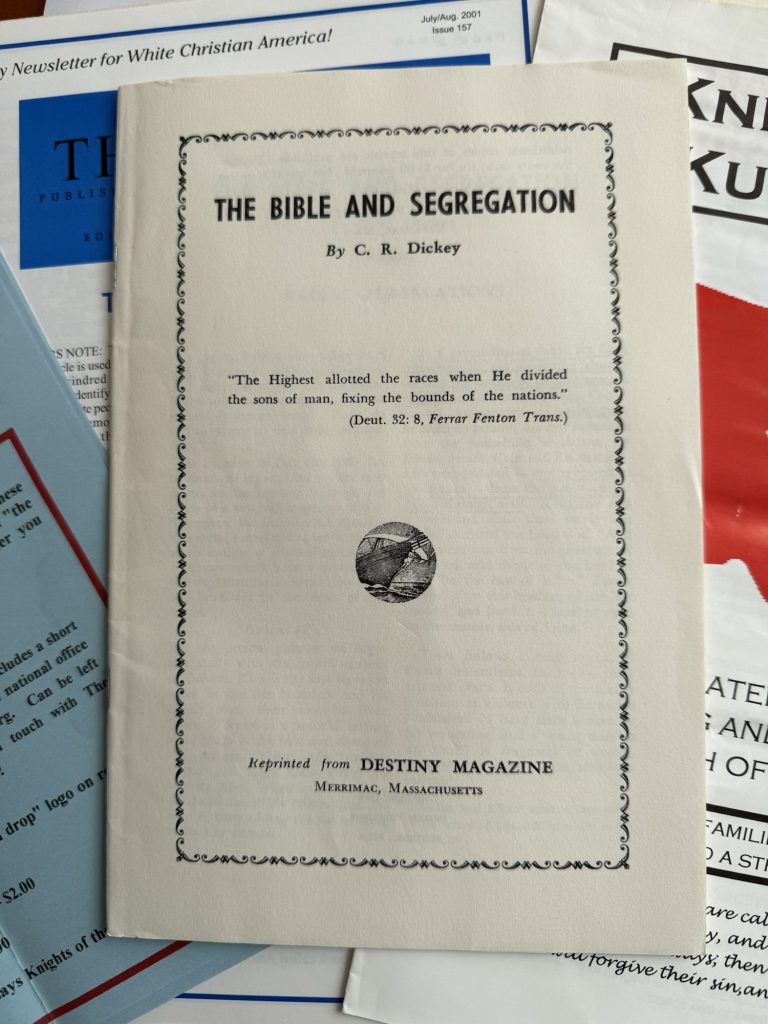










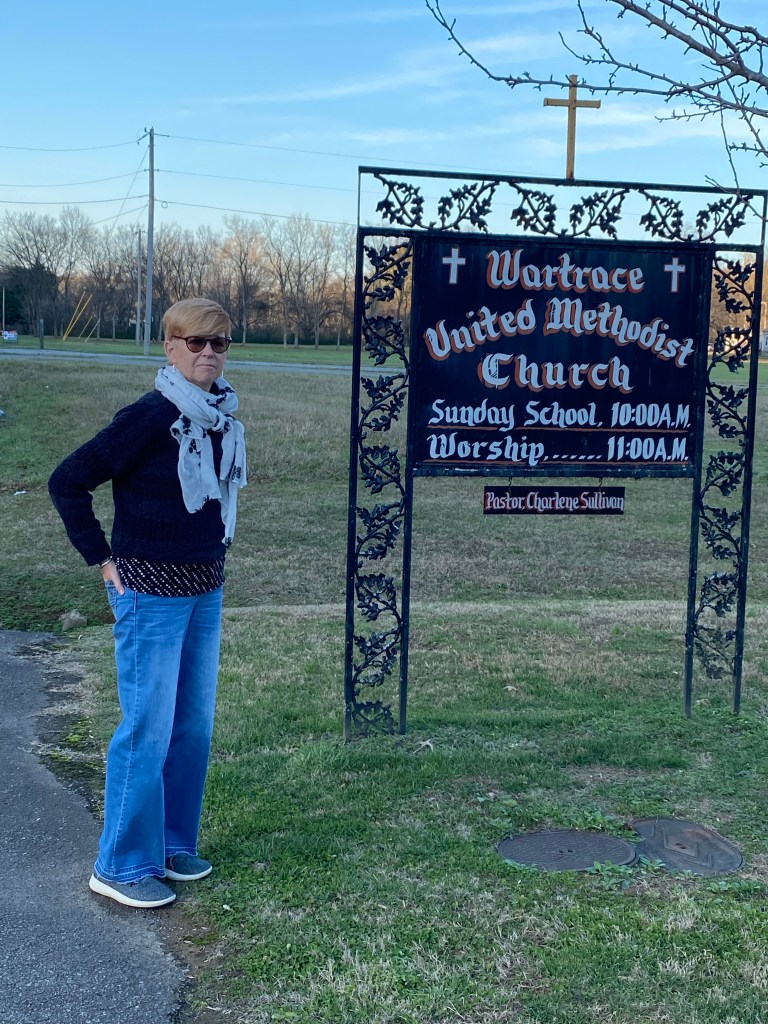





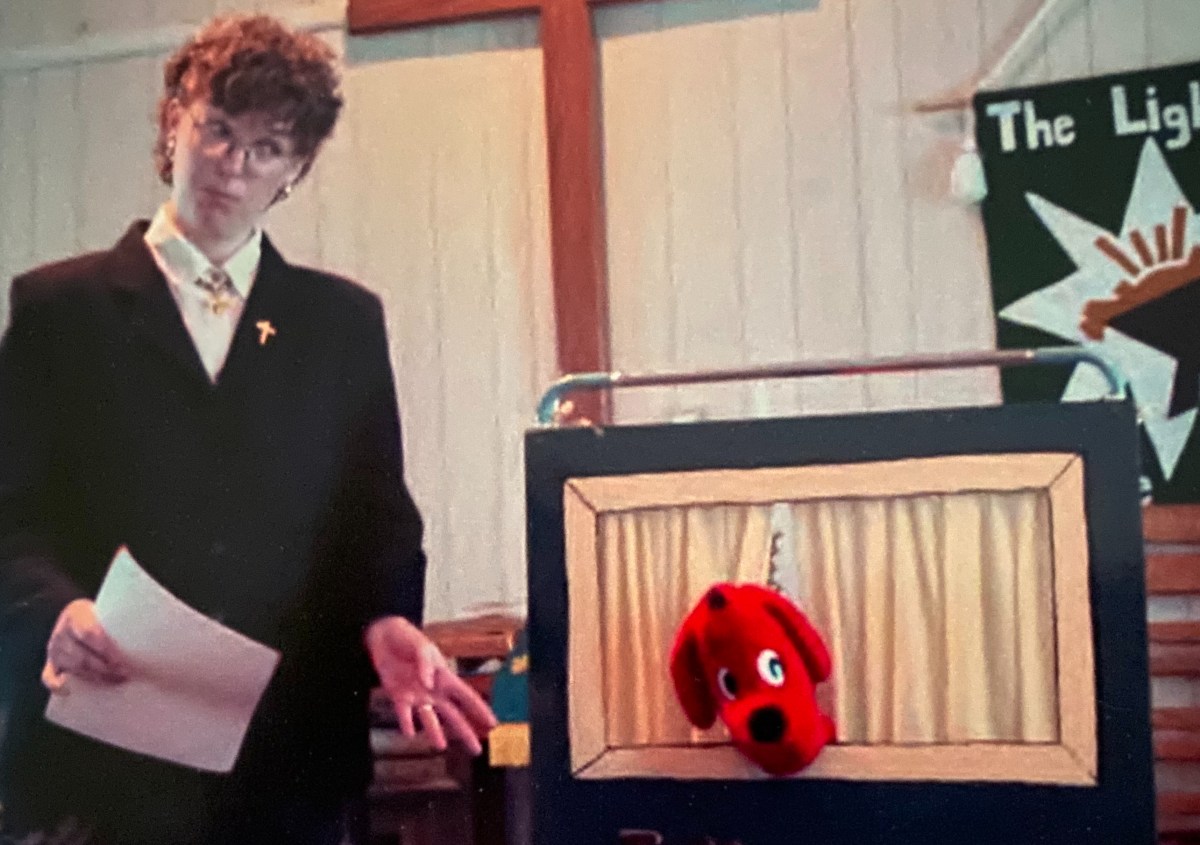



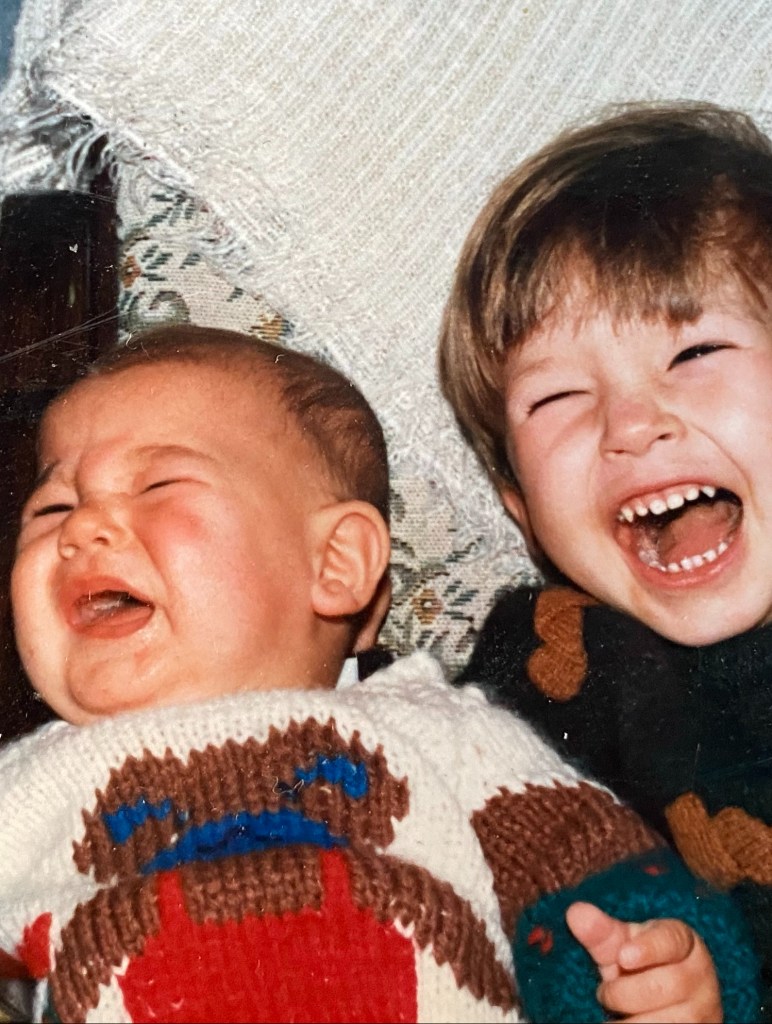
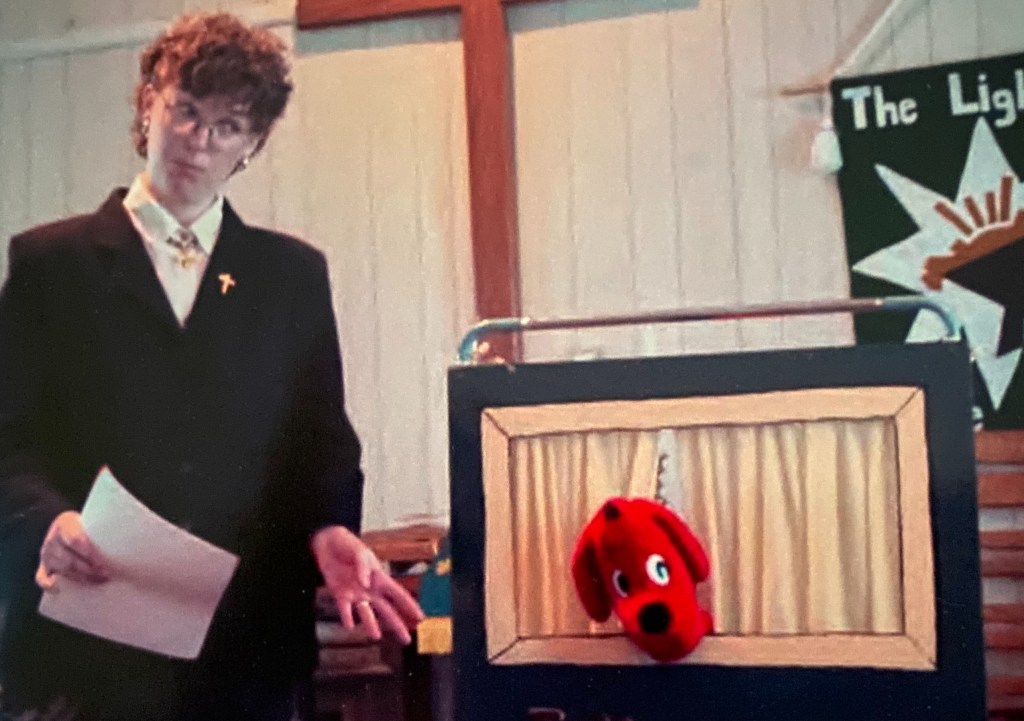













 Emptying The Backpack
Leave a comment