

Rituals are meant to be the beginning of the healing process, not the end of it.
Rituals can be powerful for healing, and we need them to help us heal after loss and tragedy. That memorial service we hold when someone dies? It is for the living, not the person who died. Those impromptu memorials after shootings? They help us come together to start the healing.
Rituals are just the beginning, though. This is especially true when our own behavior is part of the problem, when we keep doing the same things and expecting different results. At that point, our rituals are pointless and empty. Visiting a shut-in about once a month for nearly a decade taught me this.
By the time I started preaching, James (I changed his name for this post.) and his wife of close to 60 years were both homebound shut-ins and so were on a rotation of homes for the pastor to visit after worship. Visiting their home was ever the adventure, though.
The entry of the home was a strange mix of antebellum and 70’s influences. A folding metal lawn chair leaned up against one of the original plaster columns that framed the ten-foot-high wooden doors, for example. Heavy enough to kill you if they fell on you, the doors were never allowed to completely close as long as I knew James; opening them would have required at least two grown men. A makeshift screen door was all that separated visitors from the cluttered yard and the porch strewn with more folded lawn chairs, some dead potted plants and a half-empty bag of mulch.
The first time I visited, after knocking several times, I gingerly pushed the screen door open and started towards the voice of a television newscaster beckoning me from the farthest end of the great entry hall. On my right, was a set of partially closed doors, and from them I could see Jame’s wife, whom I also had not met, but whom I was told was not interested in visitors. I later did manage to introduce myself and be admitted to her room but that was apparently only out of necessity: I was allowed in long enough to change the channel on her nearly-antebellum black and white television for her. I was only in her room long enough to realize that, though she was hooked up to an oxygen machine, sitting next to her on the bedside table was a pack of cigarettes and a full ashtray. I declined to empty the ashtray for her, and she waved me out of the room.
I passed two more sets of floor-to-ceiling wooden doors on either side of the great hall before arriving at what must have originally been the site of the grand staircase. Evidently, the top floor of the old home had been caving in, so James’ predecessors had lopped it off before moving it to the current site facing a four-lane highway. The opening to the old stairwell had been boarded up with thin, dark paneling, creating a wall for a now-enclosed back porch. From an opening on the far left I could see the shadows from the television news cast flickering. I peeked around the opening to see the now rather annoyingly loud black and white television, a tv tray lined with medicine bottles and half-opened packages of lemon cookies, and James in a recliner.
He looked up that first visit and asked, “You the lady preacher or are you here to check my sugar?”
“Lady Preacher,” I offered and he pointed to the ottoman next to his recliner, the only other piece of furniture I could see in the dark, enclosed porch under the stairwell. Sitting on the ottoman meant I was looking up at James as we chatted, as if I had been relegated to the children’s table at Thanksgiving.
In my eleven years serving that church, James sat in that recliner for every conversation. The trajectory of our conversations and our relationship, however, determined the seat I would be offered. My perch progressed over the years from the lowly ottoman to a metal and vinyl kitchen chair and eventually to a second recliner, the offer of which required clearing away a years’s worth of mass mailing ads and cookie wrappers. My own recliner. I though I had arrived.
Preaching “Scripturally”
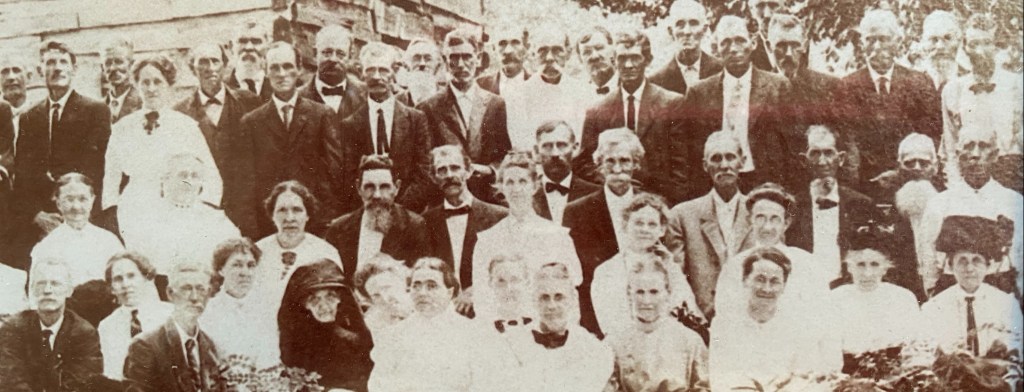
Even after my graduation to adult seating, though, our struggle continued. Over the years James’ oldest son indicated that James did not believe I was preaching correctly. I was not, in James’ words, “preaching Scripturally.” Though James did not actually attend and only heard secondhand about my preaching from his son, evidently, when his son told him about my sermons, James’ complaint remained the same. “Not preaching Scripturally.”
Years would pass before I would be able to grasp the kind of preaching he would consider “Scriptural.”
Every sermon I preached began with a Scripture passage, intentionally allowing the text to speak for itself. I trust the Scripture to tell us something about God and ourselves. I didn’t always like what I learned but I respected it, so I knew James’ accusations either were incorrect or misinformed. His son had reassured me he was reporting my sermon Scripture choices and preaching points, so neither of us realized for some time exactly why James consistently was disappointed. It took me years to realize that, for James and likely for many others of his upbringing, church was supposed to “convict.”

Someone went to the mourner’s bench or church had not broken out.
From the moment you entered the sanctuary apparently, church was meant to be a frightening experience; God knew what you had done all week and before the sermon was over, an honest-to-God, bona fide pastor would have directed your miserable self to come forward and sit on the hardest bench, a single bench at the front of the sanctuary, the one without a back, the “Mourner’s Bench.” There you were expected to confess that you were a sinner – lower than a worm on really bad weeks in spite of being a baptized believer. You were directed then to confess, then you were forgiven and then the congregation would sing, “Shall We Gather at the River” or “Just As I Am” before heading home.
Take me to the real church. Find me a mourner’s bench. God knows what I did all week.
This process, I learned, what James would call “preaching Scripturally,” would render backsliding baptized members “Good-to-Go” for another week. Sadly, though, it was usually then a week of the same damn behavior that had made you feel so guilty the week before, but it was fine because you could count on the Preacher to help you confess and be forgiven all over again the next week. That was apparently how folks knew they’d been to church.
Sure, not everyone went to the mourner’s bench every week but someone did or preaching had not really broken out.
By the time I got there, it didn’t matter that there was no longer a mourner’s bench in the sanctuary; the expectation was still that sitting in the pew on a Sunday invited guilt and shame and the preacher must offer a chance to ask for forgiveness so folks could feel better about themselves for at least a few days.
Full disclaimer: this is not Methodist theology.
For James to feel like he’d “been to church,” he would need to go through the whole ritual, to confess and be forgiven before he was good to go. Then, though, he apparently felt that he would be free to live his life however he wanted…until he needed to come back and do it again.
Nothing in his life changed after that ritual. It was empty. This is the kind of empty ritual that God does not want, we are told in our Scriptures. As much as God loves a good ritual, even God does not seek or require ritual simply for ritual’s sake without any change in behavior.
In Isaiah 58, “God mocks people who seek God as if they were ‘a nation that acted righteously.’ God accuses them of saying they want to be close to God, but ‘you do whatever you want…oppress all your workers… quarrel and brawl…hit each other violently.’ In classic Hebrew style, [Isaiah makes God sound] like a Yiddish grandmother saying, ‘Oy vey! You call this a fast? Enough with the thoughts and prayers, already!’ (58:5)”
Harnish, Jim, https://jimharnish.org/2022/05/26/is-god-fed-up-with-our-prayers/
Isaiah 58 is tough to read. God rejects empty piety. God rejects our “lying down in the mourning clothing and ashes” while we still oppress, quarrel and brawl, rejects us going through the rituals but then continuing the behavior that caused us to need to mourn in the first place. More to the point today, God calls us to concrete actions, not simply thoughts and prayers:
“Isn’t this the fast I choose:
releasing wicked restraints, untying the ropes of a yoke,
setting free the mistreated, and breaking every yoke?
Isn’t it sharing your bread with the hungry
and bringing the homeless poor into your house,
covering the naked when you see them,
and not hiding from your own family?
With God’s command comes God’s promise:
Then your light will break out like the dawn,
and you will be healed quickly….
Then you will call, and the Lord will answer;
you will cry for help, and God will say, I’m here.
Isaiah 58
God loves a good ritual, but even God does not seek ritual simply for ritual’s sake without any change in behavior.
A few weeks ago, a second-grader fell at a school in the Nashville area, less than an hour from the Covenant School. She stumbled and fell, sadly, during an active shooter drill, cutting her knee and scraping her elbows, after the teacher had screamed at the children to “Run!” A sweet gesture from another child helped ease the pain and panic in that moment: one of her classmates stopped, helped the distraught child get back up and ran with her to the safe gathering spot.
The good news: her friend didn’t leave her behind.
The horrible terrible very sad news: our response to people who take AR-15’s into schools is to step up active shooter drills.
For God, our rituals mourning all of these shootings are empty and meaningless if we continue to do what we do and wonder why things never get better. As a nation, we’ve gotten pretty good at this, though, acting as if our stint on the mourner’s bench is sufficient.
After the Covenant shooting, a large number of Nashville neighbors including many clergy colleagues participated in actions beyond candlelight vigils and prayers and leaving stuffed animals and flowers and balloons at an impromptu memorial. Thousands staged a sit-in and even marched on the state capitol. The overwhelming message to the politicians who would not consider bans on assault weapons was “Save your ‘thoughts and prayers.'”
With no apparent policy changes, though, the best efforts are still empty rituals, something we are sadly proficient at in this country.
We mourn, but we still can legally purchase an AR-15 and make up for it by telling our children to learn to run faster.

The horrible terrible very sad news is we still think the best response is teaching children to run faster and hide better.
Maybe you believe the problem is guns. Maybe you believe the problem is certain types of guns.
Maybe you support more police in school or arming teachers.
I know I want people to understand there can never be enough equipment for any SRO to combat an 18-year-old in a Kevlar vest and a helmet with an assault rifle.
Maybe you believe the problem is broken families, no prayer in schools, the lack of mental health care, or children who come to school having never sat down with an adult to read a story book. The truth is, it’s likely some of all of these but focussing only on mental health care without limiting access to the weapons that leave small bodies in shreds is mourners’ bench behavior. That renders our thoughts and prayers empty.

What is critical here is that we do not make our rituals empty, that we do not sit on the mourner’s bench and cry and pray and then go home and keep doing what we have been doing. Because that is making a mockery of our faith and rituals.
Whichever side you fall on, God asks what are you doing to help fix it? Are you just making more room on the bench?
To lament, to pray, to mourn, and then to change nothing is to miss the point. It is, in fact, to fail–to fail our children and to fail our God.
At the very least, educate yourself. And by that I don’t mean just read what people write who agree with you. Read what people write who don’t agree with you. Learn the actual issues in your area. Every state has different issues and different laws. More than anything, listen to people who disagree with you.
Everyone of us is afraid and sad and none of us has answers that will work for each situation, but God calls us to work together to keep our children safe. Look up your community’s Peace and Justice Center and join in. No Center? Look into starting one.
Grieve, pray, then do something that shows you have truly taken in the gravity of the situation; but for God’s sake, let us not keep acting as if nothing has happened.
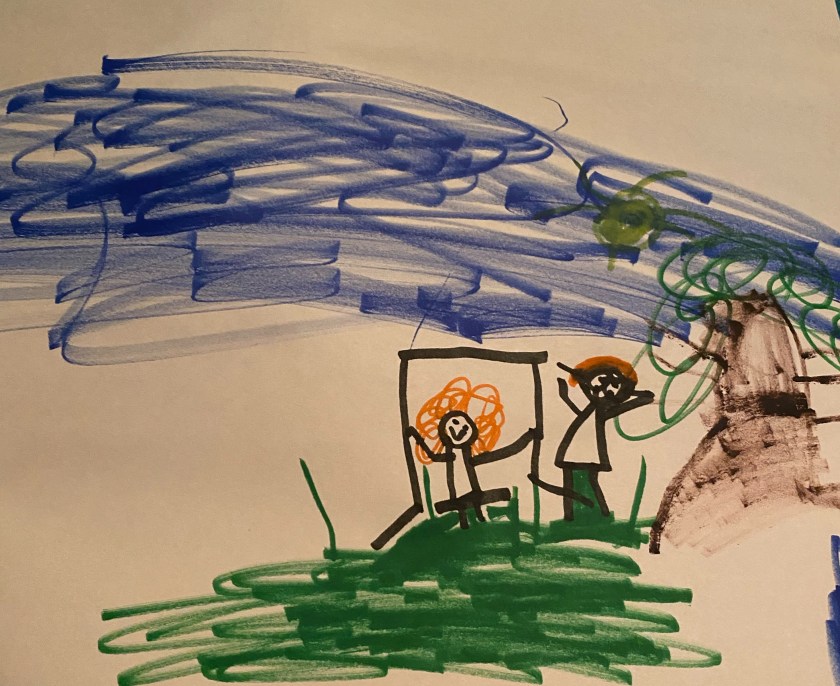
Our children
need us to
figure it out.
-
Challenging piece about an horrific plague on our land. What are our lawmakers thinking? They hear the voices of the people and yet do little to address the problem. I need to do more, I know. Letter writing is just not getting it either. Thanks for your focus on what’s going wrong in our world.
LikeLike
-
Amen!
LikeLike
-

[…] a previous post, (“You Can Have My Seat on the Mourner’s Bench,”) I introduced James, (not his real name), who struggled mightily with ongoing guilt and grief […]
LikeLike


 Emptying The Backpack
Challenging piece about an horrific plague on our land. What are our lawmakers thinking? They hear the voices of the people and yet do little to address the problem. I need to do more, I know. Letter writing is just not getting it either. Thanks for your focus on what’s going wrong in our world.
LikeLike
Amen!
LikeLike