
Yesterday it was “chestnut.”
The day before it was that square piece of cloth thingy that’s all different colors and patterns that you tie around your neck. Oh yeah, a bandana!
For years, my nightmare was that I showed up for worship and everyone expected me to preach unprepared, in my pajamas. Last week, though, the nightmare was real AND worse. We attended a gathering of more than a hundred members of the church I led just two years ago, and I struggled. So many names to recall. My kingdom for some nametags. It was a long afternoon. I knew them all well. I just couldn’t remember any of their names.

Nouns, first names, proper nouns, but now all nouns are scaling the walls of my brain as if it were the Bastille and the iron gates have finally been breached. Noun after noun and name after name fly out out into freedom, only to return one by one after great collaborative effort.
I am grateful that I am not alone in this. The husband of a friend sat with another friend over drinks out. “Next time,” he said, “we want to take you guys to a new bistro we’ve discovered.”
Friend: “Oh? What’s the name?”
Husband: “It’s um…wait…what’s that flower with the thorns?”
Friend: “A rose?”
Husband: “That’s it!”He yells into the next room to his wife. “Rose? What’s the name of that new bistro we found?”
Deep question: do those escaping nouns seek another brain in which to dwell or are they now free simply to roam and fill the earth? Discuss.
Last week, I went to the shop around the corner here in St. Augustine. I thought I’d find what I had needed a few days before as temperatures rose. The owner, a tall silver haired beach bum turned shop owner asked what I needed and I turned to ask him for, “Um, you know, uh,” I began to gesture, drawing a square in the air with my hands, then pantomiming tying it around my neck. At first, the shop owner seemed to panic. Maybe he was bad at charades. Turns out, though, his words too were fleeing his brain but then he then blurted out, “Scarf!”
Yessss! I was in search of a scarf! Kind of. I waited expectantly for him to point to the right shelf in the store.
“Sorry,” he said, “Got none.”
My shoulders slumped as I walked down Beach Boulevard to the next shop. I would have to repeat the process and risk proving to yet another set of customers and store staff that I was safest from a distance. I was discouraged, but the worker in the next shop was young and immediately offered that they did not carry bandanas. I know that youthful clerk could not yet fathom my joy of remembering a noun I’d used pretty regularly thoughout my life. And who were you? Wait. Don’t tell me. I know. It’s on the tip of my tongue.
I often joke about wearing my name on a tag upside down so I can read it.
I got used to forgetting names years ago. I learned that I could remember names only if I’d seen them in writing. I tried to talk the members of my first church into wearing name tags for the sake of visitors as well as their pastor, but the resistance was fierce. One thirty-something guy loudly refused the first time I offered him a sticker during a potluck supper. “Everybody knows my name,” he joked. “It’s on my underwear.”
“No,” I tried to keep things light. “That’s Barney.” He tossed the sticker on the floor and walked away.
In the past, I have routinely needed some research to recall the names of people with whom I’d worked years ago, for example. Lately, though, and this year I turn 68, names of people whom I’ve just seen last week escape me.
Of course, I did some research.
Research – okay, AI – tells me names in particular leave us easily in part because we don’t often have other clues attached to them. If we forget a noun like bandana, for example, we can think of and describe a gestures, shapes and colors like “square, cloth, colorful you tie it around your neck….”
Names don’t always have associations we need to retrieve them from the right file in our memory stores. Young folks struggle as well to remember a name when they encounter the receptionist from the dentist’s office while watching their child’s little league game.
Evidently, nouns, especially proper nouns like names are “low-context” words, meaning they are labels instead of descriptions, so they are tougher to retrieve once they’ve flown the coop.
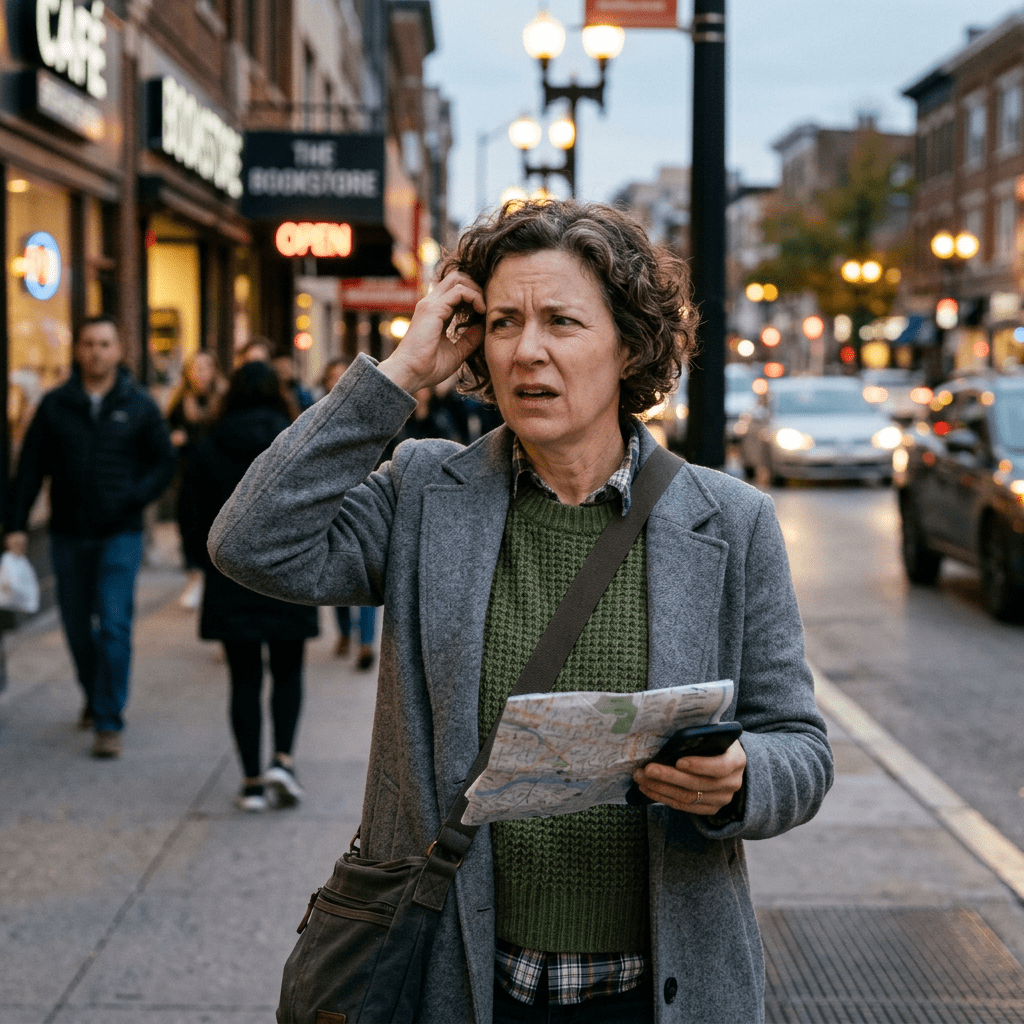
I’ve seen a variety of ads for meds that are available over the counter they improve memory but I keep forgetting to go to the pharmacy.
Aging, of course, can seriously erode our ability to capture escaping nouns and bring them home. Specifically, our retrieval speed slows, even when the memory is there, thus something is near but not near enough, maybe on the “tip of my tongue.” It may be close but it is slowing walking its way back.
When I consulted an AI assistant that I have used before, (sometimes to help me remember names, I admit,) the assistant wanted me to be sure my escaping nouns questions were not signs of a larger problem. I don’t know whether to be concerned or touched that this chatbot is worried about me.
He/she asked:
- About how long have you been noticing this—weeks, months, or years?
- Has anyone close to you commented that your memory or language seems different?
- Aside from finding words, are you having trouble managing finances, driving, following conversations, or keeping appointments?
Those answers can help distinguish between common age-related changes and something that would benefit from a more thorough evaluation, he/she said. I assured him/her I’d put that list on the bulletin board for future reference, right next to the directions for accessing my chatbot friend.
Nothing so disburbing as a chatbot checking up on me as if I were his mom.
Seriously, though….
Of course, this is no joke for many who would answer in the positive to the above questions. For those like me who have no excuse but that we’re getting old, though, the good news is these brain farts seem to be common. We can be embarrassed about it or we can commiserate. I stopped back into the first shop on my way home after searching that square thingy you wear around your neck, opened the door, looked at the owner and simply said, “Bandana!” He slapped his forehead. A moment of old people community building.
I have struggled with memory not only with names and nouns but ideas, story possibilities, even blog ideas. Too often, the idea or memory will slip through my brain so quickly I often do not even manage to write them down before they fly the coop. The only advice I can give you is the same wisdom that helps when I have misplaced something: breathe, do not get upset, just wait because you know the ideas often come back pretty quickly; and, most importantly, be ready to write them down as soon as they light upon my desk or shoulder.
The charades and descriptors are culturally bound, though. I may know what it is I want to ask for or share, a spatula or a specific song or movie. Thus, describing “that thing you use to flip a pancake” or “the young singer who always wears bellbottom jeans” can help some, but your ability to help me answer will depend upon whether or not we have shared the item or cultural experience. Referring to the older version of “Perry Mason” or a phone book won’t work with my grandchildren no matter how many adjectives I throw at them.
I have to be careful, though. Last night I could not recall the term “shoulder” to tell my husband about encountering construction that required us to drive several miles on the highway along that edge of the road, you know the part that isn’t a lane and the part that isn’t the median…! My sons likely would be as worried about that as the chatbot and wonder if they should let me babysit the grandchildren. Those kids are okay, I’d tell them. I don’t need to remember their name to make them stop whatever it is they’re doing that’s dangerous. I might struggle to remember what that climbing thingy is called but I can still manage a menacing “No!” any time I need it.

