Just Gotta Write

What I realized years ago is that writing is how to scream in a socially acceptable way.

I’ve been thinking of late that I need to write a book where every entry begins with, “I Am Not A Nice Person.”

It seems I frequently wake up thinking of starting an entry with that statement, followed by lots of annoying thoughts that have been buzzing about my head like nasty little kamikaze planes. I wake up certain that, if anyone heard all the complaining and frustrations clogging my poor little brain, they’d agree wholeheartedly that I’m not so nice. Sadly, much of my writing through the years has been nothing more than me complaining. What I have figured out, though, (through writing, thank you) is that dumping all those complaints onto paper for all these years has done me – and everyone around me – some good.

Honestly, I write because I too often wake up wanting to scream.

So, perhaps more accurately: a blog entry today should read simply, “Gotta write.” It will do me (and the people around me) some good.

Seriously, if you know me, you should count yourself fortunate that most of my furiously scribbled pages and pages have been purges no one else will ever read. I’ve spent the majority of my writing time getting my frustrations or anger or complaints off my chest, out of my mouth and thus, (mostly) out of the earshot of those around me. My husband has learned that my being in a bad mood and complaining is quite often a sign I am not writing. 

So maybe, I thought, instead, a blog entry today should read simply, “Gotta write.” It could do you (and the people around you) some good. Perhaps you – or someone you work or live with – is simply a frustrated writer.  

Writing is simply therapeutic.

Let’s be clear, though, there’s being a writer and there’s being an author.

Writing for therapy isn’t the same as writing because you might want to share your stories. The first is for your eyes only, a way to get all those thoughts and frustrations and even giggles out of your head to make room for some clarity or joy or discovery or a story to share. The second is a craft, i.e., what you do to the rare few of those rants and raves that warrant a second glance. Some will be worth a second look and perhaps the effort to fashion them into something another person might be keen to read or gain a personal benefit from the effort. This doesn’t matter as much because there’s honestly great overlap there.

Lots of people around me tell me (now that I’ve published a book and they’ve read it, thank you) they also have stories they love to share over meals, on the bus or while waiting in line, but are stopped by the thought of sitting and typing or writing them out. Simple enough, I tell them, use those easily available programs or apps that allow you to dictate, then go back and edit. For myself, I truly prefer the feel of graphite on paper, I explain, but that means I have to then go back and type up what I’ve written. So I have been using a Remarkable, an electronic pad that lets me use what genuinely feels like a pencil, then converts my scribbles to text. “Oh, my writing is too sloppy,” is the excuse most folks offer for why that method won’t work for them. I write quickly and in cursive on mine and, yes, some editing is necessary but the system works pretty darn well and I’m nearly finished with a second memoir written on the tablet.

“I can’t seem to find the time,” I hear. Years ago, though, I read about how helpful it could be for writers to simply buy some cheap spiral bound notebooks and every morning with coffee just scribble three pages. There’s a book and workshops and support for folks who want to use this method and I recommend them, but the gist is simply to write. You can start every morning with “I am so mad at….” or “I cannot understand….” or “I remember….” Just write is the idea. Write the first sentence over and over if you need but fill up three pages. You may not ever look at those pages again but your purpose is not to write the great American novel. It is simply to write. To get what’s in your head on paper. To grease the wheels. To make it easier and easier and more and more addictive to write than to not write. And to get whatever is annoying you off your chest.

This follows the discipline suggested by the writer and teacher Natalie Goldberg of writing three pages a day- scribbling, really, without allowing my brain to edit while I dump what’s on my mind. “Writing Down the Bones,” by Natalie Goldberg .(https://nataliegoldberg.com/books/writing-down-the-bones/.)

Goldberg teaches about getting those “first thoughts” on paper by keeping your hand moving and not letting yourself have time to edit, not stopping to criticize yourself or correct your feelings, simply to get those thoughts out of my head. The process is similar to keeping the wheels of a wagon greased. Whether you write for yourself or for others, this or some kind of discipline that involves putting pencil or pen to paper is, in my opinion, the place to start. Goldberg also points out the act of writing regularly teaches us to listen to ourselves, can help us overcome our doubts and affirms for each of us the value of our lives.

Often what I end up with after scribbling as quickly as possible in a cheap notebook  amounts to nothing more than a jumble of frustrations but that allows me to get it out of my system. That way, I don’t bore others around me with complaint after complaint and I don’t repeat myself all day because, I suppose, my subconscious knows it’s out of me. This is similar to writing lists for myself. I can go to sleep at night without worrying about what I need to do tomorrow because I’ve deposited those tasks onto a written list that’ll be waiting for me by the side of the bed when the alarm rings.

I also know where I can find it if I need to complain more. Again with the complaining. In all seriousness, writing out what I think helps me know what I think, discover how I feel, remember better, understand myself better and even uncover ideas about how to actually do something about what makes me so angry and frustrated, something more than simply grousing.

Whatever helps you write helps you write.

I read a quote some years ago declaring that the best discipline for any writer is to read. Gonna have to disagree. I respectfully disagree. The best discipline for a writer is to write. If you want to be an author, there are further steps. Find a continuing education course on the craft of writing or poetry or songs or memoirs. Next best: get your butt into a writer’s group. Writing to be an author is after all a craft and the steps to any kind of writing you want to publish are many. There is nothing to be brought to the crafter in you, though, if you don’t actually write. I don’t manage three pages everyday but I scribble enough to provide fodder for all kinds of stories if I want to use them.

Seriously, writing is simply therapeutic.

More critically, writing saves my friendships, my marriage and my sanity and, on occasion, helps me figure out how to help.

Last week, my furiously scrawling carried me back to those “Weekly Readers,” those newspapers designed for school-children. You remember? Where we learned about preventing forest fires, about how littering made others so sad, especially that American Indian chief with one single tear rolling down his cheek? Remember trying to wait patiently as the copies were passed out. Remember how we eagerly but gingerly turned each page to learn about how seatbelts saved lives, about the Civil Rights Movement or Rachel Carson or the value of community service?


Those little newspapers were both welcome departures from math problems and verbs and adverbs AND they presented as gentle guides to create better neighbors and friends. Through them, we all became more aware of poverty, child labor, the dangers of tobacco smoking, and racism, among so many other issues.

Why do I find myself remembering and writing about Weekly Readers? You know why. Because so much of the progress we were inspired to help bring about over the past 50 years has simply been erased or rolled back at a terrifying speed.

Good God, if we keep going, the next logical outcome will be another Executive Order banning handicap accessible restrooms because they discriminate against the “able-bodied.”

You remember what things were like back then, before so many of the “woke” ideas helped make our world a better place, don’t you? My mother could not get a job, a bank account or rent an apartment without her husband’s or her father’s permission, for just one example. Um, not willing to go back.

Today, those newspapers would likely be considered anti-American. How dare they, for example, teach us about global warming, slavery or trying to normalize women and minorities in leadership, business or science roles?

The power of the Weekly Readers was they helped turn us into informed and empathic citizens, people who cared about one another and who recognized that we needed one another to be the best we each could be.

I am wondering now, if there isn’t some way to bring those back and deliver them right to the children at their homes? How subversive is that? Maybe Dolly would help. That’s the kind of idea that surfaces when I write. I want to know what comes to mind for you? Share. Let’s collaborate.

For now, next time you – or someone you know – thinks all you do is complain, go to the corner store and buy a cheap notebook. Choose a pen or pencil that feels good in your grip and start writing. Every morning. Only, make yourself a deal. Just write and know that most of what you write for a while, maybe for a long while, will just lay there scrawled in cheap notebooks. Don’t expect great things. Just write about all the things that you can’t stand – you may never get it all out of your system but you and everyone around you will thank you for leaving it on the page. You may not ever want to use any of that but, then again, you might.

Maybe you will be the one who come up with some ideas about how we can stop what appears to be a national temper tantrum. 

Ever notice how our leader always SCREAMS his posts on social media? What if we could get him to write BEFORE he shared?

Seriously, doesn’t it lately feel like so many people are simply pouting because they don’t want to share anymore or be nice or take turns? Faithfully writing out my three pages has helped me share with others what I think without screaming at them.

What I realized years ago is that writing is how to scream in a socially acceptable way.

I too often wake up needing to express my frustrations with the world, perhaps now more than ever. So, I am convinced the world is a better place because I leave most of it on the page. Less anger is spewed, less frustration gets passed along, less whining and complaining and criticism.

I DO think more about how to take action, though, and I’m a bit clearer on what and why. I remain certain that if people in my life knew how much I spewed, well, they’d be sure I wasn’t such a nice person. Because I write, though, at least some people like me most of the time. And occasionally, I figure out something to say that is helpful, useful, perhaps even wise. Through writing, I am learning that my superpower may be that I see and feel and cannot pretend the emperor is dressed. That’s what writing does. Honestly, it’s subversive.

And that’s what so many of us need right now to help us keep our sanity.

Now more than ever. I saw a meme last week that showed a woman holding up a sign that read, “We should all receive Oscars for acting like everything is okay.”

Every damn thing is not okay, let me assure you, and, depending upon where you live and who populates your family, maybe it never has been. So start writing about it. Get the screaming out in a way that doesn’t hurt anyone else. Figure out what you think. Let the rest of us know you’re with us, that you see, too, and especially, share any ideas. I’m seriously considering a Weekly Reader reboot and I’m gonna ask Dolly to help. 
Leave a comment

D-Day Promises, Guilt and Forgiveness – Eighty Years Later

Because coming home is just the beginning….

In a previous post, (“You Can Have My Seat on the Mourner’s Bench,”) I introduced James, (not his real name), who struggled mightily with ongoing guilt and grief about his past actions. For years, I didn’t have a clue what those might be.

I did not know what troubled James, only that he was miserable, but when the Lady Preacher came by, he focussed on how I wasn’t preaching or leading worship in a way that would help him feel like he’d “been to church.” Apparently, as I explained in that eariler post, he was convinced that IF that Lady Preacher could dish up some good old-fashioned confession, that would fix things for him, at least temporarily.

My job, as he saw it, was to offer him a chance to relieve his guilt (for at least a week) through confession and some time on that mourner’s bench. There was no mourner’s bench at Wartrace UMC by the time I was sent there as pastor, though, and, unfortunately for James, I was not on board with the kind of spiritual bloodletting he seemed to want.

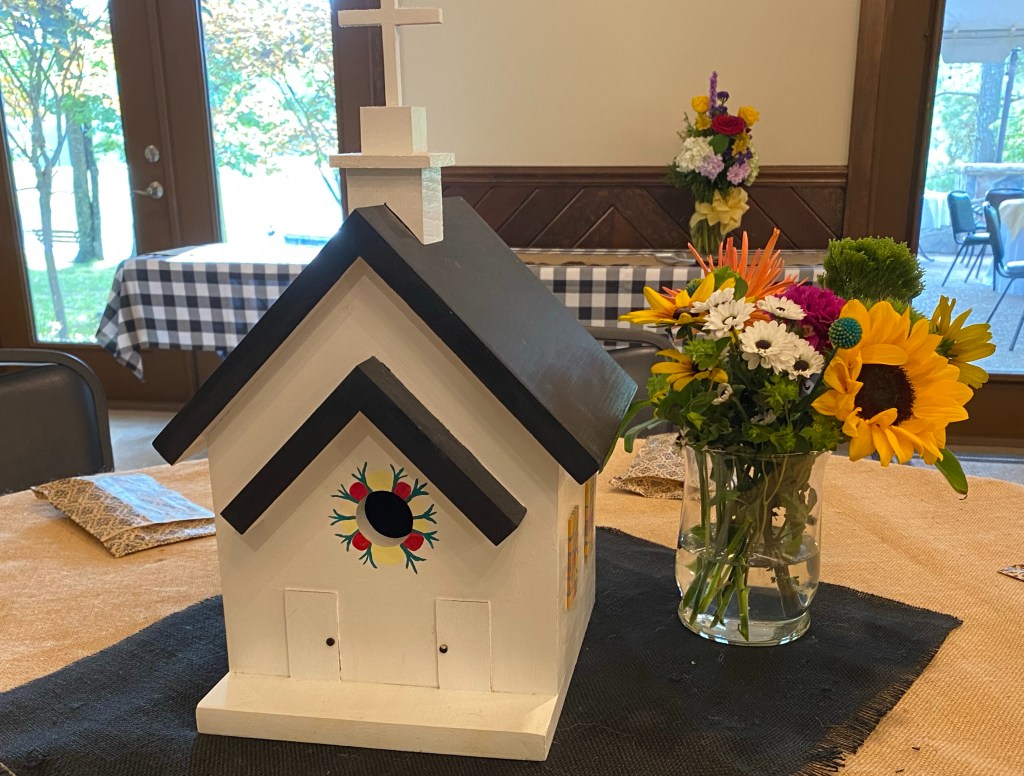
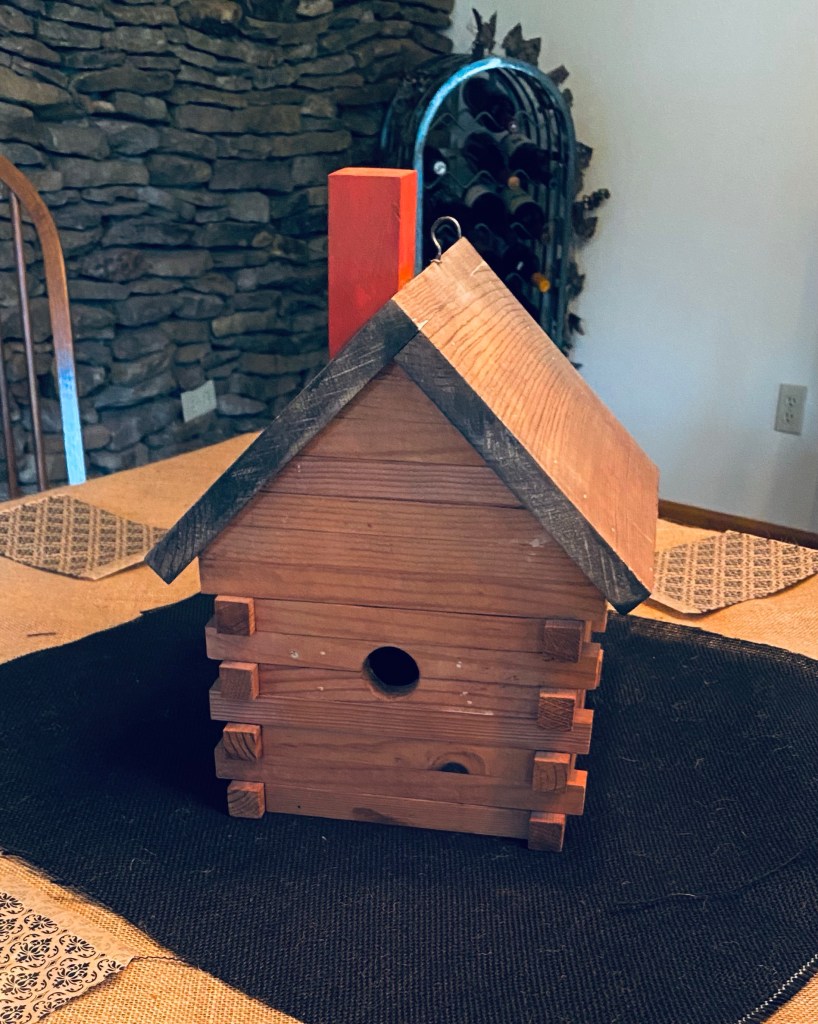
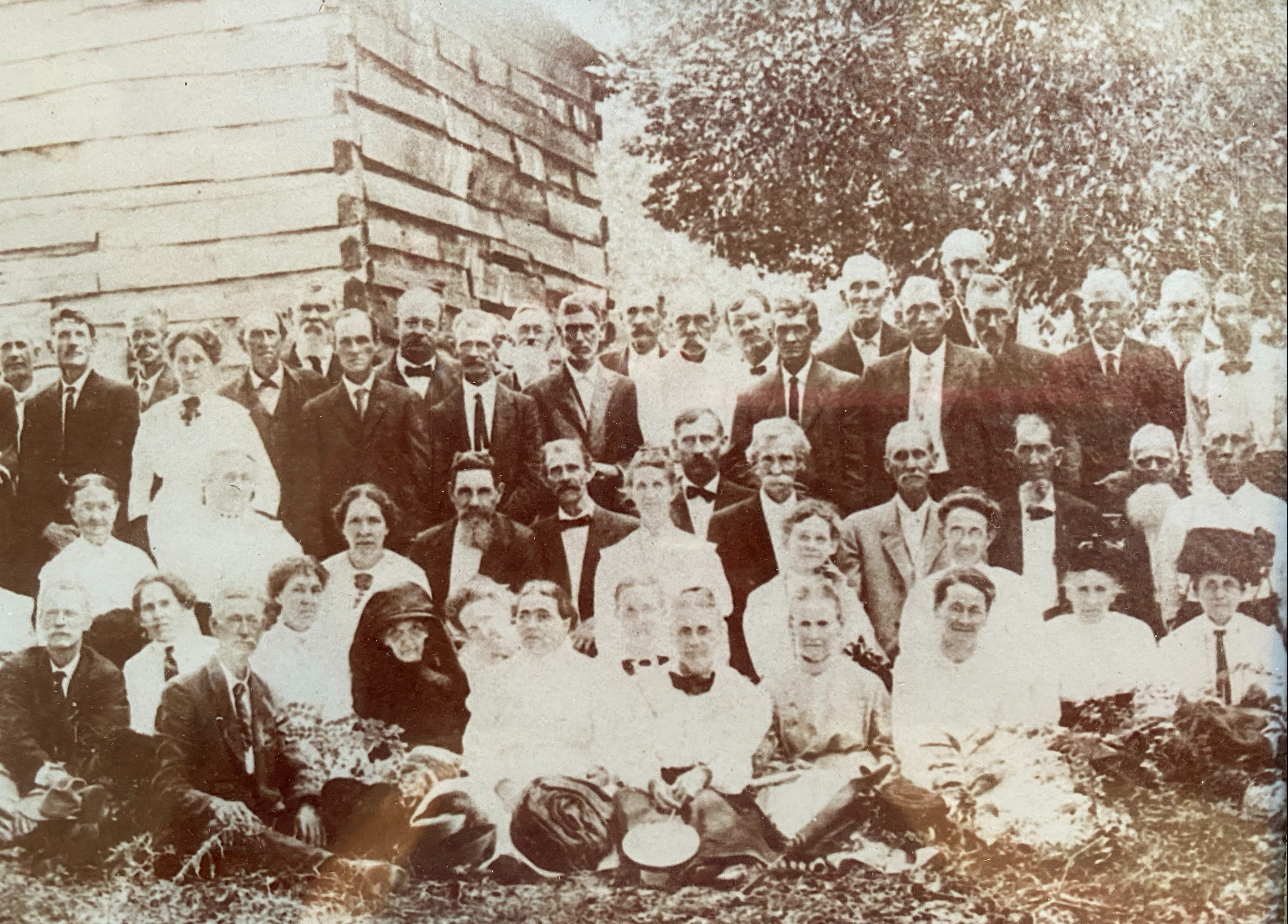
Wartrace United Methodist Church circa 1850
where a split log bench wih no back was reportedly the “mourner’s bench.”

Sadly, though, James, perhaps more than anyone at Wartrace needed his Preacher to see how guilty he believed he was, to convict him and then to help him leave that guilt on there, even if he never actually graced the church with his presence. I tried a few times to reprise my sermon from my perch on a sticky metal kitchen chair on his back porch, but the sad truth was that even if James had been able to feel forgiven by God every week, even if he had felt Scriptural preaching wash over him every Sabbath morning, he was in grave danger of never being able to forgive himself.

For years, I was unaware this was what he felt he needed. I would visit him regularly but we were not speaking the same spiritual language for the longest time. Until I preached about D-Day.

Wartrace United Methodist Church,
Greenbrier, Tennessee
(Photo Property of Rev Jodi McCullah) 2023

I finally learned why James was continually unhappy with my preaching on a sticky Sunday afternoon in June when I was directed to lift some old blankets and newspapers and take a seat on a sagging recliner in the corner of the porch at James’ house, a corner too dark and hidden even to be seen before. James had decided I was to be trusted finally, not because I had finally made him feel like the worm he thought he was; rather, on that sweltering Sunday in June, his son had called right after worship let out to tell Daddy that the Preacher Lady had shared a D-Day story in her sermon.

D-Day Promises

I had told the story of Rev. Herman Yates, a retired pastor connected to the church; he and his wife had moved there a few months earlier. He had never preached at Wartrace, not even in revivals, and he and his wife were homebound, too, but Wartrace claimed him because he’d grown up in the area. He was on my list of shut-ins to visit, and he had given me permission to share his story on the first Sunday in June. Herman, a sergeant in the United States Army on D-Day sixty years before, had joined other NCO’s who strapped on flimsy orange and white vests with large crosses on them in order to lead their platoons’ landing crafts and soldiers onto the shore. Eyes and throat burning from the acrid smoke, trying to drown out the screams, they were halted time and time again by the force of nearby explosions. Herman and the other Sergeants moved methodically forward, though, careful to move slowly enough for their men to follow and, of course, he said, slowly enough to be a perfect target. When I met him, Herman was able to tell the story calmly after relating it hundreds of times from pulpits across the area. He told powerfully of how he had bargained with God that day that, should he survive, he would dedicate the rest of his life to preaching. God took him up on the deal.

For those unfamiliar with World War II, “The D-Day operation of June 6, 1944, brought together the land, air, and sea forces of the allied armies in what became known as the largest amphibious invasion in military history,” according to the Eisenhower Presidential Library. “The operation, given the codename OVERLORD, delivered five naval assault divisions to the beaches of Normandy, France. The beaches were given the code names UTAH, OMAHA, GOLD, JUNO, and SWORD. The invasion force included 7,000 ships and landing craft manned by over 195,000 naval personnel from eight allied countries. Almost 133,000 troops from the United States, the British Commonwealth, and their allies, landed on D-Day. Casualties from these countries during the landing numbered 10,300.” Combat would continue for nearly another year in Europe. (eisenhowerlibrary.gov)

Knowing what little I do about the massive undertaking that was D-Day, I have long been amazed at the instructions Herman received that morning before the terrifying landing began. “If you make it to the beach,” Herman’s orders had been to “go to the ‘big’ tree, turn right and meet up a mile down.” Herman and at least a few of his platoon somehow safely made their way onto the beach, somehow found some trees still standing on that battlefield, and somehow chose the right big tree from among many. Herman always knew how all that happened and how he had survived the rest of the war. He went on to serve churches for some forty years.

James was proud, he said that Sunday, proud I’d shared Herman’s story. For the first time since I’d arrived at Wartrace, sitting in the old recliner, I did the math and realized James was shaking because he’d been there as well. Tragically, though, James’ story was neither heroic nor admirable.

“I sent them all out there,” he said with litte introduction, “out there to die.” He paused and looked at the flickering television screen, his only constant companion for years. “One by one,” he continued, “the boats went out. We heard and we knew. We were wishing them a safe journey. We knew though. We didn’t know how many, but we knew, we knew. We were safe, right where we were.” He wasn’t in danger but he was painfully certain that his actions were killing soldiers – his own soldiers – on that beachhead as brutally as any bullet or exploding shell. After he shared his story, his voice trailed off and he mumbled to himself for a bit before I made a pitiful attempt to be helpful.

An estimated 20 percent of all combatants historically suffer from the effects of “combat trauma.”

Soldier’s Heart

nostalgia

“to be broken”

shell shock

“The affliction (Post-Traumatic Stress Disorder) has had many names over the centuries, demonstrating that it is a condition accompanying not just modern wars but all wars. Its cluster of symptoms was first diagnosed as ‘nostalgia’ among Swiss soldiers in 1678. German doctors at that time called the condition Heimweh, and the French called it maladie du pays; both mean homesickness. The Spanish called it estar roto, ‘to be broken.’ Civil War Americans called it soldier’s heart, irritable heart, or nostalgia. In World War I, it was called shell shock; in World War II and Korea, combat fatigue. ‘Soldier’s heart’ indicates that the heart has been changed by war. ‘Nostalgia’ and ‘homesickness’ bespeak the soldier’s anguished longing to escape from the combat zone and return home. Estar roto describes the psyche’s condition after war—broken.”

(War and the Soul: Healing our Nation’s Veterans from Post-Traumatic Stress Disorder, by Edward Tick, Ph.D, p. 99)

I doubt James heard anything I said that afternoon. I’d like to believe I offered him some kind of relief from his guilt but I’m pretty sure my words were wasted. I couldn’t do what he wanted, couldn’t agree with him that he should feel guilty, couldn’t acknowledge that he was indeed as guilty of killing Allied soldiers as any German bullet, bomb or soldier. I toyed with the idea of offering him one of the confessions we regularly used from the hymnal on Communion Sunday, but not one word I could think of was gonna do.

In every house of worship in the nation, veterans of wars are in the pews. Many have spent decades grappling with grief from their wartime experiences. Few of them feel like their part was heroic or admirable. Maybe they “won,” but too often, they are leary of telling us how ugly the “winning” was.

Evidently, James had been needing to visit that mourner’s bench for decades, so maybe telling Herman’s D-Day story created a space for James, as if we gave him permission to risk sharing the shame he felt. Perhaps being able finally to tell his story out loud was the confession James craved. Like too many combat veterans, though, he needed not only to share but also to not be shunned.

Years later, I would sit in a veteran’s retreat and listen to veteran after veteran tell their combat stories, usually with trepidation. So many were like the Iraq war veteran who shared his story of killing “anything that moved” from the helicoptor he piloted. That veteran believed himself to be a “monster” and was certain he should no longer be allowed in our midst. Like this combat veteran and so many others, James needed to tell his story and not have anyone, as one veteran feared, “run screaming from the room.” He needed to know I didn’t see him as a monster and that I would still visit, still speak to him, still consider him part of the flock. He had been needing to visit that mourner’s bench for decades, and telling Herman’s D-Day story gave him permission, at least in his mind, to risk telling his story out loud. Maybe Herman knew what would happen when I shared his D-Day story. God certainly did.

Leave a comment

What’s ‘Just enough’ Christmas?

Christmas swings like a pendulum do….

My paternal grandmother, Arbaleta (Grandma Leta), and maternal grandmother, Marie (Grandma Ree), could not have been more different creatures, and this was never more obvious than at Christmas. At first glance, it seemed to me that they were polar opposites when it came to wintry holidays especially; in retrospect, it is evident they were each on opposite points of the pendulum that has come to symbolize Christmas for me. Generation after generation on both sides of my family seemed to be unconsciously caught up by the wild swings of this holiday pendulum, a reactionary arc between a resounding “Yes!” to Christmas and its counterpart, an adamant “Hell, no!” 

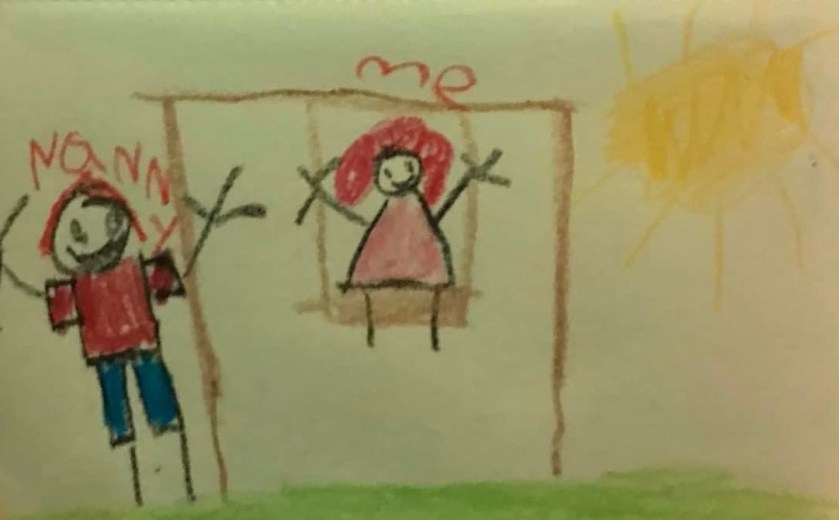
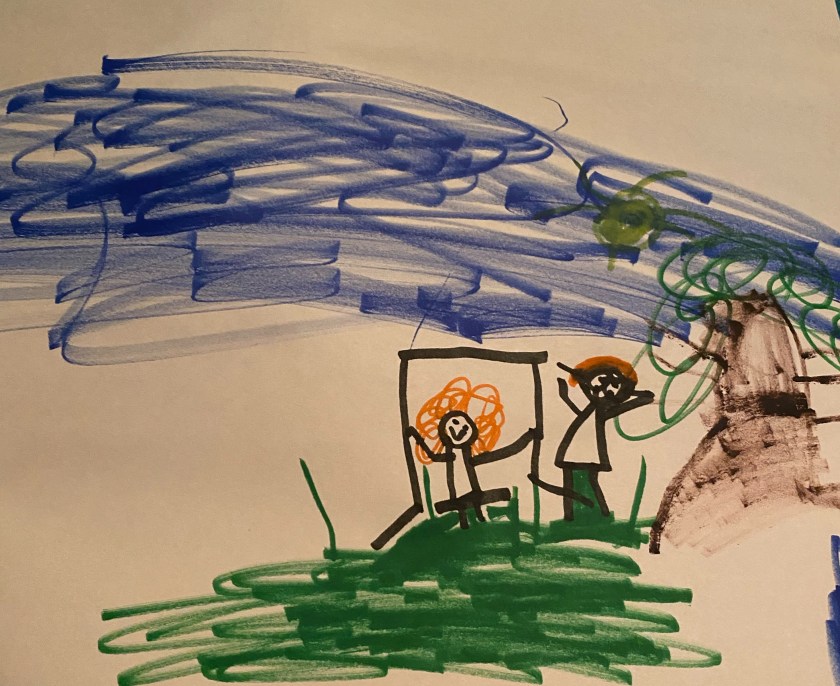
My Granddaughter’s depiction of our favorite activity: swinging. She is so wise….

Finding Healing Around Christmas

Maybe your family needs some healing around holidays as well. Sure, it seems strange to talk about Christmas amidst all the paper and ribbon and cookies and tinsel, but it is, in fact, the best time to step back, recognize struggles and disappointment and start our families on paths to peace with Christmas; maybe along the way we could even figure out what’s “enough” for joy. I offer this reflection then to all our families because we cannot find healing if we do not know our family’s wounds. Here’s hope for discussions about upcoming celebrations: may they be intentional, loving and truly joyful for all.

For me, it seems the best place to start is with the grandmothers. Both of my grandmothers were born around WWI; each married during the Great Depression. Neither had, as they say, “a pot to piss in,” not while they were growing up and not while they were young mothers. Both worked hard to support their families outside the home as well as in. Dad’s mom, Arbaleta, had two children, a boy and a girl, nine years apart. Mom’s mother, Marie, had three daughters all close in age. 

Arbaleta’s husband, my Grandpa Mac, fell from an electric pole when he was young and wasn’t supposed to ever walk again, but did, in great part because Arbaleta would not let him not walk. She reportedly insisted he move his legs and even moved them for him for months as physical therapy until he could walk and work again. While I was never close to Grandma Leta, I have always admired the steely determination that these actions showed.

Marie had a husband who was always on the road as a truck driver, mostly because the bus or truck driver jobs close to town weren’t well-paying. He died of a massive heart attack at age 50; she lived another 30-plus years and married her high school sweetheart, then outlived him and married another kind man when she was eighty. At that wedding, the minister declared what we all knew, “Marie is a hopeful woman!” Grandma Ree, as we called her, was the quintessential kindergarten teacher when teachers still had time for nature walks, ironing leaves between sheets of waxed paper, and silly songs. Thus, she was the kind of grandmother I aspired to be: she played games with us, prayed for us, encouraged us and defended us when necessary.  For most of her life, she modeled a love of learning: she earned a master’s degree, helped “plant” two churches, became an accomplished painter and was memorizing her favorite Bible verses in her seventies because she was losing her eyesight.    

While I know little of Arbaleta’s childhood except poverty and hardship, I know Marie helped her mother run a boarding house after her chiropractor father divorced her mother, something which mortified both women.

That I’m aware of, Arbaleta seldom left her home after we were born. At least we never saw her leave her home, though, as far as we knew, she was perfectly capable. Our collective memory of her is of her seated on the sofa in her silk pajamas. Every time we visited her, we would wave to her from a few feet away as she perched on the sectional sofa in the corner, surrounded by shelves of various sizes and shapes of cacti. In one hand she held a lit cigarette, ashes threatening to crumble onto the silk, and the other hand held the ever-present bean bag ashtray (you know, the kind that has the bean bag on the bottom and the colorful aluminum tin bowl on the top.) That I can remember, she never once kissed, hugged or touched us in any way, shape or form. And, though she was pleasant, there were no memorable conversations, just the cloud of cigarette smoke that circled above her. 

As for Christmas, well, I can’t remember there being much of it in their home at the edge of a Kansas golf course where she and Grandpa had retired. Ironically, I’m not aware Grandpa played golf, though my Dad did well into his eighties. As far as Christmas goes, Arbaleta represented the point in the arc where celebration was merely tolerated. Every few years, our parents would tote our gifts to their house to open on that rare occasion we woke up there on a Christmas morning, but the mood in the house was that Christmas decoration was, well, perfunctory. There was a tree and maybe a wreath, but evidently, for Grandpa and Arbaleta, a tree and some lights outside were “just enough,” though I suspect they were only put up to satisfy us. If overcoming poverty was Arbaleta’s life goal, she met it, thus the home on the golf course as well as the purchase of a new Lincoln every year. Secular or religious, it didn’t matter; Christmas was a formality, expected, tolerated for the children. Christmas dinner involved polished silver and store bought sweets, if any. “Please wait until you have permission to touch.”

Arbaleta died when I was seven and, suddenly, the focus of Christmas on my father’s side of the family shuddered and swung hard to the opposite extreme. Her daughter brought in Christmas every year from then on with a vengeance, lovingly, but with an overwhelming force. Every year, my aunt seemed to be competing for best Christmas ever, ostensibly in response to her own mother’s lackadaisical attempts.

While certain treasured and expensive statuary graced my aunt’s mantle for Christmas, for example, every year, the Christmas tree itself, usually the biggest tree I’d ever seen, sported a different theme with new, all handmade ornaments. I often asked when she started making them, sure she must have begun the previous New Year’s Day. She also made most of our gifts; they were always of Pinterest quality and I treasured several sweaters she knitted for me, for example. 

As if it were necessary, she also became an amazing cook and thus, Christmas visits always involved impressing us with recipes for new dishes. Ironically, my mother didn’t want the recipes and my mother’s mother, Marie, didn’t need them; my mother was too busy leaning into that dysfunctional pendulum that was swinging back to the starker side, likely in reaction to her mother’s seasonal excess. 

Marie, my mother’s mother, was on that same swing of the pendulum as my aunt, though I believe Grandma Ree went all out for her Christmas celebration for different reasons. Her husband, Grandpa George, also died when I was seven, but that did not slow Marie down in life or around the holidays. From the moment you opened the door into her home at Christmas, the scent of pine and wild berry candles carried you through room after room of greenery, holly, bells, poinsettias and new figurines or miniatures each year. Also new each year were the sweetbreads and cookies and homemade candies, all awaiting our discovery after hugs and kisses were exchanged and the coats and mittens and caps were piled onto a bed in the back of the house. 

Grandma Ree with her brother, Mother and Sister, c. 1960’s.

A Family Nightmare

While Marie’s response seemed to me to somewhat resemble that of Arbaleta’s daughter, the driving force behind Marie’s likely unconscious Christmas reverie gone amuck was a well-kept secret, a family nightmare. On two separate Christmas Eves, during her childhood and youth, Grandma Ree had lost family members to suicide. I was, of course, an adult before I was made aware of that history or the details: one drank poisoned alcohol and one shot himself, both on separate Christmas Eves. Of course, the grief and shock of their actions was complicated by their (conscious or unconscious) efforts to ruin Christmas forever for some of their family.

How painful were their memories of the holidays?

Before we assume that Marie’s attempts to reclaim Christmas was the reason for the pendulum’s extreme movements, though, we need to recognize that some calamity in earlier generations drove those men to choose Christmas Eve to end their lives; we have to ask how painful were their memories of the holidays that drove them to risk also ruining the holiday for their spouses and children? How far back did the pain begin and what don’t we know about that? 

In other words, it’s not likely either man, both of whom must have been suffering and feeling hopeless, started the family on that path.

The result, though, seems to have been an unconscious struggle to compensate. Those grand swings between holiday excess and hopelessness left subsequent generations still unconsciously at a loss to figure out what’s enough celebration. Further, while we can understand what might have spurred Marie’s need to excel at Christmas, I’ll likely never know what caused Arbaleta’s lack of enthusiasm for the holidays, and so I’m left simply to marvel at the overwhelming force of her daughter’s frenzied Christmas efforts. Sadly, or thankfully, no one now has picked up that mantle and the extended family is so fractured as to make these discussions nearly impossible.

I offer these reflections then to my nuclear family as the beginning of some discussions around conscious choices rather than wild reactions.

How does a family figure out what’s enough Christmas when the family’s history is, well, fractured? My own efforts were often emotionally unsatisfying; not only were my mother’s Christmas efforts headed for the stark extreme in reaction to her mother’s and her sister-in-law’s excesses, but they were complicated by my general lack of interest in cooking or baking except when absolutely necessary. 

It was my ex-husband who started me thinking about some of our responses to holidays years ago: he protested the idea of Valentines’ Day for example, saying we could and should give one another cards or flowers or candy at anytime of the year and not just one day chosen by candy and card companies and florists. Yes, we can, I agreed wholeheartedly. But do we? Of course not, I pointed out. To his credit, he came by his dislike and struggle with holidays honestly and thus brought his own reactions to our holiday table: his birthday is the day after Christmas, and he was one of six children. His Christmas gift always came with a declaration that, “Oh-that’s your birthday gift too.”

Over the years, I certainly have struggled with holidays, whether it’s decorating or preparing a feast or just planning. Don’t get me started on birthdays for children; too many of those ended in my tears from exhaustion and a sense of failure. Did I tell you about all the “Pinterest Fails?”

All these things and more (all these things and more) that’s what Christmas means to me, my love….)

Stevie Wonder

Plenty of us struggle with the holidays, though, whether because of grieving a loss or knowing you’re the only one who can’t afford the gift exchange. I’ve tried over the years to make our gifts for Christmas but again, I know too many of my family members and friends were less than thrilled with the results. Mea culpa. We tried spreading the Christmas holiday over several days to lessen the wild two-minute frenzy of Christmas morning. We tried taking Christmas to the mountains; we tried staying home. We wondered what would happen if our family just gave up one Christmas and had lots of little ones? Could that not translate into lots of chances to do or give or be kind to one another? So many of our attempts at intentional Christmases revolved around not expecting one or two people to create a magical holiday that only left them in tears and exhausted.

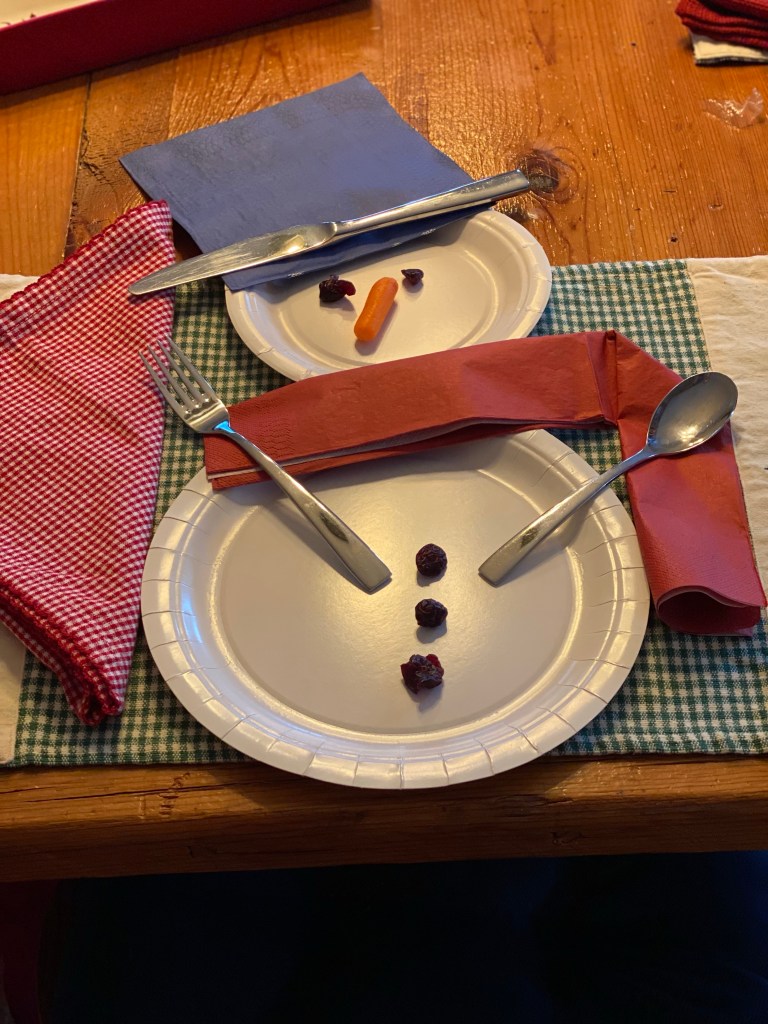
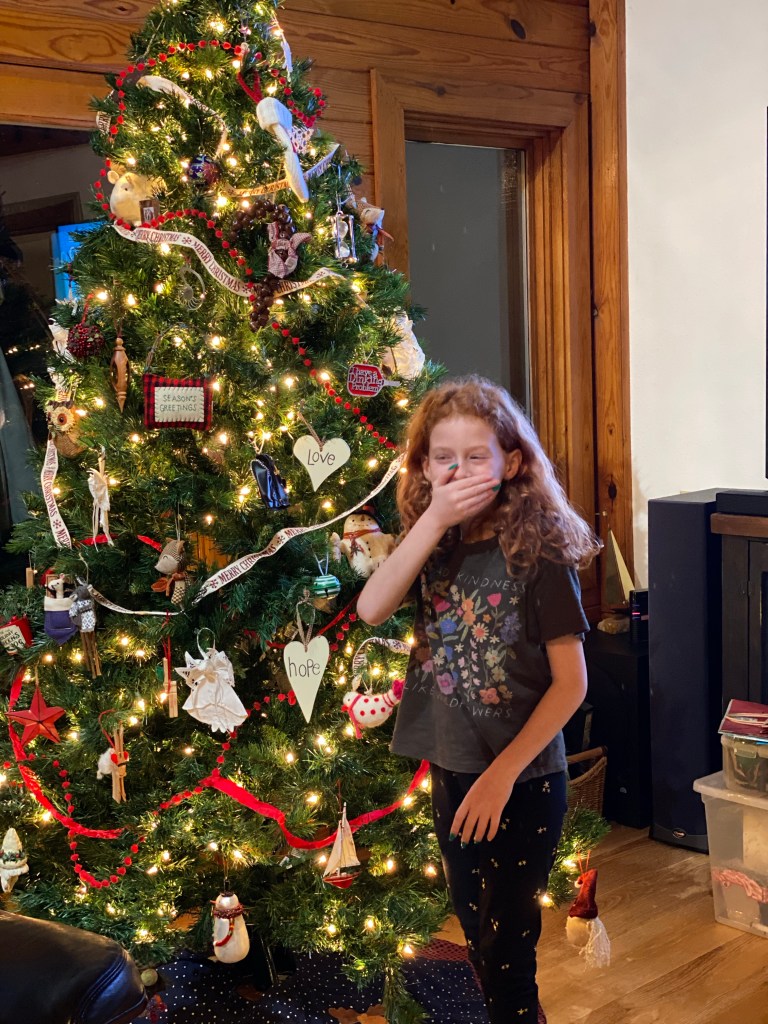
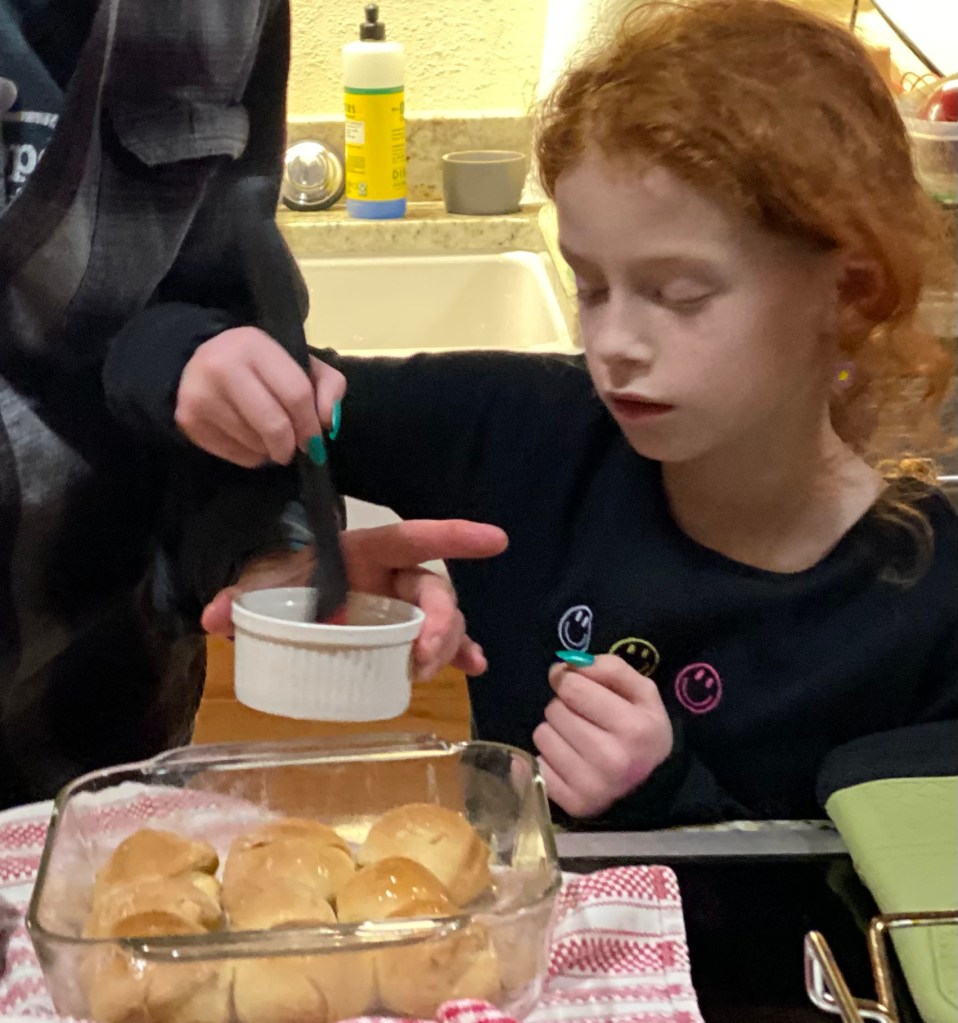
We’ve finally begun to incorporate some activities intentionally. Instead of china and crystal, we copied someone else’s snowman place settings, something the granddaughter and I could share. Last year, we started some silly story telling. This year, we introduced Karaoke and I am trying to reclaim the joy of baking by helping my granddaughter learn; watching her “knead” the goop she bought at the store made me think. Lo and behold, she discovered the joy of yeast and how it rises and how the baker must punch down the dough, then knead it. Her eyes grew wide after she made a fist and punched away. “That is soooo satisfying,” she said. A keeper. 

In case you’re wondering, religion did not seem to figure at all in the wild reactions to the holiday through the years for my extended family. While Arbaleta was, as far as I know, agnostic, and Marie was a strong Christian, neither of them addressed or seemed to include the religious holiday in their efforts to reclaim or dismiss Christmas. For our family, that’s a different pendulum altogether. I personally love a good candlelight Christmas eve service singing and the idea that God came to be with us as an infant. Nevertheless, culturally we continue to struggle with all that Christmas celebrations have become for generations and we cannot heal from pain we do not acknowledge.

For our family, the faith and religious rituals are different pendulum altogether. I will never know why my Grandma Ree did not incorporate more of her personal faith into the celebration. Personal experience suggests she was treading lightly with agnostic family members and, as is true for many families, also celebrated on different days with different parts of the family, balancing church events with home. Nevertheless, culturally, we continue to struggle with all that our secular celebrations of Christmas have become for generations, often leaving us to begin another year frustrated, sad, discouraged. That is where we can start, but we must look collectively at this because we cannot heal from pain we do not acknowledge.

The best time, I believe, to reflect on how we celebrate Christmas is when we are all together…and we’ll before Christmas comes around-unexamined-again.

For my family, I continue to try to reframe Christmas in light of the history I bring to the holiday. I guess I hope through reflections and questions to step completely back from that wild, reactionary swinging between excessive celebration to indifference and even disdain. 

I think one key is that we focus on the children, but with respect for their needs and not our own needs to give them the best holiday ever! 

They get tired; we pay attention. They want to dress up; they don’t want to dress up. Quiet time, dancing in the kitchen time, gifts that involve us engaging with them. I’m not saying we’re the best with children ever or that ours are happier than any other. What I am saying is that like in so much of life, the children around me ground me. What they need is so often what I need. Let’s sing Jingle Bells, yes, at a gathering, but we mustn’t forget the bells themselves and our need to jingle them to make the song come to life.

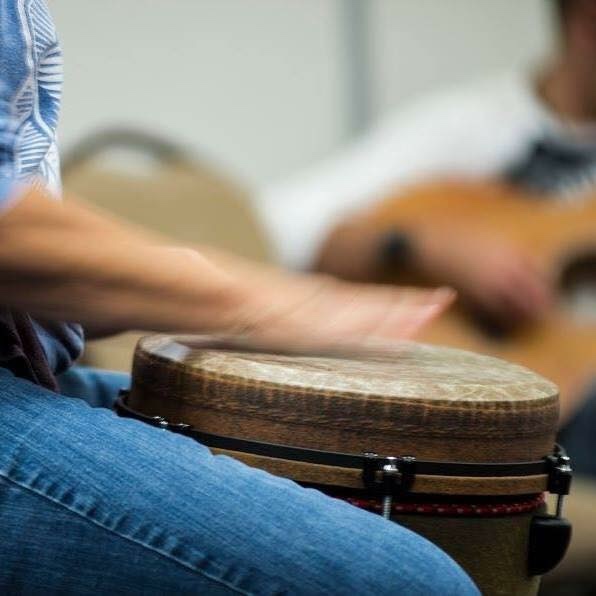
A little percussion goes a long way and when we sing “Jingle Bells” there need to be jingling bells….A five-year-old taught me that.

Music must also be a source of holiday joy for many families. I’m jealous of those who manage a musical gathering but hopeful that might be in our future as well. Certainly with percussion everyone can participate! The idea of introducing music brings us back, though, both to the need for sensory awareness and to the idea of joy and reverie throughout the year. In order for there to be music next year, we need to practice throughout the year – often and, by practicing, remember the things that do bring us joy without wearing us out. I write this and share it now, after the holiday blitz, planning to share it with my family, to start the conversation we can have in anticipation of next year. I am curious to hear from them, and find out if they are aware of, or experiencing their own pendulum of Christmases, maybe even unknowingly riding that pendulum right now. I’m hopeful that with some lowered expectations of ourselves and a little yeast, we just might be able to rescue the holidays from the extremes of that dysfunctional pendulum my family rode for far too long AND decide for ourselves what is “enough Christmas.”


Leave a comment

D-Day Promises, Guilt and Forgiveness

Because coming home is just the beginning….

In a previous post, (“You Can Have My Seat on the Mourner’s Bench,”) I introduced James, (not his real name), who struggled mightily with ongoing guilt and grief about his past actions. For years, I didn’t have a clue what those might be.

I did not know what troubled James, only that he was miserable, but when the Lady Preacher came by, he focussed on how I wasn’t preaching or leading worship in a way that would help him feel like he’d “been to church.” Apparently, as I explained in that eariler post, he was convinced that IF that Lady Preacher could dish up some good old-fashioned confession, that would fix things for him, at least temporarily.

My job, as he saw it, was to offer him a chance to relieve his guilt (for at least a week) through confession and some time on that mourner’s bench. There was no mourner’s bench at Wartrace UMC by the time I was sent there as pastor, though, and, unfortunately for James, I was not on board with the kind of spiritual bloodletting he seemed to want.

Wartrace United Methodist Church circa 1850
where a split log bench wih no back was reportedly the “mourner’s bench.”

Sadly, though, James, perhaps more than anyone at Wartrace needed his Preacher to see how guilty he believed he was, to convict him and then to help him leave that guilt on there, even if he never actually graced the church with his presence. I tried a few times to reprise my sermon from my perch on a sticky metal kitchen chair on his back porch, but the sad truth was that even if James had been able to feel forgiven by God every week, even if he had felt Scriptural preaching wash over him every Sabbath morning, he was in grave danger of never being able to forgive himself.

For years, I was unaware this was what he felt he needed. I would visit him regularly but we were not speaking the same spiritual language for the longest time. Until I preached about D-Day.

Wartrace United Methodist Church,
Greenbrier, Tennessee
(Photo Property of Rev Jodi McCullah) 2023

I finally learned why James was continually unhappy with my preaching on a sticky Sunday afternoon in June when I was directed to lift some old blankets and newspapers and take a seat on a sagging recliner in the corner of the porch at James’ house, a corner too dark and hidden even to be seen before. James had decided I was to be trusted finally, not because I had finally made him feel like the worm he thought he was; rather, on that sweltering Sunday in June, his son had called right after worship let out to tell Daddy that the Preacher Lady had shared a D-Day story in her sermon.

D-Day Promises

I had told the story of Rev. Herman Yates, a retired pastor connected to the church; he and his wife had moved there a few months earlier. He had never preached at Wartrace, not even in revivals, and he and his wife were homebound, too, but Wartrace claimed him because he’d grown up in the area. He was on my list of shut-ins to visit, and he had given me permission to share his story on the first Sunday in June. Herman, a sergeant in the United States Army on D-Day sixty years before, had joined other NCO’s who strapped on flimsy orange and white vests with large crosses on them in order to lead their platoons’ landing crafts and soldiers onto the shore. Eyes and throat burning from the acrid smoke, trying to drown out the screams, they were halted time and time again by the force of nearby explosions. Herman and the other Sergeants moved methodically forward, though, careful to move slowly enough for their men to follow and, of course, he said, slowly enough to be a perfect target. When I met him, Herman was able to tell the story calmly after relating it hundreds of times from pulpits across the area. He told powerfully of how he had bargained with God that day that, should he survive, he would dedicate the rest of his life to preaching. God took him up on the deal.

For those unfamiliar with World War II, “The D-Day operation of June 6, 1944, brought together the land, air, and sea forces of the allied armies in what became known as the largest amphibious invasion in military history,” according to the Eisenhower Presidential Library. “The operation, given the codename OVERLORD, delivered five naval assault divisions to the beaches of Normandy, France. The beaches were given the code names UTAH, OMAHA, GOLD, JUNO, and SWORD. The invasion force included 7,000 ships and landing craft manned by over 195,000 naval personnel from eight allied countries. Almost 133,000 troops from the United States, the British Commonwealth, and their allies, landed on D-Day. Casualties from these countries during the landing numbered 10,300.” Combat would continue for nearly another year in Europe. (eisenhowerlibrary.gov)

Knowing what little I do about the massive undertaking that was D-Day, I have long been amazed at the instructions Herman received that morning before the terrifying landing began. “If you make it to the beach,” Herman’s orders had been to “go to the ‘big’ tree, turn right and meet up a mile down.” Herman and at least a few of his platoon somehow safely made their way onto the beach, somehow found some trees still standing on that battlefield, and somehow chose the right big tree from among many. Herman always knew how all that happened and how he had survived the rest of the war. He went on to serve churches for some forty years.

James was proud, he said that Sunday, proud I’d shared Herman’s story. For the first time since I’d arrived at Wartrace, sitting in the old recliner, I did the math and realized James was shaking because he’d been there as well. Tragically, though, James’ story was neither heroic nor admirable.

“I sent them all out there,” he said with litte introduction, “out there to die.” He paused and looked at the flickering television screen, his only constant companion for years. “One by one,” he continued, “the boats went out. We heard and we knew. We were wishing them a safe journey. We knew though. We didn’t know how many, but we knew, we knew. We were safe, right where we were.” He wasn’t in danger but he was painfully certain that his actions were killing soldiers – his own soldiers – on that beachhead as brutally as any bullet or exploding shell. After he shared his story, his voice trailed off and he mumbled to himself for a bit before I made a pitiful attempt to be helpful.

An estimated 20 percent of all combatants historically suffer from the effects of “combat trauma.”

Soldier’s Heart

nostalgia

“to be broken”

shell shock

“The affliction (Post-Traumatic Stress Disorder) has had many names over the centuries, demonstrating that it is a condition accompanying not just modern wars but all wars. Its cluster of symptoms was first diagnosed as ‘nostalgia’ among Swiss soldiers in 1678. German doctors at that time called the condition Heimweh, and the French called it maladie du pays; both mean homesickness. The Spanish called it estar roto, ‘to be broken.’ Civil War Americans called it soldier’s heart, irritable heart, or nostalgia. In World War I, it was called shell shock; in World War II and Korea, combat fatigue. ‘Soldier’s heart’ indicates that the heart has been changed by war. ‘Nostalgia’ and ‘homesickness’ bespeak the soldier’s anguished longing to escape from the combat zone and return home. Estar roto describes the psyche’s condition after war—broken.”

(War and the Soul: Healing our Nation’s Veterans from Post-Traumatic Stress Disorder, by Edward Tick, Ph.D, p. 99)

I doubt James heard anything I said that afternoon. I’d like to believe I offered him some kind of relief from his guilt but I’m pretty sure my words were wasted. I couldn’t do what he wanted, couldn’t agree with him that he should feel guilty, couldn’t acknowledge that he was indeed as guilty of killing Allied soldiers as any German bullet, bomb or soldier. I toyed with the idea of offering him one of the confessions we regularly used from the hymnal on Communion Sunday, but not one word I could think of was gonna do.

In every house of worship in the nation, veterans of wars are in the pews. Many have spent decades grappling with grief from their wartime experiences. Few of them feel like their part was heroic or admirable. Maybe they “won,” but too often, they are leary of telling us how ugly the “winning” was.

Evidently, James had been needing to visit that mourner’s bench for decades, so maybe telling Herman’s D-Day story created a space for James, as if we gave him permission to risk sharing the shame he felt. Perhaps being able finally to tell his story out loud was the confession James craved. Like too many combat veterans, though, he needed not only to share but also to not be shunned.

Years later, I would sit in a veteran’s retreat and listen to veteran after veteran tell their combat stories, usually with trepidation. So many were like the Iraq war veteran who shared his story of killing “anything that moved” from the helicoptor he piloted. That veteran believed himself to be a “monster” and was certain he should no longer be allowed in our midst. Like this combat veteran and so many others, James needed to tell his story and not have anyone, as one veteran feared, “run screaming from the room.” He needed to know I didn’t see him as a monster and that I would still visit, still speak to him, still consider him part of the flock. He had been needing to visit that mourner’s bench for decades, and telling Herman’s D-Day story gave him permission, at least in his mind, to risk telling his story out loud. Maybe Herman knew what would happen when I shared his D-Day story. God certainly did.

Leave a comment

You Can Have My Seat on the Mourner’s Bench

Rituals are meant to be the beginning of the healing process, not the end of it.

Rituals can be powerful for healing, and we need them to help us heal after loss and tragedy. That memorial service we hold when someone dies? It is for the living, not the person who died. Those impromptu memorials after shootings? They help us come together to start the healing.

Rituals are just the beginning, though. This is especially true when our own behavior is part of the problem, when we keep doing the same things and expecting different results. At that point, our rituals are pointless and empty. Visiting a shut-in about once a month for nearly a decade taught me this.

By the time I started preaching, James (I changed his name for this post.) and his wife of close to 60 years were both homebound shut-ins and so were on a rotation of homes for the pastor to visit after worship. Visiting their home was ever the adventure, though.

The entry of the home was a strange mix of antebellum and 70’s influences. A folding metal lawn chair leaned up against one of the original plaster columns that framed the ten-foot-high wooden doors, for example. Heavy enough to kill you if they fell on you, the doors were never allowed to completely close as long as I knew James; opening them would have required at least two grown men. A makeshift screen door was all that separated visitors from the cluttered yard and the porch strewn with more folded lawn chairs, some dead potted plants and a half-empty bag of mulch.

The first time I visited, after knocking several times, I gingerly pushed the screen door open and started towards the voice of a television newscaster beckoning me from the farthest end of the great entry hall. On my right, was a set of partially closed doors, and from them I could see Jame’s wife, whom I also had not met, but whom I was told was not interested in visitors. I later did manage to introduce myself and be admitted to her room but that was apparently only out of necessity: I was allowed in long enough to change the channel on her nearly-antebellum black and white television for her. I was only in her room long enough to realize that, though she was hooked up to an oxygen machine, sitting next to her on the bedside table was a pack of cigarettes and a full ashtray. I declined to empty the ashtray for her, and she waved me out of the room.

I passed two more sets of floor-to-ceiling wooden doors on either side of the great hall before arriving at what must have originally been the site of the grand staircase. Evidently, the top floor of the old home had been caving in, so James’ predecessors had lopped it off before moving it to the current site facing a four-lane highway. The opening to the old stairwell had been boarded up with thin, dark paneling, creating a wall for a now-enclosed back porch. From an opening on the far left I could see the shadows from the television news cast flickering. I peeked around the opening to see the now rather annoyingly loud black and white television, a tv tray lined with medicine bottles and half-opened packages of lemon cookies, and James in a recliner.

He looked up that first visit and asked, “You the lady preacher or are you here to check my sugar?”

“Lady Preacher,” I offered and he pointed to the ottoman next to his recliner, the only other piece of furniture I could see in the dark, enclosed porch under the stairwell. Sitting on the ottoman meant I was looking up at James as we chatted, as if I had been relegated to the children’s table at Thanksgiving.

In my eleven years serving that church, James sat in that recliner for every conversation. The trajectory of our conversations and our relationship, however, determined the seat I would be offered. My perch progressed over the years from the lowly ottoman to a metal and vinyl kitchen chair and eventually to a second recliner, the offer of which required clearing away a years’s worth of mass mailing ads and cookie wrappers. My own recliner. I though I had arrived.

Preaching “Scripturally”

Even after my graduation to adult seating, though, our struggle continued. Over the years James’ oldest son indicated that James did not believe I was preaching correctly. I was not, in James’ words, “preaching Scripturally.” Though James did not actually attend and only heard secondhand about my preaching from his son, evidently, when his son told him about my sermons, James’ complaint remained the same. “Not preaching Scripturally.”

Years would pass before I would be able to grasp the kind of preaching he would consider “Scriptural.”

Every sermon I preached began with a Scripture passage, intentionally allowing the text to speak for itself. I trust the Scripture to tell us something about God and ourselves. I didn’t always like what I learned but I respected it, so I knew James’ accusations either were incorrect or misinformed. His son had reassured me he was reporting my sermon Scripture choices and preaching points, so neither of us realized for some time exactly why James consistently was disappointed. It took me years to realize that, for James and likely for many others of his upbringing, church was supposed to “convict.”

Someone went to the mourner’s bench or church had not broken out.

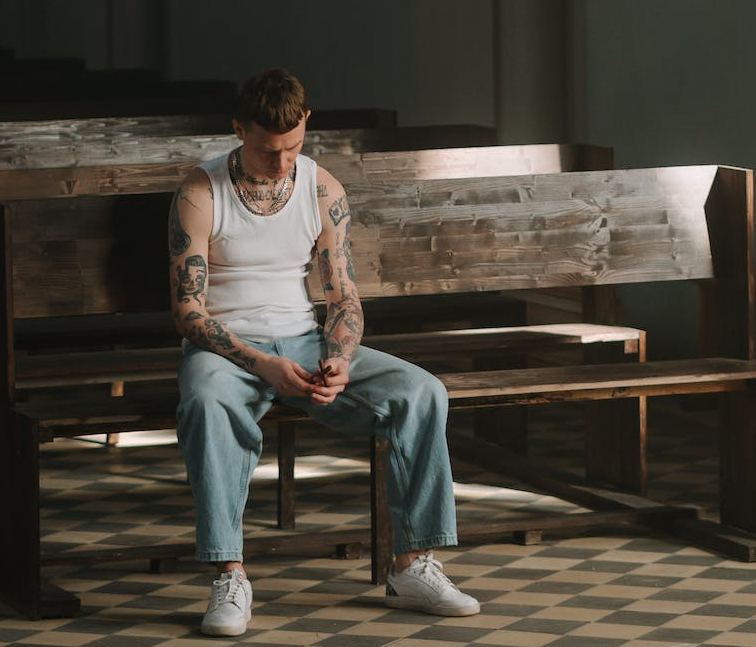
From the moment you entered the sanctuary apparently, church was meant to be a frightening experience; God knew what you had done all week and before the sermon was over, an honest-to-God, bona fide pastor would have directed your miserable self to come forward and sit on the hardest bench, a single bench at the front of the sanctuary, the one without a back, the “Mourner’s Bench.” There you were expected to confess that you were a sinner – lower than a worm on really bad weeks in spite of being a baptized believer. You were directed then to confess, then you were forgiven and then the congregation would sing, “Shall We Gather at the River” or “Just As I Am” before heading home.

Take me to the real church. Find me a mourner’s bench. God knows what I did all week.

This process, I learned, what James would call “preaching Scripturally,” would render backsliding baptized members “Good-to-Go” for another week. Sadly, though, it was usually then a week of the same damn behavior that had made you feel so guilty the week before, but it was fine because you could count on the Preacher to help you confess and be forgiven all over again the next week. That was apparently how folks knew they’d been to church.

Sure, not everyone went to the mourner’s bench every week but someone did or preaching had not really broken out.

By the time I got there, it didn’t matter that there was no longer a mourner’s bench in the sanctuary; the expectation was still that sitting in the pew on a Sunday invited guilt and shame and the preacher must offer a chance to ask for forgiveness so folks could feel better about themselves for at least a few days.

Full disclaimer: this is not Methodist theology.

For James to feel like he’d “been to church,” he would need to go through the whole ritual, to confess and be forgiven before he was good to go. Then, though, he apparently felt that he would be free to live his life however he wanted…until he needed to come back and do it again.

Nothing in his life changed after that ritual. It was empty. This is the kind of empty ritual that God does not want, we are told in our Scriptures. As much as God loves a good ritual, even God does not seek or require ritual simply for ritual’s sake without any change in behavior. 

In Isaiah 58, “God mocks people who seek God as if they were ‘a nation that acted righteously.’  God accuses them of saying they want to be close to God, but ‘you do whatever you want…oppress all your workers… quarrel and brawl…hit each other violently.’  In classic Hebrew style, [Isaiah makes God sound] like a Yiddish grandmother saying, ‘Oy vey! You call this a fast? Enough with the thoughts and prayers, already!’ (58:5)”

Harnish, Jim, https://jimharnish.org/2022/05/26/is-god-fed-up-with-our-prayers/

Isaiah 58 is tough to read.  God rejects empty piety. God rejects our “lying down in the mourning clothing and ashes” while we still oppress, quarrel and brawl, rejects us going through the rituals but then continuing the behavior that caused us to need to mourn in the first place. More to the point today, God calls us to concrete actions, not simply thoughts and prayers:

“Isn’t this the fast I choose:

releasing wicked restraints, untying the ropes of a yoke,

setting free the mistreated, and breaking every yoke?

Isn’t it sharing your bread with the hungry

and bringing the homeless poor into your house,

covering the naked when you see them,

 and not hiding from your own family?

With God’s command comes God’s promise:

Then your light will break out like the dawn,

and you will be healed quickly….

Then you will call, and the Lord will answer;

you will cry for help, and God will say, I’m here.

Isaiah 58

God loves a good ritual, but even God does not seek ritual simply for ritual’s sake without any change in behavior. 

A few weeks ago, a second-grader fell at a school in the Nashville area, less than an hour from the Covenant School. She stumbled and fell, sadly, during an active shooter drill, cutting her knee and scraping her elbows, after the teacher had screamed at the children to “Run!” A sweet gesture from another child helped ease the pain and panic in that moment: one of her classmates stopped, helped the distraught child get back up and ran with her to the safe gathering spot.

The good news: her friend didn’t leave her behind.

The horrible terrible very sad news: our response to people who take AR-15’s into schools is to step up active shooter drills.

For God, our rituals mourning all of these shootings are empty and meaningless if we continue to do what we do and wonder why things never get better.  As a nation, we’ve gotten pretty good at this, though, acting as if our stint on the mourner’s bench is sufficient.

After the Covenant shooting, a large number of Nashville neighbors including many clergy colleagues participated in actions beyond candlelight vigils and prayers and leaving stuffed animals and flowers and balloons at an impromptu memorial. Thousands staged a sit-in and even marched on the state capitol. The overwhelming message to the politicians who would not consider bans on assault weapons was “Save your ‘thoughts and prayers.'”

With no apparent policy changes, though, the best efforts are still empty rituals, something we are sadly proficient at in this country.

We mourn, but we still can legally purchase an AR-15 and make up for it by telling our children to learn to run faster.

The horrible terrible very sad news is we still think the best response is teaching children to run faster and hide better.

Maybe you believe the problem is guns. Maybe you believe the problem is certain types of guns.

Maybe you support more police in school or arming teachers.

I know I want people to understand there can never be enough equipment for any SRO to combat an 18-year-old in a Kevlar vest and a helmet with an assault rifle. 

Maybe you believe the problem is broken families, no prayer in schools, the lack of mental health care, or children who come to school having never sat down with an adult to read a story book. The truth is, it’s likely some of all of these but focussing only on mental health care without limiting access to the weapons that leave small bodies in shreds is mourners’ bench behavior. That renders our thoughts and prayers empty.

What is critical here is that we do not make our rituals empty, that we do not sit on the mourner’s bench and cry and pray and then go home and keep doing what we have been doing. Because that is making a mockery of our faith and rituals.

Whichever side you fall on, God asks what are you doing to help fix it? Are you just making more room on the bench?

To lament, to pray, to mourn, and then to change nothing is to miss the point.  It is, in fact, to fail–to fail our children and to fail our God.

At the very least, educate yourself. And by that I don’t mean just read what people write who agree with you. Read what people write who don’t agree with you. Learn the actual issues in your area. Every state has different issues and different laws. More than anything, listen to people who disagree with you.

Everyone of us is afraid and sad and none of us has answers that will work for each situation, but God calls us to work together to keep our children safe. Look up your community’s Peace and Justice Center and join in. No Center? Look into starting one.

Grieve, pray, then do something that shows you have truly taken in the gravity of the situation; but for God’s sake, let us not keep acting as if nothing has happened.   

Our children

need us to

figure it out.

  1. Nancy Bradshaw Avatar
    Nancy Bradshaw

    Challenging piece about an horrific plague on our land. What are our lawmakers thinking? They hear the voices of the people and yet do little to address the problem. I need to do more, I know. Letter writing is just not getting it either. Thanks for your focus on what’s going wrong in our world.

    Like

  2. Martha Ann Pilcher Avatar
    Martha Ann Pilcher

    Amen!

    Like

  3. D-Day Promises, Guilt and Forgiveness – Emptying The Backpack Avatar

    […] a previous post, (“You Can Have My Seat on the Mourner’s Bench,”) I introduced James, (not his real name), who struggled mightily with ongoing guilt and grief […]

    Like

  4. D-Day Promises, Guilt and Forgiveness – Eighty Years Later – Emptying The Backpack Avatar

    […] a previous post, (“You Can Have My Seat on the Mourner’s Bench,”) I introduced James, (not his real name), who struggled mightily with ongoing guilt and grief […]

    Liked by 1 person

Of Pakistan, Chewing Gum, Chatty Cathy Dolls & Valiant Efforts

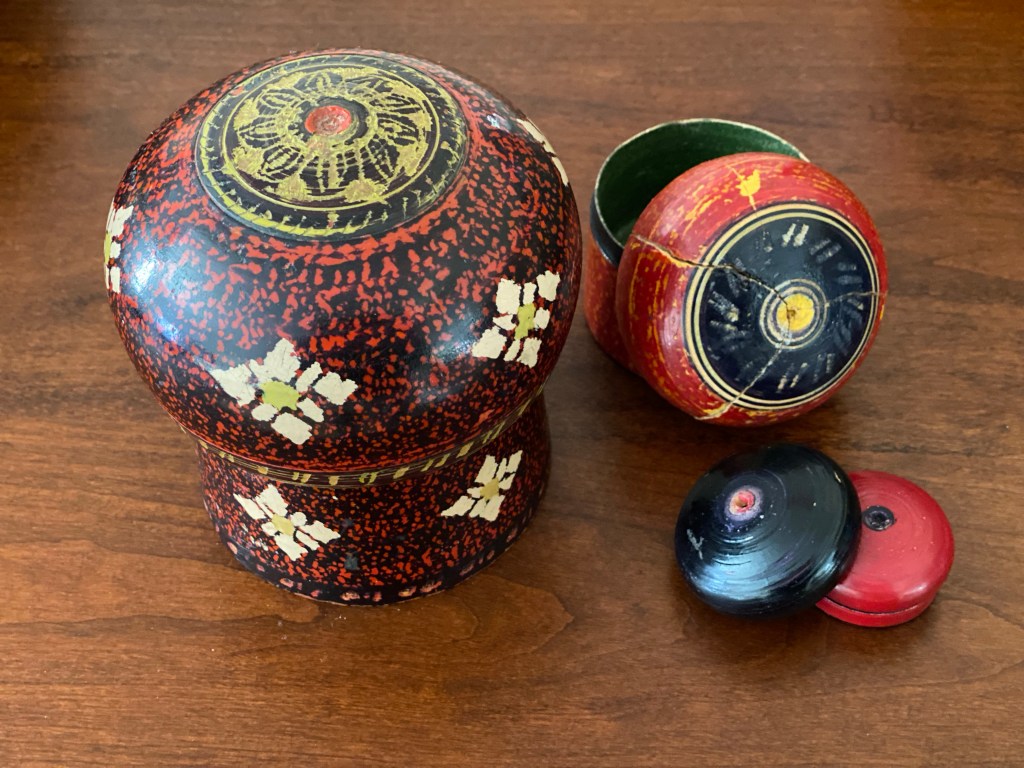
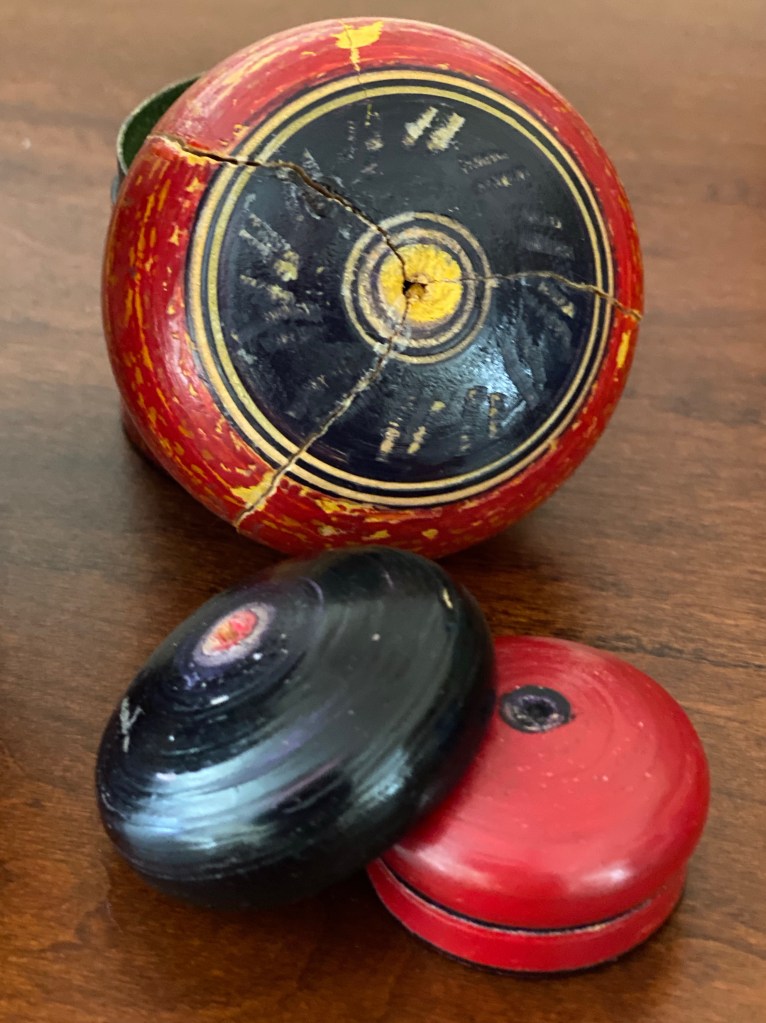
A favorite talisman from Pakistan. I loved how all the different sizes nested one inside the other. I’ve carried this painted wooden toy with me for nearly sixty years now. Cracked and repaired, broken but still beautiful, a cradle of memories.

When I was seven, my brother, who was eight, my sister, who was six, and I got dumped in our grandparents’ laps, a harsh ending to what had begun two years earlier as a grand adventure, meant to last a lifetime.

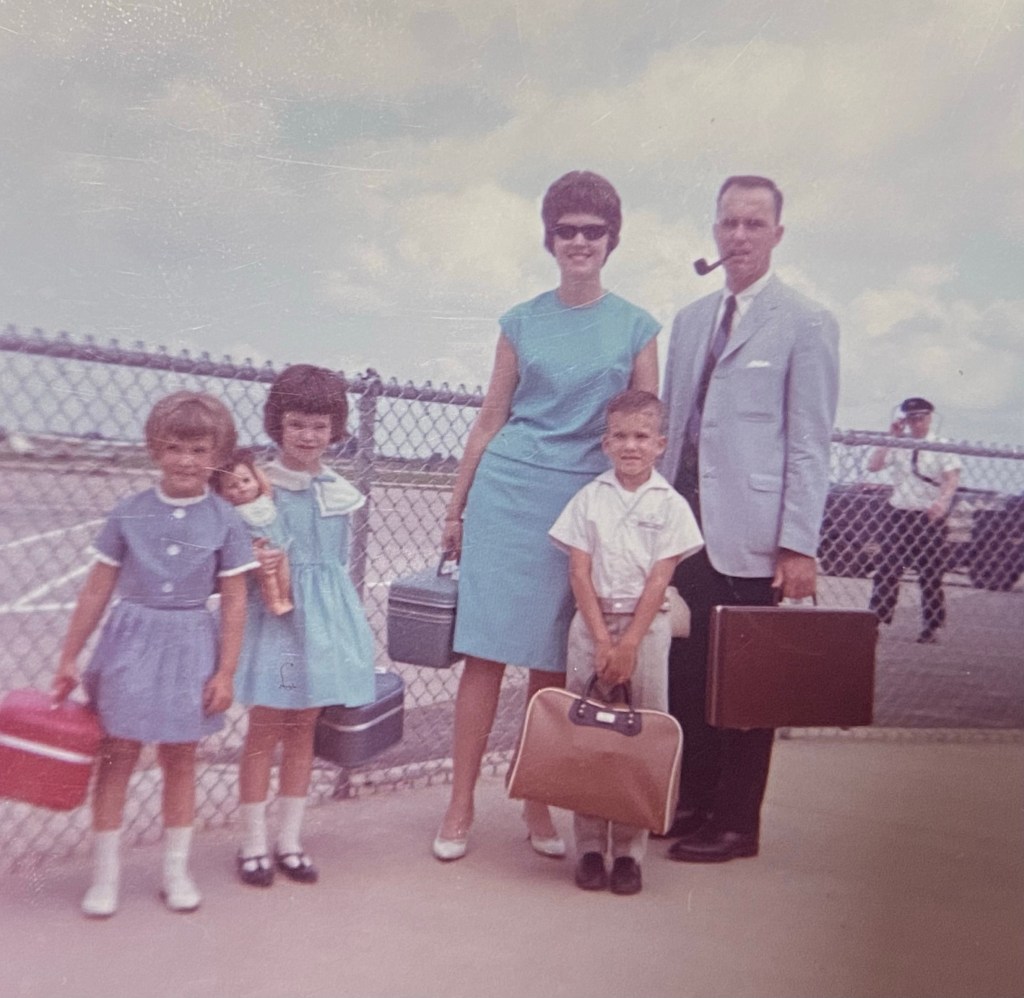
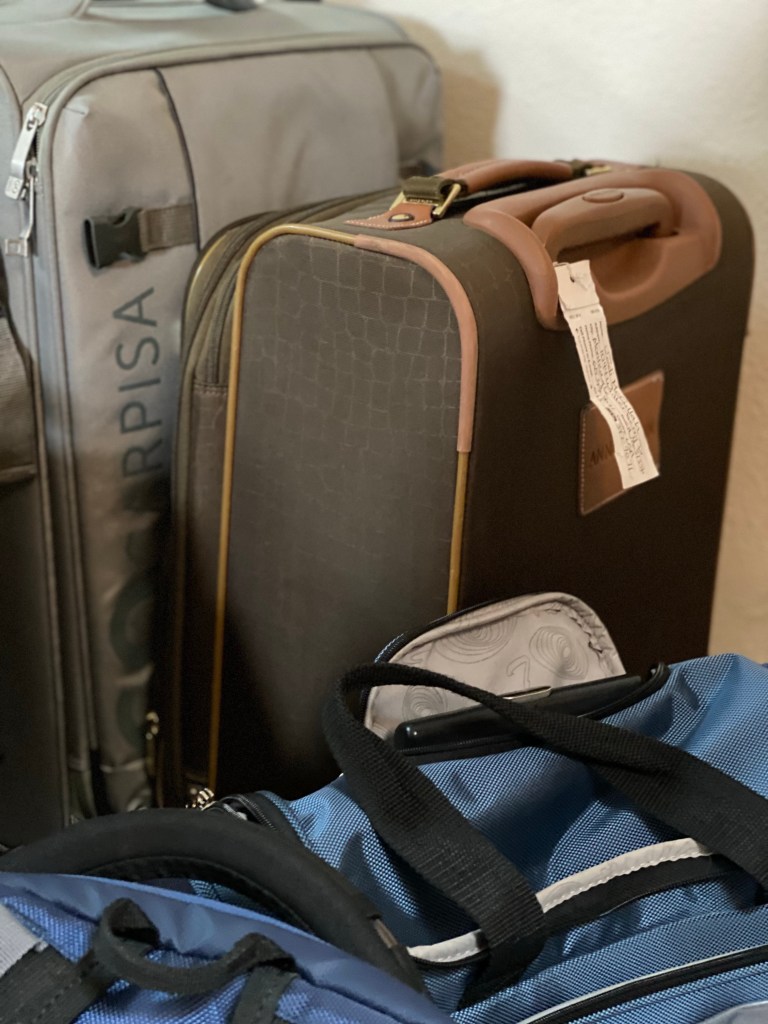
Once it was announced that Dad had secured a coveted engineering job overseas, we had all been celebrities at one festive send off after another from Springfield, to the unknown and mysterious West Pakistan, (now Pakistan). The biggest Bon Voyage event, where each of us had been presented with brand new suitcases to go with our brand new outfits for the journey to the other side of the earth, reflected how impressed friends, coworkers and neighbors had been when Dad had secured the contract.

That the way to Pakistan involved so many shots for so many illnesses was annoying, but, for me, the memories of those jabs are overshadowed by those of international flights on Pan Am where the pilots brought all the children on the flight into the cockpit and each of us received a souvenir Pan Am flight bag and our own set of pilot’s wings. I remember buying a doll in Tokyo, where I was convinced that I could speak Japanese because I could speak to the sales clerk. I remember arriving in Karachi to be served warm milk and runny eggs and that we slept twenty-four hours before driving to our new home in a walled compound in Northern Pakistan. I remember much about our time in Pakistan, but I do not remember the trip home.

Thoughout the two years we were there, Dad was likely excelling in his work, but, before the contract was completed and we could be posted at yet another overseas project on another continent, Dad was forced to break his contract and return to the states on short notice, with little or no money, no job and much anger.

So, just a few days after boarding a plane for home, the three of us children found ourselves seated in a row on the edge of the bed in a motel halfway between our grandparents’ home in the little town of Waynesville, Missouri, and wherever Dad had found a job. The motel bed was low to the ground; our toes just touched the linoleum and we were each individually toeing the floor and pushing the old bed up and down, causing the box springs to creak softly. Next door, we could hear our parents and grandparents arguing loudly. We did not know then the three of us would not be going to the tiny apartment Dad had managed to find. 

I clutched my Chatty Cathy doll. Bless her heart, she’d stayed with me throughout our time overseas in spite of looking like she had mange because my little sister had taken a pair of scissors to her black hair. My sister clutched a stuffed monkey who had a permanent grip on a plastic banana. She had already given up the doll she’d been given, one who giggled when her arms were squeezed, and who likely ended up in another child’s arms, looking like she was just out of the box with that curly, blond hairdo intact. Don’t think it didn’t cross my mind, though, to experiment on her with scissors. Maybe my sister was just more angry at that time than I was. 

“Say goodbye to your children!” my father had hissed moments before all three of us climbed in the back of our grandparents’ sedan. Mom’s eyes were already glazed over though; she wasn’t responding. She had said nothing while my father had been yelling for weeks, it seemed, most recently in the next motel room, in front of her parents, who also were silent. We couldn’t hear any of those angry words at all, only loud voices, then we each flinched as the door to our motel room had swung open and we saw our parents standing there.  “Say goodbye!” 

Grandma Ree and Grandpa George seemed just as dumbfounded as we were, I think, and were really in no financial position to take on more, but to their credit, they put the three of us into the back of their tiny dark blue sedan anyway.  Driving away from that motel, each of us rode silently, wide-eyed, tacitly agreeing it was better not to ask. 

His Adventure; Her Nightmare

On our way home from Pakistan, we’d each been wearing a new pair of leather shoes made from a cobbler in Pakistan. Even finding shoes while we were there became an adventure for my father who savored every side trip to a bazaar and whose shopping addiction devoured cameras and jewelry and handmade rugs and carved tables with ivory inlay for playing chess. Being there while the country was at war with India was a nightmare for our mother, though; after my parents ventured to the bazaars, she had nightmares about the children who had been purposely maimed in order to make their begging more lucrative. By the time we left Pakistan, Mom had begun obsessing about keeping the windows covered with foil for nighttime blackouts, long after it was necessary. 

The civil engineering position Dad had secured with this company overseas was his dream and meant to last his whole career; he had not planned to have to return to southwest Missouri with his family at all, certainly not as a quitter. This contract was his chance to escape small towns and small minds, and that dream was not meant to die a quick death because his young wife discovered the balm of alcohol and realized that some men could be sweet. Mom, bless her heart, had been thrust into a world she had never contemplated and one she was vastly unprepared to engage, understand or master. Dad, on the other hand, had served overseas in the Air Force and, when he returned, he invested in National Geographic in order to know more about the world he had only tasted in his two years in Puerto Rico. This job had been his chance to immerse himself in adventure and travel.

A small-town girl who had never left Missouri before, Mom continued dutifully each day to don a crisply ironed dress and heels while struggling to learn to oversee servants, like the first one, a “Bearer.” The Pakistani manservant who did not speak any English was in the house all day, and ironed and cooked unrecognizable meals for us.  He didn’t last long. A gardener, a “Mali,” was required, if only to keep up appearances in the European-style neighborhoods built by the company that had brought so many engineers and families from all over the world. We knew, though, that walking outside one morning to find the gardener, proudly holding up the cobra he’d caught in the yard where her children played was too much for Mom. She began to unravel. Our father held out, though, and doubled down on social activities, including starting a Boy Scout troop, in hopes Mom would adjust. Instead, she discovered the alcohol that had never been allowed in her home growing up. She found the mathematics of rum, to be precise. One drink made her feel good, two made the barbed wire on the compound walls fade, and four drinks made all the lizards and maimed children and strange men in the house just slip away for hours and hours. 

We never saw Mom drink, though. We were in bed every night by seven p.m. We never saw her drink and we never saw our father much at all.  For the two years we lived in Pakistan, our father kept twelve-hour work days and so our paths did not cross for two years, except on the occasional family shopping outing. During those two years was the only time we had allowances and every few weeks, the family would venture to the compound’s shopping area where we could find a Pakistani furniture store, a European-style restaurant complete with a dessert cart filled with petit-fours, and a toy store, where we were happy to spend our allowances, most often on comic books since there were no Saturday morning cartoons. We had no television at all in our home there, in fact, so by the time we left after two years, we had amassed more than three hundred Archie, Superman and Richie Rich comic books and often participated in a robust trading circle with other neighborhood children. Once, though, we all three saved our allowance to buy a pale blue scooter that we could see high up on a corner shelf in the toy store. We visited that store several times without buying any new toys or comics, simply to be sure no other children had purchased that little scooter high up in the corner.  We were struggling not to run or pull on our father’s hand to get to the store when the day for purchase finally arrived. Together, the three of us proudly plunked down our rupees onto the counter and watched, holding our breath, as the store owner pulled the scooter down and dusted it off.  When he rolled it around the corner of the counter, however, to present that blue beauty to us, my older brother and I realized that the scooter, heretofore only viewed from afar, was too small for either of us. Only our little sister would be able to enjoy it. There was no going back, however. The store owner was beaming at having sold the toy that had taken up his store’s top shelf for months and our father would have been too embarrassed to halt the purchase. Typical of our relationship, though, my brother and I did not commiserate; we were silent as our feet dragged on the dusty road going home. Our sister stayed on the sidewalks with the scooter but I do not remember her using it very often after that, which only added to our disappointment. 

Photo by Erik Mclean on Pexels.com

Other than the occasional shopping trip, church and the bowling alley, we did not see our father. Even at those venues, we did not interact with him. Our understanding was that, like the other engineers who worked long hours building that dam, our father was excused from many family activities. When we did participate as a family, like at the bowling alley, the children went off unsupervised mostly, so we still didn’t see our parents unless we were causing a problem. Dad was apparently a minor celebrity at the bowling alley, though, often bowling perfect or near perfect games. Our time there consisted of ordering tuna fish sandwiches and zombies to drink at the adjacent grill and watching, fascinated, as the Pakistani workers reset the pins after each throw of the ball.  No automated pin replacement there. 

Though I was very young, I remember a lot about when my Father was helping in the beginning years to build Mangla Dam in West Pakistan, now Pakistan (as opposed to East Pakistan, now Bangladesh.) Most of our old photos from that time, however, are lost. I do remember that strange juxtaposition of Western and Pakistani. We attended a British school where I learned some Urdu and to add an “e” in the middle of judgment, (i.e., British spelling) a bowling alley and we enjoyed a wonderful series of public pools. We also explored some historic sites and went to school with children from all over the world, including Pakistan. (See Wikipedia, Mangla Dam and Mangla Dam Memories on Facebook.)

Otherwise, the three of us were on our own outside of school hours. The compound was large with an American side and a European side and a bus that drove around both sides all day.  On any particularly boring day, the three of us would simply climb onto the old, repainted school bus and ride down all the streets of both sides of the compound, cooled by the hot wind coming through the open windows and fascinated by what our neighbors might be up to that day. I am still amazed that we were simply allowed to wander at five, six and seven years old. In Pakistan.

The entire adventure seemed a contradiction in terms, characterized for me by the fact that we lived in a compound surrounded by a stone wall with barbed wire and cut glass on the top but where the gates were always open and unguarded.

There was an open gate at the back of our own yard, in fact, and from it, we could see a small village where, we were told, women slapped cow dung onto the walls of the homes to dry to be later used as fuel for the fire. Every day, we could hear the calls to worship; they were haunting and beautiful, a call to an Islamic understanding of God that serenaded us as we walked to our Christian church potluck supper. For some of the year, the dust on the side of the road was a fine and deep silt and we would slide our feet through it as if it were snow; other times, during monsoon season, there seemed to be nothing that was dry.

Unsupervised. In Pakistan. At age 7.

That we were largely unsupervised outside of school hours made sense to someone I guess. Until the injuries began. First, my five-year-old sister got stitches trying to climb up a ladder to dive off of the high dive at the crowded community pool. Then, I nearly drowned just a few feet from my mother in the same pool; another mother noticed me struggling to keep my head above water and grabbed me. Mom was busy chatting. There was a broken arm, then stitches for me. Twice. This time, however, neglect was not the problem. I had become the target of choice for my older brother who gleefully ran his bicycle into mine, causing the pedal to tear into the fleshy part of my lower right leg, leaving white tissue oozing down my shin. He later threw a cutting board at me, just missing my eye socket but also requiring stitches. We may never know if another parent intervened or if our father walking into the living room to see our mother kissing the neighbor, but there came a day when Dad sat all three of us down on the edge of a bed in our shared bedroom to tell us our mother was ill and would be “going away” for six months or more. It had been decided we three would wait for her there, in Pakistan.

That’s when the wailing began. Paid mourners could not have been louder or more dramatic. At the time, we were terrified, but we were also resolute, huddled together eyeing that dark and dangerous chasm that seemed to open up before us. We did not know this man. No way were we letting Mom go quietly. We did not stop crying until Dad returned to the room hours later to tell us we were all going home. 

Our relief was short-lived, though; once my father dragged Mom away from that motel, we did not see or hear from our parents for months and months. The timeline is vague for me but I remember attending three schools in second grade. So, once we were settled in my grandparents’ two-bedroom duplex in Waynesville, I took to running away, searching for her. From school, from my grandparents’ home, even from church services, I escaped, watching for unsupervised moments and unlocked doors, taking advantage of crowds and distracted adults, always looking for my mother. 

More than once, because Grandma Ree was exasperated, I was simply allowed to stay home from school on my grandfather’s day off and we watched cartoons and ate Oreos while he ironed the work shirts he wore driving trucks. Grandpa George seemed to me to be the only adult who was not angry with me; I remain convinced that was because he understood my quest. 

Once, after I’d run away from school, the school principal found me. He and a teacher picked me up in a car after they’d driven all over that little town looking for this wayward seven-year-old. 

“There, there,” he said, offering me a piece of gum in a green wrapper folded around shiny foil, very much a treat then.  Defeated for the moment, I cooperated and got into the old car, only because I’d been wandering for hours and it was getting dark. Offering me a stick of gum, though? Did the adults around me really think that would fix this? I remember looking at him as if he were clueless. It would be years later, though, before I could be proud of that seven-year-old slapping that piece of gum from the principal’s hand in the back of that car, and even longer before I could appreciate the courage it had taken for the three of us to stand up to our father. 

We all paid a price, though; we would never have back the mother we had known. When we saw her again, she was subdued, defeated. She had endured shame, therapy, even, we were told later, shock treatments, all because her dream was not his dream. She was not unlike many women of her day, praised for obedience like a child. For the rest of his life, though, my father was on notice. I’m not certain to this day that we accomplished much, but our little rebellion was uncharacteristic of us and I am proud to be able to look back and say that those three little souls refused to go quietly into the darkness. 

.

Boots in the Trunk

Some of the greatest moments in life, I believe, are when you find out you are not the only one who does “that.” You’re not the only kid in class who likes to blow bubbles in her chocolate milk or the only student who questions why you should wear a dress to school on picture day when you hate wearing dresses and no one ever sees your dress because you’re always in the back row for pictures. Once, on a phone interview for a job in Florida, I mentioned that most of my friends “up here in the north” seemed to believe that living in colder climates builds character and people who want to live in warmer places are just lazy. The employer simply said, “Come on down; you’ll find plenty of hardworking folks here; they just happen to like burying their toes in the warm sand.” I remember thinking, “I’ve found my people.”

One of my most affirming moments occurred a few years ago while watching a movie that was set in southern California. A woman was sitting in heavy Los Angeles traffic on her way to work when the road began to shake and seemed to begin rolling. Her first response, once all the motion ceased, was to pop open her trunk and change from her fashionable black pumps into a pair of hiking boots. She evidently kept in her trunk for just such an emergency, or at least the character did. She must have known she’d likely have to walk through streets filled with debris, and the boots were just one of the survival tactics she’d either learned firsthand or been taught. She was prepared.

I remember nothing else now about the movie except that I wondered if she also kept some water and maybe a first aid kit and snacks in her trunk. What I loved was that she wasn’t some hiker out on the Appalachian Trail for weeks; the character must have been created by someone familiar with earthquakes who understood that we never know when or where we’ll need to run for our lives. It would be several years later before I would learn that boots in the trunk was a common response for survivors of trauma and abuse. I don’t know if the woman in the movie was supposed to have grown up with a scoutmaster for a father, or if she was a trauma survivor, but she embraced the boots in the trunk. She didn’t think it was weird.

Boots in the trunk, a “go” bag by the bed…

I was a teen when I realized not everyone slept with a “go bag” next to the bed in case a speedy escape became necessary in the middle of the night. After five decades of being teased by others for it, though, I was especially grateful to finally learn that lots of other trauma survivors sleep with shoes under the bed, a wallet or purse with meds, money and that handy Swiss Army knife by the bed, so that in an emergency, they do not waste precious survival and escape time locating footwear or a flashlight. Finally, I could stop being embarrassed that I preferred to sleep in something I knew I could wear outdoors in case of a fire or an earthquake or tornado. I could stop hiding the fact that I think about not wanting to have to run into the dark barefoot and thus be even more vulnerable in a crisis. My “go bag” has been a reasonable and healthy response to the lessons of my childhood where I was taught to be afraid of the dark and it is also a reflection of a strong instinct to survive. Instead of being embarrassed that I startled so easily, I became proud of my Swiss Army knife and I became grateful for those survival instincts. Plenty of children do not get out.

Escape Artists

I know some people who were abused or whose childhood was traumatic seek vengeance and long to hurt the one hurting them, and even hurt others in an attempt to ease their own pain, but my instinct has always been to escape. When my siblings and I were young, they seemed unaware that following the rules meant escaping the belt or the hair brush.  As we grew older and taller, I knew to stay well away from my parents’ and even my siblings’ arguments because they so easily slid into the violent responses we’d seen modeled. I mostly escaped broken bones and stitches by escaping as a child and teen. Later, I applied the same tactics to job losses and failures and broken relationships because I knew when to escape, and how to – most of the time – make an exit before the explosions.

Because I could escape, none of their crazy dust landed on me. I know without a doubt that is one reason I survived and got this far. Too many children who grew up like we did never get very far from the crazy, never get too many steps out the door.  Maybe that is because they had not managed to stay arm’s lengths away as children and teens; maybe their scars left them less equipped to walk away when they were old enough; maybe their backpacks were just too heavy to carry another step.

Sadly, few if any adults were able back then to recognize this behavior as a survival technique and, thus, necessary. I once attended a junior high church retreat.  Our parents sent us away to every camp and retreat that was offered. My brother and sister hated those camps. In contrast, I eagerly grabbed a bag and hopped into whatever car was taking us away from whatever house we were living in at the time. At that particular junior high retreat, though, the girls’ leader accused me of being like a “wolf.” Because I was being quiet, she accused me of preparing to “pounce, to attack,” when the opportunity arrived.  I’m really not sure what kind of attack she thought I was planning. I remember just staring at her while she accused me of cooperating with some kind of evil. She was only half wrong, though, which meant, of course, that she was half right. I wasn’t preparing to pounce, though; I was preparing to escape, trying to figure out when that might be necessary.  Sadly, it felt like escape was too often necessary and, after a while, became a way of life.

I wasn’t preparing to pounce, though; I was preparing to escape. Sadly, it felt like escape was too often necessary and, after a while, became a way of life. Photo, 1964.

A counselor once asked me how I had survived the turmoil, upheaval, illnesses and chaos of my home. Since I’d already told her about how often I had simply walked away, I was confused. I know now she wanted me to relate to her how I knew when to get the hell away from my mom or dad or brother or sister or myriad boyfriends. The fact is, in the beginning, I became a girl scout. Well, actually a boy scout. Okay, both.  Being a “girl scout” meant being good. Being good meant usually no one noticed me and, if I followed the rules, usually no one would hit me.  I would certainly never give them a reason to hit me.

Being a “boy scout” meant being prepared. Since we had moved so many times before I was sixteen, it wasn’t like we didn’t have practice packing. I kept my bag and shoes by the bed because they kept me feeling like I had some power to escape if I needed. I knew when to leave because I was what counselors called “hypervigilant.” I watched folks around me like a hawk. That was what concerned the youth leader at the junior high retreat; she did not recognize the behavior as a survival tactic developed over time in response to threats; it was somehow easier for her to imagine a teen as evil than to consider one of the parents in the church might be a predator, I guess.

Live Like a Refugee

The more I worked to find healing over the years after I finally escaped my family home, the more I found like-minded souls who also seemed to move about more than others. My first husband and I were both nomads when we met. “You Don’t Have to Live Like a Refugee” by Tom Petty was the soundtrack of both of our lives at the time. We had both been traveling quite a bit when we separately landed in a writing class and met; even nomads and escape artists settle down for the odd semester. By then, we’d both traveled all over the US and overseas and had both served in the military. We decided to settle down together, to create an alliance, to have each others’ backs; we might have imagined at the time that we’d be more settled, but we found then there were some things about being nomads we still liked and so we promptly moved to California, then to Japan, then to Tennessee, anywhere but where we grew up. So much for no longer being refugees.

Changing Tactics

There came a time, however, when I no longer had the luxury of escape, of running, because our two sons meant there were others I needed to protect and escaping might mean leaving them behind and that was not going to happen. Needing to protect others complicated escape plans, for sure. We taught our boys never to climb up a play structure if they could not make it down without help, to meet up at the back gate if there was ever a fire and we would not let them sleep upstairs until they were big enough to climb out a second story window onto a porch roof and then jump down to safety. Protecting them changed everything. I’d explain it by talking about driving over the huge bridges spanning the Ohio and Missississippi Rivers. We had to drive over both of them at the confluence of the rivers near Cairo, Illinois, every time we went north. Driving over those bridges was frightening enough for me personally but became hellish when I had children and their safety became most important. For myself, to calm my fears as I drove into the monstrous structures crossing those wide and churning rivers, I had developed a bridge survival plan in case the car somehow went into the water: wait for the car to fill up, open the window to swim up and then try to float on the current until I could get to land. With two small children, however, that plan would no longer work. Suddenly, I would need to take two precious little persons with me through that drill and, well, there was not a good time to try to talk to them about that plan and besides, it would most assuredly traumatize them so I prayed extra hard instead that the bridge engineers had done their jobs well and other drivers would keep their distances as we crossed over those bridges.

I still slept with my shoes next to the bed AND I taught my boys as much as possible about safety, but the reality was that escape to survive was no longer always an option. I often still “see death everywhere” as my ex-husband used to say, meaning I am one of those safety-conscious folks that drive some folks crazy. Loving children has helped me learn to stay connected rather than seek escape, though, to find trustworthy people, to ask for help and to allow trustworthy others to help me. Over the years there were a number of folks who definitely helped me when I needed it; reminding myself of their support and encouragement has helped me trust that I can find others and allow them to help, too, if necessary. I needed to learn to choose relationships with trustworthy people and to develop alliances, to stop just trying to survive. I needed to open myself to the possibility that there might be more.

Getting older helped: I started wearing more sensible shoes all the time so boots in the car weren’t major safety concerns anymore!

(Photo by Jodi McCullah, 2023. All rights reserved.)

Why, though?

Watching my responses over the years, though, I know, has perhaps caused some folks who know me to think I’m just paranoid or hypersensitive for no good reason. This blog is, in part, an attempt to explain that behavior to those who do not understand. Writing about what has been in that backpack for so long is also for my tribe, for all those other folks who also were awakened in the night by a touch that taught us to be afraid of touch. We share this because we know “just in case” has come before.

I still struggle to say I am proud of all of this. I wish we were still innocents. I wish we did not know what we know. I wish we had different stories to tell. The things we feared, though, were real for us and we did not have the luxury of going through a day without being hypervigilant, without knowing firsthand that sometimes the unthinkable does happen. Sometimes, for some people, the darkness IS dangerous. To survive then, sometimes you do what you gotta do for the time being and, once it’s safer, you can work on growing, healing and learning other ways to take care of yourself. I am grateful, then, for all of you with boots in your car and a pack slung over your shoulder. Maybe it wasn’t always pretty, but we made it.

Because we were prepared, and we escaped, we can live into new possibilities; we can embrace the reality that the frightening place we came from is not all there is out there. (Photo by Jodi McCullah, 2023. All rights reserved.)

As I was writing this, I wondered why the photo below spoke to me and now I realize it’s because what’s around that corner in Venice promises to be beautful and hopeful and exciting. I celebrate all those survival skills, including learning over time that we will find what we need, AND learning to let ourselves ask for and accept help. Good news: there ARE others who do “that.” We are not alone and there are those who love us anyway. Embrace your backpack then or your boots until you don’t need them, then thank them for getting you this far and go see what’s around that next corner! You’ve got this!
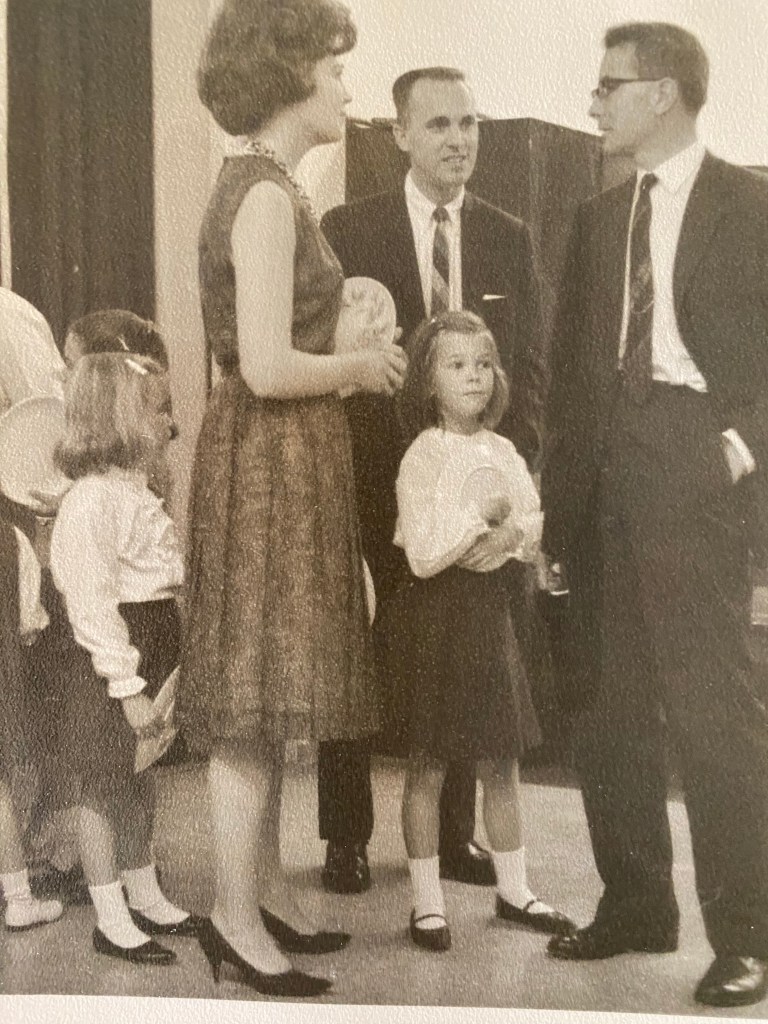
Venice, Italy, 2022, photo by Jodi McCullah. All rights reserved.

Leave me a comment: what was in your survival kit?

Leave a comment

What Tolstoy Said….

All happy families are alike, but every unhappy family is unhappy in its own way.

Leo Tolstoy, Anna Karenina, 1878

People who are happy are not paying attention. And probably stupid.

Me, 2005 in a seminary class (Yeah, I’m not proud of that.)

We all learn lessons growing up. Some friends tell me today about learning how to hold their own in a fist fight or how to plait hair or how to make a decent pie crust. Those tend to be the friends whose families do not match the same clinical dysfunction criteria mine did. Warning: some of this post might be triggering for readers. Take care of yourself, please.

Little sister, older brother and me in happier times. Circa 1962.

If you looked at my family tree, you’d see the roots are severed. I am grateful, though, that the tree trunk has survived and flowered nonetheless. While I have been cut off from my family of origin for more than a decade, I am so very grateful for my husband, my sons, my granddaughter and my husband’s large extended family. I do not lack for people who care about me; what I was not able to produce for some time, though, was a witness to much of my life before the break with my parents, siblings and extended family. I lacked someone who could pick me out of the class photo (usually one of the taller kids on the back row). Missing was anyone who knew I didn’t usually eat my birthday cake, only the icing, or that I read every biography and autobiography in my elementary school library and that I grieved when I finished books because, for the few hours when I was reading, I was able to wander around in another space and time – one that was not mine. I lacked anyone who could give a witness to any of the reasons why I thought for so long that happy people were not paying attention to the pain in life.

Can I get a witness?

When asked to describe my family as I was growing up, I’d explain: you could be lying on the braided rug in the living room, devastated, distraught, lost, and sobbing, and every member of my family would step around you at best. Or, at worst, they would chastize you for your selfishness: just look how you are upsetting everyone else by your pain! Not only did we NOT hold onto one another in times of crisis or pain, we denied one another’s right to be in pain. “How long you gonna be a victim?” was what was asked of me by a family member after she’d heard I was in counseling for being assaulted as a teen. I was in my early twenties. I had just remembered the assault that I had blocked out of my consciousness for several years because it was just too painful to remember. I had only just begun counseling and I felt her rebuke keenly. There was evidently no place in our family for that. She, a woman thirty years older and presumably three decades wiser, could not cotton my taking any time to understand and come to terms with what had happened to me. Today, thanks to counselors and learning about trauma, I would be able to put my hand on her arm and reassure her that she would never need to listen to my struggles. I would also explain to her that recovering from trauma requires some reflection, though, and some help understanding what happened and more than a little work to heal. I would assure her I certainly did my part to finish that work – to come home from the journey someone else started me on. I would also plan to be there for her if she ever felt like she could share her own pain.

Sadly, family breaks are more common in my family than not, though, so, when the relationship with my mother’s family was severed, our entire nuclear family was already split from Dad’s people. As an adult, I started a genealogical search only to find I had a great-grandmother living about an hour away by car until I was a teen whom I hadn’t known existed. I asked my parents at the time and was told “We didn’t like her very much.” Later, I found an old family photo with one woman’s face scratched out completely (and she had been sitting next to her twin brother in the photo!). What do you have to do, for goodness, to get completely scratched out of existence? Evidently, severing ties, splitting up was the response of choice for my people.

In the past few years, though, through the magic of the internet, I have been able to reunite with some folks from my childhood. While for some, that can be a hilarious trip down a bumpy old memory lane, for others of us, restablishing connections can be healing and grounding. As a sixty-something woman estranged from her entire family of birth for more than a decade, finding these old friends had been spurred by the need to find folks who could vouch for my previous life.

This, then, is a post about my friends from childhood and teen years reconnecting and discovering how little we knew about each other in spite of how close we thought we were.

Photo by Malcolm Hill on Pexels.com

I was always jealous of those who stayed close to their friends long after school; I believe now that most of my friendships were more akin to life boats in the midst of stormy seas. Survival was the goal, and perhaps we knew instinctively that two or three strands of rope were stronger than one, so we held onto one another. Once we found ourselves in new oceans, though, we grabbed onto new, different life connections, and let go of the old ones, not because we were inconsiderate or uncaring but out of necessity. No one had time or energy to look back; survival was the priority.

Puzzle Pieces

Trauma, though, can leave fragmented memories. One definition of trauma is that we remember all too well what we cannot forget but struggle to remember all the pieces in between – the rest of the story. I have long been embarrassed at being unable to remember large chunks of my life because I didn’t realize how large was the shadow of trauma and how it can so deeply darken the rest of our lives. The details, so many pieces, seem lost, scattered, in my case, all over the world like a favorite nesting toy. Through more than seventeen moves before I was old enough to leave home, curiously, I have somehow held onto most of a wooden nesting toy from Pakistan, where we lived when I was a child (stories for another post.) Some of the pieces are missing and others have been glued back together; today they serve as an apt metaphor for the struggle to repair and hold together memories of traumatic childhoods.

Comparing Notes

Once we reconnected, my friends and I began comparing notes. One childhood friend thought I was an only child though I have two siblings and we are all just a year apart in age. One of us had grown up with an abusive father. She married four times before she got help and stopped getting herself into abusive relationships. Another lived with an older brother who we now realize was a sociopath. She had found not words for when, as a seven-year-old, he had cheated, stole and tried to be sexual with her. Weren’t there rules about that?

That no adult saw all of this meant it continued, and by the time she was eight, he had run her over with a bike causing her to need stitches and hit her in the head with cutting board causing more stitches, and routinely touched her inappropriately. “Just a rowdy boy, right? Just a kid who doesn’t like to lose, wasn’t he? He’ll grow out of that, we are certain.” She grew up searching for an adult – any adult – around her to be the adult and a witness to what she was experiencing. She knows now that her brother simply passed along his own pain.

Healing began when a counselor said, “You were not imagining this. You are hurt, angry because you were betrayed by parents who were supposed to take are of you. You have those feelings because you have a brain and eyes to see. You doubted yourself and what you saw and experienced because you were raised by parents who were overwhelmed by their own pain and shame and guilt; they had nothing to offer you for yours.” A teen aged girl, she wanted her mother to teach her to curl her hair; instead, she watched her mother threaten to cut herself.

While it was happening, though, none of us “knew.” As teens in the late 60’s and early 70’s, we braved new styles together: we traded bell bottoms and hip huggers and together we tried cheap strawberry wine behind the concession stand at the drive-in movies, but we never shared about home. We didn’t “know” even though we saw each other every day at school, ate lunches together, joined cheer club together, and moved around in a pack as if we were attached to each other by velcro. We were all taken aback when we collectively realized that none of us, though fast friends throughout junior high and high school, had ever visited the others’ homes. No sleepovers. No parties together. None of us had ever even met the others’ parents. We didn’t know why, but we all somehow understood one another. Somehow we saw in each other kindred, if broken, spirits, and we found respite in our time together.

High School Dance 1973
We didn’t know how much we didn’t know.

Today, as the three of us somewhat gingerly share our memories, fragments and misunderstandings are beginning to make sense to us. Counselors and social scientists tell us now that we compartmentalised our lives, partly out of shame, partly to protect the others. We never spoke of life at home or after school; we kept those separate. In our defense, we didn’t often know what was going on in our homes wasn’t going on in everyone’s homes. Part of the power of dysfunction is that it simply seems like “that’s how it’s done, so why are you whining?” Or worse, we feared that the pain and chaos and constant crisis of our homes was somehow our own faults and if we’d only be better daughters….

Dysfunction, though, happens in shadows and darkness and thrives on secrecy.

We know now that each of us fought to get out of that darkness once we left those homes and we celebrate our individual efforts to keep our own lives in the light.

“The light came into the world, and people loved darkness more than the light, for their actions are evil. All who do wicked things hate the light for fear their actions will be exposed to the light.”

John 3:19b-20 CEB

What do we do differently?

We learned to encourage the children in our lives because each of us could remember at least one person who had encouraged us. Never underestimate the power of encouraging a child or teen; you may well be the only encouragement they receive.

We refuse to keep secrets. We ask tougher questions. When we see someone sobbing, we approach them gently and ask what we can do. If they don’t know or can’t answer, we sit down with them and wait until they are calmer. We hold sacred space for our own pain and for theirs.

One of the three of us refuses, even when facing family verbal and emotional abuse herself, to walk away completely herself because of a child in the extended family; she doesn’t want the child to feel alone. She knows how important it is for someone to say, “I see you. I see what happened. I see how confusing it must be.”

One of us worked hard to figure out why she kept getting herself into abusive relationships over the years and now she is able to choose healthier relationships and she doesn’t need to hide that relationship from us.

None of our parents paid any attention to where we went or with whom, so we each had resolved to offer our children a healthier childhood, making sure their friends knew us and we knew the parents of their friends.

We also grieve those who did not make it; each of us has family members still hurting, still in the darkness, unable for a variety of reasons to find their way out. We are grateful and we do not take our own growth for granted.

Okay, sharing isn’t always “nice,” but it IS healing.

The tagline on this blog is “Sharing is nice.” That is my witness. Sharing is difficult. Sharing is scary. Sharing is necessary. Sharing is essential. Sharing is healing. Sharing is powerful.

The good news is that we all found healing because we shared. There’s help out there and hope and healing and lots of folks who are called to listen and trained to help us when we share. Make sure you find someone who is trained and, if you don’t feel like you are being heard or they are helping, find someone else.

Several years after my aunt’s rebuke and her impatience with my healing process, I shared with a female friend at church. Sharing with the counselor had helped but the counselor wisely encouraged me to share with a friend. Me sharing, the counselor explained, can also create that sacred space where others find healing, too. That is the power of sharing. Choose someone safe, she said, but share. When we share safely, we create a safe place for ourselves and often for others, a place of healing. Amazingly, pain shared safely dissipates and loses its power over us.

Ask before you share with anyone other than a professional. Be aware that your trauma might trigger theirs. Always ask permission but ask and keep asking until you find someone to listen.

I did share and my friend was lovely and listened and the moment felt healing. The next day, though, her husband dropped by and stunned me when he said, “Mary told me what you told her.” I felt betrayed. How had Mary not known that I would not want others, especially men, to know? How dare she share my story? It was not hers to share.

“You just need to get over it,” he demanded. And suddently there I was again, back home, back where we keep our pain and illness in the dark, back where we keep secrets. I felt my pain rise up and choke me.

This time, however, I was different. This time it was the thought of going back into the darkness that had turned my stomach. “As it happens,” I told him, trying not to vomit, “healing apparently will only happen if I walk through the memory. They tell me I have to share to get well, so I’m gonna.” I was on the verge of apologizing to him for sharing with his wife because it had upset him so much when suddenly he sat down hard and started sobbing. Then he began his own sharing. He’d never talked about being a fighter pilot in VietNam and he desperately needed to tell someone. I don’t remember much of what he shared; what I do remember was being amazed that holding my own space for healing had created space for him. In that moment, he felt safe, too, and he stepped into that space for just a bit. We never talked again about his trauma or mine. Perhaps sharing helped him enough; perhaps he went on to seek more help because he, too, had seen the power of sharing.

Stepping out of the squirrel cage….

Mostly, the friends I reconnected with and I had individually found that, in an unexamined life, pain just gets passed down the line, generation to generation. We all were recipients of pain passed along, never knowing why or where it originated. The effects of trauma will keep rolling back around from generation to generation if no one stops long enough to find some healing and try to get out of that squirrel cage of crazy. Just ignoring the pain, or worse, denying its existence, guarantees the next generation will be expected to hold it, too, and they often have no idea the why or the where of that family trauma.

We may not have been able to protect our own children as well as we might have liked but it was not from lack of trying and we console ourselves by remembering that, because we have reflected, educated ourselves about trauma, shared with counselors, written and prayed, we have at least helped our children to get out of that damn cage. We may have done it clumsily, we may all be still rolling sometimes out of control on the floor after hurtling ourselves out of the cage, but we’re clear. We can take a breath. We can stop, stand back and reflect on that still-spinning wheel and maybe even pray for the family members still running on it. Because we are out, though, because we are talking, because we won’t hide any more, we have a fighting chance to NOT pass that trauma and dysfunction on down the line.

For a recent, well-done example of how trauma not shared can affect us and those around us, consider Tom Hanks’ movie, “A Man Called Otto,” or the book it’s based on, “A Man Called Ove,” by Fredrik Backman.

Talking About Death Won’t Kill You.

Pulling death out from the shadows and examining it in the light does not make death happen. In fact, it does just the opposite. Thinking about death, learning about it and accepting it, makes life happen.

Virginia Morris, “Talking About Death Won’t Kill You,” Algonquin Books. Kindle Edition.

Death is a funny thing. And I don’t mean in a dark humor kind of way but, rather, funny as in strange: we all do it, and, these days, we all know we ought to muster up our courage and talk to our loved ones about what we know is coming at some time, and yet few of us do.

Talking about how we want to die and what needs to be done when we do is a gift to our families and friends, kind and considerate; sometimes that’s the last gift we give loved ones. Pastors and health care workers and counselors encourage us to start the conversations early but far too few of us ever get our courage up to start, even though we surely love our families.

We often don’t even talk to our loved ones

AS we (or they) are dying.

The first person I sat with who was dying, died alone in a hospital room while his family waited out in a waiting room. That was thirty years ago. We did not know how to help him not be afraid and nothing we said could ease the fear but no one wanted to name that or claim it either, so we talked around him when we were in the room. We talked about the weather, the dog, the cost of eggs, anything except death and eventually most went back out into the aptly named “waiting” room.  I, just starting out as a pastor, stayed in the darkened room with this man who no longer wore his own clothing but rather a hospital-issued and worn cotton gown and asked for some socks that weren’t neon blue or orange and didn’t have those silly dot on them or some salt for the instant potatoes and who was just plain furious. He was angry about sox and pajamas and dying without some damn salt and without any choices: no choices about dying and not even any choices about how he would die. Thus far, as a pastor just starting out, I had read and discussed one book about how to minister to someone who is dying and could remember none of what the damn book said. I drove home that night screaming in my car. I had not signed up for that, and I was unprepared both for his anger and mine and this helplessness we shared. The journey into ministry was going to be rougher than I ever could have imagined.

Once I’d calmed down a bit, a pastor with more experience offered this simple advice: “Next time,” she said, “name it. Fear. Uncertainty. Anger. Questions. Whatever is in front of you while you sit there, name it.” There was a time when I would have discounted such a ridiculously simple suggestion, but it turned out to be great advice. In fact, in any difficult situation, naming whatever is in “in the room,” especially if it is scary, lessens the fear and opens up the space for questions, laments or even the jokes, all ways of sharing.

I buried about a couple of dozen members of that church over the next few years, including a suicide, my 18-year-old communion steward and a couple who had been married for more than 75 years and who died within a week of one another. All of those deaths brought up questions, and I tried to name what I saw and reassure us all that talking about death would not kill us. Most of those folks’ deaths happened fairly quickly, but one member of that first church took almost a year to die after receiving what he called his “death pink slip.” Over that year, David showed an entire church how to die a good death. Diagnosed with metastasized prostate cancer already destroying his back and ribs, the construction engineer who could no longer build houses started building birdhouses. He built hundreds of them in the months he was dying. His mind and his hands still moved well and in sync and he was grateful when his friends’ eyes lit up. He designed bird homes that celebrated the University of Tennessee for a Vols fan, several that looked like our little white country church and one I requested that mimicked a Lincoln Log cabin.

More importantly, though, as David died, as he dealt with the diagnoses, the treatments and the rapid onslaught of decay and death, he shared. He talked about what was happening to him to everyone who visited him. He taught us what the Hospice folks were teaching him, even describing what death might look like, how he might have some better days right before he died and what to watch for in his breathing as death grew nearer. In short, he did not hide or try to protect us from what was happening.  He named all of it and we are grateful for this evidence of his courage and love for us.

Because of David, I also found a great resource and over the years referred to it both for personal help and also to preach and teach. In, “Talking About Death,” Virginia Morris addresses so much of what keeps us from these important discussions. First of all, she says, “Pulling death out from the shadows and examining it in the light does not make death happen. In fact, it does just the opposite. Thinking about death, learning about it and accepting it, makes life happen.”

When I started this project a friend of mine called me, all upset. She felt that this endeavor was not only morbid, but dangerous. By studying death, she said, I might make it happen. A friend of hers had died of cancer while studying Portuguese death rituals. I, too, might be on a suicide mission. This subject was better left untouched. Her concerns may seem a bit odd at first, but they are not unusual. Death is the boogeyman, hiding in the shadows of our bedrooms, arousing all sorts of anxieties and fears—some valid, some silly, some we don’t readily admit even to ourselves. Most of us can’t imagine the end of our existence as we know it. We dread the process of dying, the pain and disability. We panic at the thought of leaving loved ones, or having them leave us.

Morris, Virginia. Talking About Death (p. 7). Algonquin Books. Kindle Edition.

What Did COVID teach us?

So many died during COVID alone and unable to be comforted by family or friends and we are more aware now than ever of the importance of being there for one another.

NEVERTHELESS, we struggle with starting the conversations before we are ill, before we are hospitalized, before we need hospice care.

Part of the issue is that we simply don’t have to talk about death much anymore. We simply do not talk about death, not even in churches even though a church seems like the best place to talk about death.

Wartrace United Methodist Church, est. 1849. Homecoming suppers were “on the grounds.” For most smaller Methodist churches, the cemetery often surrounded the church building.

In so many of those little churches we attended, all of the “Saints” who’d gone before were buried all around the church in the cemetery just outside the doors. Every few months, we would have “supper” on the grounds, meaning we spread our biscuits and fried chicken legs and pickles on platters on old checked table cloths on top of the graves of our ancestors, who were buried all around us.

There was no pretending they weren’t there with us, bodies underneath and souls swirling overhead, whispering in our ears, reminding us all they’d taught us and all they’d done, good, bad or just human. Don’t slouch. Eat your greens, too. Wipe your fingers on that napkin and not on your shirt, young man. These were the folks who’d walked through those cemetery gates and into that old wooden sanctuary each week and they had taught us how to follow those 10 rules Moses brought down from the mountain AND to turn that other cheek. Still, they didn’t have to create a moment to talk about death because they reminded us of it every Sunday and during revivals as we entered that sacred space.

Today we don’t have those reminders.  We do not see the cycle of life and death firsthand on a daily basis now. We do not wring the chickens’ necks and pluck them ourselves; few of rely on butchering hogs to have food for the winter, and we no longer prepare loved ones’ bodies for burial ourselves. We have people called to and trained to do these tasks and so the majority of us will never touch any dead body, never be faced with the need to handle a lifeless body, never have to be reminded we too will die, never find an occasion to talk about our deaths.

Easy for You to Say.

You might be thinking that as a retired pastor, of course, I have lots of experience sitting with people who are dying, sitting with the family and friends of someone who has died and just talking about death in general.  That is true, but all that professional experience did not make it any easier to start the discussions with my own family or to begin the work personally. In fact, I am embarrassed to say that it was a neighbor who suggested the book that started me on the process for myself and my family, by suggesting the book she’d found: “I’m Dead, Now What?” (See below.)

I want to offer some suggestions, then, some topics and some resources to help you do what is one of the most loving things you can for your family: discuss with them, prepare and plan so they are not left with the burden when you are gone or can no longer help. We can do this.
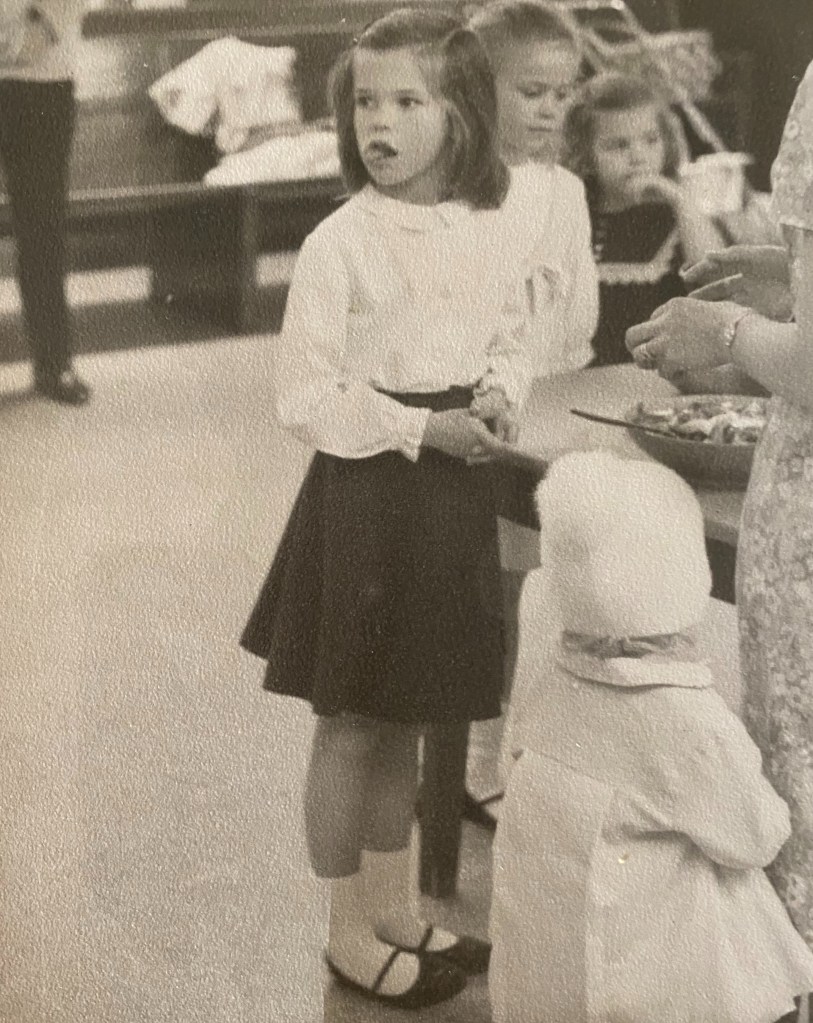
Excellent planner to provide peace of mind for those who need to settle your affairs. Helps organize your information, from pet needs to email and social medea to banking. Available on Amazon. By Peter Pauper Press

Start with the easier stuff.

If talking about death at all is just difficult for you, start with putting your papers in order and maybe your mind will become more used to the idea of realizing there will be a day when you (posthumously) say, “I’m Dead. Now What?” When you are gone, will your papers be in order? Will whomever is left to pay the bills, deal with property, take care of Fido or make other decisions know where to find what they need? Thankfully, there are wonderful resources for that as well. Starting here will often help us begin the many conversations we need to have around our own deaths.

Passwords, please. Can I get an amen?

If nothing else, safely providing a list of the seemingly thousands of passwords we all have now is one of the greatest gifts you can give these days. Don’t forget to tell them what the site is for the password; you know how you have spent hours trying to get back into your Netflix account. Think about how that’s going to work when it’s time to close out the account and stop the automatic draft for that times about fifty or a hundred, depending on how many apps and accounts you have.

Talk About How You Want to Die

We all hope to die at a certain way if we are honest and think about it for a moment and sharing that with one another around a kitchen table is a way to learn about one another.

Some of us want to die quickly, instantly. Some of us only hope for no pain. Many of us in my culture hope to die at home in our own beds surrounded by family and friends. Some of us hope to die with a silk parachute inflating overhead one last time; others of us hope to die in in satin ballroom shoes, our hips responding to the beat on the congas as a Latin band plays a cha-cha. Still others of us would love to take our last breaths in the arms of a lover. Some of the sweetest couples I’ve known debate who should go first: some do not want to be left alone after a longterm companion goes but most are more concerned about their sweetheart and hope that the other will go first so they are not left alone to grieve. They would take that grief upon themselves.

Consider doing a bit of research, then sharing.

In Japan, at least thirty years ago when I lived there, everyone in the neighborhood chips in to help pay for the costs of a neighbor’s funeral knowing that everyone else will do the same when their own time comes.

Funeral traditions there offered us a number of occasions to talk about dying and our own deaths. Once, a neighbor came to visit after her father had died and shared with me about the funeral since I had not been in town on the day of the funeral. I remember trying to put my finger on what was wrong as we sat and looked at a picture album of the funeral gathering and ceremonies until I realized that what was strange for me was that there was a photo album of the event. I had never known anyone to photograph a funeral.

There’s some fascinating and/or disturbing historical examples of cultural differences around death, such as mummifying and burying with everything you’d need to survive in the afterlife, including, sadly, your pets, and others we pray have been banned forever such as the Hindu custom of a wife immolating herself on the funeral pyre of her dead husband.

Write down your information first, then your wishes.

Think about what you want for a service, write down your wishes and share them with a family member and a pastor or another family friend who can help when the time comes. What are your wishes around being kept alive? Wishes around resusitation, extreme measures and even feeding tubes are much more difficult for family members if they are not aware of your wishes.

Do you want certain songs included in your service? Have a favorite verse? Talk about what you want and need or don’t want. Tell a pastor or trusted friend who can help you when you need to let your loved one die the way they’ve chosen, whether that means no , no on every possible intervention, i.e., their choices as best can be honored.

Clean up after before yourself.

In some societies, sorting through all your belongings, “death cleaning” is an established tradition. They are aware of the stress and pain of leaving all our “stuff” behind for our family to have to sort and clear and give away or sell or keep.

“Death cleaning,” or “döstädning” is a Swedish term that refers the process of downsizing before you die. Death Cleaning, explained in “The Gentle Art of Swedish Death Cleaning” is an gift you give your family. Sorting through, clearing out, giving away or selling all the “stuff” we can accumulate throughout our lives is an indication, the author writes, that you love your family enough to clear our unnecessary things and make your home nice and orderly well before you think the time is coming closer for you to leave the planet. The idea is that our spouses and children or grandchildren are not burdened with what can become a beast of a process, yet another source of pain for those grieving us when we’re gone, yet another indication that we didn’t want to talk about death.

(Magnusson, Margareta. The Gentle Art of Swedish Death Cleaning: How to Free Yourself and Your Family from a Lifetime of Clutter (The Swedish Art of Living & Dying Series) (p. 2). Scribner. Kindle Edition.) Also available on Amazon.

Start the conversation any way you can.

We all face it; people all over the world face it, but not always in the same manner, using the same customs, so, I’m thinking maybe talking about cultural differences around death and dying might be a way to start a conversation.

Did you know that those death masks, usually made by taking a cast of a person’s face after their death, were often kept as mementoes or used for the creation of a portrait or perhaps a scupture after the person had died and been buried. That could open a conversation. A lock of hair often is kept, a tradition started by Queen Victoria after the death of her husband. Tiny brooches might hold cremation ashes. Do you want to be cremated? This is the time to make sure a loved one knows that.

Just start.

Finally, to start the conversation, if none of the suggestions above have spurred you to sit down with your spouse or children or companion or pastor or priest yet, here is a poem I wrote after sitting with a man at my last church who was dying. Perhaps you can start simply by sharing this poem over a cup of tea, a pint of beer or some lovely scones your neighbor dropped by to share. “Hey,” you can say, “I read this poem about death and dying today and it made me think. Can I read it to you and you tell me what you think?” You get a yes and maybe some discussion will follow. Have some questions ready. Maybe a version of “Would you rather…?” Would you rather be buried at sea or on a mountain? Would you rather have everyone sing happy songs at your funeral or maybe tell their favorite joke?

Every time I have spent time with someone who is close to death, I recognize I am closer to my own death and my own fears and though both death and the fear of dying creep ever closer, neither seem to crowd out the peace I have found in talking about, in naming, what is before me, even death. It’s pretty much the one thing we all have in common. Let’s talk!

Sitting with the Dying

I used to think sitting with someone who's dying took courage.
Now I think it is much more selfish than I might ever want to admit.
It is an act of hope, yes.
If I am honest, though,
the hope is that someone else will sit with me when I'm the one who's dying.
There is prayer
but the prayer is that someone who knows me will wipe the drool
from my chin when the time comes.
There is the seeking of promises, guarantees, bartering if
necessary,
so that someone whose face I used to recognize will
cup my face in the palm of their hands when I cry like a baby, or
pluck the hairs from my upper lip because even a dying woman
deserves to feel pretty.
The first time I sat with someone who was dying, I went into that dark room because no one else would and because I couldn't bear
anyone dying alone.
Except now I know we too often do anyway.
Still, if there's any comfort to be offered there, I will selfishly offer warm, gentle and soft touches if only because I know I want the return.
I confess then that sitting with someone who's dying
is a selfish act for me.
It is my way. A way to make the world the place I want it to be,
where no one dies alone
if only because I cannot bear to live in a world where we do.

~Jodi McCullah 2022

4 responses to “Talking About Death Won’t Kill You.”

  1. Anne Culver Avatar
    Anne Culver

    Thank you for these reflections, Jodi. As a hospital chaplain, I’ve found that many people who’ve been told “some bad news” (that they’re dying), desperately need someone willing to help them work through just what that might mean for them and their loved ones in our culture in which even thinking about death seems to be taboo.

    Liked by 1 person

  2. A. Getty Avatar
    A. Getty

    Thank you for sharing. We have been having more of these conversations lately and your reading suggestions are helpful.

    Liked by 1 person

  3. Earnie L Avatar

    I was raised with grandparents who took me to their church’s dinner on the grounds. One of my favorite places to photograph is a cemetery. I imagine all of the lovely lives and interesting people there. And, my Mother taught me that there are far worse things in this life than dying. Thanks for the lovely article.

    Liked by 1 person

  4. Joan Butler Avatar
    Joan Butler

    Jodi, thanks so much for these thought provoking words. We’ve started the process, but need to go deeper.

    Liked by 1 person

Leave a comment

More Lessons from the Ocean – A Warning to the “Aggressively Helpful” Among Us

Walkway from homes to the beach at St. Augustine Beach in aftermath of Hurricanes Ian and Nicole, 2022. Photo Jodi McCullah 2022 All Rights Reserved

Walking along the St. Augustine, Florida, beach and seeing the aftermath of landfall of two hurricanes in the course of a couple of months, I realized that the ocean, like any living thing, strikes back when other living creatures encroach. Many a relationship has suffered and been destroyed or abandoned because of one partner taking up space that the other is meant to be occupying. Makes sense that the ocean would be no different. When we do not recognize and honor her space, this, the largest creature we humans interact with and desperately need, can be terrifying and mighty.

Walking along that beach pondering relationships and what the ocean offers for healing was humbling when I considered the damage we did first. St. Augustine Beach saw some of its worst flooding this past year in an area that had been “repurposed” by a land developer in the 1920’s.

In “Anastasia Island” Kenneth M. Barrett, Jr., a local photographer and writer, describes how Davis Shores was “built” by filling in oyster beds and salt marshes with dredged materials to create a new space to build homes. That neighborhood, ironically, suffered some of the worst flooding during the recent storms and, though I cannot claim to know of direct causation here, it has been telling how the ocean seems to have tried to reclaim much of the beaches in general where homes have been built. (www.LegaciesandMemoriesPublishing.com)

Photo Jodi McCullah 2022 All Rights Reserved

Relationship Lesson One: don’t take what’s not yours, including space. We’ve all sat at a table or on an airplane or shared the stage with someone who feels the need to take up more than their fair share of the space. Not only do these folks not share, they do not relinquish the extra space when confronted and usually do not seem either able OR willing to figure out themselves that they have claimed more than they deserve. Try to walk on an indoor walking track, for example, and notice who immediately allows faster walkers to pass and who seems never willing to move over.

Photo Jodi McCullah 2022 All Rights Reserved

Back at the beach, when walking after a storm surge, you will see newly-formed “cliffs.” Actually, these are twenty-foot-tall sand dunes sheered off by the hurricane’s storm surge so that they now resemble cliffs. New sand is being brought in to repair those; many of them are all that separates thousands of homes and the ocean. More to the point here though is how we who traverse and hope to find healing for relationship damage respond to the markers along the way. On the beach, there are markers to show us the paths we who walk the beach are asked to respect and follow; authorities ask us to stay on those paths to allow the dunes to heal. These dunes were habitats and breeding grounds before the storm, the places where others lived and breathed. Do we see the other creatures who also walk here? Do we respect the boundaries they have set? Or are we oblivious, or worse, do we simply disregard those markers in the sand of our relationships?

Of course, it is sad that most of us living “First World” lives take up more than our fair share of the world’s resources and leave more than our fair share of the messes that need to be cleaned up. That’s a post for another day. We cannot possibly recognize those transgressions if we do not, however, first recognize how we do this on a personal basis.

Those who are faithful in the small things will be faithful in the big things.

Luke 16:10

Listening to the beach when you have a fractured relationship somewhere in your life can also bring lessons in repairing those relationships, complete with intentionality and peace offerings even in the presence of the mangled metal aftermath.

Photo Jodi McCullah 2022 All Rights Reserved

Lesson two: be intentional about making space for the others in your life, especially after there has been a storm. On the beach, finding a gentle space to meet might mean sitting quietly next to a tide pool where the water and the emotions are calmer, quieter and restful and thus, where there is space for healing. Author Joan Didion and her husband, author John Dunne, shared for years the habit of walking every day in Central Park. They did not always walk together, she says in “The Year of Magical Thinking.” They liked different routes. Of course they did. They were two distinct creatures and would not share every single preference. They routinely, though, intentially, kept one another’s routes in mind and they made certain to cross one another’s path before leaving the park. This evidently was their habit, no matter how they felt about one another of a day.

There is calm and healing even simply in sharing space quietly with no other agenda, only being in the same space and breathing the same air, and this is especially necessary and powerful after a storm has visited and left you or your friend, child or partner feeling mangled. Tidal pools are physical pools of rest the ocean offers us, a physical natural example of the valuable practice of simply, quietly, with intention, sharing space. The message of doing so in a fractured, fractuous relationship is as powerful as it is difficult. Holding space for the other with intentionality speaks loudly without making a sound.

Holding space for the other with intentionality speaks loudly without making a sound.

Lesson three (and I can’t believe we need to say this out loud): give to others in your life, but only give what’s yours to give. Every time the tide comes in, as it goes back out, the ocean leaves gifts, mostly of shells, the abandoned habitats of creatures who no longer inhabit them. We can find many gifts there when we walk along as the tide goes back to its home. Quiet observation (notice the emphasis on quiet) takes you to those places where those shells are less damaged because there the tide is gentlest.

Photo by Jess Loiterton on Pexels.com

Tidal pools, though, are packed with sea life, from snails to barnacles to small fish. These pockets of seawater are not offering us souvenirs; the creatures in tidal pools are still alive. Where you have gone to find some quiet and calm is where they live. The same goes for the dunes where coastal authorities strive to rebuild lost habitats of the Anastasia Island beach mouse, the gopher tortoise, laughing gulls and wood storks.

Lesson Four: Do not assume you know what the other person wants or needs. You MUST ask. On our beaches, the county has taken to posting signs warning NOT to “help” a gopher tortoise if they see one along the shoreline. People think they are being helpful when they see one of these tortoises headed inland, pick it up and deposit it in the ocean. This will harm the tortoises because tortoises are NOT turtles. Tortoises are land creatures, and, if left in the ocean, could drown. The intentions of these helpful souls are no doubt good; they do not, however, show an interest in or an understanding of the need to ask what the other creatures need. We call that being “Aggressively Helpful.” And I know I am as guilty as the next person. We want to help so badly that we override what the other creature needs by not finding out what that creatures needs or even IF the creature needs or wants our help. We run roughshod over their needs trying to meet our own need to be seen as helpful.

Photo Jodi McCullah 2022 All Rights Reserved

This is actually not much different from ignoring those signs asking us to stay off the dunes. There, we simply go where we want. Being aggressively helpful, though, means we do for others what they likely could do themselves IF they wanted, but we do it without even asking. There is, then, such as thing as being too helpful. You may just want to look around but the salesperson is going to help you anyway. You may need to work things out in your relationship but one of your parents jumps in to fix things. In terms of relationships, trying to be too helpful equals proving to the other once more that you do not respect their space and choices nor do you value what they want or need, especially if it isn’t what you need.

My need to help that tortoise might be so overwhelming that I do not take the time to check and see if the creature before me needs my help (and, let’s be real, we can do this on our phones now that most of us carry them to the beach.) Come on. I am being aggressively helpful when I do not ask (whether I’m standing next to my friend or consulting a search engine for the difference between tortoise and turtle.) I do not listen when I find out that both of those creatures need me to leave them be, to give them the respect of their own space. Be forewarned: not asking, not respecting space too often means I am focussed on my own pain in the relationship. In fact, all of these behaviors scream that loud and clear.
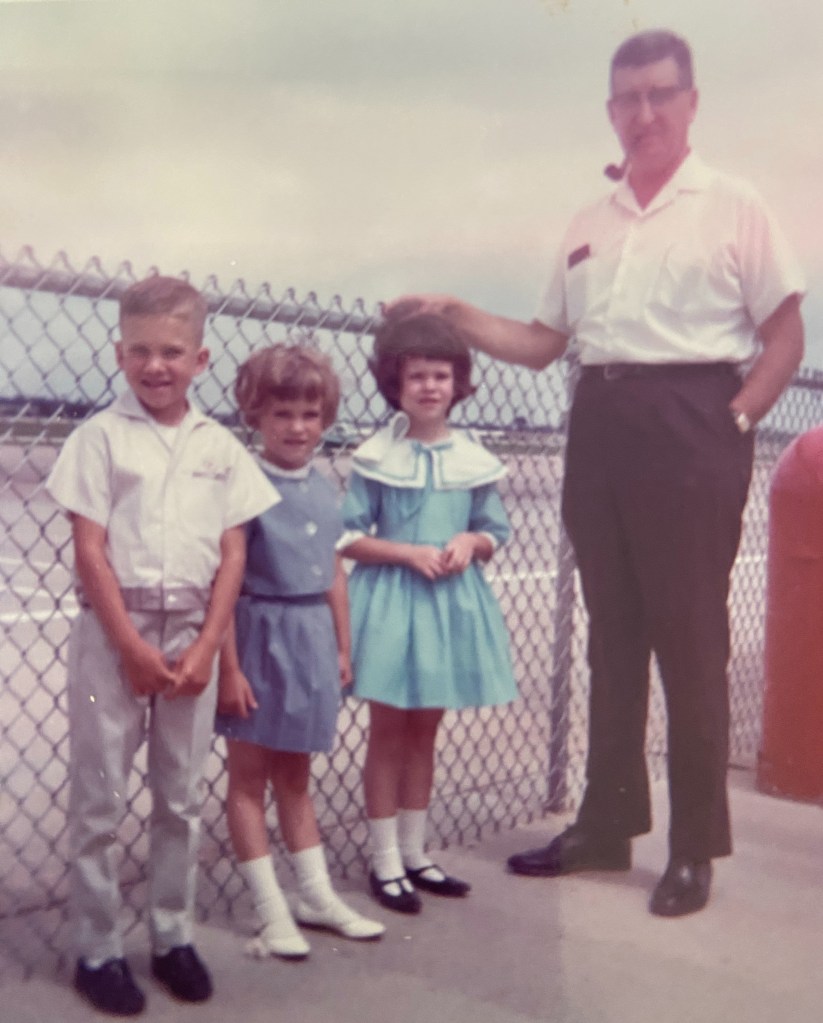
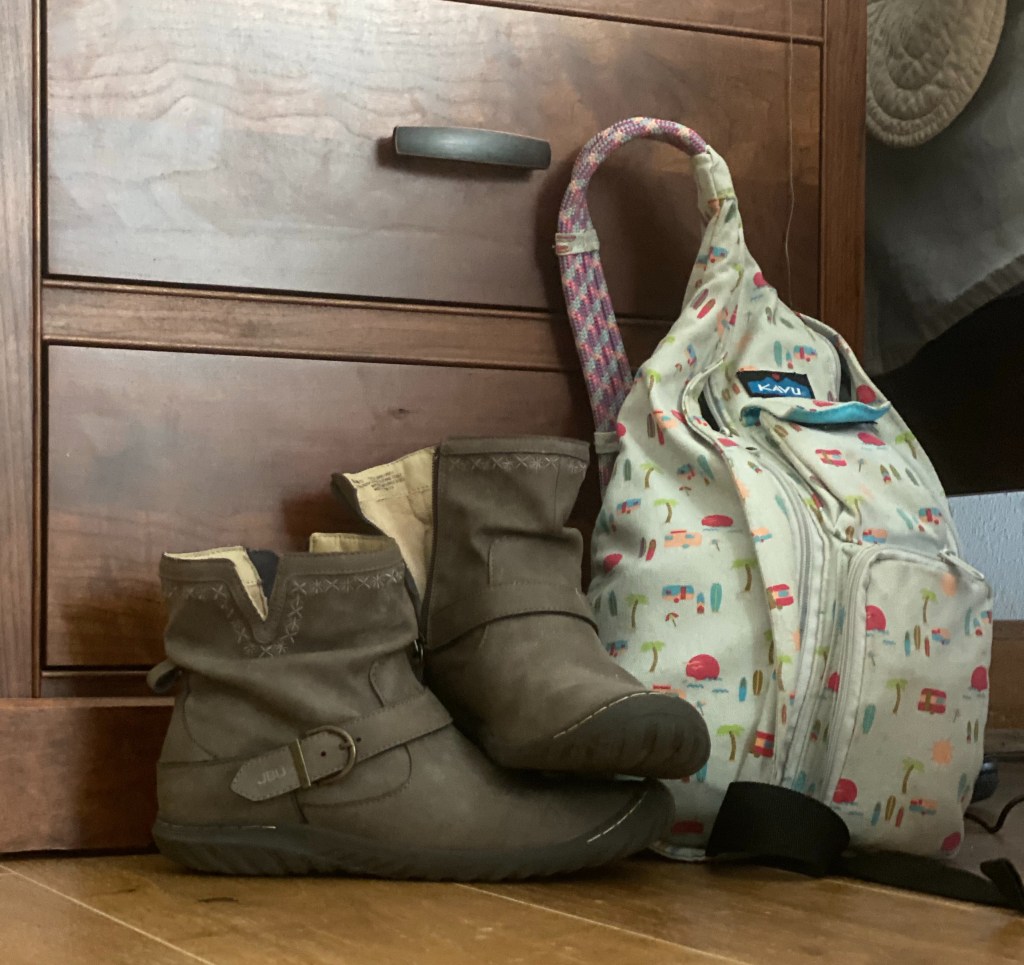
Maybe, if you’ve read this far and are in pain in a relationship, it’s time to ask if the other will sit quietly with you at a tide pool (lake, pond, mountain view) to rest and see if there isn’t some wisdom there for you. Shh. No. Just sit quietly. I know if feels like it’ll kill you but it won’t. It’s okay to admit that sitting quietly when we are in pain is really difficult. Just breathe in the shape of the leaves. Feel the snow on your arms as you make a snow angel. Trail your hand in the water as the canoe floats along. There are lessons like these all around us. In today’s lessons, the ocean teaches us that, in relationships, we need to respect the other creature enough to ask, then listen and, oh yeah, show some respect and stay off the dunes.