
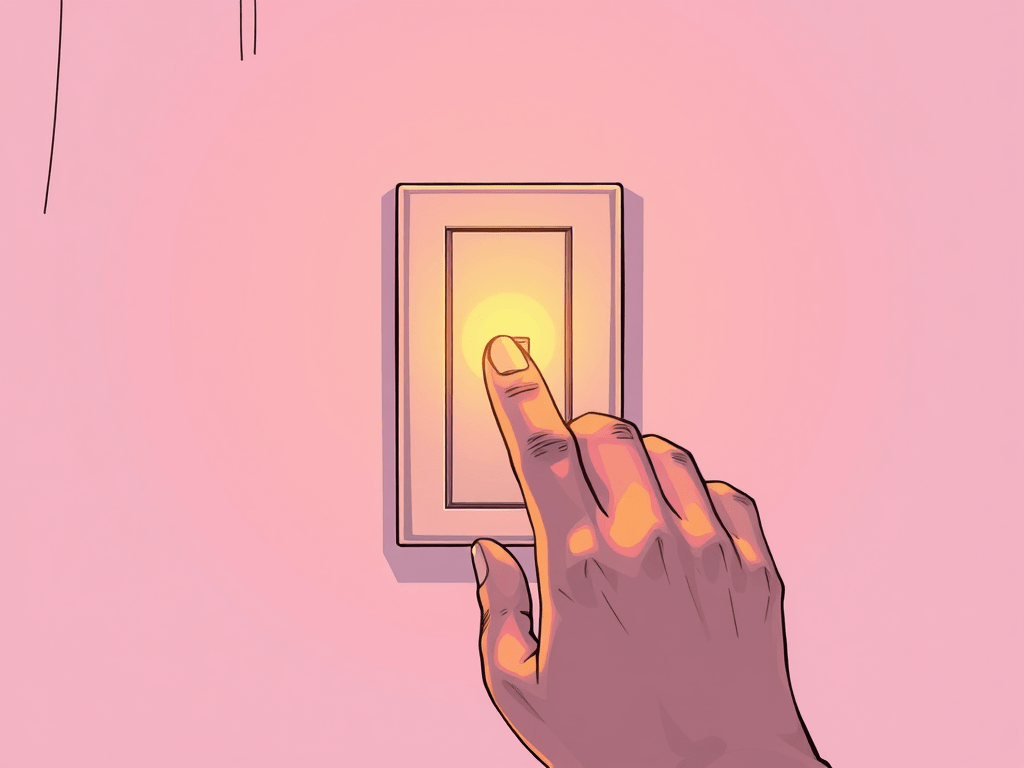
You’ve been there. You flip the light switch but nothing happens. You push the covers back and scurry across the chilly floor only to realize the thermostat doesn’t respond with some heat, so you curse yourself for not investing in throw rugs, slippers, a generator.
As minutes become hours, what started out as annoying can become a serious hurdle to starting your day with the looming potential to morph into danger for you and your family though. We’ve seen how easily a home without heat can become deadly.
In the case of my granddaughter, who has Cystic Fibrosis, lack of power for any length of time means someone has to beat her on the back and chest for thirty minutes twice a day to break up deadly mucus that can build up. At night, because she has a feeding tube, losing power for more than a couple of days means she cannot consume enough calories to provide the nutrition her body needs.
In the United States, though, most of us operate on the assumption that the things we trust will be there. Switches provide light. Cars start. Ambulances come. Social Security checks are deposited. We will be able to buy insulin. The medicine will be available and safe.
We forget we operate on trust.

That is, until the light switch doesn’t respond—until we are left sitting in darkness.
Again, it’s mostly just annoying in the short term for most of us because our experience is that we can have faith someone out there is working on it. Maybe we call the power company to report the outage to verify the powers that be know our predicament, but our expectation, our experience has been that someone out there is doing their job and working to restore our power.
Until we realize they aren’t.
Until we realize no one is on the job, maybe because they cannot get there, maybe because there is no way to fix the problem, or maybe, we fear, there is someone in control who feels empowered to decide who gets attention and service and who doesn’t, who deserves light and food and civil rights and who isn’t worthy of those things.
It’s terrifying to realize you might not be able to pay your rent next month if you do not, in someone else’s opinion, deserve to be paid. To add insult to injury, that same someone and his cronies even demonize you for the audacity to work for a non-profit whose aid reaches outside the country.
It’s even more terrifying to wonder if there is anyone doing anything about the chaos since reporting is sporadic and mostly limited to U.S. news sources. Visit another country and watch the news, though; we are not only not alone, but neighbors the world over grasp how interconnected we all are.
Few of us in the U.S. are aware of how incensed our friends in other countries are in reaction to the chaos in our country.
We, on the other hand, seem to be simply baffled.
We’re watching those in power operate in a way we’ve not experienced, maybe ever. They are moving aggressively, not collaboratively. Hell, they are starting the conversation by turning off the power, then daring us to come and stop them. We are baffled.
When did we decide we needed to regress socially? When did we agree to dismantle all the social advances of the past century? What’s next? Smokey the Bear is homeless? Littering is okay? Seriously, will we be told soon that teachers, libraries, recycling centers, veterans’ services are the problem? How long before we’re being told child labor laws are unnecessary? All it takes – all it has taken – for most of us is a few weeks of watching this behavior around us before the fear, the terror we feel, is that no one will try now and eventually no one will be able to stop him.
The rug has been pulled out from under us.
We have been reminded as of late just how fragile our lives and how vital are our interactions. I’m thinking this painful recognition, though, is a gift. That may sound incredible, but I believe that those of us who are pretty secure most of the time are blessed when we become painfully aware of the tenuous nature of those threads that hold us together. I believe we more fully join the ranks of humanity when we who do not usually go hungry or worry that someone will start shooting at us when we are in the market, feel that sudden sick feeling in our stomach and become acutely aware of how easily our bones break and our breathing can stop. Fragile. Vulnerable. In denial until we aren’t able to be any longer.

So many people in our world cannot rely on a light switch to have any effect. So many might not even have a light switch at all.
Reminding myself of that, though, does slow me down, make me look around, and help me think about the countless others in this world who are struggling. Two decades ago, I visited Nicaragua with a study group for Vanderbilt Divinity School. In Nicaragua, the literacy rate at the time was 50%, and the material conditions are worse than that: no one, for example, not even in the government offices, had toilets down which you can flush paper because there existed no viable sewage treatment facilities; no one had clothes washers, let alone dryers; everyone did their wash on a washboard. Because there are no emissions standards to speak of, air pollution was a palpable problem. In that tropical heat, only major buildings could be air-conditioned; most houses had no screened windows, and the majority of the people living outside of towns lived without electricity or running water, let alone sewage. A family with a new cinder-block, two-room house was considered rich, even though the floors were dirt and there was no electricity, even though they used an outhouse and got their water from a well.
The family I stayed overnight with in the countryside had a five-year-old son. The parents–in their twenties– both worked five days a week in the coffee fields or the local elementary school; then, on Saturdays, they both walked seven kilometers to the bus stop to ride into town to attend high school because neither of them had had the money to attend high school when they were teens. The elementary school which their son attended had 120 children, in three rooms with 25 desks; it had three teachers, few supplies, no water and no toilet, and no heat or air conditioning.
Medical care was rare; most people in the countryside would walk an entire day sometimes to see a doctor and get a tube of antibacterial cream. In Managua, children who lived on the streets (the numbers were in the thousands) sniffed airplane glue every day because the glue and the high they got was the only thing that would dull their constant hunger. Tragically, while the glue, which numbed their hunger, also killed their brain cells; most of those street children would die from the damage within ten years. This is their reality, the reality of more than ¾ of our world still today, a reality we neither see nor want to see and yet most of the world has no choice in the matter like we do.
One of the first things I learned on this trip to Nicaragua was that I am rich. I realized I carried more in my daypack than most of our hosts owned altogether. I can afford to throw away food when it goes bad or when I don’t finish my plate. I do so every day. I’m not considered a particularly wasteful person, but I have learned to take for granted that I am not going to starve and so I did not feel much guilt throwing food away. Until I started noticing how carefully people in Nicaragua prepared and kept food in order not to waste it. We would never eat food that came off a stranger’s plate; many of us will not even share food with family members. Once it’s been touched, we tend to toss it because it is contaminated with germs, bacteria, who knows what. Now I realize what a “luxury” it is to be able to throw food away. Far too many of our international neighbors cannot afford such a luxury. The people who fed us in Nicaragua took whatever was left on our plates and put it back in with the other leftovers to be eaten at the next meal. This luxury to waste, though, I realize now, is part of what isolates us.
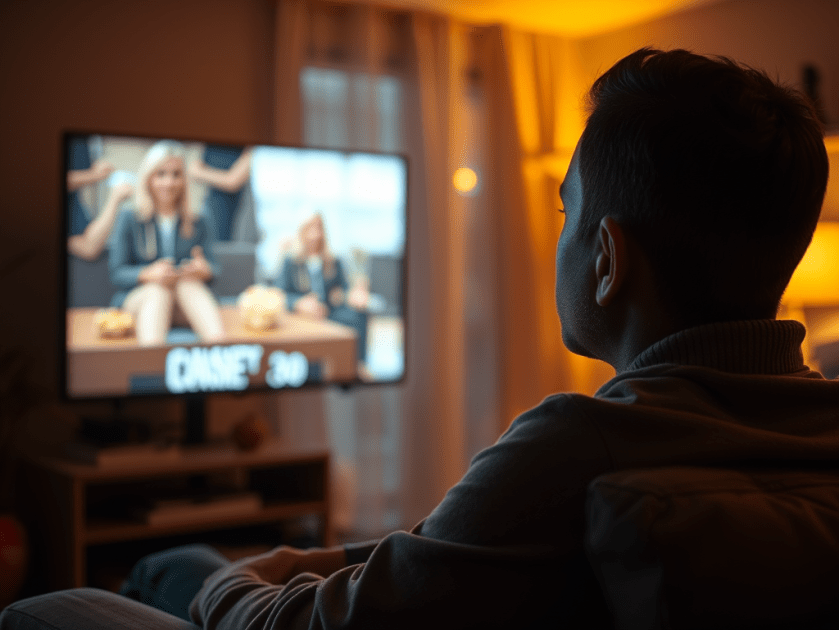
When we do not recognize a need for one another, sitting alone on our own couch binging movies is just easier.
This is particularly evident in the U.S., I believe, and the COVID lockdowns of 2020 only exacerbated our tendency to isolate. It simply does not occur to us here as easily as it seems to in other countries that, together with our neighbors, we could figure out how to find – and take – some power.
One of the questions we got most often in Nicaragua was how it was that so few of us were active in politics; grassroots movements and neighborhood groups were the norm there and everyone played a part in helping make decisions about governance. When I offered that I was impressed with how everyone played a part, they asked, “How is it that you don’t?”
How is it that we do not reach out naturally, do not work together, do not at least recognize we are not alone? Why does that idea seem so foreign to us?
When I returned home to preach in the rural church I served, I shared with my congregation this local legend I’d found while researching poverty.
A poor peasant lived daily on the verge of starvation. One evening, the old man found a basket of apples on the doorstep of his tiny hovel. Delirious with hunger and joy, he sat down to eat in the light of his one flickering candle. You can imagine his disappointment when he bit into the first apple and found it rotten and wormy. He tossed it aside and tried a second only to find it in the same condition. Again, a third and fourth apple were rotten. Torn by hunger and disgust at what he saw in the apples, the starving peasant paused to consider his choices. Hesitating for only a moment, he blew out his candle and ate.
I’m grateful to report that such stories and meetings with those living in poverty changed much of how I see our world. Even twenty years later, lessons emerge regularly from unexpected places. Recently, I experienced an epiphany while riding my bicycle that moved my understanding of this story and connected it to the questions we’d been asked by our hosts in Nicaragua. One of the reasons I live where I live is because I can ride my bicycle or walk to much of what I need. Walkability. Walkability scores in most of the places I’ve lived in this country are low. Not that there aren’t plenty of motorized vehicles of all sorts in my neighborhood, but riding during the day is only frightening to me when I need to cross the main 4-lane road. The usual vigilance does take some of the joy out of the ride: drivers who don’t see you as they pull out of a home or parking lot, grates in the road, debris in the road, rocks in the road. Just to be safe, I often will walk my bike across this road even while I’m in the crosswalk, furtively watching for that racing driver who might not see me even though I am in the marked crosswalk and have the green light.
Recently, I left an event later than I had planned, though, and so the ride home at dusk was more dangerous than normal and the spectacular sunset wasn’t helping visibility. My mood was darkening as well, until I looked around me (while stopped and waiting for the light). I was spiraling from frustration to self-pity, I realized, then from defensive to angry. I began to wonder if the people around me were feeling the same; my tendency has been to believe I am the only one.
My epiphany, though, was that I was not alone. Older couples were waiting for trolleys, a neighbor who commuted by bike to work was waiting to walk across the road, a couple trying to get to the grocery store across the road was stepping over debris left from the last storm; all of them were vulnerable like me. I did not know if any of them were consciously feeling fragile or in danger, because we were not communicating; hell, we barely made eye contact. If we had been at least acknowledging one another, though, perhaps we would eventually discover one or two of us had ideas about making the commute safer for bikes or pedestrians. We might even have discovered in some locales, for example, that there exist efforts for community organizing around safe travel for non-motorized travelers. Because they do; it’s just that so many of us in this country do not know about them because community organizing has not been a necessary part of our lives until recently.
Stopping to get to know a pedestrian at that moment simply did not seem like it would have been welcome, though, so I did the next best thing I could think of to connect: I prayed. I began to pray for not only my own safety but that of others as they passed me on the way. I could connect, I realized, at least for a moment and still allow all of us to focus on safely completing our journeys.
Moving out of myself required a conscious effort, but that is where I will find others struggling just like me. When I am most afraid or feeling most alone, the best thing for me to do is to get out of myself because I am seldom as alone as I think in my grief or fear or struggles.
Turns out, what seems most personal is quite often universal. If I am hurting, others around me are, too.
For the first time, it occurred to me to wonder why the farmer in the story had not considered taking his apples next door to see what the neighbors had, a kind of stone soup potluck sharing. Maybe we can find our neighbor and compare notes about what has worked in the past when the lights went out. Maybe we can pool our resources for when generators are needed. Maybe we go together to speak to our representatives or, when they do not listen, organize to elect new ones because together we now more keenly recognize that keeping the light switches working might require some effort on our part. Maybe that’s not all bad.
Realizing how fragile we are, then, is a gift, one that can isolate us or bring us together.
At the very least, when the lights go out and we can no longer assume we are safe, perhaps we take a breath, greet our fear with gratitude and look around us, recognizing that we are, in fact, most fully human when we feel the most fragile.

 Emptying The Backpack