Talking About Death Won’t Kill You.

Pulling death out from the shadows and examining it in the light does not make death happen. In fact, it does just the opposite. Thinking about death, learning about it and accepting it, makes life happen.

Virginia Morris, “Talking About Death Won’t Kill You,” Algonquin Books. Kindle Edition.

Death is a funny thing. And I don’t mean in a dark humor kind of way but, rather, funny as in strange: we all do it, and, these days, we all know we ought to muster up our courage and talk to our loved ones about what we know is coming at some time, and yet few of us do.

Talking about how we want to die and what needs to be done when we do is a gift to our families and friends, kind and considerate; sometimes that’s the last gift we give loved ones. Pastors and health care workers and counselors encourage us to start the conversations early but far too few of us ever get our courage up to start, even though we surely love our families.

We often don’t even talk to our loved ones

AS we (or they) are dying.

The first person I sat with who was dying, died alone in a hospital room while his family waited out in a waiting room. That was thirty years ago. We did not know how to help him not be afraid and nothing we said could ease the fear but no one wanted to name that or claim it either, so we talked around him when we were in the room. We talked about the weather, the dog, the cost of eggs, anything except death and eventually most went back out into the aptly named “waiting” room.  I, just starting out as a pastor, stayed in the darkened room with this man who no longer wore his own clothing but rather a hospital-issued and worn cotton gown and asked for some socks that weren’t neon blue or orange and didn’t have those silly dot on them or some salt for the instant potatoes and who was just plain furious. He was angry about sox and pajamas and dying without some damn salt and without any choices: no choices about dying and not even any choices about how he would die. Thus far, as a pastor just starting out, I had read and discussed one book about how to minister to someone who is dying and could remember none of what the damn book said. I drove home that night screaming in my car. I had not signed up for that, and I was unprepared both for his anger and mine and this helplessness we shared. The journey into ministry was going to be rougher than I ever could have imagined.

Once I’d calmed down a bit, a pastor with more experience offered this simple advice: “Next time,” she said, “name it. Fear. Uncertainty. Anger. Questions. Whatever is in front of you while you sit there, name it.” There was a time when I would have discounted such a ridiculously simple suggestion, but it turned out to be great advice. In fact, in any difficult situation, naming whatever is in “in the room,” especially if it is scary, lessens the fear and opens up the space for questions, laments or even the jokes, all ways of sharing.

I buried about a couple of dozen members of that church over the next few years, including a suicide, my 18-year-old communion steward and a couple who had been married for more than 75 years and who died within a week of one another. All of those deaths brought up questions, and I tried to name what I saw and reassure us all that talking about death would not kill us. Most of those folks’ deaths happened fairly quickly, but one member of that first church took almost a year to die after receiving what he called his “death pink slip.” Over that year, David showed an entire church how to die a good death. Diagnosed with metastasized prostate cancer already destroying his back and ribs, the construction engineer who could no longer build houses started building birdhouses. He built hundreds of them in the months he was dying. His mind and his hands still moved well and in sync and he was grateful when his friends’ eyes lit up. He designed bird homes that celebrated the University of Tennessee for a Vols fan, several that looked like our little white country church and one I requested that mimicked a Lincoln Log cabin.
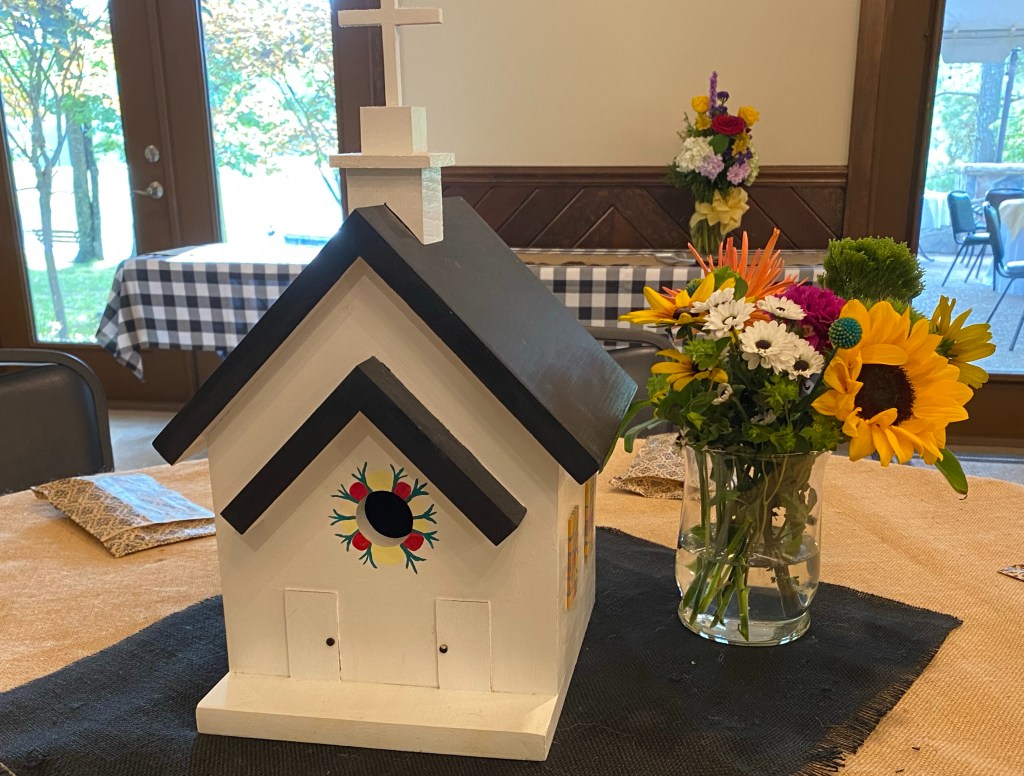
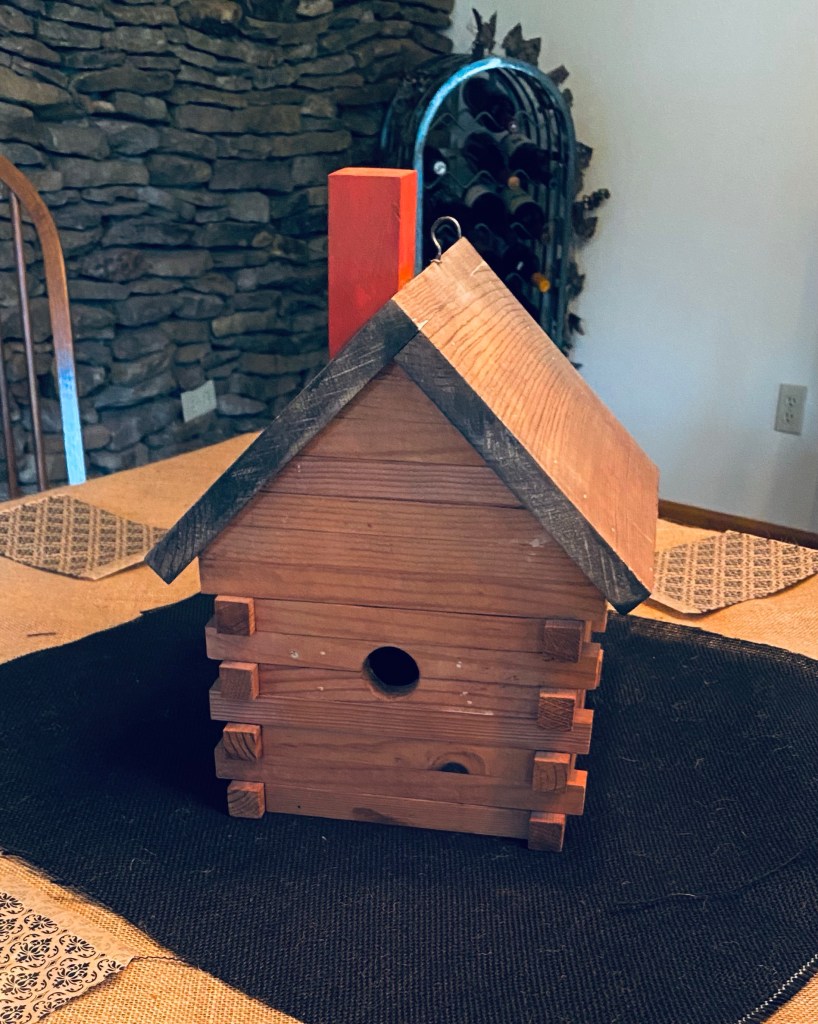
More importantly, though, as David died, as he dealt with the diagnoses, the treatments and the rapid onslaught of decay and death, he shared. He talked about what was happening to him to everyone who visited him. He taught us what the Hospice folks were teaching him, even describing what death might look like, how he might have some better days right before he died and what to watch for in his breathing as death grew nearer. In short, he did not hide or try to protect us from what was happening.  He named all of it and we are grateful for this evidence of his courage and love for us.

Because of David, I also found a great resource and over the years referred to it both for personal help and also to preach and teach. In, “Talking About Death,” Virginia Morris addresses so much of what keeps us from these important discussions. First of all, she says, “Pulling death out from the shadows and examining it in the light does not make death happen. In fact, it does just the opposite. Thinking about death, learning about it and accepting it, makes life happen.”

When I started this project a friend of mine called me, all upset. She felt that this endeavor was not only morbid, but dangerous. By studying death, she said, I might make it happen. A friend of hers had died of cancer while studying Portuguese death rituals. I, too, might be on a suicide mission. This subject was better left untouched. Her concerns may seem a bit odd at first, but they are not unusual. Death is the boogeyman, hiding in the shadows of our bedrooms, arousing all sorts of anxieties and fears—some valid, some silly, some we don’t readily admit even to ourselves. Most of us can’t imagine the end of our existence as we know it. We dread the process of dying, the pain and disability. We panic at the thought of leaving loved ones, or having them leave us.

Morris, Virginia. Talking About Death (p. 7). Algonquin Books. Kindle Edition.

What Did COVID teach us?

So many died during COVID alone and unable to be comforted by family or friends and we are more aware now than ever of the importance of being there for one another.

NEVERTHELESS, we struggle with starting the conversations before we are ill, before we are hospitalized, before we need hospice care.

Part of the issue is that we simply don’t have to talk about death much anymore. We simply do not talk about death, not even in churches even though a church seems like the best place to talk about death.
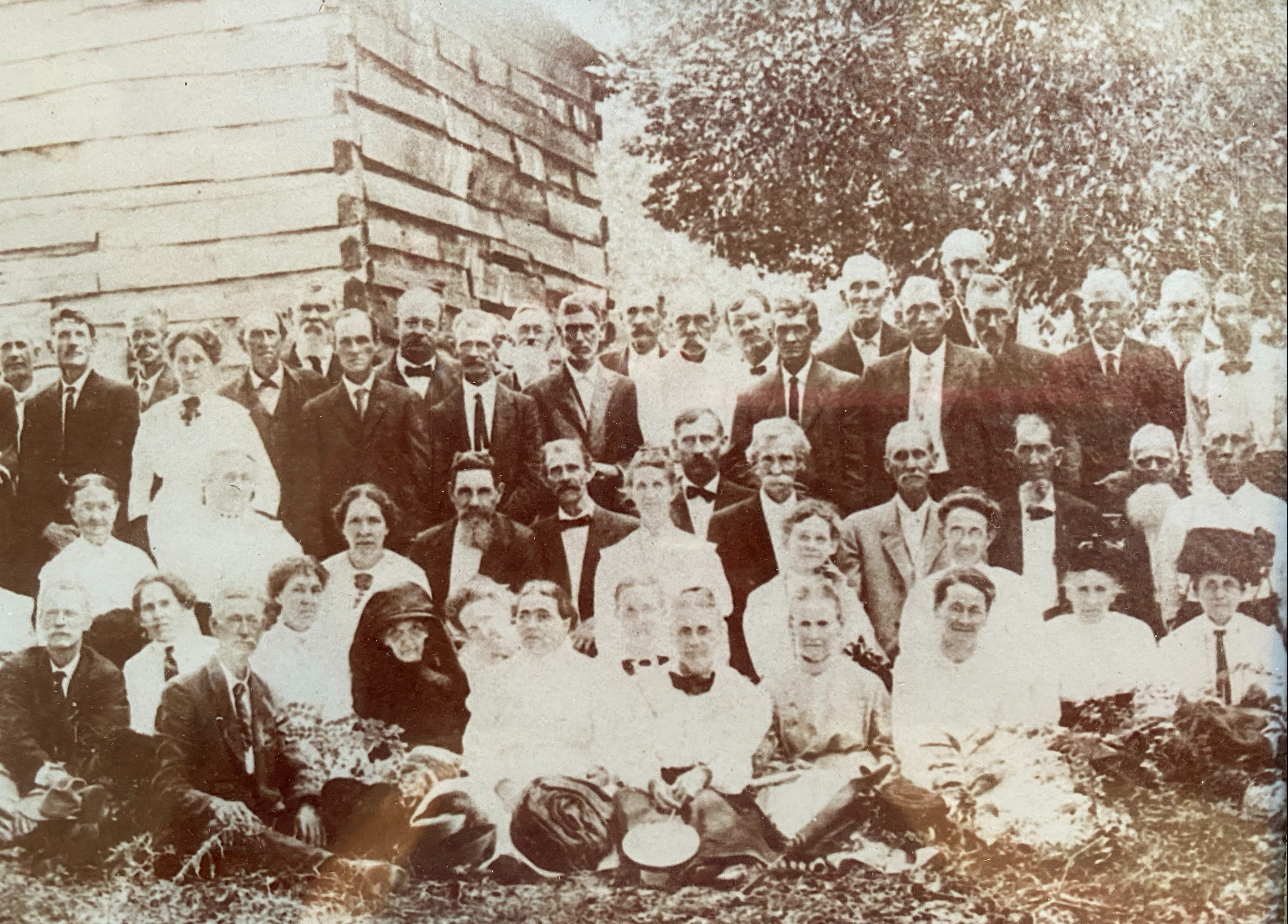
Wartrace United Methodist Church, est. 1849. Homecoming suppers were “on the grounds.” For most smaller Methodist churches, the cemetery often surrounded the church building.

In so many of those little churches we attended, all of the “Saints” who’d gone before were buried all around the church in the cemetery just outside the doors. Every few months, we would have “supper” on the grounds, meaning we spread our biscuits and fried chicken legs and pickles on platters on old checked table cloths on top of the graves of our ancestors, who were buried all around us.

There was no pretending they weren’t there with us, bodies underneath and souls swirling overhead, whispering in our ears, reminding us all they’d taught us and all they’d done, good, bad or just human. Don’t slouch. Eat your greens, too. Wipe your fingers on that napkin and not on your shirt, young man. These were the folks who’d walked through those cemetery gates and into that old wooden sanctuary each week and they had taught us how to follow those 10 rules Moses brought down from the mountain AND to turn that other cheek. Still, they didn’t have to create a moment to talk about death because they reminded us of it every Sunday and during revivals as we entered that sacred space.

Today we don’t have those reminders.  We do not see the cycle of life and death firsthand on a daily basis now. We do not wring the chickens’ necks and pluck them ourselves; few of rely on butchering hogs to have food for the winter, and we no longer prepare loved ones’ bodies for burial ourselves. We have people called to and trained to do these tasks and so the majority of us will never touch any dead body, never be faced with the need to handle a lifeless body, never have to be reminded we too will die, never find an occasion to talk about our deaths.

Easy for You to Say.

You might be thinking that as a retired pastor, of course, I have lots of experience sitting with people who are dying, sitting with the family and friends of someone who has died and just talking about death in general.  That is true, but all that professional experience did not make it any easier to start the discussions with my own family or to begin the work personally. In fact, I am embarrassed to say that it was a neighbor who suggested the book that started me on the process for myself and my family, by suggesting the book she’d found: “I’m Dead, Now What?” (See below.)

I want to offer some suggestions, then, some topics and some resources to help you do what is one of the most loving things you can for your family: discuss with them, prepare and plan so they are not left with the burden when you are gone or can no longer help. We can do this.
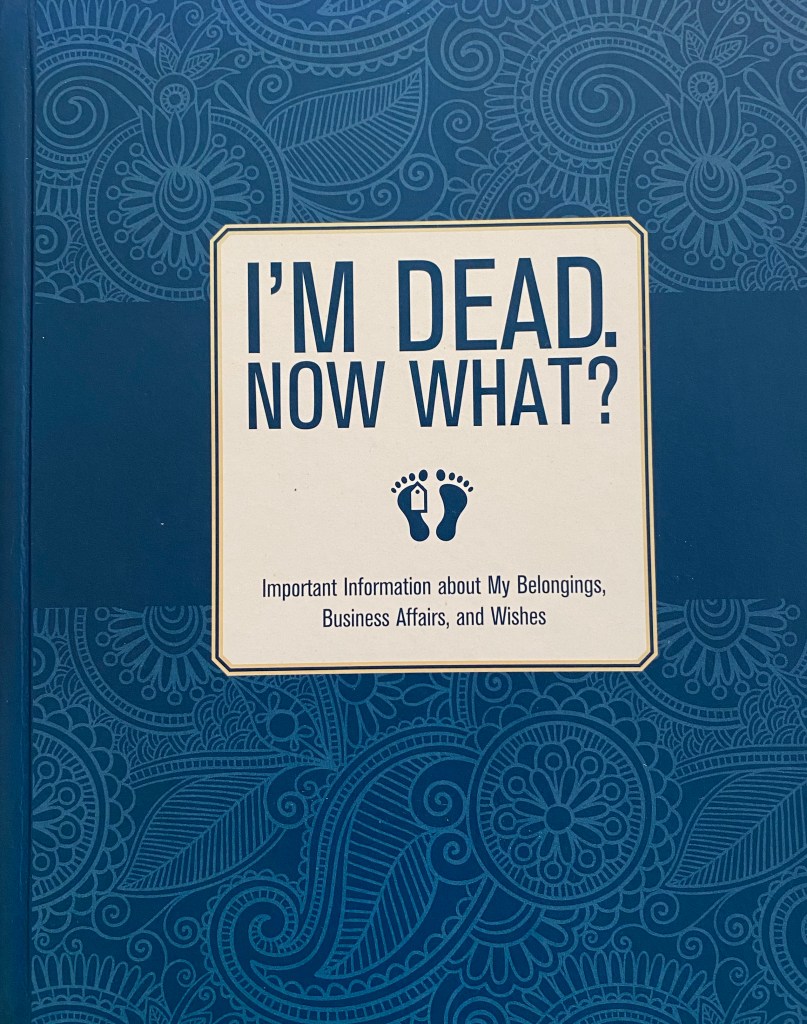
Excellent planner to provide peace of mind for those who need to settle your affairs. Helps organize your information, from pet needs to email and social medea to banking. Available on Amazon. By Peter Pauper Press

Start with the easier stuff.

If talking about death at all is just difficult for you, start with putting your papers in order and maybe your mind will become more used to the idea of realizing there will be a day when you (posthumously) say, “I’m Dead. Now What?” When you are gone, will your papers be in order? Will whomever is left to pay the bills, deal with property, take care of Fido or make other decisions know where to find what they need? Thankfully, there are wonderful resources for that as well. Starting here will often help us begin the many conversations we need to have around our own deaths.

Passwords, please. Can I get an amen?

If nothing else, safely providing a list of the seemingly thousands of passwords we all have now is one of the greatest gifts you can give these days. Don’t forget to tell them what the site is for the password; you know how you have spent hours trying to get back into your Netflix account. Think about how that’s going to work when it’s time to close out the account and stop the automatic draft for that times about fifty or a hundred, depending on how many apps and accounts you have.

Talk About How You Want to Die

We all hope to die at a certain way if we are honest and think about it for a moment and sharing that with one another around a kitchen table is a way to learn about one another.

Some of us want to die quickly, instantly. Some of us only hope for no pain. Many of us in my culture hope to die at home in our own beds surrounded by family and friends. Some of us hope to die with a silk parachute inflating overhead one last time; others of us hope to die in in satin ballroom shoes, our hips responding to the beat on the congas as a Latin band plays a cha-cha. Still others of us would love to take our last breaths in the arms of a lover. Some of the sweetest couples I’ve known debate who should go first: some do not want to be left alone after a longterm companion goes but most are more concerned about their sweetheart and hope that the other will go first so they are not left alone to grieve. They would take that grief upon themselves.

Consider doing a bit of research, then sharing.

In Japan, at least thirty years ago when I lived there, everyone in the neighborhood chips in to help pay for the costs of a neighbor’s funeral knowing that everyone else will do the same when their own time comes.

Funeral traditions there offered us a number of occasions to talk about dying and our own deaths. Once, a neighbor came to visit after her father had died and shared with me about the funeral since I had not been in town on the day of the funeral. I remember trying to put my finger on what was wrong as we sat and looked at a picture album of the funeral gathering and ceremonies until I realized that what was strange for me was that there was a photo album of the event. I had never known anyone to photograph a funeral.

There’s some fascinating and/or disturbing historical examples of cultural differences around death, such as mummifying and burying with everything you’d need to survive in the afterlife, including, sadly, your pets, and others we pray have been banned forever such as the Hindu custom of a wife immolating herself on the funeral pyre of her dead husband.

Write down your information first, then your wishes.

Think about what you want for a service, write down your wishes and share them with a family member and a pastor or another family friend who can help when the time comes. What are your wishes around being kept alive? Wishes around resusitation, extreme measures and even feeding tubes are much more difficult for family members if they are not aware of your wishes.

Do you want certain songs included in your service? Have a favorite verse? Talk about what you want and need or don’t want. Tell a pastor or trusted friend who can help you when you need to let your loved one die the way they’ve chosen, whether that means no , no on every possible intervention, i.e., their choices as best can be honored.

Clean up after before yourself.

In some societies, sorting through all your belongings, “death cleaning” is an established tradition. They are aware of the stress and pain of leaving all our “stuff” behind for our family to have to sort and clear and give away or sell or keep.

“Death cleaning,” or “döstädning” is a Swedish term that refers the process of downsizing before you die. Death Cleaning, explained in “The Gentle Art of Swedish Death Cleaning” is an gift you give your family. Sorting through, clearing out, giving away or selling all the “stuff” we can accumulate throughout our lives is an indication, the author writes, that you love your family enough to clear our unnecessary things and make your home nice and orderly well before you think the time is coming closer for you to leave the planet. The idea is that our spouses and children or grandchildren are not burdened with what can become a beast of a process, yet another source of pain for those grieving us when we’re gone, yet another indication that we didn’t want to talk about death.

(Magnusson, Margareta. The Gentle Art of Swedish Death Cleaning: How to Free Yourself and Your Family from a Lifetime of Clutter (The Swedish Art of Living & Dying Series) (p. 2). Scribner. Kindle Edition.) Also available on Amazon.

Start the conversation any way you can.

We all face it; people all over the world face it, but not always in the same manner, using the same customs, so, I’m thinking maybe talking about cultural differences around death and dying might be a way to start a conversation.

Did you know that those death masks, usually made by taking a cast of a person’s face after their death, were often kept as mementoes or used for the creation of a portrait or perhaps a scupture after the person had died and been buried. That could open a conversation. A lock of hair often is kept, a tradition started by Queen Victoria after the death of her husband. Tiny brooches might hold cremation ashes. Do you want to be cremated? This is the time to make sure a loved one knows that.

Just start.

Finally, to start the conversation, if none of the suggestions above have spurred you to sit down with your spouse or children or companion or pastor or priest yet, here is a poem I wrote after sitting with a man at my last church who was dying. Perhaps you can start simply by sharing this poem over a cup of tea, a pint of beer or some lovely scones your neighbor dropped by to share. “Hey,” you can say, “I read this poem about death and dying today and it made me think. Can I read it to you and you tell me what you think?” You get a yes and maybe some discussion will follow. Have some questions ready. Maybe a version of “Would you rather…?” Would you rather be buried at sea or on a mountain? Would you rather have everyone sing happy songs at your funeral or maybe tell their favorite joke?

Every time I have spent time with someone who is close to death, I recognize I am closer to my own death and my own fears and though both death and the fear of dying creep ever closer, neither seem to crowd out the peace I have found in talking about, in naming, what is before me, even death. It’s pretty much the one thing we all have in common. Let’s talk!

Sitting with the Dying

I used to think sitting with someone who's dying took courage.
Now I think it is much more selfish than I might ever want to admit.
It is an act of hope, yes.
If I am honest, though,
the hope is that someone else will sit with me when I'm the one who's dying.
There is prayer
but the prayer is that someone who knows me will wipe the drool
from my chin when the time comes.
There is the seeking of promises, guarantees, bartering if
necessary,
so that someone whose face I used to recognize will
cup my face in the palm of their hands when I cry like a baby, or
pluck the hairs from my upper lip because even a dying woman
deserves to feel pretty.
The first time I sat with someone who was dying, I went into that dark room because no one else would and because I couldn't bear
anyone dying alone.
Except now I know we too often do anyway.
Still, if there's any comfort to be offered there, I will selfishly offer warm, gentle and soft touches if only because I know I want the return.
I confess then that sitting with someone who's dying
is a selfish act for me.
It is my way. A way to make the world the place I want it to be,
where no one dies alone
if only because I cannot bear to live in a world where we do.

~Jodi McCullah 2022

4 responses to “Talking About Death Won’t Kill You.”

  1. Anne Culver Avatar
    Anne Culver

    Thank you for these reflections, Jodi. As a hospital chaplain, I’ve found that many people who’ve been told “some bad news” (that they’re dying), desperately need someone willing to help them work through just what that might mean for them and their loved ones in our culture in which even thinking about death seems to be taboo.

    Liked by 1 person

  2. A. Getty Avatar
    A. Getty

    Thank you for sharing. We have been having more of these conversations lately and your reading suggestions are helpful.

    Liked by 1 person

  3. Earnie L Avatar

    I was raised with grandparents who took me to their church’s dinner on the grounds. One of my favorite places to photograph is a cemetery. I imagine all of the lovely lives and interesting people there. And, my Mother taught me that there are far worse things in this life than dying. Thanks for the lovely article.

    Liked by 1 person

  4. Joan Butler Avatar
    Joan Butler

    Jodi, thanks so much for these thought provoking words. We’ve started the process, but need to go deeper.

    Liked by 1 person

Leave a comment

Commit = Finding My Nerve Again.

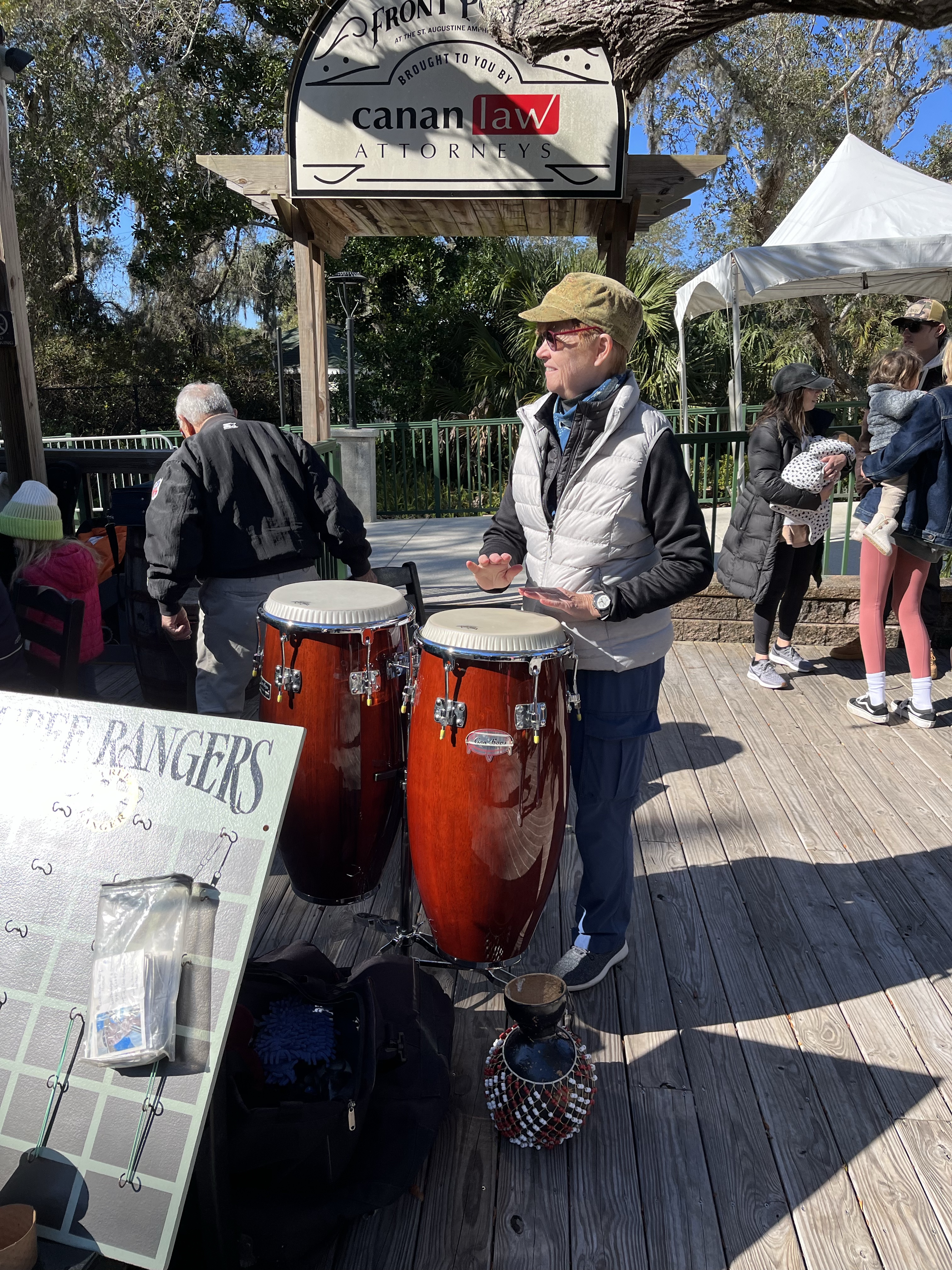
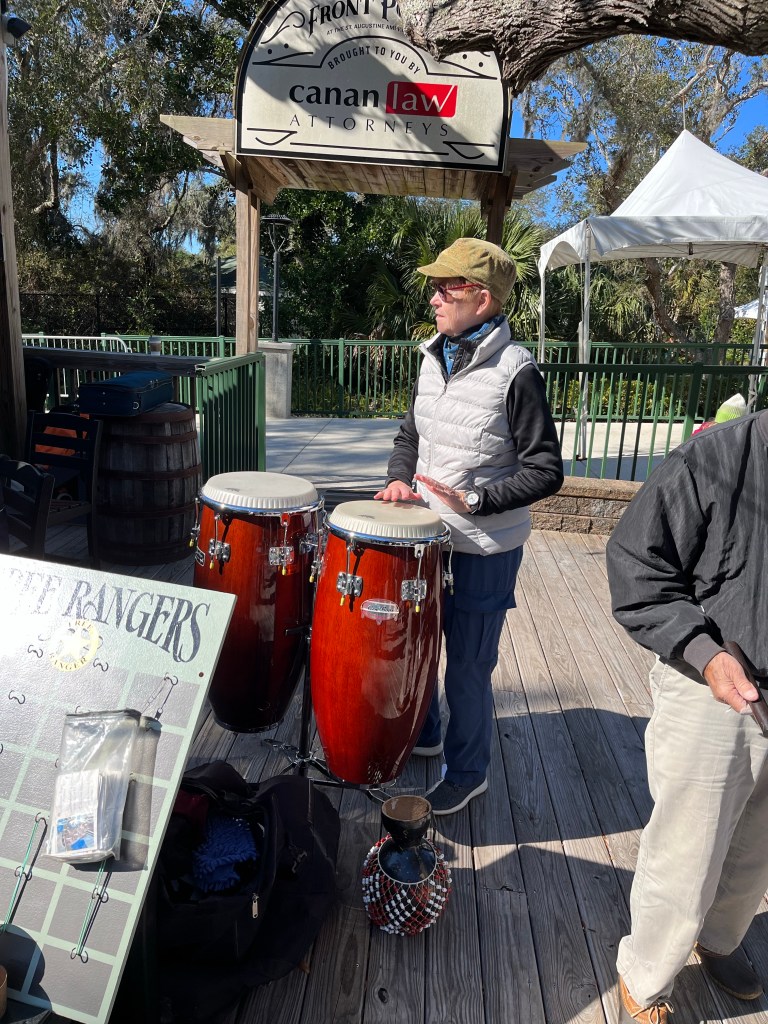
Good news this week from Papa Luie: You are never too old to learn something new! Papa Luie is the conga player who encouraged me to learn congas so I could make music with the Saturday morning music group playing at the St Augustine Farmers Market.

Actually, he said, “Learn conga or washboard. We need both.”

I chose conga, though I was more than a little intimidated. Now he’s teaching me and making a place for me to play music too. The lessons last week centered around some new patterns to practice, as well as three rules: 1) there are no rules for playing; 2) you’re never too old to learn; and 3) ya gotta commit. Papa Louie, whose age I will no longer try to guess, took up playing conga when he was 75. Yeah. Now he’s like my own personal Yoda and that is not because he is a head shorter than me. “There is no try. Only do. Commit… or go home to your recliner,” he said.

Commitment is the theme of the week: commit to not backing away, commit to not being timid but rather putting your back into the return of the ball in a volley, commit to the drive, commit to the first few notes of a verse. Commit or go home.

Photo Courtesy of Doug Mackenzie, Mackenzie Images, 2023

Commitment

Actually, commitment was this week’s lesson ad nauseum. From traffic, bluegrass music, pickleball, and life in general, I heard: Do not back away from what you want to or need to do.

The time is now to speed up a bit more when you enter traffic, to move forward, not backwards when you see the ball coming at you, and to sing out rather than wait for another chance.

Commit = speed up or move over?

As it was, the insistence of several noisy and angry drivers behind me was not so gentle after all, though. I confess they were justified in their angry gestures and (likely)rude comments; I was, in my mind, still driving in Monteagle, our bucolic and peaceful mountain (of course) town and summer home, where rush hour” means six cars, the speed limit on many roads is whatever you want it to be, and meandering drivers share the gravel roads with speeders. We don’t even have a stop light in Monteagle. That’s actually for safety’s sake. Besides the deer, the biggest danger for drivers in Monteagle is fog. We live at about 2000 feet elevation there, and the fog comes in and sets for a spell, has a cup of coffee and lingers far too long in the winter. Uninvited, the fog seems to camp out on our front lawn most of the winter, and, while it is pretty if you’re sitting by the fire looking out, driving in the fog is nerve-wracking for those of us who are already more timid drivers.

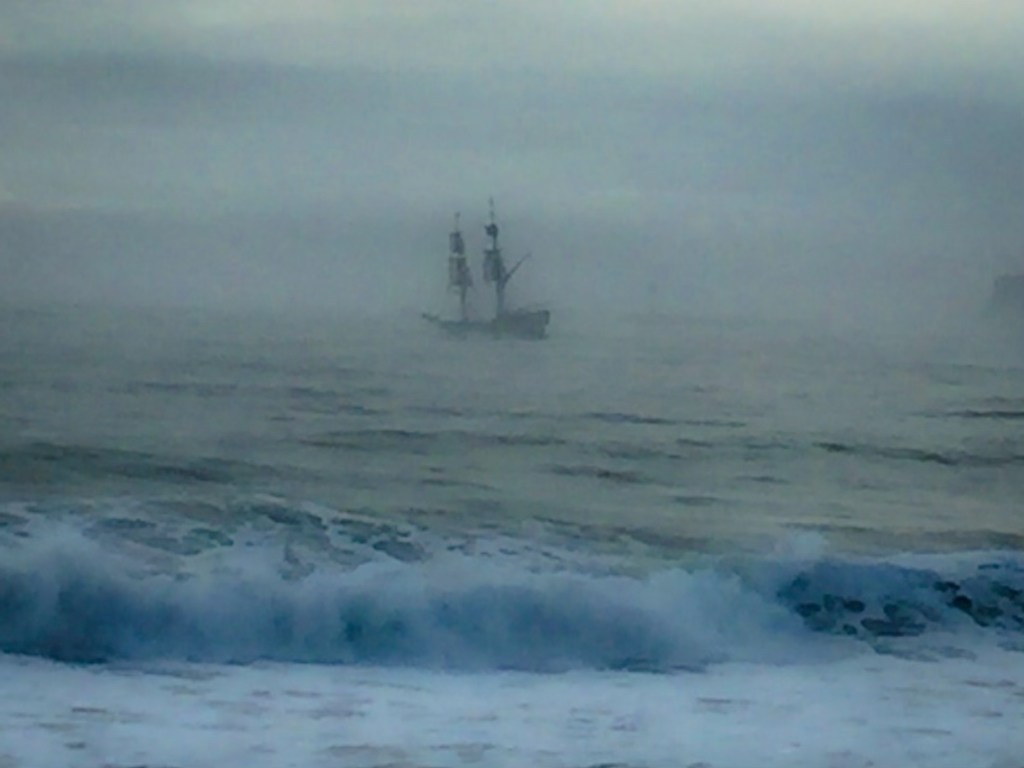
Ghost ship in the fog off California Coast
Photo Courtesy of Doug Mackenzie, Mackenzie Images.

The advice they give you for driving in the fog doesn’t help, either: “Roll down your window because you’ll hear the other cars before you see them.”

Driving in the fog 101: “Roll down your window because you’ll hear the other cars before you see them.”

Such dangerous driving conditions separate the timid drivers from the more aggressive ones; some drivers seem to see the fog as a reason to hit the accelerator. Wisdom dictates then that putting a stop light in downtown so some of us might be waiting to start or turn when another driver barrels through would be a foolish and short-lived experiment. Driving in Monteagle, though, usually allows me to meander, to notice who’s at the Piggly Wiggly when I drive by or decide if the line at the pharmacy is too long and I can wait to get those meds tomorrow. Driving in Florida, where we are “wintering,” however, does not tolerate, invite or accept any lack of commitment when I turn onto the road. Meander onto the Beach Highway at your own risk.

Wait, you might wonder: doesn’t being at the beach encourage you to meander? 

That’s the rub, as they say. (Pass the Coppertone.) So many folks now want to live where they can meander that others move to the beach to serve them beers and crab legs, to sell them big beach houses or to build newer, even bigger ones. All those folks are in a hurry; they have zero patience for meandering. The many interactions between those two groups of beach dwellers as well as the struggle many visitors have with being able to slow down while on vacation combine to create what is the social ebb and flow of today’s beach life. Meander onto the Beach highway then at your own peril. You have to commit, to turn onto the road and be ready to accelerate immediately, not after you’ve checked the sidewalks for neighbors out walking dogs. They’re out there dodging traffic themselves as they make their way to the quiet of the actual beach, where we all have permission not to commit to much of anything except meandering.

Commit = Don’t Back Away

“Commit.” Be ready to accelerate. Be ready to hit that ball when it comes your way on the pickleball court or accept being in the losing team most of the time. “Don’t back away,” Steve, my partner in several games yesterday, encouraged me. “It [the ball] won’t hurt you,” he said. (Actually it does sting, but not as badly as always losing or worse being the one person no one wants to play with because you let the ball go by too often.) “Stand your ground,” he said, gently, but with some insistence. “You’re not here to watch, right?” Steve is older than I am, slender and wiry, clearly someone who has always been athletic. He sports a neatly-trimmed beard and is the kind of consistent player I’d like to be.  “You didn’t start playing this game to watch the ball go by,” he says.  Steve makes it look so easy to keep the ball in play without being aggressive.  I find his coaching to be so much more compelling precisely because he isn’t one of the “Every shot is a kill shot” players.  Those guys tell me not to back up and watch the ball go by as well but, in my thinking, they are suspect because their response to aggressive play is more aggressive play. “If the ball is hit hard, hit it back even harder.”  Steve, though, is himself trying to navigate the game by being assertive rather than aggressive, and I really appreciate the distinction.  

Assertive Does Not Equal Aggressive

Coaches and Instructors have shown me how to practice returning those more aggressive volleys, they’ve shown me how to use my torso to garner greater strength myself, they’ve even taught me, at my request, how to slow down someone else’s aggressive volley. That takes a lot of practice. And commitment. We haven’t talked, though, about the struggles of those of us who have been intimidated around more aggressive folks all our lives. Easily half the pickleball players out there struggle when facing more aggressive players, which can be especially disappointing in light of the fact that many players take up the sport as much for the social outlet as for the workout or the competition. We’ve wondered more than a few times if this was really our game since we don’t want to be aggressive ourselves and so many players seem to embrace the aggressive potential of the pickleball. 

I’m grateful I realized, though, that the encouragement from Steve was not whether to be aggressive but whether or not to stand my ground as best I could, to take my place as one of the players on the court for that particular game, or simply to give it up. Instead, his encouragement was just that: encouraging. He was suggesting I needed to see how it feels to claim my space. That’s not the same as being aggressive. Aggressive players want their space and mine. I have the option of walking away and letting aggressive players have my space, or, I have the option of standing my ground and that, Steve was trying to tell me, is satisfying and even empowering and is why many of us play. I’m actually okay( with not winning all the time. Well, most of the time.) I’m good so long as matches are close games and include lots of good volleys and points. I don’t like getting “pickled” (losing 11-0) any more than the next player, but, mostly, the fun comes when the games are fairly evenly matched. A game where one server simply aces every serve bores most of us. Like most every other player, I’m here on the court to try to improve my skills, to compete, and to play. “You gotta commit,though,” Steve said. “You aren’t out here to watch the ball go by.”

Commit = Sing Out

That message seems to be everywhere right now.  The next step in my joining in with the Saturday morning jam session at the St. Augustine Farmers Market (see previous post about setting goals) is being allowed to sing a song or two, and I’ve been practicing to meet that goal. I’ve been studying bluegrass singing techniques, practicing finding the tenor or baritone line above or below the melody and learning lyrics to old bluegrass songs. 

“Commit,” Annie said. Annie took up banjo later in life also and she gets my hesitation but she knows hesitation is not a singer’s friend.  “You gotta hit that note or it’Il sound like you’re being strangled,” she says. 

At a session in the near future, I’m gonna have to ask to sing lead but first they need to hear me harmonize and so I’ve been joining on Mondays with a smaller group to harmonize and offer percussion. 

Talking about singing won’t get me anywhere, though; they need to hear me sing. So, this week I jumped in with that smaller group and, while I’m not sure my tenor line wasn’t flat, I committed. I sang loudly enough to be heard or so I thought. Let’s just say the invitations to sing did not come flying in, though, and it was clear heading into the larger jam session this week that I would have to work that much harder at  overcoming my timidity. My desire to participate needed to outweigh the tendency to shrink back into the wings, to stay on the fringe, not risk being bad at this. 

My desire to participate needed to outweigh the tendency to shrink back into the wings, to stay on the fringe, not risk being bad at this. 

I used to have nerve until…

I’m pretty sure I was considerably more self-assured, bolder even, when I was younger. I did not hesitate to enter the flow of traffic using only peripheral vision to scan lanes while I pedaled a ten-speed bicycle into city traffic. I didn’t think twice about riding at night through town or riding alone even in the dark. That, though, was before I realized I was mortal. 

Perhaps realizing you will not actually live forever is something most folks don’t realize until they are “up in years” as my grandmother used to say, or declining in health or strength. Some of us can point to a moment when we lost at least some of our nerve, though, because we suddenly realized, “Hey, we could die.” Until that time, many of us had ridden or skated or raced through life, jumped trestles, run stop signs and woven through traffic like our favorite friend of Mario. Life – or at least the possibility of it ending – first slapped me upside the head when I was about eighteen. I was biking to a college class, weaving in and out of city traffic and, of course, wearing no helmet. No one wore them back then. I stopped at a light next to a semi. The light changed and I started pedaling just as the truck  turned my way, dragging me and my ten-speed along the road. Another driver evidently alerted him to the bicycle and rider he had been trying to crush, and, thank God, he stopped. I remember thinking, as I was being dragged, that those big rigs looked even more menacing from underneath. When the dragging stopped, I laid my head on the pavement for a moment, grateful that my bike had protected me from the truck’s tires. I phoned home and got a ride to my classes.  

…that moment when I realized I am mortal after all.

Maybe realizing I could die, that I was not going to live forever, ought to have compelled me to trade up from my ten-speed to something more substantial—a small tank, for instance—but mine and my parents’ response at the time was to get me a motorcycle. Maybe we figured I’d be able to outrun the big rigs. I got a couple of lessons from the guy at the dealership, then the salesman said I was good to go and so I went. I had to get to work and school, and, with two adults and three driving teens in the family, we simply could not afford a car just for me. 
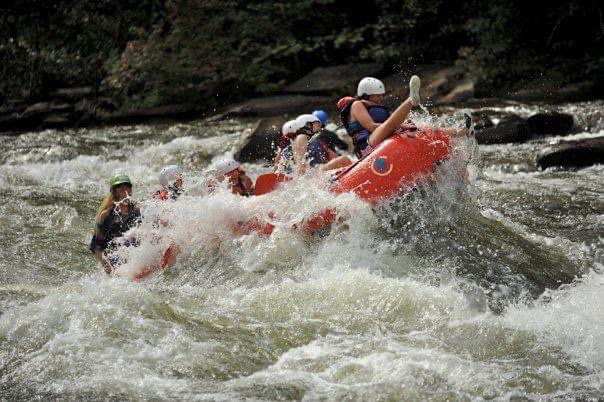
Like so much else, the motorcycle worked for a while, right up until I woke up in the back of an ambulance.  Thing is, I wasn’t driving that motorcycle when we wrecked; my mother and I had decided together that she ought to learn to drive the motorcycle as well.  Yes, my mother was driving and no, she had not taken the lessons.  In retrospect, that was not exactly a shining moment for either mother or daughter.  I have long regretted climbing on the back of that little Yamaha 250 to share with my mother my vast experience handling a motorcycle. In our defense, we lived on a small road where the only regular traffic consisted of neighbors pulling into their driveways.  The road did, however, dump out onto a busier road so while Mom did well driving down our road away from calamity, the trip back required she remember how to apply the brakes and, well, that didn’t happen. It was a bonafide miracle that we ran into the side of that car; if we’d been going another mile per hour faster, he likely would have hit us full on and shoved us into ongoing traffic. As it was, I was thrown backwards onto our road. Thank God we were wearing helmets. Mine was cracked; that’ll tell you something about impact. I woke up in the ambulance the first time, looked at the EMT and asked him what day it was. He got flustered and couldn’t tell me and I remember thinking that, if the EMT didn’t know what day it was, what chance did I have to figure it out? A nurse told me when I awoke again later in the hospital that I had upset the EMT.  Poor guy, he was not much older than I was, and it had been his first day. I would like to be able to tell you that he wore the uniform well or that he visited me in the ER and I found his blue eyes haunting.  Instead, I wonder to this day if he had any personal thoughts about mortality when he saw a girl his age lying next to her mother on the pavement unconscious. 
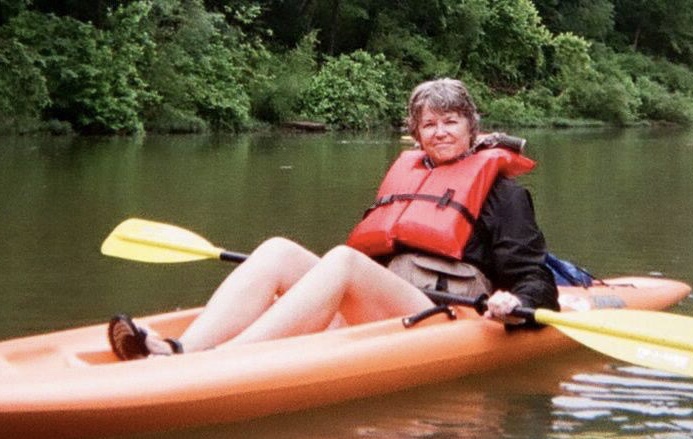
The physical effects for both my mother and me were miraculously minor. We each had a concussion and lots of scrapes but those injuries were far less memorable than the tension and strain of living in our home for the next few weeks. I did apologize several times over the next few weeks to my father without much effect. He couldn’t speak to me or my mother for several weeks even though neither of us were injured worse than we were.  He didn’t even lecture me when he showed up in a used car for me to drive from then on. 

I can show you the scars on my legs nearly five decades later, but the greater impact of those two incidents was that I was no longer confident about much of anything and my go-to response for anything coming at me fast was to curl up like an armadillo and hope whatever it was would bounce off me. This is the red carpet of trauma I have been trying to unfurl now for years and lately, life has been saying in so many ways, it’s time.   

…lately, life has been saying in so many ways, it’s time for me to find my nerve again.   

Everywhere I turn in the past few months, weeks, days, I see or hear encouragement to commit, to overcome the tendency to sit back and let the ball go by or miss my chance to make music. Yesterday, Annie, who gets my hesitation, took matters into her own hands and shoved me up front to where the microphone was so I could sing that tenor line on “Roll in My Sweet Baby’s Arms.” It’s apparently time. Being thrown onto the pavement was neither the beginning nor the end of trauma for me; but, after decades of watching too much of my life go by, it seems the universe is urging me to accelerate back into the midst of life’s flow, to not just sit and watch the ball go by, to risk being the one making music and to not simply stay on the sidelines any more.

“There is no try. Only do. Commit… or go home to your recliner.”

Papa Luie

More Lessons from the Ocean – A Warning to the “Aggressively Helpful” Among Us

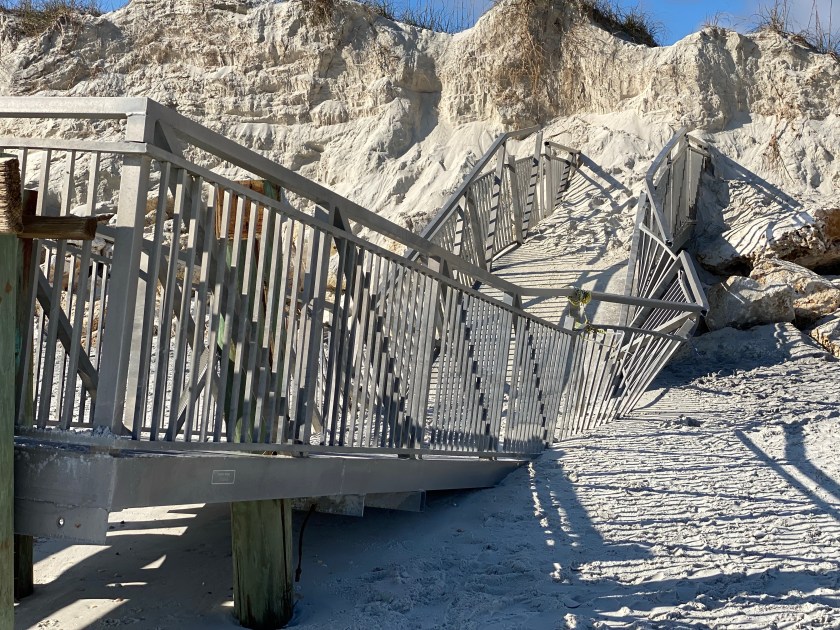
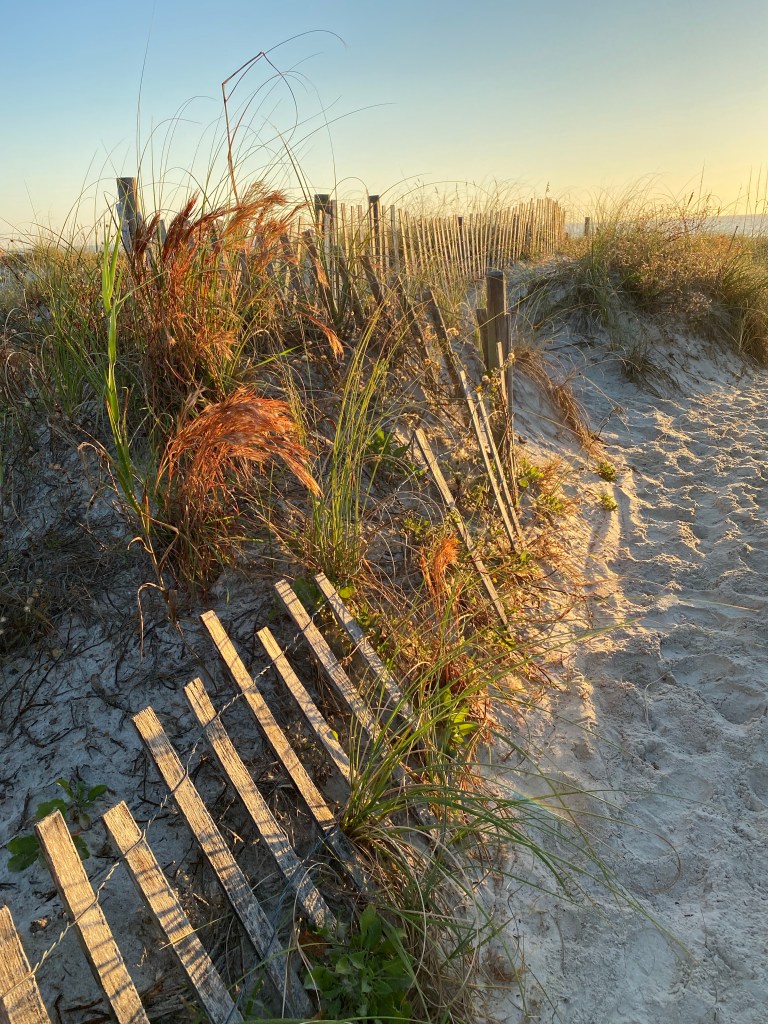
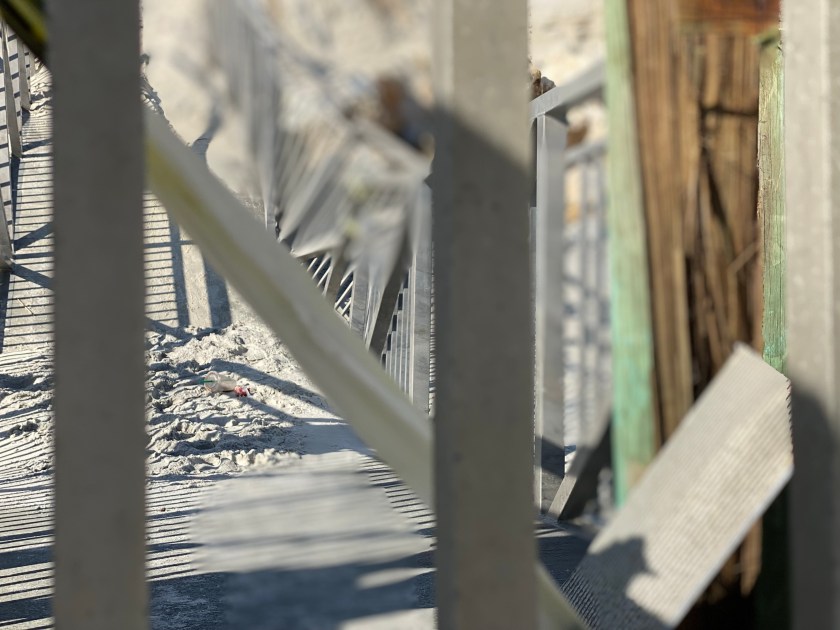
Walkway from homes to the beach at St. Augustine Beach in aftermath of Hurricanes Ian and Nicole, 2022. Photo Jodi McCullah 2022 All Rights Reserved

Walking along the St. Augustine, Florida, beach and seeing the aftermath of landfall of two hurricanes in the course of a couple of months, I realized that the ocean, like any living thing, strikes back when other living creatures encroach. Many a relationship has suffered and been destroyed or abandoned because of one partner taking up space that the other is meant to be occupying. Makes sense that the ocean would be no different. When we do not recognize and honor her space, this, the largest creature we humans interact with and desperately need, can be terrifying and mighty.

Walking along that beach pondering relationships and what the ocean offers for healing was humbling when I considered the damage we did first. St. Augustine Beach saw some of its worst flooding this past year in an area that had been “repurposed” by a land developer in the 1920’s.

In “Anastasia Island” Kenneth M. Barrett, Jr., a local photographer and writer, describes how Davis Shores was “built” by filling in oyster beds and salt marshes with dredged materials to create a new space to build homes. That neighborhood, ironically, suffered some of the worst flooding during the recent storms and, though I cannot claim to know of direct causation here, it has been telling how the ocean seems to have tried to reclaim much of the beaches in general where homes have been built. (www.LegaciesandMemoriesPublishing.com)

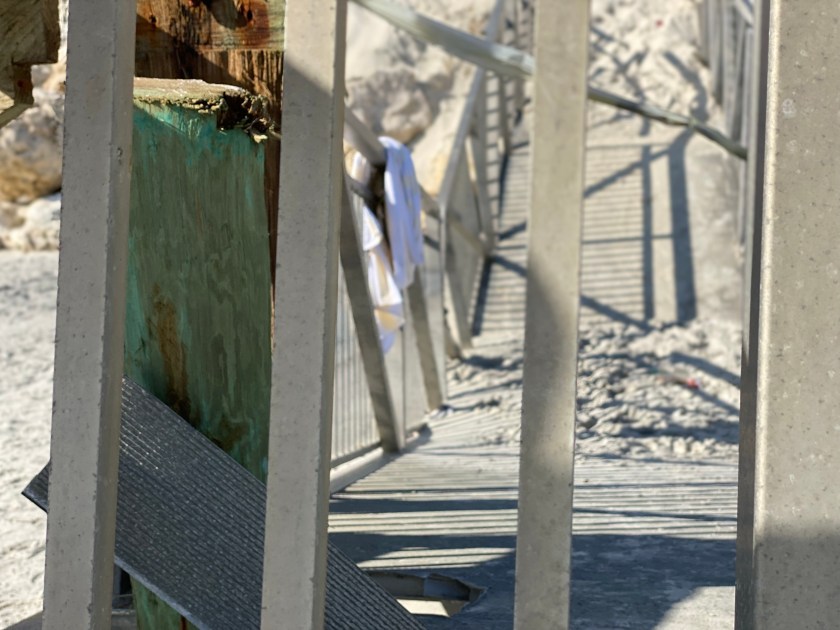
Photo Jodi McCullah 2022 All Rights Reserved

Relationship Lesson One: don’t take what’s not yours, including space. We’ve all sat at a table or on an airplane or shared the stage with someone who feels the need to take up more than their fair share of the space. Not only do these folks not share, they do not relinquish the extra space when confronted and usually do not seem either able OR willing to figure out themselves that they have claimed more than they deserve. Try to walk on an indoor walking track, for example, and notice who immediately allows faster walkers to pass and who seems never willing to move over.

Photo Jodi McCullah 2022 All Rights Reserved

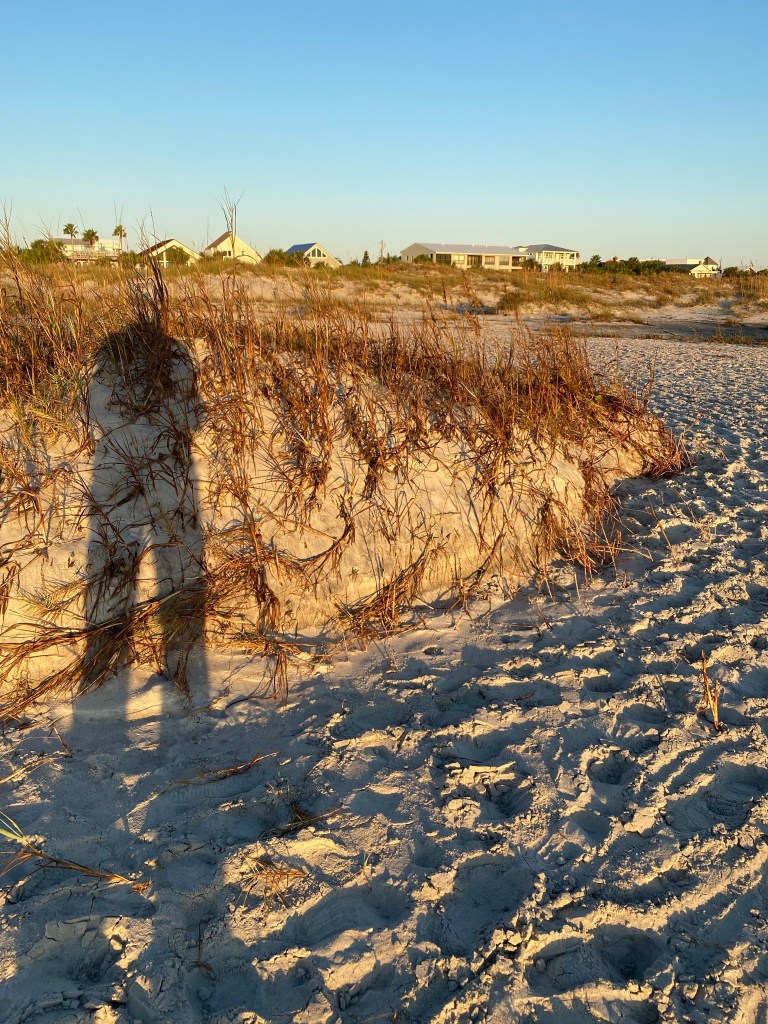
Back at the beach, when walking after a storm surge, you will see newly-formed “cliffs.” Actually, these are twenty-foot-tall sand dunes sheered off by the hurricane’s storm surge so that they now resemble cliffs. New sand is being brought in to repair those; many of them are all that separates thousands of homes and the ocean. More to the point here though is how we who traverse and hope to find healing for relationship damage respond to the markers along the way. On the beach, there are markers to show us the paths we who walk the beach are asked to respect and follow; authorities ask us to stay on those paths to allow the dunes to heal. These dunes were habitats and breeding grounds before the storm, the places where others lived and breathed. Do we see the other creatures who also walk here? Do we respect the boundaries they have set? Or are we oblivious, or worse, do we simply disregard those markers in the sand of our relationships?

Of course, it is sad that most of us living “First World” lives take up more than our fair share of the world’s resources and leave more than our fair share of the messes that need to be cleaned up. That’s a post for another day. We cannot possibly recognize those transgressions if we do not, however, first recognize how we do this on a personal basis.

Those who are faithful in the small things will be faithful in the big things.

Luke 16:10

Listening to the beach when you have a fractured relationship somewhere in your life can also bring lessons in repairing those relationships, complete with intentionality and peace offerings even in the presence of the mangled metal aftermath.

Photo Jodi McCullah 2022 All Rights Reserved

Lesson two: be intentional about making space for the others in your life, especially after there has been a storm. On the beach, finding a gentle space to meet might mean sitting quietly next to a tide pool where the water and the emotions are calmer, quieter and restful and thus, where there is space for healing. Author Joan Didion and her husband, author John Dunne, shared for years the habit of walking every day in Central Park. They did not always walk together, she says in “The Year of Magical Thinking.” They liked different routes. Of course they did. They were two distinct creatures and would not share every single preference. They routinely, though, intentially, kept one another’s routes in mind and they made certain to cross one another’s path before leaving the park. This evidently was their habit, no matter how they felt about one another of a day.

There is calm and healing even simply in sharing space quietly with no other agenda, only being in the same space and breathing the same air, and this is especially necessary and powerful after a storm has visited and left you or your friend, child or partner feeling mangled. Tidal pools are physical pools of rest the ocean offers us, a physical natural example of the valuable practice of simply, quietly, with intention, sharing space. The message of doing so in a fractured, fractuous relationship is as powerful as it is difficult. Holding space for the other with intentionality speaks loudly without making a sound.

Holding space for the other with intentionality speaks loudly without making a sound.

Lesson three (and I can’t believe we need to say this out loud): give to others in your life, but only give what’s yours to give. Every time the tide comes in, as it goes back out, the ocean leaves gifts, mostly of shells, the abandoned habitats of creatures who no longer inhabit them. We can find many gifts there when we walk along as the tide goes back to its home. Quiet observation (notice the emphasis on quiet) takes you to those places where those shells are less damaged because there the tide is gentlest.

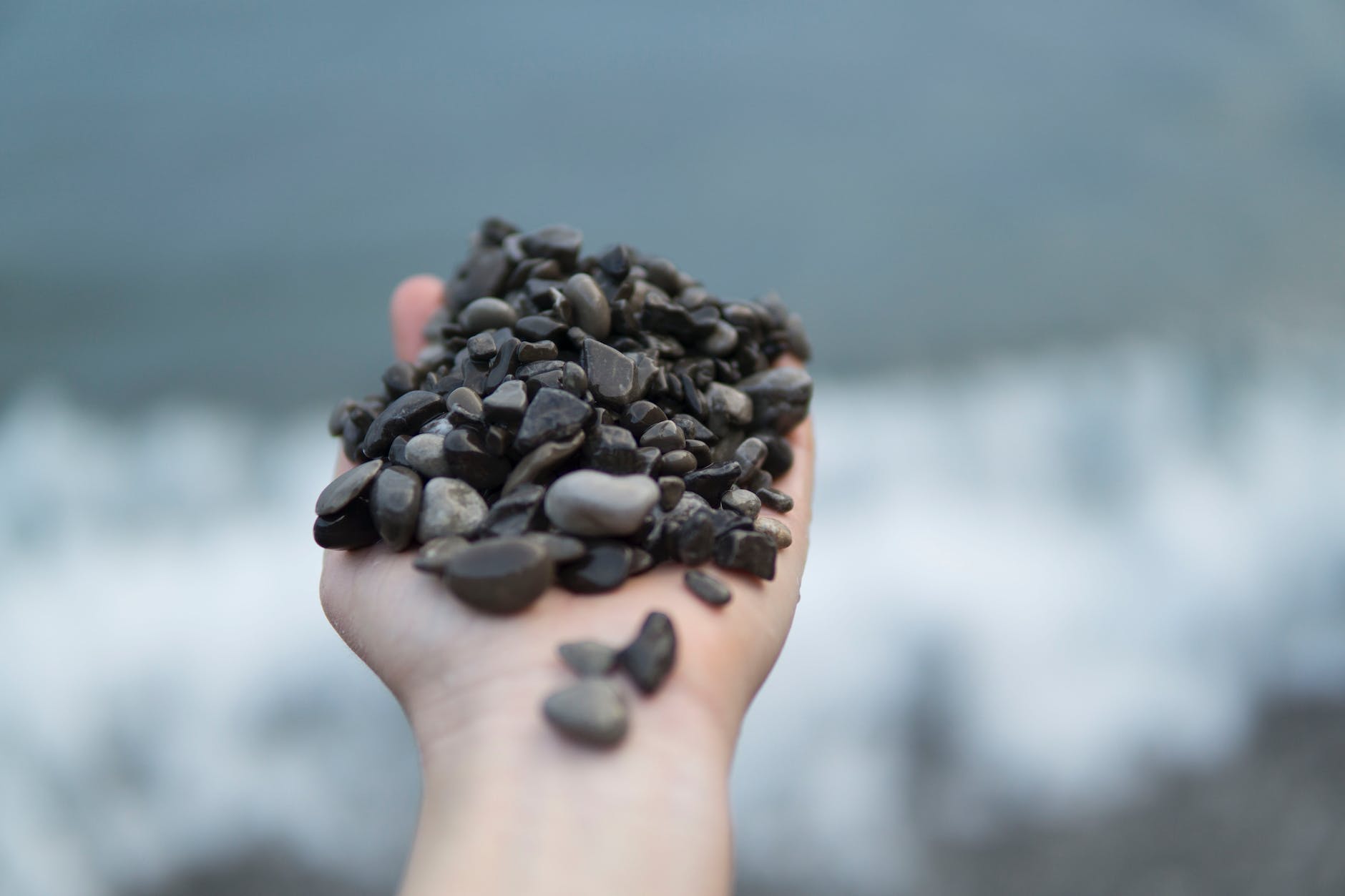
Photo by Jess Loiterton on Pexels.com

Tidal pools, though, are packed with sea life, from snails to barnacles to small fish. These pockets of seawater are not offering us souvenirs; the creatures in tidal pools are still alive. Where you have gone to find some quiet and calm is where they live. The same goes for the dunes where coastal authorities strive to rebuild lost habitats of the Anastasia Island beach mouse, the gopher tortoise, laughing gulls and wood storks.

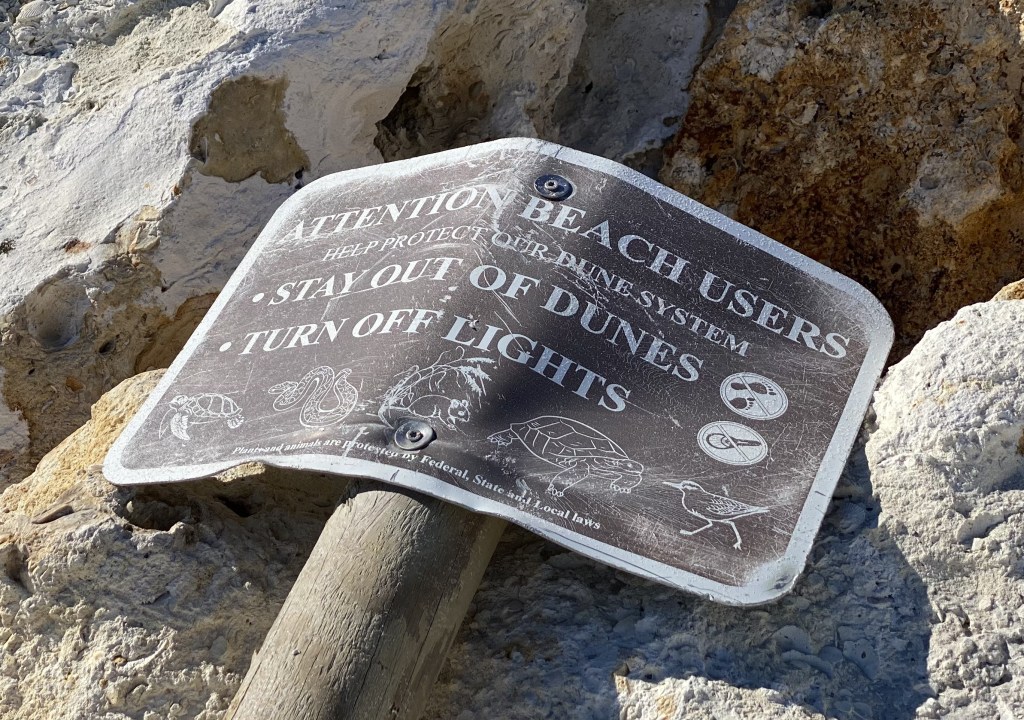
Lesson Four: Do not assume you know what the other person wants or needs. You MUST ask. On our beaches, the county has taken to posting signs warning NOT to “help” a gopher tortoise if they see one along the shoreline. People think they are being helpful when they see one of these tortoises headed inland, pick it up and deposit it in the ocean. This will harm the tortoises because tortoises are NOT turtles. Tortoises are land creatures, and, if left in the ocean, could drown. The intentions of these helpful souls are no doubt good; they do not, however, show an interest in or an understanding of the need to ask what the other creatures need. We call that being “Aggressively Helpful.” And I know I am as guilty as the next person. We want to help so badly that we override what the other creature needs by not finding out what that creatures needs or even IF the creature needs or wants our help. We run roughshod over their needs trying to meet our own need to be seen as helpful.

Photo Jodi McCullah 2022 All Rights Reserved

This is actually not much different from ignoring those signs asking us to stay off the dunes. There, we simply go where we want. Being aggressively helpful, though, means we do for others what they likely could do themselves IF they wanted, but we do it without even asking. There is, then, such as thing as being too helpful. You may just want to look around but the salesperson is going to help you anyway. You may need to work things out in your relationship but one of your parents jumps in to fix things. In terms of relationships, trying to be too helpful equals proving to the other once more that you do not respect their space and choices nor do you value what they want or need, especially if it isn’t what you need.

My need to help that tortoise might be so overwhelming that I do not take the time to check and see if the creature before me needs my help (and, let’s be real, we can do this on our phones now that most of us carry them to the beach.) Come on. I am being aggressively helpful when I do not ask (whether I’m standing next to my friend or consulting a search engine for the difference between tortoise and turtle.) I do not listen when I find out that both of those creatures need me to leave them be, to give them the respect of their own space. Be forewarned: not asking, not respecting space too often means I am focussed on my own pain in the relationship. In fact, all of these behaviors scream that loud and clear.

Maybe, if you’ve read this far and are in pain in a relationship, it’s time to ask if the other will sit quietly with you at a tide pool (lake, pond, mountain view) to rest and see if there isn’t some wisdom there for you. Shh. No. Just sit quietly. I know if feels like it’ll kill you but it won’t. It’s okay to admit that sitting quietly when we are in pain is really difficult. Just breathe in the shape of the leaves. Feel the snow on your arms as you make a snow angel. Trail your hand in the water as the canoe floats along. There are lessons like these all around us. In today’s lessons, the ocean teaches us that, in relationships, we need to respect the other creature enough to ask, then listen and, oh yeah, show some respect and stay off the dunes.

Quitters, Goals and Macrame, Oh My!

On Saturday, December 31, 2022, I achieved one of my biggest goals. . .for 2022. Just in the nick of time, right? The goal was to sit in and play some kind of percussion with a group that plays every Saturday morning at the local Farmer’s Market. Anyone is invited to join in but it took several steps to get there, including: several scouting expeditions to see they really were inviting and open to new folks; lessons to learn the Congas because that’s what one of their drummers suggested; and, oh yeah, a new set of Congas provided expressly to encourage me to meet this goal.

Playing at the Farmer’s Market December 31. They were welcoming but they needed to see if I could really play that drum. Next goals: working my way into the group by slowly, steadily building their trust and showing I can keep a beat and add to the music.

Working to get comfortable bringing a drum to the jam and sitting in required several more steps, actually, including sitting in with another “drop-in” jamming group where I already knew some folks. Completing the final step of this goal took several months and there were even more steps beforehand, including taking drumming lessons in general for some time, years actually. Sitting in with this well-established group whose regular jam is a performance for an audience was the final step to complete that goal and I did that on December 31. Actually that it was completed just as the year ended didn’t occur to me until a couple of days into the new year, partly because I was feeling so good about meeting the goal. I just love checking items off my list of goals.

Yes, I keep a list of goals. Specific goals, in fact. Some of them have taken years and several steps to achieve; others are quicker or easier. Full disclosure: I am a list maker and a goal setter. I have been making lists – and being made fun of for it – for years. Don’t care. I started making lists before anyone ever suggested I might have some sort of attention disorder; I just realized early on that I was easily distracted and, if I wanted to remember to do something of a day, a week or a year, I’d better write it down. I’m gonna pat myself a bit on the back here and say the practice has served me well. I’ve been asked more than a few times how I have gotten so much done and making lists has been one of my most successful tools.

Of course, the idea of setting goals is appropriate for New Year’s in general. We’ve all likely seen or heard a lot about setting goals in the past few weeks; plenty of products are being advertised on all forms of media as being willing to help us “meet our goals.” Sadly, as new tools and programs are promsing to help us finally lose weight, start exercising, further our education or learn macrame, we generally listen while surrounded by the remnants of past goals abandoned, like the macrame plant hangers on that never-used exercise bike; or worse, we consume those cigarettes or sugar or french fries while we listen to the experts tell us how to stop it now.

Sometimes it’s good to be a quitter.

One of the toughest goals I ever managed – finally- to achieve was quitting smoking. I almost wrote, “one of the biggest goals I ever managed to meet.” Ever thought about why we say we “meet” goals? I have. Other synonyms are match, satisfy, answer, comply, discharge, execute, fit, fufill and so on. To meet, though, makes me think of encountering, of running into someone on a narrow pathway and then needing to decide whether or not to hug, to join hands, to negotiate getting around one another or to bail, to jump off the path entirely to avoid the other, that goal. What if we thought of our goals as other life companions we hope one day to fully embrace, to welcome, to love and hold? How do we get to the place where we do not think of these goals as adverseries, enemies, unreachable or unloveable?

Photo by Pixabay on Pexels.com

I began smoking on the rifle range in Army basic training. That’s a story in itself. Maybe that really set up this goal of NOT smoking as an adversary? While I had never found cigarettes even tolerable before the day my company stepped onto that range with live ammunition in our rifles, I smoked half a pack of Marlboros before the day was out and then I was hooked. Smoking actually was more attractive in Basic Training for another reason. When the company took a break, the Drill Sergeants often barked: “Smok’em if you gottem! If ya don’t, you can police the area. ” (“Policing the area” meant picking up cigarette butts left by smokers who had not yet learned to field strip their cigs. Hmm…smoke…or pick up someone else’s cigarette butts. Hmm.) That was in ’78.

I smoked until 1985. July 1, 1985, to be exact. I had wanted to quit for a couple of years before that. I had even managed to ease back from a pack of regular Marlboros a day to the light version and then even managed to be able to ration them, to limit them. For a year, I smoked five or fewer cigarettes a day, but I could not let them go completely. My husband at the time and I both smoked and we had both entertained quitting but neither of us was willing to create a concrete goal at New Year’s or any other time of the year that we knew we wouldn’t achieve. Why set ourselves up for failure, we figured? Still, while I knew I wanted to be not smoking before having children, the desire to quit not as strong as the urge to have one more after supper or before bed or whenever I saw someone else light up.

Out of the mouths of babes….

We needed some help and prodding to accomplish this goal; we just didn’t know it. Perhaps the most powerful deterrent to lighting up came from a four-year-old we knew who, while we were lighting up one day at her house, asked us point-blank, “Why do you want to die?” I’m pretty sure that at the time I shrugged it off or walked outside but her question followed me everywhere. I couldn’t answer her. Neither my husband nor I could answer her because we realized this child might in fact love us more than we loved ourselves.

Neither my husband nor I could answer her because we realized she might in fact love us more than we loved ourselves.

We carried that question for weeks with no answer until we were surprised to be confronted by another couple, good friends. They wanted to know when we would stop. “You have told us before you’re gonna stop smoking. When? We’d like to know!” We were so surprised by that full-frontal assault that we threw out a date that seemed far far away. July 1, 1985, we said. Conversation over. They seemed happy. Everyone was happy.

Until July 1, 1985. Actually, June something or other. We were at their home and they reminded us of our promise months earlier. Dammit. Now we had to choose. Lose the nasty habit or lose the friends. How sad is it that too often we hold onto the nasty habit? We didn’t, though. We looked at each other and decided to go for it. It still wasn’t easy. July 1 was going to be a Monday. On Sunday around noon, we ran out of cigarettes. I argued that we had one more day. I knew I’d only have one or two more smokes before the deadline hit and that I’d have no trouble trashing the others but my husband argued we’d be too tempted to keep smoking til that pack, then the next and the next were gone. We needed to simply stop, he insisted. Really ticked me off at the time. But we quit. I took up knitting in hopes that it would help to keep my hands busy when I was sitting and agitated or bored; today it irks me to remember that I smoked sometimes out of boredom!

Quitters

We stayed quitters even after moving away to Japan where, it seemed, everyone smoked, and there weren’t even any non-smoking areas in restaurants or on trains. That was a test of our resolve. By that time, though, we had another incentive: while it had been tough to stop, it had with time become tougher to decide to start. We were not ready to tick the box that said “Smoker” again. Turns out, that’s a great way to succeed in goals – make it so you have to choose openly, publicly, to go against your goal. Or disincentivize it. Make a bet with someone that will cost real money; one suggestion I heard was make it so that you have to give money to a cause you hate if you slip and start smoking again.

I have found that not having some goals, not knowing where I’d like to be next year, next decade even, means it’ll be a surprise and often a disappointment where I am when those days arrive. There WILL be regrets. Here’s to no regrets!!

Strangely, much of what has served me well, especially as I have sought direction in life, I learned in Al-Anon, the family counterpart to Alcoholics Anonymous. I joined when I was nineteen at the suggestion of a friend. I was feeling quite lost at the time, adrift, at the mercy of the storms of those around me who were miserable and who definitely wanted some company in that. I couldn’t tell you at the time what rules or concepts or guidelines I lived by other than trying to follow the Ten Commandments and the Golden Rule.

No Regrets.

Other than that, all I could tell you was that I wanted to reach the end of my life with no regrets. It was clear at the time though that I needed more because I was so easily distracted from my personal goals and that led to regrets. I needed to know where I wanted to go, what I wanted to do with my life in general and specifically each day. I needed some worthwhile, meaningful goals and I needed to have some general life guidelines that would help me achieve those goals.

Al-Anon’s teachings suggested several really important concepts for me, like the power of having support while you learn new behaviors, (my husband I quit smoking together but goals are far more attainable when you have someone who is willing to be your support person or persons) and the importance of removing the temptations (we agreed to no cigarettes in the house and managed for a long while not to frequent places where people smoked). Perhaps the toughest concept to ingest but the most important one for me sends us back to the idea of “meeting” our goals.

What if we thought of our goals as life companions we hope one day to fully embrace, to welcome, to love and hold? How might we then see them and figure out how to embrace them? Maybe we would no longer see goals like eating healthy or quitting smoking as something keeping us from fun but rather as ways of living that help us carve out time or keep us healthy enough to do what truly brings us joy. I love walking on the beach and dancing and playing pickleball and all of those would be infinitely more difficult (or I might not even have attempted them) had I kept smoking.

Whatever goals you set or changes you make, make them for the right reasons. Make them because you love yourself as much as you love others and others as much as you love yourself. Recognize the two go hand in hand and you can’t have one without the other; if you think you can, you’ve been deceived. Make your goals because you are recognizing and honoring the fact that others love you. Make them with the understanding that your goals and life changes are companions who hope to help you live life joyfully and reach the next year and the next with fewer and fewer regrets. You can do it!

Be the pebble. One answer to the unimaginable.

For several months last year, I was invited to join a group of women from all over western and middle Tennessee, some clergywomen, some lay leaders in their churches.  We gathered virtually because we shared a sad truth: a colleague and friend had been taken from us suddenly, shot in her own driveway during a carjacking.

I had not known any of these women before this group convened, but I am so very grateful that they all agreed to convene for those few months – and to invite me – to share our grief and pain and try to make some, any, if possible, sense of this tragedy. Some of the participants had known this woman for years; others of us had only known her a short while, but we all grieved what felt like a future filled with hope and ministry. She was likely going to be a Bishop some day, not because she was someone who was well-loved but because she was someone who loved well. That future was denied suddenly not by someone who had judged her ministry or intentions or love as lacking, but by a total stranger, someone who never had and now never would feel the love she had to offer him.

Within just a few weeks following her murder, we stepped into a virtual room, and invoked the words so many of us had shared in the funerals we had presided over. We affirmed that we had come together in our grief, acknowledging our human loss and praying that God would grant us grace. We also prayed that, in our pain we may find comfort, and in our sorrow, we might find hope.  We especially, collectively, wanted to find ways to honor our friend. 

It’s not necessarily a new idea to say we are called to honor those who are now gone who’ve loved, nurtured, forgiven or supported and encouraged us by doing the same. It just may be a bit tougher to process our emotions after the loss is a shock or especially an act of violence, because violence always leaves in its wake more victims than are seen by the naked eye. Be assured, most of us could acknowledge our privilege in not facing this kind of loss before; we also recognized what a gift it was that we could take the needed time to grieve and to find some guidance and companions for this process. Plenty of folks do not share that luxury, we knew. 

Nevertheless, to say the sheer aggression and randomness of this event knocked us down is insufficient. We all know that bad things happen to even the best of people, but somehow some of us thought – hoped – there was a line the people of God would not cross. I mean, if you’re willing to kill a preacher, who stands a chance? We were shaken individually and collectively and so I am grateful that our colleague’s legacy brought us together. A few of the women realized that, if our friend had been the one left in shock and pain, this is what she’d do. She would gather us all in. She was all about sharing, listening, reflecting and holding hands in our fear and our pain. Over the next few months, then, we talked about how this trauma affected us, mentally, spiritually, emotionally and theologically.  We seemed to know that she would encourage us to ask our questions, something most of us in this world have been conditioned to avoid, even if we do have the time. Through our theological and faith journeys, though, through pursuing our callings, many of us in the group had been exposed to and become somewhat practiced in reflection, in the art of asking questions, and, perhaps most importantly, in sitting with questions that are not accompanied by satisfying answers. 

Aggressive, blunt, unanswered and unanswerable questions most definitely were part of these group meetings; they sat next to us, sometimes gently nudging us, sometimes poking us with bony fingers, often angering and annoying us, always taking up space and reminding us they were not going away.  So, we chose to embrace them, to welcome them into our space, albeit a bit begrudgingly, buoyed by the fact that we were not alone.  

“After all these years I have begun to wonder if the secret of living well is not in having all the answers but in pursuing unanswerable questions in good company.”

Remen, Rachel Naomi. My Grandfather’s Blessings: Stories of Strength, Refuge, and Belonging . Penguin Publishing Group. Kindle Edition.

We shared from various resources: prayers, poems, stories, theological pieces and we asked ourselves, How then shall we live?

To get there, we shared questions about our colleague like: How can one person be someone whom everyone felt like they knew? This woman saw you. I could easily spend the rest of my life trying to see every person that I encounter as well as she did; it is a spiritual practice that I will likely never master but one that she embodied. She saw each of us and even if you only met her once, you left her presence knowing she still somehow held you as tightly and lovingly as she did everyone she saw. I would have liked to ask her more about this; how did she manage it? Did she consciously focus only on who was right in front of her? How was she able to tune out the rest of the world so successfully as to make you feel like not so much the center of the universe but seen. And heard. She saw you. Most of us go through life not feeling truly seen or heard and yet, sadly, that is often all we want. Many an argument or estrangement likely would be quelled or mended if each participant were able to take a turn seeing and hearing the other fully. She seemed to know that.

How Then Shall We Live?

Throughout the sessions over last fall, I found myself counting how many people who were now missing from my life after this year: friends, colleagues, family members.

Sadly, I am grateful that a couple of them are no longer here to harm others. I spent a great deal of my life learning how NOT to follow in those footsteps. I also, though, came to recognize them as human beings, not monsters, and to acknowledge I have my own failings. I hate knowing that. I hate knowing I am capable of being ugly and of wounding others.  I hate knowing that too often what annoys me in others is what annoys me about myself.  All of that knowledge means I must go forward with self-assessment that is as rigorous as my judgment of others AND I must offer grace that is as unearned as the grace I receive. The question there was what did I learn about myself from that person?

I am grateful though to declare that most of those whom I have lost have blessed me.  All of those I lost this past twelve months, including my colleague, I now realize, left me with the question on my life: how will I live going forward so as to reflect how I have been changed by their influence on my life? How, then, will I live now in light of what they taught me, whether it be because I want to honor them or because I want to never fall into their footsteps: what gift will I give the world now that they are no longer here?  

Photo by Scott Webb on Pexels.com

Questions, then, I thought, might be the answer, if that’s possible.  I shared with the group one of the understandings of a Scripture passage that another colleague had helped me to see differently years ago.  The Scripture was about the widow and the judge in Luke 18:1-8.  The story is often interpreted that the judge is God and the widow has to badger God – the judge – to get heard and to receive justice.  Another colleague years ago saw the story differently and preached that the widow in the story instead was God and God (the widow) would continue to beseech the powers that be (the judges) in our world to do the right thing.  God would continue to be the pebble in the shoe, she preached, that made us stop in our tracks and take care of that annoying pain that we feel every step we take.  God will continue to try to make us stop long enough perhaps to think, to listen, to pray, to see one another.  The story when I read it now reminds me, calls me, to be the pebble, to keep the hard, stony, annoying truths in front of folks I know.  

God calls us to BE the pebble. Ask – lovingly – the difficult questions. Keep the hard, stony, annoying truths in front of the folks we know.

We lamented that there was no going back to our blissful ignorance, no chance now we could pretend we or those whom we loved were safe.  One thing that is certain about hatred, ugliness, violence, is that once you know, you can’t “unknow.” Most of us in our world today learn at such early ages that violence and meanness and the ability to harm others is part of our world but being the target or even knowing the target of someone else’s violent behavior, even and maybe especially if that target appears random, moves us into darker places emotionally, spiritually, mentally.  

One of the toughest conversations was, no surprise, about guns and gun violence. I do not believe I am breaking confidence to say that we were keenly aware of the difficulty we live into everyday in our country of how to deal with what has become an epidemic.  

He was just a child still himself who pulled the trigger and took this life. In light of how much gun violence has become part of so many children’s lives, I offered the image of our society as a body where this bullet’s wound was not the only injury or illness that needed to be addressed in this tragedy. The image of a body with multiple system failures came to mind for me as we talked about how we had failed this child as well, the child who had murdered her, lamenting how he had gotten to that place, into that car, with that gun. The questions became: What had gotten him to the point where another human being was worth less than that car?  Don’t we need to know that process? Where in his young life was he ever seen? 

The questions we all needed to ask ourselves and one another became: What had gotten him to the point where another human being was worth less than a car? Don’t we need to know that process? Where in his young life was he ever seen?

For help with tough questions, I suggested this resource:  “When Thoughts and Prayers Aren’t Enough: A Shooting Survivor’s Journey into the Realities of Gun Violence,” by Taylor Schumann, a victim of gun violence, a Christian and a strong advocate for the right to own and bear arms.  Her offering in this book is as honest a discussion of faith and firearms as I have seen thus far and it is a true gift to those who do not know what to say but feel called to participate in reflection and discussion.  We put seatbelts in our cars to help protect our children when auto accidents were the number one killer; we need to stop the yelling and figure this out for our children’s sake.  Schumann offers intelligent, faith-led, personal and compelling points to add to the discussion, pebbles, if you will, that we can cast into our collective path. 

Moving Forward

How then would we go forward was the overarching question. How we each had thought we would be going forward in our lives was mostly changed but not canceled, we realized, but this sudden loss. I grieved having postponed working together until after my retirement.  I had so many questions I was looking forward to asking her when we would be working together. Each of us was challenged to ask ourselves, “How will I live now?” We realized we had already started moving forward and had chosen to live differently by simply inviting and agreeing to meet over the course of those months, by sharing and holding one another in grief, by sharing resources that inspired us (and often which we hoped might answer some of those pesky questions). Already we were living with intention, living in response to this trauma and tragedy, living in a way that would honor her (and more importantly we knew to her,) living in a way that recognized the power and gift of connecting. We would commit each of us to continue using our platforms (sermons, Bible studies, book clubs) to replicate these conversations, to offer them to others, to hold hands with, to sit with, to see each person who came before us and to ask the questions.

Photo by Elle Hughes on Pexels.com

For myself, I believe my beloved colleague would encourage me this Christmas and every Christmas going forward to seek to “Be that pebble in the shoes of those who are in power and ask the questions that need asking.” No question, my friend saw me or you like she saw everyone, it seemed; she made each of us feel seen.  Spending time in her presence, though, also meant you had to keep stooping down to remove the occasional pebble from your shoe because it was either that or limp forever.  She did this lovingly and you knew as you stooped down to scoop out that pebble that she meant to be loving to you and to everyone else who might be affected. “It’s all right,” she seemed to be saying in a loving and gentle way, “I’ll wait while you tend to that.” 

Who knew that a handful of pebbles could be such a sacred Christmas gift? 

War in the Second Grade

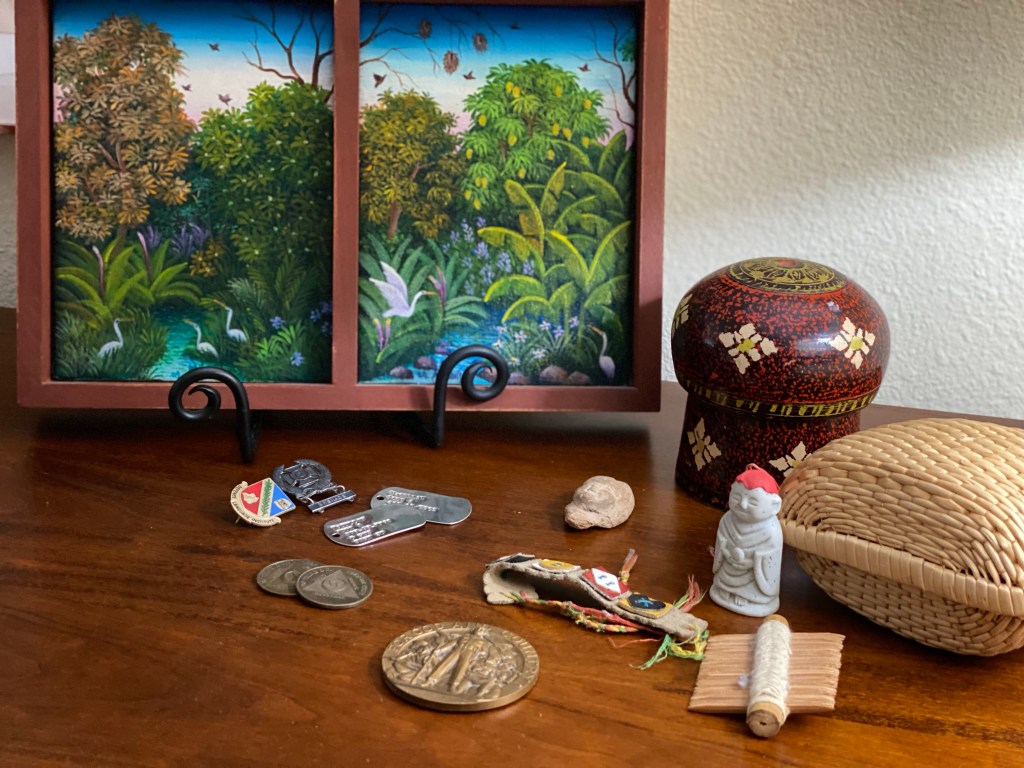
Some of the mementos from my backpack. Ever wonder why you held onto some and not others?

As stories go, this one is incomplete, like a puzzle missing some corner pieces, or a picture torn, by accident, of course. It’s my hope that through this process of unpacking my backpack of memories, I’ll locate those missing puzzle pieces or that torn corner of the picture and all – or at least more – will make sense.

Some years ago, I went looking for, or at least information about, my teacher from third grade. I’m sad to say, so far, I haven’t found her, though I am pleased to report I’ve found some folks I’d lost track of some decades ago. As the child of a father who moved us to new cities – and even new countries – at least every three years, I certainly have felt disconnected. For the longest time, because I also was estranged from my family, there existed no one in my life who could vouch for me ever existing prior to college. No one would say, for example, “You were always the tall one in the class.” No one was ready and eager to remind me that I was always late for the traffic patrol crossing guard duty – dear God, they let us do that in sixth grade then! No one would raise their hand to verify – or deny – if I were accused of being teacher’s pet (I sure wanted to be.) or if I had read every historical biography in our primary school library. (I had!)

Thorpe J. Gordon Elementary

I attended Thorpe J. Gordon Elementary School in Jefferson City, Missouri, from the last part of second grade until sixth. We arrived after living overseas for a couple of years (There’s another couple of items from the backpack and a few more stories for another cold day). Today, though, I am seriously regretting tossing all those class pictures a few years ago. You know, the ones where we all stood on those metal risers and tried to hold still long enough for the photographer who counted it a win if he could get us all looking at the camera when the bulb flashed. (If you have pictures from Thorpe J. Gordon Elementary in the mid-sixties, by the way, I’d love to see them.)

To the best of my recollection, my teacher when the year began was a Mrs. Peterson (sp?). She was young, pretty, energetic and fun, and we all loved her.

At least that’s how I remember it, but then, for the longest time, I remembered this as happening in second grade. Since I didn’t start Thorpe J. Gordon until after Christmas in the second grade, seems like some memories got fragmented and some pieces indeed might be missing. We do all have somewhat mashed up, muddled memories, don’t we? I don’t know about you, but whether they are from last week or our childhood, my memories toy with me.

In my mashed up memories, Mrs. Peterson was lively and pretty and cheerful, which was amazing because she was married to a Soldier. Mr. Peterson was, at the time, serving in Viet Nam. He was at war. We didn’t know why he had to be at war but we knew she didn’t get to see him or talk to him much and he wasn’t at home when her day was over. We knew too that he was a pretty nice guy because, every time he sent a cassette-taped message to his wife, he included a message for our class. In return, when Mrs. Peterson was preparing her own cassette message, she allowed us to add some greetings and questions. Sometimes, much to our delight, in the subsequent message, he answered those 8- and 9-year-old’s questions. We felt special and connected and heard, both from him and from her, something most children could not say in that generation, to be sure, and something that, sadly, would not last.

Christmas Corsages

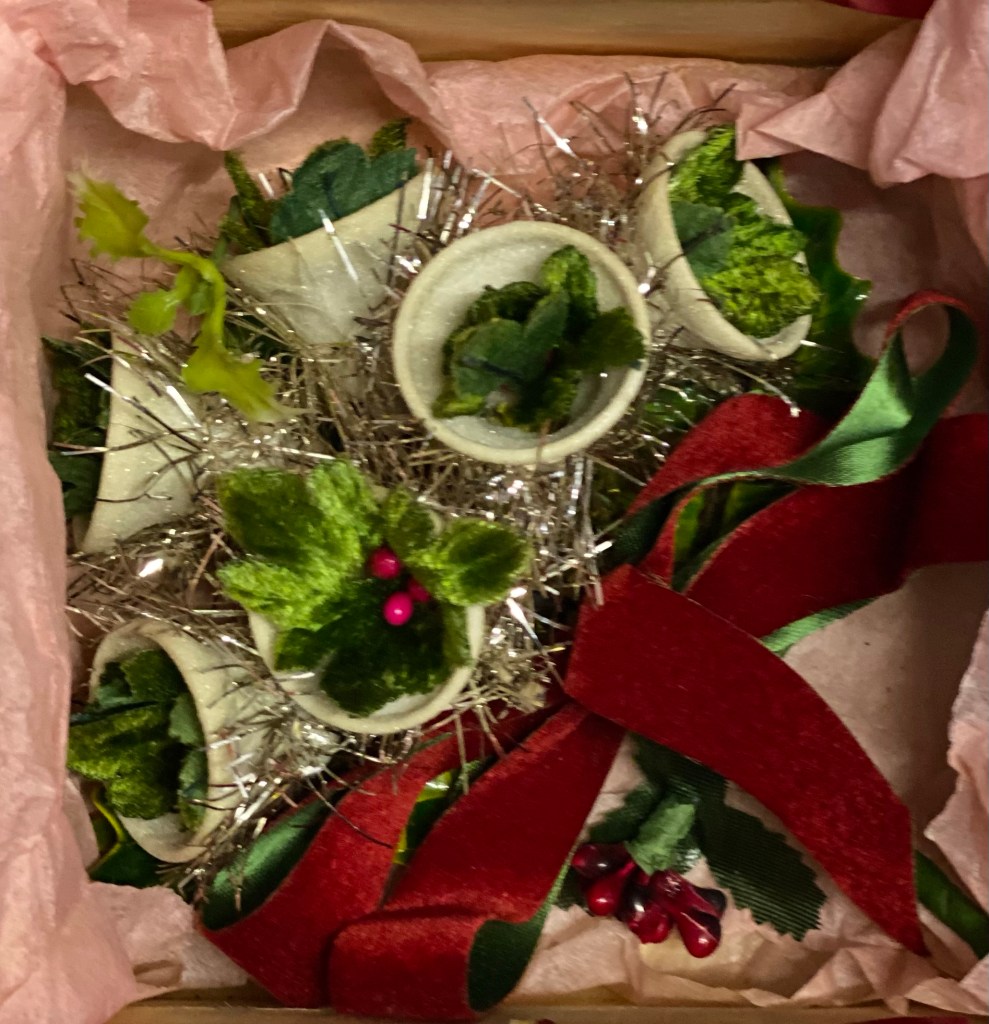
That year, just like every year I can remember, we were off of school for two or three weeks for Christmas break. Before the break, at the class Christmas party, we’d all given Mrs. Peterson our Christmas gifts. The practice in the mid-sixties in the cold, gray, windy midwest, or at least in our neighborhood, was to give your teacher a Christmas corsage; these were pretty, often fake flowers (or no flowers at all, if I remember correctly) and they were adorned with ribbons and trinkets. They certainly were festive. The trouble, as far as I could see at the time, though, was that everyone gave the teacher a corsage. How many dang corsages could one teacher wear? So, I opted that year to give the teacher something else, likely some candy or perfume; it made sense to me, but the gesture did not pass without incurring grief from several of my classmates.

A Typical Christmas Corsage

Over time, I would become more accustomed to classmates wondering what on earth I was thinking. In fifth grade, for example, a couple of us created a class-wide crisis when we did not wear dresses on picture day. Whoa. (Strangely, we were allowed to wear pants in grade school at that school; later, I’d transfer to another town where girls were required to wear dresses, no matter what the weather.) What some of us had figured out, though, was this: when we wore a dress (with nice shoes) for picture day, recess was a wash and we really, really liked running and climbing during recess. In addition, the individual pictures were only head and shoulders so a pretty blouse would serve the same purpose as a dress. Finally, at least in my case, since I was the second tallest kid in the class, I always always stood on the back row for the class picture anyway so no one ever saw what I was wearing. I could see no reason to endure the discomfort of the dress and patent-leather shoes all day when I could be in pants and tennis shoes. Sadly, I had to explain that about twenty-five times that year and, while I was annoyed at that, I was more annoyed at myself for not figuring this out in first or second grade. Still, embracing my generation’s dictim “Question Everything” was a learning curve, and the Christmas corsage might be considered the first volley in my war on ridiculous expectations.

No Questions Allowed.

Still, this post is about war, war and children.

That Christmas break, we went home a happy lot and looked forward to returning in January. When we did step back into that classroom, we did not find Mrs. Peterson at all. What we found was another teacher, an older woman whom I’m sure was a lovely and gifted teacher, but on the first day back to class that frosty January, we were told simply, “Mrs. Peterson is gone and this is your new teacher.” End of discussion. No questions allowed though you know we had plenty. In my child’s memory, our anger and questions were dismissed, sent to the corner, not allowed.

Now, if any of our parents heard about this from us or if any of them knew what had happened or reached out to the school with their own questions, I don’t know. I don’t remember if I had any conversations with my parents about this either. I can reliably tell you that they were not advocates of my budding proclivity for questioning everything.

It would be decades later when some of that memory came into focus for me; I would realize, belatedly, something must have happened to Mrs. Peterson’s husband. Perhaps he was injured, or killed; we could hope, even, he simply returned home to the states and they were transferred or moved. We never knew though and no one ever told us, which meant our imaginations would have been allowed to run wild if it hadn’t been made so clear that there was no room for that. For me, those banished questions would not surface again until, as a Campus Minister, I began working with students who were combat veterans.

(Lazarus Project, which started as The Lazarus Project, became Soldiers And Families Embraced. The free counseling program began in 2010 as a United Methodist Campus Ministry project to help combat veterans and their families who were attending Austin Peay State University in Clarksville, Tennessee, adjacent to Fort Campbell, Kentucky. By that time, the US had been at war for nearly a decade, but much of burden of fighting was borne by less than 1% of the US population and felt then quite keenly by their families.The program expanded into the entire community as we began to hear from veterans and family members from all eras who needed to process their pain, grief, anger and ask their questions.)

The name “Lazarus Project” was inspired by the idea that when the biblical Lazarus emerged from the tomb he still had the trappings and stench of war on him and the community is told by Jesus to “go to him” and unbind him that he might live again, rather than wait until he asks for help. See John 11, especially John 11:38-44. We started with peer support groups for veterans and their families and evolved into a full-fledged counseling program offering free counseling still to those affected by wars of all eras.

One part of the program for several years involved joint retreats to find healing from war, and one of the first activities in those retreats involved introducing yourself by sharing some symbol of your experience with war.

Back to the Second Grade

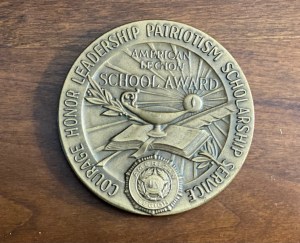
As I prepared to go to my first retreat, I was at a loss to share any personal experience with war until I was cleaning out a drawer and stumbled upon an award I received at the end of sixth grade from the American Legion. It was not until I was holding that award that I realized my own experience with war began in second grade with Mrs. Peterson.

It was not until I was holding that award that I realized my own experience with war began in second grade with Mrs. Peterson.

Certainly, this award, which, I was sure was going to my classmate, Karla, did not – in my sixth-grade mind – have anything to do with war.

American Legion Award given each year to one boy and one girl in the sixth grade of each local Elementary school for “Courage, Honor, Leadership, Patriotism, Scholarship and Service.”

Holding it all those years later, however, gave air to a mass of memories. To my surprise, the memory of Mrs. Peterson and her Soldier were near the top. Processing those memories in that retreat, sorting through the confusion and child’s anger, I am grateful to say, helped the Lazarus Project and then SAFE become community educators about the effects of war on children. The first thing we taught was that children DO know about war, whether we adults want to admit it or not, and denying their experience has both immediate and longterm consequences.

Already, one of our first clients for counseling had been an angry child, a six-year-old, who had been expelled from school for stabbing other children with pencils. Her grandmother came to us asking for help. The child’s father had been deployed into combat three times for a year at a time since she had been born and her mother had melted under the stress, grief and fear of all those long deployments. All that the child knew was that now Mommy also had “gone away.” The child was angry and she had lots of questions no one could answer. We learned quickly that she was among the many children of that war and so many other wars who wake up wondering if Daddy was still alive, if Mommy would be able to come home, and if, when they did come home, they’d be “all right.”

“You lied,” he said. “You all lied.”

A ten-year-old client of our program.

One of the saddest days of our program was when a child whose father had sustained a serious Traumatic Brain Injury declared that all the adults around him were liars because they had all told him Daddy would be okay, and he did not need to worry. You lied, he said. Like most of us adults who want to protect the children, the adults in his life underestimated his ability to grasp the seriousness of the situation and discounted his need for honesty and his right to have the chance to grieve the possibilities and air his fears, too.

All of us at Lazarus Project were amazed, though, at how much it helped the six-year-old just to have an adult hear her and assure her that of course she was angry and rightly so. She desperately needed someone to normalize that anger. Being able to ask her questions without upsetting everyone else around her didn’t fix the situation or mean she wouldn’t need more counseling to understand and name her feelings but it did help her stop stabbing other children with pencils. Allowing her space to air her questions likely had the added bonus of helping her process them before they became jumbled fragments tossed into a backpack that might not be opened for decades, if ever.

As the wars continued, more and more resources surfaced to help talk about war with children. Sadly, as those wars continued, there were children who had spent their entire school experience, twelve years or more, with one or the other parent deployed into combat zones. The questions they have and the feelings they need to process will continue throughout their lives.

Our questions don’t always need answers, just air, the air to breathe, the chance to be counted.

As I write this, I think of my granddaughter who is only seven and, while she seems quite young, she does know about death and she has dealt with the losses of animals and people she has known. Thankfully, she is blessed to be surrounded by adults who allow her to ask questions, even if they don’t have answers for her.

It’s not easy to hear her questions some times, but it IS simple. What we are learning by listening is that our questions don’t always need answers; they do need air, the air to breathe and the chance to be counted.

Wrestling with God

People often assume that, because I am a pastor, my relationship with God must be bucolic, nurturing, all green pastures and peaceful waters. They are surprised then when I tell them that my relationship with God, in fact, more closely mirrors the story of Jacob wrestling with the angel. (See Genesis 32, or better, go back and read the whole story of this trickster who became the father of the 12 tribes of Israel.)

I refer them to this story because while I would love to say God and I are just great buddies and I, like Mary, sister of Martha, spend my days sitting at God’s feet listening and learning, the reality is much more that I wrestle with God and often, the wrestling feels like a life and death struggle.

The “Before”

Rapids

About five years ago, my two sons and I went kayaking on the Harpeth River on a rainy 4th of July. We were the last group of people allowed to get in the water because the rain had been coming down so long that the river was starting to rise. Those who ran the kayaking and canoeing outfitters were concerned and so they stopped letting other people get in the water. It was still manageable when we got in, and all three of us have a lot of experience with canoeing and kayaking, so we felt quite comfortable–even if we were soaking wet.

Almost immediately though, really before we could even get settled in our kayaks, we had to make a quick decision at a split in the water – a stretch of rapids either way but we had no time to think and no time to weigh the two and find the safest. My youngest son went right and my oldest and I went left. Within seconds, I watched in horror as my oldest son was sucked underneath a pile of brush that had collected on the side and then, almost as quickly, only had time enough to take a breath before I also got sucked under the pile of brush myself.

I remember being clear I did not want to be carried any further under that brush pile, because, well, there did not appear to be a way out on the other side. I, of course, immediately lost my paddle and kayak and just focussed on not being pulled any further under. I did know which way was up and managed to grab onto a branch, but I was not strong enough to pull myself to the surface. I remember that I kept holding onto the branch and was especially grateful when I realized it was living and attached to the riverbank. I could not find any way, though, to push myself up and get my head out of the water. I remember kicking and kicking and holding on until quite suddenly I found a foothold and pushed up until my head came out of the water and I felt a hand grabbing mine.

I was not underwater for a long time, but the time that I was underwater went by slowly while I was struggling, and I remember two thoughts as I was kicking and searching for a foothold and trying to push myself up: the first thing that I was thinking was I didn’t know where my oldest son was and I was really scared he was underneath the brush; and the second thing I was thinking was honestly that I might not get out of this alive. I was under water and struggling long enough to have time to think I might not make it.  

As it turns out, I was not the only one thinking that, though, because I found out a bit later that my youngest son — the outdoorsman and most  experienced of the three of us, the one who has survived several brushes with death that mom doesn’t want to know about, that son apparently had enough time to stop trying to retrieve my paddles, to yell to his brother, “Mom is not coming back up” and to start sprinting for where he’d seen me go under.  

Apparently, though, his brother, who I’m so grateful as able to quickly surface, was already trying to reach me and when I finally found a submerged log with my foot and was able to push up and reach up, that son grabbed my hand and pulled me on up and out.  And that all happened in five minutes or less of putting our kayaks into the water! My heart still races just thinking about it!

Praying, Not Praying….

Now you might hope that, in the midst of chaos and a frightening situation, that a preacher would be praying, right!? And, I’d really like to say that I was praying but I don’t remember that.  I do remember being calm, even when I thought I might not make it.  I remember being focused and I remember doing what I knew to do, focus on finding a foothold to push myself out of the rushing water. I remember being fully present in each moment.  I remember pushing again and again and I remember hoping it would work.  I remember that I kept trying and that I kept reaching. And when I felt that hand grab mine, when my sons pulled me out of the water, absolutely soaking wet, I remember taking a really deep breath. 

Afterwards, once I felt the relief of seeing both boys safe and sound, I think I felt worse for my oldest son who — Poor guy — had just given up cigarettes a few weeks earlier.   He looked like he needed one.  As for my younger son, well, he got a taste of what Mom had felt so many times with him and his brushes with danger and death.  I remember registering that it must have been serious because it was highly unusual for him to be worried but he was so worried, he ran!

How it felt….

I remember being grateful that my oldest son was above the surface trying to get to me the whole time and grateful to see his face when he pulled me out. Quietly, with little conversation at first, we set about trying to retrieve our paddles and whatever gear we had. Much was washed down the river and gone. We found what we could see in the rain, secured that gear to the kayaks and got back on the water because, as drenched and drained as we might have felt, there was no going back up the river – there was only one way home.

I remember we floated in silence for a bit until my youngest son turned to me and asked, “Don’t you just feel so alive right now, Mom?”  

Well, yes.

And No.  

I was far more exhausted than I normally would have been, considering we really had only been on the water for a few minutes.  But I also could say I could not remember many times in my life when I have felt that present, and that much in the moment, and that keenly aware of and focussed on what I needed to be doing.  

I felt quite shaken, I told him, but grateful though I was very clear that it never needed to happen again!!

All that is to say, I felt like most people do in a terrifying situation. While scary movies are quite popular with many of us, most of us do not actually like being in danger.  In fact, we have a high need to control that kind of chaos; we certainly do not like it.  As far as most of us are concerned, it is God’s job to make the chaos stop and God’s job to restore safety and help us feel comfortable again.

Wrestling is Biblical, Turns Out.

In Gospel Medicine, Rev. Barbara Brown Taylor says, we think that’s how we can tell when God is present–when the danger has been avoided.  When your heart stops pounding and you can breathe normally again? That’s when God is present, right? We believe we know that God is there when we’re not afraid anymore. “It is an appealing idea,” says Taylor, “but unfortunately the Bible will not back it up. As much as we’d like to think God is in the ‘keeping us from danger and chaos’ business,” in fact, she says, “much of God’s best work takes place in total chaos, while we are scared half out of our wits.” (Taylor, Rev. Barbara Brown, Gospel Medicine, 107-8.) Great. 

In the Genesis saga where Jacob is wrestling with an angel, Jacob certainly did not want to be fighting for his life.  But this story is where he does exactly that.  When we find Jacob there, it is twenty years after Jacob left his family because he cheated his older brother, and lied to his father, and took his older brother’s birthright, inheritance, AND blessing and then had to flee. 

“Likely he only knows which end is up because he can feel the dirt on his back or the gravel in his face as they roll and tumble and cling to one another all night, apparently evenly matched.  We know he felt afraid for his life, thought he was likely going to die, in fact, which means he was keenly present and aware of every moment and every move because the next move, the next moment, the wrong move, could mean the end of his life on this earth.” (Taylor, Ibid. )

Jacob refuses to let go of the angel until the angel gives him a blessing and the angel changes his name to Israel, which, of course, will be hugely important, but also leaves Jacob wounded, limping for the rest of his life, which means always vulnerable in that day and time.

This story is perhaps my favorite story in the Bible.  In fact, when folks ask me to explain my relationship with God, I tell them this story because while I would love to say God and I are just buddies and I, like Mary sister of Martha, spend my days sitting at God’s feet listening and learning, the reality is much more that I wrestle with God.  Sometimes I question God, sometimes I get angry with God, sometimes I am grateful and feel blessed. But it is not usually a serene and peaceful relationship. I also love this story because it describes so well how so many of us experience life: crises, and relationship troubles, and illnesses, and accidents, seem to pounce on us when we are not looking. and all we can do is hold on tightly and try to come up for air when we can. 

Faith, For Me, is Holding On, Ever Hoping.

Rachel Naomi Remen, an oncologist and author who struggled all of her life with her own Crohn’s Disease, and who has endured lasting, debilitating pain and multiple surgeries, talks about Jacob and striving with God in her book, My Grandfather’s Blessings. First, because she was a child when her grandfather told her this story, she says she was puzzled and wondered how anyone could confuse an angel with an enemy.  Her grandfather pointed out, though, that the wrestling was not the important part of the story.  The important part, he told her, is that everything has a blessing for us, and we can receive blessings even–and perhaps especially–in the times when we are clear we are not in control.  Our task is to keep striving as best we can to understand, keep striving to learn, and maybe even, like Jacob, keep negotiating but we keep holding on.

Rachel Remen says, “How tempting to let the enemy go and flee.  To put the struggle behind you as quickly as possible and get on with your life.  In fact, though, it turns out that very often the struggle IS your real life and all the time we spend quietly, serenely, calmly is just the quiet before the storm that is our life. Perhaps,” says Remen, “the wisdom lies in engaging the life you have been given as fully and as courageously as possible and not letting go until you find the unknown blessing that is in everything.” (Remen, Dr. Rachel Naomi, My Grandfather’s Blessings, 27. ) 

This kind of wrestling is not pretty, though. Most of us shy away from this kind of struggle because it is so embarrassing to be so clearly overwhelmed by our lives. I am sorry to say I have struggled a great deal in my life, sometimes because of tragedy or trauma and sadly, just as often because I have allowed trauma to set the rules and too often closed myself off from healing or relationships.

Soaked and Tired

When I do struggle, and it seems that I do nearly every time there’s a change I need to make, I have found it necessary to forget about how I look or how I present to others, as much about whether or not my eyes are swollen and red as about whether what I say makes sense to someone else. I have learned not to expect myself to sound rational or even be able to defend what I am feeling or thinking, only to hold on and not worry about frogs in my pockets or mud on my forehead or if anyone else understands right now. Every attempt, every time I push or grasp for words to explain what feels life-giving and what doesn’t, every move is more proof I am alive and I do care and still hope and, God willing, will reap a blessing from the effort.

As my sons and I floated down the river that day, I’d love to say I felt somehow triumphant, that I had gleaned some grand lesson the world would want to hear, that God had spoken to me and sent me back the land of the living to share some great wisdom that would make all of our lives better or more meaningful or help us cure cancer.

Instead, I was drenched, defeated and deflated but that didn’t matter because I was just grateful to be near enough my boys to touch them, to call to them, and to hear them call back to me for another day.

Lessons From the Ocean

Full disclaimer: I love the ocean. I will likely write about it often.

I breathe better when I am near the ocean. I flourish when I am warm and can bury my toes in the sand. I used to feel guilty about wanting to be at the ocean all of the time until I finally found others like me. People used to call me lazy when I talked about how I was looking to find work near the ocean, near the beach, near the waves and the driftwood, as if only being willing to brave the cold and wind and aches and stiffness of winter made you a responsible and mature adult.

Suffice it to say, the ocean will be one of the topics I will write about here. Perhaps some of my unpacking thoughts will speak to you.

If you have ever tried to body surf, or even if you have ever been knocked down by a wave, you know how powerful waves can be. I have sported my fair share of bruises earned when a wave has knocked me down. Some waves are so powerful that they will send you tumbling back onto the beach, rolling and rolling head over heels until you lose momentum, as if you were Jonah spit back up onto the beach by the whale, as if the ocean were done with you and wanted you out.

Grief can bowl us over as if it were a wave. Once it initially recedes, we may struggle to stand again even as the water, powerful and relentless, rushes back out into the vast­ness of the ocean.

Perhaps you’ve experienced this, trying to stand again while the sand and shells and rocks and debris under your feet sinks and sucks your feet into the muck.

Strange to anticipate grief but smaller instances of grief are warnings of the power of grief to come. Nothing to do but to attend to the moment and focus on the feel often the knees- sin and hands-sinking in the shifting ground under me.

Too often I cannot recover enough balance and find a sure enough of a foothold to raise myself above the next wave that often quite rudely washes over me and requires me again to seek some sure footing. What I have found, though, is that, too often the only answer is to sit in the sand and swirling waters and take a breath as the grief washes over me.

Try not to gulp, I warned my granddaughter, when she was learning to body surf. Keep your mouth closed; If you scream at the wrong moment, you will know what anchovies taste like.

When the grief and swells are too strong to fight, they recommend you curl up in ball and not fight the current of a rip tide. If you are in shallow enough water, you may find the surf still to strong to allow you to stand. In that case, just sit. After a moment, there’ll be a lull in the swells and a chance to right yourself and get onto-your knees again, then your feet.

When I was a child, my brother, my sister and I were introduced rudely to the tyranny of waves. Beautiful and calming from a distance, exciting and great fun when you know how to ride them, the swells of the ocean came as a rude surprise to my siblings and I. Aged five, six and seven, dressed in new outfits for travel overseas, my father directed us to chase that wave back into the ocean for a photo op with his brand new SLR. We’ll never know if he was aware of what would happen; he’d never admit it but the youngest of us didn’t realize soon enough and the resulting photo captured her shock of the cold and surprise at the wet as a wave swept over her. To this day I don’t remember who grabbed her to keep her from falling fully into the wave. True to our family, though, dynamics, she’s never discussed the moment, never indicated even if she remembered it, never revealed whether or not it was traumatic or simply a not so pleasant memory.

I certainly remember the look on her face, the question, “Why did you let this happen?”

“Why didn’t you warn me?”

Most days, memories of my childhood are simply like the gentle wake of the outgoing tide; they lap at my toes and remind me of how far I have been blessed to come from those days.

Most days, I recognize that the memories, after years of work, are harmless, never gone but not threatening to knock me down and no longer able to sweep me out into the deep.

Most days, the memories are not so powerful, now, though, as is often the case with trauma victim, on occasion the wave that washes over is certainly chilling and a shock to the system.

As an adult, I camped one weekend on a beach in Big Sur California, with a friend, a fellow soldier, a Captain in the unit whose members wore a green beret. Overlook for this anecdote the fact that we were not allowed to date, a Private First Class (enlisted) and a Captain. He was, for me, I realize now, a protector, safe and able to navigate dangers that still frightened me. He was also I realize as I write this, a warrior who decided to become his own protector first. I am sad to say I will probably never know now what trauma drove that for him. We might have been able to help one another more consciously had we been able to share. As it was, we were simply a refuge for one another for a time.

After a bit of a hike, we discovered, on that trip decades ago, a driftwood shelter on the beach, perfect for two of us to sleep inside and so we took shelter during a gentle rain and slept peacefully. Until morning. Slightly before dawn, I awoke to his arm suddenly over me, directing me not to move, holding a bundle of clothes over my head (I know now that was to keep them dry.) I am, to this day, amazed at the training that enables that kind of quick thinking, by the way. As the chilly wave receded, he jumped up, scrambling out of the shelter and further up the beach before the next wave overtook the little shelter, me his willing shadow.

Aware of the chill that would quickly set in, he was, true to form, able to build a warming fire for us and dressed me in the (oversized for me) warm sweater he’d managed to grab as wave had first washed over us.

These two events share more than the cold waters of the Pacific Ocean off of northern California. (That first experience occurred on the San Francisco Bay).

Together for me, these experiences mark a formal progression to an awareness of choices, choices in how to live, how to parent, how to love, choices it has not seemed that either of my parents ever reached themselves.

My father had been a boy scout and became a boy scout leader but never shared any of what he’d learned about safety, precautions or survival. His guiding principle seemed to come from early poverty, both poverty of resources and poverty of love. My mother once declared that no one ever taught her how to take care of herself so her children could just figure that out themselves, too.

I am grateful I realized I did have choices.

For the longest time, I thought my only choices were to be like one or the other parent. I am grateful to this day for a doctor who said simply, there is more for you than the life you live at home. You will have other choices, entirely different choices, she said. Because of her simple statement, I have lived learning to expect and then accept those choices that could help me survive and even thrive in spite of the waves that have periodically threatened to wash over me in life.

The choices I have discovered have been for my own “upbringing.” I am the first to acknowledge that I have been slow to mature emotionally, but that was not from lack of effort. My choices have also been about how to parent i.e., whether to repeat my parents pain and pass it on, as they did, or try, albeit likely still lacking, to teach my children at least something about self-care and caring for others.

Sometimes the self-care is just about sitting still while the sand and shells and swirling waves threaten to pull you down more and certainly do not allow you to get to your feet right away. Sometimes the self-care is to admit you cannot yet stand. Sometimes the self-care becomes caring for others as you teach them how to sit still in the grief and the waves and even sit still with them, teaching them to power of sharing the moment and the powerful self-care to be found in caring for one another.