My Alamo

Individually, collectively, as a nation, there have been times when we’ve needed to draw a line. This is one of those times.

“Those who would give up essential Liberty, to purchase a little temporary Safety, deserve neither Liberty nor Safety.” Benjamin Franklin

Much of the time when any of us need to draw a line in the sand, as they say, I suspect it is a surprise. I say that because we are often not expecting the person moving aggressively towards us; thus, we are not prepared to mark any line. When we do draw a boundary, when we insist that the next step the person in front of us takes will be too far and we will stand in their way, it can feel jarring and aggressive, like we are the ones being combative. We are simply not prepared to counter aggression or abuse, individually or collectively. 

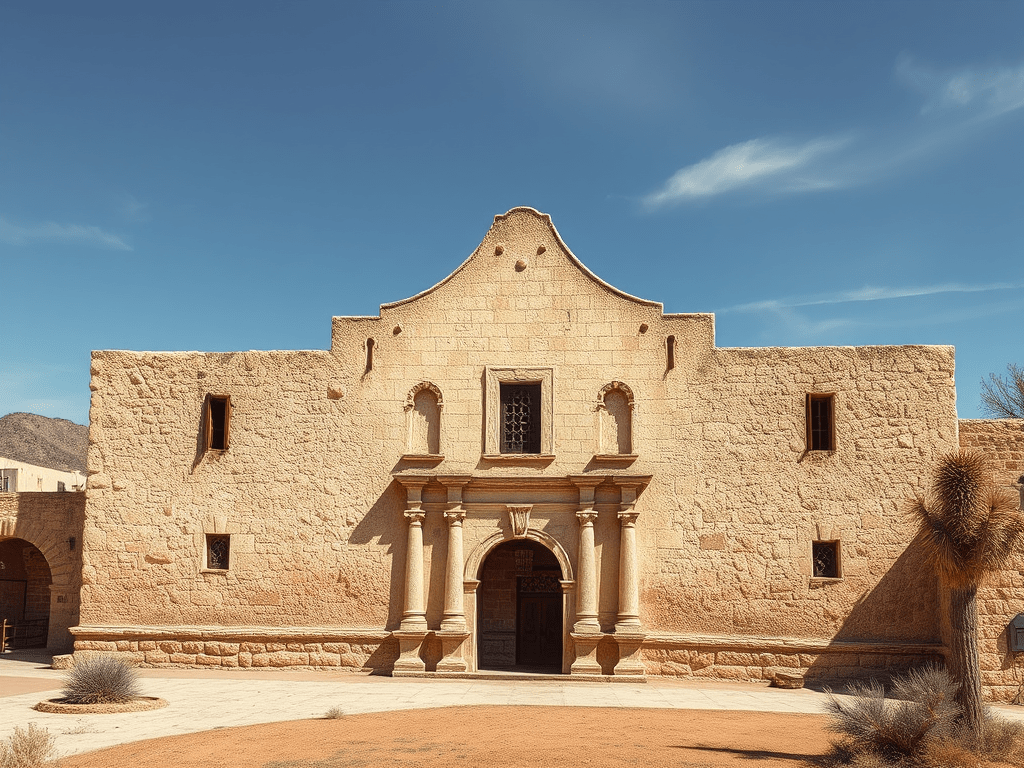
This is somewhat ironic, at least in the United States, though. Remember the Alamo? Legend has it that when Lieutenant-Colonel William “Buck” Travis, Texian Army officer and his fighters faced overwhelming forces at the famed fort, Travis drew a line in the sand with his sword and told his fighters to cross it if they were willing to stay and fight. Nearly all of them did. While that story is possibly more fiction than fact, it is nevertheless the lore many of us were inspired by, taught to emulate, part of the “GIve me liberty or give me death!” understanding of the cost of freedom of speech, freedom of religion, freedom from tyranny. We know what’s right. We know abuse when we see it. We know when someone is trying to frighten us into not fighting for those freedoms. We know and yet we are reticent, loathe to draw our line in the sand, whether personally, as a family or as a community and nation. We want it to all go away. But it won’t.

Years ago, an experience from the first church I served paved the way for an extended family finally to take a stance, to draw their line in the sand to stop the abuse that had been harming women in that family for at least a generation. In this case, what had been a family secret became quite public because the abuser got reckless and over-confident and, in some ways, that arrogance made taking a stand easier for the family.

“Herb” (name changed to protect his victims) wasn’t a regular attendee at the church I served, so my radar was not pinging when I greeted him that Sunday morning. He was a 60-something married man who always dressed in seersucker and bow ties and prided himself still sporting a full head of hair, even if it was graying. I’d brushed off his previous suggestions about how my congregation would like it, he was sure, if I wore more colorful outfits when I stood in the pulpit. I glared at him and walked away when he suggested I unbutton a button or two on my blouse, but nowhere was there any guidance on responding to such behavior from this man whose family members occupied nearly one-third of the pews. I wondered why his wife never attended with him and started avoiding him, thinking he would remember he was talking to the preacher. Turns out, I should have opted for outrage from the beginning. At least I might have been prepared for battle when I walked out of the little white building one Sunday afternoon to see him seated in his big old Buick in the parking lot across the road. I waited for two cars to speed by, then crossed the two-lane blacktop warily, my chest tightening. My arms were full with my Bible, sermon notes, my purse and some funeral home fans that I’d grabbed off the table in the back of the sanctuary. The cardboard fans helped you breathe on the days when the humidity was looking for an excuse to break into a summer shower. 

Already sweaty, and looking forward to an afternoon of visiting the shut-ins, I moved cautiously across the road, hoping he would stay in his car. I had been headed to the fellowship hall to lock up before I started the afternoon’s visits. Herb exited his car and was next to me nearly as soon as I stepped off the highway onto the parking lot. I had to stop mid-stride to avoid running into him; I was off-balance as I tried to look behind me before stepping back because that would put me back onto the highway. 

Turning towards him, I stumbled to my right just in time to miss him grabbing my arm. I looked at him in confusion as he reached out again and said, “Why don’t we go inside?” 

In an uncharacteristic flash of assertiveness, I shoved him with my books. He stumbled back a bit, startled. I darted as quickly as I could around to the passenger side of his car. Did he really just grab at me? Herb started around the side of the car and reached for me again, so I threw my books at the ground near his feet to stop him long enough for me to move around the car until I was back on the driver’s side. I know my hands would have been shaking if I had not been clutching my black leather purse, instinctively wrapping the strap around my hand in case I needed to use it as a weapon. 

I would never have expected a man from my church to be bold enough to try to grab me in the church parking lot in broad daylight. That simply was not something I expected. Worse, he acted with such confidence, as if he would face no opposition.

Herb laughed. “Don’t be so silly,” he said, putting one hand on the trunk of the car as he slowly headed back around towards me. He seemed quite amused, at first, that I managed to run around his car—a rather large late model car–but all I could think about was the fact that, thank God, he could not reach across. When he snatched his hand back quickly in pain because the metal was hot enough to sting his hand, I bolted. 

He was moving around the car towards me again; I managed to dart into the fellowship hall, drop my purse and the ridiculous fans, and turn the lock on the wooden door. Maybe it was the sound of the door locking–maybe something else–but, apparently something brought Herb back to reality; he “came to himself,” like the prodigal son in Luke, and stopped grinning. Unlike the repentant son who asks forgiveness of the father, though, Herb stood before me, his fist raised, threatening to bust through the window of what seemed suddenly like a very flimsy door. I tried to breathe. Even though he was a member of my church with a large and influential family and now he was angry, I had clearly—finally—drawn a line in the sand. 

When he finally got back into his car and drove away, I leaned against the wall and let out a scream, then frantically ran to the other door, grateful to find it was locked. He hadn’t tried opening it anyway. He’d just driven off. 

I couldn’t catch my breath.

I gave myself the afternoon off from visiting parishioners. I did not let myself cry until I got home; navigating back roads is difficult enough when you’re watching the rearview mirror for a Buick the whole time.

The next Sunday, and for several Sundays after that, I was greatly relieved that Herb did not return to the church. For months, I would imagine his hand grabbing for me. While I was grateful not to see Herb for a while, I also felt quite alone and indulged in some hefty self-pity as I pondered how large a contingent his family was in our congregation. His wife, for example, was one of several sisters, many of whom attended the church. Herb had married the oldest sister when most of the sisters were still children. At least his wife was not attending our church. A few months later, though, his wife was scheduled for surgery and the prognosis was not good. A pastoral visit to the hospital was in order, if only to console her sisters.

I arrived at the hospital intentionally late. Even after the family was sent to the waiting room before surgery, nursing staff was willing to allow clergy in to pray. I smacked the oversized button to open the doors just in time to go back into the surgical prep area to see her alone. She was still awake and aware enough and thanked me for praying with her. Then I made my way through the winding hallways to the family waiting room. 

Nearly every seat was taken by a sister, but I spotted Herb on a chair in the far corner. I took a breath, said a silent prayer, and walked over to him. I leaned down to offer him my hand in greeting but, before I knew it, he was laughing because he’d managed to pull me onto his lap and wrap his arms around me. Even now when I think about how shamelessly he seemed to operate, how little he feared anyone’s disapproval, how brazenly he disregarded the line I had drawn, I want to scream. I’d been pretty damn clear, I thought, that his behavior was not welcome.

I jumped up as quickly as I could and found a chair on the other side of the room, next to one of the sisters. I did not look at anyone for several minutes; I was afraid they would have seen how hot my cheeks were with anger and embarrassment. I was grateful, finally, to look up and notice that sister number two, one of my regular members, was sitting next to me. Voices soft, we chatted quietly about how long the surgery was expected to last. I was grateful she quickly offered to call me when the surgery was over. “We know you have other calls to make, Pastor,” she offered. I thanked her, chose the fastest way out of the room and made it to my car before the tears began. 

I drove home discouraged. How could I keep being the pastor at that church? Even if they wanted me to continue, could I keep dealing with this man and his aggressive behavior? I could not shrug it off, and I did not find it amusing, like he did. Worse, I feared other congregation members might also find it amusing. 

Everyone in that waiting room had seen Herb pull me onto his lap and me pushing his arms off of me and jumping up but no one had said a word. I’d not received help when I’d spoken to my mentor: “It’s part of the job,” I was told. I did not sleep well that night; I was drafting my letter of resignation from the ministry and imagining the sensation that would ensue within the church once it was made public.  

The next morning, I was praying about the letter when sister number two called me, I assumed, to tell me how recovery was going. The conversation was so short I almost didn’t remember it.  

“You need to know,” she said quietly but deliberately, “Bobby has spoken to Herb,” she said. “He won’t be bothering you anymore.” She paused. “He won’t be bothering anyone any more.” She paused again. “We’ll see you Sunday.” 

Suddenly, I was not alone. One of the other men in the church had stood up to Herb. Sadly, though, slowly, I began to imagine several young women standing next to me with tears in their eyes. I had not considered how many others Herb probably had “bothered” over the years but they were suddenly standing next to me.  

All those younger sisters and their daughters would have been easy targets. No one had stood up to him before then. Evidently, no one had even spoken in any voice louder than a whisper about his behavior for decades until that day in the waiting room when he accosted the preacher. The family finally found the line they would not let him cross.   

Likely, in the past, the family had hoped Herb’s behavior, something most of them could not even fathom, would have just gone away on its own. Challenging one of the patriarchs of the family had been too painful and even frightening for them to consider. What would they do if he said “she” initiated it? Who might he go after next? What if he suddenly turned the tables and claimed he was a victim? How many of the neighbors might take his side because THEY were already victims and afraid or feared becoming targets? 

Because they had never expected to even contemplate such abuse from one of their own, the family could not choose a line. 

Because they were afraid to talk to one another about what was going on, no line was drawn.

Because no line was drawn, the abuse continued, unchecked.

Trouble is, this is a common pattern. Whether the abuse is of a person or a group of persons, though, not wanting to talk about it only aids and abets the abuser. Not wanting to talk about what we know is wrong because we are afraid or because it is not our family or because we’re not sure the child maybe “deserved” some punishment or worst of all because we simply don’t want to believe what is happening only emboldens and strengthens the aggressor.

Do not be fooled. These lessons apply to us—to our families and our nation. 

We know in our guts how this goes. We know but we are hoping we won’t be asked to draw any lines ourselves.

We wish some people would stop constantly reminding us how more and more boundaries are being crossed every day, how free speech and due process, decency and respect for others are being blatantly, publicly disregarded, then even applauded. We are afraid and tired. Didn’t we move past this decades ago? 

Are we waiting for another Colonel Travis to draw the lines for us? Have you admitted you need to think about those now, like it or not?
Are we waiting for another Colonel Travis to draw the lines for us? Have you admitted you need to think about those now, like it or not?

A public school teacher told me today she had decided she would obstruct any immigration authorities who tried to take her students – children – from their classroom. She has admitted to herself what is possible, even as horrific as it sounds, and she decided where to draw her line.

Where is your line?


Sacred Bears

When I shared the following events with my writer’s group and asked them to put a timeline on them, most guessed the 1950’s. Learning this occurred in 2002 disturbed them. Truly disturbing, though, is that, sadly, no one in this country right now would be surprised to enter a town square in nearly any southern state in the US and see again today what I saw then.

Black and White Teddy Bear on overturned children's chair

Sacred Bears

“Some old lady got my buddy in trouble!” was what I heard another pastor declare as I sat down at the weekly lunch of local United Methodist pastors in the county. (“Local Pastors” do not attend seminary but rather several years’ worth of courses in order to be allowed to preach from United Methodist pulpits.) I was running late, but I knew immediately what he was complaining about and I was annoyed to realize quickly he had only heard part of the story. “He was at the weekend school…”

“Course of Study,” I offered.

“Yeah. The Course of Study. Anyway, there was this festival on the square down there in Pulaski….”

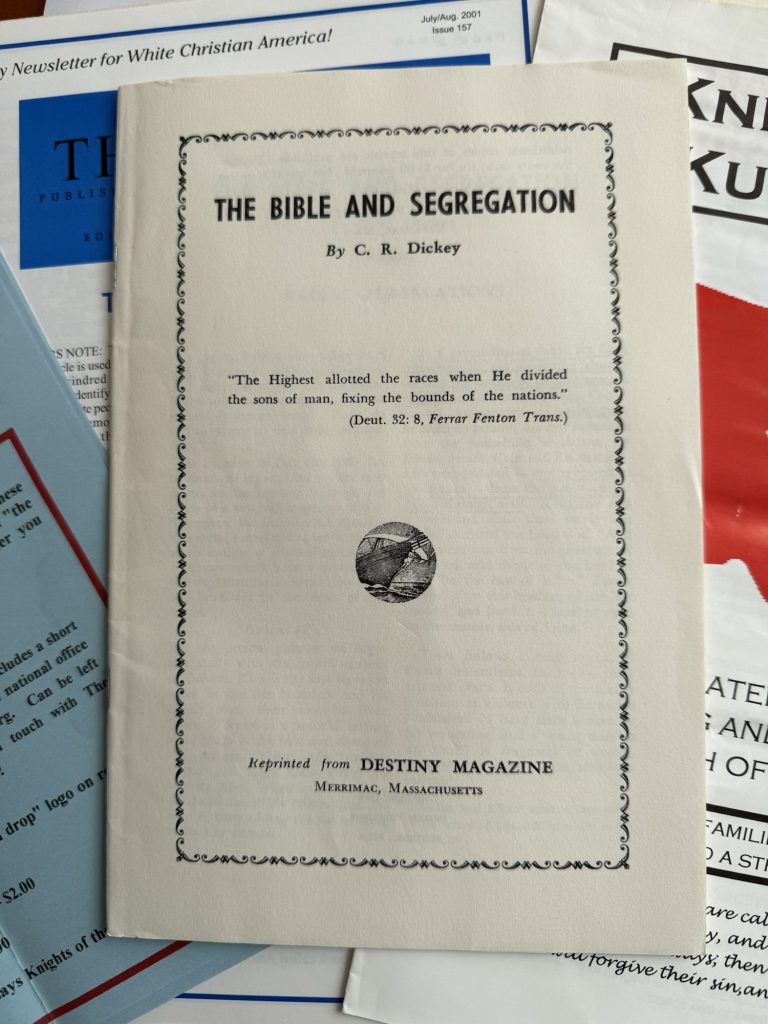
“They called it ‘White Christian Heritage Festival’ but they were handing out KKK literature,” I added. He frowned.

“Okay…. so, this old lady just took what my buddy said all wrong. Then…then, she told the guy in charge.”

“Grady?” 

My colleague stared at me, determined to finish the story. “That old lady told Grady my buddy was part of the KKK!”

“Actually,” I said after I ordered my chicken salad with ranch on the side, “that ‘old lady’ told Grady that your buddy confessed to her that he could see where their teachings made sense. He said they made sense.’  So, since he is allowed to preach at a United Methodist church and to teach children and youth….”

“She probably just misunderstood.” 

Surely, I thought, this guy will catch on soon. I sighed. “So, I shoulda just let that slide?”  

The others at our table were clearly amused that my colleague didn’t get why I knew the story so well. In his defense, he attended a different Course of Study, lasting four weeks, in Atlanta for full time pastors in the United Methodist Church. His buddy and I were part time, which meant only 60 hours a week of work. Our Course of Study classes met over eight weekends a year with reading and papers in between those weekends, sometimes in Jackson and other times at Martin Methodist College in Pulaski. Pulaski, if you aren’t aware, is known for being home to some members  of the Mars candy family (think Milky Way) and is also generally credited with being the birthplace of the Knights of the Ku Klux Klan, the KKK.  

I especially hated the overnight stays at these weekend schools. That particular weekend, I do not remember another woman in attendance. Not only was I away from my sons, but I was alone. In a motel room. In a strange town. A single woman.  Newly in recovery from trauma. In other words, someone who knew bad people did lurk in the shadows. Assuming all the men around were trustworthy was a luxury. So, I slept not at all. I took to wedging whatever chairs were in the room in front of the door in an effort to at least rest. 

On one particular Saturday, several of us left class to make a lap around the nearby downtown square on our lunch break only to encounter what was that day touted as a “Celebration of Southern Culture.” Displayed on the assorted tables were handtooled leather goods, canned peaches, okra and pickles. A brochure I found had previously invited area residents to join in the “family fun,” including a cakewalk.

Pretty quickly, though, I was stopped, jolted a stuffed teddy bear sitting among the books and maps under the magnolia trees. I believe God created Teddy Bears to provide a tactile reminder of love and affection, of comfort. This bear, though, had, through no fault of his own, become aligned with pure evil: he wore a white cotton robe and a white pointed cap that covered his face. This child’s toy was disguised, as if he, too, needed to hide his collusion with evil, like the men who had donned those robes and hoods in the night for so long. I thought they were a thing of our past and yet there they were, not hiding their affiliation at all and they had brochures, newsletters, books and even maps, the texts and visual aids to present these “Southern” beliefs. The first murmurs from the other pastors with me were indignant: how did these folks get to determine the definition of what was “southern”?

Eager to share with us about how God meant to order society, one of the men began to carefully explain the rationale for hatred, including their understanding that God, of course, looked just like them. In that moment,  the inference was that God most resembled a skinny, pasty middle-aged man in black slacks, a white shirt and a decades-old tie. A couple of pastors seemed interested in engaging. I was far from confident in my ability to face evil head on though; I, instead, focused on the contents of the tables.

Besides books and t-shirts, decals, key rings, watches, pins and flags, there were maps. I would not give them my money for books but I did consider buying one of the maps, a large laminated wall map designed to settle once and for all the mystery of the disappearance of the two “Lost Tribes” of Israel. Finally, I chuckled. They’d migrated, it seemed, from the Middle East and crossed over the Caucasus Mountains, stopping, of course,  in Scotland before heading into North America.  My ancestors were among those Scots who came through the Cumberland Gap and moved on into Kentucky, Tennessee, Missouri. I hadn’t known, however, that we were either lost or a tribe of Israelites. This journey was credited with solving the mystery: the Lost Tribes were now known as “Caucasians,” according to the map, by virtue of having traversed the Caucasus Mountains. I kick myself now for not purchasing that map, but, at the time, I could not stomach giving these people my money.

I did try to offer them money for the Teddy Bear, for the sake of the children these men likely influenced, for the sake of the legacy of Teddy Bears the world over, and for the comfort and benevolence children had so long depended on them to provide, I wanted to scream, “How dare you?!” 

Gotta hand it to the KKK, though. Aligning an innocent source of comfort and safety with the evil of the KKK, twisting what a child loves and trusts and using it to promote hatred and exclusion is socially and theologically powerful. Teddy Bears are bordering on sacred, as far as I’m concerned, objects that carry children through those times when the adults are absent or preoccupied or already asleep.

The Teddy Bear in the hood and robe makes more sense when you recognize how much of the most destructive theology through the ages has been born out of childhood pain. We may never know who was the child who’d been hurt enough that he grew up and somehow chose to cover himself and his head and face with a white hood so his grandmother or his neighbors or his children did not see him when he was cruel and ugly. I wanted so badly to rescue that child, or at least rescue the Teddy Bear, to allow God to do what God does best: redeem both that Teddy Bear and whomever it was who dressed him up. 

I wanted so badly to rescue that child, or at least rescue the Teddy Bear, to allow God to do what God does best: redeem both that Teddy Bear and whomever it was who dressed him up. 

“He is not for sale” was the response, though, and so I left behind that embodiment of evil and prayed for the trust and spirits of all the children these pasty white men were teaching or had taught so far. 

I did pick up some brochures and printed newsletters and walked away before they realized I did not, in fact, agree with their understanding that our country was designed as a White Christian nation or that we ought to somehow respect men who hid behind masks to terrorize others. Later, I would discover the literature went so far as to advocate for internment facilities for those who had contracted AIDS, for example, or that we all were invited to a worship service that night, complete with “great white Christian fellowship” and a “brilliant cross-burning!” 

I was no longer hungry, so I walked back with one of the younger pastors. After a few moments’ walk in silence, I said simply, “I was not expecting that.” I was feeling shaken that this evil was so openly displayed and discussed; I’d been blissfully ignorant, I realized. I had honestly thought these clowns in hoods were anachronisms, relics of a bygone era, that they were no longer active, like the sundown signs I would later learn sat as sentinels along the highways at the edges of the town where I preached. Those signs–simple painted sunsets on road signs–were nonverbal warnings: if you were a person of color, you’d best not be found in this town after sunset. The signs had been taken down, but the sentiments, fears and prejudices were not so deeply buried. I would later be disturbed to find out, for example, that two members of my congregation had been “card-carrying” KKK members while  I was pastor there. As a white woman, I had been ignorant and thus, negligent.

As we walked back to classes that weekend, though, my companion, a pastor who was about 15 years my junior, pointed out that “southern culture” was his culture. Then he added, “They did make some valid points. Did you realize they’re Christian?” 

The hair on the back of my neck stood up.

“If you listen to what they are saying,” he went on, “you will discover that they make a lot of sense.” 

He was a pastor. 

He taught a children’s Sunday School class, too, and he seemed interested, not disturbed, but interested in the Teddy Bear in the robe and hood.

“How,” I asked as calmly as I could while placing one foot in front of another, “would you go about teaching this to children?” I wanted him to clarify, to make me realize I’ve misunderstood, to tell me he wasn’t teaching ‘southern culture’ to the children, but he didn’t say any more. As we approached the classroom for our last afternoon that weekend, I wondered what the other pastors might say. Turns out, very little. I remember watching the others in the rest of the day’s lecture and discussion, wondering why no one mentioned what we’d seen. Had they debated at lunch? Had they discovered  others open to these ideas? No one seemed angry, at least not that they’d admit. I felt like I was playing a game my sons liked where you had to pretend that the floor was lava, so don’t dare put your feet down; it was dangerous. I hoped that the overt racism we’d witnessed had shocked them too. I feared, though, they knew from experience not to admit out loud they “got” where these guys were coming from, that, like my walking companion, they knew to simply shut down the conversation if they thought they’d shown their own hood to the wrong person. 

Once we’d finished for the day and each of the pastors was headed home to prepare to preach the next morning, I found Grady, the professor in charge. I explained I did not want to cause an issue for a colleague but I was disturbed about what this pastor might be teaching, especially in Sunday school for children. I wasn’t sure what to do and had not felt safe addressing him directly. Grady listened, got the particulars, then told me it was his place to address it. 

I heard nothing else for a month until I received an email from Grady; he’d spoken to the younger pastor’s District Superintendent, who evidently had found “no reason to believe such reports” and had never even spoken to the guy. This information hit my inbox just before leaving for the next weekend class. Once there, I was dismayed to find that the young pastor was there before me, annoyed, and looking for me. He was pretty sure I was the one who had ratted him out. I was the only “old lady” there. 

He greeted me with “I got called on the carpet by my DS,” which was a stark departure from what my professor had been told.  “When can we talk about this alone?” he wanted to know. 

“Excuse me,” I said, walking away; that was as much as he got for the rest of the weekend from me.

I still count that entire episode a disappointing failure, though I didn’t know how to do anything differently at the time. Not tossing my books and overnight bag in my car and leaving right away seemed the best I could manage for the time being. Clearly, I needed to learn how to counter this twisting of theology openly, to be prepared to teach the children and youth in the churches I served that Jesus really meant it when He said He loved every body. So I stayed. For the rest of that weekend, I kept my distance. I kept my guard up. I didn’t sleep.

I wasn’t surprised then a few weeks later at lunch, though, when this “old lady” was being castigated and labelled a busybody sticking her nose in other people’s business. 

Just to be clear, I asked my angry colleague, “That old lady ought to have simply looked the other way?” 

“Exactly!” he said. “It was none of her…your business.”

Because every veteran needs a mission.

The rain was relentless. And aggressive. Errant drops ricocheted off the railing and sprayed me and my companion as we stood on the stoop of the aging A-frame building. I would have struggled in that moment to offer a hopeful assessment of the continued usefulness of that building. Housing the United Methodist Campus Ministry at Austin Peay State University in Clarksville, Tennessee, the fifty-year old A-frame’s faux-wood siding was turning gray, the third story was sagging and the tired building was just begging to be torn down. Though I didn’t realize it as I stood on the stoop, this building, the one real asset that came with the position of campus minister, would be remodeled, revisioned and revamped over the next few years to accommodate the mental health needs of combat veterans, student interns and counselors in newly-carved out counseling rooms.

At that moment, though, I was painfully aware that three adults could huddle intimately on that stoop, but only if they were very friendly. My companion, whom I knew only as Sergeant Major, and I’d only very recently met; we had joined forces because we each felt called to ministry with the hurting military men and women and their families who were connected to Fort Campbell, Kentucky. Sitting adjacent to Clarksville for decades, the fort was home to the 5th Special Forces and the 101st Airborne Division. At that moment, as we shook off the drops beginning to run down our marginally waterproof jackets, our two worlds were connected awkwardly, like our perch on that stoop, by one dirty little secret: there was still a war – actually more than one – going on, still soldiers coming home injured and still families being destroyed, but few if any other people outside that geographic locale even noticed. 

The war in Iraq (2003-2011) was nearing its end but the war in Afghanistan (2001-2021) was going strong. Over the years the 101st Airborne became one of the Army’s repeatedly deployed divisions. Just the year before, in 2010, the President ordered a surge to roll back the Taliban. For the 101st, the year had been deadly both on the field of battle and at home. Many never made it back and the Fort became infamous for the number of suicides among active duty soldiers. Suicides of active duty and veterans, in fact, outpaced combat deaths, to some accounts by four to one. Clarksville and Fort Campbell were reeling and many of those veterans, especially those injured, took their discharge and their GI Bill benefits and enrolled in APSU.

Outside of the immediate community, though, the wars and the pain felt by families and soldiers and the pastors and community around them was a well-kept secret. I was certainly guilty of having put the ongoing wars on a back burner when I was sent to be the campus minister a couple of years earlier as my first full time appointment after seminary. Like most of the country, I was oblivious, in part because the War on Terror was being fought by only about 2% of our nation, the 2% who volunteered to serve, many after witnessing the planes flying into the World Trade Center. While the college and Clarksville had lived with the military in their midst for decades, these wars were different. Too many soldiers deployed into combat two, three, or more times, usually for a year at a time. There was little time for any kind of healing in between wheels down and the subsequent wheels up. Far too many of the wounds were invisible like Traumatic Brain Injuries, usually inflicted by an evil known as the IED (Improvised Explosive Device); these bombs usually were remotely detonated and inflicted brain injuries even hundreds of yards away – think football fields. The brain is shaken inside the skull even though no projectile or weapon actually touched the soldier, which also meant no diagnosis or treatment, just damage that caused otherwise “good soldiers” to struggle with symptoms like unexplained anger issues, loss of peripheral vision and/or the inability to process commands. 

 As Sergeant Major and I stood on the stoop that day, we were part of those trying to respond when APSU realized that these impatient, angry, injured recently-discharged combat veterans made up nearly 20 percent of its student body without warning or preparation. One of those struggling veterans watched us from the cab of his scratched and dented Ford F150. 

The irony of this moment did not escape me, though I did not share it with my companion. While I was an Army veteran myself, I did not have fond memories of my time in service, did not hold a particularly favorable opinion of most military and, in fact, was quite proud of two anti-war bumper stickers on my car. On the front bumper, a bright yellow sticker read, “You cannot simultaneously wage war AND peace,” and on the back, a dark blue with white letters declared “Military Intelligence is an oxymoron.” (I’d been a 98G, Military Intelligence, when I served, so I always felt like I was within my rights to sport that last bumper sticker.) The decision to attach those bumper stickers to my car had been capricious, a joke mostly, and, I thought, innocent at the time. Today, I’d say it was more intentional than I realized. I’d been, I believe, like most of the country, unconscious to the fact that our country was still at war because it did not affect me or anyone I knew. 

Until I was sent to APSU. 

I proudly possessed, at the time, a number of anti-war stickers and posters, most of them left-over from the Vietnam War.

Once it became clear to me that our campus ministry needed to recognize the veterans on our campus as part of our ministry, I remember sitting in my car, waiting to drive onto Fort Campbell for a conference called “Healing the Hidden Wounds.” I was arguing with God. “I don’t like military people. I really don’t want to do this. They won’t want to work with me either, you know! Have you seen my bumper stickers! Seriously?” Within the next few months, however, through no fault of my own, I would need to replace both bumpers and thus lose both bumper stickers. One of God’s little jokes, I believe, and I am still annoyed.  

I had met Sergeant Major at the conference and a few days after we met, he brought Eddie G. to my campus ministry. Eddie had been recently demoted to sergeant for not understanding and following even some of the simple orders he’d been able to follow months earlier. At age 28, he had already been deployed into combat as an engineer three times. 

“Got any work our guy can help with?” Sergeant Major asked. The rain had finally stopped and Eddie stood by his truck across the parking lot, out of earshot, smoking.

“Well, I was needing to make this entrance nearer the parking more accessible,” I offered, nodding to the young vet leaning against his truck. Seems Eddie had taken to sleeping in his truck. He was not allowed to see his daughter or go home. Sergeant Major was running out of ideas and Eddie was only one of thousands of combat vets in crisis at the time but he was the one Sergeant Major brought to see me that day.

“You need something built; Eddie’s your man,” said Sergeant Major. Eddie had been building bridges for combat transport. Never having done that, I did not at the time realize the frustration and grief of building a bridge to transport your unit into or away from combat only to watch your hard work be destroyed in minutes, often at the cost of the lives of your buddies. 

“He just needs a mission.”

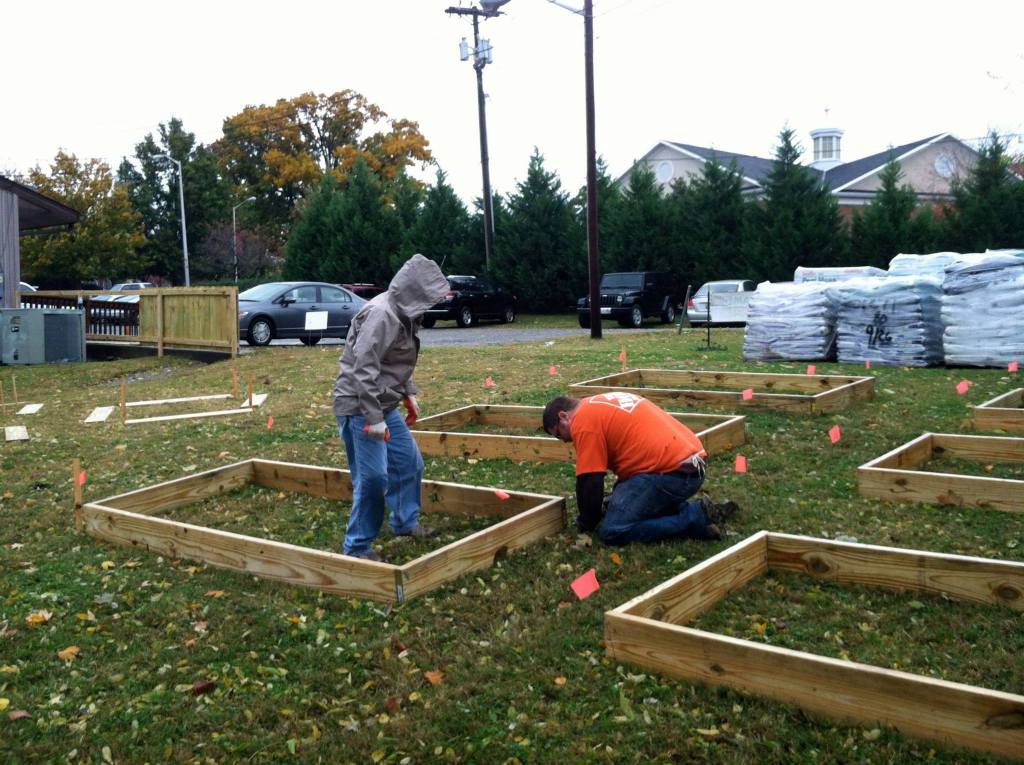
And just like that, a hurting vet was building a ramp for our campus ministry. Eddie showed up the next morning at an ungodly hour in the pouring rain – my students living in the building called me to complain – and, for the next four days, he worked silently and alone with the supplies I provided. Our only conversation was me asking him if he wanted a cup of coffee or something to eat. He never needed anything but the coffee. He mostly worked silently. Alone. In the rain. For four days. Didn’t need any help. Didn’t want to talk to anyone much. I watched him so much those four days, I felt like a voyeur, but I was struggling to know how our fledgling military ministry could help him. After the third or fourth foray into the parking lot each day, I gave up on my saturated rain gear and just stood to one side, under the eaves, feeling lame but praying he’d offer an opening. Eddie may have taken up space next to me but he was clearly not “there;” he was somewhere I’d never been, somewhere I could not go. I didn’t know what to do except to faithfully show up early each morning with coffee and wait for him to leave at the end of the day so he would not feel alone. 

I felt lame and useless, though, so, on the third day, I called an older veteran I knew. As I watched Eddie work from inside my office, I said I was looking for suggestions, for ways we could help this guy who worked so methodically, silently, almost prayerfully to build a ramp to make our building accessible but who was so inaccessible, even it seemed, to himself.

“Just let him build,” my friend said. 

“I promised Sergeant Major I would help, though.” 

“Leave him alone,” he repeated slowly. “You ARE helping him.” 

 I said goodbye, as discouraged as I had been when I dialed the phone. 

For four days, Eddie worked in the rain, silently, taking only the occasional break to smoke a cigarette and stare at the ramp as it took shape. The day he finished, almost magically, the rain stopped. He sat for a couple of hours, I guess, in his truck, smoking and staring silently at the finished ramp.

I was afraid to let him leave, afraid he needed so much more, but painfully aware I didn’t know what that might be or if he wanted or needed anything from us. After a couple of hours, I took one last cup of coffee out to the parking lot, and took some pictures of the finished ramp. Eddie said I could send them to Sergeant Major and he’d get them. I said thank you and he stabbed his cigarette out, shook my hand and said goodbye. As Eddie turned to leave, though, he stopped, adding so quietly I almost didn’t hear it. “At least nobody is gonna blow this up,” he said, then he nodded at farewell and drove away.

He left the military not long afterwards and Sergeant Major came by to tell me he’d lost track of him, too. That conversation would be repeated too many times over the next decade; combat veterans returning physically from war didn’t seem to need to circle back and report on progress to counselors or pastors. Many did figure out, though, how to live with what they’d seen, done, and learned. I just hope Eddie was one of them. Often, all it seemed we could do was offer them a ramp. I hope he found his.


Soldiers And Families Embraced

Spurred by the struggles we saw of the veterans on campus and their families, encouraged by veterans who’d enrolled in social work courses to help out, I enlisted the help of another veteran, one who was enrolled at APSU to earn a social work degree. We spent the next few months listening to military and their families. One huge problem was that soldiers were not seeking needed counseling because of the stigma and potential harm to their military careers; The intensity of the ongoing wars also drove soldiers to avoid counseling because they did not want the rest of their company to be redeployed without them; the loyalty to the others in their units too often overshadowed much needed care. In response, we began a counseling program that was free to all who had served and their families. That program, originally called the Lazarus Project, became Soldiers and Families Embraced (SAFE).

This Veteran’s Day, you can thank a veteran for their service, you can offer them a free meal, or you can help them heal by educating yourself about the struggles of those who have gone to war for us and by donating to programs that continue the work of healing well after the veteran has returned. SAFE

In creating this program, we sought out other counseling programs in the mid-state area: there were few if any counselors outside of those in the military who were serving this demographic at the time. The program has also worked closely with APSU to provide internships to help prepare social work students (many of them veterans or family members themselves) with training and supervision. Since 2011 SAFE has helped double the number of counselors in the area. In addition to counseling, SAFE has offered or partnered with a variety of programming in addition to counseling, including weekend retreats for healing, music and storytelling and a War Garden, for example. SAFE still offers services, support and hope today.

Since 2011, advertised mostly by word of mouth, SAFE has provided free, professional counseling to military and their families and now first responders.

One response to “Because every veteran needs a mission.”

  1. Anne Avatar
    Anne

    Jodi, once again you overwhelm me with your ability to succinctly convey breathtaking stories. My initial reaction is sadness, then realized hope for what you worked hard to provide for these needy vets. God bless you for the effect you have on people. Hugs and love, Anne

    Like

Leave a comment

Here Lies Jimmie’s Arm: A Pastor’s Tale of Smalltown Challenges

(Includes an excerpt)

With your support and encouragement, Here Lies Jimmie’s Arm, my first book, is out and ready for consumption.

Click here to go to my Amazon author page. From there you can Follow the Author and be the first to hear about new books.

Or, point your phone’s camera to this QR code to be taken to the book’s page. (Available in paperback or Kindle download.)

Be sure to leave me a review if you liked what you read!

An excerpt:

From “The Women’s Kitchen Jug Band.”

Lela, Rebecca, Molly and Sally were all part of this impressive gaggle of hardy women who had lived long enough and worked hard enough to say they didn’t really care what anyone else thought any more, though they were not shy about telling you what they thought. What they “thought” often and vocally was that “Mildred was goin’ to hell.” That was because Mildred, who lived across the street from Lela, never let the shadow of the steeple at church fall across her path, even though she was mobile and still drove when she wanted. 

The first time I tried to visit Mildred, I called to ask if she’d mind a visit and she proceeded to cuss me out and tell me with every imaginable expletive why I needed to leave her the #*#* alone! Then she stopped and took a breath, but before I could apologize for bothering her, she asked, “Now, who IS this?”

“Your new preacher,” I offered. 

“Well, damn.”

Like many of the elderly I visited, Mildred, who was even tinier than Rebecca, and even more impatient with the younger folks around her, complained about the same issues every time. She also told me about her “constitutional.” Her need for me to know her bowel habits was, strangely, not unusual for this congregation which was, admittedly, mostly populated with folks old enough for regularity to be an issue. Nevertheless, I never knew so many people in one congregation who needed their pastor to know they were regular. I was not prepared for that. I expected they’d share what they were ashamed of or when they’d strayed from the straight and narrow, but not this. If I’d had a bingo board to take to every visit, “regular bowel movement” would have been the center spot. Mildred was no different. 

I learned quickly to move to another topic in those visits. If I’d been willing, I could have shared what was working or not working for others in the congregation and even wondered if I needed to copy those old timey door-to-door peddlers and carry with me a big black valise filled with stool-softeners, laxatives and Pepto-Bismol. I decided instead that this line of conversation was simply a warped reminder of my responsibility to keep boundaries and not share what was not mine to share. I chose not to take the bait in those conversations.  

All of these women, at different times, worried me to no end, and the challenge was to try to talk them down off those ladders at their age. Mildred prided herself on a perfect lawn, and no one could do it as well as she could. She was so tiny, though, that the brand new “Yardman” riding mower she bought would not start for her because she was not heavy enough for the seat to register that she was actually riding the mower. Undeterred, she doctored the spring system and drove around her steep and hilly lawn at least twice a week during the warmer months while the neighbors cringed and begged her to let one of their sons help her out. Her own son would not help, however, so she was damned if she would let someone else’s son show him or her up. She would not stop mowing, not even after she tipped the mower because she found a new gopher hole. One tire dropped into the hole but kept going even after Mildred fell off. Thankfully, it did not get far before it rested against a small tree and burned itself out. The jolt sent Mildred tumbling and she found herself stuck, headfirst, in a hole. It wasn’t a tight hole and her head had fallen into it so she hadn’t gotten hurt too badly. She would have easily been capable of extricating herself from the offending hole except she didn’t have the arm strength to push herself back upright and so she had to wait, head first in that hole, listening to her precious mower burn itself out against the silver maple tree until one of the neighbors smelled the engine burning and came over to see what was what. That neighbor got cussed out, too. Mildred was nothing if not consistent.

A couple of years later, Mildred died, still alone, and still cussing out anyone in her way, but also still quite regular. All she wanted was a short graveside service and that was certainly her choice except that she died during the coldest February I could remember. Only the Kitchen Band ladies attended and, as was to be expected, each dressed “to the nines” to send Mildred off to her fiery eternal home. Because the only people who would be attending on that frigid morning were these ladies in their nineties, I was grateful the funeral home was prepared with a small tent and some space heaters. I assured the Directors I would keep things brief, and only included a prayer and Proverbs 31. “Who can find a virtuous woman?” In retrospect, I had to admit Mildred had only sparsely shared about her past issues so talking about her as an excellent wife might have seemed disingenuous to the women who knew her well. At the time, though, we all were simply grateful to recite the 23rd Psalm and The Lord’s Prayer and be done with it. Unfortunately, as I took a flower from the pall and broke it up to crumble onto her casket, while I prayed, “Ashes to ashes,” a foul and acrid smell made me choke. I looked up to see one funeral director frantically trying to swat sparks while the other gagged. Rebecca, who’d ventured too close to the heater, had decided friends don’t die every day, so she would celebrate the occasion by resurrecting her fox fur stole, its head hanging where a nice brooch ought to have been. The beady eyes of the dead fox haunted me throughout the short service, but it was the smell that was most memorable. It was not just the smell of hair burning, which is foul enough; it was seventy-year-old fox hair we were smelling, an odor that stayed with me for days. I know, as we moved as fast as we could to get the ladies back into their cars, Mildred was either cussing up a storm or, perhaps, cackling gleefully. Maybe both.


Not convinced? How about some advance reviews?

“Here Lies Jimmie’s Arm is a treasure of a book, especially if you have ever attended a small church. The author describes her experiences growing up and becoming a pastor with much humor and great style. The reader is drawn into the dramas of small towns, small churches and in some cases small minds. How she survives and thrives and laughs along the way is truly brilliant and entertaining.” ~ Nancy B. 


“Very readable. And engaging. These pieces welcome the reader into this country setting, with all its charms, peculiarities and characters. The author juxtaposes the troubled histories of her parishioners with her own, inviting readers  into a novice pastor’s inner thoughts, worries and fears. Should be required reading for all would-be pastors.” ~ Charlie M

Check, Please!

Adventures in

Dating After 50

Ask anyone who’s played the “dating game” as an older adult and they will likely be able to offer up some horror stories, especially if they ventured into the world of dating sites (and later dating apps on phones.) Even if they succeeded in finding that special someone, and plenty of folks do, the journey can at times more closely approximate a game of MarioCart than a stroll down EHarmony Lane; the rules change quickly, toads abound and princes and princesses can be tough to locate and even tougher to engage.  

As I approached my fifties, after twenty-one years of marriage, I found myself clumsily navigating the dating world. I hated being alone, but I would end up single for far too many years before I found a man in Tennessee who would even consider a relationship with a liberal, divorced, (female) Methodist minister.

Lonely People (by America)

“This is for all the lonely people, Thinking that life has passed them by, Don’t give up until you drink from the silver cup And ride that highway in the sky.”

For readers living in more socially open-minded areas of the country, the divorced aspect was actually the least of the problem. I had stayed in Tennessee for one reason: our divorce decree would not permit me to move and take my young sons with me. Evidently, though, my being liberal in Tennessee was way more repugnant to many men I met, and, too often, I felt like a little blue raft adrift on a sea of red. I tried making sure that “liberal” was prominent on my profile’s description in hopes that those with more conservative leanings would just move on; sadly, being up front about social issues also attracted plenty of ugly comments. 

In contrast, being a minister was, apparently, just plain confusing for potential dates. “Are you allowed to date?” “Are you allowed to kiss?” Female clergy quite often seemed as foreign as Cyborgs. I understand that. When I started looking into preaching nearly three decades ago, I was asked if I could see myself preaching and leading worship and I had to confess I’d never seen a woman do either. I was not alone in my lack of experience at the time with clergywomen and so I could understand why single men quite often were at a loss as to what a relationship with a woman in ministry might look like. Still, there’s lack of education, and there’s rude. I was stunned when a guy who was working on my campus ministry building leaned over one day and said, “I guess you don’t want people to see you out on a date, so why don’t you just meet me at the hotel down the way? And, do you have a dress because I bet you’d look good in a dress.” Gee, how can a girl resist?

I held onto hope through several abysmal dates arranged on dating sites on the internet; this was before you simply looked at a face on your phone and swiped left or right. If I met someone on EHarmony.com, we talked for a week or two before they got my full name or even my phone number. I even joked that I didn’t date anyone I couldn’t Google. If a guy didn’t have a positive history, we would not meet up.


One hopes we all learn as we get older, but, if you have never experienced online dating or dating apps, you might be surprised by the shenanigans, even on sites catering to the “silver” set, guys who are old enough to know better. Surely, I thought, they’d be more mature than the younger guys who were often simply looking for a one-night stand or someone to talk dirty to them for a while. Now I wish I had a dollar for every time an older “gentleman” made sure before we even ordered our meals that I knew he’d taken his little blue pill. Can you say, “Check, please?”

Once I arranged to meet a potential dating partner at a local restaurant, but didn’t see him in the restaurant even though there were only two other patrons and one was a woman. Turns out, his picture online was from more than a decade earlier, so, once I walked over to the booth and determined he was indeed the man I’d spoken to on the dating site, I had to wonder why he had sent his father to meet me. Foolishly constrained by politeness, I ordered and drank down a soda, then asked the waiter for my check and told the old man sitting across from me, “I’ll call you.” I lied. 

Another guy complained about middle-aged women “letting themselves go” and gaining weight. “I hate it when they sit at a table and their breasts rest on the table,” he said. Yes, I would agree in hindsight that such a ridiculous comment ought to have been enough to prevent further conversation, but I was still hopeful that one comment didn’t sum up his entire attitude towards women. When I saw him walk into the restaurant, I didn’t recognize him, though, because, it turns out, he had gained more than forty pounds since the picture he had posted of himself! Okay, I thought, he’s embarrassed about his weight. When, though, halfway through the meal he gave me directions to his apartment in case I had trouble following him home, I excused myself to use the restroom. Nowhere had we discussed going anywhere together after the meal, let alone his place. I found the waiter, paid for my own dinner at the hostess station and left alone. 

 One guy openly lied about smoking – I said no smokers on my page – because, he said, he was looking for a girlfriend to help him quit. Another guy, who agreed to meet even after discussing the fact that I was a minister, informed me before we had even gotten our menus that whatever relationship we developed would not end in marriage. “Just to be clear,” he said, then he asked what I’d like to drink. No check necessary. One guy commented on my profile page that he didn’t date women with short hair. I responded that we at least had one thing in common! Yet another was charming throughout our phone conversations but then, during our first dinner, when I commented that his family sounded lovely, he calmly informed me that he was looking for a mistress and would not ever be introducing me to any of his family. I just left him with the check. 

Photos I used on my dating profile in the dark ages….

I did go on some dates that were not arranged through sites. I’d started taking social dancing classes and met a few nice men but no one I wanted to go out with until one New Year’s Eve. A charming man I met while dancing that evening, who was funny and who was respectful of my vocation, danced well and we ended up dancing nearly every dance together.  At the end of the evening, we were sitting around a large table with of my friends, enjoying a champagne toast to the new year when he invited me to visit his “compound” in rural South Carolina. Seemed innocuous enough until he began to press me for specifics. How soon could I make the trip? I wouldn’t need a car, he said. He’d drive me there and then I could have my choice of any of three refurbished RV’s (if I wanted privacy once we arrived.) When he lifted his glass in a toast to the fact that my impending visit to his compound would be a “forever thing” now that we’d found one another, he was sent back to South Carolina alone. 

I honestly wondered for the longest time if it were going to be possible to find anyone even to date, let alone to hope for a mutually supportive and loving relationship. I did meet some nice guys but both of us being liberal or even both of us being Christian wasn’t enough to build a relationship. As a pastor, I couldn’t date congregation members because of ethical concerns. The few colleagues I knew who weren’t married were often looking for a more conservative and/or less outspoken wife. It really seemed hopeless for so long. 

Mirror, mirror, on the wall….

What was most depressing was realizing there were often obvious reasons why some folks weren’t married any more; too often, a failed attempt at a connection caused me to look at my own foibles and failures and, more than a few times, caused me to wonder if I was just meant to be alone. 

Then I met the man we will just call Walt. No, not his name. He was also a minister. We met for the first time when my campus ministry team visited his church. A week later, he brought his youth group to an event we held for prospective students. He was the life of the party and danced several times. We shared dating horror stories. Then he asked about spending more time together and I began to hope my solitary days were coming to an end. I was happy to find such an out-going, gregarious non-conformist; he even spent evenings, he told me, on his porch surrounded by the hummingbirds who had become his friends.  

We arranged for a first real date, which started with a brief meeting of his mother and young granddaughters. They were delightful and it was a positive sign, I thought, and so I didn’t blink when he said he wanted to share a little bit at dinner before we officially began dating. I agreed. We were both old enough to have some baggage and we needed to begin any relationship with our bags open for inspection. 

Dinner began quietly. He did not drink any more, he shared. I was a longtime member of Al-Anon and we understood one another on that topic. I told him about my divorce and he shared about his; we both lamented the struggles of sharing children with exes, especially when the rift was still painful.  

“One thing it’s tough for me to share, though,” he said after we ordered. He took a breath and said simply,  “You need to know: the probation will be over soon.” 

Probation

By “soon,” he meant, “there are only eight months left on a twelve-month sentence.” 

“It’s okay, though,” he said, reaching across the table and putting his hand on mine, seemingly to reassure me all would be well. “The drugs were not mine; they belonged to the prostitute.”

I remember staring, confused, at his hand patting mine. Knowing that the drugs weren’t his made it better? 

“No one here will ever know,” he explained. “It’s in another county.”

I pulled my hand back, still silent.

“You should probably say something here,” he said. I had just been staring at him, trying to process this information. “You know,” he said, “you can’t tell anyone about this. What people tell clergy, you know.” 

I remember I laughed just a bit at that. He was wrong about so much at that moment. No such privilege existed, though he clearly hoped I believed it did. Most baffling was that he seemed convinced I’d be fine with the idea of him soliciting a prostitute so long as she had been the one who brought the drugs to the party. 

Not only were we not on the same page at that moment, we weren’t even in the same book. In fact, I was only clear about one thing at that moment. I raised my hand, caught the eye of the waiter nearby, and said, as calmly as I could manage, “Check, please.” 

Pickleball? Really?

I will tell you that, after many years alone, I did enter into a caring relationship with a man whom I met playing pickleball, of all things. Who knew pickleball would replace EHarmony, Match.com or the vegetable aisle in Whole Foods as the place to meet eligible singles? By the time my husband and I met, though, I’d pretty much given up looking. That was wise, though, because, honestly, when I review my dating experience before that, well, I think you’d agree, if I didn’t laugh, I’d cry. Check, please.