Just Gotta Write

What I realized years ago is that writing is how to scream in a socially acceptable way.

I’ve been thinking of late that I need to write a book where every entry begins with, “I Am Not A Nice Person.”

It seems I frequently wake up thinking of starting an entry with that statement, followed by lots of annoying thoughts that have been buzzing about my head like nasty little kamikaze planes. I wake up certain that, if anyone heard all the complaining and frustrations clogging my poor little brain, they’d agree wholeheartedly that I’m not so nice. Sadly, much of my writing through the years has been nothing more than me complaining. What I have figured out, though, (through writing, thank you) is that dumping all those complaints onto paper for all these years has done me – and everyone around me – some good.

Honestly, I write because I too often wake up wanting to scream.

So, perhaps more accurately: a blog entry today should read simply, “Gotta write.” It will do me (and the people around me) some good.

Seriously, if you know me, you should count yourself fortunate that most of my furiously scribbled pages and pages have been purges no one else will ever read. I’ve spent the majority of my writing time getting my frustrations or anger or complaints off my chest, out of my mouth and thus, (mostly) out of the earshot of those around me. My husband has learned that my being in a bad mood and complaining is quite often a sign I am not writing. 

So maybe, I thought, instead, a blog entry today should read simply, “Gotta write.” It could do you (and the people around you) some good. Perhaps you – or someone you work or live with – is simply a frustrated writer.  

Writing is simply therapeutic.

Let’s be clear, though, there’s being a writer and there’s being an author.

Writing for therapy isn’t the same as writing because you might want to share your stories. The first is for your eyes only, a way to get all those thoughts and frustrations and even giggles out of your head to make room for some clarity or joy or discovery or a story to share. The second is a craft, i.e., what you do to the rare few of those rants and raves that warrant a second glance. Some will be worth a second look and perhaps the effort to fashion them into something another person might be keen to read or gain a personal benefit from the effort. This doesn’t matter as much because there’s honestly great overlap there.

Lots of people around me tell me (now that I’ve published a book and they’ve read it, thank you) they also have stories they love to share over meals, on the bus or while waiting in line, but are stopped by the thought of sitting and typing or writing them out. Simple enough, I tell them, use those easily available programs or apps that allow you to dictate, then go back and edit. For myself, I truly prefer the feel of graphite on paper, I explain, but that means I have to then go back and type up what I’ve written. So I have been using a Remarkable, an electronic pad that lets me use what genuinely feels like a pencil, then converts my scribbles to text. “Oh, my writing is too sloppy,” is the excuse most folks offer for why that method won’t work for them. I write quickly and in cursive on mine and, yes, some editing is necessary but the system works pretty darn well and I’m nearly finished with a second memoir written on the tablet.

“I can’t seem to find the time,” I hear. Years ago, though, I read about how helpful it could be for writers to simply buy some cheap spiral bound notebooks and every morning with coffee just scribble three pages. There’s a book and workshops and support for folks who want to use this method and I recommend them, but the gist is simply to write. You can start every morning with “I am so mad at….” or “I cannot understand….” or “I remember….” Just write is the idea. Write the first sentence over and over if you need but fill up three pages. You may not ever look at those pages again but your purpose is not to write the great American novel. It is simply to write. To get what’s in your head on paper. To grease the wheels. To make it easier and easier and more and more addictive to write than to not write. And to get whatever is annoying you off your chest.

This follows the discipline suggested by the writer and teacher Natalie Goldberg of writing three pages a day- scribbling, really, without allowing my brain to edit while I dump what’s on my mind. “Writing Down the Bones,” by Natalie Goldberg .(https://nataliegoldberg.com/books/writing-down-the-bones/.)

Goldberg teaches about getting those “first thoughts” on paper by keeping your hand moving and not letting yourself have time to edit, not stopping to criticize yourself or correct your feelings, simply to get those thoughts out of my head. The process is similar to keeping the wheels of a wagon greased. Whether you write for yourself or for others, this or some kind of discipline that involves putting pencil or pen to paper is, in my opinion, the place to start. Goldberg also points out the act of writing regularly teaches us to listen to ourselves, can help us overcome our doubts and affirms for each of us the value of our lives.

Often what I end up with after scribbling as quickly as possible in a cheap notebook  amounts to nothing more than a jumble of frustrations but that allows me to get it out of my system. That way, I don’t bore others around me with complaint after complaint and I don’t repeat myself all day because, I suppose, my subconscious knows it’s out of me. This is similar to writing lists for myself. I can go to sleep at night without worrying about what I need to do tomorrow because I’ve deposited those tasks onto a written list that’ll be waiting for me by the side of the bed when the alarm rings.

I also know where I can find it if I need to complain more. Again with the complaining. In all seriousness, writing out what I think helps me know what I think, discover how I feel, remember better, understand myself better and even uncover ideas about how to actually do something about what makes me so angry and frustrated, something more than simply grousing.

Whatever helps you write helps you write.

I read a quote some years ago declaring that the best discipline for any writer is to read. Gonna have to disagree. I respectfully disagree. The best discipline for a writer is to write. If you want to be an author, there are further steps. Find a continuing education course on the craft of writing or poetry or songs or memoirs. Next best: get your butt into a writer’s group. Writing to be an author is after all a craft and the steps to any kind of writing you want to publish are many. There is nothing to be brought to the crafter in you, though, if you don’t actually write. I don’t manage three pages everyday but I scribble enough to provide fodder for all kinds of stories if I want to use them.

Seriously, writing is simply therapeutic.

More critically, writing saves my friendships, my marriage and my sanity and, on occasion, helps me figure out how to help.

Last week, my furiously scrawling carried me back to those “Weekly Readers,” those newspapers designed for school-children. You remember? Where we learned about preventing forest fires, about how littering made others so sad, especially that American Indian chief with one single tear rolling down his cheek? Remember trying to wait patiently as the copies were passed out. Remember how we eagerly but gingerly turned each page to learn about how seatbelts saved lives, about the Civil Rights Movement or Rachel Carson or the value of community service?


Those little newspapers were both welcome departures from math problems and verbs and adverbs AND they presented as gentle guides to create better neighbors and friends. Through them, we all became more aware of poverty, child labor, the dangers of tobacco smoking, and racism, among so many other issues.

Why do I find myself remembering and writing about Weekly Readers? You know why. Because so much of the progress we were inspired to help bring about over the past 50 years has simply been erased or rolled back at a terrifying speed.

Good God, if we keep going, the next logical outcome will be another Executive Order banning handicap accessible restrooms because they discriminate against the “able-bodied.”

You remember what things were like back then, before so many of the “woke” ideas helped make our world a better place, don’t you? My mother could not get a job, a bank account or rent an apartment without her husband’s or her father’s permission, for just one example. Um, not willing to go back.

Today, those newspapers would likely be considered anti-American. How dare they, for example, teach us about global warming, slavery or trying to normalize women and minorities in leadership, business or science roles?

The power of the Weekly Readers was they helped turn us into informed and empathic citizens, people who cared about one another and who recognized that we needed one another to be the best we each could be.

I am wondering now, if there isn’t some way to bring those back and deliver them right to the children at their homes? How subversive is that? Maybe Dolly would help. That’s the kind of idea that surfaces when I write. I want to know what comes to mind for you? Share. Let’s collaborate.

For now, next time you – or someone you know – thinks all you do is complain, go to the corner store and buy a cheap notebook. Choose a pen or pencil that feels good in your grip and start writing. Every morning. Only, make yourself a deal. Just write and know that most of what you write for a while, maybe for a long while, will just lay there scrawled in cheap notebooks. Don’t expect great things. Just write about all the things that you can’t stand – you may never get it all out of your system but you and everyone around you will thank you for leaving it on the page. You may not ever want to use any of that but, then again, you might.

Maybe you will be the one who come up with some ideas about how we can stop what appears to be a national temper tantrum. 

Ever notice how our leader always SCREAMS his posts on social media? What if we could get him to write BEFORE he shared?

Seriously, doesn’t it lately feel like so many people are simply pouting because they don’t want to share anymore or be nice or take turns? Faithfully writing out my three pages has helped me share with others what I think without screaming at them.

What I realized years ago is that writing is how to scream in a socially acceptable way.

I too often wake up needing to express my frustrations with the world, perhaps now more than ever. So, I am convinced the world is a better place because I leave most of it on the page. Less anger is spewed, less frustration gets passed along, less whining and complaining and criticism.

I DO think more about how to take action, though, and I’m a bit clearer on what and why. I remain certain that if people in my life knew how much I spewed, well, they’d be sure I wasn’t such a nice person. Because I write, though, at least some people like me most of the time. And occasionally, I figure out something to say that is helpful, useful, perhaps even wise. Through writing, I am learning that my superpower may be that I see and feel and cannot pretend the emperor is dressed. That’s what writing does. Honestly, it’s subversive.

And that’s what so many of us need right now to help us keep our sanity.

Now more than ever. I saw a meme last week that showed a woman holding up a sign that read, “We should all receive Oscars for acting like everything is okay.”
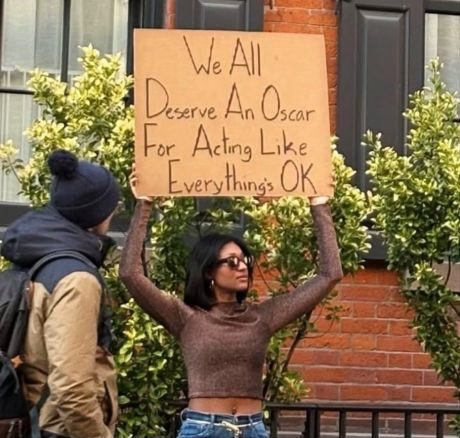
Every damn thing is not okay, let me assure you, and, depending upon where you live and who populates your family, maybe it never has been. So start writing about it. Get the screaming out in a way that doesn’t hurt anyone else. Figure out what you think. Let the rest of us know you’re with us, that you see, too, and especially, share any ideas. I’m seriously considering a Weekly Reader reboot and I’m gonna ask Dolly to help. 
Leave a comment

My Alamo

Individually, collectively, as a nation, there have been times when we’ve needed to draw a line. This is one of those times.

“Those who would give up essential Liberty, to purchase a little temporary Safety, deserve neither Liberty nor Safety.” Benjamin Franklin

Much of the time when any of us need to draw a line in the sand, as they say, I suspect it is a surprise. I say that because we are often not expecting the person moving aggressively towards us; thus, we are not prepared to mark any line. When we do draw a boundary, when we insist that the next step the person in front of us takes will be too far and we will stand in their way, it can feel jarring and aggressive, like we are the ones being combative. We are simply not prepared to counter aggression or abuse, individually or collectively. 

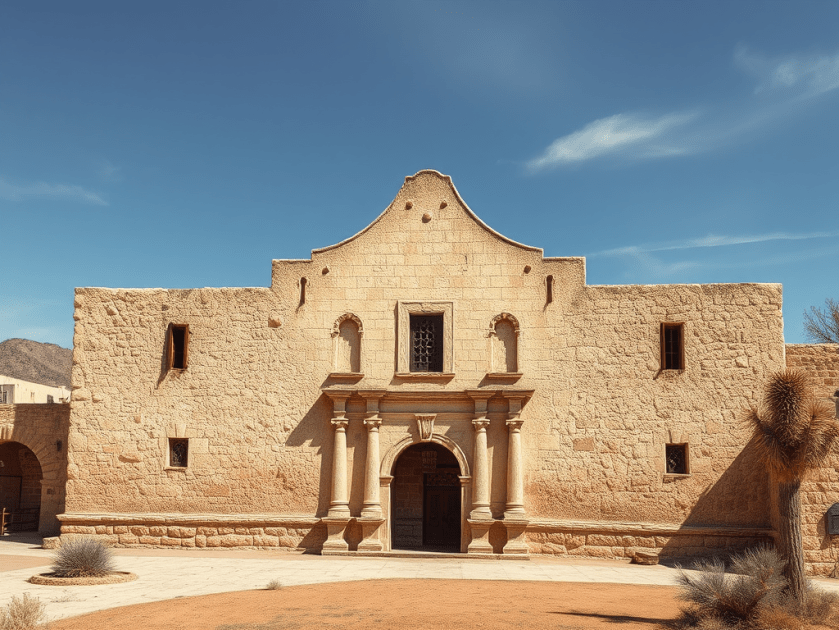
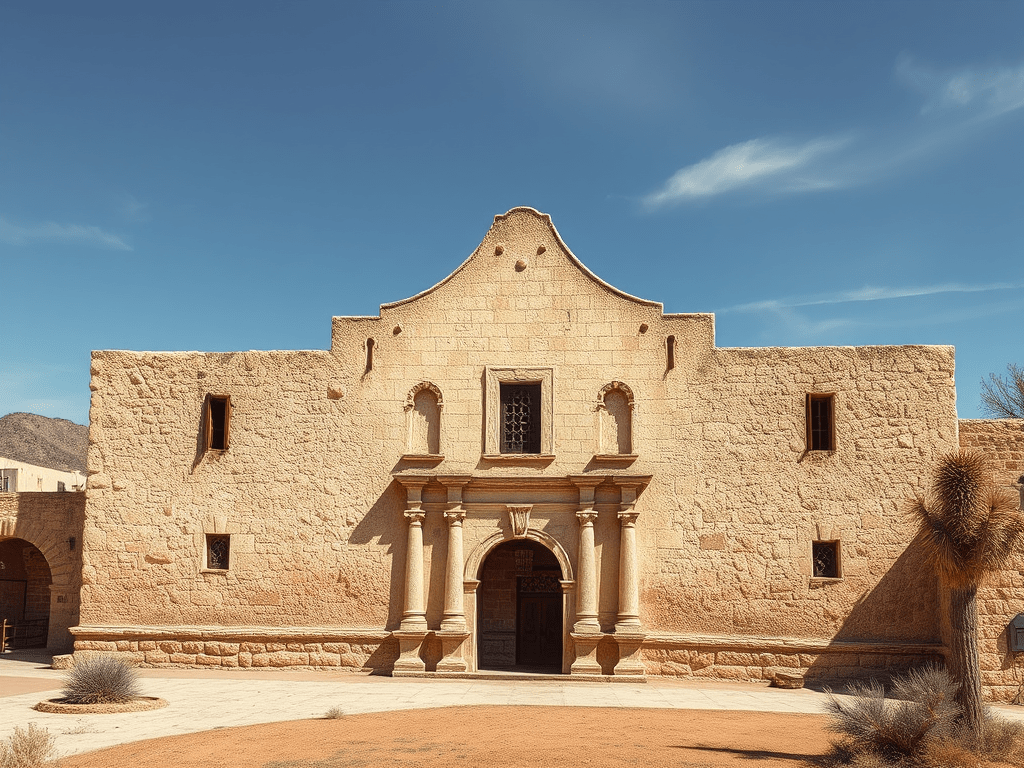
This is somewhat ironic, at least in the United States, though. Remember the Alamo? Legend has it that when Lieutenant-Colonel William “Buck” Travis, Texian Army officer and his fighters faced overwhelming forces at the famed fort, Travis drew a line in the sand with his sword and told his fighters to cross it if they were willing to stay and fight. Nearly all of them did. While that story is possibly more fiction than fact, it is nevertheless the lore many of us were inspired by, taught to emulate, part of the “GIve me liberty or give me death!” understanding of the cost of freedom of speech, freedom of religion, freedom from tyranny. We know what’s right. We know abuse when we see it. We know when someone is trying to frighten us into not fighting for those freedoms. We know and yet we are reticent, loathe to draw our line in the sand, whether personally, as a family or as a community and nation. We want it to all go away. But it won’t.

Years ago, an experience from the first church I served paved the way for an extended family finally to take a stance, to draw their line in the sand to stop the abuse that had been harming women in that family for at least a generation. In this case, what had been a family secret became quite public because the abuser got reckless and over-confident and, in some ways, that arrogance made taking a stand easier for the family.

“Herb” (name changed to protect his victims) wasn’t a regular attendee at the church I served, so my radar was not pinging when I greeted him that Sunday morning. He was a 60-something married man who always dressed in seersucker and bow ties and prided himself still sporting a full head of hair, even if it was graying. I’d brushed off his previous suggestions about how my congregation would like it, he was sure, if I wore more colorful outfits when I stood in the pulpit. I glared at him and walked away when he suggested I unbutton a button or two on my blouse, but nowhere was there any guidance on responding to such behavior from this man whose family members occupied nearly one-third of the pews. I wondered why his wife never attended with him and started avoiding him, thinking he would remember he was talking to the preacher. Turns out, I should have opted for outrage from the beginning. At least I might have been prepared for battle when I walked out of the little white building one Sunday afternoon to see him seated in his big old Buick in the parking lot across the road. I waited for two cars to speed by, then crossed the two-lane blacktop warily, my chest tightening. My arms were full with my Bible, sermon notes, my purse and some funeral home fans that I’d grabbed off the table in the back of the sanctuary. The cardboard fans helped you breathe on the days when the humidity was looking for an excuse to break into a summer shower. 

Already sweaty, and looking forward to an afternoon of visiting the shut-ins, I moved cautiously across the road, hoping he would stay in his car. I had been headed to the fellowship hall to lock up before I started the afternoon’s visits. Herb exited his car and was next to me nearly as soon as I stepped off the highway onto the parking lot. I had to stop mid-stride to avoid running into him; I was off-balance as I tried to look behind me before stepping back because that would put me back onto the highway. 

Turning towards him, I stumbled to my right just in time to miss him grabbing my arm. I looked at him in confusion as he reached out again and said, “Why don’t we go inside?” 

In an uncharacteristic flash of assertiveness, I shoved him with my books. He stumbled back a bit, startled. I darted as quickly as I could around to the passenger side of his car. Did he really just grab at me? Herb started around the side of the car and reached for me again, so I threw my books at the ground near his feet to stop him long enough for me to move around the car until I was back on the driver’s side. I know my hands would have been shaking if I had not been clutching my black leather purse, instinctively wrapping the strap around my hand in case I needed to use it as a weapon. 

I would never have expected a man from my church to be bold enough to try to grab me in the church parking lot in broad daylight. That simply was not something I expected. Worse, he acted with such confidence, as if he would face no opposition.

Herb laughed. “Don’t be so silly,” he said, putting one hand on the trunk of the car as he slowly headed back around towards me. He seemed quite amused, at first, that I managed to run around his car—a rather large late model car–but all I could think about was the fact that, thank God, he could not reach across. When he snatched his hand back quickly in pain because the metal was hot enough to sting his hand, I bolted. 

He was moving around the car towards me again; I managed to dart into the fellowship hall, drop my purse and the ridiculous fans, and turn the lock on the wooden door. Maybe it was the sound of the door locking–maybe something else–but, apparently something brought Herb back to reality; he “came to himself,” like the prodigal son in Luke, and stopped grinning. Unlike the repentant son who asks forgiveness of the father, though, Herb stood before me, his fist raised, threatening to bust through the window of what seemed suddenly like a very flimsy door. I tried to breathe. Even though he was a member of my church with a large and influential family and now he was angry, I had clearly—finally—drawn a line in the sand. 

When he finally got back into his car and drove away, I leaned against the wall and let out a scream, then frantically ran to the other door, grateful to find it was locked. He hadn’t tried opening it anyway. He’d just driven off. 

I couldn’t catch my breath.

I gave myself the afternoon off from visiting parishioners. I did not let myself cry until I got home; navigating back roads is difficult enough when you’re watching the rearview mirror for a Buick the whole time.

The next Sunday, and for several Sundays after that, I was greatly relieved that Herb did not return to the church. For months, I would imagine his hand grabbing for me. While I was grateful not to see Herb for a while, I also felt quite alone and indulged in some hefty self-pity as I pondered how large a contingent his family was in our congregation. His wife, for example, was one of several sisters, many of whom attended the church. Herb had married the oldest sister when most of the sisters were still children. At least his wife was not attending our church. A few months later, though, his wife was scheduled for surgery and the prognosis was not good. A pastoral visit to the hospital was in order, if only to console her sisters.

I arrived at the hospital intentionally late. Even after the family was sent to the waiting room before surgery, nursing staff was willing to allow clergy in to pray. I smacked the oversized button to open the doors just in time to go back into the surgical prep area to see her alone. She was still awake and aware enough and thanked me for praying with her. Then I made my way through the winding hallways to the family waiting room. 

Nearly every seat was taken by a sister, but I spotted Herb on a chair in the far corner. I took a breath, said a silent prayer, and walked over to him. I leaned down to offer him my hand in greeting but, before I knew it, he was laughing because he’d managed to pull me onto his lap and wrap his arms around me. Even now when I think about how shamelessly he seemed to operate, how little he feared anyone’s disapproval, how brazenly he disregarded the line I had drawn, I want to scream. I’d been pretty damn clear, I thought, that his behavior was not welcome.

I jumped up as quickly as I could and found a chair on the other side of the room, next to one of the sisters. I did not look at anyone for several minutes; I was afraid they would have seen how hot my cheeks were with anger and embarrassment. I was grateful, finally, to look up and notice that sister number two, one of my regular members, was sitting next to me. Voices soft, we chatted quietly about how long the surgery was expected to last. I was grateful she quickly offered to call me when the surgery was over. “We know you have other calls to make, Pastor,” she offered. I thanked her, chose the fastest way out of the room and made it to my car before the tears began. 

I drove home discouraged. How could I keep being the pastor at that church? Even if they wanted me to continue, could I keep dealing with this man and his aggressive behavior? I could not shrug it off, and I did not find it amusing, like he did. Worse, I feared other congregation members might also find it amusing. 

Everyone in that waiting room had seen Herb pull me onto his lap and me pushing his arms off of me and jumping up but no one had said a word. I’d not received help when I’d spoken to my mentor: “It’s part of the job,” I was told. I did not sleep well that night; I was drafting my letter of resignation from the ministry and imagining the sensation that would ensue within the church once it was made public.  

The next morning, I was praying about the letter when sister number two called me, I assumed, to tell me how recovery was going. The conversation was so short I almost didn’t remember it.  

“You need to know,” she said quietly but deliberately, “Bobby has spoken to Herb,” she said. “He won’t be bothering you anymore.” She paused. “He won’t be bothering anyone any more.” She paused again. “We’ll see you Sunday.” 

Suddenly, I was not alone. One of the other men in the church had stood up to Herb. Sadly, though, slowly, I began to imagine several young women standing next to me with tears in their eyes. I had not considered how many others Herb probably had “bothered” over the years but they were suddenly standing next to me.  

All those younger sisters and their daughters would have been easy targets. No one had stood up to him before then. Evidently, no one had even spoken in any voice louder than a whisper about his behavior for decades until that day in the waiting room when he accosted the preacher. The family finally found the line they would not let him cross.   

Likely, in the past, the family had hoped Herb’s behavior, something most of them could not even fathom, would have just gone away on its own. Challenging one of the patriarchs of the family had been too painful and even frightening for them to consider. What would they do if he said “she” initiated it? Who might he go after next? What if he suddenly turned the tables and claimed he was a victim? How many of the neighbors might take his side because THEY were already victims and afraid or feared becoming targets? 

Because they had never expected to even contemplate such abuse from one of their own, the family could not choose a line. 

Because they were afraid to talk to one another about what was going on, no line was drawn.

Because no line was drawn, the abuse continued, unchecked.

Trouble is, this is a common pattern. Whether the abuse is of a person or a group of persons, though, not wanting to talk about it only aids and abets the abuser. Not wanting to talk about what we know is wrong because we are afraid or because it is not our family or because we’re not sure the child maybe “deserved” some punishment or worst of all because we simply don’t want to believe what is happening only emboldens and strengthens the aggressor.

Do not be fooled. These lessons apply to us—to our families and our nation. 

We know in our guts how this goes. We know but we are hoping we won’t be asked to draw any lines ourselves.

We wish some people would stop constantly reminding us how more and more boundaries are being crossed every day, how free speech and due process, decency and respect for others are being blatantly, publicly disregarded, then even applauded. We are afraid and tired. Didn’t we move past this decades ago? 

Are we waiting for another Colonel Travis to draw the lines for us? Have you admitted you need to think about those now, like it or not?

Are we waiting for another Colonel Travis to draw the lines for us? Have you admitted you need to think about those now, like it or not?

A public school teacher told me today she had decided she would obstruct any immigration authorities who tried to take her students – children – from their classroom. She has admitted to herself what is possible, even as horrific as it sounds, and she decided where to draw her line.

Where is your line?


Understanding Fragility: The Hidden Lessons of Power Outages

We forget we operate on trust. That is, until the light switch doesn’t respond and we are left sitting in darkness.

You’ve been there. You flip the light switch but nothing happens. You push the covers back and scurry across the chilly floor only to realize the thermostat doesn’t respond with some heat, so you curse yourself for not investing in throw rugs, slippers, a generator.

As minutes become hours, what started out as annoying can become a serious hurdle to starting your day with the looming potential to morph into danger for you and your family though. We’ve seen how easily a home without heat can become deadly. 

In the case of my granddaughter, who has Cystic Fibrosis, lack of power for any length of time means someone has to beat her on the back and chest for thirty minutes twice a day to break up deadly mucus that can build up. At night, because she has a feeding tube, losing  power for more than a couple of days means she cannot consume enough calories to provide the nutrition her body needs.

In the United States, though, most of us operate on the assumption that the things we trust will be there. Switches provide light. Cars start. Ambulances come. Social Security checks are deposited. We will be able to buy insulin. The medicine will be available and safe.

We forget we operate on trust. 

That is, until the light switch doesn’t respond—until we are left sitting in darkness. 

Again, it’s mostly just annoying in the short term for most of us because our experience is that we can have faith someone out there is working on it. Maybe we call the power company to report the outage to verify the powers that be know our predicament, but our expectation, our experience has been that someone out there is doing their job and working to restore our power. 

Until we realize they aren’t. 

Until we realize no one is on the job, maybe because they cannot get there, maybe because there is no way to fix the problem, or maybe, we fear, there is someone in control who feels empowered to decide who gets attention and service and who doesn’t, who deserves light and food and civil rights and who isn’t worthy of those things.  

It’s terrifying to realize you might not be able to pay your rent next month if you do not, in someone else’s opinion, deserve to be paid. To add insult to injury, that same someone and his cronies even demonize you for the audacity to work for a non-profit whose aid reaches outside the country.

It’s even more terrifying to wonder if there is anyone doing anything about the chaos since reporting is sporadic and mostly limited to U.S. news sources. Visit another country and watch the news, though; we are not only not alone, but neighbors the world over grasp how interconnected we all are.

Few of us in the U.S. are aware of how incensed our friends in other countries are in reaction to the chaos in our country. 

We, on the other hand, seem to be simply baffled.

We’re watching those in power operate in a way we’ve not experienced, maybe ever. They are moving aggressively, not collaboratively. Hell, they are starting the conversation by turning off the power, then daring us to come and stop them. We are baffled.

When did we decide we needed to regress socially? When did we agree to dismantle all the social advances of the past century? What’s next? Smokey the Bear is homeless? Littering is okay? Seriously, will we be told soon that teachers, libraries, recycling centers, veterans’ services are the problem? How long before we’re being told child labor laws are unnecessary? All it takes – all it has taken – for most of us is a few weeks of watching this behavior around us before the fear, the terror we feel, is that no one will try now and eventually no one will be able to stop him.

The rug has been pulled out from under us. 

We have been reminded as of late just how fragile our lives and how vital are our interactions. I’m thinking this painful recognition, though, is a gift. That may sound incredible, but I believe that those of us who are pretty secure most of the time are blessed when we become painfully aware of the tenuous nature of those threads that hold us together.  I believe we more fully join the ranks of humanity when we who do not usually go hungry or worry that someone will start shooting at us when we are in the market, feel that sudden sick feeling in our stomach and become acutely aware of how easily our bones break and our breathing can stop. Fragile. Vulnerable. In denial until we aren’t able to be any longer.

So many people in our world cannot rely on a light switch to have any effect. So many might not even have a light switch at all. 

Reminding myself of that, though, does slow me down, make me look around, and help me think about the countless others in this world who are struggling. Two decades ago, I visited Nicaragua with a study group for Vanderbilt Divinity School.  In Nicaragua, the literacy rate at the time was 50%, and the material conditions are worse than that: no one, for example, not even in the government offices, had toilets down which you can flush paper because there existed no viable sewage treatment facilities; no one had clothes washers, let alone dryers; everyone did their wash on a washboard. Because there are no emissions standards to speak of, air pollution was a palpable problem. In that tropical heat, only major buildings could be air-conditioned; most houses had no screened windows, and the majority of the people living outside of towns lived without electricity or running water, let alone sewage.  A family with a new cinder-block, two-room house was considered rich, even though the floors were dirt and there was no electricity, even though they used an outhouse and got their water from a well.

The family I stayed overnight with in the countryside had a five-year-old son.  The parents–in their twenties– both worked five days a week in the coffee fields or the local elementary school; then, on Saturdays, they both walked seven kilometers to the bus stop to ride into town to attend high school because neither of them had had the money to attend high school when they were teens.  The elementary school which their son attended had 120 children, in three rooms with 25 desks; it had three teachers, few supplies, no water and no toilet, and no heat or air conditioning. 

Medical care was rare; most people in the countryside would walk an entire day sometimes to see a doctor and get a tube of antibacterial cream.  In Managua, children who lived on the streets (the numbers were in the thousands) sniffed airplane glue every day because the glue and the high they got was the only thing that would dull their constant hunger. Tragically, while the glue, which numbed their hunger, also killed their brain cells; most of those street children would die from the damage within ten years. This is their reality, the reality of more than ¾ of our world still today, a reality we neither see nor want to see and yet most of the world has no choice in the matter like we do.

One of the first things I learned on this trip to Nicaragua was that I am rich. I realized I carried more in my daypack than most of our hosts owned altogether. I can afford to throw away food when it goes bad or when I don’t finish my plate. I do so every day. I’m not considered a particularly wasteful person, but I have learned to take for granted that I am not going to starve and so I did not feel much guilt throwing food away. Until I started noticing how carefully people in Nicaragua prepared and kept food in order not to waste it. We would never eat food that came off a stranger’s plate; many of us will not even share food with family members. Once it’s been touched, we tend to toss it because it is contaminated with germs, bacteria, who knows what. Now I realize what a “luxury” it is to be able to throw food away. Far too many of our international neighbors cannot afford such a luxury. The people who fed us in Nicaragua took whatever was left on our plates and put it back in with the other leftovers to be eaten at the next meal. This luxury to waste, though, I realize now, is part of what isolates us.

When we do not recognize a need for one another, sitting alone on our own couch binging movies is just easier.

This is particularly evident in the U.S., I believe, and the COVID lockdowns of 2020 only exacerbated our tendency to isolate. It simply does not occur to us here as easily as it seems to in other countries that, together with our neighbors, we could figure out how to find – and take – some power. 

One of the questions we got most often in Nicaragua was how it was that so few of us were active in politics; grassroots movements and neighborhood groups were the norm there and everyone played a part in helping make decisions about governance. When I offered that I was impressed with how everyone played a part, they asked, “How is it that you don’t?”

How is it that we do not reach out naturally, do not work together, do not at least recognize we are not alone? Why does that idea seem so foreign to us? 

When I returned home to preach in the rural church I served, I shared with my congregation this local legend I’d found while researching poverty.

A poor peasant lived daily on the verge of starvation. One evening, the old man found a basket of apples on the doorstep of his tiny hovel. Delirious with hunger and joy, he sat down to eat in the light of his one flickering candle. You can imagine his disappointment when he bit into the first apple and found it rotten and wormy. He tossed it aside and tried a second only to find it in the same condition. Again, a third and fourth apple were rotten. Torn by hunger and disgust at what he saw in the apples, the starving peasant paused to consider his choices. Hesitating for only a moment, he blew out his candle and ate.  

I’m grateful to report that such stories and meetings with those living in poverty changed much of how I see our world. Even twenty years later, lessons emerge regularly from unexpected places. Recently, I experienced an epiphany while riding my bicycle that moved my understanding of this story and connected it to the questions we’d been asked by our hosts in Nicaragua.  One of the reasons I live where I live is because I can ride my bicycle or walk to much of what I need. Walkability. Walkability scores in most of the places I’ve lived in this country are low. Not that there aren’t plenty of motorized vehicles of all sorts in my neighborhood, but riding during the day is only frightening to me when I need to cross the main 4-lane road. The usual vigilance does take some of the joy out of the ride: drivers who don’t see you as they pull out of a home or parking lot, grates in the road, debris in the road, rocks in the road. Just to be safe, I often will walk my bike across this road even while I’m in the crosswalk, furtively watching for that racing driver who might not see me even though I am in the marked crosswalk and have the green light. 

Recently, I left an event later than I had planned, though, and so the ride home at dusk was more dangerous than normal and the spectacular sunset wasn’t helping visibility. My mood was darkening as well, until I looked around me (while stopped and waiting for the light).  I was spiraling from frustration to self-pity, I realized, then from defensive to angry. I began to wonder if the people around me were feeling the same; my tendency has been to believe I am the only one. 

My epiphany, though, was that I was not alone. Older couples were waiting for trolleys, a neighbor who commuted by bike to work was waiting to walk across the road, a couple trying to get to the grocery store across the road was stepping over debris left from the last storm; all of them were vulnerable like me. I did not know if any of them were consciously feeling fragile or in danger, because we were not communicating; hell, we barely made eye contact. If we had been at least acknowledging one another, though, perhaps we would eventually discover one or two of us had ideas about making the commute safer for bikes or pedestrians. We might even have discovered in some locales, for example, that there exist efforts for community organizing around safe travel for non-motorized travelers. Because they do; it’s just that so many of us in this country do not know about them because community organizing has not been a necessary part of our lives until recently. 

Stopping to get to know a pedestrian at that moment simply did not seem like it would have been welcome, though, so I did the next best thing I could think of to connect: I prayed. I began to pray for not only my own safety but that of others as they passed me on the way. I could connect, I realized, at least for a moment and still allow all of us to focus on safely completing our journeys. 

Moving out of myself required a conscious effort, but that is where I will find others struggling just like me. When I am most afraid or feeling most alone, the best thing for me to do is to get out of myself because I am seldom as alone as I think in my grief or fear or struggles. 

Turns out, what seems most personal is quite often universal. If I am hurting, others around me are, too.

For the first time, it occurred to me to wonder why the  farmer in the story had not considered taking his apples next door to see what the neighbors had, a kind of stone soup potluck sharing. Maybe we can find our neighbor and compare notes about what has worked in the past when the lights went out. Maybe we can pool our resources for when generators are needed. Maybe we go together to speak to our representatives or, when they do not listen, organize to elect new ones because together we now more keenly recognize that keeping the light switches working might require some effort on our part. Maybe that’s not all bad. 

Realizing how fragile we are, then, is a gift, one that can isolate us or bring us together.

At the very least, when the lights go out and we can no longer assume we are safe, perhaps we take a breath, greet our fear with gratitude and look around us, recognizing that we are, in fact, most fully human when we feel the most fragile.

Sacred Bears

When I shared the following events with my writer’s group and asked them to put a timeline on them, most guessed the 1950’s. Learning this occurred in 2002 disturbed them. Truly disturbing, though, is that, sadly, no one in this country right now would be surprised to enter a town square in nearly any southern state in the US and see again today what I saw then.

Black and White Teddy Bear on overturned children's chair

Sacred Bears

“Some old lady got my buddy in trouble!” was what I heard another pastor declare as I sat down at the weekly lunch of local United Methodist pastors in the county. (“Local Pastors” do not attend seminary but rather several years’ worth of courses in order to be allowed to preach from United Methodist pulpits.) I was running late, but I knew immediately what he was complaining about and I was annoyed to realize quickly he had only heard part of the story. “He was at the weekend school…”

“Course of Study,” I offered.

“Yeah. The Course of Study. Anyway, there was this festival on the square down there in Pulaski….”

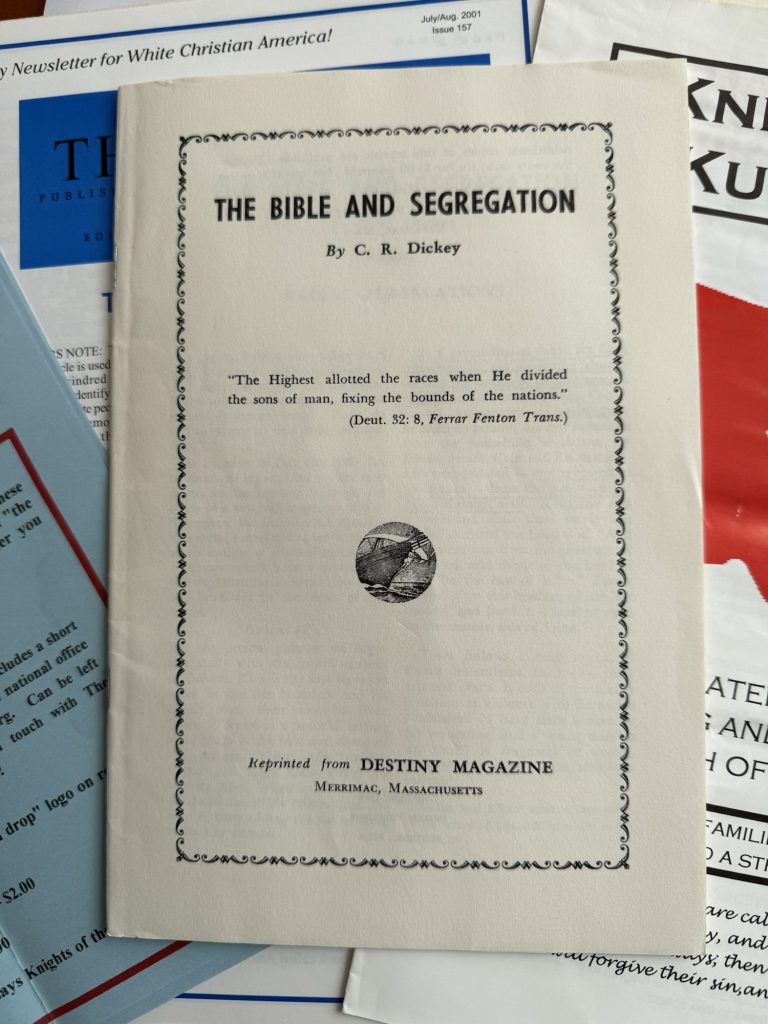
“They called it ‘White Christian Heritage Festival’ but they were handing out KKK literature,” I added. He frowned.

“Okay…. so, this old lady just took what my buddy said all wrong. Then…then, she told the guy in charge.”

“Grady?” 

My colleague stared at me, determined to finish the story. “That old lady told Grady my buddy was part of the KKK!”

“Actually,” I said after I ordered my chicken salad with ranch on the side, “that ‘old lady’ told Grady that your buddy confessed to her that he could see where their teachings made sense. He said they made sense.’  So, since he is allowed to preach at a United Methodist church and to teach children and youth….”

“She probably just misunderstood.” 

Surely, I thought, this guy will catch on soon. I sighed. “So, I shoulda just let that slide?”  

The others at our table were clearly amused that my colleague didn’t get why I knew the story so well. In his defense, he attended a different Course of Study, lasting four weeks, in Atlanta for full time pastors in the United Methodist Church. His buddy and I were part time, which meant only 60 hours a week of work. Our Course of Study classes met over eight weekends a year with reading and papers in between those weekends, sometimes in Jackson and other times at Martin Methodist College in Pulaski. Pulaski, if you aren’t aware, is known for being home to some members  of the Mars candy family (think Milky Way) and is also generally credited with being the birthplace of the Knights of the Ku Klux Klan, the KKK.  

I especially hated the overnight stays at these weekend schools. That particular weekend, I do not remember another woman in attendance. Not only was I away from my sons, but I was alone. In a motel room. In a strange town. A single woman.  Newly in recovery from trauma. In other words, someone who knew bad people did lurk in the shadows. Assuming all the men around were trustworthy was a luxury. So, I slept not at all. I took to wedging whatever chairs were in the room in front of the door in an effort to at least rest. 

On one particular Saturday, several of us left class to make a lap around the nearby downtown square on our lunch break only to encounter what was that day touted as a “Celebration of Southern Culture.” Displayed on the assorted tables were handtooled leather goods, canned peaches, okra and pickles. A brochure I found had previously invited area residents to join in the “family fun,” including a cakewalk.

Pretty quickly, though, I was stopped, jolted a stuffed teddy bear sitting among the books and maps under the magnolia trees. I believe God created Teddy Bears to provide a tactile reminder of love and affection, of comfort. This bear, though, had, through no fault of his own, become aligned with pure evil: he wore a white cotton robe and a white pointed cap that covered his face. This child’s toy was disguised, as if he, too, needed to hide his collusion with evil, like the men who had donned those robes and hoods in the night for so long. I thought they were a thing of our past and yet there they were, not hiding their affiliation at all and they had brochures, newsletters, books and even maps, the texts and visual aids to present these “Southern” beliefs. The first murmurs from the other pastors with me were indignant: how did these folks get to determine the definition of what was “southern”?

Eager to share with us about how God meant to order society, one of the men began to carefully explain the rationale for hatred, including their understanding that God, of course, looked just like them. In that moment,  the inference was that God most resembled a skinny, pasty middle-aged man in black slacks, a white shirt and a decades-old tie. A couple of pastors seemed interested in engaging. I was far from confident in my ability to face evil head on though; I, instead, focused on the contents of the tables.

Besides books and t-shirts, decals, key rings, watches, pins and flags, there were maps. I would not give them my money for books but I did consider buying one of the maps, a large laminated wall map designed to settle once and for all the mystery of the disappearance of the two “Lost Tribes” of Israel. Finally, I chuckled. They’d migrated, it seemed, from the Middle East and crossed over the Caucasus Mountains, stopping, of course,  in Scotland before heading into North America.  My ancestors were among those Scots who came through the Cumberland Gap and moved on into Kentucky, Tennessee, Missouri. I hadn’t known, however, that we were either lost or a tribe of Israelites. This journey was credited with solving the mystery: the Lost Tribes were now known as “Caucasians,” according to the map, by virtue of having traversed the Caucasus Mountains. I kick myself now for not purchasing that map, but, at the time, I could not stomach giving these people my money.

I did try to offer them money for the Teddy Bear, for the sake of the children these men likely influenced, for the sake of the legacy of Teddy Bears the world over, and for the comfort and benevolence children had so long depended on them to provide, I wanted to scream, “How dare you?!” 

Gotta hand it to the KKK, though. Aligning an innocent source of comfort and safety with the evil of the KKK, twisting what a child loves and trusts and using it to promote hatred and exclusion is socially and theologically powerful. Teddy Bears are bordering on sacred, as far as I’m concerned, objects that carry children through those times when the adults are absent or preoccupied or already asleep.

The Teddy Bear in the hood and robe makes more sense when you recognize how much of the most destructive theology through the ages has been born out of childhood pain. We may never know who was the child who’d been hurt enough that he grew up and somehow chose to cover himself and his head and face with a white hood so his grandmother or his neighbors or his children did not see him when he was cruel and ugly. I wanted so badly to rescue that child, or at least rescue the Teddy Bear, to allow God to do what God does best: redeem both that Teddy Bear and whomever it was who dressed him up. 

I wanted so badly to rescue that child, or at least rescue the Teddy Bear, to allow God to do what God does best: redeem both that Teddy Bear and whomever it was who dressed him up. 

“He is not for sale” was the response, though, and so I left behind that embodiment of evil and prayed for the trust and spirits of all the children these pasty white men were teaching or had taught so far. 

I did pick up some brochures and printed newsletters and walked away before they realized I did not, in fact, agree with their understanding that our country was designed as a White Christian nation or that we ought to somehow respect men who hid behind masks to terrorize others. Later, I would discover the literature went so far as to advocate for internment facilities for those who had contracted AIDS, for example, or that we all were invited to a worship service that night, complete with “great white Christian fellowship” and a “brilliant cross-burning!” 

I was no longer hungry, so I walked back with one of the younger pastors. After a few moments’ walk in silence, I said simply, “I was not expecting that.” I was feeling shaken that this evil was so openly displayed and discussed; I’d been blissfully ignorant, I realized. I had honestly thought these clowns in hoods were anachronisms, relics of a bygone era, that they were no longer active, like the sundown signs I would later learn sat as sentinels along the highways at the edges of the town where I preached. Those signs–simple painted sunsets on road signs–were nonverbal warnings: if you were a person of color, you’d best not be found in this town after sunset. The signs had been taken down, but the sentiments, fears and prejudices were not so deeply buried. I would later be disturbed to find out, for example, that two members of my congregation had been “card-carrying” KKK members while  I was pastor there. As a white woman, I had been ignorant and thus, negligent.

As we walked back to classes that weekend, though, my companion, a pastor who was about 15 years my junior, pointed out that “southern culture” was his culture. Then he added, “They did make some valid points. Did you realize they’re Christian?” 

The hair on the back of my neck stood up.

“If you listen to what they are saying,” he went on, “you will discover that they make a lot of sense.” 

He was a pastor. 

He taught a children’s Sunday School class, too, and he seemed interested, not disturbed, but interested in the Teddy Bear in the robe and hood.

“How,” I asked as calmly as I could while placing one foot in front of another, “would you go about teaching this to children?” I wanted him to clarify, to make me realize I’ve misunderstood, to tell me he wasn’t teaching ‘southern culture’ to the children, but he didn’t say any more. As we approached the classroom for our last afternoon that weekend, I wondered what the other pastors might say. Turns out, very little. I remember watching the others in the rest of the day’s lecture and discussion, wondering why no one mentioned what we’d seen. Had they debated at lunch? Had they discovered  others open to these ideas? No one seemed angry, at least not that they’d admit. I felt like I was playing a game my sons liked where you had to pretend that the floor was lava, so don’t dare put your feet down; it was dangerous. I hoped that the overt racism we’d witnessed had shocked them too. I feared, though, they knew from experience not to admit out loud they “got” where these guys were coming from, that, like my walking companion, they knew to simply shut down the conversation if they thought they’d shown their own hood to the wrong person. 

Once we’d finished for the day and each of the pastors was headed home to prepare to preach the next morning, I found Grady, the professor in charge. I explained I did not want to cause an issue for a colleague but I was disturbed about what this pastor might be teaching, especially in Sunday school for children. I wasn’t sure what to do and had not felt safe addressing him directly. Grady listened, got the particulars, then told me it was his place to address it. 

I heard nothing else for a month until I received an email from Grady; he’d spoken to the younger pastor’s District Superintendent, who evidently had found “no reason to believe such reports” and had never even spoken to the guy. This information hit my inbox just before leaving for the next weekend class. Once there, I was dismayed to find that the young pastor was there before me, annoyed, and looking for me. He was pretty sure I was the one who had ratted him out. I was the only “old lady” there. 

He greeted me with “I got called on the carpet by my DS,” which was a stark departure from what my professor had been told.  “When can we talk about this alone?” he wanted to know. 

“Excuse me,” I said, walking away; that was as much as he got for the rest of the weekend from me.

I still count that entire episode a disappointing failure, though I didn’t know how to do anything differently at the time. Not tossing my books and overnight bag in my car and leaving right away seemed the best I could manage for the time being. Clearly, I needed to learn how to counter this twisting of theology openly, to be prepared to teach the children and youth in the churches I served that Jesus really meant it when He said He loved every body. So I stayed. For the rest of that weekend, I kept my distance. I kept my guard up. I didn’t sleep.

I wasn’t surprised then a few weeks later at lunch, though, when this “old lady” was being castigated and labelled a busybody sticking her nose in other people’s business. 

Just to be clear, I asked my angry colleague, “That old lady ought to have simply looked the other way?” 

“Exactly!” he said. “It was none of her…your business.”

Eyes to See

I lived in Japan for three and a half years.  Both of my sons were born there. The whole time I lived there, I studied and practiced speaking Japanese.  In fact, I had known for a year I’d be moving there so I had started trying to learn the language a full twelve months before ever stepping foot off the plane in Tokyo.  My husband and I lived the entire time in an apartment building where we were the only “gaijin,” the only foreigners. In fact, we were often the first foreigners our neighbors had ever met even though there were in fact many foreigners living where we lived – in Himeji, a castle town on the inland sea. This is all to say that we spent our days immersed in Japanese; we learned quickly how to ask for what we needed or just to be able to understand what others were saying because, while most Japanese studied English in school, they learned to read it and write it but not necessarily to speak it. Teaching Japanese to speak the English language was what foreigners like us were hired to do.  A common belief we encountered throughout our time there was that gaijins could not learn the Japanese language any more than they could learn to eat sashimi, nori or yakisoba. While we (and most of the gaijin we came to know there) loved the food, we still encountered regularly the declaration that we could not possibly eat, let alone enjoy, the cuisine.

Even funnier was the fact that, more than a few times, we spoke to a neighbor in Japanese, only to be told in Japanese that we were not speaking Japanese.  

On a spring morning, I was part of a field trip up into the mountains to eat, of all things, roses prepared in a variety of ways, from batter-dipped and fried to jams. This was with a group of women I to whom I taught English every week for three years. I generally did not speak Japanese to them, but they’d known me long enough to have seen me converse with others who weren’t my students. Standing next to a couple of them, I could hear them talking about me in Japanese. I turned to them and said, in Japanese, “You know I can understand what you are saying, right?” I know I said it correctly because two other students snickered at their friends getting caught and the woman I had addressed turned red. Still, she turned to her confidante and said, “Good thing she can’t understand Japanese.” She could not see how anyone other than a person born Japanese and raised in Japan could possibly speak the language. This was not true for all our neighbors, but it happened, even after we lived next door to them for a couple of years, had worked alongside them, shopped in their stores, enjoyed holiday meals in their homes and gossiped together in the neighborhood’s public bath. Depending on the day, it was either humorous or annoying that a handful of the folks we interacted with regularly simply never could see it though. It went against everything they had been taught and they simply could not imagine, could not see that ever being possible. 

They did not have eyes to see.

Six days later, Jesus took with him Peter and James and John, and led them up a high mountain apart, by themselves. And he was transfigured before them, and his clothes became dazzling white, such as no one on earth could bleach them.

And there appeared to them Elijah with Moses, who were talking with Jesus. Then Peter said to Jesus, “Rabbi, it is good for us to be here; let us make three dwellings, one for you, one for Moses, and one for Elijah.”

He did not know what to say, for they were terrified.

Then a cloud overshadowed them, and from the cloud there came a voice, “This is my Son, the Beloved; listen to him!”

Suddenly when they looked around, they saw no one with them any more, but only Jesus.

As they were coming down the mountain, he ordered them to tell no one about what they had seen, until after the Son of Man had risen from the dead.

Mark 9:2-9 NRSV

Jesus referred fairly often to us having eyes to see and ears to hear – meaning usually us being willing and able to see something new, a new way to see, because this life, this journey, this faith God offers us through Christ is meant to transform us, to help us to see, hear, understand and ultimately be different.  This requires that we enter into that relationship ready and willing each moment to be surprised and to change how we see what is in front of us.   

We are in good company if we often find that difficult to do.   We simply cannot easily change what we “see.” When I was exploring being called into ministry,  I was asked, “Do you see yourself preaching or serving communion?”  I simply said, “No.” I had never seen a woman do any of that and could not even imagine it. 

Here’s the difficult truth about life in Christ: you cannot enter into that relationship and expect to be unchanged; you cannot experience the transformation that is possible without being willing to see differently, even if that means seeing something that is surprising, or bewildering or that you do not know how to explain.

In Mark 9:2-9, we read, “He changed in front of them.” Transfigured is the word that we have become used to reading here. Transfiguration sounds more holy somehow, more theological than to say simply that he changed. But the Greek word here is where we get metamorphosis — or change.

So what happened on that mountain? Evidently it was something they couldn’t really explain. It remains hard to say what happened, except by repeating the words that we read there. He was transfigured; he was changed before them. What they were used to seeing they no longer saw; and something they had never seen before suddenly appeared to their frightened eyes.  We can be sure it was confusing and we can be sure they had choices just like we do: try to forget what they just saw, try to make sense of it or simply move closer because that is where we will be transformed by the renewing of our minds.  

“The Gospel of Mark tells us that Peter was so terrified by the transfiguration that he did not know what to say. The Gospel of Matthew reports that Jesus touched the disciples because they were overcome with fear at the transfiguration. And the Gospel of Luke records that the disciples were terrified after they entered the cloud along with Jesus, Moses, and Elijah. All three Gospel accounts record the transfiguration as an experience that was not shared with anyone else for quite some time.”

(Feasting on the Word, Year B, Vol. 1, loc 16361, Kindle Version.)

By the time Mark was writing these Scriptures, he had already witnessed the crucifixion and resurrection. He already knew the end of the story.  When our three disciples were on that mountain, though, they did not know what to think and they were just as happy not to have to share the story.

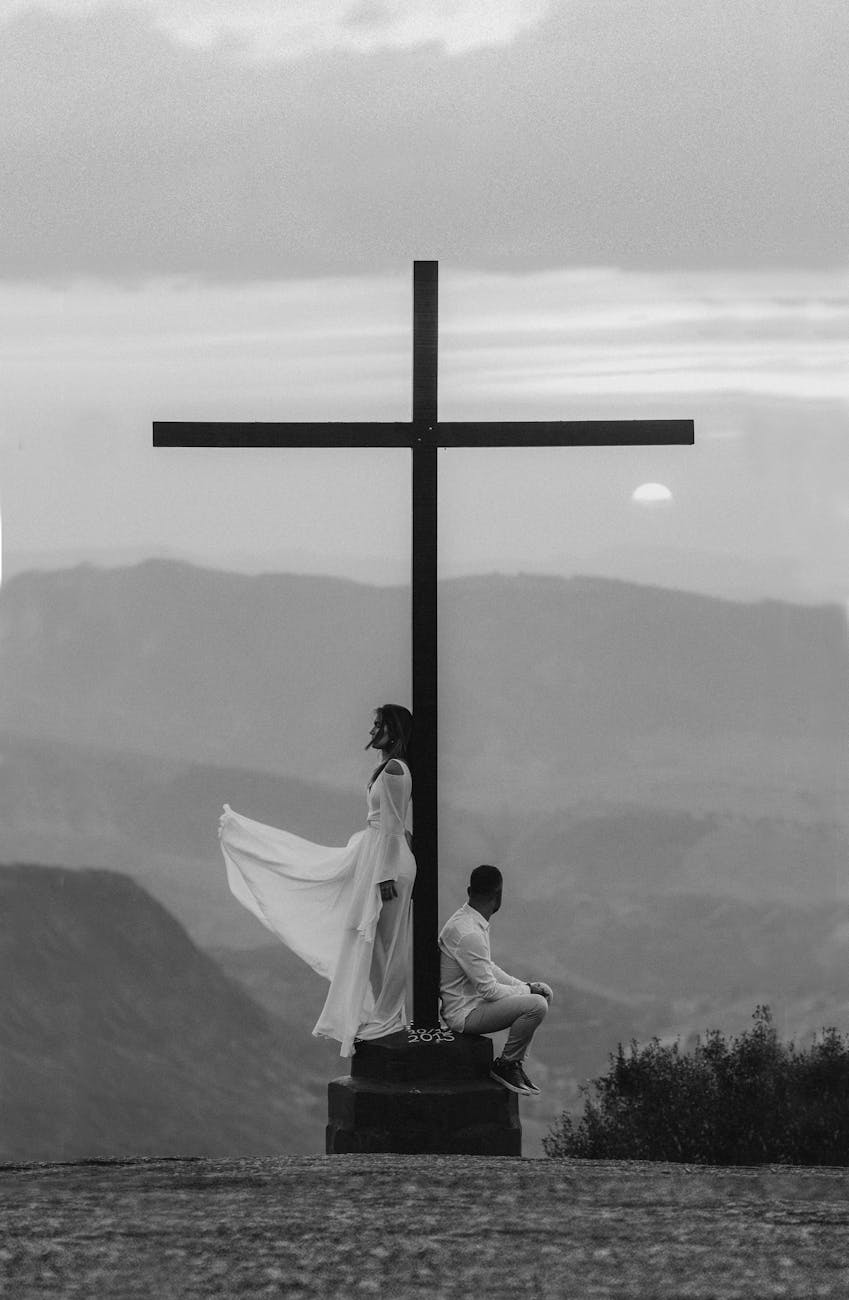
Photo by Jonathan Borba on Pexels.com

Mark wasn’t even on that mountain.  He didn’t see what Peter James and John saw.   They weren’t supposed to tell so maybe they didn’t. They certainly would not have understood it at the time and if they indeed told anyone, whomever heard it would likely think they’d been drinking strong wine. 

Perhaps it would have seemed a lot less crazy AFTER Jesus had come back from the dead to see the disciples. Maybe then they would have had “eyes to see” and could have believed this story and so many others. 

He had told them already though. He had told them he’d be raised from the dead. They didn’t believe it apparently. 

He’s no pilot…is he?

In “Remembering the Night Two Atomic Bombs Fell—on North Carolina,” a story in National Geographic, we not only learn about a piece of seldom-told history, but also find an example of not having “eyes to see.”

Seems that sixty years ago, at the height of the Cold War, a B-52 bomber from Seymore Johnson Air Base, near Goldsboro, North Carolina, was carrying two 3.8-megaton thermonuclear atomic bombs when the plane disintegrated, killing four of the eight crew members. The plane crashed in a fiery mess, but not before jettisoning the two bombs, what the Air Force would call “Broken Arrows.”  Somehow the bombs both landed without exploding or this event would be a whole lot more well-known than it is.  

(All quotes from this story are from National Geographic, Bill Newcott, 1/23/21, told by eye-witnesses and Joel Dobson, author of a book on the subject (The Goldsboro Broken Arrow.) https://apple.news/AZQ4ng5GNQQ65TcanqBG4yg.)

What the people of Goldsboro did not know then was that their little air base had “quietly become one of several U.S. airfields selected for Operation Chrome Dome, a Cold War doomsday program that kept multiple B-52 bombers in the air throughout the Northern Hemisphere 24 hours a day, 365 days a year. Each plane carried two atomic bombs.”

“A few weeks before, the Air Force and the plane’s builder, Boeing, had realized that a recent modification—fitting the B-52’s wings with fuel bladders—could cause the wings to tear off. Tulloch’s plane was scheduled for a re-fit to resolve the problem, but it would come too late.”  The plane started rolling and tearing apart and [The pilot] knew his plane was doomed, so he hit the “bail out” alarm.”

“Of the eight airmen aboard the B-52, six sat in ejection seats. Adam Mattocks, the third pilot, was assigned a regular jump seat in the cockpit. The youngest man on board, 27-year-old Mattocks was also an Air Force rarity: an African-American jet fighter pilot, reassigned to B-52 duty as Operation Chrome Dome got into full swing. At this moment, it looked like that chance assignment would be his death warrant.”

Mattocks’ only chance was to somehow pull himself through a cockpit window after the other two pilots had ejected.

“He was a very religious man, and telling the story later, said he  looked around and said, ‘Well, God, if it’s my time, so be it. But here goes.’”  

“It was a surreal moment. The B-52’s forward speed was nearly zero, but the plane had not yet started falling. It was as if Mattocks and the plane were, for a moment, suspended in midair. He seized on that moment to hurl himself into the abyss, leaping as far from the B-52 as he could. He pulled his parachute ripcord. At first it didn’t deploy, perhaps because his air speed was so low. But as he began falling in earnest, the welcome sight of an air-filled canopy billowed in the night sky above him.

“Mattocks prayed, ‘Thank you, God!’” 

“Then the plane exploded in midair and collapsed his chute.”

“Now Mattocks was just another piece of falling debris from the disintegrating B-52. Somehow, a stream of air slipped into the fluttering chute and it re-inflated. Mattocks was once more floating toward Earth. Looking up at that gently bobbing chute, Mattocks again whispered, ‘Thank you, God!’”

“Then he looked down. He was heading straight for the burning wreckage of the B-52.”

“Well, Lord,” he said out loud, “if this is the way it’s going to end, so be it.” Then a gust of wind, or perhaps an updraft from the flames below, nudged him to the south. Mattocks landed, unhurt, away from the main crash site.”

“After one last murmur of thanks, Mattocks headed for a nearby farmhouse and hitched a ride back to the Air Force base. Standing at the front gate in a tattered flight suit, still holding his bundled parachute in his arms, Mattocks told the guards he had just bailed from a crashing B-52.”

“Faced with a disheveled African-American man cradling a parachute and telling a cockamamie story like that,
the sentries did exactly what you might expect a pair of guards in 1961 rural North Carolina to do:
They arrested Mattocks for stealing a parachute.”

Nothing else made sense to them – they could see no other possible explanation. They did not have eyes to see.

“Of the eight airmen aboard the B-52, five ejected—one of whom didn’t survive the landing—one failed to eject, and another, in a jump seat similar to Mattocks, died in the crash. To this day, Adam Columbus Mattocks—who died in 2018—remains the only aviator to bail out of a B-52 cockpit without an ejector seat and survive.”

The guards that night could not see it though, could not see how this man could be the pilot of a US bomber. 

What can WE not see? What can we not accept because we cannot explain it, cannot see it, cannot imagine it being right?

We do not do this alone.  We stand together in open-mouthed wonder at the fullness of the Christ we worship; together we marvel at something we didn’t think could ever be, things we didn’t think we could ever see. The Good News then is that we don’t have to explain everything, only to follow and be willing to follow somewhere that perhaps we can’t explain and can’t understand, trusting the promise that we will have eyes to see, and we will be transformed, if we will follow.   

Free Cookies

I come for the cookies….

“Why,” I asked the woman seated next to me, both of us with arms outstretched being squeezed by thin rubber tourniquets, “would someone go to the trouble of  giving blood to that venerable institution called the Red Cross expecting that their blood would be rejected?” I kept my eyes trained on hers to avoid witnessing either needle being inserted, grateful for the distraction.

“To see if they’re still clean,” was the answer she gave that summer afternoon in the Red Cross’s makeshift donation center in our little town’s City Hall. From the looks of it, the BloodMobile staff had the travel and setup routine down and, on this particular afternoon, business was booming in that air-conditioned meeting room. Word was out and neighbors in the Highland Rim town of Portland, Tennessee, population just over 5,000, were lining up, enticed perhaps by some visiting and sharing of the cookies and orange juice handed out to donors, all playing out indoors where there was air that you could breathe in August. The tech loosened the rubber tourniquet around my arm and the young woman in the next chair leaned over and explained. “If you suspect you have AIDS, you can let the Red Cross diagnose you. They’ll only use your blood if it’s clean,” she said. “Lots cheaper than paying for a test. And no one asks you questions you don’t want to answer.” 

Plus, there are cookies.

People amaze me. I sat back as the blood flowed and reviewed how creative types could see what the rest of us cannot, who find ways to work around existing services to fit their needs, even if the services were not intended to diagnose, for example. These workarounds can be quite ingenious, but less about artistic visions and more often the child of necessity. Were folks adapting the services of the Red Cross the way others did those phone hotlines, I wondered? The ones where you could find someone to talk to you for free? Maybe not, I thought, more like 2-1-1. Used to be, if you wanted to talk to someone but you don’t want two police officers showing up at your door to do a “well check,” you could dial, or rather, punch in “2-1-1.” The idea washed over me that our culture used to, at least, have a number of systems, screenings and alert systems apparently in place. Some were designed to separate the lonely from the disturbed, some alerted us when we needed to see a doctor, still others, a process of interest to me at the time, offered to determine if you were among the “called” or simply delusional. As someone whose life path led me into ordained ministry by way of teaching, social work and writing, I was becoming familiar with this web of services. 

You’ve Got a Friend….

I was serving Neeley’s Bend UMC by this point and our proximity to Nashville meant we had access to a 211 directory. Our little town of Portland, nearer the Kentucky state line, where my son and I still lived as he finished out high school, did not have such service, a system where anyone could call and chat with another, live person for a bit at no cost and about pretty much anything. Designed to help steer local residents towards food pantries or accessible ride programs, the lines were answered by folks who became, at least for a while, the only friends some could claim. Turns out, lonely people were also creative and many of them figured out they could call every day. In fact, lonely callers so overwhelmed the 211 system that a few rules became necessary: callers were limited to one call a day per person for a limited duration. Rules ruin it for everyone, some lamented, but, then again, even if only for ten minutes a day, you still had a friend who’d listen to you, for “free.” No strings attached. The beauty for many was that there was no real effort on the caller’s part except to dial the phone; no quid pro quo was necessary and no relational reciprocation was required. Someone was always at your (beck and) call. At least once a day. Whether we were annoyed with the smell of our pet’s kitty litter or the price of avocados, we could talk to a person through 211 about anything for ten minutes and they’d listen. They could even tell you where to get free groceries and usually there’d be cookies. All for free. Not sure how many towns have those systems in place now, but they definitely serve a purpose.

Along the same vein, (pun intended), while I sat in that chair watching the bag fill with blood, I had learned that, if you believed God talked to you and you wanted to know if you were sane, there were workarounds; in particular, there were helpful gatekeepers. While some folks slide easily into ordained ministry, others of us step onto the path shakily, unsure for ourselves and aware that those around us will be more than a little skeptical. For me, the first step was admitting to my husband that I prayed. We had been married more than a decade when I sat on the edge of the bed we shared, clutching a lumpy pillow, cringing as I told him that swearing was not in fact the only time I used the word “God” (with a capital ‘G.”) This was the man who was outspoken about his belief that only mental weaklings believed in a deity of any kind. 

God talks to you?!?! Of all people…?

For years as a teen, long before I’d met my husband or considered turning to the church for a vocation, I had struggled with anxious thoughts, worries that felt like there was one of those old mimeograph machines in my head. Perhaps you are old enough to remember those: the kind with the drum that you cranked by hand while the paper revolved around and your words were printed on multiple pages, the precursor to a copy machine. For most of my life, I’d been trying to make decisions absent any sage advice from my parents who, when approached for advice, waved me and my siblings off, annoyed, as if to remind us they were overwhelmed enough already by our existence and life in general. My father once described to me his own anxieties by sharing that he had spent most of his adult life feeling like he was hanging dangerously onto a ledge and, above him, people were constantly stepping on his fingers to make him let go, give up, go away. He could offer no guidance or help to anyone else while he was just hanging on. 

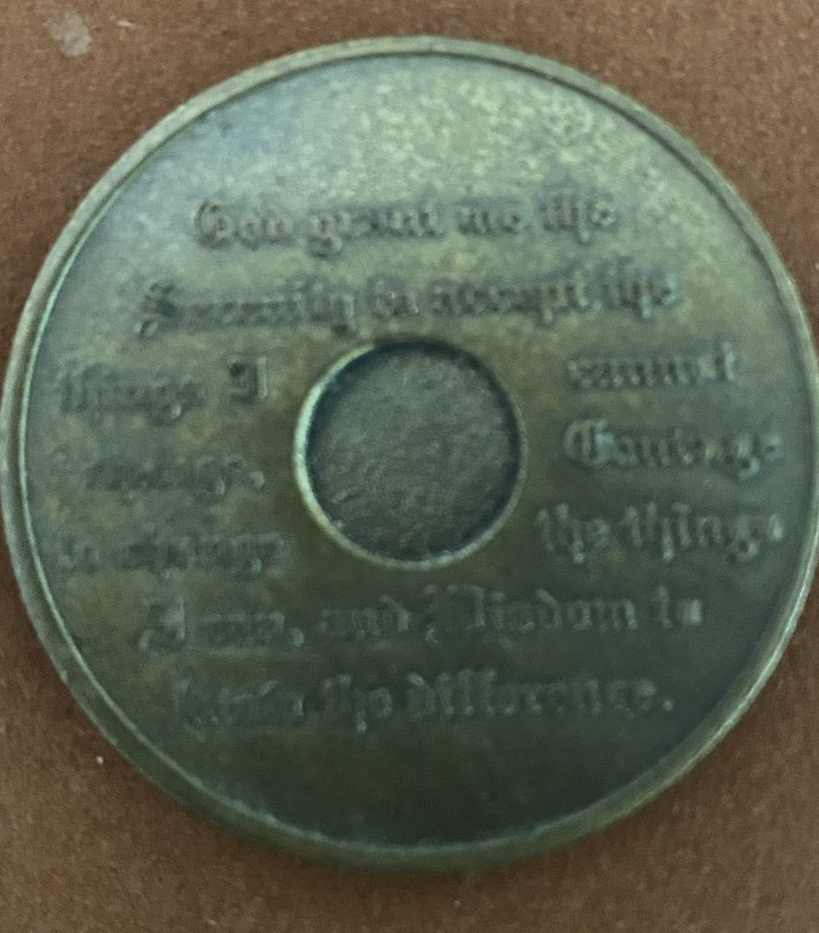
“God grant me the serenity to accept the things I cannot change, the courage to change the things I can and the wisdom to know the difference.”

On occasion, because of my own anxieties, on the mimeograph machine in my mind, it seemed like a couple of pieces of paper would come loose and flap wildly as the drum turned. My mind was that drum and my thoughts were that paper flapping uncontrollably.  I had tried a variety of ways to ease my anxieties: visualizing silly images like a cat with a stop sign attached to its tail or locking my worries in a dumpster, but nothing helped much until I found my way into an Al-Anon meeting one day. I was nineteen and dating David, a man who shared early on that he was a member of Alcoholics Anonymous and, who, after having known my mother for a few weeks, thought he ought to tell me about Al-Anon. “I don’t know much about that group except they used the same 12 Steps we use in AA. Who knows? It might just be a lot of old women complaining about their drunk husbands, but it’s there and worth a try.” 

You could always try those meetings….

He shared this one morning over coffee; I’d sought him out, distraught after encountering my mother drunk that morning. His suggestion hit me at the right moment and I found a meeting that evening at the back of the small storefront where the AA meeting was held. I was too worn out with navigating the alcohol and moods to be nervous about walking into a room where I knew no one. What happened then was that I walked into a roomful of loving, wise, patient surrogate parents who shared with me the Twelve Steps. Members of Al-Anon are, like me, those who have lived with or currently in relationship with alcoholics. The first three steps to that philosophy are designed to help you recognize that your life is unmanageable; likely if you grew up in an alcoholic home, your life had always seemed pretty unmanageable. The Third Step talks about believing in and trusting that there was a God and that God could help. The idea of letting go of control of my life seemed dangerous but I kept going back and sharing how stressful and chaotic my family’s day to day life was.  My own life at that time was a mess as well: I couldn’t tell you what I believed or what I needed to do for my next job, let alone as a career. So, per their suggestion, I attended 90 meetings in 90 days, letting those people love on me and studying the Steps. In contrast to everything around me, the Twelve Steps were not chaotic, but rather offered a different way to make decisions and live life. Then, one afternoon, I was curled up on my bed, emotionally exhausted and lost. It seemed a voice in my head, a benevolent voice, said, “You just need to sit down and shut up.” Suddenly, it felt like I was not alone in making decisions. I took a breath and stopped asking myself or God or anyone who’d listen; I just sat quietly, suddenly reassured the answer would find me if I sat still and waited. A revelation. There would be more. Eventually. I stopped dating David, but I kept coming back to the meetings regularly for nearly two decades, wherever I lived, and I know that that program and those people saved my life and even helped me grow up, at least a bit. 
 A decade later, married and teaching with two small boys, I finally told my then husband that I prayed and, when he didn’t laugh at me, I admitted that God not only talked to me but that I believed I was meant to be involved full time in some ministry. You might think that everyone around you would celebrate if you announced your call to church ministry, and that’s true in some circles. I’d been attending a Methodist Church regularly with our sons, but most of our friends at that time were not attending any church; most were agnostic at best. Thus, I felt the need to be selective when telling anyone that I had regular conversations with God, even those that are only in my head. It didn’t help that God and I were negotiating what ministry for me might look like and I was still quite leery of admitting God wanted anything from me, of all people. If nothing else, at the time, I cussed like a sailor. I had to wonder how that would work! 

Moving forward into what would become an increasingly complicated path towards ordination, it was clear that I had to be subtle about my next steps, and at least appear sane and convincing enough to be taken seriously. The first step was to write a letter to the Methodist Superintendent of the district I lived in and declare my desire to “explore ministry.” Somewhere in there, it was necessary to admit publicly – to say out loud in front of others – that God spoke to me and told me that I was “called” to ministry. Another chance to cringe.

My First Church

The process of moving towards ordination (in the Methodist Church at least) had certainly been more involved than dialing 211, but it was not dissimilar. I’d written that letter and one of the first things the church did was assign me someone to be my mentor, someone who would listen to me and ask lots of questions. Kind of like a free friend, but with a purpose. From then on out, as I went through the process, there were plenty of folks who were ready and willing to swim in the deep end of thoughts and emotions with me, like those free friends, or better, like counselors I didn’t have to pay. The first thing they did, though, was send me to  a psychologist’s office because there was a test in my future. Not free, I remember thinking, but a whole lot less dramatic than calling the local hotline and telling them I talk to God, I guess. 

The psychological exam was just one of the many steps involved in becoming a Methodist minister, a process that is quite long and involved, and can become expensive for many. I had to laugh when I found out, though, that people also used this process, or at least the psychological testing, as a workaround for their own mental screening; it wasn’t free and was far more involved than a simple phone call. I had to wonder: Did they want to be stopped before they hurt someone? I remember sitting in a leather chair in a paneled office with a massive wooden desk between me and the psychologist. I will be forever grateful he started the conversation with, “First, your test reveals you are mentally strong and resilient. All good.”

Relieved, I sat back in the leather chair, and let out a laugh, then admitted, “I’ve got to ask about one of the questions in that test.”

“Sure,” he said.

“It was  something like, ‘Do you like to smell other people’s shoes? Do some people actually admit to enjoying aroma of another person’s shoes?’” 

“You’d be surprised,” the psychologist said.

“Why on earth would you do that?” 

“It’s a way to ask for help, ostensibly without actually asking. They want us to catch them before they do something dangerous,” he explained.

I sure understand that, I thought, making a mental note to be, as a minister, more focussed on the reasons behind those workarounds than the tricks themselves. The reasons were where ministry would happen, I realized. Sometimes people need someone to help them figure out if they are crazy because they talk to – and hear from – God. Just as often, though, folks need to be encouraged to share what they believe God is telling them. Walking people through that process for the United Methodist Church requires years of discernment, writing, interviews and 84 hours of seminary. In other churches, you simply walk up to the front of the sanctuary and declare that God talks to you, indeed, that God is calling you to ministry. I get why it’s so tough to get through the ordination process for the UMC, though, and, don’t get me wrong: I respect it. Even after all the schooling and the discerning and retreats and writing and interviews, after all that I learned about myself and about ministry, I still stood behind the pulpit of my first church and wondered if I was in the right place. I suspect though that God is more able to use us when we are not so sure of ourselves, when we remember we need God. And, my experience has been that, often, we learn we need God through recognizing we need one another, whether we find one another through a phone call, a church or a self-help meeting.  

 Sometimes, in perverse moments, though, I will admit, I’ve wondered if we don’t just need to suggest people start with dialing 211. It’s a whole lot faster and cheaper and they will even tell you where to get free cookies. 

D-Day Promises, Guilt and Forgiveness – Eighty Years Later

Because coming home is just the beginning….

In a previous post, (“You Can Have My Seat on the Mourner’s Bench,”) I introduced James, (not his real name), who struggled mightily with ongoing guilt and grief about his past actions. For years, I didn’t have a clue what those might be.

I did not know what troubled James, only that he was miserable, but when the Lady Preacher came by, he focussed on how I wasn’t preaching or leading worship in a way that would help him feel like he’d “been to church.” Apparently, as I explained in that eariler post, he was convinced that IF that Lady Preacher could dish up some good old-fashioned confession, that would fix things for him, at least temporarily.

My job, as he saw it, was to offer him a chance to relieve his guilt (for at least a week) through confession and some time on that mourner’s bench. There was no mourner’s bench at Wartrace UMC by the time I was sent there as pastor, though, and, unfortunately for James, I was not on board with the kind of spiritual bloodletting he seemed to want.

Wartrace United Methodist Church circa 1850
where a split log bench wih no back was reportedly the “mourner’s bench.”

Sadly, though, James, perhaps more than anyone at Wartrace needed his Preacher to see how guilty he believed he was, to convict him and then to help him leave that guilt on there, even if he never actually graced the church with his presence. I tried a few times to reprise my sermon from my perch on a sticky metal kitchen chair on his back porch, but the sad truth was that even if James had been able to feel forgiven by God every week, even if he had felt Scriptural preaching wash over him every Sabbath morning, he was in grave danger of never being able to forgive himself.

For years, I was unaware this was what he felt he needed. I would visit him regularly but we were not speaking the same spiritual language for the longest time. Until I preached about D-Day.

Wartrace United Methodist Church,
Greenbrier, Tennessee
(Photo Property of Rev Jodi McCullah) 2023

I finally learned why James was continually unhappy with my preaching on a sticky Sunday afternoon in June when I was directed to lift some old blankets and newspapers and take a seat on a sagging recliner in the corner of the porch at James’ house, a corner too dark and hidden even to be seen before. James had decided I was to be trusted finally, not because I had finally made him feel like the worm he thought he was; rather, on that sweltering Sunday in June, his son had called right after worship let out to tell Daddy that the Preacher Lady had shared a D-Day story in her sermon.

D-Day Promises

I had told the story of Rev. Herman Yates, a retired pastor connected to the church; he and his wife had moved there a few months earlier. He had never preached at Wartrace, not even in revivals, and he and his wife were homebound, too, but Wartrace claimed him because he’d grown up in the area. He was on my list of shut-ins to visit, and he had given me permission to share his story on the first Sunday in June. Herman, a sergeant in the United States Army on D-Day sixty years before, had joined other NCO’s who strapped on flimsy orange and white vests with large crosses on them in order to lead their platoons’ landing crafts and soldiers onto the shore. Eyes and throat burning from the acrid smoke, trying to drown out the screams, they were halted time and time again by the force of nearby explosions. Herman and the other Sergeants moved methodically forward, though, careful to move slowly enough for their men to follow and, of course, he said, slowly enough to be a perfect target. When I met him, Herman was able to tell the story calmly after relating it hundreds of times from pulpits across the area. He told powerfully of how he had bargained with God that day that, should he survive, he would dedicate the rest of his life to preaching. God took him up on the deal.

For those unfamiliar with World War II, “The D-Day operation of June 6, 1944, brought together the land, air, and sea forces of the allied armies in what became known as the largest amphibious invasion in military history,” according to the Eisenhower Presidential Library. “The operation, given the codename OVERLORD, delivered five naval assault divisions to the beaches of Normandy, France. The beaches were given the code names UTAH, OMAHA, GOLD, JUNO, and SWORD. The invasion force included 7,000 ships and landing craft manned by over 195,000 naval personnel from eight allied countries. Almost 133,000 troops from the United States, the British Commonwealth, and their allies, landed on D-Day. Casualties from these countries during the landing numbered 10,300.” Combat would continue for nearly another year in Europe. (eisenhowerlibrary.gov)

Knowing what little I do about the massive undertaking that was D-Day, I have long been amazed at the instructions Herman received that morning before the terrifying landing began. “If you make it to the beach,” Herman’s orders had been to “go to the ‘big’ tree, turn right and meet up a mile down.” Herman and at least a few of his platoon somehow safely made their way onto the beach, somehow found some trees still standing on that battlefield, and somehow chose the right big tree from among many. Herman always knew how all that happened and how he had survived the rest of the war. He went on to serve churches for some forty years.

James was proud, he said that Sunday, proud I’d shared Herman’s story. For the first time since I’d arrived at Wartrace, sitting in the old recliner, I did the math and realized James was shaking because he’d been there as well. Tragically, though, James’ story was neither heroic nor admirable.

“I sent them all out there,” he said with litte introduction, “out there to die.” He paused and looked at the flickering television screen, his only constant companion for years. “One by one,” he continued, “the boats went out. We heard and we knew. We were wishing them a safe journey. We knew though. We didn’t know how many, but we knew, we knew. We were safe, right where we were.” He wasn’t in danger but he was painfully certain that his actions were killing soldiers – his own soldiers – on that beachhead as brutally as any bullet or exploding shell. After he shared his story, his voice trailed off and he mumbled to himself for a bit before I made a pitiful attempt to be helpful.

An estimated 20 percent of all combatants historically suffer from the effects of “combat trauma.”

Soldier’s Heart

nostalgia

“to be broken”

shell shock

“The affliction (Post-Traumatic Stress Disorder) has had many names over the centuries, demonstrating that it is a condition accompanying not just modern wars but all wars. Its cluster of symptoms was first diagnosed as ‘nostalgia’ among Swiss soldiers in 1678. German doctors at that time called the condition Heimweh, and the French called it maladie du pays; both mean homesickness. The Spanish called it estar roto, ‘to be broken.’ Civil War Americans called it soldier’s heart, irritable heart, or nostalgia. In World War I, it was called shell shock; in World War II and Korea, combat fatigue. ‘Soldier’s heart’ indicates that the heart has been changed by war. ‘Nostalgia’ and ‘homesickness’ bespeak the soldier’s anguished longing to escape from the combat zone and return home. Estar roto describes the psyche’s condition after war—broken.”

(War and the Soul: Healing our Nation’s Veterans from Post-Traumatic Stress Disorder, by Edward Tick, Ph.D, p. 99)

I doubt James heard anything I said that afternoon. I’d like to believe I offered him some kind of relief from his guilt but I’m pretty sure my words were wasted. I couldn’t do what he wanted, couldn’t agree with him that he should feel guilty, couldn’t acknowledge that he was indeed as guilty of killing Allied soldiers as any German bullet, bomb or soldier. I toyed with the idea of offering him one of the confessions we regularly used from the hymnal on Communion Sunday, but not one word I could think of was gonna do.

In every house of worship in the nation, veterans of wars are in the pews. Many have spent decades grappling with grief from their wartime experiences. Few of them feel like their part was heroic or admirable. Maybe they “won,” but too often, they are leary of telling us how ugly the “winning” was.

Evidently, James had been needing to visit that mourner’s bench for decades, so maybe telling Herman’s D-Day story created a space for James, as if we gave him permission to risk sharing the shame he felt. Perhaps being able finally to tell his story out loud was the confession James craved. Like too many combat veterans, though, he needed not only to share but also to not be shunned.

Years later, I would sit in a veteran’s retreat and listen to veteran after veteran tell their combat stories, usually with trepidation. So many were like the Iraq war veteran who shared his story of killing “anything that moved” from the helicoptor he piloted. That veteran believed himself to be a “monster” and was certain he should no longer be allowed in our midst. Like this combat veteran and so many others, James needed to tell his story and not have anyone, as one veteran feared, “run screaming from the room.” He needed to know I didn’t see him as a monster and that I would still visit, still speak to him, still consider him part of the flock. He had been needing to visit that mourner’s bench for decades, and telling Herman’s D-Day story gave him permission, at least in his mind, to risk telling his story out loud. Maybe Herman knew what would happen when I shared his D-Day story. God certainly did.

Leave a comment

Facing the Big Dogs (Part 2 of 2)

To read part one of this two-part essay, see Speak Up, Young Lady. Be warned, parts of that essay may trigger victims.

Wise ones tell us that we often have to “learn” the same lesson over and over until we get it right. My hint: once you figure out whatever lesson it is you seem doomed to repeat in your life, get on that. Study it. Dissect it. Get it right so you can get it done…or, at least, get good at it.

For me, evidently, one lesson that I have felt doomed to repeat is “Speak up.” 

After being fired at age 17 from a fast food restaurant for daring to write a letter to corporate about requiring female workers to wear short skirts (this was in the late 70’s) I found work that fit my college schedule at the county juvenile detention facility. I was thrilled to get the job if only because I was considering a career in social work by that time. Never mind that there was little or no training for the position or that most of my co-workers and I were still teens ourselves; the county simply needed folks willing to work all hours, and willing to be locked into the facility with teens in trouble. College students fit that bill nicely. There were three shifts a day, each eight hours, round the clock, and we all pulled at least one midnight to eight a.m. shift a week. I’m grateful that the teens we supervised were “less criminal and more neglected” teens, picked up mostly for truancy or petty theft or vandalism, but mostly just guilty of being unsupervised. There were three pods of four teens each and our biggest struggle was keeping them from being bored and trying to ignore smartass remarks. I generally worked the 4 p.m. to midnight shift on three of my four shifts, always sharing supervision and feeding and fielding complaints alongside another college student, always a guy since we were locked in every night with boys and girls. 

When the dog bites….

Only once did we realize how vulnerable we were, but some training we received came in really handy then and years later for me. During a self-defense training, we learned about getting out of holds and about using weak spots like the instep which is usually vulnerable when someone grabs you from behind. I would years later be grateful for another piece of that training: when we were taught how to react when someone bites you. An unarmed combatant might bite and, while the instinct is to pull away, the best move is to push into the open jaws. That movement will cause the assailant to open their jaw wider and allow you to then pull away. Years later, while out walking in my neighborhood, I would use that with a dog that jumped his fence and lunged for me. I am grateful I saw him coming, though, raised my arm (covered thankfully by a heavy jacket) and pushed back into his jaw as he lunged. He was unable to bite down. We repeated this two more times, him lunging and me pushing back while I yelled for help before another neighbor came out. I’d heard people say time seems to slow in life-threatening moments, and I remember calmly being focussed on my arm going into that dog’s jaw.

It was terrifying.

It was also empowering and would help me in so many ways.

I’d been given one way to stand my ground and I’d seen it work. This would not come in handy until years later, though. At that time, I am grateful to say we had little reason to be afraid of our detainees in the juvenile detention facility. 

Again with the troublemaking.

After working there for nearly a year, though, as the juvenile detention facility (which seemed like a lifetime for me at eighteen, by the way) a new worker was hired. Without warning, my schedule was cut in half. It took a week or so to figure out what was happening, but, evidently, the new worker was dating the boss. Remember, this was the seventies. No one even thought of filing complaints then, at least not in Springfield, Missouri. I was angry, but was told at our monthly staff meeting this arrangement would be temporary. By that time, I was living in a tiny apartment. The kitchen was so small I could not open the oven door more than three inches because the refrigerator stood in the way. The bathroom had a claw foot tub with a skylight overhead, though, and a balcony, and I was thrilled to have it, but I would not be able to pay my rent on half a paycheck. Already, I had learned the art of “robbing Peter to pay Paul,” and relied as well on the four meals a week I shared with the detainees at work. This job had been my way out of working fast food; I knew I was far too clumsy to be a server at a restaurant. After nearly a month with my hours cut though, I found it difficult to be cordial when I went to pick up my diminished paycheck and encountered my replacement. I’d thus far received good evaluations, so I was frustrated about having to consider another job. That is perhaps why I figured I had little to lose when the next monthly staff meeting rolled around. After our boss offered updates and training information, he handed out new schedules for the month and, again, I was facing half of my regular paycheck. I raised my hand. My boss called on me. I was standing at the back of the room, aware that others were disgruntled at how things were working out but only two of us had lost significant portions of our paychecks. I simply asked, “What do I have to do to get my hours back?” 

My boss looked at me, frowned, and asked me what I meant. 

“You know what I mean.” I said, “What do I have to DO to get my hours back?” He definitely knew what I meant. He looked at his girlfriend who was seated next to him up front, then frowned at me. I guessed it was time to start searching for another job. I certainly had no intention of actually sleeping with the jerk. And, while a well-reasoned letter to my boss’s boss might have seemed more professional, as it happened, I got my hours back the next day. Troublemaker. It wasn’t pretty, but it was effective. Noted. 

Speaking up, asking people to do the right thing hasn’t always been as successful as I might wish, though. Over the years, the stakes became higher.  Sometimes, it did not make me friends with those in charge, and sometimes those in charge used their power in ways that cost me lost opportunities and/or lost income. The best news for me was that often there were others standing with me, and, on occasion, I have been pleasantly surprised by someone speaking up for me.  

Sometimes, feeling the need to speak up cost me more than a lost date. While in college, I was invited to apply for a scholarship through a local civic organization to study in France for a year because French was my minor. The opportunity to study abroad would no doubt have opened doors I could not imagine. I wrote my application essay and my resume in French and English, and, of course I listed Leadership opportunities, including some speaking engagements explaining the Equal Rights Amendment in town or on campus. I was told, though, that the scholarship was given to a young man. I would have received it had it not been for my work on women’s issues; evidently the group imagined me sailing across the sea to start riots, maybe even to burn my bra.

I had two ways to see that, I reasoned. I could stop speaking up and go along to get along, but I would have to agree to be like the people who had disappointed me which might lead to me being the reason someone else was disappointed. All these lessons in speaking up followed (or led?) me into teaching and ministry and, while it got some easier, I never really got used to people being angry when I speak up. Now, when I find out, though, that there’ll be consequences or someone is angry, I (eventually) shrug. There are people close to me who I am loathe to upset, but everyone else can just take a number. I might be surprised and disappointed but we’ve come too far now. People just expect it.

Who Knew? My Life Lessons Aren’t Just For Me.

Turns out, learning our life lessons isn’t just for us. What we learn can benefit others. In ministry, I have been called to speak up for my LGBTQ students, those behind bars, wounded soldiers. I was, honestly, as proud as I was distressed to be called “that woman” by some of the folks dealing with wounded warriors at Fort Campbell.


All of my lessons, it turned out, helped in these cases, as did the understanding that the folks who needed someone to stand with them or speak up for them were in far greater pain than any discomfort I felt at speaking up at this point in my life.


Personally, speaking up was easier, in fact, when I was no longer the only one affected. When I had children, I felt keenly the need to protect my boys or anyone else who was vulnerable. My first chance to act on that came when a neighborhood dog began getting out of his fenced-in yard.

Facing the Big Dogs

In this case, I thought the “Big Dog” in the small town where my husband and I had settled with our boys was the Collie living on the corner across the street from one of my son’s friends. He was so large he could put his front paws on the shoulders of an adult and look him in the eye. He started demonstrating this on folks in the neighborhood who were strolling around the small downtown area, knocking more than a few of them down. The owner, when informed, usually snarled and slammed the door.  When I heard the dog had knocked down the elderly piano teacher around the corner,  though, I resolved to call animal control. I discovered though there was only a part time animal control staff in our small town in spite of a growing number of dogs allowed to roam free. I decided to write a letter to the editor -again with the letters, right? – to encourage folks to speak up and perhaps convince our city government to make the animal control agent a full time position. The letter was also an “open letter” to my neighbors with dogs to encourage them to follow the leash law in town and inform them of what was then the local rule at least. According to that rule, a dog owner whose pet bit another person could be made to pay any doctor bills. A dog owner whose dog bit a second time could be sued and, after a third offense, an animal would be put down by the city. I encouraged dog owners to protect both their neighbors and their dogs. Once again, I believed I’d written a well-reasoned letter.

The Big Dogs Bark

The letter was published on a Wednesday. That evening, I received a phone call from the mayor. My anticipation of a good conversation was usurped almost immediately when our illustrious city leader, whom I had never met, began berating me angrily and basically telling me to mind my own business. The big dogs were barking.

I quickly gave up on an actual conversation when it became apparent this was not a dialog. I was honestly surprised that any adult would yell like that at any other adult who wasn’t in their family. He didn’t even know me. I was also confused about why he’d been so rude and aggressive and I began to worry about encountering him in public. I was still pretty unsure what to think about his behavior when, early the next morning, I answered my front door to find the animal control officer in uniform. 

Photo by Blue Bird on Pexels.com

You gotta be kidding, I thought.

She was smiling, though, and, after introducing herself, asked if by any chance I’d received a call the night before from the city mayor. Turns out, the mayor had made a habit of nightly drunken calls to people who ticked him off, and this officer often was dispatched by the local sheriff to apologize to the recipients of those calls. No wonder the city couldn’t afford a full time Animal Control officer.  We took notice that the understanding was they’d keep up this practice of apologizing for him until the next election. I began to worry about how angry our neighbor with the collie likely was, if he had read the paper.

The Bite

Photo by Tara Winstead on Pexels.com

We got the chance to face him fairly quickly when, a week or two later, I was walking with my eight-year-old to his friend’s house and the collie on the corner lunged out from behind a bush and bit me on the hip before we even knew what was happening. He only lunged once, thank God, and, fortunately, we were just a few feet from the friend’s house. The boy’s mother and I quickly decided I needed to see a doctor. The bite had punctured the skin and drawn blood, but he had not clamped down or torn the flesh. I had not needed to put my juvenile court training into action, I thought, since he only lunged once. The importance of the lesson about standing your ground, though, contained a much wider meaning, I would find out.

The bleeding was minimal but the bruising had already begun and I’d need a tetanus shot. As soon as I finished at our local clinic that day, I walked over to the police department and swore out a warrant. I was driven by the terrifying thought that, had my son been walking on the other side of me that morning, the dog would likely have bitten his face or neck. The thought made the hair on the back of my neck stand up and I knew this was a chance to begin the process to make our neighborhood safer. Though I feared we’d all still have to avoid that part of the neighborhood for a long while, we had put this bully and his dog on notice and try to find some official help.
Amusing detail: the officer who took my information was surprised to discover, through a congenial conversation, that I not only actually loved dogs, we had two big dogs; we just didn’t let them run free. She and her colleagues were under the impression I hated all dogs. She gave me a court date and I left, already afraid and realizing I’d need to warn my boys to watch out in case the neighbor decided to retaliate once he was served with the papers. We stayed close to home for the next few weeks.

Photo by Sora Shimazaki on Pexels.com

When the morning came to face the dog’s owner in court, I will admit I was nauseous and more than a bit afraid not only of facing him but also of how the case would be treated. For all I knew, this dog owner played pool with the local judge. When the judge called us both up to his bench, the neighbor immediately started complaining, “Judge,” he said, “this crazy woman–” but the judge cut him off and asked me for the evidence I had of the bite, which meant both men would be viewing pictures of my butt and hip showing the puncture marks and bruising. A stellar start.

I was beginning to regret the warrant when the judge laid the pictures down, turned to the dog owner and asked, “You drunk, Sir?” My neighbor’s blustery and belligerent response was the judge’s answer.

“You, Sir,” the judge continued, “may or may not be aware that this bite is your dog’s first offense, his first strike.” He held up his hand when my neighbor began to protest. 

“You will pay her for her medical bills before you leave. And because you disrespected this court by showing up drunk, your dog now has two strikes against him.” Once again, he held up his hand to stop any protests. “I understand you own some property outside of town; I’d suggest the dog move there. Today. Step back.”  

Going through all of that was exhausting and literally gut-wrenching, but I had reached a point where NOT doing anything would have felt far worse. 

I’d finally reached a point where NOT speaking up was more painful than swallowing what I needed to say. I did not want to end my life filled with regrets. I’ve hated learning to speak up but I hated not speaking up more.

where I am today is light years better than where I began, represents so much distance from curling up in the backseat, sure no one would believe me if I spoke up.  

This has been my journey and, while speaking up can still be tiring, today I have allies, I have freedom to walk away and I have lots of practice. The need to speak up is mostly easier to face. 
This life lesson is no longer the big dog in my emotional neighborhood lunging at me until I fall down.

Maybe you never think twice about speaking up, but I know you have your own challenges, your own life lessons, and I hope you’re moving through them, growing, reaching, finding your freedom.  I hope as you reflect on where you’ve been, that you give yourself the benefit of the doubt and that you recognize you likely did the best you could, the best you knew to do, at the time. If nothing else, you survived and learned to do things differently the next time. 

My hope for you, then, is this:

May you figure out your life lessons swiftly and early in life.

May you accept help and welcome allies along the way.

May you not reach the end of your life wondering 

Where you’d be or 

What you’d be doing 

If you had stared down your hounds, 

If you had pushed back on the jaws that threatened you, 

If you had felt strong enough…finally…, become fed up enough, worn out enough to say what you needed to say when you needed to say it.

“Honestly, I wanna see you be brave….”

Sara Bareilles, “Brave,” 2013

Of Hiking, Floods and Fragmented Memories

In the previous Post called The Boulder Fields of our Lives, about hiking Longs Peak and working at the YMCA of the Rockies, I ended by explaining that our summer work (and “Hikemaster” Course) were cut short not long after we scaled the 14,000+ foot Longs Peak because of a natural disaster in the canyon below us. A few days after the climb, a year’s worth of rain fell in 70 minutes and the Big Thompson River below our camp washed out nearly everything and everyone in its way.

“On July 31, 1976, the skies opened up over the Big Thompson Canyon, setting off the deadliest natural disaster in Colorado history that claimed 144 lives and caused $35 million of damages.” (https://www.coloradoan.com/story/news/2016/07/29/big-thompson-flood-killed-scores/87524858/)

Fragmented Memories

For decades now, because my memories of being just above the “500-Year Flood” are so fragmented, I have not told the story of being there, which is unusual for me. Most days, I am known to bore anyone close enough to listen with a story or two; I usually can’t help myself. The stories I have not told then generally are ones I cannot remember OR ones I do not want to remember. Only after writing about climbing Longs Peak, as I looked at the photo of me and my climbing companion, did it occur to me that the story of that summer was not complete without talking about the flood.

“The chaos along an otherwise trickling Big Thompson River killed 144 people, five of whom were never found, and carved out a chapter in the history books as Colorado’s deadliest natural disaster.”

https://www.coloradoan.com/story/news/2016/07/29/big-thompson-flood-killed-scores/87524858/

Both the hike and the flood were, for lack of a better word, watershed moments for me, but the lessons have been realized slowly and in fragments. To better remember those days, I looked at a couple of television news reports of the flood, but they were recorded decades after the flood. Strangely, the lack of technology at the time affected both the before and the after, the event and the memories. The only phones in 1976 were landlines and, so, warnings came only through emergency personnel going door-to-door; at least one first responder died trying to warn others that night. Only a few black and white photos are available as well, making attempts at remembering as cumbersome as the warning system had been. Nevertheless, I have felt driven to try to piece together a coherent memory of those days and, as I researched and read and poured over old photos online, I read the words of one Colorado disaster preparedness official. She said,”We learn the most from chaotic events.” As I have tried to remember and reflect, I think that she was right; we do learn much from chaos, but we have to work to find those lessons.

First, setting the stage for our story….

After my freshman year in college, I went to the mountains near Estes Park to work for what I thought would be a summer of fun. Once there, I was surprised to find a sense of peace that I had not expected. I was, for the first time, hopeful that I might actually be able to find a peaceful and stable home once I could support myself. I surprised myself, in fact, by making some plans to continue working at the camp in the fall.

Though I kept journals off and on, little remains of what might have been written that summer. I do remember that, on the back of placemats, during lulls in our work, I sometimes wrote letters or journal entries; most of them are lost, but the only one I have found from before the flood surprised me. I wrote:

  • Tuesday, July 20, 1976

    “Storm clouds have mingled with the mountain peaks since sunrise; we here in the valley are enclosed, shut away from the crowds that would disturb us….peace of mind must certainly follow. Here, in my room, I am lulled into a tranquil mood by the clouds every day. Even when my work day is long and busy and even frustrating,” I wrote, “…the calm is inescapable.”

Calm was something I could not claim before that trip and safety was not a place I remembered.

At that point, the clouds covering the tops of the mountain peaks around us (The highest peak in our area was Longs Peak at more than 14,000 feet in elevation.) were benevolent. I wrote: “These clouds draw your thoughts. Constantly changing, first ringing, then entrapping the peaks, they are playing quietly and are a source of constant amusement.”

Those “playful clouds” would soon turn deadly, though. During our Hikemaster classes that summer, we learned to appreciate the danger of the storm clouds that often came up quickly in the mountains. On July 20, though, I was simply calmed by their presence and movement. I needed that calm desperately; the family life I would return to was chaotic, unpredictable, traumatic. The rules changed daily and nothing that occurred in my home could surprise me anymore. The overwhelming feeling that I had carried with me when I tried to escape to the mountains from a tumultuous family life was fear. Fear and anxiety wore me out and, I know now, the trauma, fear and stress are why so many of my memories are fragmented at best.

And now, a word about trauma….

Trauma is destructive. Like the different kinds of skin cancer, trauma can create a wound that burrows deep or spreads outside of you, like when you fear for your loved ones in such a depth as to make others question you, call you hysterical even. And yet, because you have experienced trauma, you know. Accidents DO happen. People, even people you trust, DO harm one another. Your parents did not protect you. No one saved you. Nothing, not even seeing another day, was guaranteed. All the worst, all you feared, was indeed possible, did happen. And no amount of reassurance from others can repair that trust completely; we can learn to manage the fear but we never know when some sound or smell or person or newscast will bring it all rushing back.

Like a broken mirror, trauma shatters both our sense of self and our memories. Too many of my memories lie in shards on the floor and picking through them, trying to piece them together, trying to make sense, to have some timelines or events make sense is most likely why I write.

Even the effort to capture the memory of that time is fragmented: all that remains are three pages written by that seventeen-year-old me as I tried to capture what I saw and a couple of newspaper pieces I wrote after I got a job working at the local paper and my editors learned I’d been in the “500-year Flood of ’76.”

The morning of July 20, 1976, though, I was feeling calmer than I ever had, safer, more at peace and, to my surprise, I was enjoying even the colder weather on the mountains. I have long been known to dislike the cold intensely, so as I read the words I wrote, I am struck by what I believed I had found there: a home and place where I was being trained to pay attention to my surroundings, to know my own capabilities, and how to prepare for and help others in disasters. Wanting to help others is one response to trauma. I know I was hopeful that I might at the very least return the next summer to be Hikemaster and even one day make my home near the clouds.

I wasn’t able to stay, though, and thus much of what I remember, even as I try to piece it together, still seems fragmented and lost to me. Like most of my co-workers, I went home soon after the flood, and immersed myself in college classes. I never saw any of my coworkers again and I never spoke to any of them afterwards either; those relationships simply ending undoubtedly contributed to a sense of loss.

Now, as I try to access any memories of that time, I am left with the handful of days afterwards, days when all of us above the canyon were trying to figure our what was happening below us. Even though we were aware, we did not want to talk about how we ourselves inexplicably had escaped being swept up.

That first day, though, we didn’t know what was going on below us in the canyon.

Like the many campers along the river, we were enjoying the scenery. The Big Thompson River was one of the jewels of the area, a mighty source of income because of all the tourists it drew. Most of the year, “…the water runs only a few feet deep and fifteen to twenty feet wide…happily rushes over rocks and gurgles through pools as it descends 8,000 feet from the high range to the south Platte on the prairie. The water is clear, numbing cold, and playfully sparked by the sun.” (Big Thompson: Profile of a Natural Disaster by David McComb, Pruitt Publishing Company, 1980.)

  • Saturday, July 31, 1976

    Today is unusually rainy.

    Normally, storms approached Estes Park and the YMCA camp from the south; thunderstorms, while normal, are of short duration, with clouds often enveloping peaks by 10 a.m., which was why hikers needed to climb summits of the various peaks in the range in time to skedaddle back down below the treeline or risk becoming a lightning rod.  Our Hikemaster course is teaching us a great deal about safety and we are training to lead hikes, which would mean teaching tourists about safety as well. Too often, though, tourists in the park dismiss any safety preparations or climbing instructions with disastrous consequences. The tourists we met traveling up to the summit the day we climbed Longs Peak weren’t interested in safety tips.  As we were headed down to the timber line, we passed, for example, a woman in a summer dress, wearing tennis shoes and carrying a purse on her arm as if she were headed to a party. They would be fine, they told us, and they waved us on. They had evidently never seen a person who’d been struck by lightning. Unprepared hikers found their way to our camp often enough though and several of our coworkers are among those trained to rescue hikers.

We did not know at that time that many of our Hikemaster instructors would be called upon to help flood victims the next day.

The storm was approaching from the East, though, we noticed, and it just seemed to camp above us, a thunderhead with no high westerly winds to move it. Reports were that during that Saturday evening, twelve inches of rain fell, about the normal annual rainfall amount for the area. Estes Park and the YMCA are above Lake Estes on the Big Thompson River, but, just below us, the unrelenting water from several tributaries gathered debris and swept down the canyons, both restricted by and guided by steep walls. By the time the waters reached the North Fork and the Big Thompson, there was already enough force to destroy bridges. All along the canyon, this storm surge ripped up everything in its way, including homes and campsites, swept up by a water level estimated at nearly twenty feet above the normal. Reports I read later told of at least one emergency worker dying in his attempts to go door-to-door to warn people.

We Learn from Chaos….

One of the innovations that came out of the Big Thompson flood was a national warning system for floods and other national disasters. That, with the advent of cell phones has greatly reduced the number of deaths in floods.

  • Sunday, August 1, 1976

    The camp is secluded from the world as usual, except for the hymns and local newscasts being broadcast on the radio in the bakery. Rain falls steadily still and a heavy fog had settled on Big Thompson Canyon. Four of us went by van higher up into the mountains to a lodge to feed some visitors. While the lodge was only thirty feet higher than the camp, it was eerily sitting just above the clouds and driving on those narrow roads on the sides of those mountains felt even more dangerous than normal.

    Sitting in the lodge’s kitchen after breakfast, we listened to the radio to learn when we could expect some sunshine. Mountain thunderstorms seldom lasted even more than an hour or two, so this second day of fog and rain was disconcerting. The announcer became somber, reading a report that surprised us: “The Big Thompson River had overflowed its banks in the narrow canyon leading to the valley and four persons were reported dead.” We became quiet, not having known that the storm was dangerous. The cook was worried about his family, knowing they lived near the flooded area. The storm, we heard, was stationary, and we could look forward to more rain.


    A lightning flash warned us we needed to take the van back down the mountain before trying to drive became even more treacherous AND before the van started attracting electricity. We warned the visitors in the lodge not to drive anywhere or even to go outdoors because they’d be lightning rods.

    Throughout the morning, as we worked back at the bakery and kitchen, we listened to any news reports coming over the radio. We worked silently through the day as the reports began to seem unreal; the number of dead grew to more than sixty before evening. We began to slowly comprehend the devastation that was apparently just below us. No one wanted to ask if it were just dumb luck that we were above the deadly flood and others were below it. The folks in charge were not sharing much information; maybe they didn’t want us to panic. No one really was surprised to learn that our phone lines were down. That was not terribly unusual, but the announcement added to the somber mood and hushed tones all day. The frequent updates on the radio and our director forbidding us to leave the YMCA property kept us all close to the kitchen even long after our own shifts had ended. Only the maintenance crew left to take the trash but the normal 30-minute round trip took hours and they returned with widely varying reports of the flooding just 1500 feet below us. If any of my coworkers or those in charge were afraid, I did not see it.

Monday, August 2, 1976

  • Monday, August 2, 1976

    This morning, the fog is even lower than before, which meant rescue helicopters were grounded. Several refugees have been brought into the camp in the night. So forlorn, they are wet and cold and dirty. They wait for some coffee and a blanket; dirty pillowcases in the hands hold the few belongings they were able to salvage. They are lucky, though; hundreds more are still stranded. Many more are missing and most are expected to be dead. Still there are no phone lines available and a trip to Denver, normally a couple of hours, would take six or seven and that was only if you had a four-wheel drive vehicle. Technical climbing skills are needed now for rescuers because roads are washed out in the canyon and the only way out is up over the cliffs.

  • Tuesday, August 3, 1976

    For three days, we have heard little about what was happening below us, except by the radio. I suspect now they were trying to prevent any kind of panic; we also did not know what the rest of the world thought about our fates, either. We were surprised to find for example, that our parents had heard mostly dire reports about Estes Park and the YMCA camp above it being unreachable and even obliterated. Some men we didn’t know came to get us today and told us we were going to be calling our parents via ham radios set up. The instructions to “tell your parents you’re still alive” stopped me for a moment. I had not known nor had I had a moment to worry what they might be thinking at home.

The overriding feeling it seems was somber but also a bit bizarre. For one example, our local radio station published a newsletter/bulletin we could see every morning, and next to the names of the dead each day were that day’s baseball scores.

Rumors

Rumors abounded. One account said all manner of snakes, also apparently trying. to escape the waters, were chasing survivors up the sides of the Big Thompson River canyon.

There was one report of a baby, who became known as Baby Moses, stranded on a rock in the rushing water.

One newspaper wrote: “After it opened, the refugee center at Loveland High School became a source of personal details as survivors, some with nothing more than the clothes they had worn into the canyon, told how an evening of cards with friends was interrupted by rushing water and a mad dash to scale slippery rocks. Throughout the first days rumors were abundant. There was one report of a baby, who became known as Baby Moses, stranded on a rock in the rushing water. One national publication called to verify that the baby had been rescued by a woman who lassoed it while riding a white horse. But no one could substantiate any of it, and The Coloradoan reported it as an example of the rumors.” (Big Thompson: Profile of a Natural Disaster by David McComb, Pruitt Publishing Company, 1980.)

“We learn the most from chaotic events.”

Disaster Preparedness Official in Colorado

I Learn from Chaos

For the longest time, I realize now, I felt profoundly disillusioned after that flood; the safe home I thought I had found, in fact, was as treacherous as any place could be.  I was not able to stay and create a home there that I was seeking because of the flood and damage. It took me years to acknowledge that and even longer to name the terror. I could not risk feeling that terror then; none of us could afford to name the terror that was just below us. 

I certainly had seen the power and wisdom of what we had been taught while learning to hike safely on those granite peaks. I cannot necessarily agree that we “learn from chaos,” but I can admit that I learned from how others around me operated in the chaos. 

Over the years since I left the camp, I know that I consciously incorporated lots of those lessons into my life. When you hike, take only pictures and leave only footsteps. When you journey, make sure someone knows where you’re going and when you should be back. When it’s cold outside, layering is the key to staying warm. If you’d asked me before what that summer taught me, I would have acknowledged all of that readily. I also spent a lot of time the next few years in jeans, hiking boots and denim shirts. I even decorated any space I inhabited with topographical maps. I started jogging in order to build up my endurance. I even tried caving because I was not near any mountains.

Mostly, trying to remember any part of that time has shown me that I had learned and incorporated lessons from the flood into my daily life much more extensively than I realized. Being just above the flood and watching how others navigated that danger, in fact, would inform and guide me for decades, if only because so much of what we’d learned in our classes had been especially effective in the midst of that chaos and tragedy.

There is wisdom and, often, survival, in choosing to be careful, and to work together. We learned to look before you step over a log or rock, make sure you pack what you need but only what you need, and, naturally, respect the power of nature and especially of water. In life lessons, those translate to being intentional, learning when enough stuff is enough and admitting to ourselves that we are not the most powerful force out there.

When my parents showed up a few days later to take me back to Missouri, they said I was different. The summer had been grueling in a number of ways, but I had learned so much that would inform every step I took from then on, would help me create the safety I craved whatever path I chose. I don’t doubt that the summer has helped me feel brave enough to continue to travel and explore new places, albeit with safety ever in mind.

Until now, I hadn’t talked or thought much about that time. I chalked it up to being forced by circumstances to abandon the path I had begun to enjoy so much. I felt for the longest time that I’d had an adventurous summer but it was over and so the memory and the possibilities were simply filed away like a summer fling; they were simply not relevant going forward. What I didn’t recognize was that I was on another trek, one that would last my lifetime and what I learned during that summer was helping me all along to find my way, help me create the safety I craved. I say “create” rather than find because all that I learned that summer helped me slowly realize that the safety I sought I had learned to carry with me. “Safety” would be wherever I found myself when I paused long enough to look up from the path.

I will continue to unpack the backpack, to try to remember the story of those days and others still dark. I can recognize one truth, though, folded neatly like a bandana in my jeans pocket: chaos and danger will be all around no matter where I travel or where I land, no matter where I make my home. Because of that training, though, I have tools, guiding principles and more confidence to continue exploring whatever path has been before me.

D-Day Promises, Guilt and Forgiveness

Because coming home is just the beginning….

In a previous post, (“You Can Have My Seat on the Mourner’s Bench,”) I introduced James, (not his real name), who struggled mightily with ongoing guilt and grief about his past actions. For years, I didn’t have a clue what those might be.

I did not know what troubled James, only that he was miserable, but when the Lady Preacher came by, he focussed on how I wasn’t preaching or leading worship in a way that would help him feel like he’d “been to church.” Apparently, as I explained in that eariler post, he was convinced that IF that Lady Preacher could dish up some good old-fashioned confession, that would fix things for him, at least temporarily.

My job, as he saw it, was to offer him a chance to relieve his guilt (for at least a week) through confession and some time on that mourner’s bench. There was no mourner’s bench at Wartrace UMC by the time I was sent there as pastor, though, and, unfortunately for James, I was not on board with the kind of spiritual bloodletting he seemed to want.

Wartrace United Methodist Church circa 1850
where a split log bench wih no back was reportedly the “mourner’s bench.”

Sadly, though, James, perhaps more than anyone at Wartrace needed his Preacher to see how guilty he believed he was, to convict him and then to help him leave that guilt on there, even if he never actually graced the church with his presence. I tried a few times to reprise my sermon from my perch on a sticky metal kitchen chair on his back porch, but the sad truth was that even if James had been able to feel forgiven by God every week, even if he had felt Scriptural preaching wash over him every Sabbath morning, he was in grave danger of never being able to forgive himself.

For years, I was unaware this was what he felt he needed. I would visit him regularly but we were not speaking the same spiritual language for the longest time. Until I preached about D-Day.

Wartrace United Methodist Church,
Greenbrier, Tennessee
(Photo Property of Rev Jodi McCullah) 2023

I finally learned why James was continually unhappy with my preaching on a sticky Sunday afternoon in June when I was directed to lift some old blankets and newspapers and take a seat on a sagging recliner in the corner of the porch at James’ house, a corner too dark and hidden even to be seen before. James had decided I was to be trusted finally, not because I had finally made him feel like the worm he thought he was; rather, on that sweltering Sunday in June, his son had called right after worship let out to tell Daddy that the Preacher Lady had shared a D-Day story in her sermon.

D-Day Promises

I had told the story of Rev. Herman Yates, a retired pastor connected to the church; he and his wife had moved there a few months earlier. He had never preached at Wartrace, not even in revivals, and he and his wife were homebound, too, but Wartrace claimed him because he’d grown up in the area. He was on my list of shut-ins to visit, and he had given me permission to share his story on the first Sunday in June. Herman, a sergeant in the United States Army on D-Day sixty years before, had joined other NCO’s who strapped on flimsy orange and white vests with large crosses on them in order to lead their platoons’ landing crafts and soldiers onto the shore. Eyes and throat burning from the acrid smoke, trying to drown out the screams, they were halted time and time again by the force of nearby explosions. Herman and the other Sergeants moved methodically forward, though, careful to move slowly enough for their men to follow and, of course, he said, slowly enough to be a perfect target. When I met him, Herman was able to tell the story calmly after relating it hundreds of times from pulpits across the area. He told powerfully of how he had bargained with God that day that, should he survive, he would dedicate the rest of his life to preaching. God took him up on the deal.

For those unfamiliar with World War II, “The D-Day operation of June 6, 1944, brought together the land, air, and sea forces of the allied armies in what became known as the largest amphibious invasion in military history,” according to the Eisenhower Presidential Library. “The operation, given the codename OVERLORD, delivered five naval assault divisions to the beaches of Normandy, France. The beaches were given the code names UTAH, OMAHA, GOLD, JUNO, and SWORD. The invasion force included 7,000 ships and landing craft manned by over 195,000 naval personnel from eight allied countries. Almost 133,000 troops from the United States, the British Commonwealth, and their allies, landed on D-Day. Casualties from these countries during the landing numbered 10,300.” Combat would continue for nearly another year in Europe. (eisenhowerlibrary.gov)

Knowing what little I do about the massive undertaking that was D-Day, I have long been amazed at the instructions Herman received that morning before the terrifying landing began. “If you make it to the beach,” Herman’s orders had been to “go to the ‘big’ tree, turn right and meet up a mile down.” Herman and at least a few of his platoon somehow safely made their way onto the beach, somehow found some trees still standing on that battlefield, and somehow chose the right big tree from among many. Herman always knew how all that happened and how he had survived the rest of the war. He went on to serve churches for some forty years.

James was proud, he said that Sunday, proud I’d shared Herman’s story. For the first time since I’d arrived at Wartrace, sitting in the old recliner, I did the math and realized James was shaking because he’d been there as well. Tragically, though, James’ story was neither heroic nor admirable.

“I sent them all out there,” he said with litte introduction, “out there to die.” He paused and looked at the flickering television screen, his only constant companion for years. “One by one,” he continued, “the boats went out. We heard and we knew. We were wishing them a safe journey. We knew though. We didn’t know how many, but we knew, we knew. We were safe, right where we were.” He wasn’t in danger but he was painfully certain that his actions were killing soldiers – his own soldiers – on that beachhead as brutally as any bullet or exploding shell. After he shared his story, his voice trailed off and he mumbled to himself for a bit before I made a pitiful attempt to be helpful.

An estimated 20 percent of all combatants historically suffer from the effects of “combat trauma.”

Soldier’s Heart

nostalgia

“to be broken”

shell shock

“The affliction (Post-Traumatic Stress Disorder) has had many names over the centuries, demonstrating that it is a condition accompanying not just modern wars but all wars. Its cluster of symptoms was first diagnosed as ‘nostalgia’ among Swiss soldiers in 1678. German doctors at that time called the condition Heimweh, and the French called it maladie du pays; both mean homesickness. The Spanish called it estar roto, ‘to be broken.’ Civil War Americans called it soldier’s heart, irritable heart, or nostalgia. In World War I, it was called shell shock; in World War II and Korea, combat fatigue. ‘Soldier’s heart’ indicates that the heart has been changed by war. ‘Nostalgia’ and ‘homesickness’ bespeak the soldier’s anguished longing to escape from the combat zone and return home. Estar roto describes the psyche’s condition after war—broken.”

(War and the Soul: Healing our Nation’s Veterans from Post-Traumatic Stress Disorder, by Edward Tick, Ph.D, p. 99)

I doubt James heard anything I said that afternoon. I’d like to believe I offered him some kind of relief from his guilt but I’m pretty sure my words were wasted. I couldn’t do what he wanted, couldn’t agree with him that he should feel guilty, couldn’t acknowledge that he was indeed as guilty of killing Allied soldiers as any German bullet, bomb or soldier. I toyed with the idea of offering him one of the confessions we regularly used from the hymnal on Communion Sunday, but not one word I could think of was gonna do.

In every house of worship in the nation, veterans of wars are in the pews. Many have spent decades grappling with grief from their wartime experiences. Few of them feel like their part was heroic or admirable. Maybe they “won,” but too often, they are leary of telling us how ugly the “winning” was.

Evidently, James had been needing to visit that mourner’s bench for decades, so maybe telling Herman’s D-Day story created a space for James, as if we gave him permission to risk sharing the shame he felt. Perhaps being able finally to tell his story out loud was the confession James craved. Like too many combat veterans, though, he needed not only to share but also to not be shunned.

Years later, I would sit in a veteran’s retreat and listen to veteran after veteran tell their combat stories, usually with trepidation. So many were like the Iraq war veteran who shared his story of killing “anything that moved” from the helicoptor he piloted. That veteran believed himself to be a “monster” and was certain he should no longer be allowed in our midst. Like this combat veteran and so many others, James needed to tell his story and not have anyone, as one veteran feared, “run screaming from the room.” He needed to know I didn’t see him as a monster and that I would still visit, still speak to him, still consider him part of the flock. He had been needing to visit that mourner’s bench for decades, and telling Herman’s D-Day story gave him permission, at least in his mind, to risk telling his story out loud. Maybe Herman knew what would happen when I shared his D-Day story. God certainly did.

Leave a comment