My Alamo

Individually, collectively, as a nation, there have been times when we’ve needed to draw a line. This is one of those times.

“Those who would give up essential Liberty, to purchase a little temporary Safety, deserve neither Liberty nor Safety.” Benjamin Franklin

Much of the time when any of us need to draw a line in the sand, as they say, I suspect it is a surprise. I say that because we are often not expecting the person moving aggressively towards us; thus, we are not prepared to mark any line. When we do draw a boundary, when we insist that the next step the person in front of us takes will be too far and we will stand in their way, it can feel jarring and aggressive, like we are the ones being combative. We are simply not prepared to counter aggression or abuse, individually or collectively. 

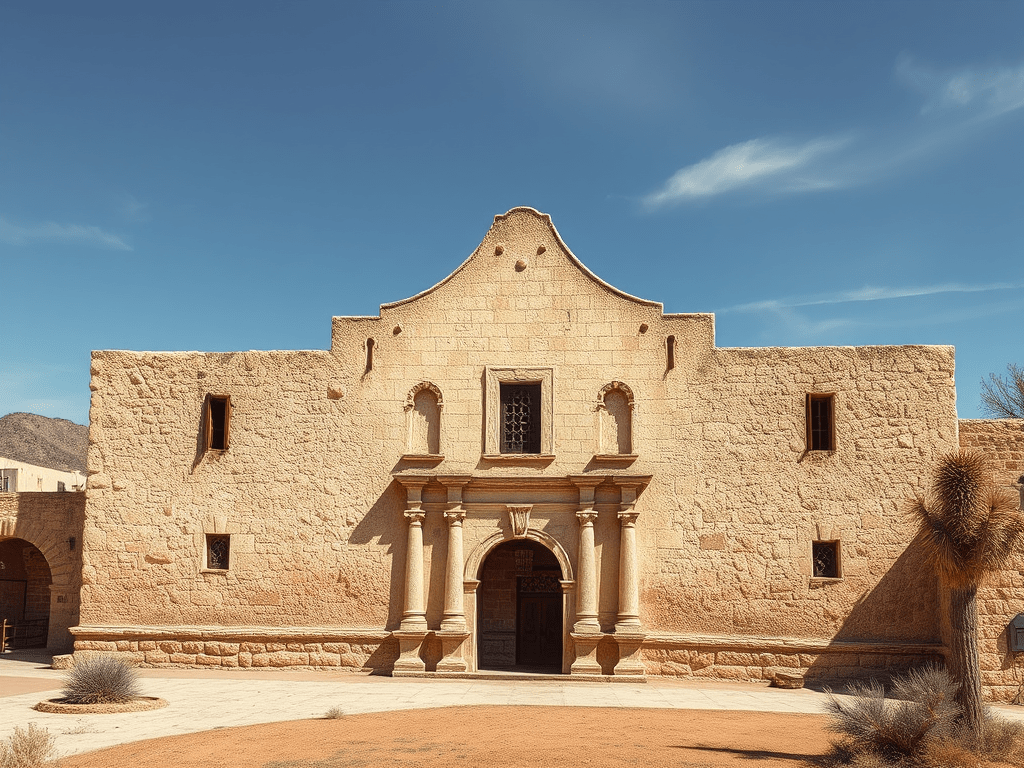
This is somewhat ironic, at least in the United States, though. Remember the Alamo? Legend has it that when Lieutenant-Colonel William “Buck” Travis, Texian Army officer and his fighters faced overwhelming forces at the famed fort, Travis drew a line in the sand with his sword and told his fighters to cross it if they were willing to stay and fight. Nearly all of them did. While that story is possibly more fiction than fact, it is nevertheless the lore many of us were inspired by, taught to emulate, part of the “GIve me liberty or give me death!” understanding of the cost of freedom of speech, freedom of religion, freedom from tyranny. We know what’s right. We know abuse when we see it. We know when someone is trying to frighten us into not fighting for those freedoms. We know and yet we are reticent, loathe to draw our line in the sand, whether personally, as a family or as a community and nation. We want it to all go away. But it won’t.

Years ago, an experience from the first church I served paved the way for an extended family finally to take a stance, to draw their line in the sand to stop the abuse that had been harming women in that family for at least a generation. In this case, what had been a family secret became quite public because the abuser got reckless and over-confident and, in some ways, that arrogance made taking a stand easier for the family.

“Herb” (name changed to protect his victims) wasn’t a regular attendee at the church I served, so my radar was not pinging when I greeted him that Sunday morning. He was a 60-something married man who always dressed in seersucker and bow ties and prided himself still sporting a full head of hair, even if it was graying. I’d brushed off his previous suggestions about how my congregation would like it, he was sure, if I wore more colorful outfits when I stood in the pulpit. I glared at him and walked away when he suggested I unbutton a button or two on my blouse, but nowhere was there any guidance on responding to such behavior from this man whose family members occupied nearly one-third of the pews. I wondered why his wife never attended with him and started avoiding him, thinking he would remember he was talking to the preacher. Turns out, I should have opted for outrage from the beginning. At least I might have been prepared for battle when I walked out of the little white building one Sunday afternoon to see him seated in his big old Buick in the parking lot across the road. I waited for two cars to speed by, then crossed the two-lane blacktop warily, my chest tightening. My arms were full with my Bible, sermon notes, my purse and some funeral home fans that I’d grabbed off the table in the back of the sanctuary. The cardboard fans helped you breathe on the days when the humidity was looking for an excuse to break into a summer shower. 

Already sweaty, and looking forward to an afternoon of visiting the shut-ins, I moved cautiously across the road, hoping he would stay in his car. I had been headed to the fellowship hall to lock up before I started the afternoon’s visits. Herb exited his car and was next to me nearly as soon as I stepped off the highway onto the parking lot. I had to stop mid-stride to avoid running into him; I was off-balance as I tried to look behind me before stepping back because that would put me back onto the highway. 

Turning towards him, I stumbled to my right just in time to miss him grabbing my arm. I looked at him in confusion as he reached out again and said, “Why don’t we go inside?” 

In an uncharacteristic flash of assertiveness, I shoved him with my books. He stumbled back a bit, startled. I darted as quickly as I could around to the passenger side of his car. Did he really just grab at me? Herb started around the side of the car and reached for me again, so I threw my books at the ground near his feet to stop him long enough for me to move around the car until I was back on the driver’s side. I know my hands would have been shaking if I had not been clutching my black leather purse, instinctively wrapping the strap around my hand in case I needed to use it as a weapon. 

I would never have expected a man from my church to be bold enough to try to grab me in the church parking lot in broad daylight. That simply was not something I expected. Worse, he acted with such confidence, as if he would face no opposition.

Herb laughed. “Don’t be so silly,” he said, putting one hand on the trunk of the car as he slowly headed back around towards me. He seemed quite amused, at first, that I managed to run around his car—a rather large late model car–but all I could think about was the fact that, thank God, he could not reach across. When he snatched his hand back quickly in pain because the metal was hot enough to sting his hand, I bolted. 

He was moving around the car towards me again; I managed to dart into the fellowship hall, drop my purse and the ridiculous fans, and turn the lock on the wooden door. Maybe it was the sound of the door locking–maybe something else–but, apparently something brought Herb back to reality; he “came to himself,” like the prodigal son in Luke, and stopped grinning. Unlike the repentant son who asks forgiveness of the father, though, Herb stood before me, his fist raised, threatening to bust through the window of what seemed suddenly like a very flimsy door. I tried to breathe. Even though he was a member of my church with a large and influential family and now he was angry, I had clearly—finally—drawn a line in the sand. 

When he finally got back into his car and drove away, I leaned against the wall and let out a scream, then frantically ran to the other door, grateful to find it was locked. He hadn’t tried opening it anyway. He’d just driven off. 

I couldn’t catch my breath.

I gave myself the afternoon off from visiting parishioners. I did not let myself cry until I got home; navigating back roads is difficult enough when you’re watching the rearview mirror for a Buick the whole time.

The next Sunday, and for several Sundays after that, I was greatly relieved that Herb did not return to the church. For months, I would imagine his hand grabbing for me. While I was grateful not to see Herb for a while, I also felt quite alone and indulged in some hefty self-pity as I pondered how large a contingent his family was in our congregation. His wife, for example, was one of several sisters, many of whom attended the church. Herb had married the oldest sister when most of the sisters were still children. At least his wife was not attending our church. A few months later, though, his wife was scheduled for surgery and the prognosis was not good. A pastoral visit to the hospital was in order, if only to console her sisters.

I arrived at the hospital intentionally late. Even after the family was sent to the waiting room before surgery, nursing staff was willing to allow clergy in to pray. I smacked the oversized button to open the doors just in time to go back into the surgical prep area to see her alone. She was still awake and aware enough and thanked me for praying with her. Then I made my way through the winding hallways to the family waiting room. 

Nearly every seat was taken by a sister, but I spotted Herb on a chair in the far corner. I took a breath, said a silent prayer, and walked over to him. I leaned down to offer him my hand in greeting but, before I knew it, he was laughing because he’d managed to pull me onto his lap and wrap his arms around me. Even now when I think about how shamelessly he seemed to operate, how little he feared anyone’s disapproval, how brazenly he disregarded the line I had drawn, I want to scream. I’d been pretty damn clear, I thought, that his behavior was not welcome.

I jumped up as quickly as I could and found a chair on the other side of the room, next to one of the sisters. I did not look at anyone for several minutes; I was afraid they would have seen how hot my cheeks were with anger and embarrassment. I was grateful, finally, to look up and notice that sister number two, one of my regular members, was sitting next to me. Voices soft, we chatted quietly about how long the surgery was expected to last. I was grateful she quickly offered to call me when the surgery was over. “We know you have other calls to make, Pastor,” she offered. I thanked her, chose the fastest way out of the room and made it to my car before the tears began. 

I drove home discouraged. How could I keep being the pastor at that church? Even if they wanted me to continue, could I keep dealing with this man and his aggressive behavior? I could not shrug it off, and I did not find it amusing, like he did. Worse, I feared other congregation members might also find it amusing. 

Everyone in that waiting room had seen Herb pull me onto his lap and me pushing his arms off of me and jumping up but no one had said a word. I’d not received help when I’d spoken to my mentor: “It’s part of the job,” I was told. I did not sleep well that night; I was drafting my letter of resignation from the ministry and imagining the sensation that would ensue within the church once it was made public.  

The next morning, I was praying about the letter when sister number two called me, I assumed, to tell me how recovery was going. The conversation was so short I almost didn’t remember it.  

“You need to know,” she said quietly but deliberately, “Bobby has spoken to Herb,” she said. “He won’t be bothering you anymore.” She paused. “He won’t be bothering anyone any more.” She paused again. “We’ll see you Sunday.” 

Suddenly, I was not alone. One of the other men in the church had stood up to Herb. Sadly, though, slowly, I began to imagine several young women standing next to me with tears in their eyes. I had not considered how many others Herb probably had “bothered” over the years but they were suddenly standing next to me.  

All those younger sisters and their daughters would have been easy targets. No one had stood up to him before then. Evidently, no one had even spoken in any voice louder than a whisper about his behavior for decades until that day in the waiting room when he accosted the preacher. The family finally found the line they would not let him cross.   

Likely, in the past, the family had hoped Herb’s behavior, something most of them could not even fathom, would have just gone away on its own. Challenging one of the patriarchs of the family had been too painful and even frightening for them to consider. What would they do if he said “she” initiated it? Who might he go after next? What if he suddenly turned the tables and claimed he was a victim? How many of the neighbors might take his side because THEY were already victims and afraid or feared becoming targets? 

Because they had never expected to even contemplate such abuse from one of their own, the family could not choose a line. 

Because they were afraid to talk to one another about what was going on, no line was drawn.

Because no line was drawn, the abuse continued, unchecked.

Trouble is, this is a common pattern. Whether the abuse is of a person or a group of persons, though, not wanting to talk about it only aids and abets the abuser. Not wanting to talk about what we know is wrong because we are afraid or because it is not our family or because we’re not sure the child maybe “deserved” some punishment or worst of all because we simply don’t want to believe what is happening only emboldens and strengthens the aggressor.

Do not be fooled. These lessons apply to us—to our families and our nation. 

We know in our guts how this goes. We know but we are hoping we won’t be asked to draw any lines ourselves.

We wish some people would stop constantly reminding us how more and more boundaries are being crossed every day, how free speech and due process, decency and respect for others are being blatantly, publicly disregarded, then even applauded. We are afraid and tired. Didn’t we move past this decades ago? 

Are we waiting for another Colonel Travis to draw the lines for us? Have you admitted you need to think about those now, like it or not?
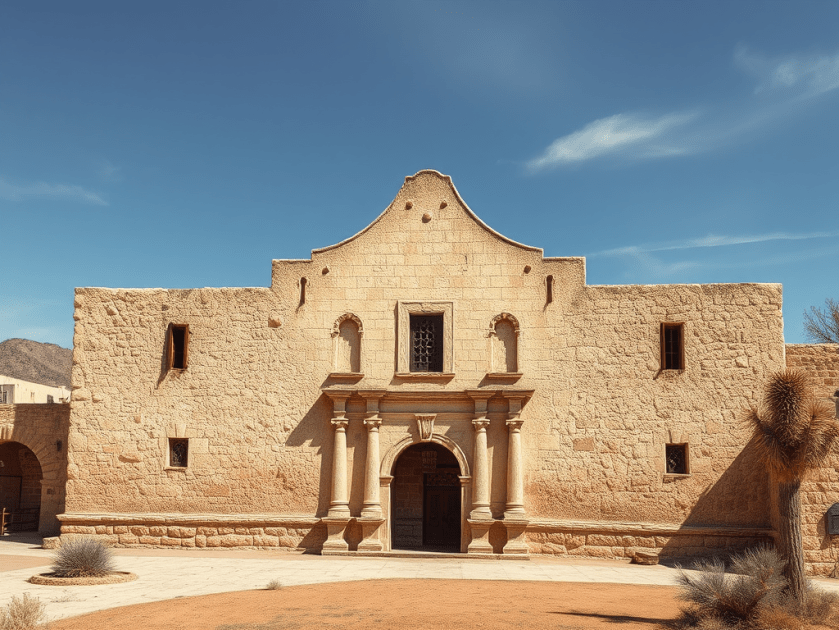
Are we waiting for another Colonel Travis to draw the lines for us? Have you admitted you need to think about those now, like it or not?

A public school teacher told me today she had decided she would obstruct any immigration authorities who tried to take her students – children – from their classroom. She has admitted to herself what is possible, even as horrific as it sounds, and she decided where to draw her line.

Where is your line?


“Good? Bad? Who Knows?

There’s an often told Chinese story, “Good or Bad, Who Knows?” about a farmer, his son and his horses. The farmer used an old horse to help plough his fields, but one day, the horse escaped and galloped off. When the farmer’s neighbors offered their sympathies to the farmer over the bad news, he simply replied, “Good? or Bad? Who Knows?”

As it happens, a week later, the old horse returned and brought with it a herd of horses! This time the neighbors congratulated the farmer on this good fortune. Once again, though, he replied, “Good? or Bad? Who knows?”

As it happens, a few days later, when the farmer’s son was attempting to tame one of the wild horses, he fell off the horse’s back and broke his leg. Everyone thought this was very bad luck. The farmer’s reaction again was, “Good? or Bad? Who knows?”

Some weeks later, then, when the army marched into the village requiring every able-bodied youth they found to enlist, they found the farmer’s son with this broken leg and he was not drafted.

“Good? or Bad? Who Knows?”

Banner Week? Week From Hell? Who Knows?

It was a banner week. Or the week from hell. Depending on when you asked me. Start seminary. Check. Get divorced. Check. Buy a house solo. Check. In one week. Ugh. Scheduling all three in one week had not been my choice: the seminary starting date was set, but the other two were simply the luck of the draw. I agreed because I wanted to be done with those moments where legal experts, signatures and explanations of terms and fees were laden with shame. Time to move forward.

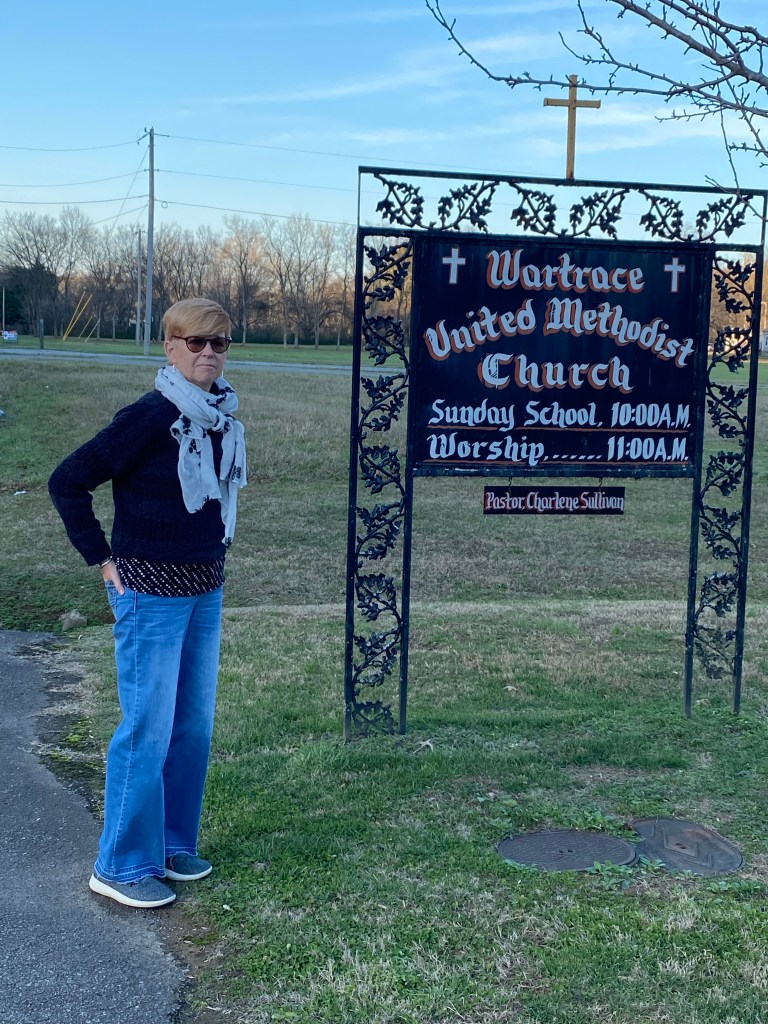
Thus, on a Monday morning in 2003, I began what would be a four-year run at Vanderbilt Divinity School, one of many steps to ordination in the United Methodist Church. I had already been serving as the pastor at a small United Methodist Church. For seven years, I’d been what the UMC calls a Local Pastor, meaning I was the only pastor for that congregation and licensed (given authority) to preach, teach, marry, bury and serve communion for that congregation. During that time, I attended classes offered by the church but all the while I was waiting until my sons got a bit older before entering seminary and moving closer to ordination. I served at Wartrace United Methodist Church in Greenbrier, Tennessee, while living in Portland. Portland, Tennessee, lies about 30 miles from the church to the west and nearly 45 miles north of Nashville where the school is located. For those four years, the daily trek between the three locations would be my own little Bermuda Triangle, and I would clock 40,000 miles each year, though God knows I hated driving.

God also knew that, when I was called into ministry, one of my biggest concerns was that I swore “like a sailor.” How’s this gonna work I wondered? God held my tongue, though, and miraculously, only one time did an obscenity escape my mouth while I was in front of anyone in more than a decade. (I’m gonna blame campus ministry and later working with combat veterans for my language eventually going south again.) 

Back to that week. I started seminary and the daily drive back and forth forth and through the back roads. I also would close on a house on Wednesday of that week, my first solo home purchase. Though my husband and I had bought two houses together, I still found the process baffling on my own. With the help of a patient agent, I got there though and much to the relief of my youngest son, we were staying in our little town which meant he could finish high school with friends.  More importantly, at least to him, we weren’t going to live in a trailer, apparently a fate worse than any other his teen brain could conjure.

I closed on this house alone on Wednesday after classes because the day before, somewhere in the midst of visits to shut-ins or the hospital and more orientation for my new Vanderbilt classes, I went to court to finalize my divorce. The court appearance was still required then and ours was early in the morning on that Tuesday. I drove down the ridge and sat in the courtroom as the judge appeared and called couple after couple to stand before him to ask if either had any other concerns or if they could agree to the final settlement.

Couple after couple said yes. Some answered quietly and sadly. One or two barked their answers as they stared at their soon-to-be exes. We were last except “we” weren’t there. The judge moved the process along fairly quickly so it was only 9: 15 or 9:20 when our names were called, but my soon-to-be ex was nowhere to be found. I went before the judge, wondered a minute or two whether or not I could change the agreement since my husband wasn’t there yet, then answered. “Yes, I am in agreement to the terms we negotiated with the help of a mediator.” 

And then I was divorced. Something I’d never believed I would be. My parents were not happy together, but they stayed married. His parents struggled too but they also were still married. I had never imagined myself divorced. Of course, I never imagined in my forties I’d be preaching or attending seminary and studying theology and Bible and the elements of worship or prison ministry, either, but there I was in classes 9 a.m. every day of the week suddenly. Even nine years earlier, it had not yet entered my mind that I’d be standing in a pulpit trying to help a congregation feel closer to God OR divorced OR buying a home as a single mom. I answered yes, the gavel hit the wooden block on the judge’s bench, and we were done.  

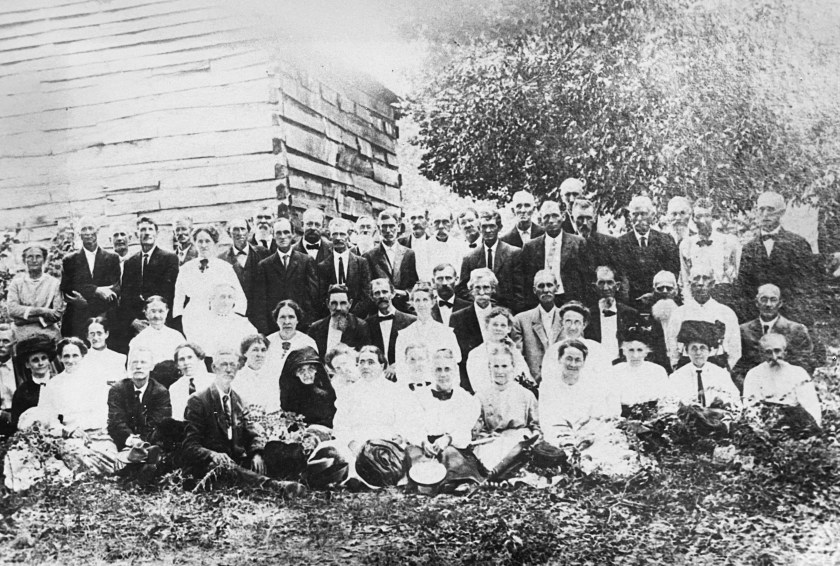
Wartrace United Methodist Church was approaching 150 years old when I went there in 1996 and the photo at the left is in front of the original building, taken around the turn of the last century.

I next saw my now ex-husband again as I walked out of the courthouse around 9:30. He was just then walking in a bit late even though he lived in the same town as the county courthouse. I had driven some thirty minutes down the ridge to get there.

“Are you here alone?” The judge had asked me before declaring us divorced. 

“Yes, sir.”I had said, “It’s appropriate,” I explained, “It didn’t feel like he showed up for the marriage so I guess there’s no reason to expect him to show up for the divorce.”

The judge frowned, but declared I was no longer married to the man I’d expected to live with forever. I used to tell friends I imagined fondly the two of us walking hand in hand when we were elderly. Perhaps he’d wear a beret; I’d once seen an elderly couple walking together and the man wore a beret. They seemed to walk as if that was simply the most natural thing in the world. The two. Together. 

We’d walked through life together but, ironically, we had never actually taken many walks together until our twentieth year of marriage when we were in counseling and needed to talk out so much.  The only reliable privacy we had was to go for walks in the neighborhood so we could talk, or argue, without our sons needing to hear it all. I lost about twenty pounds that last year from stress and walking. I’d love to say I never found it again but that’s a different post.  

I stopped briefly on the steps leading into the courthouse as my now “ex” husband entered, looking at me quizzically. 

“It’s done,” I said, and he frowned. 

“Do you want some coffee?” he asked. 

My turn to frown. “Pass, “I said. “Heading to class.” 

“How’s that going?” he asked, He’d finished his own doctorate while we were married and was none too happy to be paying me alimony while I got my Masters of Divinity, but he also liked academia and worked in it, so he was happy to chat about that if I wanted. I didn’t. 

My day would be filled, thankfully, with the business of becoming a Vanderbilt student, and the myriad tasks that entailed would keep my mind occupied that day, I hoped. As soon as I got in the car, though, I wondered if I’d missed a chance. I should have planned to meet up with a friend and get drunk or find a rebound relationship or get a tattoo, I thought. Was I missing out on the chance to be self-destructive and not be judged? Damn.  

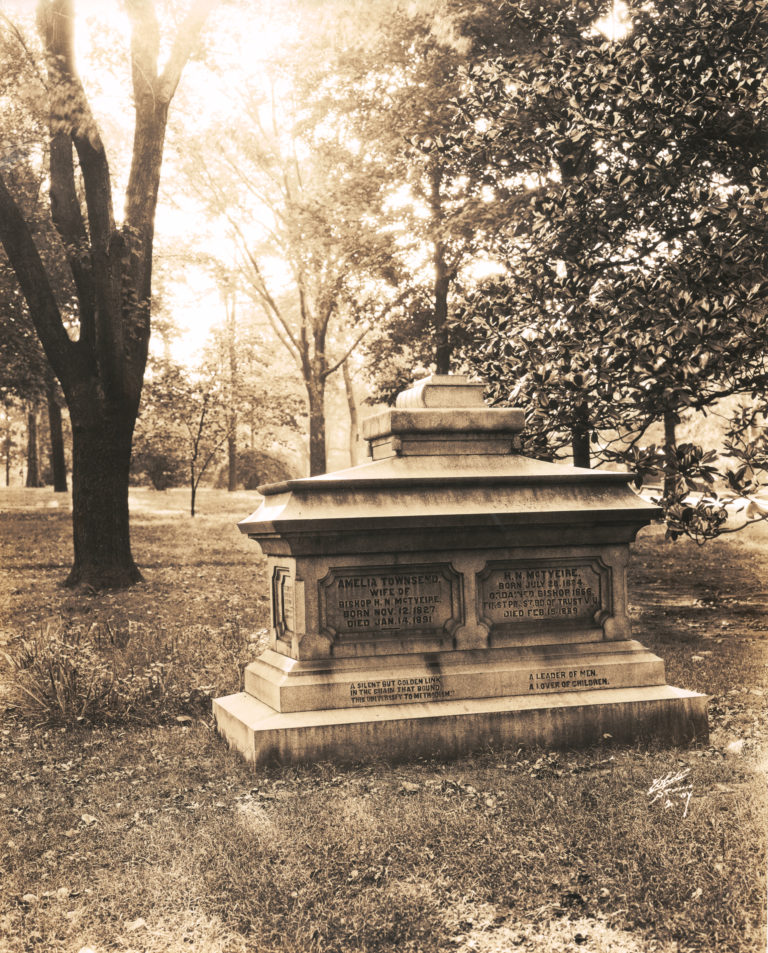
I drove silently to the campus for more paperwork. Classes began on Wednesday and honestly, at the time, it felt like they would be a welcome relief. Before that, there were school loan papers to sign, books to buy, an ID to be photographed for; time to don my student pastor identity. Orientation day at Vanderbilt Divinity School was, of course, as was the entire week, played out in the muggy heat of August in Tennessee. Sadly, that all required I move about the campus in the heat dressed as a professional without looking wilted. Complicating the day for me was the layout of the campus with the walks between buildings. Those walks meandered through the beautiful campus, but not in any grid-like pattern. While pastoral on cooler days, the campus on that steamy day seemed to confound me every time I had to leave the Divinity School quad to visit another building. The paths between buildings curved and intersected and wound around various statues and even the stone crypt of Bishop William McKendree, who, I would learn, was the first Methodist Bishop born in the USA and credited with establishing Methodism on what was the western frontier in the early nineteenth century. McKendree UM churches dot the countryside in Tennessee, Kentucky and Missouri. He died near Nashville while visiting family and in 1876, his remains were interred in the grounds of Vanderbilt University, along with those of other Methodist bishops, in part because the school originally was created to help educate Methodist ministers.   

View of the gravestone of Bishops McKendee, Soule and McTyeire, and Amelia McTyeire, Chancellor Garland, and Dean Thomas O. Summers in 1925. Vanderbilt University Special Collections and University Archives photo archives PA.CAF.GRAV.002 (https://www.vanderbilt.edu/trees/mctyeires-grave/)

Pastoral, bucolic, flowering garden beds sat next to benches that encouraged rest and beautiful old stone buildings invited meditation, but those paths seemed designed to confuse me even though I had grown up reading maps. My father, who helped survey the paths for hundreds of miles of Missouri state highways, taught us how to read maps early, and every year at Christmas, he presented us each with the state highway version of “bling,” a new, revised state map. I was always particularly gifted at directions and maps; I corrected pathways to destinations regularly. It was a gift that I could tell you how to get “there.” Not that day, though and not in that place. The Vanderbilt campus walkways, I soon discovered, curved and meandered enough that, on at least three trips on that sweaty afternoon, I wound up at the wrong building in spite of the decorative campus maps posted prominently. I guess the designers felt students needed to be lost more often. At one point, after finding my campus mailbox, I followed a group who all said they were looking to get campus ID’s next. One by one we got pictures taken and laminated. Mine was a witness to my defeated state on that afternoon. Perspiration matted my hair and my cheeks were red from the heat. The bad news was no one would recognize me in that picture. Perhaps that’d be good news one day. My query about retaking the photo on another day was met with a glare. The clerk was spending her afternoon in the air conditioning, I thought. What’s her issue?

I moved along, aware a library card still needed to be acquired and a locker in the Divinity School building as well. If I could find the library, the Divinity School would be close, I reasoned, but the heat was getting to me. At one point, I stopped into the food court to find some lunch but found the choices bewildering and the process moved more quickly than I was prepared to navigate. Students who’d only recently attended undergraduate classes jostled me and moved around me and the hot food worker glared until I took my tray and moved to the salad bar. A few minutes later, I stabbed at my salad and wiped the sweat off my forehead trying to unstick my bangs. As I dabbed at my sweaty forehead with a napkin, another worker, a woman, stopped at my table and put her hand down and said, “You look like you need to put your head on the shelf now, dear.” 

“I’m sorry?”

“Put your head on a shelf. Take a break? Stop thinking for the day, you know.” 

I frowned.

“Rest your mind, sweetie,” she said and she moved on. Words of wisdom from a stranger, but I didn’t have time to rest yet; that’d come years later. 

On my way back to the library, my phone pinged to tell me I was late for an orientation I’d completely forgotten about, and I stopped and looked around me, lost again. I felt old. I felt like I wasn’t going to be able to keep up. How would I manage classes and single parenting and being the pastor and preaching and visiting and paying for all those books and driving? It was too much. What was I thinking? The next day I’d be signing papers to buy a house on a part-time salary and school loans. The students around me were twenty and thirty years younger and most were accustomed to the changes on college campuses that threw me, like salad bars in the cafeteria and computer charging stations everywhere. Those students didn’t seem lost.

I sat down on a bench, defeated. I would have just quit right then and there, if I could have found the damn Divinity School building.  Obscenity doesn’t count if no one hears you, right? I would be walking into the orientation with the other 60-plus students who would be in my cohort for three to four years. Only I’d be late, sweaty, disheveled and feeling defeated. I sat on a stone bench and looked at the backpack I had been steadily filling with more and more, mostly because I couldn’t figure out how to make the locker work in order to leave some of the many required books in there. Tears filled my eyes as I began to pray.

“I can’t do this, Lord. It’s too hard. I don’t know what I was thinking. I was foolish to even consider I could manage. I still had a house to close on and God knows that process never made sense to me. How am I gonna manage that AND Divinity school? I can’t even find the damn school.” I was trying not to just start sobbing.

I took a breath and looked up at the elderly and majestic magnolia tree shading me, one that had been planted with a couple of hundred other southern magnolias in 1895 by Bishop McTyeire, one of the bishops buried near the Divinity School. I squinted to look through the dark leaves at the sun shimmering and the cross…. Wait. What?

There was a cross on top of that building. 

Suddenly, I was laughing as I cried. Of course, there was a cross on the top of the Divinity School Building! My guess is that everyone else knew that, except those of us sitting in our self-pity piles. Geez. Yeah, I’ll cop to a tendency to self-pity, fueled by a glass half full mentality. Sometimes I’ve wondered how I ever got anything done, but, then again, I’ve always been teachable. I wasn’t alone like I felt I was either, but there’s seldom been room for or recognition of any company in my self-pity dinghy.

In that moment, sitting on that concrete bench, though, laughing at the shiny cross against the blue sky, I kicked myself. Had I taken a moment to look up and to seek God in the midst of my exhausting week, I would’ve seen it. Like on the steeple of a Christian church in most places, shiny and bright, that cross topped the Divinity School building, there to guide us all day back home, like the North Star. I would have seen it if I had just looked up, if I had started my days with an awareness of God’s presence.

The rest of the week would be mostly a blur, but by time I stepped back into the pulpit that next Sunday, I would have “celebrated” or “survived” three momentous life changes in the course of one week. I was living in a new home, divorced, and a seminary student, but I was still standing, gratefully. I shared with my congregation about looking up and seeing the cross and realizing it had been there all along waiting for me to notice. I also shared the image of putting my head on a shelf. Both would carry me through the next four years of school as well as the decades I’d spend in ministry, reminders of who brought me to that moment and who would guide me through all the struggles, if I would pay attention.

Drawing the Circle Wider: Prison Ministry and Family

The last time I read the Scriptural passage about the woman who insisted Jesus heal her even after he likened her people to the dogs under the table, it made me think of my youngest son. And jails.  For several reasons.

"Leaving that place, Jesus withdrew to the region of Tyre and Sidon. Just then a Canaanite woman from that region came out and started shouting, “Have mercy on me, Lord, Son of David; my daughter is tormented by a demon.” 
But he did not answer her at all. And his disciples came and urged him, saying, “Send her away, for she keeps shouting after us.” 
He answered, “I was sent only to the lost sheep of the house of Israel.” 
But she came and knelt before him, saying, “Lord, help me.” 
He answered, “It is not fair to take the children’s food and throw it to the dogs.” She said, “Yes, Lord, yet even the dogs eat the crumbs that fall from their masters’ table.” 
Then Jesus answered her, “Woman, great is your faith! Let it be done for you as you wish.” And her daughter was healed instantly."  Matthew 15:21-28 

First, my son is a lawyer, working as a public defender.  He’s the guy who gets assigned to people who don’t have money for a private attorney when they have to appear in court.  He thinks it’s a hoot that he can call his mom whenever he wants to and say he’s headed to jail.  Haha.  

Second, he LOVES to argue.

And third, he likes rules. To be specific, he likes knowing where the line is.  When he was younger, we’d tell him the rules and he would make us hold that line.  We’d tell him not to step over that line and he’d put his toe right up to it and ask, “You mean this line?”  For the longest time, his constant testing of our boundaries and rules for him was frustrating. After a while though, we realized he really DID want to know where the line was because rules helped him feel safe, helped him know where he stood.  That may be WHY he became a lawyer, that love of rules.  He ate all that up, all those laws and statutes, just his cup of tea.  So he likes being a lawyer, at least most of the time, likes helping folks who find themselves in trouble but can’t afford a private lawyer.  

We’d tell him not to step over that line and he’d put his toe right up to it and ask, “You mean this line?”

So most of the folks he defends have very little means and many of them don’t get bailed out while they wait for their day in court.  That’s when he calls mom and says he’s going to jail.  It’s been frustrating for him often but every so often, it is also quite rewarding.  For one exxample, a couple of years ago, he was visiting a young client at the jail and the client asked how old my son was.  He shared that he was in fact turning 32 on that very day and the client was floored. “You mean you have to come here on your birthday?” he asked. “Are you gonna get to have a party or a cake later?” he asked. “Probably not,” my son said, shrugging it off. He didn’t think about it again until he saw the young client again a couple of weeks later and the client, in his twenties, pulled a folded up napkin from the pocket of his orange jumpsuit and unfolded it to reveal a cookie.  “This is for you, man,” he said.  “Because you didn’t get a birthday cake.  I saved my cookie from lunch for you.”  My son was speechless, which is significant for him. He’s never at a loss for words.  

Photo by RODNAE Productions on Pexels.com

It’s not a stretch, though, to say that most of us are not terribly comfortable with courts and jails and prisons so I don’t feel like I’m bragging when I say my son is comfortable going to jail because his mom went to prison.  No no – don’t get me wrong.  I went to prison the way he goes to jail.  

When I was in seminary, we were offered classes that met in Riverbend Prison, classes that were populated half by seminarians and half by inmates.  We studied issues surrounding prisons, legal systems, punishment and forgiveness.  I did that for the entire time I was in seminary, every week, and I can tell you I learned a great deal and came to know about a dozen of the prisoners pretty well – guys in for everything from murder to arson to rape – all of whom were taking the same graduate level classes the seminarians were taking.  When it came time for me to graduate, then, I was invited to continue visiting by getting on the visitation list of one of the inmates.  When you visit Riverbend, like lots of state prisons, you visit during set hours in a large open room and there might be as many as fifty inmates also having visitors in the same room, all seated on molded plastic chairs, all attached in groups of twos or threes. At the corner of many of the sets of chairs are the all-valuable tables.  Tables are at a premium and desired because, all around the walls of the room are vending machines for snacks. Most of the foods in those vending machines are cheese and peanut butter crackers, tuna fish sandwiches and peanuts and candy. None of the items appealed to me much, I realized, because the daily food I had was better and more varied than those offerings. To the men who lived there, the stale hamburgers were a real treat.

Visits generally were on the weekends and lasted several hours; if an inmate had visitor privileges (and those were earned), they could possibly see family or friends who’d been approved by the prison system on Friday evening, Saturday morning and/or Sunday afternoon, for example. Visitors were subject to body searches and metal detectors and not allowed to carry in much, not even key fobs and certainly no phones.  The nice thinga bout the open room was that you can easily visit with several inmates at the same time and that’s what some of us from the classes did.  Usually on Friday night or Saturday morning, we’d go to visit one of the inmates who had been in the class and be able to see several of them and catch up on their lives and share about ours. 

While I always visited as a friend and not as a minister, the inmates always asked about my ministry and the church I was serving and, for a couple of them, it eased the loneliness of not receiving visits from family.  One thing we had learned was that inmates who served their time and then were released were 5-10 more successful staying out of trouble when they got out if they had continued to have relationships that were positive.  So, we particularly focussed on being supportive of those whose families were not involved in their lives and didn’t visit or call. 

Some of us spoke to one or more of the inmates by phone as well.  They were allowed to have up to ten people they called and most looked forward to having someone to call on occasion to break up the monotony if nothing else.  I agreed to be on the phone list of one of the inmates, who is, by the way, not eligible to be released for another decade, if he lives that long.  It was safe.  For an inmate to call you required a LOT of paperwork and clearances and then when they called, you heard a voice say, so and so from Riverbend Prison is calling you, do you want to accept the call?   I was careful and the school and the prison were careful but I know it still made people nervous who knew me. That included, not surprisingly, my parents, who were at that time retired and who worried alot about me anyway. 

Mom and Dad were especially struggling with my being friends with inmates because neither of them had ever even  met someone who had gone to jail, not even for a DUI, and they didn’t even know anyone else who knew anyone who’d gone to jail.  It was too foreign a concept and just not acceptable. So one weekend I went to Missouri to visit them and told them I was visiting an inmate and he was allowed to call me, they were angry.  I assured them that inmates could NOT call cell phones and they only had my home phone number in Tennessee so they could not call me while I was at my parents home in Missouri.

For an inmate to call you required a LOT of paperwork and clearances and then when they called, you heard a voice say, so and so from Riverbend Prison is calling you, do you want to accept the call?  

Nevertheless, while I was there with them, while we were arguing about whether or not this was acceptable behavior on my part be friends with some guy who was sitting in a prison cell, the phone rang and my mother answered, then handed me the phone angrily.  It’s your criminal friend, she said. I took the phone trying to answer while also explaining to them that it couldn’t be him because he couldn’t call me at their house when I heard the voice on the other end say, “…an inmate from the Greene County, Missouri, jail is calling.  Do you want to accept the call?”

I realized suddenly that call was not coming from my friend in Tennessee but rather from my brother, who apparently had been arrested the night before.  And suddenly, the inmate in Tennessee – whom they were sure was dangerous and not to be trusted – was sitting on a hard metal bench next to my brother, their son, in a jail cell. And just like that, the circle of their care and compassion grew a whole lot larger.  

My own circle of care and compassion grew exponentially because of my time visiting prisons. When I was sent to another church, turned out that nearly one quarter of the folks in the church had family or friends who had served or were serving time and it helped my ministry greatly that I knew first hand what it was like for them to constantly to worry about the safety of their loved one, to struggle financially because of lost income, to struggle not to be ashamed of what another person had done, to wonder how things would be when they returned home.  

Those families were grateful when their pastor talked then about visiting the prison regularly. For the first time, their pastor was there with them when they sat in the visitation gallery on Christmas Day or Easter or celebrated with them when their son got his GED in prison, sharing hopes he could change the path he was on.   Their pastor seemed to speak the same language and was one of their people, one who at least accepted and cared about their “kind.”

All of that is what leads me to one of the most troubling aspects of this story in Matthew 15: how the disciples AND Jesus treat this woman, who is not one of them, not one of their “kind.”

We find first that Jesus refuses even to answer the woman, then denies he has anything that she could possibly want and then even likens her to a dog.  This is definitely a troubling passage.

 We may believe that Jesus was “truly human,” but usually we don’t want him to be too human. So over the years, people have tried to clean up this story. But Matthew doesn’t clean up this story.  He lets us see this encounter in all its unvarnished glory.   

The woman is a Canaanite woman – and she is NOT one of Jesus’ “people”. But he is in her part of the world –  Tyre and Sidon. This is her home.  

Nevertheless, this woman seems to know who Jesus is. She has tracked him down in order to ask him –  to beg him –  to heal her daughter who is tormented by a demon. This is a desperate woman and apparently,  comes at Jesus shouting. The disciples want nothing to do with her and want Jesus to send her packing. 

She isn’t going anywhere, though. She may not be “their kind,” but she somehow knows enough about this healer to find him and call to him in the language of the Jewish prayer: “Have mercy on me, Lord, Son of David.” She has come prepared to fight for her child, it seems. 

Even so, Jesus isn’t even impressed by her using the language he knows is not hers. “I was sent only to the lost sheep of Israel,” he tells her, and still she doesn’t give up.

 “Lord, help me,” she begs. This is where Jesus says what we really wish he hadn’t said, “It is not fair to take the children’s food and throw it to the dogs.” But this woman is feisty and stubborn.   Having a special needs grandchild, though, means there’s one thing I have learned about people who know their children’s lives are in danger –  they will get in your face if necessary – they do not care if you do not like it.  That’s their baby and the hair on the back of their neck stands up every time someone or something threatens that child’s safety.  The life of this woman’s daughter is at stake. She does not back down at all but throws Jesus’s words right back at him: “Yes, Lord,” she says, “but even the dogs eat the crumbs that fall from their masters’ table.”  

And all of a sudden, just like that, Jesus changes his tone. He says, “Woman, great is your faith!” 

Interestingly, she hasn’t made any confession of faith, though. There’s no sign she’s been converted or planning to become a follower. She simply told him what she had heard – what many in the region had heard – that there had been by that time more than one instance where thousands had been fed when they came to see this healer, this rabbi called Jesus.  “I’ve heard that there were enough crumbs to feed thousands,” she seems to be saying.  “You can’t tell me there’s not enough for me and my daughter.” 

That’s what I believe Jesus finally heard and that’s why he not only changes his mind,  but he changes his mission. “For saying that,” he says, “you may go — the demon has left your daughter.”  And just like that, the circle, the line, that defines his mission on earth is widened to include everyone.

It is disturbing to some folks to think of this episode, such harsh words coming out of Jesus, but one thing was clear that Matthew wanted his listeners to understand: in that encounter, Jesus was converted – he understood something he had not understood before – and the circle of his mission and ministry was much larger than he had realized before.  The Kingdom of God had been revealed to him in the face of the Canaanite woman. The Canaanite woman taught Jesus that she and her daughter and so many others like her deserve more than crumbs. After this encounter Jesus went on to feed those who had not yet been fed, went on to include everyone in God’s kingdom to come.

We saw here something that ought to surprise us, certainly surprised me the first time I saw it: Jesus drew a line – as surely as if he had used a stick to draw a line in the sand and said, this, what I am sent to do, is not for you.  I’ve done enough. I am tapped out. I gave at the office.  I don’t have any more energy to help anyone else, to get to know anyone else, to include anyone else in my circle.  He dismissed her and not in a kind way at all.    

IF we are pushed, we will get ugly too, though; we’ve been known to let others see our disdain for that person who does not deserve any help or who needs to go somewhere else to find it.  “WE” don’t know people who go to prison and we don’t want to….

At least not until one of them is sitting next to our child in that jail cell and suddenly our circle is a little wider than we knew.  Any time this happens, it can be frightening, and it can feel like we are out there where we don’t feel so safe any more, and we might be really unsure about how this is gonna go.

If we look again, though, really look, chances are good we will see God in that cell, sitting there with all of them, sitting next to our child and all of them will be sharing cookies.  Amen

4 responses to “Drawing the Circle Wider: Prison Ministry and Family”

  1. Nancy Bradshaw Avatar
    Nancy Bradshaw

    Jodi, sitting here on the deck of a cruise ship. My eyes are watering and not from the sun but from the eye opening beauty of this piece that you wrote which reminds me that Jesus was certainly human as well as divine and that the divine is also in me , in you and all humanity. We just need to be reminded. Thank you for doing just that. ❤️

    Like

    1. Jodi McCullah Avatar

      You are a poet, dear friend. Thank you.

      Like

  2. a. getty Avatar
    a. getty

    Amen.

    Like

  3. Nancy Avatar
    Nancy

    Your ability to unite seemingly unrelated life experiences with a scripture and a message is your special craft, priceless. I bookmarked this weeks ago and I’m glad I came back to it. Forever faithful are we, Amen.

    Liked by 1 person

Leave a comment

Boots in the Trunk

Some of the greatest moments in life, I believe, are when you find out you are not the only one who does “that.” You’re not the only kid in class who likes to blow bubbles in her chocolate milk or the only student who questions why you should wear a dress to school on picture day when you hate wearing dresses and no one ever sees your dress because you’re always in the back row for pictures. Once, on a phone interview for a job in Florida, I mentioned that most of my friends “up here in the north” seemed to believe that living in colder climates builds character and people who want to live in warmer places are just lazy. The employer simply said, “Come on down; you’ll find plenty of hardworking folks here; they just happen to like burying their toes in the warm sand.” I remember thinking, “I’ve found my people.”

One of my most affirming moments occurred a few years ago while watching a movie that was set in southern California. A woman was sitting in heavy Los Angeles traffic on her way to work when the road began to shake and seemed to begin rolling. Her first response, once all the motion ceased, was to pop open her trunk and change from her fashionable black pumps into a pair of hiking boots. She evidently kept in her trunk for just such an emergency, or at least the character did. She must have known she’d likely have to walk through streets filled with debris, and the boots were just one of the survival tactics she’d either learned firsthand or been taught. She was prepared.

I remember nothing else now about the movie except that I wondered if she also kept some water and maybe a first aid kit and snacks in her trunk. What I loved was that she wasn’t some hiker out on the Appalachian Trail for weeks; the character must have been created by someone familiar with earthquakes who understood that we never know when or where we’ll need to run for our lives. It would be several years later before I would learn that boots in the trunk was a common response for survivors of trauma and abuse. I don’t know if the woman in the movie was supposed to have grown up with a scoutmaster for a father, or if she was a trauma survivor, but she embraced the boots in the trunk. She didn’t think it was weird.

Boots in the trunk, a “go” bag by the bed…

I was a teen when I realized not everyone slept with a “go bag” next to the bed in case a speedy escape became necessary in the middle of the night. After five decades of being teased by others for it, though, I was especially grateful to finally learn that lots of other trauma survivors sleep with shoes under the bed, a wallet or purse with meds, money and that handy Swiss Army knife by the bed, so that in an emergency, they do not waste precious survival and escape time locating footwear or a flashlight. Finally, I could stop being embarrassed that I preferred to sleep in something I knew I could wear outdoors in case of a fire or an earthquake or tornado. I could stop hiding the fact that I think about not wanting to have to run into the dark barefoot and thus be even more vulnerable in a crisis. My “go bag” has been a reasonable and healthy response to the lessons of my childhood where I was taught to be afraid of the dark and it is also a reflection of a strong instinct to survive. Instead of being embarrassed that I startled so easily, I became proud of my Swiss Army knife and I became grateful for those survival instincts. Plenty of children do not get out.

Escape Artists

I know some people who were abused or whose childhood was traumatic seek vengeance and long to hurt the one hurting them, and even hurt others in an attempt to ease their own pain, but my instinct has always been to escape. When my siblings and I were young, they seemed unaware that following the rules meant escaping the belt or the hair brush.  As we grew older and taller, I knew to stay well away from my parents’ and even my siblings’ arguments because they so easily slid into the violent responses we’d seen modeled. I mostly escaped broken bones and stitches by escaping as a child and teen. Later, I applied the same tactics to job losses and failures and broken relationships because I knew when to escape, and how to – most of the time – make an exit before the explosions.

Because I could escape, none of their crazy dust landed on me. I know without a doubt that is one reason I survived and got this far. Too many children who grew up like we did never get very far from the crazy, never get too many steps out the door.  Maybe that is because they had not managed to stay arm’s lengths away as children and teens; maybe their scars left them less equipped to walk away when they were old enough; maybe their backpacks were just too heavy to carry another step.

Sadly, few if any adults were able back then to recognize this behavior as a survival technique and, thus, necessary. I once attended a junior high church retreat.  Our parents sent us away to every camp and retreat that was offered. My brother and sister hated those camps. In contrast, I eagerly grabbed a bag and hopped into whatever car was taking us away from whatever house we were living in at the time. At that particular junior high retreat, though, the girls’ leader accused me of being like a “wolf.” Because I was being quiet, she accused me of preparing to “pounce, to attack,” when the opportunity arrived.  I’m really not sure what kind of attack she thought I was planning. I remember just staring at her while she accused me of cooperating with some kind of evil. She was only half wrong, though, which meant, of course, that she was half right. I wasn’t preparing to pounce, though; I was preparing to escape, trying to figure out when that might be necessary.  Sadly, it felt like escape was too often necessary and, after a while, became a way of life.

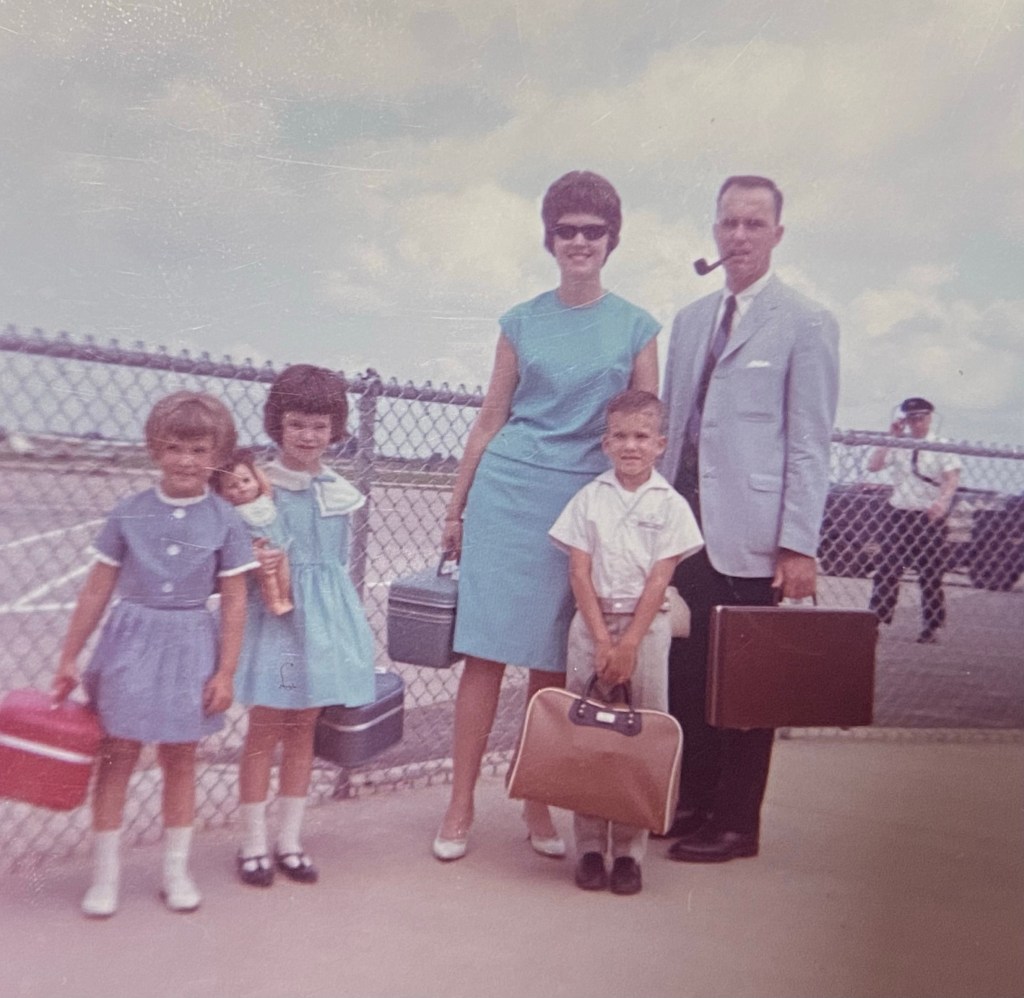
I wasn’t preparing to pounce, though; I was preparing to escape. Sadly, it felt like escape was too often necessary and, after a while, became a way of life. Photo, 1964.

A counselor once asked me how I had survived the turmoil, upheaval, illnesses and chaos of my home. Since I’d already told her about how often I had simply walked away, I was confused. I know now she wanted me to relate to her how I knew when to get the hell away from my mom or dad or brother or sister or myriad boyfriends. The fact is, in the beginning, I became a girl scout. Well, actually a boy scout. Okay, both.  Being a “girl scout” meant being good. Being good meant usually no one noticed me and, if I followed the rules, usually no one would hit me.  I would certainly never give them a reason to hit me.

Being a “boy scout” meant being prepared. Since we had moved so many times before I was sixteen, it wasn’t like we didn’t have practice packing. I kept my bag and shoes by the bed because they kept me feeling like I had some power to escape if I needed. I knew when to leave because I was what counselors called “hypervigilant.” I watched folks around me like a hawk. That was what concerned the youth leader at the junior high retreat; she did not recognize the behavior as a survival tactic developed over time in response to threats; it was somehow easier for her to imagine a teen as evil than to consider one of the parents in the church might be a predator, I guess.

Live Like a Refugee

The more I worked to find healing over the years after I finally escaped my family home, the more I found like-minded souls who also seemed to move about more than others. My first husband and I were both nomads when we met. “You Don’t Have to Live Like a Refugee” by Tom Petty was the soundtrack of both of our lives at the time. We had both been traveling quite a bit when we separately landed in a writing class and met; even nomads and escape artists settle down for the odd semester. By then, we’d both traveled all over the US and overseas and had both served in the military. We decided to settle down together, to create an alliance, to have each others’ backs; we might have imagined at the time that we’d be more settled, but we found then there were some things about being nomads we still liked and so we promptly moved to California, then to Japan, then to Tennessee, anywhere but where we grew up. So much for no longer being refugees.

Changing Tactics

There came a time, however, when I no longer had the luxury of escape, of running, because our two sons meant there were others I needed to protect and escaping might mean leaving them behind and that was not going to happen. Needing to protect others complicated escape plans, for sure. We taught our boys never to climb up a play structure if they could not make it down without help, to meet up at the back gate if there was ever a fire and we would not let them sleep upstairs until they were big enough to climb out a second story window onto a porch roof and then jump down to safety. Protecting them changed everything. I’d explain it by talking about driving over the huge bridges spanning the Ohio and Missississippi Rivers. We had to drive over both of them at the confluence of the rivers near Cairo, Illinois, every time we went north. Driving over those bridges was frightening enough for me personally but became hellish when I had children and their safety became most important. For myself, to calm my fears as I drove into the monstrous structures crossing those wide and churning rivers, I had developed a bridge survival plan in case the car somehow went into the water: wait for the car to fill up, open the window to swim up and then try to float on the current until I could get to land. With two small children, however, that plan would no longer work. Suddenly, I would need to take two precious little persons with me through that drill and, well, there was not a good time to try to talk to them about that plan and besides, it would most assuredly traumatize them so I prayed extra hard instead that the bridge engineers had done their jobs well and other drivers would keep their distances as we crossed over those bridges.

I still slept with my shoes next to the bed AND I taught my boys as much as possible about safety, but the reality was that escape to survive was no longer always an option. I often still “see death everywhere” as my ex-husband used to say, meaning I am one of those safety-conscious folks that drive some folks crazy. Loving children has helped me learn to stay connected rather than seek escape, though, to find trustworthy people, to ask for help and to allow trustworthy others to help me. Over the years there were a number of folks who definitely helped me when I needed it; reminding myself of their support and encouragement has helped me trust that I can find others and allow them to help, too, if necessary. I needed to learn to choose relationships with trustworthy people and to develop alliances, to stop just trying to survive. I needed to open myself to the possibility that there might be more.

Getting older helped: I started wearing more sensible shoes all the time so boots in the car weren’t major safety concerns anymore!

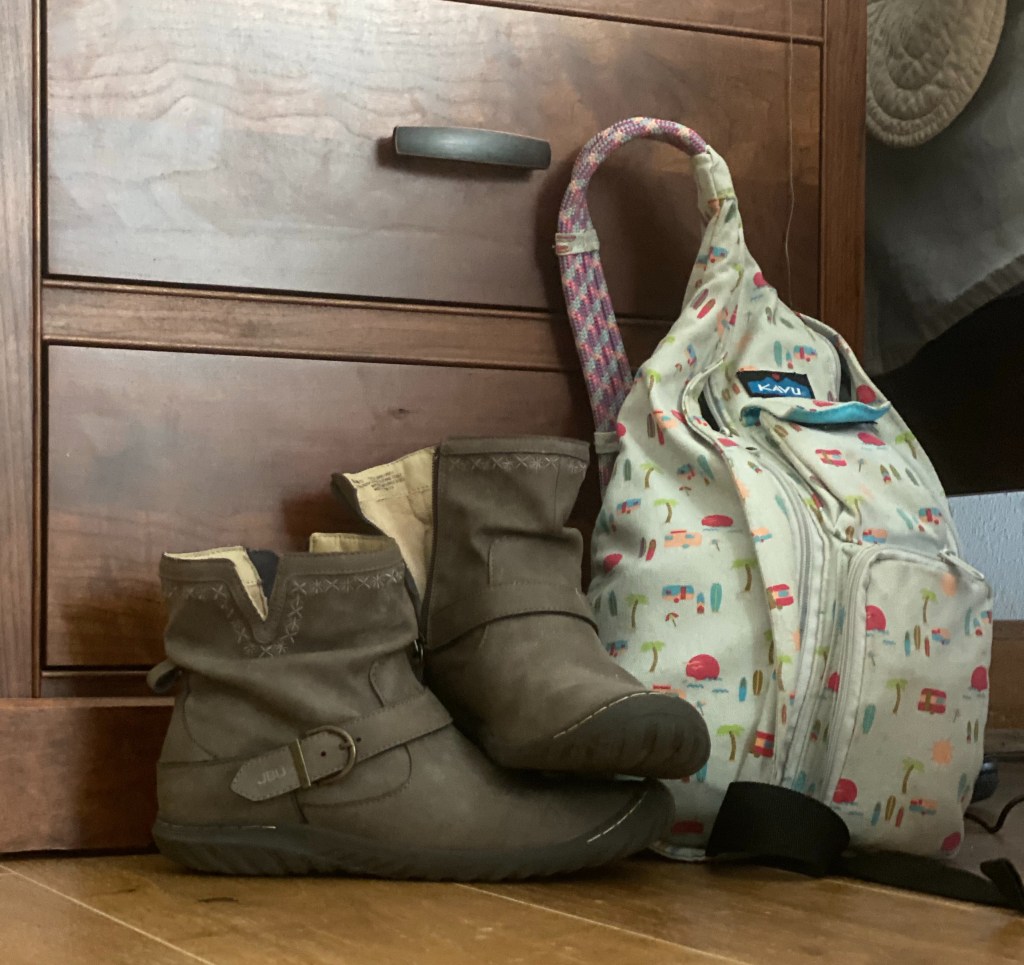
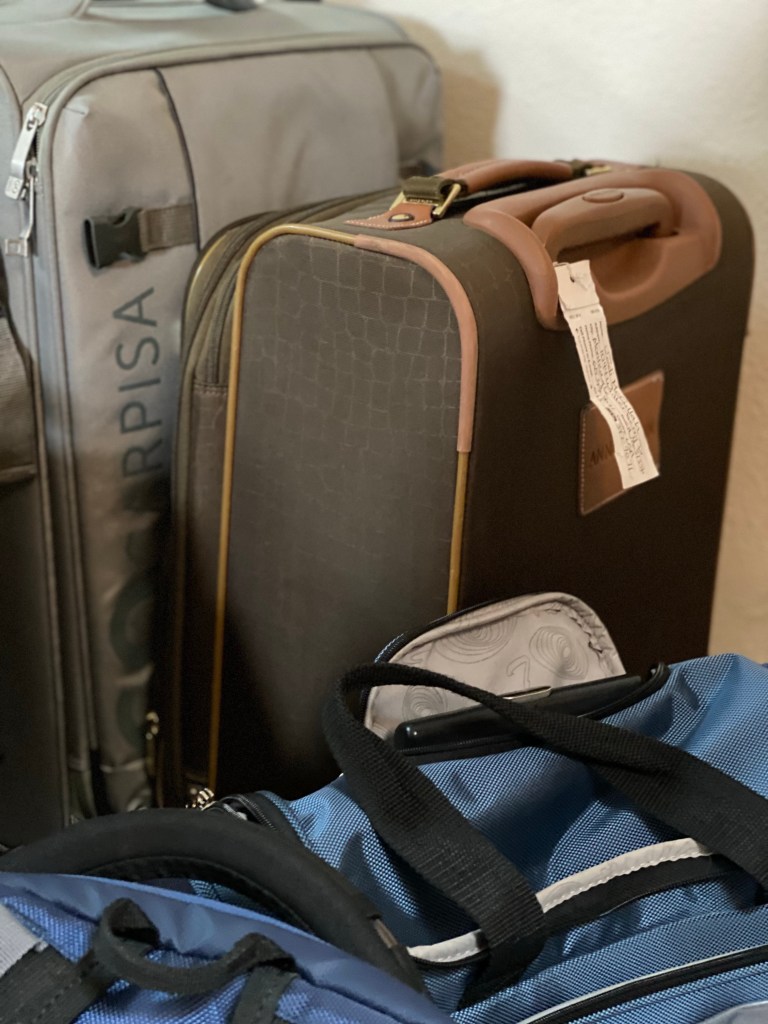
(Photo by Jodi McCullah, 2023. All rights reserved.)

Why, though?

Watching my responses over the years, though, I know, has perhaps caused some folks who know me to think I’m just paranoid or hypersensitive for no good reason. This blog is, in part, an attempt to explain that behavior to those who do not understand. Writing about what has been in that backpack for so long is also for my tribe, for all those other folks who also were awakened in the night by a touch that taught us to be afraid of touch. We share this because we know “just in case” has come before.

I still struggle to say I am proud of all of this. I wish we were still innocents. I wish we did not know what we know. I wish we had different stories to tell. The things we feared, though, were real for us and we did not have the luxury of going through a day without being hypervigilant, without knowing firsthand that sometimes the unthinkable does happen. Sometimes, for some people, the darkness IS dangerous. To survive then, sometimes you do what you gotta do for the time being and, once it’s safer, you can work on growing, healing and learning other ways to take care of yourself. I am grateful, then, for all of you with boots in your car and a pack slung over your shoulder. Maybe it wasn’t always pretty, but we made it.

Because we were prepared, and we escaped, we can live into new possibilities; we can embrace the reality that the frightening place we came from is not all there is out there. (Photo by Jodi McCullah, 2023. All rights reserved.)

As I was writing this, I wondered why the photo below spoke to me and now I realize it’s because what’s around that corner in Venice promises to be beautful and hopeful and exciting. I celebrate all those survival skills, including learning over time that we will find what we need, AND learning to let ourselves ask for and accept help. Good news: there ARE others who do “that.” We are not alone and there are those who love us anyway. Embrace your backpack then or your boots until you don’t need them, then thank them for getting you this far and go see what’s around that next corner! You’ve got this!

Venice, Italy, 2022, photo by Jodi McCullah. All rights reserved.

Leave me a comment: what was in your survival kit?

Leave a comment

Commit = Finding My Nerve Again.

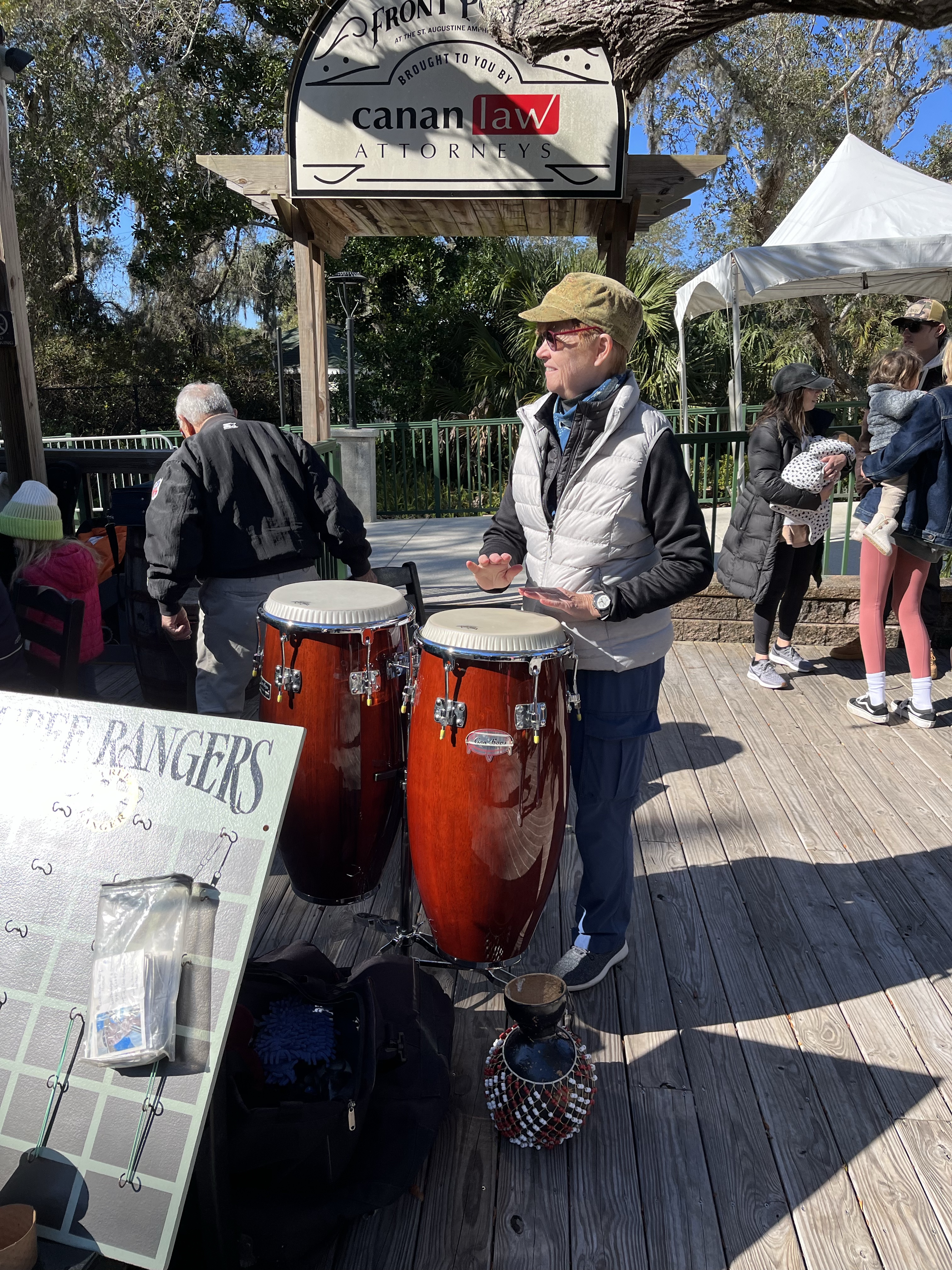
Good news this week from Papa Luie: You are never too old to learn something new! Papa Luie is the conga player who encouraged me to learn congas so I could make music with the Saturday morning music group playing at the St Augustine Farmers Market.

Actually, he said, “Learn conga or washboard. We need both.”

I chose conga, though I was more than a little intimidated. Now he’s teaching me and making a place for me to play music too. The lessons last week centered around some new patterns to practice, as well as three rules: 1) there are no rules for playing; 2) you’re never too old to learn; and 3) ya gotta commit. Papa Louie, whose age I will no longer try to guess, took up playing conga when he was 75. Yeah. Now he’s like my own personal Yoda and that is not because he is a head shorter than me. “There is no try. Only do. Commit… or go home to your recliner,” he said.

Commitment is the theme of the week: commit to not backing away, commit to not being timid but rather putting your back into the return of the ball in a volley, commit to the drive, commit to the first few notes of a verse. Commit or go home.

Photo Courtesy of Doug Mackenzie, Mackenzie Images, 2023

Commitment

Actually, commitment was this week’s lesson ad nauseum. From traffic, bluegrass music, pickleball, and life in general, I heard: Do not back away from what you want to or need to do.

The time is now to speed up a bit more when you enter traffic, to move forward, not backwards when you see the ball coming at you, and to sing out rather than wait for another chance.

Commit = speed up or move over?

As it was, the insistence of several noisy and angry drivers behind me was not so gentle after all, though. I confess they were justified in their angry gestures and (likely)rude comments; I was, in my mind, still driving in Monteagle, our bucolic and peaceful mountain (of course) town and summer home, where rush hour” means six cars, the speed limit on many roads is whatever you want it to be, and meandering drivers share the gravel roads with speeders. We don’t even have a stop light in Monteagle. That’s actually for safety’s sake. Besides the deer, the biggest danger for drivers in Monteagle is fog. We live at about 2000 feet elevation there, and the fog comes in and sets for a spell, has a cup of coffee and lingers far too long in the winter. Uninvited, the fog seems to camp out on our front lawn most of the winter, and, while it is pretty if you’re sitting by the fire looking out, driving in the fog is nerve-wracking for those of us who are already more timid drivers.

Ghost ship in the fog off California Coast
Photo Courtesy of Doug Mackenzie, Mackenzie Images.

The advice they give you for driving in the fog doesn’t help, either: “Roll down your window because you’ll hear the other cars before you see them.”

Driving in the fog 101: “Roll down your window because you’ll hear the other cars before you see them.”

Such dangerous driving conditions separate the timid drivers from the more aggressive ones; some drivers seem to see the fog as a reason to hit the accelerator. Wisdom dictates then that putting a stop light in downtown so some of us might be waiting to start or turn when another driver barrels through would be a foolish and short-lived experiment. Driving in Monteagle, though, usually allows me to meander, to notice who’s at the Piggly Wiggly when I drive by or decide if the line at the pharmacy is too long and I can wait to get those meds tomorrow. Driving in Florida, where we are “wintering,” however, does not tolerate, invite or accept any lack of commitment when I turn onto the road. Meander onto the Beach Highway at your own risk.

Wait, you might wonder: doesn’t being at the beach encourage you to meander? 

That’s the rub, as they say. (Pass the Coppertone.) So many folks now want to live where they can meander that others move to the beach to serve them beers and crab legs, to sell them big beach houses or to build newer, even bigger ones. All those folks are in a hurry; they have zero patience for meandering. The many interactions between those two groups of beach dwellers as well as the struggle many visitors have with being able to slow down while on vacation combine to create what is the social ebb and flow of today’s beach life. Meander onto the Beach highway then at your own peril. You have to commit, to turn onto the road and be ready to accelerate immediately, not after you’ve checked the sidewalks for neighbors out walking dogs. They’re out there dodging traffic themselves as they make their way to the quiet of the actual beach, where we all have permission not to commit to much of anything except meandering.

Commit = Don’t Back Away

“Commit.” Be ready to accelerate. Be ready to hit that ball when it comes your way on the pickleball court or accept being in the losing team most of the time. “Don’t back away,” Steve, my partner in several games yesterday, encouraged me. “It [the ball] won’t hurt you,” he said. (Actually it does sting, but not as badly as always losing or worse being the one person no one wants to play with because you let the ball go by too often.) “Stand your ground,” he said, gently, but with some insistence. “You’re not here to watch, right?” Steve is older than I am, slender and wiry, clearly someone who has always been athletic. He sports a neatly-trimmed beard and is the kind of consistent player I’d like to be.  “You didn’t start playing this game to watch the ball go by,” he says.  Steve makes it look so easy to keep the ball in play without being aggressive.  I find his coaching to be so much more compelling precisely because he isn’t one of the “Every shot is a kill shot” players.  Those guys tell me not to back up and watch the ball go by as well but, in my thinking, they are suspect because their response to aggressive play is more aggressive play. “If the ball is hit hard, hit it back even harder.”  Steve, though, is himself trying to navigate the game by being assertive rather than aggressive, and I really appreciate the distinction.  

Assertive Does Not Equal Aggressive

Coaches and Instructors have shown me how to practice returning those more aggressive volleys, they’ve shown me how to use my torso to garner greater strength myself, they’ve even taught me, at my request, how to slow down someone else’s aggressive volley. That takes a lot of practice. And commitment. We haven’t talked, though, about the struggles of those of us who have been intimidated around more aggressive folks all our lives. Easily half the pickleball players out there struggle when facing more aggressive players, which can be especially disappointing in light of the fact that many players take up the sport as much for the social outlet as for the workout or the competition. We’ve wondered more than a few times if this was really our game since we don’t want to be aggressive ourselves and so many players seem to embrace the aggressive potential of the pickleball. 

I’m grateful I realized, though, that the encouragement from Steve was not whether to be aggressive but whether or not to stand my ground as best I could, to take my place as one of the players on the court for that particular game, or simply to give it up. Instead, his encouragement was just that: encouraging. He was suggesting I needed to see how it feels to claim my space. That’s not the same as being aggressive. Aggressive players want their space and mine. I have the option of walking away and letting aggressive players have my space, or, I have the option of standing my ground and that, Steve was trying to tell me, is satisfying and even empowering and is why many of us play. I’m actually okay( with not winning all the time. Well, most of the time.) I’m good so long as matches are close games and include lots of good volleys and points. I don’t like getting “pickled” (losing 11-0) any more than the next player, but, mostly, the fun comes when the games are fairly evenly matched. A game where one server simply aces every serve bores most of us. Like most every other player, I’m here on the court to try to improve my skills, to compete, and to play. “You gotta commit,though,” Steve said. “You aren’t out here to watch the ball go by.”

Commit = Sing Out

That message seems to be everywhere right now.  The next step in my joining in with the Saturday morning jam session at the St. Augustine Farmers Market (see previous post about setting goals) is being allowed to sing a song or two, and I’ve been practicing to meet that goal. I’ve been studying bluegrass singing techniques, practicing finding the tenor or baritone line above or below the melody and learning lyrics to old bluegrass songs. 

“Commit,” Annie said. Annie took up banjo later in life also and she gets my hesitation but she knows hesitation is not a singer’s friend.  “You gotta hit that note or it’Il sound like you’re being strangled,” she says. 

At a session in the near future, I’m gonna have to ask to sing lead but first they need to hear me harmonize and so I’ve been joining on Mondays with a smaller group to harmonize and offer percussion. 

Talking about singing won’t get me anywhere, though; they need to hear me sing. So, this week I jumped in with that smaller group and, while I’m not sure my tenor line wasn’t flat, I committed. I sang loudly enough to be heard or so I thought. Let’s just say the invitations to sing did not come flying in, though, and it was clear heading into the larger jam session this week that I would have to work that much harder at  overcoming my timidity. My desire to participate needed to outweigh the tendency to shrink back into the wings, to stay on the fringe, not risk being bad at this. 

My desire to participate needed to outweigh the tendency to shrink back into the wings, to stay on the fringe, not risk being bad at this. 

I used to have nerve until…

I’m pretty sure I was considerably more self-assured, bolder even, when I was younger. I did not hesitate to enter the flow of traffic using only peripheral vision to scan lanes while I pedaled a ten-speed bicycle into city traffic. I didn’t think twice about riding at night through town or riding alone even in the dark. That, though, was before I realized I was mortal. 

Perhaps realizing you will not actually live forever is something most folks don’t realize until they are “up in years” as my grandmother used to say, or declining in health or strength. Some of us can point to a moment when we lost at least some of our nerve, though, because we suddenly realized, “Hey, we could die.” Until that time, many of us had ridden or skated or raced through life, jumped trestles, run stop signs and woven through traffic like our favorite friend of Mario. Life – or at least the possibility of it ending – first slapped me upside the head when I was about eighteen. I was biking to a college class, weaving in and out of city traffic and, of course, wearing no helmet. No one wore them back then. I stopped at a light next to a semi. The light changed and I started pedaling just as the truck  turned my way, dragging me and my ten-speed along the road. Another driver evidently alerted him to the bicycle and rider he had been trying to crush, and, thank God, he stopped. I remember thinking, as I was being dragged, that those big rigs looked even more menacing from underneath. When the dragging stopped, I laid my head on the pavement for a moment, grateful that my bike had protected me from the truck’s tires. I phoned home and got a ride to my classes.  

…that moment when I realized I am mortal after all.

Maybe realizing I could die, that I was not going to live forever, ought to have compelled me to trade up from my ten-speed to something more substantial—a small tank, for instance—but mine and my parents’ response at the time was to get me a motorcycle. Maybe we figured I’d be able to outrun the big rigs. I got a couple of lessons from the guy at the dealership, then the salesman said I was good to go and so I went. I had to get to work and school, and, with two adults and three driving teens in the family, we simply could not afford a car just for me. 

Like so much else, the motorcycle worked for a while, right up until I woke up in the back of an ambulance.  Thing is, I wasn’t driving that motorcycle when we wrecked; my mother and I had decided together that she ought to learn to drive the motorcycle as well.  Yes, my mother was driving and no, she had not taken the lessons.  In retrospect, that was not exactly a shining moment for either mother or daughter.  I have long regretted climbing on the back of that little Yamaha 250 to share with my mother my vast experience handling a motorcycle. In our defense, we lived on a small road where the only regular traffic consisted of neighbors pulling into their driveways.  The road did, however, dump out onto a busier road so while Mom did well driving down our road away from calamity, the trip back required she remember how to apply the brakes and, well, that didn’t happen. It was a bonafide miracle that we ran into the side of that car; if we’d been going another mile per hour faster, he likely would have hit us full on and shoved us into ongoing traffic. As it was, I was thrown backwards onto our road. Thank God we were wearing helmets. Mine was cracked; that’ll tell you something about impact. I woke up in the ambulance the first time, looked at the EMT and asked him what day it was. He got flustered and couldn’t tell me and I remember thinking that, if the EMT didn’t know what day it was, what chance did I have to figure it out? A nurse told me when I awoke again later in the hospital that I had upset the EMT.  Poor guy, he was not much older than I was, and it had been his first day. I would like to be able to tell you that he wore the uniform well or that he visited me in the ER and I found his blue eyes haunting.  Instead, I wonder to this day if he had any personal thoughts about mortality when he saw a girl his age lying next to her mother on the pavement unconscious. 

The physical effects for both my mother and me were miraculously minor. We each had a concussion and lots of scrapes but those injuries were far less memorable than the tension and strain of living in our home for the next few weeks. I did apologize several times over the next few weeks to my father without much effect. He couldn’t speak to me or my mother for several weeks even though neither of us were injured worse than we were.  He didn’t even lecture me when he showed up in a used car for me to drive from then on. 

I can show you the scars on my legs nearly five decades later, but the greater impact of those two incidents was that I was no longer confident about much of anything and my go-to response for anything coming at me fast was to curl up like an armadillo and hope whatever it was would bounce off me. This is the red carpet of trauma I have been trying to unfurl now for years and lately, life has been saying in so many ways, it’s time.   

…lately, life has been saying in so many ways, it’s time for me to find my nerve again.   

Everywhere I turn in the past few months, weeks, days, I see or hear encouragement to commit, to overcome the tendency to sit back and let the ball go by or miss my chance to make music. Yesterday, Annie, who gets my hesitation, took matters into her own hands and shoved me up front to where the microphone was so I could sing that tenor line on “Roll in My Sweet Baby’s Arms.” It’s apparently time. Being thrown onto the pavement was neither the beginning nor the end of trauma for me; but, after decades of watching too much of my life go by, it seems the universe is urging me to accelerate back into the midst of life’s flow, to not just sit and watch the ball go by, to risk being the one making music and to not simply stay on the sidelines any more.

“There is no try. Only do. Commit… or go home to your recliner.”

Papa Luie