What Tolstoy Said….

All happy families are alike, but every unhappy family is unhappy in its own way.

Leo Tolstoy, Anna Karenina, 1878

People who are happy are not paying attention. And probably stupid.

Me, 2005 in a seminary class (Yeah, I’m not proud of that.)

We all learn lessons growing up. Some friends tell me today about learning how to hold their own in a fist fight or how to plait hair or how to make a decent pie crust. Those tend to be the friends whose families do not match the same clinical dysfunction criteria mine did. Warning: some of this post might be triggering for readers. Take care of yourself, please.
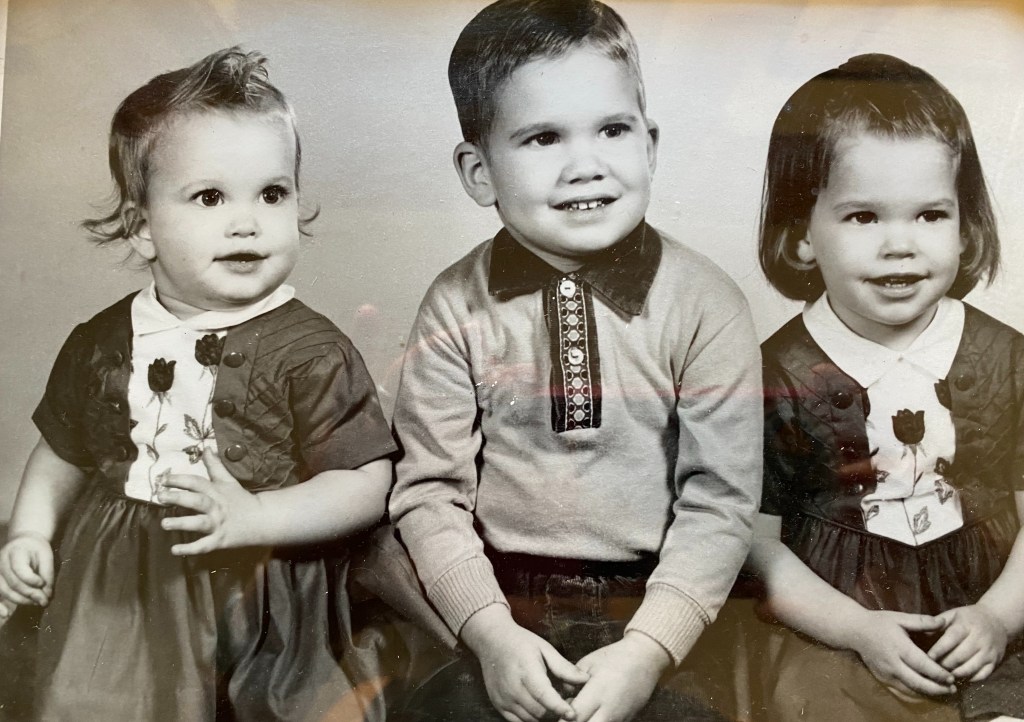
Little sister, older brother and me in happier times. Circa 1962.

If you looked at my family tree, you’d see the roots are severed. I am grateful, though, that the tree trunk has survived and flowered nonetheless. While I have been cut off from my family of origin for more than a decade, I am so very grateful for my husband, my sons, my granddaughter and my husband’s large extended family. I do not lack for people who care about me; what I was not able to produce for some time, though, was a witness to much of my life before the break with my parents, siblings and extended family. I lacked someone who could pick me out of the class photo (usually one of the taller kids on the back row). Missing was anyone who knew I didn’t usually eat my birthday cake, only the icing, or that I read every biography and autobiography in my elementary school library and that I grieved when I finished books because, for the few hours when I was reading, I was able to wander around in another space and time – one that was not mine. I lacked anyone who could give a witness to any of the reasons why I thought for so long that happy people were not paying attention to the pain in life.
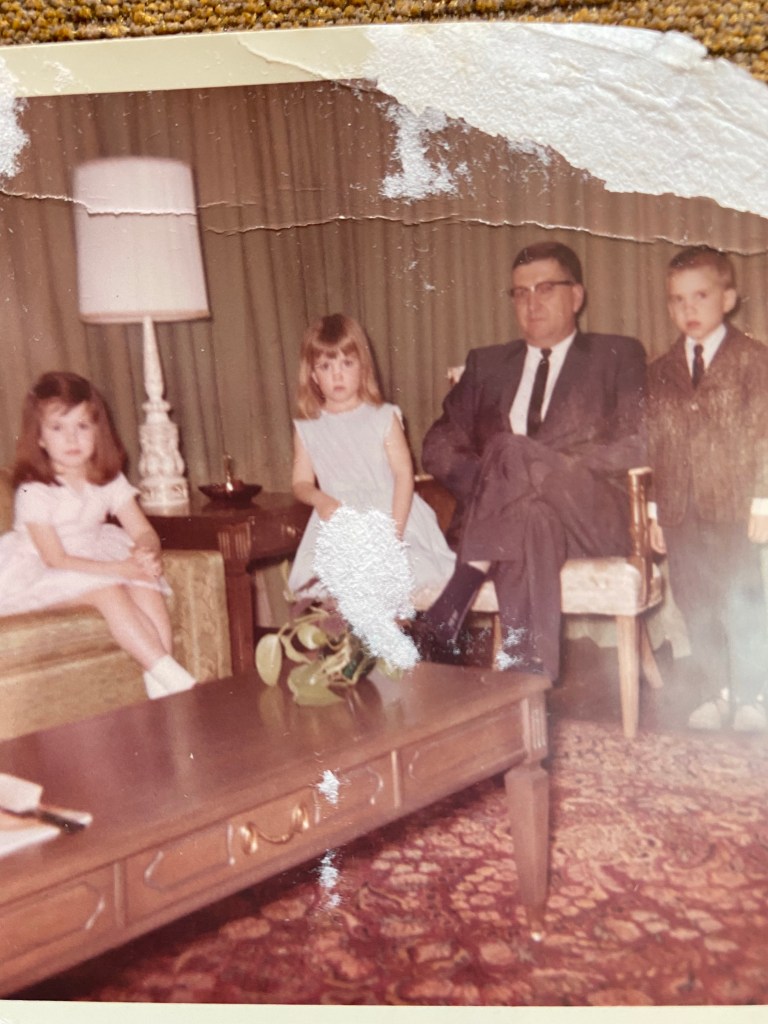
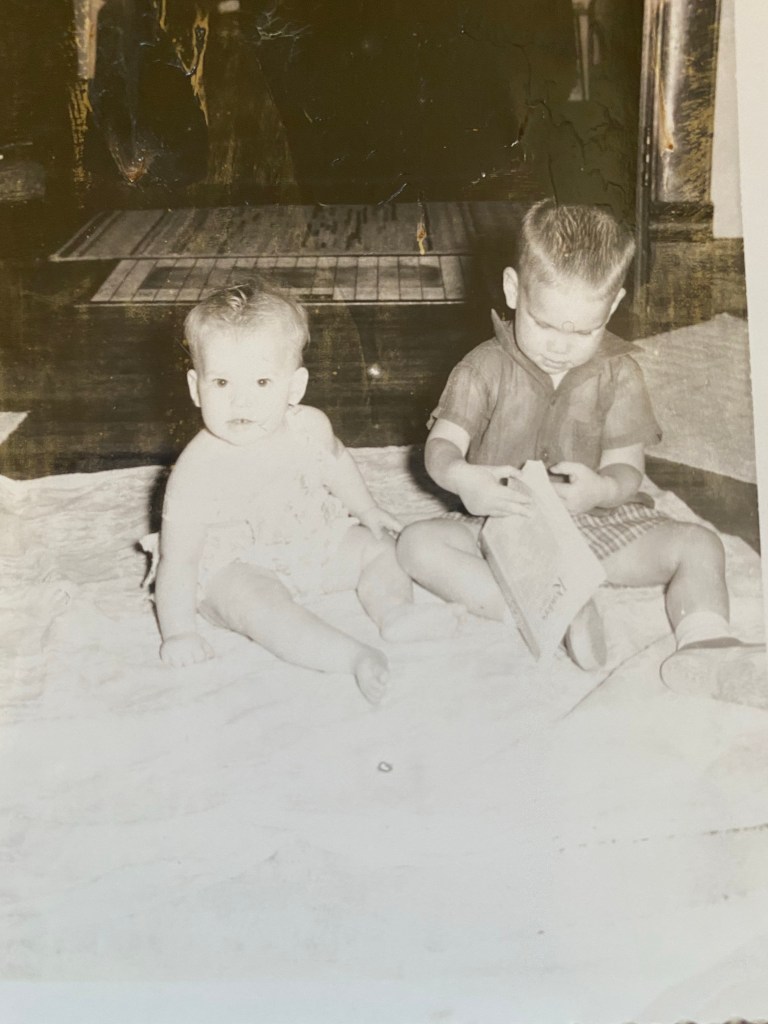
Can I get a witness?

When asked to describe my family as I was growing up, I’d explain: you could be lying on the braided rug in the living room, devastated, distraught, lost, and sobbing, and every member of my family would step around you at best. Or, at worst, they would chastize you for your selfishness: just look how you are upsetting everyone else by your pain! Not only did we NOT hold onto one another in times of crisis or pain, we denied one another’s right to be in pain. “How long you gonna be a victim?” was what was asked of me by a family member after she’d heard I was in counseling for being assaulted as a teen. I was in my early twenties. I had just remembered the assault that I had blocked out of my consciousness for several years because it was just too painful to remember. I had only just begun counseling and I felt her rebuke keenly. There was evidently no place in our family for that. She, a woman thirty years older and presumably three decades wiser, could not cotton my taking any time to understand and come to terms with what had happened to me. Today, thanks to counselors and learning about trauma, I would be able to put my hand on her arm and reassure her that she would never need to listen to my struggles. I would also explain to her that recovering from trauma requires some reflection, though, and some help understanding what happened and more than a little work to heal. I would assure her I certainly did my part to finish that work – to come home from the journey someone else started me on. I would also plan to be there for her if she ever felt like she could share her own pain.

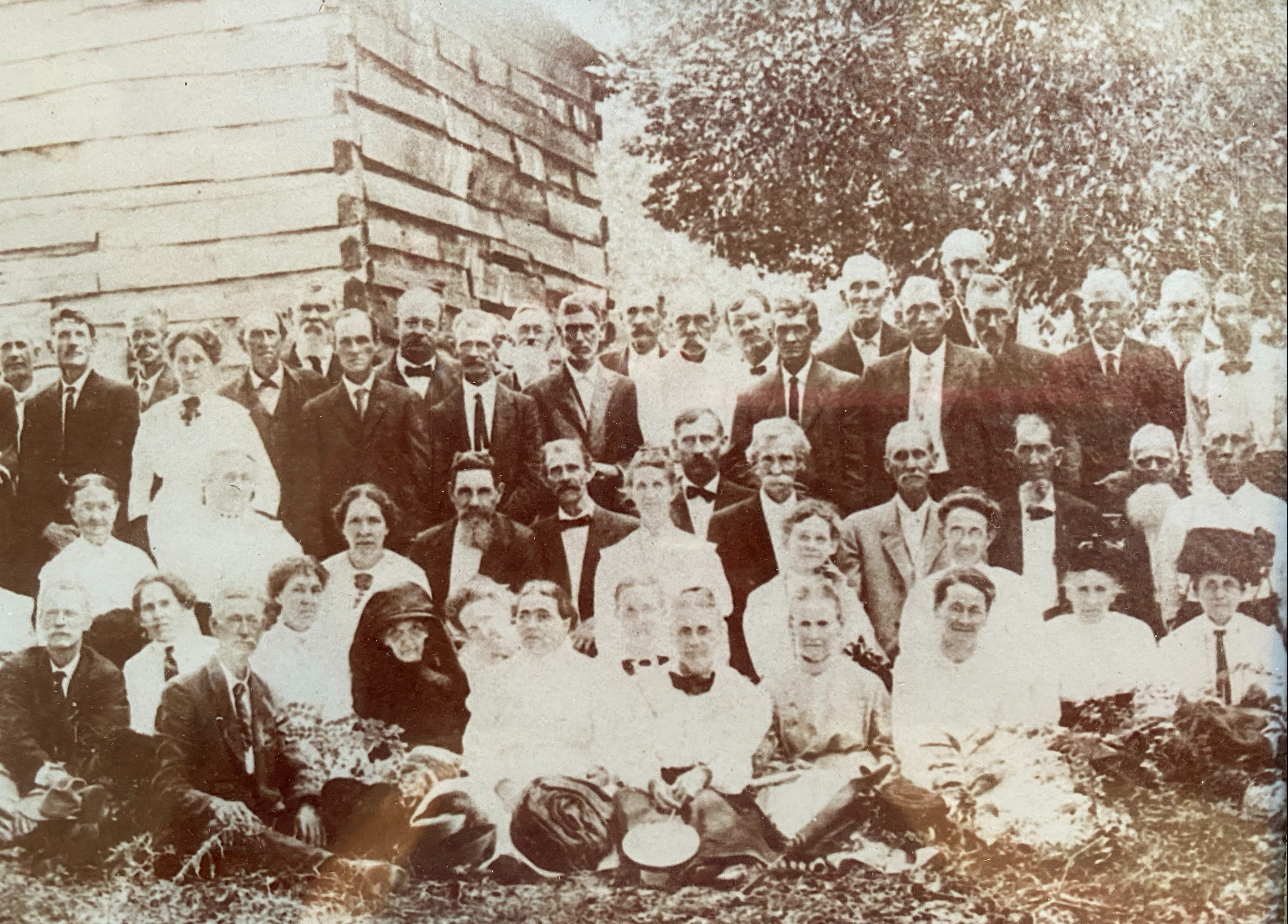
Sadly, family breaks are more common in my family than not, though, so, when the relationship with my mother’s family was severed, our entire nuclear family was already split from Dad’s people. As an adult, I started a genealogical search only to find I had a great-grandmother living about an hour away by car until I was a teen whom I hadn’t known existed. I asked my parents at the time and was told “We didn’t like her very much.” Later, I found an old family photo with one woman’s face scratched out completely (and she had been sitting next to her twin brother in the photo!). What do you have to do, for goodness, to get completely scratched out of existence? Evidently, severing ties, splitting up was the response of choice for my people.

In the past few years, though, through the magic of the internet, I have been able to reunite with some folks from my childhood. While for some, that can be a hilarious trip down a bumpy old memory lane, for others of us, restablishing connections can be healing and grounding. As a sixty-something woman estranged from her entire family of birth for more than a decade, finding these old friends had been spurred by the need to find folks who could vouch for my previous life.

This, then, is a post about my friends from childhood and teen years reconnecting and discovering how little we knew about each other in spite of how close we thought we were.

Photo by Malcolm Hill on Pexels.com

I was always jealous of those who stayed close to their friends long after school; I believe now that most of my friendships were more akin to life boats in the midst of stormy seas. Survival was the goal, and perhaps we knew instinctively that two or three strands of rope were stronger than one, so we held onto one another. Once we found ourselves in new oceans, though, we grabbed onto new, different life connections, and let go of the old ones, not because we were inconsiderate or uncaring but out of necessity. No one had time or energy to look back; survival was the priority.

Puzzle Pieces

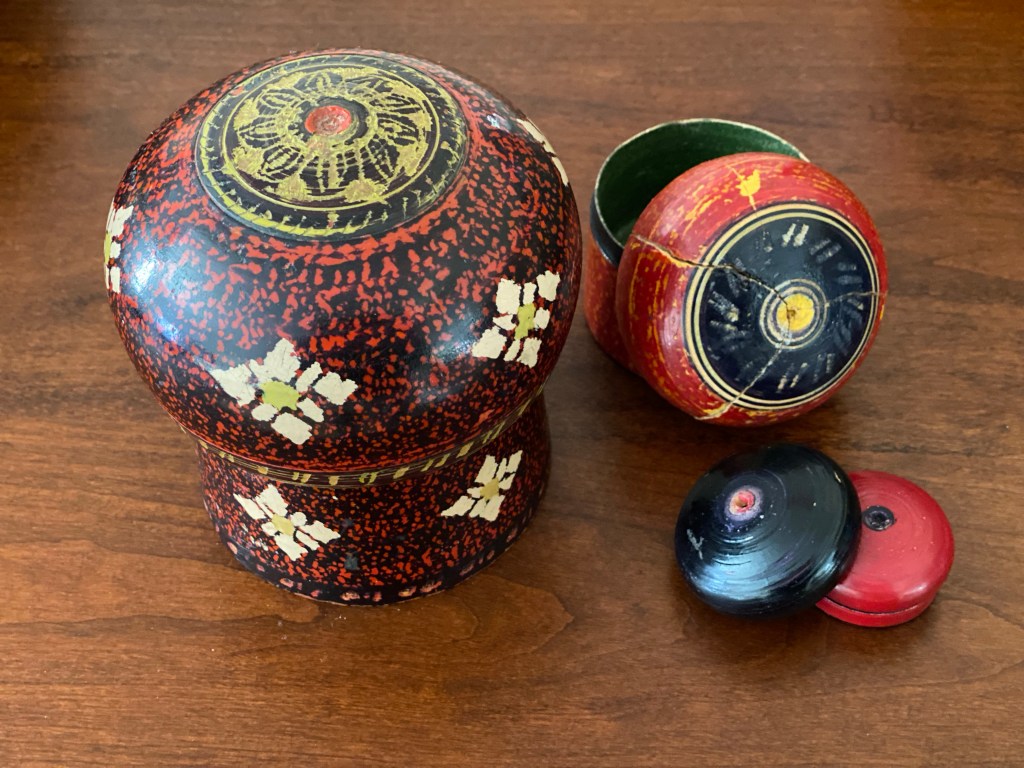
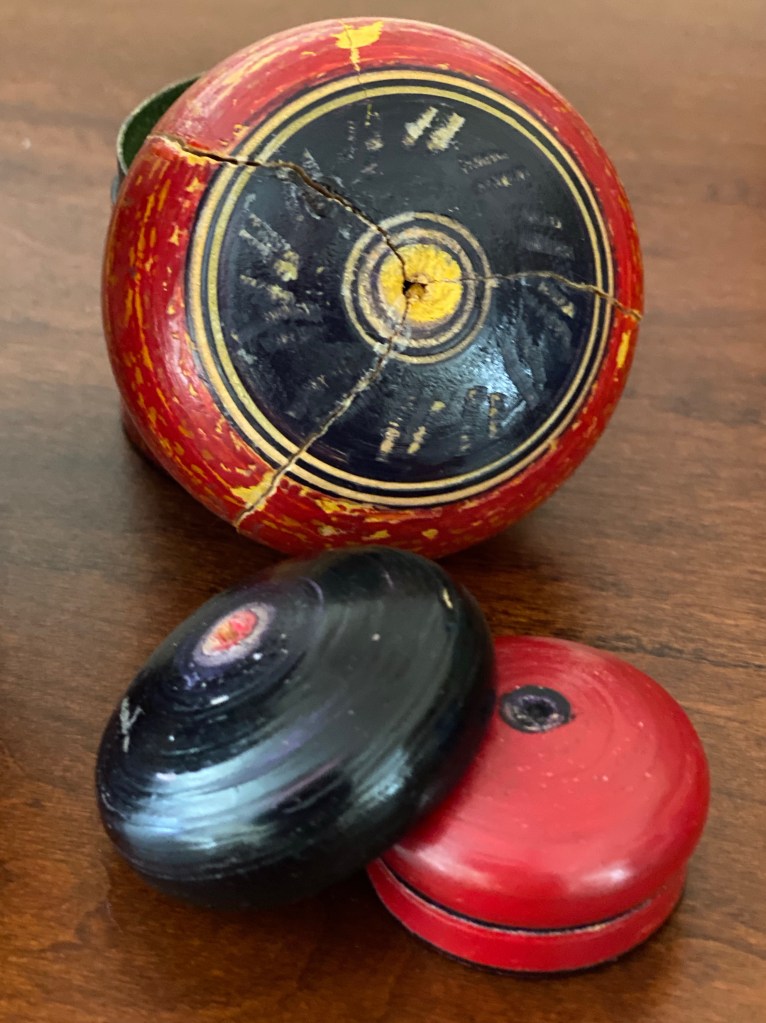
Trauma, though, can leave fragmented memories. One definition of trauma is that we remember all too well what we cannot forget but struggle to remember all the pieces in between – the rest of the story. I have long been embarrassed at being unable to remember large chunks of my life because I didn’t realize how large was the shadow of trauma and how it can so deeply darken the rest of our lives. The details, so many pieces, seem lost, scattered, in my case, all over the world like a favorite nesting toy. Through more than seventeen moves before I was old enough to leave home, curiously, I have somehow held onto most of a wooden nesting toy from Pakistan, where we lived when I was a child (stories for another post.) Some of the pieces are missing and others have been glued back together; today they serve as an apt metaphor for the struggle to repair and hold together memories of traumatic childhoods.
Comparing Notes

Once we reconnected, my friends and I began comparing notes. One childhood friend thought I was an only child though I have two siblings and we are all just a year apart in age. One of us had grown up with an abusive father. She married four times before she got help and stopped getting herself into abusive relationships. Another lived with an older brother who we now realize was a sociopath. She had found not words for when, as a seven-year-old, he had cheated, stole and tried to be sexual with her. Weren’t there rules about that?

That no adult saw all of this meant it continued, and by the time she was eight, he had run her over with a bike causing her to need stitches and hit her in the head with cutting board causing more stitches, and routinely touched her inappropriately. “Just a rowdy boy, right? Just a kid who doesn’t like to lose, wasn’t he? He’ll grow out of that, we are certain.” She grew up searching for an adult – any adult – around her to be the adult and a witness to what she was experiencing. She knows now that her brother simply passed along his own pain.

Healing began when a counselor said, “You were not imagining this. You are hurt, angry because you were betrayed by parents who were supposed to take are of you. You have those feelings because you have a brain and eyes to see. You doubted yourself and what you saw and experienced because you were raised by parents who were overwhelmed by their own pain and shame and guilt; they had nothing to offer you for yours.” A teen aged girl, she wanted her mother to teach her to curl her hair; instead, she watched her mother threaten to cut herself.

While it was happening, though, none of us “knew.” As teens in the late 60’s and early 70’s, we braved new styles together: we traded bell bottoms and hip huggers and together we tried cheap strawberry wine behind the concession stand at the drive-in movies, but we never shared about home. We didn’t “know” even though we saw each other every day at school, ate lunches together, joined cheer club together, and moved around in a pack as if we were attached to each other by velcro. We were all taken aback when we collectively realized that none of us, though fast friends throughout junior high and high school, had ever visited the others’ homes. No sleepovers. No parties together. None of us had ever even met the others’ parents. We didn’t know why, but we all somehow understood one another. Somehow we saw in each other kindred, if broken, spirits, and we found respite in our time together.
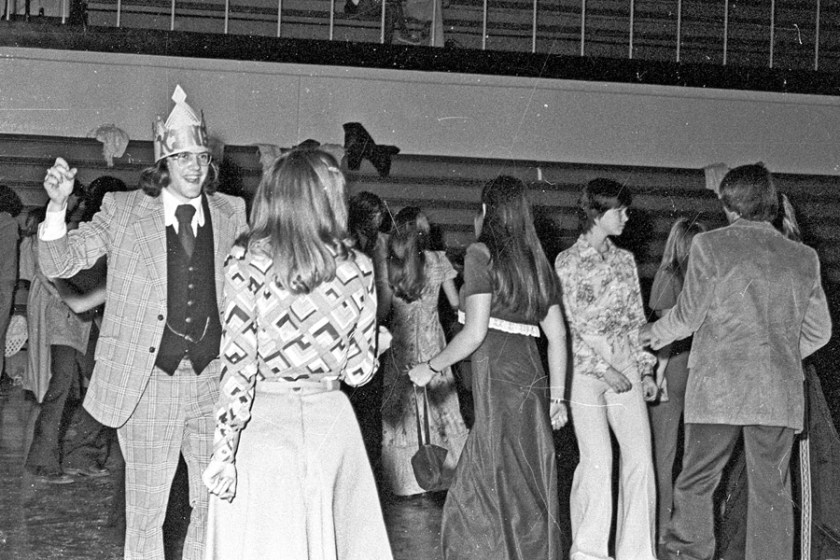
High School Dance 1973
We didn’t know how much we didn’t know.

Today, as the three of us somewhat gingerly share our memories, fragments and misunderstandings are beginning to make sense to us. Counselors and social scientists tell us now that we compartmentalised our lives, partly out of shame, partly to protect the others. We never spoke of life at home or after school; we kept those separate. In our defense, we didn’t often know what was going on in our homes wasn’t going on in everyone’s homes. Part of the power of dysfunction is that it simply seems like “that’s how it’s done, so why are you whining?” Or worse, we feared that the pain and chaos and constant crisis of our homes was somehow our own faults and if we’d only be better daughters….

Dysfunction, though, happens in shadows and darkness and thrives on secrecy.

We know now that each of us fought to get out of that darkness once we left those homes and we celebrate our individual efforts to keep our own lives in the light.

“The light came into the world, and people loved darkness more than the light, for their actions are evil. All who do wicked things hate the light for fear their actions will be exposed to the light.”

John 3:19b-20 CEB

What do we do differently?

We learned to encourage the children in our lives because each of us could remember at least one person who had encouraged us. Never underestimate the power of encouraging a child or teen; you may well be the only encouragement they receive.

We refuse to keep secrets. We ask tougher questions. When we see someone sobbing, we approach them gently and ask what we can do. If they don’t know or can’t answer, we sit down with them and wait until they are calmer. We hold sacred space for our own pain and for theirs.

One of the three of us refuses, even when facing family verbal and emotional abuse herself, to walk away completely herself because of a child in the extended family; she doesn’t want the child to feel alone. She knows how important it is for someone to say, “I see you. I see what happened. I see how confusing it must be.”

One of us worked hard to figure out why she kept getting herself into abusive relationships over the years and now she is able to choose healthier relationships and she doesn’t need to hide that relationship from us.

None of our parents paid any attention to where we went or with whom, so we each had resolved to offer our children a healthier childhood, making sure their friends knew us and we knew the parents of their friends.

We also grieve those who did not make it; each of us has family members still hurting, still in the darkness, unable for a variety of reasons to find their way out. We are grateful and we do not take our own growth for granted.

Okay, sharing isn’t always “nice,” but it IS healing.

The tagline on this blog is “Sharing is nice.” That is my witness. Sharing is difficult. Sharing is scary. Sharing is necessary. Sharing is essential. Sharing is healing. Sharing is powerful.

The good news is that we all found healing because we shared. There’s help out there and hope and healing and lots of folks who are called to listen and trained to help us when we share. Make sure you find someone who is trained and, if you don’t feel like you are being heard or they are helping, find someone else.

Several years after my aunt’s rebuke and her impatience with my healing process, I shared with a female friend at church. Sharing with the counselor had helped but the counselor wisely encouraged me to share with a friend. Me sharing, the counselor explained, can also create that sacred space where others find healing, too. That is the power of sharing. Choose someone safe, she said, but share. When we share safely, we create a safe place for ourselves and often for others, a place of healing. Amazingly, pain shared safely dissipates and loses its power over us.
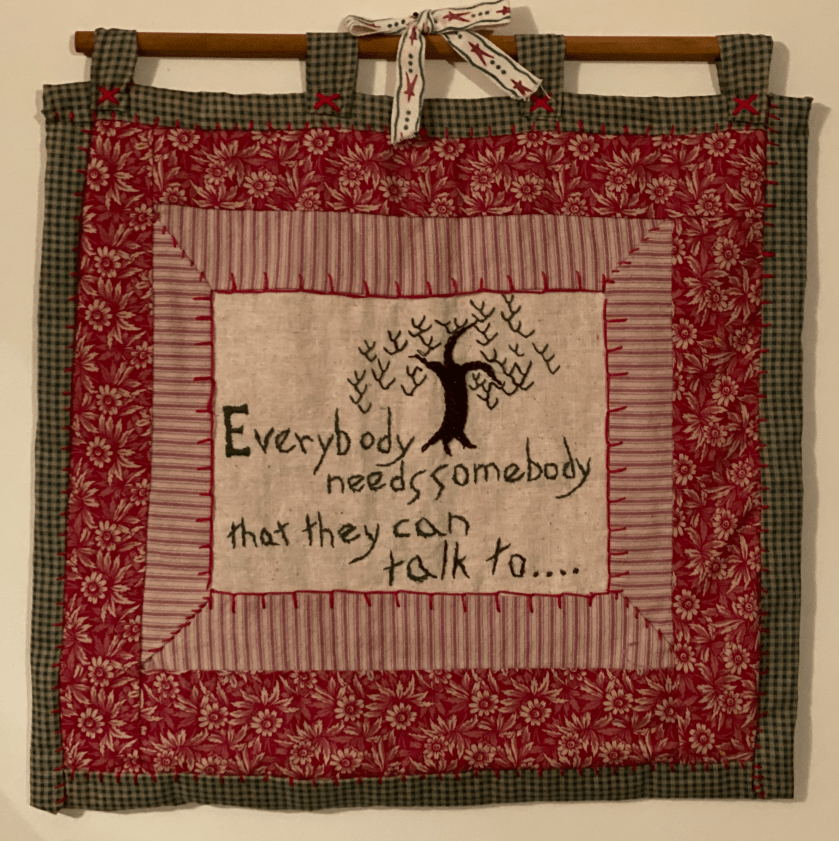
Ask before you share with anyone other than a professional. Be aware that your trauma might trigger theirs. Always ask permission but ask and keep asking until you find someone to listen.

I did share and my friend was lovely and listened and the moment felt healing. The next day, though, her husband dropped by and stunned me when he said, “Mary told me what you told her.” I felt betrayed. How had Mary not known that I would not want others, especially men, to know? How dare she share my story? It was not hers to share.

“You just need to get over it,” he demanded. And suddently there I was again, back home, back where we keep our pain and illness in the dark, back where we keep secrets. I felt my pain rise up and choke me.

This time, however, I was different. This time it was the thought of going back into the darkness that had turned my stomach. “As it happens,” I told him, trying not to vomit, “healing apparently will only happen if I walk through the memory. They tell me I have to share to get well, so I’m gonna.” I was on the verge of apologizing to him for sharing with his wife because it had upset him so much when suddenly he sat down hard and started sobbing. Then he began his own sharing. He’d never talked about being a fighter pilot in VietNam and he desperately needed to tell someone. I don’t remember much of what he shared; what I do remember was being amazed that holding my own space for healing had created space for him. In that moment, he felt safe, too, and he stepped into that space for just a bit. We never talked again about his trauma or mine. Perhaps sharing helped him enough; perhaps he went on to seek more help because he, too, had seen the power of sharing.
Stepping out of the squirrel cage….

Mostly, the friends I reconnected with and I had individually found that, in an unexamined life, pain just gets passed down the line, generation to generation. We all were recipients of pain passed along, never knowing why or where it originated. The effects of trauma will keep rolling back around from generation to generation if no one stops long enough to find some healing and try to get out of that squirrel cage of crazy. Just ignoring the pain, or worse, denying its existence, guarantees the next generation will be expected to hold it, too, and they often have no idea the why or the where of that family trauma.

We may not have been able to protect our own children as well as we might have liked but it was not from lack of trying and we console ourselves by remembering that, because we have reflected, educated ourselves about trauma, shared with counselors, written and prayed, we have at least helped our children to get out of that damn cage. We may have done it clumsily, we may all be still rolling sometimes out of control on the floor after hurtling ourselves out of the cage, but we’re clear. We can take a breath. We can stop, stand back and reflect on that still-spinning wheel and maybe even pray for the family members still running on it. Because we are out, though, because we are talking, because we won’t hide any more, we have a fighting chance to NOT pass that trauma and dysfunction on down the line.

For a recent, well-done example of how trauma not shared can affect us and those around us, consider Tom Hanks’ movie, “A Man Called Otto,” or the book it’s based on, “A Man Called Ove,” by Fredrik Backman.
Talking About Death Won’t Kill You.

Pulling death out from the shadows and examining it in the light does not make death happen. In fact, it does just the opposite. Thinking about death, learning about it and accepting it, makes life happen.

Virginia Morris, “Talking About Death Won’t Kill You,” Algonquin Books. Kindle Edition.

Death is a funny thing. And I don’t mean in a dark humor kind of way but, rather, funny as in strange: we all do it, and, these days, we all know we ought to muster up our courage and talk to our loved ones about what we know is coming at some time, and yet few of us do.

Talking about how we want to die and what needs to be done when we do is a gift to our families and friends, kind and considerate; sometimes that’s the last gift we give loved ones. Pastors and health care workers and counselors encourage us to start the conversations early but far too few of us ever get our courage up to start, even though we surely love our families.

We often don’t even talk to our loved ones

AS we (or they) are dying.

The first person I sat with who was dying, died alone in a hospital room while his family waited out in a waiting room. That was thirty years ago. We did not know how to help him not be afraid and nothing we said could ease the fear but no one wanted to name that or claim it either, so we talked around him when we were in the room. We talked about the weather, the dog, the cost of eggs, anything except death and eventually most went back out into the aptly named “waiting” room.  I, just starting out as a pastor, stayed in the darkened room with this man who no longer wore his own clothing but rather a hospital-issued and worn cotton gown and asked for some socks that weren’t neon blue or orange and didn’t have those silly dot on them or some salt for the instant potatoes and who was just plain furious. He was angry about sox and pajamas and dying without some damn salt and without any choices: no choices about dying and not even any choices about how he would die. Thus far, as a pastor just starting out, I had read and discussed one book about how to minister to someone who is dying and could remember none of what the damn book said. I drove home that night screaming in my car. I had not signed up for that, and I was unprepared both for his anger and mine and this helplessness we shared. The journey into ministry was going to be rougher than I ever could have imagined.

Once I’d calmed down a bit, a pastor with more experience offered this simple advice: “Next time,” she said, “name it. Fear. Uncertainty. Anger. Questions. Whatever is in front of you while you sit there, name it.” There was a time when I would have discounted such a ridiculously simple suggestion, but it turned out to be great advice. In fact, in any difficult situation, naming whatever is in “in the room,” especially if it is scary, lessens the fear and opens up the space for questions, laments or even the jokes, all ways of sharing.

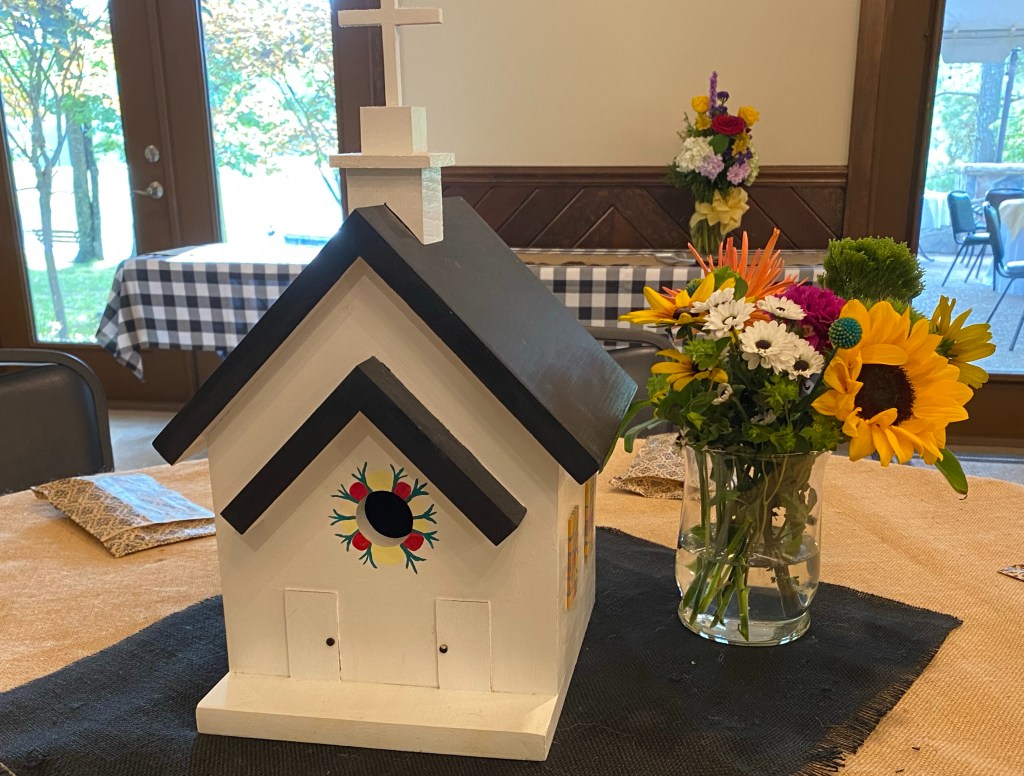
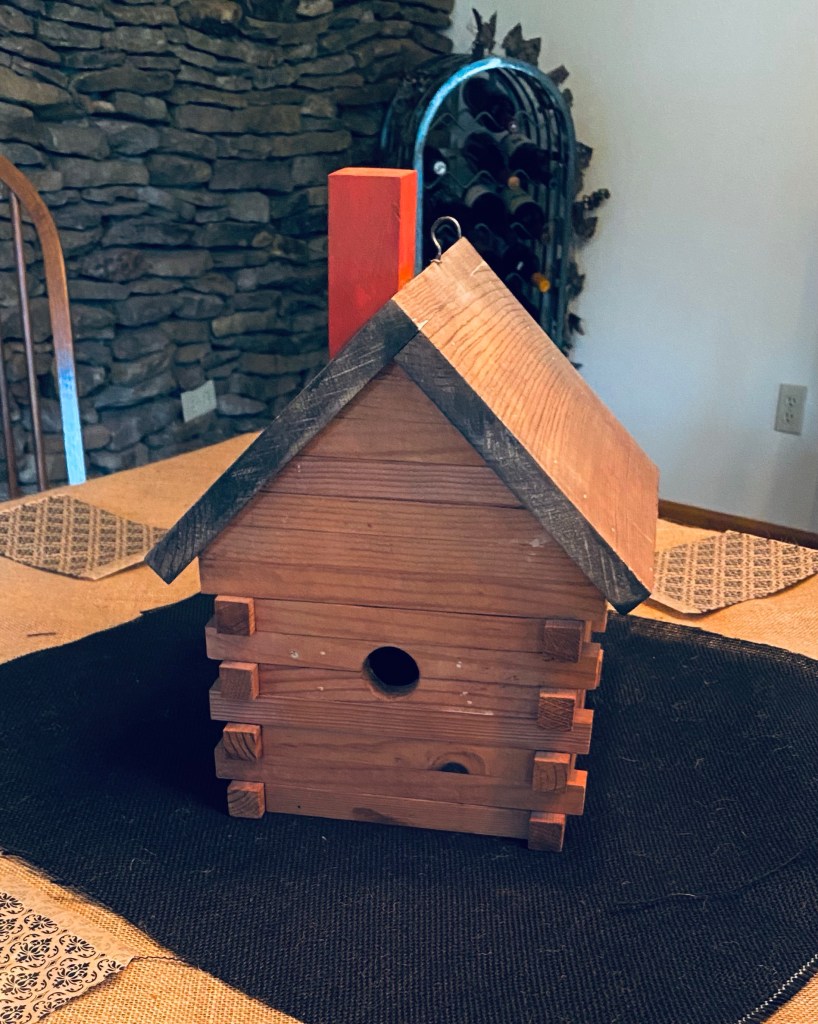
I buried about a couple of dozen members of that church over the next few years, including a suicide, my 18-year-old communion steward and a couple who had been married for more than 75 years and who died within a week of one another. All of those deaths brought up questions, and I tried to name what I saw and reassure us all that talking about death would not kill us. Most of those folks’ deaths happened fairly quickly, but one member of that first church took almost a year to die after receiving what he called his “death pink slip.” Over that year, David showed an entire church how to die a good death. Diagnosed with metastasized prostate cancer already destroying his back and ribs, the construction engineer who could no longer build houses started building birdhouses. He built hundreds of them in the months he was dying. His mind and his hands still moved well and in sync and he was grateful when his friends’ eyes lit up. He designed bird homes that celebrated the University of Tennessee for a Vols fan, several that looked like our little white country church and one I requested that mimicked a Lincoln Log cabin.

More importantly, though, as David died, as he dealt with the diagnoses, the treatments and the rapid onslaught of decay and death, he shared. He talked about what was happening to him to everyone who visited him. He taught us what the Hospice folks were teaching him, even describing what death might look like, how he might have some better days right before he died and what to watch for in his breathing as death grew nearer. In short, he did not hide or try to protect us from what was happening.  He named all of it and we are grateful for this evidence of his courage and love for us.

Because of David, I also found a great resource and over the years referred to it both for personal help and also to preach and teach. In, “Talking About Death,” Virginia Morris addresses so much of what keeps us from these important discussions. First of all, she says, “Pulling death out from the shadows and examining it in the light does not make death happen. In fact, it does just the opposite. Thinking about death, learning about it and accepting it, makes life happen.”

When I started this project a friend of mine called me, all upset. She felt that this endeavor was not only morbid, but dangerous. By studying death, she said, I might make it happen. A friend of hers had died of cancer while studying Portuguese death rituals. I, too, might be on a suicide mission. This subject was better left untouched. Her concerns may seem a bit odd at first, but they are not unusual. Death is the boogeyman, hiding in the shadows of our bedrooms, arousing all sorts of anxieties and fears—some valid, some silly, some we don’t readily admit even to ourselves. Most of us can’t imagine the end of our existence as we know it. We dread the process of dying, the pain and disability. We panic at the thought of leaving loved ones, or having them leave us.

Morris, Virginia. Talking About Death (p. 7). Algonquin Books. Kindle Edition.

What Did COVID teach us?

So many died during COVID alone and unable to be comforted by family or friends and we are more aware now than ever of the importance of being there for one another.

NEVERTHELESS, we struggle with starting the conversations before we are ill, before we are hospitalized, before we need hospice care.

Part of the issue is that we simply don’t have to talk about death much anymore. We simply do not talk about death, not even in churches even though a church seems like the best place to talk about death.

Wartrace United Methodist Church, est. 1849. Homecoming suppers were “on the grounds.” For most smaller Methodist churches, the cemetery often surrounded the church building.

In so many of those little churches we attended, all of the “Saints” who’d gone before were buried all around the church in the cemetery just outside the doors. Every few months, we would have “supper” on the grounds, meaning we spread our biscuits and fried chicken legs and pickles on platters on old checked table cloths on top of the graves of our ancestors, who were buried all around us.

There was no pretending they weren’t there with us, bodies underneath and souls swirling overhead, whispering in our ears, reminding us all they’d taught us and all they’d done, good, bad or just human. Don’t slouch. Eat your greens, too. Wipe your fingers on that napkin and not on your shirt, young man. These were the folks who’d walked through those cemetery gates and into that old wooden sanctuary each week and they had taught us how to follow those 10 rules Moses brought down from the mountain AND to turn that other cheek. Still, they didn’t have to create a moment to talk about death because they reminded us of it every Sunday and during revivals as we entered that sacred space.

Today we don’t have those reminders.  We do not see the cycle of life and death firsthand on a daily basis now. We do not wring the chickens’ necks and pluck them ourselves; few of rely on butchering hogs to have food for the winter, and we no longer prepare loved ones’ bodies for burial ourselves. We have people called to and trained to do these tasks and so the majority of us will never touch any dead body, never be faced with the need to handle a lifeless body, never have to be reminded we too will die, never find an occasion to talk about our deaths.

Easy for You to Say.

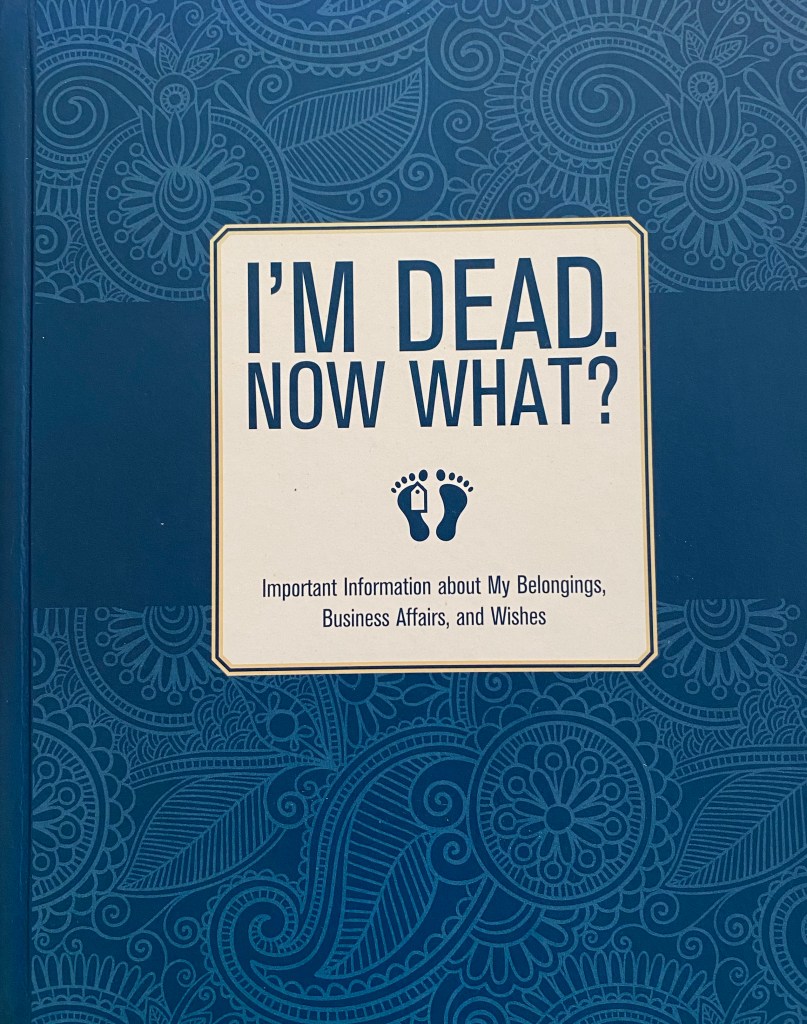
You might be thinking that as a retired pastor, of course, I have lots of experience sitting with people who are dying, sitting with the family and friends of someone who has died and just talking about death in general.  That is true, but all that professional experience did not make it any easier to start the discussions with my own family or to begin the work personally. In fact, I am embarrassed to say that it was a neighbor who suggested the book that started me on the process for myself and my family, by suggesting the book she’d found: “I’m Dead, Now What?” (See below.)

I want to offer some suggestions, then, some topics and some resources to help you do what is one of the most loving things you can for your family: discuss with them, prepare and plan so they are not left with the burden when you are gone or can no longer help. We can do this.

Excellent planner to provide peace of mind for those who need to settle your affairs. Helps organize your information, from pet needs to email and social medea to banking. Available on Amazon. By Peter Pauper Press

Start with the easier stuff.

If talking about death at all is just difficult for you, start with putting your papers in order and maybe your mind will become more used to the idea of realizing there will be a day when you (posthumously) say, “I’m Dead. Now What?” When you are gone, will your papers be in order? Will whomever is left to pay the bills, deal with property, take care of Fido or make other decisions know where to find what they need? Thankfully, there are wonderful resources for that as well. Starting here will often help us begin the many conversations we need to have around our own deaths.

Passwords, please. Can I get an amen?

If nothing else, safely providing a list of the seemingly thousands of passwords we all have now is one of the greatest gifts you can give these days. Don’t forget to tell them what the site is for the password; you know how you have spent hours trying to get back into your Netflix account. Think about how that’s going to work when it’s time to close out the account and stop the automatic draft for that times about fifty or a hundred, depending on how many apps and accounts you have.

Talk About How You Want to Die

We all hope to die at a certain way if we are honest and think about it for a moment and sharing that with one another around a kitchen table is a way to learn about one another.

Some of us want to die quickly, instantly. Some of us only hope for no pain. Many of us in my culture hope to die at home in our own beds surrounded by family and friends. Some of us hope to die with a silk parachute inflating overhead one last time; others of us hope to die in in satin ballroom shoes, our hips responding to the beat on the congas as a Latin band plays a cha-cha. Still others of us would love to take our last breaths in the arms of a lover. Some of the sweetest couples I’ve known debate who should go first: some do not want to be left alone after a longterm companion goes but most are more concerned about their sweetheart and hope that the other will go first so they are not left alone to grieve. They would take that grief upon themselves.

Consider doing a bit of research, then sharing.

In Japan, at least thirty years ago when I lived there, everyone in the neighborhood chips in to help pay for the costs of a neighbor’s funeral knowing that everyone else will do the same when their own time comes.

Funeral traditions there offered us a number of occasions to talk about dying and our own deaths. Once, a neighbor came to visit after her father had died and shared with me about the funeral since I had not been in town on the day of the funeral. I remember trying to put my finger on what was wrong as we sat and looked at a picture album of the funeral gathering and ceremonies until I realized that what was strange for me was that there was a photo album of the event. I had never known anyone to photograph a funeral.

There’s some fascinating and/or disturbing historical examples of cultural differences around death, such as mummifying and burying with everything you’d need to survive in the afterlife, including, sadly, your pets, and others we pray have been banned forever such as the Hindu custom of a wife immolating herself on the funeral pyre of her dead husband.

Write down your information first, then your wishes.

Think about what you want for a service, write down your wishes and share them with a family member and a pastor or another family friend who can help when the time comes. What are your wishes around being kept alive? Wishes around resusitation, extreme measures and even feeding tubes are much more difficult for family members if they are not aware of your wishes.

Do you want certain songs included in your service? Have a favorite verse? Talk about what you want and need or don’t want. Tell a pastor or trusted friend who can help you when you need to let your loved one die the way they’ve chosen, whether that means no , no on every possible intervention, i.e., their choices as best can be honored.

Clean up after before yourself.

In some societies, sorting through all your belongings, “death cleaning” is an established tradition. They are aware of the stress and pain of leaving all our “stuff” behind for our family to have to sort and clear and give away or sell or keep.

“Death cleaning,” or “döstädning” is a Swedish term that refers the process of downsizing before you die. Death Cleaning, explained in “The Gentle Art of Swedish Death Cleaning” is an gift you give your family. Sorting through, clearing out, giving away or selling all the “stuff” we can accumulate throughout our lives is an indication, the author writes, that you love your family enough to clear our unnecessary things and make your home nice and orderly well before you think the time is coming closer for you to leave the planet. The idea is that our spouses and children or grandchildren are not burdened with what can become a beast of a process, yet another source of pain for those grieving us when we’re gone, yet another indication that we didn’t want to talk about death.

(Magnusson, Margareta. The Gentle Art of Swedish Death Cleaning: How to Free Yourself and Your Family from a Lifetime of Clutter (The Swedish Art of Living & Dying Series) (p. 2). Scribner. Kindle Edition.) Also available on Amazon.

Start the conversation any way you can.

We all face it; people all over the world face it, but not always in the same manner, using the same customs, so, I’m thinking maybe talking about cultural differences around death and dying might be a way to start a conversation.

Did you know that those death masks, usually made by taking a cast of a person’s face after their death, were often kept as mementoes or used for the creation of a portrait or perhaps a scupture after the person had died and been buried. That could open a conversation. A lock of hair often is kept, a tradition started by Queen Victoria after the death of her husband. Tiny brooches might hold cremation ashes. Do you want to be cremated? This is the time to make sure a loved one knows that.

Just start.

Finally, to start the conversation, if none of the suggestions above have spurred you to sit down with your spouse or children or companion or pastor or priest yet, here is a poem I wrote after sitting with a man at my last church who was dying. Perhaps you can start simply by sharing this poem over a cup of tea, a pint of beer or some lovely scones your neighbor dropped by to share. “Hey,” you can say, “I read this poem about death and dying today and it made me think. Can I read it to you and you tell me what you think?” You get a yes and maybe some discussion will follow. Have some questions ready. Maybe a version of “Would you rather…?” Would you rather be buried at sea or on a mountain? Would you rather have everyone sing happy songs at your funeral or maybe tell their favorite joke?

Every time I have spent time with someone who is close to death, I recognize I am closer to my own death and my own fears and though both death and the fear of dying creep ever closer, neither seem to crowd out the peace I have found in talking about, in naming, what is before me, even death. It’s pretty much the one thing we all have in common. Let’s talk!

Sitting with the Dying

I used to think sitting with someone who's dying took courage.
Now I think it is much more selfish than I might ever want to admit.
It is an act of hope, yes.
If I am honest, though,
the hope is that someone else will sit with me when I'm the one who's dying.
There is prayer
but the prayer is that someone who knows me will wipe the drool
from my chin when the time comes.
There is the seeking of promises, guarantees, bartering if
necessary,
so that someone whose face I used to recognize will
cup my face in the palm of their hands when I cry like a baby, or
pluck the hairs from my upper lip because even a dying woman
deserves to feel pretty.
The first time I sat with someone who was dying, I went into that dark room because no one else would and because I couldn't bear
anyone dying alone.
Except now I know we too often do anyway.
Still, if there's any comfort to be offered there, I will selfishly offer warm, gentle and soft touches if only because I know I want the return.
I confess then that sitting with someone who's dying
is a selfish act for me.
It is my way. A way to make the world the place I want it to be,
where no one dies alone
if only because I cannot bear to live in a world where we do.

~Jodi McCullah 2022

4 responses to “Talking About Death Won’t Kill You.”

  1. Anne Culver Avatar
    Anne Culver

    Thank you for these reflections, Jodi. As a hospital chaplain, I’ve found that many people who’ve been told “some bad news” (that they’re dying), desperately need someone willing to help them work through just what that might mean for them and their loved ones in our culture in which even thinking about death seems to be taboo.

    Liked by 1 person

  2. A. Getty Avatar
    A. Getty

    Thank you for sharing. We have been having more of these conversations lately and your reading suggestions are helpful.

    Liked by 1 person

  3. Earnie L Avatar

    I was raised with grandparents who took me to their church’s dinner on the grounds. One of my favorite places to photograph is a cemetery. I imagine all of the lovely lives and interesting people there. And, my Mother taught me that there are far worse things in this life than dying. Thanks for the lovely article.

    Liked by 1 person

  4. Joan Butler Avatar
    Joan Butler

    Jodi, thanks so much for these thought provoking words. We’ve started the process, but need to go deeper.

    Liked by 1 person

Leave a comment

Be the pebble. One answer to the unimaginable.

For several months last year, I was invited to join a group of women from all over western and middle Tennessee, some clergywomen, some lay leaders in their churches.  We gathered virtually because we shared a sad truth: a colleague and friend had been taken from us suddenly, shot in her own driveway during a carjacking.

I had not known any of these women before this group convened, but I am so very grateful that they all agreed to convene for those few months – and to invite me – to share our grief and pain and try to make some, any, if possible, sense of this tragedy. Some of the participants had known this woman for years; others of us had only known her a short while, but we all grieved what felt like a future filled with hope and ministry. She was likely going to be a Bishop some day, not because she was someone who was well-loved but because she was someone who loved well. That future was denied suddenly not by someone who had judged her ministry or intentions or love as lacking, but by a total stranger, someone who never had and now never would feel the love she had to offer him.

Within just a few weeks following her murder, we stepped into a virtual room, and invoked the words so many of us had shared in the funerals we had presided over. We affirmed that we had come together in our grief, acknowledging our human loss and praying that God would grant us grace. We also prayed that, in our pain we may find comfort, and in our sorrow, we might find hope.  We especially, collectively, wanted to find ways to honor our friend. 

It’s not necessarily a new idea to say we are called to honor those who are now gone who’ve loved, nurtured, forgiven or supported and encouraged us by doing the same. It just may be a bit tougher to process our emotions after the loss is a shock or especially an act of violence, because violence always leaves in its wake more victims than are seen by the naked eye. Be assured, most of us could acknowledge our privilege in not facing this kind of loss before; we also recognized what a gift it was that we could take the needed time to grieve and to find some guidance and companions for this process. Plenty of folks do not share that luxury, we knew. 

Nevertheless, to say the sheer aggression and randomness of this event knocked us down is insufficient. We all know that bad things happen to even the best of people, but somehow some of us thought – hoped – there was a line the people of God would not cross. I mean, if you’re willing to kill a preacher, who stands a chance? We were shaken individually and collectively and so I am grateful that our colleague’s legacy brought us together. A few of the women realized that, if our friend had been the one left in shock and pain, this is what she’d do. She would gather us all in. She was all about sharing, listening, reflecting and holding hands in our fear and our pain. Over the next few months, then, we talked about how this trauma affected us, mentally, spiritually, emotionally and theologically.  We seemed to know that she would encourage us to ask our questions, something most of us in this world have been conditioned to avoid, even if we do have the time. Through our theological and faith journeys, though, through pursuing our callings, many of us in the group had been exposed to and become somewhat practiced in reflection, in the art of asking questions, and, perhaps most importantly, in sitting with questions that are not accompanied by satisfying answers. 

Aggressive, blunt, unanswered and unanswerable questions most definitely were part of these group meetings; they sat next to us, sometimes gently nudging us, sometimes poking us with bony fingers, often angering and annoying us, always taking up space and reminding us they were not going away.  So, we chose to embrace them, to welcome them into our space, albeit a bit begrudgingly, buoyed by the fact that we were not alone.  

“After all these years I have begun to wonder if the secret of living well is not in having all the answers but in pursuing unanswerable questions in good company.”

Remen, Rachel Naomi. My Grandfather’s Blessings: Stories of Strength, Refuge, and Belonging . Penguin Publishing Group. Kindle Edition.

We shared from various resources: prayers, poems, stories, theological pieces and we asked ourselves, How then shall we live?

To get there, we shared questions about our colleague like: How can one person be someone whom everyone felt like they knew? This woman saw you. I could easily spend the rest of my life trying to see every person that I encounter as well as she did; it is a spiritual practice that I will likely never master but one that she embodied. She saw each of us and even if you only met her once, you left her presence knowing she still somehow held you as tightly and lovingly as she did everyone she saw. I would have liked to ask her more about this; how did she manage it? Did she consciously focus only on who was right in front of her? How was she able to tune out the rest of the world so successfully as to make you feel like not so much the center of the universe but seen. And heard. She saw you. Most of us go through life not feeling truly seen or heard and yet, sadly, that is often all we want. Many an argument or estrangement likely would be quelled or mended if each participant were able to take a turn seeing and hearing the other fully. She seemed to know that.

How Then Shall We Live?

Throughout the sessions over last fall, I found myself counting how many people who were now missing from my life after this year: friends, colleagues, family members.

Sadly, I am grateful that a couple of them are no longer here to harm others. I spent a great deal of my life learning how NOT to follow in those footsteps. I also, though, came to recognize them as human beings, not monsters, and to acknowledge I have my own failings. I hate knowing that. I hate knowing I am capable of being ugly and of wounding others.  I hate knowing that too often what annoys me in others is what annoys me about myself.  All of that knowledge means I must go forward with self-assessment that is as rigorous as my judgment of others AND I must offer grace that is as unearned as the grace I receive. The question there was what did I learn about myself from that person?

I am grateful though to declare that most of those whom I have lost have blessed me.  All of those I lost this past twelve months, including my colleague, I now realize, left me with the question on my life: how will I live going forward so as to reflect how I have been changed by their influence on my life? How, then, will I live now in light of what they taught me, whether it be because I want to honor them or because I want to never fall into their footsteps: what gift will I give the world now that they are no longer here?  

Photo by Scott Webb on Pexels.com

Questions, then, I thought, might be the answer, if that’s possible.  I shared with the group one of the understandings of a Scripture passage that another colleague had helped me to see differently years ago.  The Scripture was about the widow and the judge in Luke 18:1-8.  The story is often interpreted that the judge is God and the widow has to badger God – the judge – to get heard and to receive justice.  Another colleague years ago saw the story differently and preached that the widow in the story instead was God and God (the widow) would continue to beseech the powers that be (the judges) in our world to do the right thing.  God would continue to be the pebble in the shoe, she preached, that made us stop in our tracks and take care of that annoying pain that we feel every step we take.  God will continue to try to make us stop long enough perhaps to think, to listen, to pray, to see one another.  The story when I read it now reminds me, calls me, to be the pebble, to keep the hard, stony, annoying truths in front of folks I know.  

God calls us to BE the pebble. Ask – lovingly – the difficult questions. Keep the hard, stony, annoying truths in front of the folks we know.

We lamented that there was no going back to our blissful ignorance, no chance now we could pretend we or those whom we loved were safe.  One thing that is certain about hatred, ugliness, violence, is that once you know, you can’t “unknow.” Most of us in our world today learn at such early ages that violence and meanness and the ability to harm others is part of our world but being the target or even knowing the target of someone else’s violent behavior, even and maybe especially if that target appears random, moves us into darker places emotionally, spiritually, mentally.  

One of the toughest conversations was, no surprise, about guns and gun violence. I do not believe I am breaking confidence to say that we were keenly aware of the difficulty we live into everyday in our country of how to deal with what has become an epidemic.  

He was just a child still himself who pulled the trigger and took this life. In light of how much gun violence has become part of so many children’s lives, I offered the image of our society as a body where this bullet’s wound was not the only injury or illness that needed to be addressed in this tragedy. The image of a body with multiple system failures came to mind for me as we talked about how we had failed this child as well, the child who had murdered her, lamenting how he had gotten to that place, into that car, with that gun. The questions became: What had gotten him to the point where another human being was worth less than that car?  Don’t we need to know that process? Where in his young life was he ever seen? 

The questions we all needed to ask ourselves and one another became: What had gotten him to the point where another human being was worth less than a car? Don’t we need to know that process? Where in his young life was he ever seen?

For help with tough questions, I suggested this resource:  “When Thoughts and Prayers Aren’t Enough: A Shooting Survivor’s Journey into the Realities of Gun Violence,” by Taylor Schumann, a victim of gun violence, a Christian and a strong advocate for the right to own and bear arms.  Her offering in this book is as honest a discussion of faith and firearms as I have seen thus far and it is a true gift to those who do not know what to say but feel called to participate in reflection and discussion.  We put seatbelts in our cars to help protect our children when auto accidents were the number one killer; we need to stop the yelling and figure this out for our children’s sake.  Schumann offers intelligent, faith-led, personal and compelling points to add to the discussion, pebbles, if you will, that we can cast into our collective path. 

Moving Forward

How then would we go forward was the overarching question. How we each had thought we would be going forward in our lives was mostly changed but not canceled, we realized, but this sudden loss. I grieved having postponed working together until after my retirement.  I had so many questions I was looking forward to asking her when we would be working together. Each of us was challenged to ask ourselves, “How will I live now?” We realized we had already started moving forward and had chosen to live differently by simply inviting and agreeing to meet over the course of those months, by sharing and holding one another in grief, by sharing resources that inspired us (and often which we hoped might answer some of those pesky questions). Already we were living with intention, living in response to this trauma and tragedy, living in a way that would honor her (and more importantly we knew to her,) living in a way that recognized the power and gift of connecting. We would commit each of us to continue using our platforms (sermons, Bible studies, book clubs) to replicate these conversations, to offer them to others, to hold hands with, to sit with, to see each person who came before us and to ask the questions.

Photo by Elle Hughes on Pexels.com

For myself, I believe my beloved colleague would encourage me this Christmas and every Christmas going forward to seek to “Be that pebble in the shoes of those who are in power and ask the questions that need asking.” No question, my friend saw me or you like she saw everyone, it seemed; she made each of us feel seen.  Spending time in her presence, though, also meant you had to keep stooping down to remove the occasional pebble from your shoe because it was either that or limp forever.  She did this lovingly and you knew as you stooped down to scoop out that pebble that she meant to be loving to you and to everyone else who might be affected. “It’s all right,” she seemed to be saying in a loving and gentle way, “I’ll wait while you tend to that.” 

Who knew that a handful of pebbles could be such a sacred Christmas gift?