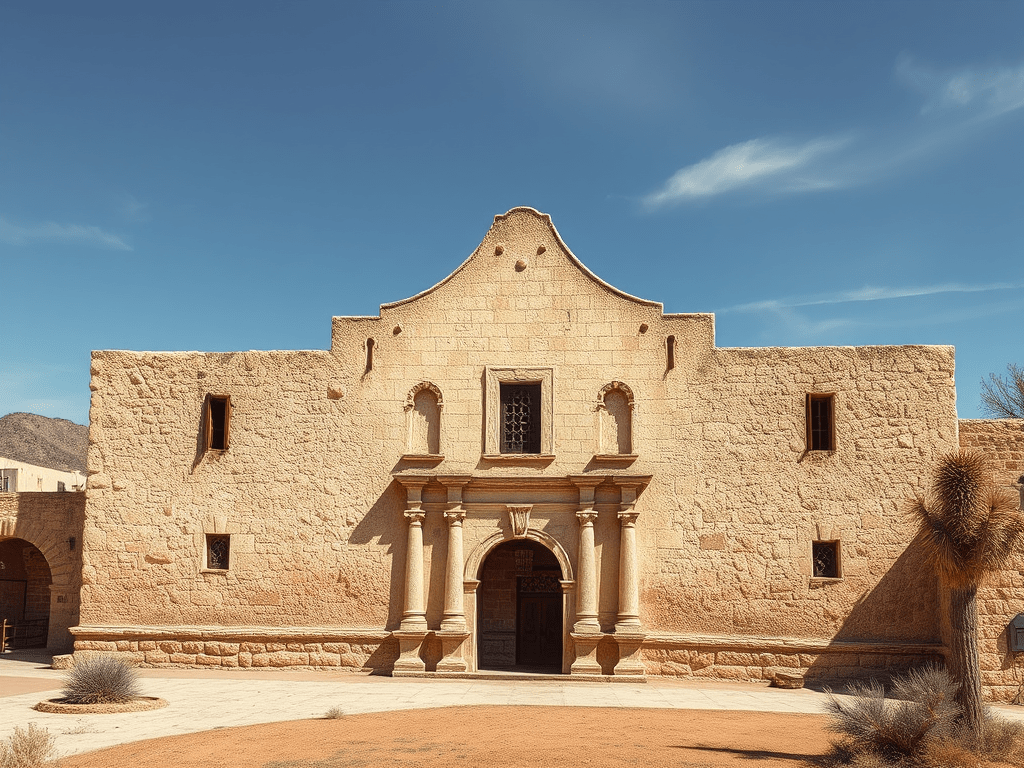
My Alamo

Individually, collectively, as a nation, there have been times when we’ve needed to draw a line. This is one of those times.

“Those who would give up essential Liberty, to purchase a little temporary Safety, deserve neither Liberty nor Safety.” Benjamin Franklin

Much of the time when any of us need to draw a line in the sand, as they say, I suspect it is a surprise. I say that because we are often not expecting the person moving aggressively towards us; thus, we are not prepared to mark any line. When we do draw a boundary, when we insist that the next step the person in front of us takes will be too far and we will stand in their way, it can feel jarring and aggressive, like we are the ones being combative. We are simply not prepared to counter aggression or abuse, individually or collectively. 

This is somewhat ironic, at least in the United States, though. Remember the Alamo? Legend has it that when Lieutenant-Colonel William “Buck” Travis, Texian Army officer and his fighters faced overwhelming forces at the famed fort, Travis drew a line in the sand with his sword and told his fighters to cross it if they were willing to stay and fight. Nearly all of them did. While that story is possibly more fiction than fact, it is nevertheless the lore many of us were inspired by, taught to emulate, part of the “GIve me liberty or give me death!” understanding of the cost of freedom of speech, freedom of religion, freedom from tyranny. We know what’s right. We know abuse when we see it. We know when someone is trying to frighten us into not fighting for those freedoms. We know and yet we are reticent, loathe to draw our line in the sand, whether personally, as a family or as a community and nation. We want it to all go away. But it won’t.

Years ago, an experience from the first church I served paved the way for an extended family finally to take a stance, to draw their line in the sand to stop the abuse that had been harming women in that family for at least a generation. In this case, what had been a family secret became quite public because the abuser got reckless and over-confident and, in some ways, that arrogance made taking a stand easier for the family.

“Herb” (name changed to protect his victims) wasn’t a regular attendee at the church I served, so my radar was not pinging when I greeted him that Sunday morning. He was a 60-something married man who always dressed in seersucker and bow ties and prided himself still sporting a full head of hair, even if it was graying. I’d brushed off his previous suggestions about how my congregation would like it, he was sure, if I wore more colorful outfits when I stood in the pulpit. I glared at him and walked away when he suggested I unbutton a button or two on my blouse, but nowhere was there any guidance on responding to such behavior from this man whose family members occupied nearly one-third of the pews. I wondered why his wife never attended with him and started avoiding him, thinking he would remember he was talking to the preacher. Turns out, I should have opted for outrage from the beginning. At least I might have been prepared for battle when I walked out of the little white building one Sunday afternoon to see him seated in his big old Buick in the parking lot across the road. I waited for two cars to speed by, then crossed the two-lane blacktop warily, my chest tightening. My arms were full with my Bible, sermon notes, my purse and some funeral home fans that I’d grabbed off the table in the back of the sanctuary. The cardboard fans helped you breathe on the days when the humidity was looking for an excuse to break into a summer shower. 

Already sweaty, and looking forward to an afternoon of visiting the shut-ins, I moved cautiously across the road, hoping he would stay in his car. I had been headed to the fellowship hall to lock up before I started the afternoon’s visits. Herb exited his car and was next to me nearly as soon as I stepped off the highway onto the parking lot. I had to stop mid-stride to avoid running into him; I was off-balance as I tried to look behind me before stepping back because that would put me back onto the highway. 

Turning towards him, I stumbled to my right just in time to miss him grabbing my arm. I looked at him in confusion as he reached out again and said, “Why don’t we go inside?” 

In an uncharacteristic flash of assertiveness, I shoved him with my books. He stumbled back a bit, startled. I darted as quickly as I could around to the passenger side of his car. Did he really just grab at me? Herb started around the side of the car and reached for me again, so I threw my books at the ground near his feet to stop him long enough for me to move around the car until I was back on the driver’s side. I know my hands would have been shaking if I had not been clutching my black leather purse, instinctively wrapping the strap around my hand in case I needed to use it as a weapon. 

I would never have expected a man from my church to be bold enough to try to grab me in the church parking lot in broad daylight. That simply was not something I expected. Worse, he acted with such confidence, as if he would face no opposition.

Herb laughed. “Don’t be so silly,” he said, putting one hand on the trunk of the car as he slowly headed back around towards me. He seemed quite amused, at first, that I managed to run around his car—a rather large late model car–but all I could think about was the fact that, thank God, he could not reach across. When he snatched his hand back quickly in pain because the metal was hot enough to sting his hand, I bolted. 

He was moving around the car towards me again; I managed to dart into the fellowship hall, drop my purse and the ridiculous fans, and turn the lock on the wooden door. Maybe it was the sound of the door locking–maybe something else–but, apparently something brought Herb back to reality; he “came to himself,” like the prodigal son in Luke, and stopped grinning. Unlike the repentant son who asks forgiveness of the father, though, Herb stood before me, his fist raised, threatening to bust through the window of what seemed suddenly like a very flimsy door. I tried to breathe. Even though he was a member of my church with a large and influential family and now he was angry, I had clearly—finally—drawn a line in the sand. 

When he finally got back into his car and drove away, I leaned against the wall and let out a scream, then frantically ran to the other door, grateful to find it was locked. He hadn’t tried opening it anyway. He’d just driven off. 

I couldn’t catch my breath.

I gave myself the afternoon off from visiting parishioners. I did not let myself cry until I got home; navigating back roads is difficult enough when you’re watching the rearview mirror for a Buick the whole time.

The next Sunday, and for several Sundays after that, I was greatly relieved that Herb did not return to the church. For months, I would imagine his hand grabbing for me. While I was grateful not to see Herb for a while, I also felt quite alone and indulged in some hefty self-pity as I pondered how large a contingent his family was in our congregation. His wife, for example, was one of several sisters, many of whom attended the church. Herb had married the oldest sister when most of the sisters were still children. At least his wife was not attending our church. A few months later, though, his wife was scheduled for surgery and the prognosis was not good. A pastoral visit to the hospital was in order, if only to console her sisters.

I arrived at the hospital intentionally late. Even after the family was sent to the waiting room before surgery, nursing staff was willing to allow clergy in to pray. I smacked the oversized button to open the doors just in time to go back into the surgical prep area to see her alone. She was still awake and aware enough and thanked me for praying with her. Then I made my way through the winding hallways to the family waiting room. 

Nearly every seat was taken by a sister, but I spotted Herb on a chair in the far corner. I took a breath, said a silent prayer, and walked over to him. I leaned down to offer him my hand in greeting but, before I knew it, he was laughing because he’d managed to pull me onto his lap and wrap his arms around me. Even now when I think about how shamelessly he seemed to operate, how little he feared anyone’s disapproval, how brazenly he disregarded the line I had drawn, I want to scream. I’d been pretty damn clear, I thought, that his behavior was not welcome.

I jumped up as quickly as I could and found a chair on the other side of the room, next to one of the sisters. I did not look at anyone for several minutes; I was afraid they would have seen how hot my cheeks were with anger and embarrassment. I was grateful, finally, to look up and notice that sister number two, one of my regular members, was sitting next to me. Voices soft, we chatted quietly about how long the surgery was expected to last. I was grateful she quickly offered to call me when the surgery was over. “We know you have other calls to make, Pastor,” she offered. I thanked her, chose the fastest way out of the room and made it to my car before the tears began. 

I drove home discouraged. How could I keep being the pastor at that church? Even if they wanted me to continue, could I keep dealing with this man and his aggressive behavior? I could not shrug it off, and I did not find it amusing, like he did. Worse, I feared other congregation members might also find it amusing. 

Everyone in that waiting room had seen Herb pull me onto his lap and me pushing his arms off of me and jumping up but no one had said a word. I’d not received help when I’d spoken to my mentor: “It’s part of the job,” I was told. I did not sleep well that night; I was drafting my letter of resignation from the ministry and imagining the sensation that would ensue within the church once it was made public.  

The next morning, I was praying about the letter when sister number two called me, I assumed, to tell me how recovery was going. The conversation was so short I almost didn’t remember it.  

“You need to know,” she said quietly but deliberately, “Bobby has spoken to Herb,” she said. “He won’t be bothering you anymore.” She paused. “He won’t be bothering anyone any more.” She paused again. “We’ll see you Sunday.” 

Suddenly, I was not alone. One of the other men in the church had stood up to Herb. Sadly, though, slowly, I began to imagine several young women standing next to me with tears in their eyes. I had not considered how many others Herb probably had “bothered” over the years but they were suddenly standing next to me.  

All those younger sisters and their daughters would have been easy targets. No one had stood up to him before then. Evidently, no one had even spoken in any voice louder than a whisper about his behavior for decades until that day in the waiting room when he accosted the preacher. The family finally found the line they would not let him cross.   

Likely, in the past, the family had hoped Herb’s behavior, something most of them could not even fathom, would have just gone away on its own. Challenging one of the patriarchs of the family had been too painful and even frightening for them to consider. What would they do if he said “she” initiated it? Who might he go after next? What if he suddenly turned the tables and claimed he was a victim? How many of the neighbors might take his side because THEY were already victims and afraid or feared becoming targets? 

Because they had never expected to even contemplate such abuse from one of their own, the family could not choose a line. 

Because they were afraid to talk to one another about what was going on, no line was drawn.

Because no line was drawn, the abuse continued, unchecked.

Trouble is, this is a common pattern. Whether the abuse is of a person or a group of persons, though, not wanting to talk about it only aids and abets the abuser. Not wanting to talk about what we know is wrong because we are afraid or because it is not our family or because we’re not sure the child maybe “deserved” some punishment or worst of all because we simply don’t want to believe what is happening only emboldens and strengthens the aggressor.

Do not be fooled. These lessons apply to us—to our families and our nation. 

We know in our guts how this goes. We know but we are hoping we won’t be asked to draw any lines ourselves.

We wish some people would stop constantly reminding us how more and more boundaries are being crossed every day, how free speech and due process, decency and respect for others are being blatantly, publicly disregarded, then even applauded. We are afraid and tired. Didn’t we move past this decades ago? 

Are we waiting for another Colonel Travis to draw the lines for us? Have you admitted you need to think about those now, like it or not?
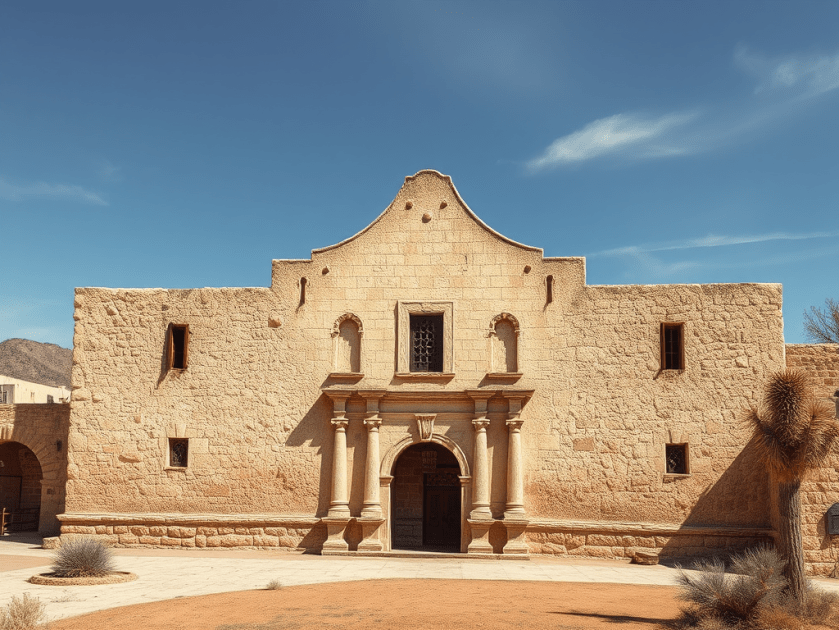
Are we waiting for another Colonel Travis to draw the lines for us? Have you admitted you need to think about those now, like it or not?

A public school teacher told me today she had decided she would obstruct any immigration authorities who tried to take her students – children – from their classroom. She has admitted to herself what is possible, even as horrific as it sounds, and she decided where to draw her line.

Where is your line?


Facing the Big Dogs (Part 2 of 2)

To read part one of this two-part essay, see Speak Up, Young Lady. Be warned, parts of that essay may trigger victims.

Wise ones tell us that we often have to “learn” the same lesson over and over until we get it right. My hint: once you figure out whatever lesson it is you seem doomed to repeat in your life, get on that. Study it. Dissect it. Get it right so you can get it done…or, at least, get good at it.

For me, evidently, one lesson that I have felt doomed to repeat is “Speak up.” 

After being fired at age 17 from a fast food restaurant for daring to write a letter to corporate about requiring female workers to wear short skirts (this was in the late 70’s) I found work that fit my college schedule at the county juvenile detention facility. I was thrilled to get the job if only because I was considering a career in social work by that time. Never mind that there was little or no training for the position or that most of my co-workers and I were still teens ourselves; the county simply needed folks willing to work all hours, and willing to be locked into the facility with teens in trouble. College students fit that bill nicely. There were three shifts a day, each eight hours, round the clock, and we all pulled at least one midnight to eight a.m. shift a week. I’m grateful that the teens we supervised were “less criminal and more neglected” teens, picked up mostly for truancy or petty theft or vandalism, but mostly just guilty of being unsupervised. There were three pods of four teens each and our biggest struggle was keeping them from being bored and trying to ignore smartass remarks. I generally worked the 4 p.m. to midnight shift on three of my four shifts, always sharing supervision and feeding and fielding complaints alongside another college student, always a guy since we were locked in every night with boys and girls. 

When the dog bites….

Only once did we realize how vulnerable we were, but some training we received came in really handy then and years later for me. During a self-defense training, we learned about getting out of holds and about using weak spots like the instep which is usually vulnerable when someone grabs you from behind. I would years later be grateful for another piece of that training: when we were taught how to react when someone bites you. An unarmed combatant might bite and, while the instinct is to pull away, the best move is to push into the open jaws. That movement will cause the assailant to open their jaw wider and allow you to then pull away. Years later, while out walking in my neighborhood, I would use that with a dog that jumped his fence and lunged for me. I am grateful I saw him coming, though, raised my arm (covered thankfully by a heavy jacket) and pushed back into his jaw as he lunged. He was unable to bite down. We repeated this two more times, him lunging and me pushing back while I yelled for help before another neighbor came out. I’d heard people say time seems to slow in life-threatening moments, and I remember calmly being focussed on my arm going into that dog’s jaw.

It was terrifying.

It was also empowering and would help me in so many ways.

I’d been given one way to stand my ground and I’d seen it work. This would not come in handy until years later, though. At that time, I am grateful to say we had little reason to be afraid of our detainees in the juvenile detention facility. 

Again with the troublemaking.

After working there for nearly a year, though, as the juvenile detention facility (which seemed like a lifetime for me at eighteen, by the way) a new worker was hired. Without warning, my schedule was cut in half. It took a week or so to figure out what was happening, but, evidently, the new worker was dating the boss. Remember, this was the seventies. No one even thought of filing complaints then, at least not in Springfield, Missouri. I was angry, but was told at our monthly staff meeting this arrangement would be temporary. By that time, I was living in a tiny apartment. The kitchen was so small I could not open the oven door more than three inches because the refrigerator stood in the way. The bathroom had a claw foot tub with a skylight overhead, though, and a balcony, and I was thrilled to have it, but I would not be able to pay my rent on half a paycheck. Already, I had learned the art of “robbing Peter to pay Paul,” and relied as well on the four meals a week I shared with the detainees at work. This job had been my way out of working fast food; I knew I was far too clumsy to be a server at a restaurant. After nearly a month with my hours cut though, I found it difficult to be cordial when I went to pick up my diminished paycheck and encountered my replacement. I’d thus far received good evaluations, so I was frustrated about having to consider another job. That is perhaps why I figured I had little to lose when the next monthly staff meeting rolled around. After our boss offered updates and training information, he handed out new schedules for the month and, again, I was facing half of my regular paycheck. I raised my hand. My boss called on me. I was standing at the back of the room, aware that others were disgruntled at how things were working out but only two of us had lost significant portions of our paychecks. I simply asked, “What do I have to do to get my hours back?” 

My boss looked at me, frowned, and asked me what I meant. 

“You know what I mean.” I said, “What do I have to DO to get my hours back?” He definitely knew what I meant. He looked at his girlfriend who was seated next to him up front, then frowned at me. I guessed it was time to start searching for another job. I certainly had no intention of actually sleeping with the jerk. And, while a well-reasoned letter to my boss’s boss might have seemed more professional, as it happened, I got my hours back the next day. Troublemaker. It wasn’t pretty, but it was effective. Noted. 

Speaking up, asking people to do the right thing hasn’t always been as successful as I might wish, though. Over the years, the stakes became higher.  Sometimes, it did not make me friends with those in charge, and sometimes those in charge used their power in ways that cost me lost opportunities and/or lost income. The best news for me was that often there were others standing with me, and, on occasion, I have been pleasantly surprised by someone speaking up for me.  

Sometimes, feeling the need to speak up cost me more than a lost date. While in college, I was invited to apply for a scholarship through a local civic organization to study in France for a year because French was my minor. The opportunity to study abroad would no doubt have opened doors I could not imagine. I wrote my application essay and my resume in French and English, and, of course I listed Leadership opportunities, including some speaking engagements explaining the Equal Rights Amendment in town or on campus. I was told, though, that the scholarship was given to a young man. I would have received it had it not been for my work on women’s issues; evidently the group imagined me sailing across the sea to start riots, maybe even to burn my bra.

I had two ways to see that, I reasoned. I could stop speaking up and go along to get along, but I would have to agree to be like the people who had disappointed me which might lead to me being the reason someone else was disappointed. All these lessons in speaking up followed (or led?) me into teaching and ministry and, while it got some easier, I never really got used to people being angry when I speak up. Now, when I find out, though, that there’ll be consequences or someone is angry, I (eventually) shrug. There are people close to me who I am loathe to upset, but everyone else can just take a number. I might be surprised and disappointed but we’ve come too far now. People just expect it.

Who Knew? My Life Lessons Aren’t Just For Me.

Turns out, learning our life lessons isn’t just for us. What we learn can benefit others. In ministry, I have been called to speak up for my LGBTQ students, those behind bars, wounded soldiers. I was, honestly, as proud as I was distressed to be called “that woman” by some of the folks dealing with wounded warriors at Fort Campbell.


All of my lessons, it turned out, helped in these cases, as did the understanding that the folks who needed someone to stand with them or speak up for them were in far greater pain than any discomfort I felt at speaking up at this point in my life.


Personally, speaking up was easier, in fact, when I was no longer the only one affected. When I had children, I felt keenly the need to protect my boys or anyone else who was vulnerable. My first chance to act on that came when a neighborhood dog began getting out of his fenced-in yard.

Facing the Big Dogs

In this case, I thought the “Big Dog” in the small town where my husband and I had settled with our boys was the Collie living on the corner across the street from one of my son’s friends. He was so large he could put his front paws on the shoulders of an adult and look him in the eye. He started demonstrating this on folks in the neighborhood who were strolling around the small downtown area, knocking more than a few of them down. The owner, when informed, usually snarled and slammed the door.  When I heard the dog had knocked down the elderly piano teacher around the corner,  though, I resolved to call animal control. I discovered though there was only a part time animal control staff in our small town in spite of a growing number of dogs allowed to roam free. I decided to write a letter to the editor -again with the letters, right? – to encourage folks to speak up and perhaps convince our city government to make the animal control agent a full time position. The letter was also an “open letter” to my neighbors with dogs to encourage them to follow the leash law in town and inform them of what was then the local rule at least. According to that rule, a dog owner whose pet bit another person could be made to pay any doctor bills. A dog owner whose dog bit a second time could be sued and, after a third offense, an animal would be put down by the city. I encouraged dog owners to protect both their neighbors and their dogs. Once again, I believed I’d written a well-reasoned letter.

The Big Dogs Bark

The letter was published on a Wednesday. That evening, I received a phone call from the mayor. My anticipation of a good conversation was usurped almost immediately when our illustrious city leader, whom I had never met, began berating me angrily and basically telling me to mind my own business. The big dogs were barking.

I quickly gave up on an actual conversation when it became apparent this was not a dialog. I was honestly surprised that any adult would yell like that at any other adult who wasn’t in their family. He didn’t even know me. I was also confused about why he’d been so rude and aggressive and I began to worry about encountering him in public. I was still pretty unsure what to think about his behavior when, early the next morning, I answered my front door to find the animal control officer in uniform. 

Photo by Blue Bird on Pexels.com

You gotta be kidding, I thought.

She was smiling, though, and, after introducing herself, asked if by any chance I’d received a call the night before from the city mayor. Turns out, the mayor had made a habit of nightly drunken calls to people who ticked him off, and this officer often was dispatched by the local sheriff to apologize to the recipients of those calls. No wonder the city couldn’t afford a full time Animal Control officer.  We took notice that the understanding was they’d keep up this practice of apologizing for him until the next election. I began to worry about how angry our neighbor with the collie likely was, if he had read the paper.

The Bite

Photo by Tara Winstead on Pexels.com

We got the chance to face him fairly quickly when, a week or two later, I was walking with my eight-year-old to his friend’s house and the collie on the corner lunged out from behind a bush and bit me on the hip before we even knew what was happening. He only lunged once, thank God, and, fortunately, we were just a few feet from the friend’s house. The boy’s mother and I quickly decided I needed to see a doctor. The bite had punctured the skin and drawn blood, but he had not clamped down or torn the flesh. I had not needed to put my juvenile court training into action, I thought, since he only lunged once. The importance of the lesson about standing your ground, though, contained a much wider meaning, I would find out.

The bleeding was minimal but the bruising had already begun and I’d need a tetanus shot. As soon as I finished at our local clinic that day, I walked over to the police department and swore out a warrant. I was driven by the terrifying thought that, had my son been walking on the other side of me that morning, the dog would likely have bitten his face or neck. The thought made the hair on the back of my neck stand up and I knew this was a chance to begin the process to make our neighborhood safer. Though I feared we’d all still have to avoid that part of the neighborhood for a long while, we had put this bully and his dog on notice and try to find some official help.

Amusing detail: the officer who took my information was surprised to discover, through a congenial conversation, that I not only actually loved dogs, we had two big dogs; we just didn’t let them run free. She and her colleagues were under the impression I hated all dogs. She gave me a court date and I left, already afraid and realizing I’d need to warn my boys to watch out in case the neighbor decided to retaliate once he was served with the papers. We stayed close to home for the next few weeks.

Photo by Sora Shimazaki on Pexels.com

When the morning came to face the dog’s owner in court, I will admit I was nauseous and more than a bit afraid not only of facing him but also of how the case would be treated. For all I knew, this dog owner played pool with the local judge. When the judge called us both up to his bench, the neighbor immediately started complaining, “Judge,” he said, “this crazy woman–” but the judge cut him off and asked me for the evidence I had of the bite, which meant both men would be viewing pictures of my butt and hip showing the puncture marks and bruising. A stellar start.

I was beginning to regret the warrant when the judge laid the pictures down, turned to the dog owner and asked, “You drunk, Sir?” My neighbor’s blustery and belligerent response was the judge’s answer.

“You, Sir,” the judge continued, “may or may not be aware that this bite is your dog’s first offense, his first strike.” He held up his hand when my neighbor began to protest. 

“You will pay her for her medical bills before you leave. And because you disrespected this court by showing up drunk, your dog now has two strikes against him.” Once again, he held up his hand to stop any protests. “I understand you own some property outside of town; I’d suggest the dog move there. Today. Step back.”  

Going through all of that was exhausting and literally gut-wrenching, but I had reached a point where NOT doing anything would have felt far worse. 

I’d finally reached a point where NOT speaking up was more painful than swallowing what I needed to say. I did not want to end my life filled with regrets. I’ve hated learning to speak up but I hated not speaking up more.

where I am today is light years better than where I began, represents so much distance from curling up in the backseat, sure no one would believe me if I spoke up.  

This has been my journey and, while speaking up can still be tiring, today I have allies, I have freedom to walk away and I have lots of practice. The need to speak up is mostly easier to face. 

This life lesson is no longer the big dog in my emotional neighborhood lunging at me until I fall down.

Maybe you never think twice about speaking up, but I know you have your own challenges, your own life lessons, and I hope you’re moving through them, growing, reaching, finding your freedom.  I hope as you reflect on where you’ve been, that you give yourself the benefit of the doubt and that you recognize you likely did the best you could, the best you knew to do, at the time. If nothing else, you survived and learned to do things differently the next time. 

My hope for you, then, is this:

May you figure out your life lessons swiftly and early in life.

May you accept help and welcome allies along the way.

May you not reach the end of your life wondering 

Where you’d be or 

What you’d be doing 

If you had stared down your hounds, 

If you had pushed back on the jaws that threatened you, 

If you had felt strong enough…finally…, become fed up enough, worn out enough to say what you needed to say when you needed to say it.

“Honestly, I wanna see you be brave….”

Sara Bareilles, “Brave,” 2013

Of Hiking, Floods and Fragmented Memories

In the previous Post called The Boulder Fields of our Lives, about hiking Longs Peak and working at the YMCA of the Rockies, I ended by explaining that our summer work (and “Hikemaster” Course) were cut short not long after we scaled the 14,000+ foot Longs Peak because of a natural disaster in the canyon below us. A few days after the climb, a year’s worth of rain fell in 70 minutes and the Big Thompson River below our camp washed out nearly everything and everyone in its way.

“On July 31, 1976, the skies opened up over the Big Thompson Canyon, setting off the deadliest natural disaster in Colorado history that claimed 144 lives and caused $35 million of damages.” (https://www.coloradoan.com/story/news/2016/07/29/big-thompson-flood-killed-scores/87524858/)

Fragmented Memories

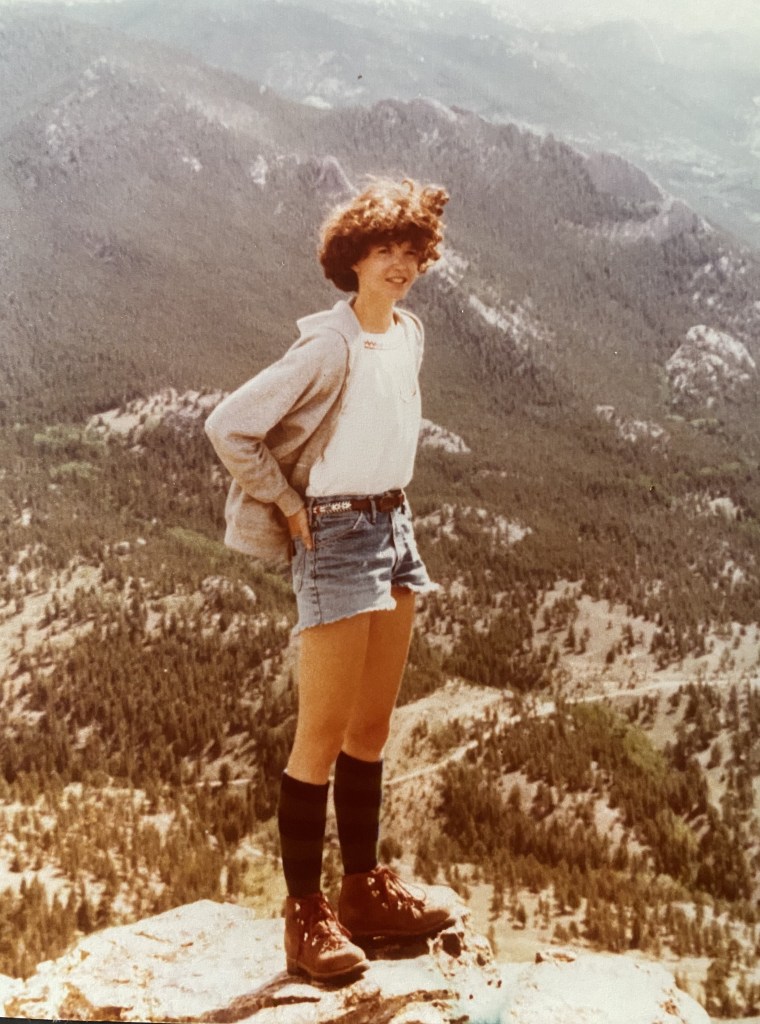
For decades now, because my memories of being just above the “500-Year Flood” are so fragmented, I have not told the story of being there, which is unusual for me. Most days, I am known to bore anyone close enough to listen with a story or two; I usually can’t help myself. The stories I have not told then generally are ones I cannot remember OR ones I do not want to remember. Only after writing about climbing Longs Peak, as I looked at the photo of me and my climbing companion, did it occur to me that the story of that summer was not complete without talking about the flood.

“The chaos along an otherwise trickling Big Thompson River killed 144 people, five of whom were never found, and carved out a chapter in the history books as Colorado’s deadliest natural disaster.”

https://www.coloradoan.com/story/news/2016/07/29/big-thompson-flood-killed-scores/87524858/

Both the hike and the flood were, for lack of a better word, watershed moments for me, but the lessons have been realized slowly and in fragments. To better remember those days, I looked at a couple of television news reports of the flood, but they were recorded decades after the flood. Strangely, the lack of technology at the time affected both the before and the after, the event and the memories. The only phones in 1976 were landlines and, so, warnings came only through emergency personnel going door-to-door; at least one first responder died trying to warn others that night. Only a few black and white photos are available as well, making attempts at remembering as cumbersome as the warning system had been. Nevertheless, I have felt driven to try to piece together a coherent memory of those days and, as I researched and read and poured over old photos online, I read the words of one Colorado disaster preparedness official. She said,”We learn the most from chaotic events.” As I have tried to remember and reflect, I think that she was right; we do learn much from chaos, but we have to work to find those lessons.

First, setting the stage for our story….

After my freshman year in college, I went to the mountains near Estes Park to work for what I thought would be a summer of fun. Once there, I was surprised to find a sense of peace that I had not expected. I was, for the first time, hopeful that I might actually be able to find a peaceful and stable home once I could support myself. I surprised myself, in fact, by making some plans to continue working at the camp in the fall.

Though I kept journals off and on, little remains of what might have been written that summer. I do remember that, on the back of placemats, during lulls in our work, I sometimes wrote letters or journal entries; most of them are lost, but the only one I have found from before the flood surprised me. I wrote:

  • Tuesday, July 20, 1976

    “Storm clouds have mingled with the mountain peaks since sunrise; we here in the valley are enclosed, shut away from the crowds that would disturb us….peace of mind must certainly follow. Here, in my room, I am lulled into a tranquil mood by the clouds every day. Even when my work day is long and busy and even frustrating,” I wrote, “…the calm is inescapable.”

Calm was something I could not claim before that trip and safety was not a place I remembered.

At that point, the clouds covering the tops of the mountain peaks around us (The highest peak in our area was Longs Peak at more than 14,000 feet in elevation.) were benevolent. I wrote: “These clouds draw your thoughts. Constantly changing, first ringing, then entrapping the peaks, they are playing quietly and are a source of constant amusement.”

Those “playful clouds” would soon turn deadly, though. During our Hikemaster classes that summer, we learned to appreciate the danger of the storm clouds that often came up quickly in the mountains. On July 20, though, I was simply calmed by their presence and movement. I needed that calm desperately; the family life I would return to was chaotic, unpredictable, traumatic. The rules changed daily and nothing that occurred in my home could surprise me anymore. The overwhelming feeling that I had carried with me when I tried to escape to the mountains from a tumultuous family life was fear. Fear and anxiety wore me out and, I know now, the trauma, fear and stress are why so many of my memories are fragmented at best.

And now, a word about trauma….

Trauma is destructive. Like the different kinds of skin cancer, trauma can create a wound that burrows deep or spreads outside of you, like when you fear for your loved ones in such a depth as to make others question you, call you hysterical even. And yet, because you have experienced trauma, you know. Accidents DO happen. People, even people you trust, DO harm one another. Your parents did not protect you. No one saved you. Nothing, not even seeing another day, was guaranteed. All the worst, all you feared, was indeed possible, did happen. And no amount of reassurance from others can repair that trust completely; we can learn to manage the fear but we never know when some sound or smell or person or newscast will bring it all rushing back.

Like a broken mirror, trauma shatters both our sense of self and our memories. Too many of my memories lie in shards on the floor and picking through them, trying to piece them together, trying to make sense, to have some timelines or events make sense is most likely why I write.

Even the effort to capture the memory of that time is fragmented: all that remains are three pages written by that seventeen-year-old me as I tried to capture what I saw and a couple of newspaper pieces I wrote after I got a job working at the local paper and my editors learned I’d been in the “500-year Flood of ’76.”

The morning of July 20, 1976, though, I was feeling calmer than I ever had, safer, more at peace and, to my surprise, I was enjoying even the colder weather on the mountains. I have long been known to dislike the cold intensely, so as I read the words I wrote, I am struck by what I believed I had found there: a home and place where I was being trained to pay attention to my surroundings, to know my own capabilities, and how to prepare for and help others in disasters. Wanting to help others is one response to trauma. I know I was hopeful that I might at the very least return the next summer to be Hikemaster and even one day make my home near the clouds.

I wasn’t able to stay, though, and thus much of what I remember, even as I try to piece it together, still seems fragmented and lost to me. Like most of my co-workers, I went home soon after the flood, and immersed myself in college classes. I never saw any of my coworkers again and I never spoke to any of them afterwards either; those relationships simply ending undoubtedly contributed to a sense of loss.

Now, as I try to access any memories of that time, I am left with the handful of days afterwards, days when all of us above the canyon were trying to figure our what was happening below us. Even though we were aware, we did not want to talk about how we ourselves inexplicably had escaped being swept up.

That first day, though, we didn’t know what was going on below us in the canyon.

Like the many campers along the river, we were enjoying the scenery. The Big Thompson River was one of the jewels of the area, a mighty source of income because of all the tourists it drew. Most of the year, “…the water runs only a few feet deep and fifteen to twenty feet wide…happily rushes over rocks and gurgles through pools as it descends 8,000 feet from the high range to the south Platte on the prairie. The water is clear, numbing cold, and playfully sparked by the sun.” (Big Thompson: Profile of a Natural Disaster by David McComb, Pruitt Publishing Company, 1980.)

  • Saturday, July 31, 1976

    Today is unusually rainy.

    Normally, storms approached Estes Park and the YMCA camp from the south; thunderstorms, while normal, are of short duration, with clouds often enveloping peaks by 10 a.m., which was why hikers needed to climb summits of the various peaks in the range in time to skedaddle back down below the treeline or risk becoming a lightning rod.  Our Hikemaster course is teaching us a great deal about safety and we are training to lead hikes, which would mean teaching tourists about safety as well. Too often, though, tourists in the park dismiss any safety preparations or climbing instructions with disastrous consequences. The tourists we met traveling up to the summit the day we climbed Longs Peak weren’t interested in safety tips.  As we were headed down to the timber line, we passed, for example, a woman in a summer dress, wearing tennis shoes and carrying a purse on her arm as if she were headed to a party. They would be fine, they told us, and they waved us on. They had evidently never seen a person who’d been struck by lightning. Unprepared hikers found their way to our camp often enough though and several of our coworkers are among those trained to rescue hikers.

We did not know at that time that many of our Hikemaster instructors would be called upon to help flood victims the next day.

The storm was approaching from the East, though, we noticed, and it just seemed to camp above us, a thunderhead with no high westerly winds to move it. Reports were that during that Saturday evening, twelve inches of rain fell, about the normal annual rainfall amount for the area. Estes Park and the YMCA are above Lake Estes on the Big Thompson River, but, just below us, the unrelenting water from several tributaries gathered debris and swept down the canyons, both restricted by and guided by steep walls. By the time the waters reached the North Fork and the Big Thompson, there was already enough force to destroy bridges. All along the canyon, this storm surge ripped up everything in its way, including homes and campsites, swept up by a water level estimated at nearly twenty feet above the normal. Reports I read later told of at least one emergency worker dying in his attempts to go door-to-door to warn people.

We Learn from Chaos….

One of the innovations that came out of the Big Thompson flood was a national warning system for floods and other national disasters. That, with the advent of cell phones has greatly reduced the number of deaths in floods.

  • Sunday, August 1, 1976

    The camp is secluded from the world as usual, except for the hymns and local newscasts being broadcast on the radio in the bakery. Rain falls steadily still and a heavy fog had settled on Big Thompson Canyon. Four of us went by van higher up into the mountains to a lodge to feed some visitors. While the lodge was only thirty feet higher than the camp, it was eerily sitting just above the clouds and driving on those narrow roads on the sides of those mountains felt even more dangerous than normal.

    Sitting in the lodge’s kitchen after breakfast, we listened to the radio to learn when we could expect some sunshine. Mountain thunderstorms seldom lasted even more than an hour or two, so this second day of fog and rain was disconcerting. The announcer became somber, reading a report that surprised us: “The Big Thompson River had overflowed its banks in the narrow canyon leading to the valley and four persons were reported dead.” We became quiet, not having known that the storm was dangerous. The cook was worried about his family, knowing they lived near the flooded area. The storm, we heard, was stationary, and we could look forward to more rain.


    A lightning flash warned us we needed to take the van back down the mountain before trying to drive became even more treacherous AND before the van started attracting electricity. We warned the visitors in the lodge not to drive anywhere or even to go outdoors because they’d be lightning rods.

    Throughout the morning, as we worked back at the bakery and kitchen, we listened to any news reports coming over the radio. We worked silently through the day as the reports began to seem unreal; the number of dead grew to more than sixty before evening. We began to slowly comprehend the devastation that was apparently just below us. No one wanted to ask if it were just dumb luck that we were above the deadly flood and others were below it. The folks in charge were not sharing much information; maybe they didn’t want us to panic. No one really was surprised to learn that our phone lines were down. That was not terribly unusual, but the announcement added to the somber mood and hushed tones all day. The frequent updates on the radio and our director forbidding us to leave the YMCA property kept us all close to the kitchen even long after our own shifts had ended. Only the maintenance crew left to take the trash but the normal 30-minute round trip took hours and they returned with widely varying reports of the flooding just 1500 feet below us. If any of my coworkers or those in charge were afraid, I did not see it.

Monday, August 2, 1976

  • Monday, August 2, 1976

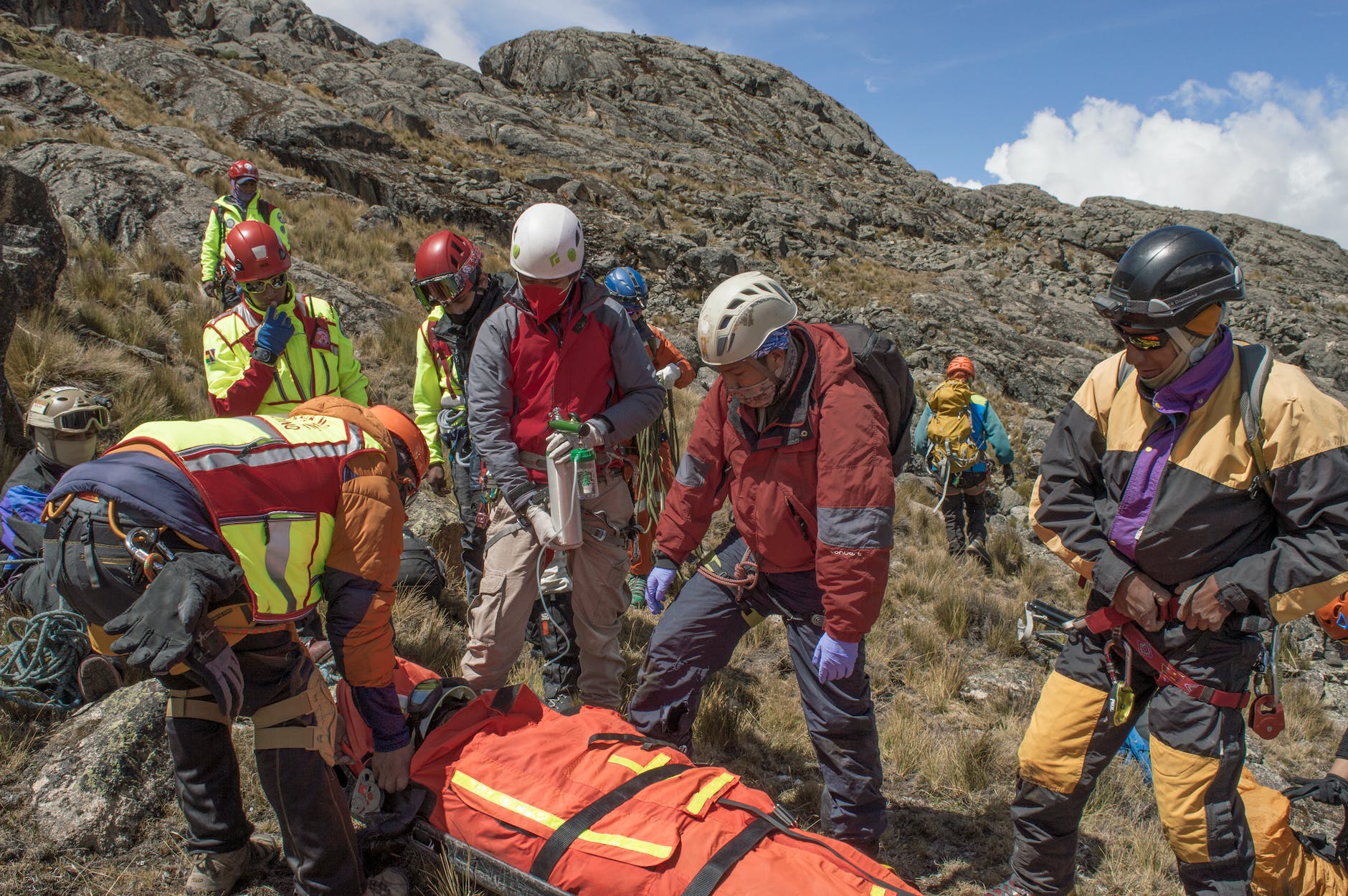
    This morning, the fog is even lower than before, which meant rescue helicopters were grounded. Several refugees have been brought into the camp in the night. So forlorn, they are wet and cold and dirty. They wait for some coffee and a blanket; dirty pillowcases in the hands hold the few belongings they were able to salvage. They are lucky, though; hundreds more are still stranded. Many more are missing and most are expected to be dead. Still there are no phone lines available and a trip to Denver, normally a couple of hours, would take six or seven and that was only if you had a four-wheel drive vehicle. Technical climbing skills are needed now for rescuers because roads are washed out in the canyon and the only way out is up over the cliffs.

  • Tuesday, August 3, 1976

    For three days, we have heard little about what was happening below us, except by the radio. I suspect now they were trying to prevent any kind of panic; we also did not know what the rest of the world thought about our fates, either. We were surprised to find for example, that our parents had heard mostly dire reports about Estes Park and the YMCA camp above it being unreachable and even obliterated. Some men we didn’t know came to get us today and told us we were going to be calling our parents via ham radios set up. The instructions to “tell your parents you’re still alive” stopped me for a moment. I had not known nor had I had a moment to worry what they might be thinking at home.

The overriding feeling it seems was somber but also a bit bizarre. For one example, our local radio station published a newsletter/bulletin we could see every morning, and next to the names of the dead each day were that day’s baseball scores.

Rumors

Rumors abounded. One account said all manner of snakes, also apparently trying. to escape the waters, were chasing survivors up the sides of the Big Thompson River canyon.

There was one report of a baby, who became known as Baby Moses, stranded on a rock in the rushing water.

One newspaper wrote: “After it opened, the refugee center at Loveland High School became a source of personal details as survivors, some with nothing more than the clothes they had worn into the canyon, told how an evening of cards with friends was interrupted by rushing water and a mad dash to scale slippery rocks. Throughout the first days rumors were abundant. There was one report of a baby, who became known as Baby Moses, stranded on a rock in the rushing water. One national publication called to verify that the baby had been rescued by a woman who lassoed it while riding a white horse. But no one could substantiate any of it, and The Coloradoan reported it as an example of the rumors.” (Big Thompson: Profile of a Natural Disaster by David McComb, Pruitt Publishing Company, 1980.)

“We learn the most from chaotic events.”

Disaster Preparedness Official in Colorado

I Learn from Chaos

For the longest time, I realize now, I felt profoundly disillusioned after that flood; the safe home I thought I had found, in fact, was as treacherous as any place could be.  I was not able to stay and create a home there that I was seeking because of the flood and damage. It took me years to acknowledge that and even longer to name the terror. I could not risk feeling that terror then; none of us could afford to name the terror that was just below us. 

I certainly had seen the power and wisdom of what we had been taught while learning to hike safely on those granite peaks. I cannot necessarily agree that we “learn from chaos,” but I can admit that I learned from how others around me operated in the chaos. 

Over the years since I left the camp, I know that I consciously incorporated lots of those lessons into my life. When you hike, take only pictures and leave only footsteps. When you journey, make sure someone knows where you’re going and when you should be back. When it’s cold outside, layering is the key to staying warm. If you’d asked me before what that summer taught me, I would have acknowledged all of that readily. I also spent a lot of time the next few years in jeans, hiking boots and denim shirts. I even decorated any space I inhabited with topographical maps. I started jogging in order to build up my endurance. I even tried caving because I was not near any mountains.

Mostly, trying to remember any part of that time has shown me that I had learned and incorporated lessons from the flood into my daily life much more extensively than I realized. Being just above the flood and watching how others navigated that danger, in fact, would inform and guide me for decades, if only because so much of what we’d learned in our classes had been especially effective in the midst of that chaos and tragedy.

There is wisdom and, often, survival, in choosing to be careful, and to work together. We learned to look before you step over a log or rock, make sure you pack what you need but only what you need, and, naturally, respect the power of nature and especially of water. In life lessons, those translate to being intentional, learning when enough stuff is enough and admitting to ourselves that we are not the most powerful force out there.

When my parents showed up a few days later to take me back to Missouri, they said I was different. The summer had been grueling in a number of ways, but I had learned so much that would inform every step I took from then on, would help me create the safety I craved whatever path I chose. I don’t doubt that the summer has helped me feel brave enough to continue to travel and explore new places, albeit with safety ever in mind.

Until now, I hadn’t talked or thought much about that time. I chalked it up to being forced by circumstances to abandon the path I had begun to enjoy so much. I felt for the longest time that I’d had an adventurous summer but it was over and so the memory and the possibilities were simply filed away like a summer fling; they were simply not relevant going forward. What I didn’t recognize was that I was on another trek, one that would last my lifetime and what I learned during that summer was helping me all along to find my way, help me create the safety I craved. I say “create” rather than find because all that I learned that summer helped me slowly realize that the safety I sought I had learned to carry with me. “Safety” would be wherever I found myself when I paused long enough to look up from the path.

I will continue to unpack the backpack, to try to remember the story of those days and others still dark. I can recognize one truth, though, folded neatly like a bandana in my jeans pocket: chaos and danger will be all around no matter where I travel or where I land, no matter where I make my home. Because of that training, though, I have tools, guiding principles and more confidence to continue exploring whatever path has been before me.

Of Pakistan, Chewing Gum, Chatty Cathy Dolls & Valiant Efforts

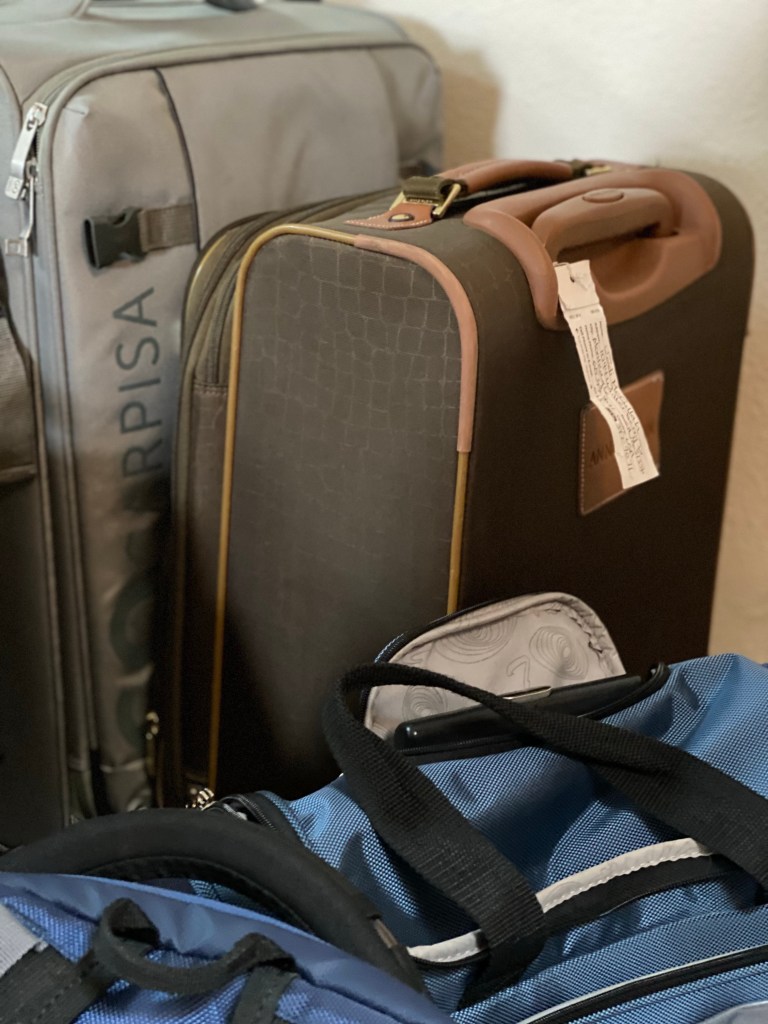
A favorite talisman from Pakistan. I loved how all the different sizes nested one inside the other. I’ve carried this painted wooden toy with me for nearly sixty years now. Cracked and repaired, broken but still beautiful, a cradle of memories.

When I was seven, my brother, who was eight, my sister, who was six, and I got dumped in our grandparents’ laps, a harsh ending to what had begun two years earlier as a grand adventure, meant to last a lifetime.

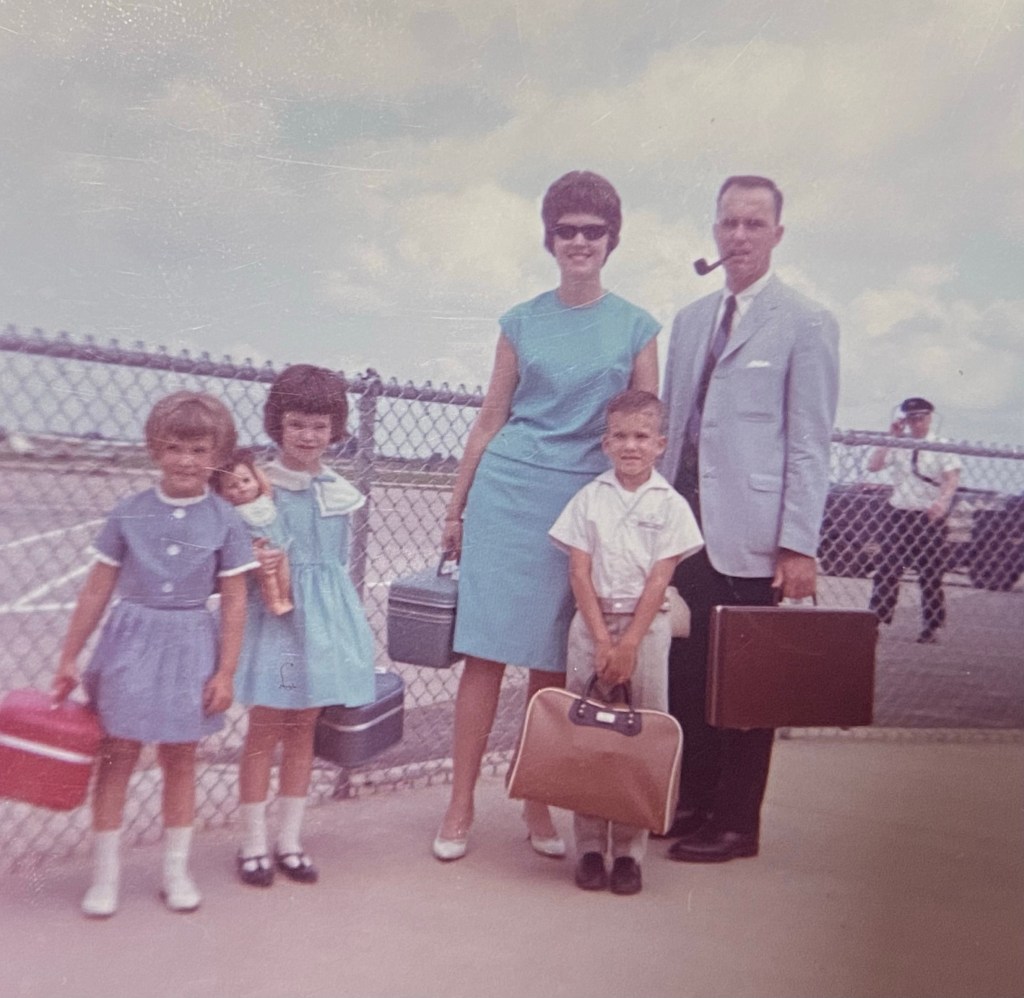
Once it was announced that Dad had secured a coveted engineering job overseas, we had all been celebrities at one festive send off after another from Springfield, to the unknown and mysterious West Pakistan, (now Pakistan). The biggest Bon Voyage event, where each of us had been presented with brand new suitcases to go with our brand new outfits for the journey to the other side of the earth, reflected how impressed friends, coworkers and neighbors had been when Dad had secured the contract.

That the way to Pakistan involved so many shots for so many illnesses was annoying, but, for me, the memories of those jabs are overshadowed by those of international flights on Pan Am where the pilots brought all the children on the flight into the cockpit and each of us received a souvenir Pan Am flight bag and our own set of pilot’s wings. I remember buying a doll in Tokyo, where I was convinced that I could speak Japanese because I could speak to the sales clerk. I remember arriving in Karachi to be served warm milk and runny eggs and that we slept twenty-four hours before driving to our new home in a walled compound in Northern Pakistan. I remember much about our time in Pakistan, but I do not remember the trip home.

Thoughout the two years we were there, Dad was likely excelling in his work, but, before the contract was completed and we could be posted at yet another overseas project on another continent, Dad was forced to break his contract and return to the states on short notice, with little or no money, no job and much anger.

So, just a few days after boarding a plane for home, the three of us children found ourselves seated in a row on the edge of the bed in a motel halfway between our grandparents’ home in the little town of Waynesville, Missouri, and wherever Dad had found a job. The motel bed was low to the ground; our toes just touched the linoleum and we were each individually toeing the floor and pushing the old bed up and down, causing the box springs to creak softly. Next door, we could hear our parents and grandparents arguing loudly. We did not know then the three of us would not be going to the tiny apartment Dad had managed to find. 

I clutched my Chatty Cathy doll. Bless her heart, she’d stayed with me throughout our time overseas in spite of looking like she had mange because my little sister had taken a pair of scissors to her black hair. My sister clutched a stuffed monkey who had a permanent grip on a plastic banana. She had already given up the doll she’d been given, one who giggled when her arms were squeezed, and who likely ended up in another child’s arms, looking like she was just out of the box with that curly, blond hairdo intact. Don’t think it didn’t cross my mind, though, to experiment on her with scissors. Maybe my sister was just more angry at that time than I was. 

“Say goodbye to your children!” my father had hissed moments before all three of us climbed in the back of our grandparents’ sedan. Mom’s eyes were already glazed over though; she wasn’t responding. She had said nothing while my father had been yelling for weeks, it seemed, most recently in the next motel room, in front of her parents, who also were silent. We couldn’t hear any of those angry words at all, only loud voices, then we each flinched as the door to our motel room had swung open and we saw our parents standing there.  “Say goodbye!” 

Grandma Ree and Grandpa George seemed just as dumbfounded as we were, I think, and were really in no financial position to take on more, but to their credit, they put the three of us into the back of their tiny dark blue sedan anyway.  Driving away from that motel, each of us rode silently, wide-eyed, tacitly agreeing it was better not to ask. 

His Adventure; Her Nightmare

On our way home from Pakistan, we’d each been wearing a new pair of leather shoes made from a cobbler in Pakistan. Even finding shoes while we were there became an adventure for my father who savored every side trip to a bazaar and whose shopping addiction devoured cameras and jewelry and handmade rugs and carved tables with ivory inlay for playing chess. Being there while the country was at war with India was a nightmare for our mother, though; after my parents ventured to the bazaars, she had nightmares about the children who had been purposely maimed in order to make their begging more lucrative. By the time we left Pakistan, Mom had begun obsessing about keeping the windows covered with foil for nighttime blackouts, long after it was necessary. 

The civil engineering position Dad had secured with this company overseas was his dream and meant to last his whole career; he had not planned to have to return to southwest Missouri with his family at all, certainly not as a quitter. This contract was his chance to escape small towns and small minds, and that dream was not meant to die a quick death because his young wife discovered the balm of alcohol and realized that some men could be sweet. Mom, bless her heart, had been thrust into a world she had never contemplated and one she was vastly unprepared to engage, understand or master. Dad, on the other hand, had served overseas in the Air Force and, when he returned, he invested in National Geographic in order to know more about the world he had only tasted in his two years in Puerto Rico. This job had been his chance to immerse himself in adventure and travel.

A small-town girl who had never left Missouri before, Mom continued dutifully each day to don a crisply ironed dress and heels while struggling to learn to oversee servants, like the first one, a “Bearer.” The Pakistani manservant who did not speak any English was in the house all day, and ironed and cooked unrecognizable meals for us.  He didn’t last long. A gardener, a “Mali,” was required, if only to keep up appearances in the European-style neighborhoods built by the company that had brought so many engineers and families from all over the world. We knew, though, that walking outside one morning to find the gardener, proudly holding up the cobra he’d caught in the yard where her children played was too much for Mom. She began to unravel. Our father held out, though, and doubled down on social activities, including starting a Boy Scout troop, in hopes Mom would adjust. Instead, she discovered the alcohol that had never been allowed in her home growing up. She found the mathematics of rum, to be precise. One drink made her feel good, two made the barbed wire on the compound walls fade, and four drinks made all the lizards and maimed children and strange men in the house just slip away for hours and hours. 

We never saw Mom drink, though. We were in bed every night by seven p.m. We never saw her drink and we never saw our father much at all.  For the two years we lived in Pakistan, our father kept twelve-hour work days and so our paths did not cross for two years, except on the occasional family shopping outing. During those two years was the only time we had allowances and every few weeks, the family would venture to the compound’s shopping area where we could find a Pakistani furniture store, a European-style restaurant complete with a dessert cart filled with petit-fours, and a toy store, where we were happy to spend our allowances, most often on comic books since there were no Saturday morning cartoons. We had no television at all in our home there, in fact, so by the time we left after two years, we had amassed more than three hundred Archie, Superman and Richie Rich comic books and often participated in a robust trading circle with other neighborhood children. Once, though, we all three saved our allowance to buy a pale blue scooter that we could see high up on a corner shelf in the toy store. We visited that store several times without buying any new toys or comics, simply to be sure no other children had purchased that little scooter high up in the corner.  We were struggling not to run or pull on our father’s hand to get to the store when the day for purchase finally arrived. Together, the three of us proudly plunked down our rupees onto the counter and watched, holding our breath, as the store owner pulled the scooter down and dusted it off.  When he rolled it around the corner of the counter, however, to present that blue beauty to us, my older brother and I realized that the scooter, heretofore only viewed from afar, was too small for either of us. Only our little sister would be able to enjoy it. There was no going back, however. The store owner was beaming at having sold the toy that had taken up his store’s top shelf for months and our father would have been too embarrassed to halt the purchase. Typical of our relationship, though, my brother and I did not commiserate; we were silent as our feet dragged on the dusty road going home. Our sister stayed on the sidewalks with the scooter but I do not remember her using it very often after that, which only added to our disappointment. 

Photo by Erik Mclean on Pexels.com

Other than the occasional shopping trip, church and the bowling alley, we did not see our father. Even at those venues, we did not interact with him. Our understanding was that, like the other engineers who worked long hours building that dam, our father was excused from many family activities. When we did participate as a family, like at the bowling alley, the children went off unsupervised mostly, so we still didn’t see our parents unless we were causing a problem. Dad was apparently a minor celebrity at the bowling alley, though, often bowling perfect or near perfect games. Our time there consisted of ordering tuna fish sandwiches and zombies to drink at the adjacent grill and watching, fascinated, as the Pakistani workers reset the pins after each throw of the ball.  No automated pin replacement there. 

Though I was very young, I remember a lot about when my Father was helping in the beginning years to build Mangla Dam in West Pakistan, now Pakistan (as opposed to East Pakistan, now Bangladesh.) Most of our old photos from that time, however, are lost. I do remember that strange juxtaposition of Western and Pakistani. We attended a British school where I learned some Urdu and to add an “e” in the middle of judgment, (i.e., British spelling) a bowling alley and we enjoyed a wonderful series of public pools. We also explored some historic sites and went to school with children from all over the world, including Pakistan. (See Wikipedia, Mangla Dam and Mangla Dam Memories on Facebook.)

Otherwise, the three of us were on our own outside of school hours. The compound was large with an American side and a European side and a bus that drove around both sides all day.  On any particularly boring day, the three of us would simply climb onto the old, repainted school bus and ride down all the streets of both sides of the compound, cooled by the hot wind coming through the open windows and fascinated by what our neighbors might be up to that day. I am still amazed that we were simply allowed to wander at five, six and seven years old. In Pakistan.

The entire adventure seemed a contradiction in terms, characterized for me by the fact that we lived in a compound surrounded by a stone wall with barbed wire and cut glass on the top but where the gates were always open and unguarded.

There was an open gate at the back of our own yard, in fact, and from it, we could see a small village where, we were told, women slapped cow dung onto the walls of the homes to dry to be later used as fuel for the fire. Every day, we could hear the calls to worship; they were haunting and beautiful, a call to an Islamic understanding of God that serenaded us as we walked to our Christian church potluck supper. For some of the year, the dust on the side of the road was a fine and deep silt and we would slide our feet through it as if it were snow; other times, during monsoon season, there seemed to be nothing that was dry.

Unsupervised. In Pakistan. At age 7.

That we were largely unsupervised outside of school hours made sense to someone I guess. Until the injuries began. First, my five-year-old sister got stitches trying to climb up a ladder to dive off of the high dive at the crowded community pool. Then, I nearly drowned just a few feet from my mother in the same pool; another mother noticed me struggling to keep my head above water and grabbed me. Mom was busy chatting. There was a broken arm, then stitches for me. Twice. This time, however, neglect was not the problem. I had become the target of choice for my older brother who gleefully ran his bicycle into mine, causing the pedal to tear into the fleshy part of my lower right leg, leaving white tissue oozing down my shin. He later threw a cutting board at me, just missing my eye socket but also requiring stitches. We may never know if another parent intervened or if our father walking into the living room to see our mother kissing the neighbor, but there came a day when Dad sat all three of us down on the edge of a bed in our shared bedroom to tell us our mother was ill and would be “going away” for six months or more. It had been decided we three would wait for her there, in Pakistan.

That’s when the wailing began. Paid mourners could not have been louder or more dramatic. At the time, we were terrified, but we were also resolute, huddled together eyeing that dark and dangerous chasm that seemed to open up before us. We did not know this man. No way were we letting Mom go quietly. We did not stop crying until Dad returned to the room hours later to tell us we were all going home. 

Our relief was short-lived, though; once my father dragged Mom away from that motel, we did not see or hear from our parents for months and months. The timeline is vague for me but I remember attending three schools in second grade. So, once we were settled in my grandparents’ two-bedroom duplex in Waynesville, I took to running away, searching for her. From school, from my grandparents’ home, even from church services, I escaped, watching for unsupervised moments and unlocked doors, taking advantage of crowds and distracted adults, always looking for my mother. 

More than once, because Grandma Ree was exasperated, I was simply allowed to stay home from school on my grandfather’s day off and we watched cartoons and ate Oreos while he ironed the work shirts he wore driving trucks. Grandpa George seemed to me to be the only adult who was not angry with me; I remain convinced that was because he understood my quest. 

Once, after I’d run away from school, the school principal found me. He and a teacher picked me up in a car after they’d driven all over that little town looking for this wayward seven-year-old. 

“There, there,” he said, offering me a piece of gum in a green wrapper folded around shiny foil, very much a treat then.  Defeated for the moment, I cooperated and got into the old car, only because I’d been wandering for hours and it was getting dark. Offering me a stick of gum, though? Did the adults around me really think that would fix this? I remember looking at him as if he were clueless. It would be years later, though, before I could be proud of that seven-year-old slapping that piece of gum from the principal’s hand in the back of that car, and even longer before I could appreciate the courage it had taken for the three of us to stand up to our father. 

We all paid a price, though; we would never have back the mother we had known. When we saw her again, she was subdued, defeated. She had endured shame, therapy, even, we were told later, shock treatments, all because her dream was not his dream. She was not unlike many women of her day, praised for obedience like a child. For the rest of his life, though, my father was on notice. I’m not certain to this day that we accomplished much, but our little rebellion was uncharacteristic of us and I am proud to be able to look back and say that those three little souls refused to go quietly into the darkness. 

.

Boots in the Trunk

Some of the greatest moments in life, I believe, are when you find out you are not the only one who does “that.” You’re not the only kid in class who likes to blow bubbles in her chocolate milk or the only student who questions why you should wear a dress to school on picture day when you hate wearing dresses and no one ever sees your dress because you’re always in the back row for pictures. Once, on a phone interview for a job in Florida, I mentioned that most of my friends “up here in the north” seemed to believe that living in colder climates builds character and people who want to live in warmer places are just lazy. The employer simply said, “Come on down; you’ll find plenty of hardworking folks here; they just happen to like burying their toes in the warm sand.” I remember thinking, “I’ve found my people.”

One of my most affirming moments occurred a few years ago while watching a movie that was set in southern California. A woman was sitting in heavy Los Angeles traffic on her way to work when the road began to shake and seemed to begin rolling. Her first response, once all the motion ceased, was to pop open her trunk and change from her fashionable black pumps into a pair of hiking boots. She evidently kept in her trunk for just such an emergency, or at least the character did. She must have known she’d likely have to walk through streets filled with debris, and the boots were just one of the survival tactics she’d either learned firsthand or been taught. She was prepared.

I remember nothing else now about the movie except that I wondered if she also kept some water and maybe a first aid kit and snacks in her trunk. What I loved was that she wasn’t some hiker out on the Appalachian Trail for weeks; the character must have been created by someone familiar with earthquakes who understood that we never know when or where we’ll need to run for our lives. It would be several years later before I would learn that boots in the trunk was a common response for survivors of trauma and abuse. I don’t know if the woman in the movie was supposed to have grown up with a scoutmaster for a father, or if she was a trauma survivor, but she embraced the boots in the trunk. She didn’t think it was weird.

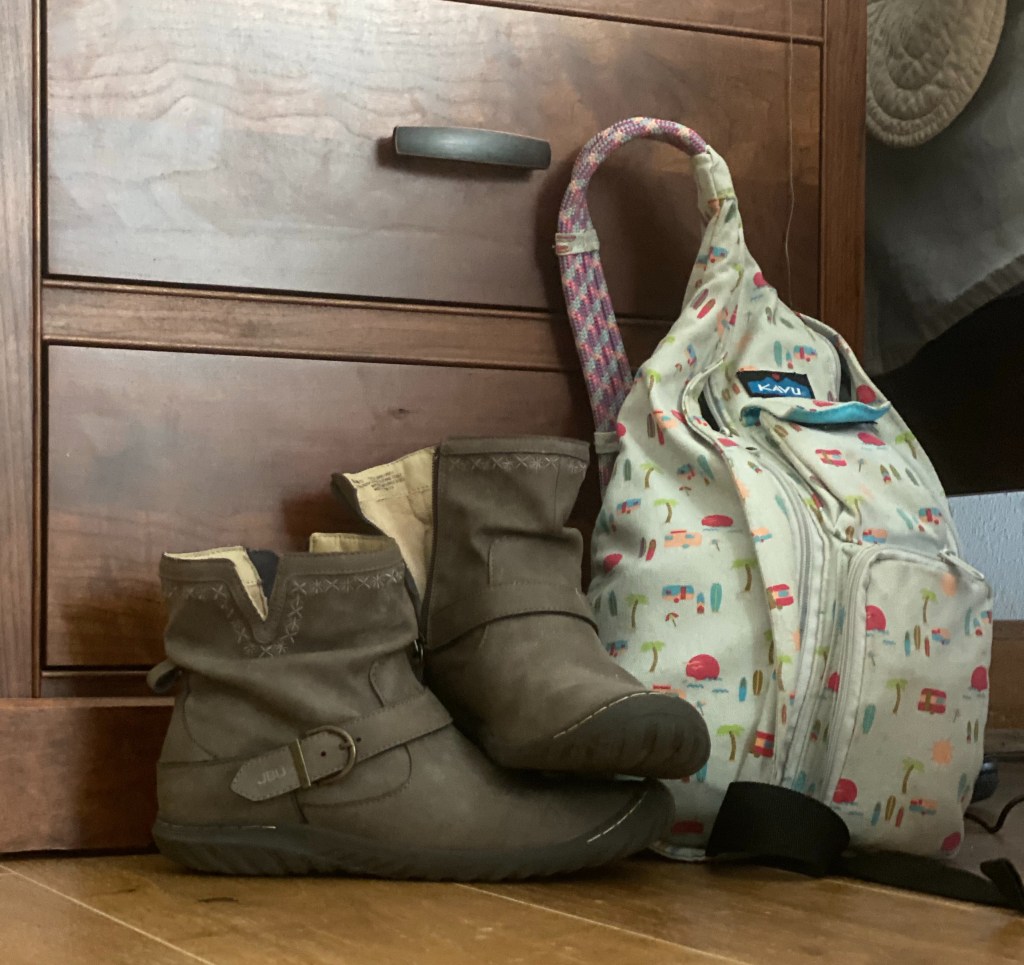
Boots in the trunk, a “go” bag by the bed…

I was a teen when I realized not everyone slept with a “go bag” next to the bed in case a speedy escape became necessary in the middle of the night. After five decades of being teased by others for it, though, I was especially grateful to finally learn that lots of other trauma survivors sleep with shoes under the bed, a wallet or purse with meds, money and that handy Swiss Army knife by the bed, so that in an emergency, they do not waste precious survival and escape time locating footwear or a flashlight. Finally, I could stop being embarrassed that I preferred to sleep in something I knew I could wear outdoors in case of a fire or an earthquake or tornado. I could stop hiding the fact that I think about not wanting to have to run into the dark barefoot and thus be even more vulnerable in a crisis. My “go bag” has been a reasonable and healthy response to the lessons of my childhood where I was taught to be afraid of the dark and it is also a reflection of a strong instinct to survive. Instead of being embarrassed that I startled so easily, I became proud of my Swiss Army knife and I became grateful for those survival instincts. Plenty of children do not get out.

Escape Artists

I know some people who were abused or whose childhood was traumatic seek vengeance and long to hurt the one hurting them, and even hurt others in an attempt to ease their own pain, but my instinct has always been to escape. When my siblings and I were young, they seemed unaware that following the rules meant escaping the belt or the hair brush.  As we grew older and taller, I knew to stay well away from my parents’ and even my siblings’ arguments because they so easily slid into the violent responses we’d seen modeled. I mostly escaped broken bones and stitches by escaping as a child and teen. Later, I applied the same tactics to job losses and failures and broken relationships because I knew when to escape, and how to – most of the time – make an exit before the explosions.

Because I could escape, none of their crazy dust landed on me. I know without a doubt that is one reason I survived and got this far. Too many children who grew up like we did never get very far from the crazy, never get too many steps out the door.  Maybe that is because they had not managed to stay arm’s lengths away as children and teens; maybe their scars left them less equipped to walk away when they were old enough; maybe their backpacks were just too heavy to carry another step.

Sadly, few if any adults were able back then to recognize this behavior as a survival technique and, thus, necessary. I once attended a junior high church retreat.  Our parents sent us away to every camp and retreat that was offered. My brother and sister hated those camps. In contrast, I eagerly grabbed a bag and hopped into whatever car was taking us away from whatever house we were living in at the time. At that particular junior high retreat, though, the girls’ leader accused me of being like a “wolf.” Because I was being quiet, she accused me of preparing to “pounce, to attack,” when the opportunity arrived.  I’m really not sure what kind of attack she thought I was planning. I remember just staring at her while she accused me of cooperating with some kind of evil. She was only half wrong, though, which meant, of course, that she was half right. I wasn’t preparing to pounce, though; I was preparing to escape, trying to figure out when that might be necessary.  Sadly, it felt like escape was too often necessary and, after a while, became a way of life.

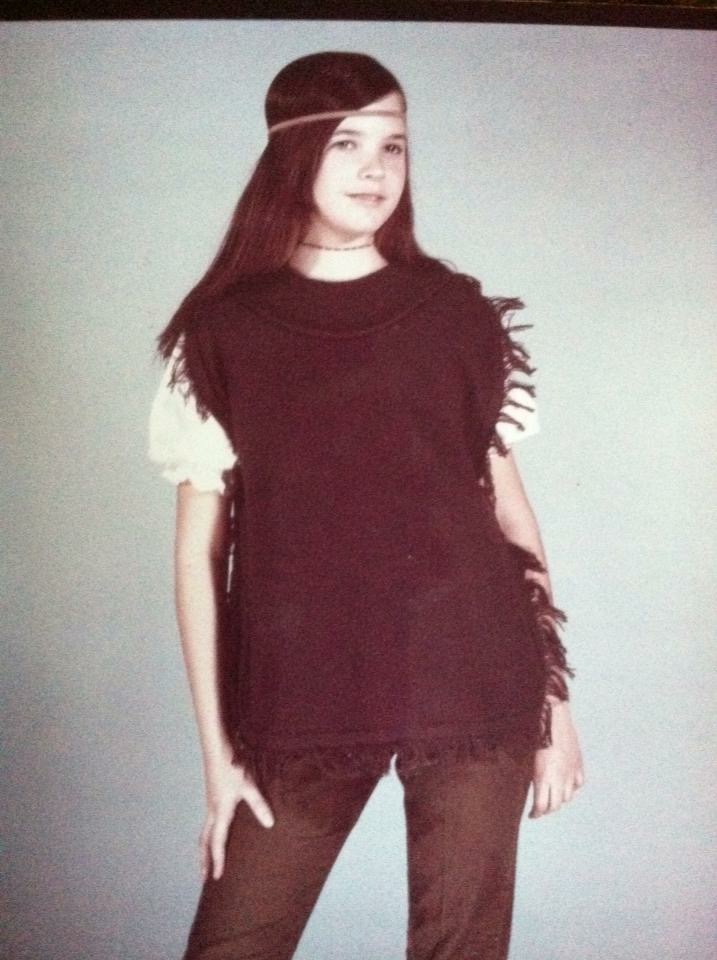
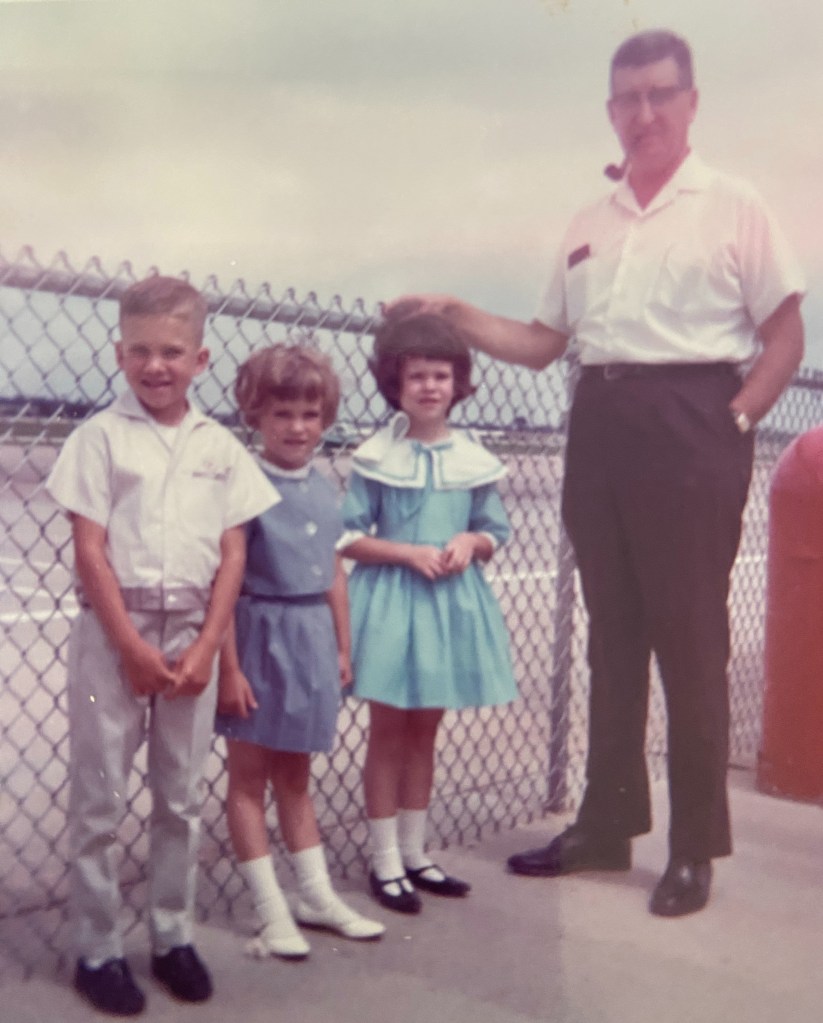
I wasn’t preparing to pounce, though; I was preparing to escape. Sadly, it felt like escape was too often necessary and, after a while, became a way of life. Photo, 1964.

A counselor once asked me how I had survived the turmoil, upheaval, illnesses and chaos of my home. Since I’d already told her about how often I had simply walked away, I was confused. I know now she wanted me to relate to her how I knew when to get the hell away from my mom or dad or brother or sister or myriad boyfriends. The fact is, in the beginning, I became a girl scout. Well, actually a boy scout. Okay, both.  Being a “girl scout” meant being good. Being good meant usually no one noticed me and, if I followed the rules, usually no one would hit me.  I would certainly never give them a reason to hit me.

Being a “boy scout” meant being prepared. Since we had moved so many times before I was sixteen, it wasn’t like we didn’t have practice packing. I kept my bag and shoes by the bed because they kept me feeling like I had some power to escape if I needed. I knew when to leave because I was what counselors called “hypervigilant.” I watched folks around me like a hawk. That was what concerned the youth leader at the junior high retreat; she did not recognize the behavior as a survival tactic developed over time in response to threats; it was somehow easier for her to imagine a teen as evil than to consider one of the parents in the church might be a predator, I guess.

Live Like a Refugee

The more I worked to find healing over the years after I finally escaped my family home, the more I found like-minded souls who also seemed to move about more than others. My first husband and I were both nomads when we met. “You Don’t Have to Live Like a Refugee” by Tom Petty was the soundtrack of both of our lives at the time. We had both been traveling quite a bit when we separately landed in a writing class and met; even nomads and escape artists settle down for the odd semester. By then, we’d both traveled all over the US and overseas and had both served in the military. We decided to settle down together, to create an alliance, to have each others’ backs; we might have imagined at the time that we’d be more settled, but we found then there were some things about being nomads we still liked and so we promptly moved to California, then to Japan, then to Tennessee, anywhere but where we grew up. So much for no longer being refugees.

Changing Tactics

There came a time, however, when I no longer had the luxury of escape, of running, because our two sons meant there were others I needed to protect and escaping might mean leaving them behind and that was not going to happen. Needing to protect others complicated escape plans, for sure. We taught our boys never to climb up a play structure if they could not make it down without help, to meet up at the back gate if there was ever a fire and we would not let them sleep upstairs until they were big enough to climb out a second story window onto a porch roof and then jump down to safety. Protecting them changed everything. I’d explain it by talking about driving over the huge bridges spanning the Ohio and Missississippi Rivers. We had to drive over both of them at the confluence of the rivers near Cairo, Illinois, every time we went north. Driving over those bridges was frightening enough for me personally but became hellish when I had children and their safety became most important. For myself, to calm my fears as I drove into the monstrous structures crossing those wide and churning rivers, I had developed a bridge survival plan in case the car somehow went into the water: wait for the car to fill up, open the window to swim up and then try to float on the current until I could get to land. With two small children, however, that plan would no longer work. Suddenly, I would need to take two precious little persons with me through that drill and, well, there was not a good time to try to talk to them about that plan and besides, it would most assuredly traumatize them so I prayed extra hard instead that the bridge engineers had done their jobs well and other drivers would keep their distances as we crossed over those bridges.

I still slept with my shoes next to the bed AND I taught my boys as much as possible about safety, but the reality was that escape to survive was no longer always an option. I often still “see death everywhere” as my ex-husband used to say, meaning I am one of those safety-conscious folks that drive some folks crazy. Loving children has helped me learn to stay connected rather than seek escape, though, to find trustworthy people, to ask for help and to allow trustworthy others to help me. Over the years there were a number of folks who definitely helped me when I needed it; reminding myself of their support and encouragement has helped me trust that I can find others and allow them to help, too, if necessary. I needed to learn to choose relationships with trustworthy people and to develop alliances, to stop just trying to survive. I needed to open myself to the possibility that there might be more.

Getting older helped: I started wearing more sensible shoes all the time so boots in the car weren’t major safety concerns anymore!

(Photo by Jodi McCullah, 2023. All rights reserved.)

Why, though?

Watching my responses over the years, though, I know, has perhaps caused some folks who know me to think I’m just paranoid or hypersensitive for no good reason. This blog is, in part, an attempt to explain that behavior to those who do not understand. Writing about what has been in that backpack for so long is also for my tribe, for all those other folks who also were awakened in the night by a touch that taught us to be afraid of touch. We share this because we know “just in case” has come before.

I still struggle to say I am proud of all of this. I wish we were still innocents. I wish we did not know what we know. I wish we had different stories to tell. The things we feared, though, were real for us and we did not have the luxury of going through a day without being hypervigilant, without knowing firsthand that sometimes the unthinkable does happen. Sometimes, for some people, the darkness IS dangerous. To survive then, sometimes you do what you gotta do for the time being and, once it’s safer, you can work on growing, healing and learning other ways to take care of yourself. I am grateful, then, for all of you with boots in your car and a pack slung over your shoulder. Maybe it wasn’t always pretty, but we made it.

Because we were prepared, and we escaped, we can live into new possibilities; we can embrace the reality that the frightening place we came from is not all there is out there. (Photo by Jodi McCullah, 2023. All rights reserved.)

As I was writing this, I wondered why the photo below spoke to me and now I realize it’s because what’s around that corner in Venice promises to be beautful and hopeful and exciting. I celebrate all those survival skills, including learning over time that we will find what we need, AND learning to let ourselves ask for and accept help. Good news: there ARE others who do “that.” We are not alone and there are those who love us anyway. Embrace your backpack then or your boots until you don’t need them, then thank them for getting you this far and go see what’s around that next corner! You’ve got this!

Venice, Italy, 2022, photo by Jodi McCullah. All rights reserved.

Leave me a comment: what was in your survival kit?

Leave a comment