
(This is for all of us who try to do too much alone, for those lone wolves who don’t need any help. You know who you are because you’re always worn out!)
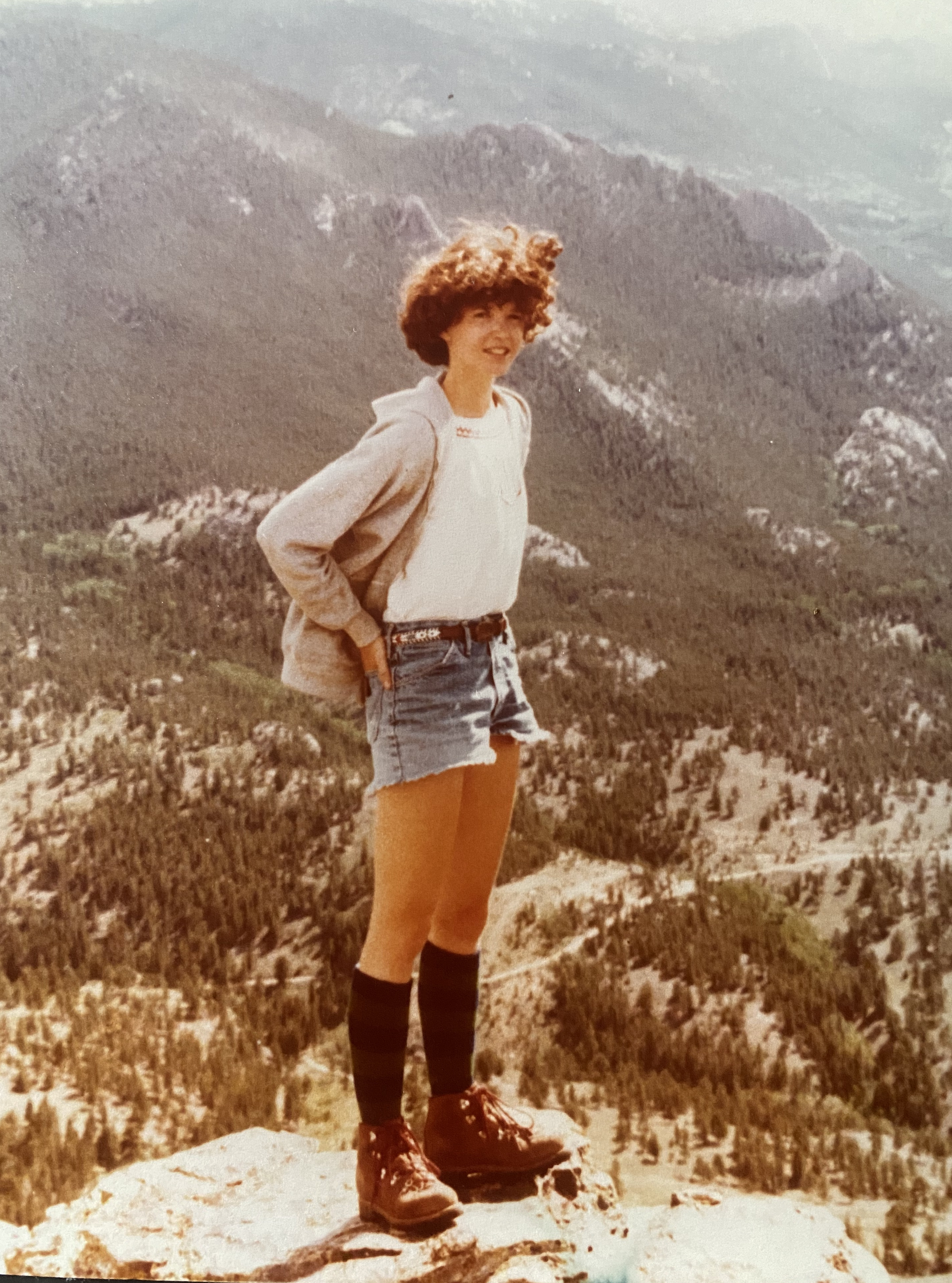
Forty-plus years ago, as the summer between my freshman and sophomore years in college was coming to an end, I embarked on what was to be an epic journey for me. During that summer, I was working at the YMCA of the Rockies in Estes Park, Colorado, adjacent to the Rocky Mountain National Park. Our days were spent working in the YMCA camp that hosted thousands of visitors in the summers; but, once work was over, several of us were studying to be hikemasters. If we completed this course that summer, we would be able to return the next summer and help lead hikes for visitors. The park is beautiful with numerous peaks well above timberline and some of the peaks even had glacier packs of ice. The highest peak in that park was Longs Peak, standing more than 14,000 feet in elevation, and, to climb Longs Peak was the final test for the hikemaster course.
Climbing Long’s Peak

Photo credit – https://www.nps.gov/romo/planyourvisit/longs_peak_conditions_report.htm
The 15-mile round-trip from parking lot to summit takes about 12 to 15 hours, and is usually completed in one day. Much of the hike was just plain exhausting, even though we had spent the summer training by climbing higher and higher peaks, acclimating to the elevation and learning about safe climbing and emergency measures. We started the hike at about 2 a.m. and, for our test, the entire trip to the summit and back was required to be done in one day. The plan was to be able to make enough progress to be on the peak by 8 or 9 a.m. because you needed to be back down to timberline (i.e., back over the boulder field) by 10 a.m. Timberline is that place where trees stop growing and where hikers become the tallest targets for the lightning that would start when the storms rolled in by 10 a.m. If you are above timberline after 10 a.m., you are just a walking lightning rod. There is no “trail” to the summit of Longs Peak once the Boulder Field begins, which is about five miles into the hike. There you leave any semblance of a path and climb over car-sized boulders. A slip, trip or fall could be fatal and IS fatal every season, so the going is slow.
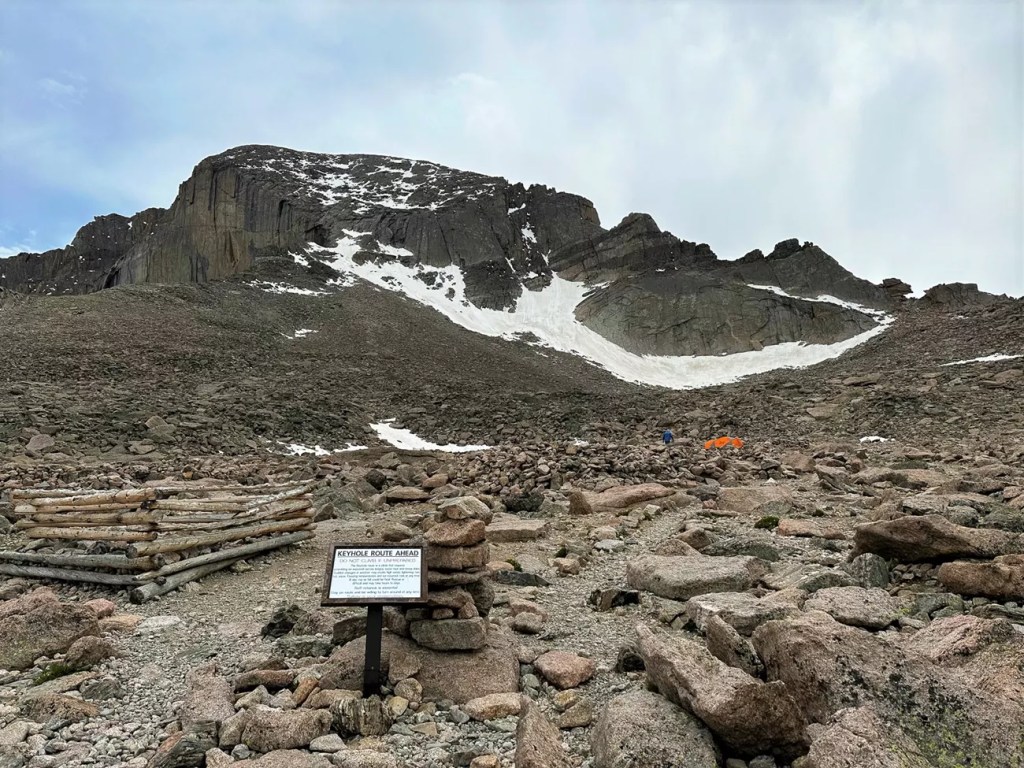
Photo credit – https://www.nps.gov/romo/planyourvisit/longs_peak_conditions_report.htm
The Boulder Field
I remember several parts of the climb – and each presents a different kinds of challenge: there are enormous vertical rock faces exposed to falling rock, which requires scrambling on all fours; there are narrow ledges, which require you just not look down; and, even in the summer, depending upon conditions, you can expect to encounter snow and ice. The part I remember as most daunting, though, was that Boulder Field, which was what you encountered first when you emerged from the forest and left the protection of the trees. From there you scrambled over boulders toward an opening in the rock face called the Keyhole. The actual Keyhole Route begins after the Boulder Field. The last 1.5 miles after the Keyhole is by far the most difficult, exposed and hazardous portion of the route.
While that sheer face after the Keyhole requires climbing on all fours and was perhaps the most dangerous, what I remember most vividly is that Boulder Field. Over the next third-of-a-mile the trail climbs roughly 500 feet. This is an extremely rugged section of “trail” that requires scrambling, use of hand-holds, hopping over boulders, and a great deal of route finding. There are, along the way, several cairns – stacks of rocks – to help with navigation. As you proceed higher, the terrain becomes progressively steeper and more difficult to climb and it would be very easy to break a bone falling off a boulder.
I still look back at successfully completing the climb to the top of Longs Peak as proof of the power of preparation and determination and teamwork to accomplish what seems most daunting. We were only able to spend a few minutes at the top then turn around and repeat the climb in reverse because the danger of being above timberline for very long; we had to reverse our course and hustle back down the sheer cliffs and over the boulder field only pausing long enough to take a picture. There, were, of course, no cell phones back then but someone else was thoughtful enough to carry a camera up there so the moment could be memorialized. We also added our names to a written list in a container there to record visits. Maybe the list is not physically there anymore, but we know we were part of a hardy group that made it to the top and back down safely. I look at that entire climb still as a pivotal moment in my life, a reminder of what I can do. Though I cannot fathom today covering 15 miles in one day, climbing over boulder after boulder and making my way thousands of feet up then back down; we managed,though, and remembering I’d been part of that successful endeavor helped me more times than I can count.
All those boulders….
When I face struggles still today, though, standing safely at timberline and staring at the boulder field is what I often remember; it seems the perfect example of a task that seems overwhelming, daunting, too big to even consider.
Years later, as a young mom with two boys under five, working evenings as a writer and teacher and volunteering in my church, that boulder field was an image that came to mind regularly. It was especially in the forefront of my mind when I was starting to feel, in the midst of the exhausting chaos that was my life, that God was calling me into ordained ministry.
I was in my mid-30s, and had returned to church with two boys because I wanted them to know the Bible stories I had learned as a child.
At first, because there was no organized Children’s ministry and I wanted that for my children, I became the leader. Soon, my pastor asked me to consider becoming a Lay speaker, someone who on occasion preached. I agreed to do that and even spoke a few times but the idea of speaking more was simply overwhelming – and besides, every time I did, I got so nervous, I thought I’d throw up.
I also was just plain tired with all I needed to do every day. Every time anyone suggested I might take on more, I would ask them to find me some free time in my schedule just to iron a shirt or get a hair cut or sleep more than five or six hours a night. More was just not realistic. Just taking the weekly evening lay speaker courses was a family sacrifice.
I was flattered that my pastor thought I had a calling on my life and leadership “potential,” but he had to badger me for a year before I finally agreed to more training; foolishly I didn’t pay attention when he mentioned that the advanced lay speaking course was going to be a weekend retreat and not just a daylong class. I was not keen on leaving my husband alone with two children under six for the weekend – mostly because I wouldn’t want to be left alone with two very busy little boys myself for a whole weekend either. Nevertheless, it was at a retreat center so I thought maybe I’d get to hike and get in a nap before the weekend ended. Wrong.
I have to say there was some relief there – mind you, it wasn’t restful – they kept us pretty busy so that was annoying; but there was relief in that for the first time as an adult, I realized I was with “my people.” For the first time as an adult, I felt I was in a place where I could talk about my faith without being ridiculed or told that religion and faith were only “for the weak.”
I was worn out at the retreat though. At one point, they suggested we each find a place around the perimeter of the room to pray silently and I remembering being so tired, I just leaned up against the wall, my forehead against the brown paneling as if I were in “time-out.” As I turned around and slid down the wall to sit on the floor though, I was not terribly thrilled when, after that long morning of worship, lectures and personal sharing, they handed each of us a slip of paper. On each one was a Scripture passage, and, they told us, we would be preaching on those in the evening. Then they sent us back to our cabins, clutching our slips of paper. There would be no nap and no hike, only swelling moments of panic and annoyance.
Then I read the Scripture they had given me and I laughed out loud. Perfect, I thought. They’d handed me Matthew 11:28-30: Come to me, all you that are weary and are carrying heavy burdens, and I will give you rest.
That’s appropriate, I thought rather sarcastically. Then I read the rest of it:
Take my yoke upon you, and learn from me; for I am gentle and humble in heart, and you will find rest for your souls. For my yoke is easy, and my burden is light.
Is this a joke?
Wait, what? Is this a joke? God calls me to come closer to rest, then says, oh, by the way, I want you to be my beast of burden???
I remember sitting there and, in my mind, picturing that “yoke” that I was expected to take upon my shoulders, asking God how the hell was I supposed to take on more when I clearly could not manage what I was already expected to do? I put my head down on the desk in that cabin, exhausted, and felt like even more of a failure, defeated. Here I was at the beginning of the next boulder field in my life and I just wanted to cry. I had no more to give to anyone, no more energy to climb. I didn’t even know what direction to head.
That’s no silo…and no yoke.
Before we go further, you should know I grew up in the suburbs of a midwestern town and so, when I would later be sent to pastor a church in a small Tennessee town, it would be painfully apparent on regular basis that I knew little or nothing about farming. Or any other culture, for that matter. My “culture” of midwest suburban life meant TV dinners on TV trays more often than not. I remember as a teenager being jealous of people who could share with you, for example, foods from their family’s culture. Like breads. Rye, sourdough, flatbread and don’t get me started on ciabatta! My culture? White bread. Plain, homogenous, more filled with air than anything substantial. Suburban life meant I’d gotten through life thus far never having tasted peaches that weren’t canned, cheese that wasn’t individually sliced and wrapped, or tomatoes off the vine. I was an adult before I learned that tomatoes actually had their own flavor and not just the flavor of whatever dressing you used to drown them.
Thus, when I woud be sent to pastor a rural Tennessee church, I would be about as out of place as I would’ve been on Mars. Early on, for example, I was corrected when I referred to a silo in a sermon. Within in minutes after leaving the pulpit and offering the benediction, before I even got to the door of the sanctuary, I’d been told at least three times that I clearly did not know the difference between a grain bin and a silo. And there IS a difference.
This is all to say that when I got to the lay speaking retreat, I certainly did not get what this scripture was about because I didn’t know any more about a yoke than I did a silo.
In my mind, I was standing at the edge of another boulder field, exhausted.
This is all to say that when I got to the lay speaking retreat, I certainly did not get what this scripture was about because I didn’t know any more about a yoke than I did a silo. I was at a loss. In my mind, I was looking at another boulder field exhausted. I COULD tell you it was just a coincidence that I had brought an Upper Room devotional with me, but, it’s no small thing that there was a devotion about this Scripture in there just waiting to be discovered. Just a few sentences, mind you, but it was all I needed to craft an entire sermon. Because the writer of that devotion knew about farms and explained to this city girl about yokes, he helped me see the Matthew passage completely differently.
For example, I didn’t know that, very often, a larger, more experienced ox would be paired with a younger ox, which meant that the older, stronger ox would carry the majority of the weight of the yoke. The younger ox would benefit from the larger ox – and the only task for the younger, weaker ox was to allow himself to be led.
The joke is that the yoke really was easy for the younger ox. The only thing that would have been harmful or exhausting would have been for the younger ox to fight the yoke. Just to allow the yoke to guide you while you took one step at a time was easy, though, if you didn’t insist on being in charge. The burden really was light, because the weight rested on the shoulders of the leader, and, that is not me. That is good news. The path that led me to ministry has been filled with examples and reminders of that.
Come to me, God says, if you are weary of carrying the world today, and I WILL give you rest.
And God doesn’t just refresh us, God equips us. “Take my yoke upon you and learn from me, for I am gentle and humble in heart, and you will find rest for your souls.” That devotional was just the first example of how God would equip me time and time again. I left that retreat with with great respect for the many resources I would discover through the years. As a pastor, I would have been severely limited as a preacher, Bible scholar and teacher if I had simply relied all those years on my own experience and learning. That weekend was a heads-up to pay attention because there is great wisdom to be gleaned – with discernment – from the studies and writings of others.
As life lessons go, it was a big one.
That weekend also offered me a chance to share in that sermon a new and different understanding for what God was calling me to do, of the yoke God was offering me. That may have been the most important lesson of my life. Sadly, I have had to learn it over and over because my personal instinct when things get tough has always been to dig in and work harder. I find myself learning over and over how to let God be in charge AND to let God lead because things go better when I do. I get to use the wisdom of the ages when I let God lead; I get to be led by someone who sees the bigger picture. Turns out, being overwhelmed and exhausted was the best thing that could have happened to me because I so often have struggled with that balance. The good news is that I don’t struggle for nearly as long because I know several things now that I didn’t know when I faced that boulder field forty four years ago:
First, God can see the path when I cannot;
Second, if I listen, God guides me – sometimes only a marker on the path at a time – but it’s always enough to get me to the next marker;
God always guides me – often it’s only one marker on the path at a time – but it’s always enough to get me to the next marker…
…and there’s always another marker waiting.
Third, when I cannot carry the load I’ve been given, God carries it for me;
Fourth, I fall down a lot less than I used to, so my knees in particular thank me;
Fifth, life is easier when my backpack is lighter and sharing what’s in there is what helps lighten my load; and
Finally, seldom am I alone on the trail. All I need to do is look around to find others also trying to follow, also climbing over boulders, up and down and up again, often ready to grasp an outstretched hand and just as willing to offer one. We may never meet again, but in that moment, we are a team, sharing a life journey and grateful for the company.
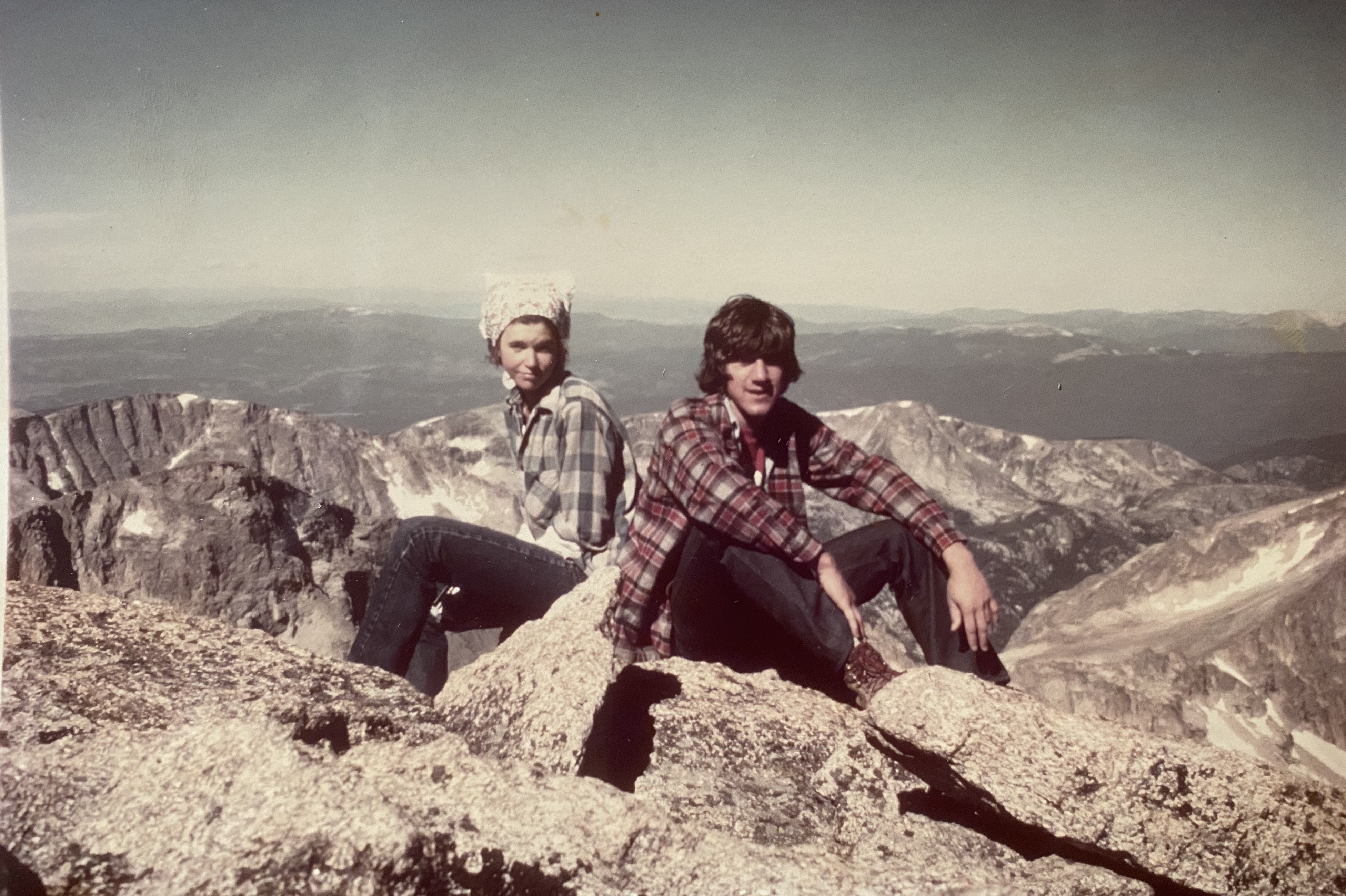
Haven’t seen him since that summer but remain grateful for him.
Side Note: We didn’t complete our hikemaster course. Our summer work was cut short a few days after this climb when the Big Thompson River below our camp flooded, killing 145 persons and closing off contact for the YMCA camp for days. I went home early as my parents, relieved to speak to me via Ham radio three days after the flood, showed up to cart me home. I’m still processing that. See the next post if you want to know more.
 Emptying The Backpack
Great story, great life lessons. Thanks for sharing. Happy to share the load!
LikeLiked by 1 person
Jodi, your writing never ceases to amaze me. I hope I can remember and call
LikeLiked by 1 person
Just beautiful, Jodi.
LikeLike
Thank you.
LikeLike