


For several months last year, I was invited to join a group of women from all over western and middle Tennessee, some clergywomen, some lay leaders in their churches. We gathered virtually because we shared a sad truth: a colleague and friend had been taken from us suddenly, shot in her own driveway during a carjacking.
I had not known any of these women before this group convened, but I am so very grateful that they all agreed to convene for those few months – and to invite me – to share our grief and pain and try to make some, any, if possible, sense of this tragedy. Some of the participants had known this woman for years; others of us had only known her a short while, but we all grieved what felt like a future filled with hope and ministry. She was likely going to be a Bishop some day, not because she was someone who was well-loved but because she was someone who loved well. That future was denied suddenly not by someone who had judged her ministry or intentions or love as lacking, but by a total stranger, someone who never had and now never would feel the love she had to offer him.
Within just a few weeks following her murder, we stepped into a virtual room, and invoked the words so many of us had shared in the funerals we had presided over. We affirmed that we had come together in our grief, acknowledging our human loss and praying that God would grant us grace. We also prayed that, in our pain we may find comfort, and in our sorrow, we might find hope. We especially, collectively, wanted to find ways to honor our friend.
It’s not necessarily a new idea to say we are called to honor those who are now gone who’ve loved, nurtured, forgiven or supported and encouraged us by doing the same. It just may be a bit tougher to process our emotions after the loss is a shock or especially an act of violence, because violence always leaves in its wake more victims than are seen by the naked eye. Be assured, most of us could acknowledge our privilege in not facing this kind of loss before; we also recognized what a gift it was that we could take the needed time to grieve and to find some guidance and companions for this process. Plenty of folks do not share that luxury, we knew.
Nevertheless, to say the sheer aggression and randomness of this event knocked us down is insufficient. We all know that bad things happen to even the best of people, but somehow some of us thought – hoped – there was a line the people of God would not cross. I mean, if you’re willing to kill a preacher, who stands a chance? We were shaken individually and collectively and so I am grateful that our colleague’s legacy brought us together. A few of the women realized that, if our friend had been the one left in shock and pain, this is what she’d do. She would gather us all in. She was all about sharing, listening, reflecting and holding hands in our fear and our pain. Over the next few months, then, we talked about how this trauma affected us, mentally, spiritually, emotionally and theologically. We seemed to know that she would encourage us to ask our questions, something most of us in this world have been conditioned to avoid, even if we do have the time. Through our theological and faith journeys, though, through pursuing our callings, many of us in the group had been exposed to and become somewhat practiced in reflection, in the art of asking questions, and, perhaps most importantly, in sitting with questions that are not accompanied by satisfying answers.
Aggressive, blunt, unanswered and unanswerable questions most definitely were part of these group meetings; they sat next to us, sometimes gently nudging us, sometimes poking us with bony fingers, often angering and annoying us, always taking up space and reminding us they were not going away. So, we chose to embrace them, to welcome them into our space, albeit a bit begrudgingly, buoyed by the fact that we were not alone.
“After all these years I have begun to wonder if the secret of living well is not in having all the answers but in pursuing unanswerable questions in good company.”
Remen, Rachel Naomi. My Grandfather’s Blessings: Stories of Strength, Refuge, and Belonging . Penguin Publishing Group. Kindle Edition.
We shared from various resources: prayers, poems, stories, theological pieces and we asked ourselves, How then shall we live?
To get there, we shared questions about our colleague like: How can one person be someone whom everyone felt like they knew? This woman saw you. I could easily spend the rest of my life trying to see every person that I encounter as well as she did; it is a spiritual practice that I will likely never master but one that she embodied. She saw each of us and even if you only met her once, you left her presence knowing she still somehow held you as tightly and lovingly as she did everyone she saw. I would have liked to ask her more about this; how did she manage it? Did she consciously focus only on who was right in front of her? How was she able to tune out the rest of the world so successfully as to make you feel like not so much the center of the universe but seen. And heard. She saw you. Most of us go through life not feeling truly seen or heard and yet, sadly, that is often all we want. Many an argument or estrangement likely would be quelled or mended if each participant were able to take a turn seeing and hearing the other fully. She seemed to know that.


How Then Shall We Live?
Throughout the sessions over last fall, I found myself counting how many people who were now missing from my life after this year: friends, colleagues, family members.
Sadly, I am grateful that a couple of them are no longer here to harm others. I spent a great deal of my life learning how NOT to follow in those footsteps. I also, though, came to recognize them as human beings, not monsters, and to acknowledge I have my own failings. I hate knowing that. I hate knowing I am capable of being ugly and of wounding others. I hate knowing that too often what annoys me in others is what annoys me about myself. All of that knowledge means I must go forward with self-assessment that is as rigorous as my judgment of others AND I must offer grace that is as unearned as the grace I receive. The question there was what did I learn about myself from that person?
I am grateful though to declare that most of those whom I have lost have blessed me. All of those I lost this past twelve months, including my colleague, I now realize, left me with the question on my life: how will I live going forward so as to reflect how I have been changed by their influence on my life? How, then, will I live now in light of what they taught me, whether it be because I want to honor them or because I want to never fall into their footsteps: what gift will I give the world now that they are no longer here?

Questions, then, I thought, might be the answer, if that’s possible. I shared with the group one of the understandings of a Scripture passage that another colleague had helped me to see differently years ago. The Scripture was about the widow and the judge in Luke 18:1-8. The story is often interpreted that the judge is God and the widow has to badger God – the judge – to get heard and to receive justice. Another colleague years ago saw the story differently and preached that the widow in the story instead was God and God (the widow) would continue to beseech the powers that be (the judges) in our world to do the right thing. God would continue to be the pebble in the shoe, she preached, that made us stop in our tracks and take care of that annoying pain that we feel every step we take. God will continue to try to make us stop long enough perhaps to think, to listen, to pray, to see one another. The story when I read it now reminds me, calls me, to be the pebble, to keep the hard, stony, annoying truths in front of folks I know.
God calls us to BE the pebble. Ask – lovingly – the difficult questions. Keep the hard, stony, annoying truths in front of the folks we know.
We lamented that there was no going back to our blissful ignorance, no chance now we could pretend we or those whom we loved were safe. One thing that is certain about hatred, ugliness, violence, is that once you know, you can’t “unknow.” Most of us in our world today learn at such early ages that violence and meanness and the ability to harm others is part of our world but being the target or even knowing the target of someone else’s violent behavior, even and maybe especially if that target appears random, moves us into darker places emotionally, spiritually, mentally.
One of the toughest conversations was, no surprise, about guns and gun violence. I do not believe I am breaking confidence to say that we were keenly aware of the difficulty we live into everyday in our country of how to deal with what has become an epidemic.
He was just a child still himself who pulled the trigger and took this life. In light of how much gun violence has become part of so many children’s lives, I offered the image of our society as a body where this bullet’s wound was not the only injury or illness that needed to be addressed in this tragedy. The image of a body with multiple system failures came to mind for me as we talked about how we had failed this child as well, the child who had murdered her, lamenting how he had gotten to that place, into that car, with that gun. The questions became: What had gotten him to the point where another human being was worth less than that car? Don’t we need to know that process? Where in his young life was he ever seen?
The questions we all needed to ask ourselves and one another became: What had gotten him to the point where another human being was worth less than a car? Don’t we need to know that process? Where in his young life was he ever seen?
For help with tough questions, I suggested this resource: “When Thoughts and Prayers Aren’t Enough: A Shooting Survivor’s Journey into the Realities of Gun Violence,” by Taylor Schumann, a victim of gun violence, a Christian and a strong advocate for the right to own and bear arms. Her offering in this book is as honest a discussion of faith and firearms as I have seen thus far and it is a true gift to those who do not know what to say but feel called to participate in reflection and discussion. We put seatbelts in our cars to help protect our children when auto accidents were the number one killer; we need to stop the yelling and figure this out for our children’s sake. Schumann offers intelligent, faith-led, personal and compelling points to add to the discussion, pebbles, if you will, that we can cast into our collective path.
Moving Forward
How then would we go forward was the overarching question. How we each had thought we would be going forward in our lives was mostly changed but not canceled, we realized, but this sudden loss. I grieved having postponed working together until after my retirement. I had so many questions I was looking forward to asking her when we would be working together. Each of us was challenged to ask ourselves, “How will I live now?” We realized we had already started moving forward and had chosen to live differently by simply inviting and agreeing to meet over the course of those months, by sharing and holding one another in grief, by sharing resources that inspired us (and often which we hoped might answer some of those pesky questions). Already we were living with intention, living in response to this trauma and tragedy, living in a way that would honor her (and more importantly we knew to her,) living in a way that recognized the power and gift of connecting. We would commit each of us to continue using our platforms (sermons, Bible studies, book clubs) to replicate these conversations, to offer them to others, to hold hands with, to sit with, to see each person who came before us and to ask the questions.
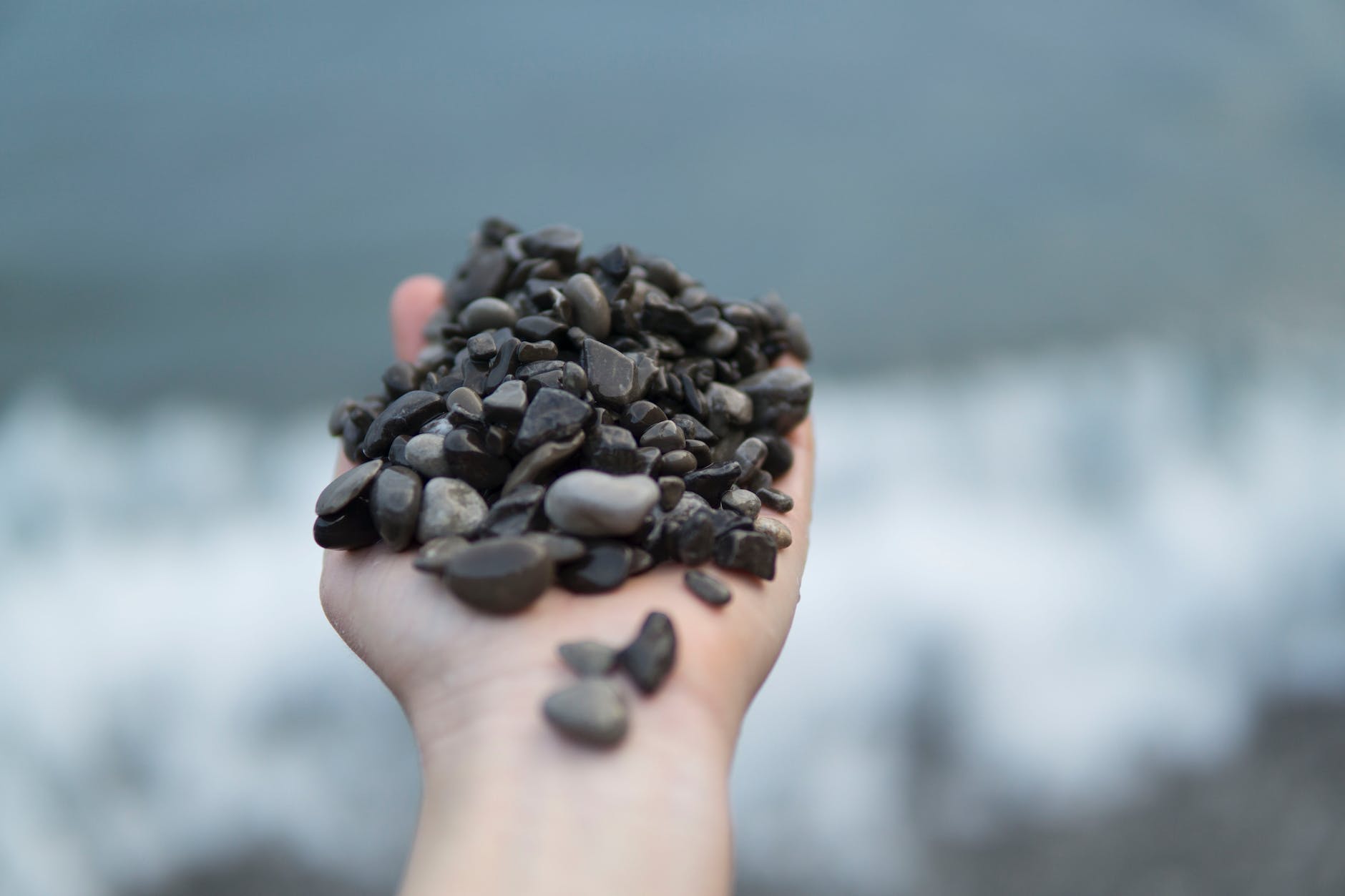
For myself, I believe my beloved colleague would encourage me this Christmas and every Christmas going forward to seek to “Be that pebble in the shoes of those who are in power and ask the questions that need asking.” No question, my friend saw me or you like she saw everyone, it seemed; she made each of us feel seen. Spending time in her presence, though, also meant you had to keep stooping down to remove the occasional pebble from your shoe because it was either that or limp forever. She did this lovingly and you knew as you stooped down to scoop out that pebble that she meant to be loving to you and to everyone else who might be affected. “It’s all right,” she seemed to be saying in a loving and gentle way, “I’ll wait while you tend to that.”
Who knew that a handful of pebbles could be such a sacred Christmas gift?
 Emptying The Backpack
Jodi, first, your writing is so concise, to the point and reflective. I know we all have pebbles in our shoes, but you need to know you have many fewer than most in my opinion. You see people as your friend did, you encourage those who need it and you show your caring nature when you listen and advise.
I’m heartbroken that you and your friends had to have these conversations, but glad you did and learned much from each other and that you are now sharing what you learned with others. There is so much violence in our world that we are nearly numb from the reports. This is a reminder that tragedy doesn’t just happen to one person but also to many, many others as a result and that we should always value our friends, family and be kind to strangers that we meet.
Thank you for unpacking your backpack and encouraging us to think and love and care more deeply. You are a gift.
LikeLike
Thank you. Kind words. She was a gift to many.
LikeLike