
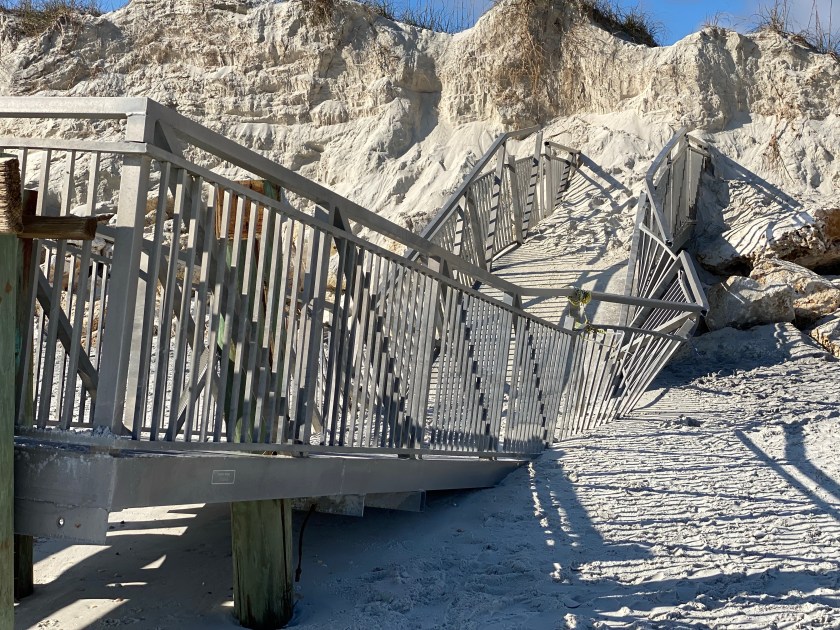
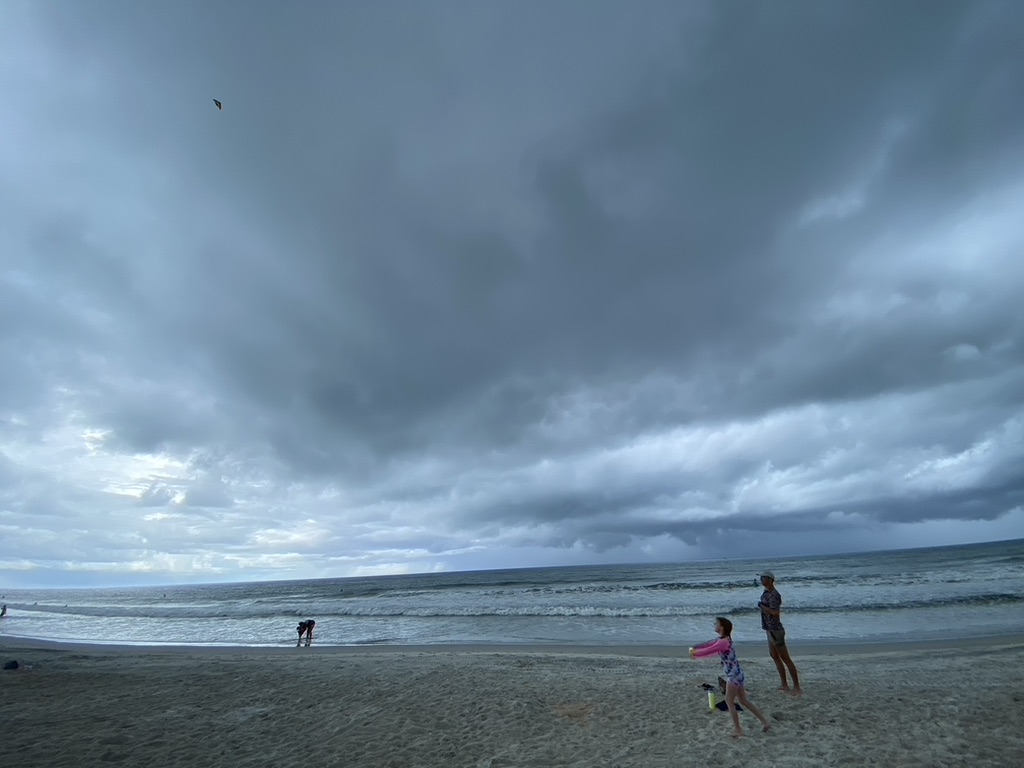
Walking along the St. Augustine, Florida, beach and seeing the aftermath of landfall of two hurricanes in the course of a couple of months, I realized that the ocean, like any living thing, strikes back when other living creatures encroach. Many a relationship has suffered and been destroyed or abandoned because of one partner taking up space that the other is meant to be occupying. Makes sense that the ocean would be no different. When we do not recognize and honor her space, this, the largest creature we humans interact with and desperately need, can be terrifying and mighty.
Walking along that beach pondering relationships and what the ocean offers for healing was humbling when I considered the damage we did first. St. Augustine Beach saw some of its worst flooding this past year in an area that had been “repurposed” by a land developer in the 1920’s.
In “Anastasia Island” Kenneth M. Barrett, Jr., a local photographer and writer, describes how Davis Shores was “built” by filling in oyster beds and salt marshes with dredged materials to create a new space to build homes. That neighborhood, ironically, suffered some of the worst flooding during the recent storms and, though I cannot claim to know of direct causation here, it has been telling how the ocean seems to have tried to reclaim much of the beaches in general where homes have been built. (www.LegaciesandMemoriesPublishing.com)
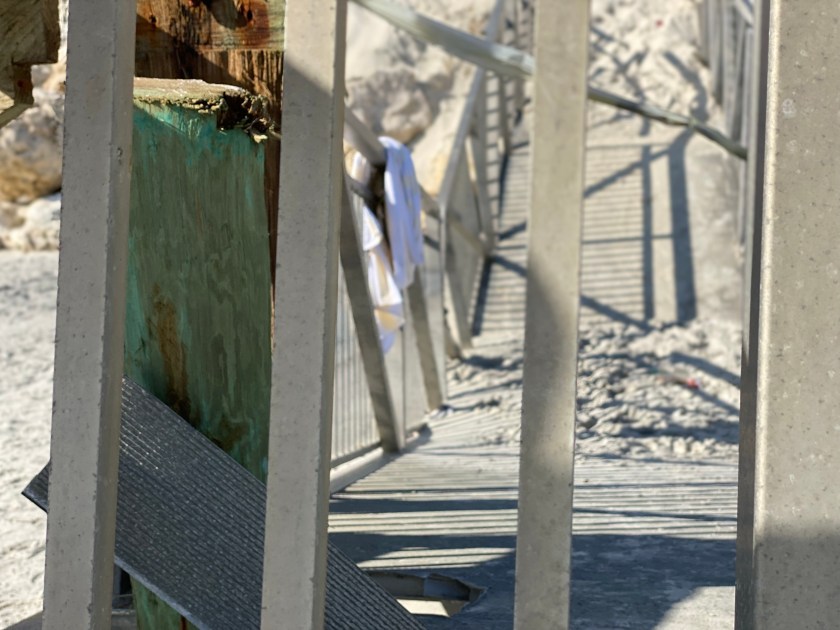
Relationship Lesson One: don’t take what’s not yours, including space. We’ve all sat at a table or on an airplane or shared the stage with someone who feels the need to take up more than their fair share of the space. Not only do these folks not share, they do not relinquish the extra space when confronted and usually do not seem either able OR willing to figure out themselves that they have claimed more than they deserve. Try to walk on an indoor walking track, for example, and notice who immediately allows faster walkers to pass and who seems never willing to move over.

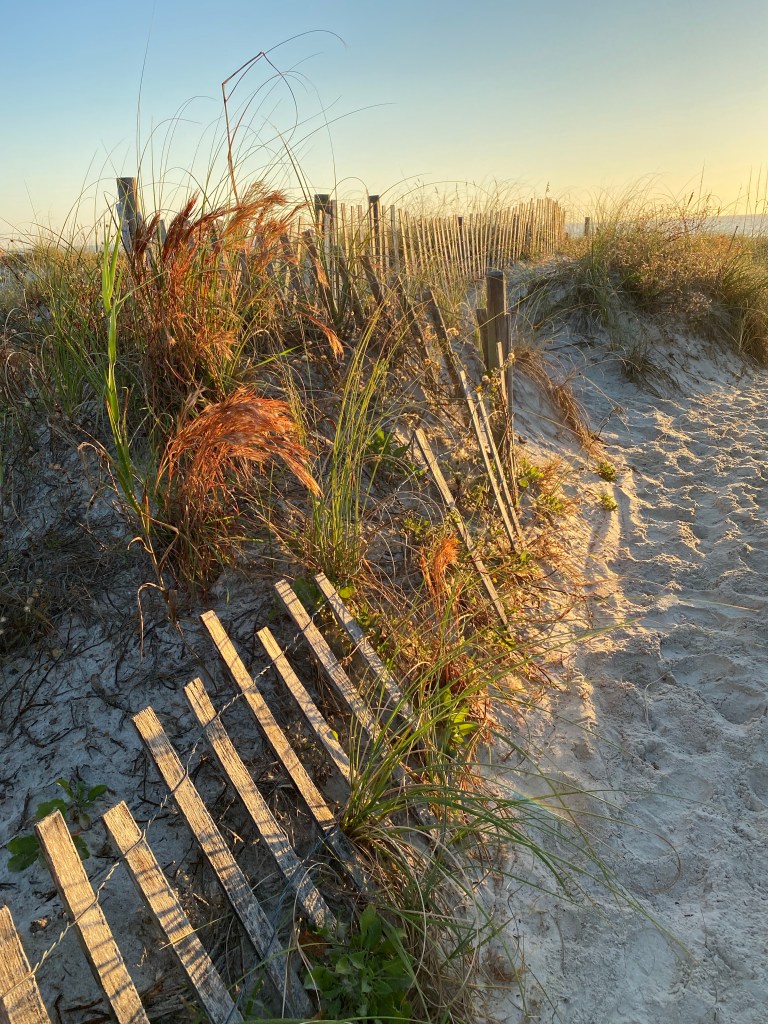
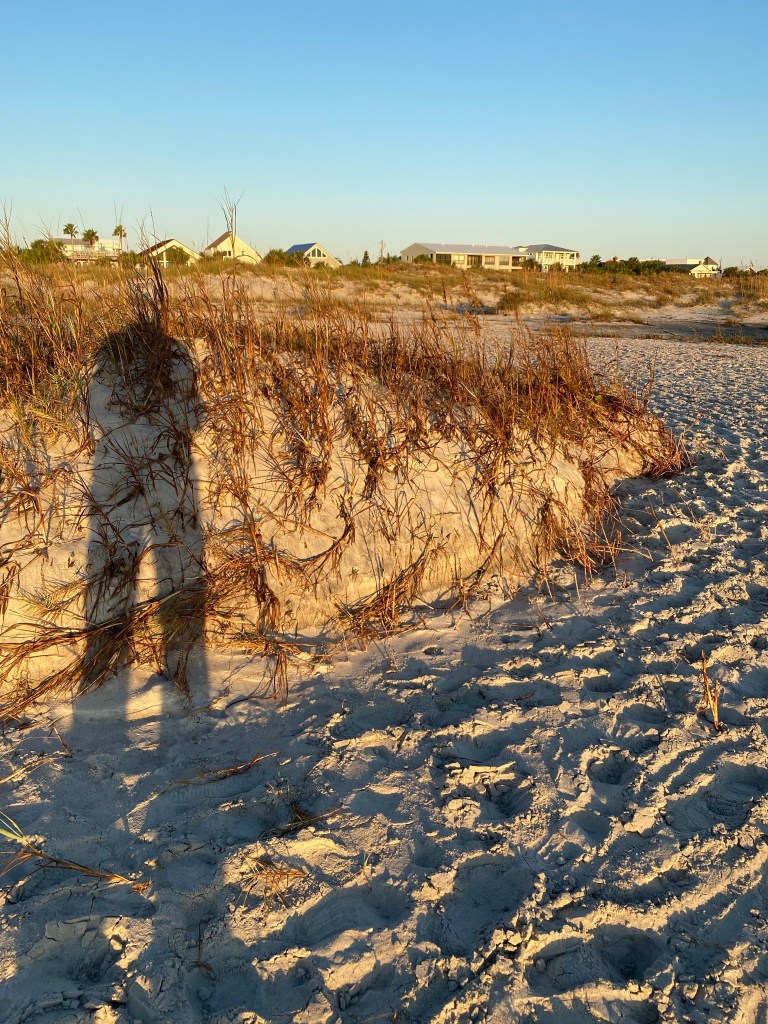
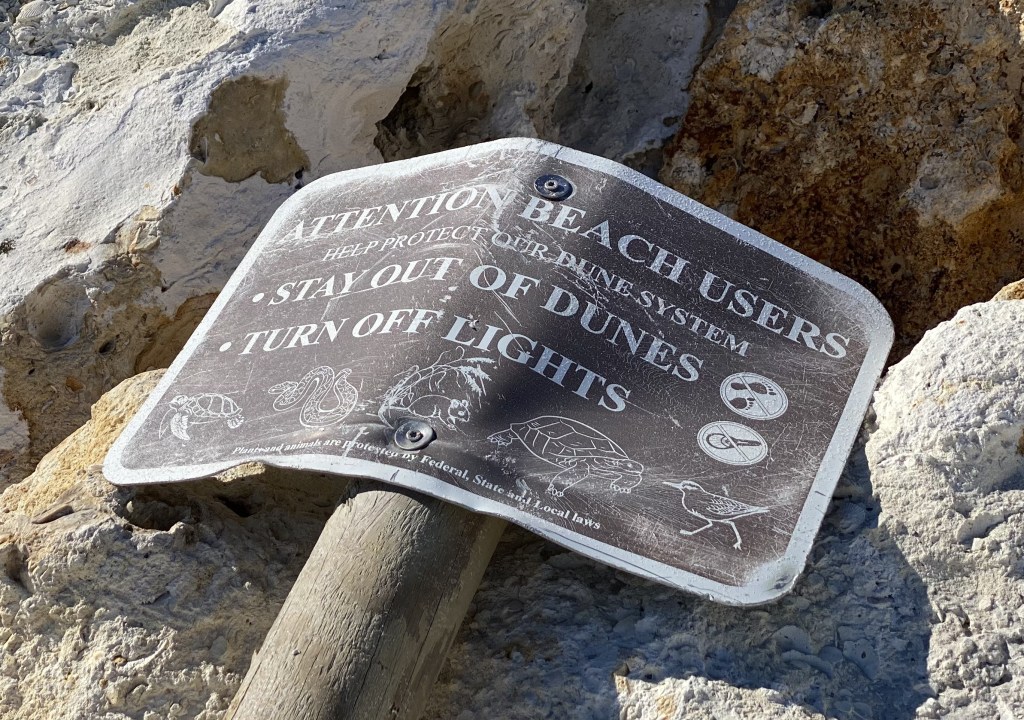
Back at the beach, when walking after a storm surge, you will see newly-formed “cliffs.” Actually, these are twenty-foot-tall sand dunes sheered off by the hurricane’s storm surge so that they now resemble cliffs. New sand is being brought in to repair those; many of them are all that separates thousands of homes and the ocean. More to the point here though is how we who traverse and hope to find healing for relationship damage respond to the markers along the way. On the beach, there are markers to show us the paths we who walk the beach are asked to respect and follow; authorities ask us to stay on those paths to allow the dunes to heal. These dunes were habitats and breeding grounds before the storm, the places where others lived and breathed. Do we see the other creatures who also walk here? Do we respect the boundaries they have set? Or are we oblivious, or worse, do we simply disregard those markers in the sand of our relationships?
Of course, it is sad that most of us living “First World” lives take up more than our fair share of the world’s resources and leave more than our fair share of the messes that need to be cleaned up. That’s a post for another day. We cannot possibly recognize those transgressions if we do not, however, first recognize how we do this on a personal basis.
Those who are faithful in the small things will be faithful in the big things.
Luke 16:10
Listening to the beach when you have a fractured relationship somewhere in your life can also bring lessons in repairing those relationships, complete with intentionality and peace offerings even in the presence of the mangled metal aftermath.
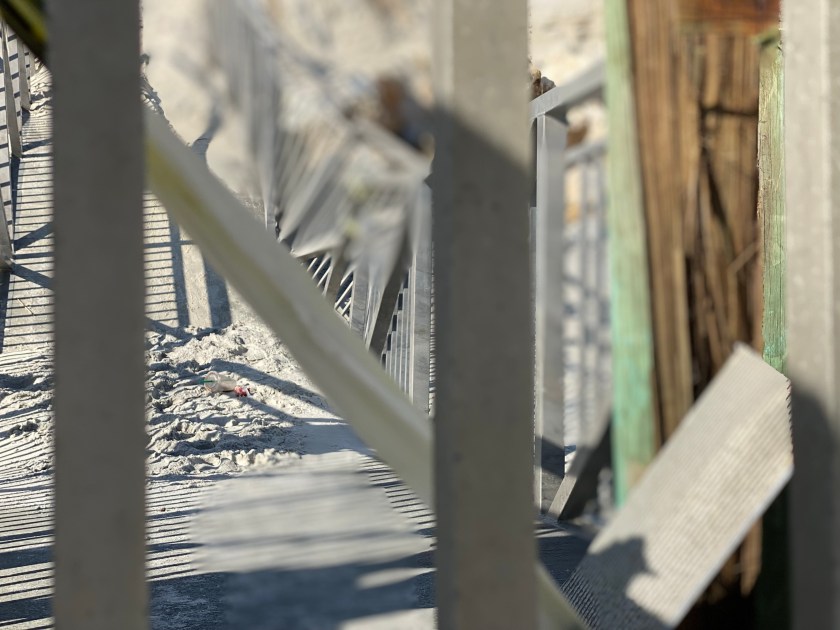
Lesson two: be intentional about making space for the others in your life, especially after there has been a storm. On the beach, finding a gentle space to meet might mean sitting quietly next to a tide pool where the water and the emotions are calmer, quieter and restful and thus, where there is space for healing. Author Joan Didion and her husband, author John Dunne, shared for years the habit of walking every day in Central Park. They did not always walk together, she says in “The Year of Magical Thinking.” They liked different routes. Of course they did. They were two distinct creatures and would not share every single preference. They routinely, though, intentially, kept one another’s routes in mind and they made certain to cross one another’s path before leaving the park. This evidently was their habit, no matter how they felt about one another of a day.
There is calm and healing even simply in sharing space quietly with no other agenda, only being in the same space and breathing the same air, and this is especially necessary and powerful after a storm has visited and left you or your friend, child or partner feeling mangled. Tidal pools are physical pools of rest the ocean offers us, a physical natural example of the valuable practice of simply, quietly, with intention, sharing space. The message of doing so in a fractured, fractuous relationship is as powerful as it is difficult. Holding space for the other with intentionality speaks loudly without making a sound.
Holding space for the other with intentionality speaks loudly without making a sound.
Lesson three (and I can’t believe we need to say this out loud): give to others in your life, but only give what’s yours to give. Every time the tide comes in, as it goes back out, the ocean leaves gifts, mostly of shells, the abandoned habitats of creatures who no longer inhabit them. We can find many gifts there when we walk along as the tide goes back to its home. Quiet observation (notice the emphasis on quiet) takes you to those places where those shells are less damaged because there the tide is gentlest.
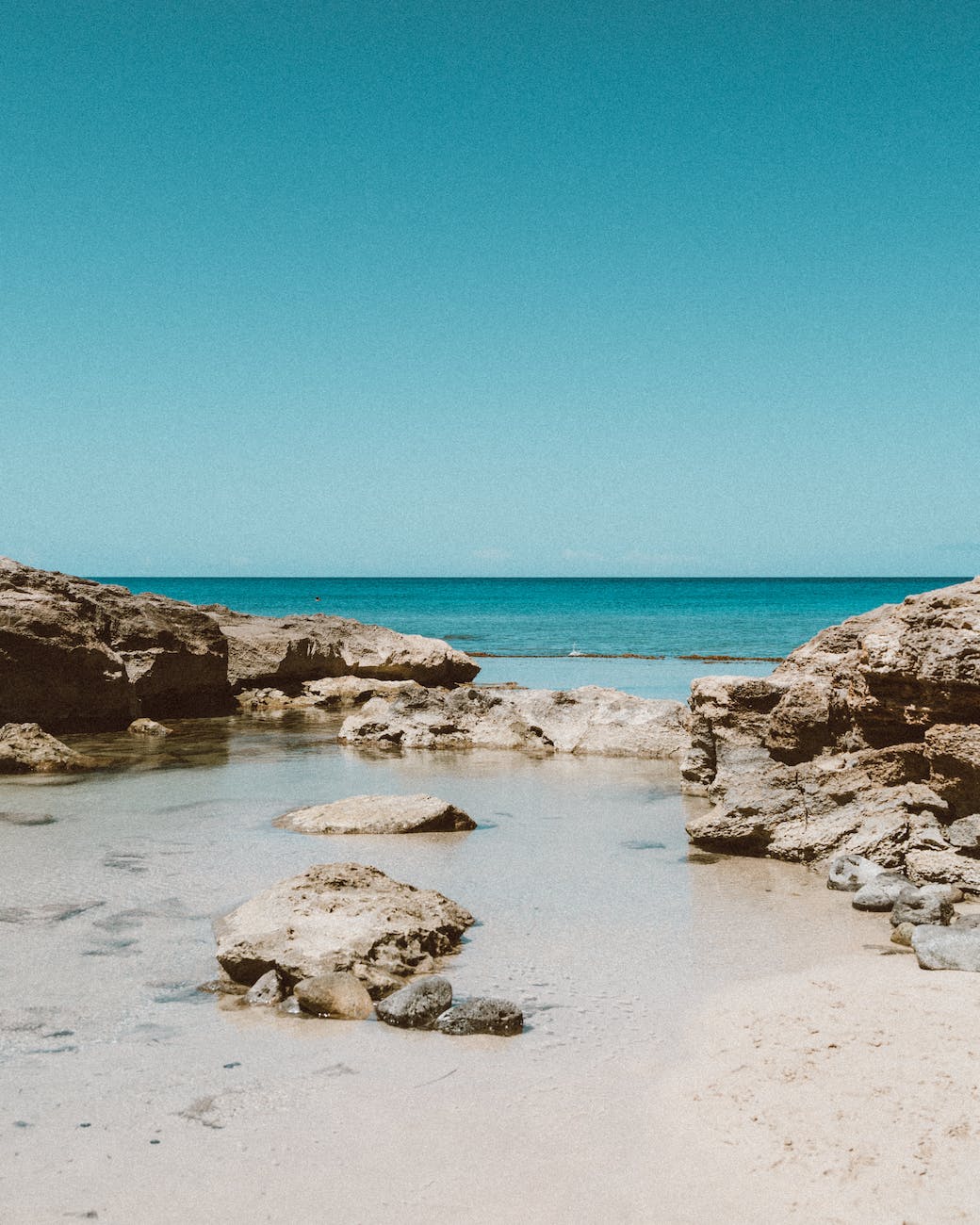
Tidal pools, though, are packed with sea life, from snails to barnacles to small fish. These pockets of seawater are not offering us souvenirs; the creatures in tidal pools are still alive. Where you have gone to find some quiet and calm is where they live. The same goes for the dunes where coastal authorities strive to rebuild lost habitats of the Anastasia Island beach mouse, the gopher tortoise, laughing gulls and wood storks.
Lesson Four: Do not assume you know what the other person wants or needs. You MUST ask. On our beaches, the county has taken to posting signs warning NOT to “help” a gopher tortoise if they see one along the shoreline. People think they are being helpful when they see one of these tortoises headed inland, pick it up and deposit it in the ocean. This will harm the tortoises because tortoises are NOT turtles. Tortoises are land creatures, and, if left in the ocean, could drown. The intentions of these helpful souls are no doubt good; they do not, however, show an interest in or an understanding of the need to ask what the other creatures need. We call that being “Aggressively Helpful.” And I know I am as guilty as the next person. We want to help so badly that we override what the other creature needs by not finding out what that creatures needs or even IF the creature needs or wants our help. We run roughshod over their needs trying to meet our own need to be seen as helpful.

This is actually not much different from ignoring those signs asking us to stay off the dunes. There, we simply go where we want. Being aggressively helpful, though, means we do for others what they likely could do themselves IF they wanted, but we do it without even asking. There is, then, such as thing as being too helpful. You may just want to look around but the salesperson is going to help you anyway. You may need to work things out in your relationship but one of your parents jumps in to fix things. In terms of relationships, trying to be too helpful equals proving to the other once more that you do not respect their space and choices nor do you value what they want or need, especially if it isn’t what you need.
My need to help that tortoise might be so overwhelming that I do not take the time to check and see if the creature before me needs my help (and, let’s be real, we can do this on our phones now that most of us carry them to the beach.) Come on. I am being aggressively helpful when I do not ask (whether I’m standing next to my friend or consulting a search engine for the difference between tortoise and turtle.) I do not listen when I find out that both of those creatures need me to leave them be, to give them the respect of their own space. Be forewarned: not asking, not respecting space too often means I am focussed on my own pain in the relationship. In fact, all of these behaviors scream that loud and clear.
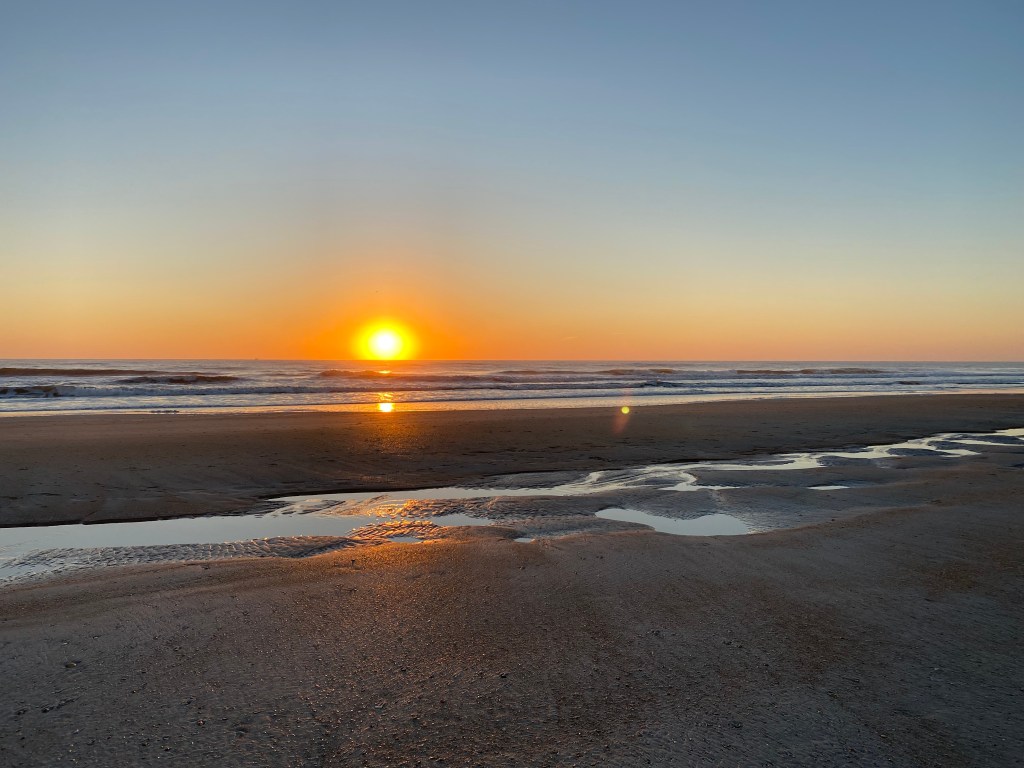
Maybe, if you’ve read this far and are in pain in a relationship, it’s time to ask if the other will sit quietly with you at a tide pool (lake, pond, mountain view) to rest and see if there isn’t some wisdom there for you. Shh. No. Just sit quietly. I know if feels like it’ll kill you but it won’t. It’s okay to admit that sitting quietly when we are in pain is really difficult. Just breathe in the shape of the leaves. Feel the snow on your arms as you make a snow angel. Trail your hand in the water as the canoe floats along. There are lessons like these all around us. In today’s lessons, the ocean teaches us that, in relationships, we need to respect the other creature enough to ask, then listen and, oh yeah, show some respect and stay off the dunes.

 Emptying The Backpack