D-Day Promises, Guilt and Forgiveness – Eighty Years Later

Because coming home is just the beginning….

In a previous post, (“You Can Have My Seat on the Mourner’s Bench,”) I introduced James, (not his real name), who struggled mightily with ongoing guilt and grief about his past actions. For years, I didn’t have a clue what those might be.

I did not know what troubled James, only that he was miserable, but when the Lady Preacher came by, he focussed on how I wasn’t preaching or leading worship in a way that would help him feel like he’d “been to church.” Apparently, as I explained in that eariler post, he was convinced that IF that Lady Preacher could dish up some good old-fashioned confession, that would fix things for him, at least temporarily.

My job, as he saw it, was to offer him a chance to relieve his guilt (for at least a week) through confession and some time on that mourner’s bench. There was no mourner’s bench at Wartrace UMC by the time I was sent there as pastor, though, and, unfortunately for James, I was not on board with the kind of spiritual bloodletting he seemed to want.

Wartrace United Methodist Church circa 1850
where a split log bench wih no back was reportedly the “mourner’s bench.”

Sadly, though, James, perhaps more than anyone at Wartrace needed his Preacher to see how guilty he believed he was, to convict him and then to help him leave that guilt on there, even if he never actually graced the church with his presence. I tried a few times to reprise my sermon from my perch on a sticky metal kitchen chair on his back porch, but the sad truth was that even if James had been able to feel forgiven by God every week, even if he had felt Scriptural preaching wash over him every Sabbath morning, he was in grave danger of never being able to forgive himself.

For years, I was unaware this was what he felt he needed. I would visit him regularly but we were not speaking the same spiritual language for the longest time. Until I preached about D-Day.

Wartrace United Methodist Church,
Greenbrier, Tennessee
(Photo Property of Rev Jodi McCullah) 2023

I finally learned why James was continually unhappy with my preaching on a sticky Sunday afternoon in June when I was directed to lift some old blankets and newspapers and take a seat on a sagging recliner in the corner of the porch at James’ house, a corner too dark and hidden even to be seen before. James had decided I was to be trusted finally, not because I had finally made him feel like the worm he thought he was; rather, on that sweltering Sunday in June, his son had called right after worship let out to tell Daddy that the Preacher Lady had shared a D-Day story in her sermon.

D-Day Promises

I had told the story of Rev. Herman Yates, a retired pastor connected to the church; he and his wife had moved there a few months earlier. He had never preached at Wartrace, not even in revivals, and he and his wife were homebound, too, but Wartrace claimed him because he’d grown up in the area. He was on my list of shut-ins to visit, and he had given me permission to share his story on the first Sunday in June. Herman, a sergeant in the United States Army on D-Day sixty years before, had joined other NCO’s who strapped on flimsy orange and white vests with large crosses on them in order to lead their platoons’ landing crafts and soldiers onto the shore. Eyes and throat burning from the acrid smoke, trying to drown out the screams, they were halted time and time again by the force of nearby explosions. Herman and the other Sergeants moved methodically forward, though, careful to move slowly enough for their men to follow and, of course, he said, slowly enough to be a perfect target. When I met him, Herman was able to tell the story calmly after relating it hundreds of times from pulpits across the area. He told powerfully of how he had bargained with God that day that, should he survive, he would dedicate the rest of his life to preaching. God took him up on the deal.

For those unfamiliar with World War II, “The D-Day operation of June 6, 1944, brought together the land, air, and sea forces of the allied armies in what became known as the largest amphibious invasion in military history,” according to the Eisenhower Presidential Library. “The operation, given the codename OVERLORD, delivered five naval assault divisions to the beaches of Normandy, France. The beaches were given the code names UTAH, OMAHA, GOLD, JUNO, and SWORD. The invasion force included 7,000 ships and landing craft manned by over 195,000 naval personnel from eight allied countries. Almost 133,000 troops from the United States, the British Commonwealth, and their allies, landed on D-Day. Casualties from these countries during the landing numbered 10,300.” Combat would continue for nearly another year in Europe. (eisenhowerlibrary.gov)

Knowing what little I do about the massive undertaking that was D-Day, I have long been amazed at the instructions Herman received that morning before the terrifying landing began. “If you make it to the beach,” Herman’s orders had been to “go to the ‘big’ tree, turn right and meet up a mile down.” Herman and at least a few of his platoon somehow safely made their way onto the beach, somehow found some trees still standing on that battlefield, and somehow chose the right big tree from among many. Herman always knew how all that happened and how he had survived the rest of the war. He went on to serve churches for some forty years.

James was proud, he said that Sunday, proud I’d shared Herman’s story. For the first time since I’d arrived at Wartrace, sitting in the old recliner, I did the math and realized James was shaking because he’d been there as well. Tragically, though, James’ story was neither heroic nor admirable.

“I sent them all out there,” he said with litte introduction, “out there to die.” He paused and looked at the flickering television screen, his only constant companion for years. “One by one,” he continued, “the boats went out. We heard and we knew. We were wishing them a safe journey. We knew though. We didn’t know how many, but we knew, we knew. We were safe, right where we were.” He wasn’t in danger but he was painfully certain that his actions were killing soldiers – his own soldiers – on that beachhead as brutally as any bullet or exploding shell. After he shared his story, his voice trailed off and he mumbled to himself for a bit before I made a pitiful attempt to be helpful.

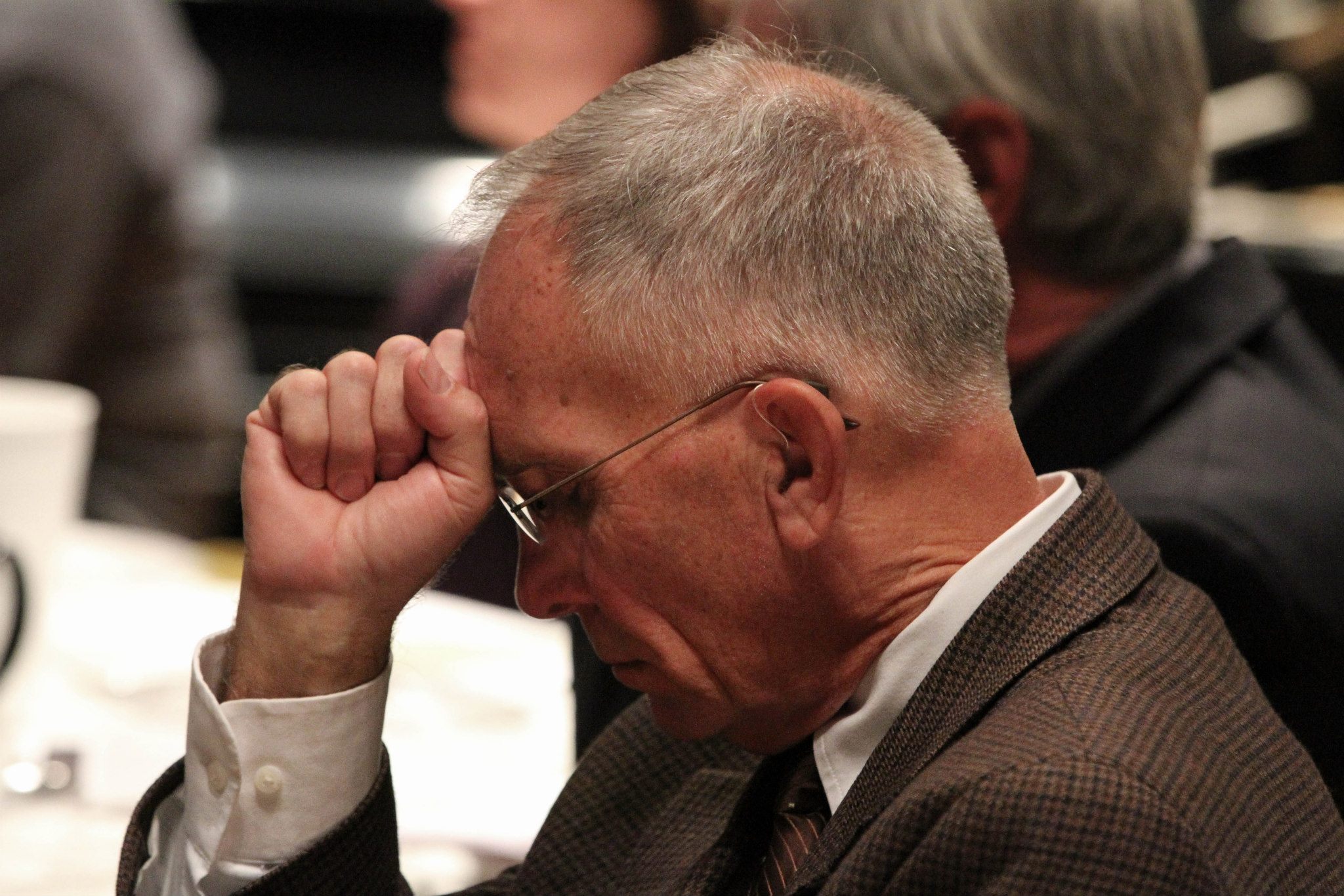
An estimated 20 percent of all combatants historically suffer from the effects of “combat trauma.”
Soldier’s Heart

nostalgia

“to be broken”

shell shock

“The affliction (Post-Traumatic Stress Disorder) has had many names over the centuries, demonstrating that it is a condition accompanying not just modern wars but all wars. Its cluster of symptoms was first diagnosed as ‘nostalgia’ among Swiss soldiers in 1678. German doctors at that time called the condition Heimweh, and the French called it maladie du pays; both mean homesickness. The Spanish called it estar roto, ‘to be broken.’ Civil War Americans called it soldier’s heart, irritable heart, or nostalgia. In World War I, it was called shell shock; in World War II and Korea, combat fatigue. ‘Soldier’s heart’ indicates that the heart has been changed by war. ‘Nostalgia’ and ‘homesickness’ bespeak the soldier’s anguished longing to escape from the combat zone and return home. Estar roto describes the psyche’s condition after war—broken.”

(War and the Soul: Healing our Nation’s Veterans from Post-Traumatic Stress Disorder, by Edward Tick, Ph.D, p. 99)

I doubt James heard anything I said that afternoon. I’d like to believe I offered him some kind of relief from his guilt but I’m pretty sure my words were wasted. I couldn’t do what he wanted, couldn’t agree with him that he should feel guilty, couldn’t acknowledge that he was indeed as guilty of killing Allied soldiers as any German bullet, bomb or soldier. I toyed with the idea of offering him one of the confessions we regularly used from the hymnal on Communion Sunday, but not one word I could think of was gonna do.

In every house of worship in the nation, veterans of wars are in the pews. Many have spent decades grappling with grief from their wartime experiences. Few of them feel like their part was heroic or admirable. Maybe they “won,” but too often, they are leary of telling us how ugly the “winning” was.

Evidently, James had been needing to visit that mourner’s bench for decades, so maybe telling Herman’s D-Day story created a space for James, as if we gave him permission to risk sharing the shame he felt. Perhaps being able finally to tell his story out loud was the confession James craved. Like too many combat veterans, though, he needed not only to share but also to not be shunned.

Years later, I would sit in a veteran’s retreat and listen to veteran after veteran tell their combat stories, usually with trepidation. So many were like the Iraq war veteran who shared his story of killing “anything that moved” from the helicoptor he piloted. That veteran believed himself to be a “monster” and was certain he should no longer be allowed in our midst. Like this combat veteran and so many others, James needed to tell his story and not have anyone, as one veteran feared, “run screaming from the room.” He needed to know I didn’t see him as a monster and that I would still visit, still speak to him, still consider him part of the flock. He had been needing to visit that mourner’s bench for decades, and telling Herman’s D-Day story gave him permission, at least in his mind, to risk telling his story out loud. Maybe Herman knew what would happen when I shared his D-Day story. God certainly did.

Leave a comment

D-Day Promises, Guilt and Forgiveness

Because coming home is just the beginning….

In a previous post, (“You Can Have My Seat on the Mourner’s Bench,”) I introduced James, (not his real name), who struggled mightily with ongoing guilt and grief about his past actions. For years, I didn’t have a clue what those might be.

I did not know what troubled James, only that he was miserable, but when the Lady Preacher came by, he focussed on how I wasn’t preaching or leading worship in a way that would help him feel like he’d “been to church.” Apparently, as I explained in that eariler post, he was convinced that IF that Lady Preacher could dish up some good old-fashioned confession, that would fix things for him, at least temporarily.

My job, as he saw it, was to offer him a chance to relieve his guilt (for at least a week) through confession and some time on that mourner’s bench. There was no mourner’s bench at Wartrace UMC by the time I was sent there as pastor, though, and, unfortunately for James, I was not on board with the kind of spiritual bloodletting he seemed to want.

Wartrace United Methodist Church circa 1850
where a split log bench wih no back was reportedly the “mourner’s bench.”

Sadly, though, James, perhaps more than anyone at Wartrace needed his Preacher to see how guilty he believed he was, to convict him and then to help him leave that guilt on there, even if he never actually graced the church with his presence. I tried a few times to reprise my sermon from my perch on a sticky metal kitchen chair on his back porch, but the sad truth was that even if James had been able to feel forgiven by God every week, even if he had felt Scriptural preaching wash over him every Sabbath morning, he was in grave danger of never being able to forgive himself.

For years, I was unaware this was what he felt he needed. I would visit him regularly but we were not speaking the same spiritual language for the longest time. Until I preached about D-Day.

Wartrace United Methodist Church,
Greenbrier, Tennessee
(Photo Property of Rev Jodi McCullah) 2023

I finally learned why James was continually unhappy with my preaching on a sticky Sunday afternoon in June when I was directed to lift some old blankets and newspapers and take a seat on a sagging recliner in the corner of the porch at James’ house, a corner too dark and hidden even to be seen before. James had decided I was to be trusted finally, not because I had finally made him feel like the worm he thought he was; rather, on that sweltering Sunday in June, his son had called right after worship let out to tell Daddy that the Preacher Lady had shared a D-Day story in her sermon.

D-Day Promises

I had told the story of Rev. Herman Yates, a retired pastor connected to the church; he and his wife had moved there a few months earlier. He had never preached at Wartrace, not even in revivals, and he and his wife were homebound, too, but Wartrace claimed him because he’d grown up in the area. He was on my list of shut-ins to visit, and he had given me permission to share his story on the first Sunday in June. Herman, a sergeant in the United States Army on D-Day sixty years before, had joined other NCO’s who strapped on flimsy orange and white vests with large crosses on them in order to lead their platoons’ landing crafts and soldiers onto the shore. Eyes and throat burning from the acrid smoke, trying to drown out the screams, they were halted time and time again by the force of nearby explosions. Herman and the other Sergeants moved methodically forward, though, careful to move slowly enough for their men to follow and, of course, he said, slowly enough to be a perfect target. When I met him, Herman was able to tell the story calmly after relating it hundreds of times from pulpits across the area. He told powerfully of how he had bargained with God that day that, should he survive, he would dedicate the rest of his life to preaching. God took him up on the deal.

For those unfamiliar with World War II, “The D-Day operation of June 6, 1944, brought together the land, air, and sea forces of the allied armies in what became known as the largest amphibious invasion in military history,” according to the Eisenhower Presidential Library. “The operation, given the codename OVERLORD, delivered five naval assault divisions to the beaches of Normandy, France. The beaches were given the code names UTAH, OMAHA, GOLD, JUNO, and SWORD. The invasion force included 7,000 ships and landing craft manned by over 195,000 naval personnel from eight allied countries. Almost 133,000 troops from the United States, the British Commonwealth, and their allies, landed on D-Day. Casualties from these countries during the landing numbered 10,300.” Combat would continue for nearly another year in Europe. (eisenhowerlibrary.gov)

Knowing what little I do about the massive undertaking that was D-Day, I have long been amazed at the instructions Herman received that morning before the terrifying landing began. “If you make it to the beach,” Herman’s orders had been to “go to the ‘big’ tree, turn right and meet up a mile down.” Herman and at least a few of his platoon somehow safely made their way onto the beach, somehow found some trees still standing on that battlefield, and somehow chose the right big tree from among many. Herman always knew how all that happened and how he had survived the rest of the war. He went on to serve churches for some forty years.

James was proud, he said that Sunday, proud I’d shared Herman’s story. For the first time since I’d arrived at Wartrace, sitting in the old recliner, I did the math and realized James was shaking because he’d been there as well. Tragically, though, James’ story was neither heroic nor admirable.

“I sent them all out there,” he said with litte introduction, “out there to die.” He paused and looked at the flickering television screen, his only constant companion for years. “One by one,” he continued, “the boats went out. We heard and we knew. We were wishing them a safe journey. We knew though. We didn’t know how many, but we knew, we knew. We were safe, right where we were.” He wasn’t in danger but he was painfully certain that his actions were killing soldiers – his own soldiers – on that beachhead as brutally as any bullet or exploding shell. After he shared his story, his voice trailed off and he mumbled to himself for a bit before I made a pitiful attempt to be helpful.

An estimated 20 percent of all combatants historically suffer from the effects of “combat trauma.”

Soldier’s Heart

nostalgia

“to be broken”

shell shock

“The affliction (Post-Traumatic Stress Disorder) has had many names over the centuries, demonstrating that it is a condition accompanying not just modern wars but all wars. Its cluster of symptoms was first diagnosed as ‘nostalgia’ among Swiss soldiers in 1678. German doctors at that time called the condition Heimweh, and the French called it maladie du pays; both mean homesickness. The Spanish called it estar roto, ‘to be broken.’ Civil War Americans called it soldier’s heart, irritable heart, or nostalgia. In World War I, it was called shell shock; in World War II and Korea, combat fatigue. ‘Soldier’s heart’ indicates that the heart has been changed by war. ‘Nostalgia’ and ‘homesickness’ bespeak the soldier’s anguished longing to escape from the combat zone and return home. Estar roto describes the psyche’s condition after war—broken.”

(War and the Soul: Healing our Nation’s Veterans from Post-Traumatic Stress Disorder, by Edward Tick, Ph.D, p. 99)

I doubt James heard anything I said that afternoon. I’d like to believe I offered him some kind of relief from his guilt but I’m pretty sure my words were wasted. I couldn’t do what he wanted, couldn’t agree with him that he should feel guilty, couldn’t acknowledge that he was indeed as guilty of killing Allied soldiers as any German bullet, bomb or soldier. I toyed with the idea of offering him one of the confessions we regularly used from the hymnal on Communion Sunday, but not one word I could think of was gonna do.

In every house of worship in the nation, veterans of wars are in the pews. Many have spent decades grappling with grief from their wartime experiences. Few of them feel like their part was heroic or admirable. Maybe they “won,” but too often, they are leary of telling us how ugly the “winning” was.

Evidently, James had been needing to visit that mourner’s bench for decades, so maybe telling Herman’s D-Day story created a space for James, as if we gave him permission to risk sharing the shame he felt. Perhaps being able finally to tell his story out loud was the confession James craved. Like too many combat veterans, though, he needed not only to share but also to not be shunned.

Years later, I would sit in a veteran’s retreat and listen to veteran after veteran tell their combat stories, usually with trepidation. So many were like the Iraq war veteran who shared his story of killing “anything that moved” from the helicoptor he piloted. That veteran believed himself to be a “monster” and was certain he should no longer be allowed in our midst. Like this combat veteran and so many others, James needed to tell his story and not have anyone, as one veteran feared, “run screaming from the room.” He needed to know I didn’t see him as a monster and that I would still visit, still speak to him, still consider him part of the flock. He had been needing to visit that mourner’s bench for decades, and telling Herman’s D-Day story gave him permission, at least in his mind, to risk telling his story out loud. Maybe Herman knew what would happen when I shared his D-Day story. God certainly did.

Leave a comment