

The rain was relentless. And aggressive. Errant drops ricocheted off the railing and sprayed me and my companion as we stood on the stoop of the aging A-frame building. I would have struggled in that moment to offer a hopeful assessment of the continued usefulness of that building. Housing the United Methodist Campus Ministry at Austin Peay State University in Clarksville, Tennessee, the fifty-year old A-frame’s faux-wood siding was turning gray, the third story was sagging and the tired building was just begging to be torn down. Though I didn’t realize it as I stood on the stoop, this building, the one real asset that came with the position of campus minister, would be remodeled, revisioned and revamped over the next few years to accommodate the mental health needs of combat veterans, student interns and counselors in newly-carved out counseling rooms.
At that moment, though, I was painfully aware that three adults could huddle intimately on that stoop, but only if they were very friendly. My companion, whom I knew only as Sergeant Major, and I’d only very recently met; we had joined forces because we each felt called to ministry with the hurting military men and women and their families who were connected to Fort Campbell, Kentucky. Sitting adjacent to Clarksville for decades, the fort was home to the 5th Special Forces and the 101st Airborne Division. At that moment, as we shook off the drops beginning to run down our marginally waterproof jackets, our two worlds were connected awkwardly, like our perch on that stoop, by one dirty little secret: there was still a war – actually more than one – going on, still soldiers coming home injured and still families being destroyed, but few if any other people outside that geographic locale even noticed.
The war in Iraq (2003-2011) was nearing its end but the war in Afghanistan (2001-2021) was going strong. Over the years the 101st Airborne became one of the Army’s repeatedly deployed divisions. Just the year before, in 2010, the President ordered a surge to roll back the Taliban. For the 101st, the year had been deadly both on the field of battle and at home. Many never made it back and the Fort became infamous for the number of suicides among active duty soldiers. Suicides of active duty and veterans, in fact, outpaced combat deaths, to some accounts by four to one. Clarksville and Fort Campbell were reeling and many of those veterans, especially those injured, took their discharge and their GI Bill benefits and enrolled in APSU.
Outside of the immediate community, though, the wars and the pain felt by families and soldiers and the pastors and community around them was a well-kept secret. I was certainly guilty of having put the ongoing wars on a back burner when I was sent to be the campus minister a couple of years earlier as my first full time appointment after seminary. Like most of the country, I was oblivious, in part because the War on Terror was being fought by only about 2% of our nation, the 2% who volunteered to serve, many after witnessing the planes flying into the World Trade Center. While the college and Clarksville had lived with the military in their midst for decades, these wars were different. Too many soldiers deployed into combat two, three, or more times, usually for a year at a time. There was little time for any kind of healing in between wheels down and the subsequent wheels up. Far too many of the wounds were invisible like Traumatic Brain Injuries, usually inflicted by an evil known as the IED (Improvised Explosive Device); these bombs usually were remotely detonated and inflicted brain injuries even hundreds of yards away – think football fields. The brain is shaken inside the skull even though no projectile or weapon actually touched the soldier, which also meant no diagnosis or treatment, just damage that caused otherwise “good soldiers” to struggle with symptoms like unexplained anger issues, loss of peripheral vision and/or the inability to process commands.
As Sergeant Major and I stood on the stoop that day, we were part of those trying to respond when APSU realized that these impatient, angry, injured recently-discharged combat veterans made up nearly 20 percent of its student body without warning or preparation. One of those struggling veterans watched us from the cab of his scratched and dented Ford F150.
The irony of this moment did not escape me, though I did not share it with my companion. While I was an Army veteran myself, I did not have fond memories of my time in service, did not hold a particularly favorable opinion of most military and, in fact, was quite proud of two anti-war bumper stickers on my car. On the front bumper, a bright yellow sticker read, “You cannot simultaneously wage war AND peace,” and on the back, a dark blue with white letters declared “Military Intelligence is an oxymoron.” (I’d been a 98G, Military Intelligence, when I served, so I always felt like I was within my rights to sport that last bumper sticker.) The decision to attach those bumper stickers to my car had been capricious, a joke mostly, and, I thought, innocent at the time. Today, I’d say it was more intentional than I realized. I’d been, I believe, like most of the country, unconscious to the fact that our country was still at war because it did not affect me or anyone I knew.
Until I was sent to APSU.

I proudly possessed, at the time, a number of anti-war stickers and posters, most of them left-over from the Vietnam War.
Once it became clear to me that our campus ministry needed to recognize the veterans on our campus as part of our ministry, I remember sitting in my car, waiting to drive onto Fort Campbell for a conference called “Healing the Hidden Wounds.” I was arguing with God. “I don’t like military people. I really don’t want to do this. They won’t want to work with me either, you know! Have you seen my bumper stickers! Seriously?” Within the next few months, however, through no fault of my own, I would need to replace both bumpers and thus lose both bumper stickers. One of God’s little jokes, I believe, and I am still annoyed.
I had met Sergeant Major at the conference and a few days after we met, he brought Eddie G. to my campus ministry. Eddie had been recently demoted to sergeant for not understanding and following even some of the simple orders he’d been able to follow months earlier. At age 28, he had already been deployed into combat as an engineer three times.
“Got any work our guy can help with?” Sergeant Major asked. The rain had finally stopped and Eddie stood by his truck across the parking lot, out of earshot, smoking.

“Well, I was needing to make this entrance nearer the parking more accessible,” I offered, nodding to the young vet leaning against his truck. Seems Eddie had taken to sleeping in his truck. He was not allowed to see his daughter or go home. Sergeant Major was running out of ideas and Eddie was only one of thousands of combat vets in crisis at the time but he was the one Sergeant Major brought to see me that day.
“You need something built; Eddie’s your man,” said Sergeant Major. Eddie had been building bridges for combat transport. Never having done that, I did not at the time realize the frustration and grief of building a bridge to transport your unit into or away from combat only to watch your hard work be destroyed in minutes, often at the cost of the lives of your buddies.
“He just needs a mission.”
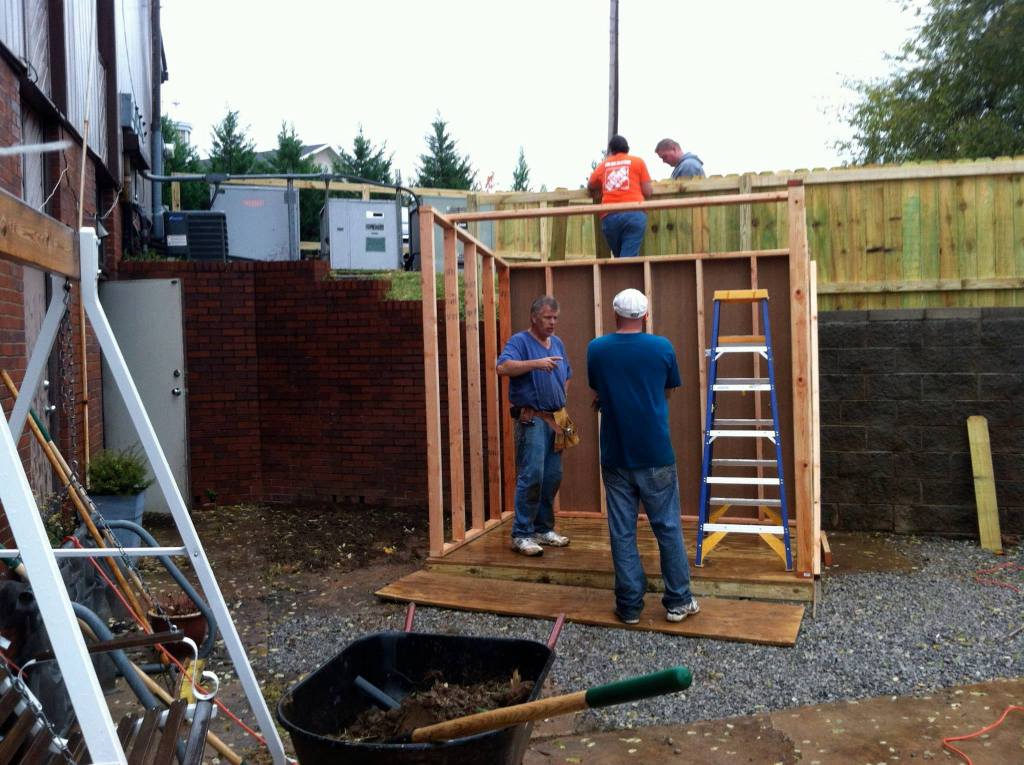
And just like that, a hurting vet was building a ramp for our campus ministry. Eddie showed up the next morning at an ungodly hour in the pouring rain – my students living in the building called me to complain – and, for the next four days, he worked silently and alone with the supplies I provided. Our only conversation was me asking him if he wanted a cup of coffee or something to eat. He never needed anything but the coffee. He mostly worked silently. Alone. In the rain. For four days. Didn’t need any help. Didn’t want to talk to anyone much. I watched him so much those four days, I felt like a voyeur, but I was struggling to know how our fledgling military ministry could help him. After the third or fourth foray into the parking lot each day, I gave up on my saturated rain gear and just stood to one side, under the eaves, feeling lame but praying he’d offer an opening. Eddie may have taken up space next to me but he was clearly not “there;” he was somewhere I’d never been, somewhere I could not go. I didn’t know what to do except to faithfully show up early each morning with coffee and wait for him to leave at the end of the day so he would not feel alone.
I felt lame and useless, though, so, on the third day, I called an older veteran I knew. As I watched Eddie work from inside my office, I said I was looking for suggestions, for ways we could help this guy who worked so methodically, silently, almost prayerfully to build a ramp to make our building accessible but who was so inaccessible, even it seemed, to himself.
“Just let him build,” my friend said.
“I promised Sergeant Major I would help, though.”
“Leave him alone,” he repeated slowly. “You ARE helping him.”
I said goodbye, as discouraged as I had been when I dialed the phone.
For four days, Eddie worked in the rain, silently, taking only the occasional break to smoke a cigarette and stare at the ramp as it took shape. The day he finished, almost magically, the rain stopped. He sat for a couple of hours, I guess, in his truck, smoking and staring silently at the finished ramp.
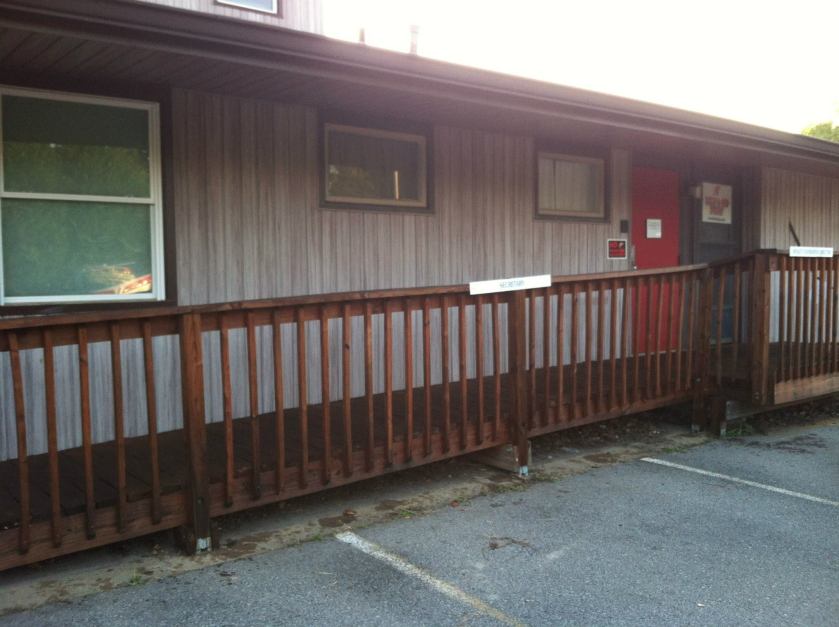
I was afraid to let him leave, afraid he needed so much more, but painfully aware I didn’t know what that might be or if he wanted or needed anything from us. After a couple of hours, I took one last cup of coffee out to the parking lot, and took some pictures of the finished ramp. Eddie said I could send them to Sergeant Major and he’d get them. I said thank you and he stabbed his cigarette out, shook my hand and said goodbye. As Eddie turned to leave, though, he stopped, adding so quietly I almost didn’t hear it. “At least nobody is gonna blow this up,” he said, then he nodded at farewell and drove away.
He left the military not long afterwards and Sergeant Major came by to tell me he’d lost track of him, too. That conversation would be repeated too many times over the next decade; combat veterans returning physically from war didn’t seem to need to circle back and report on progress to counselors or pastors. Many did figure out, though, how to live with what they’d seen, done, and learned. I just hope Eddie was one of them. Often, all it seemed we could do was offer them a ramp. I hope he found his.
Soldiers And Families Embraced
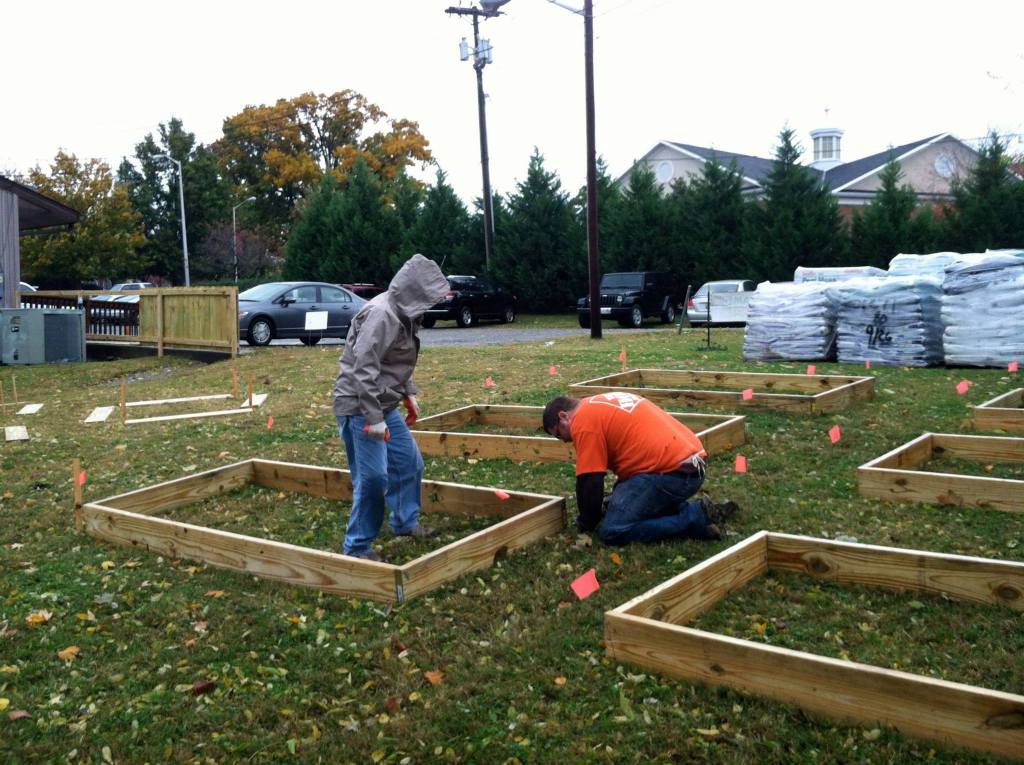
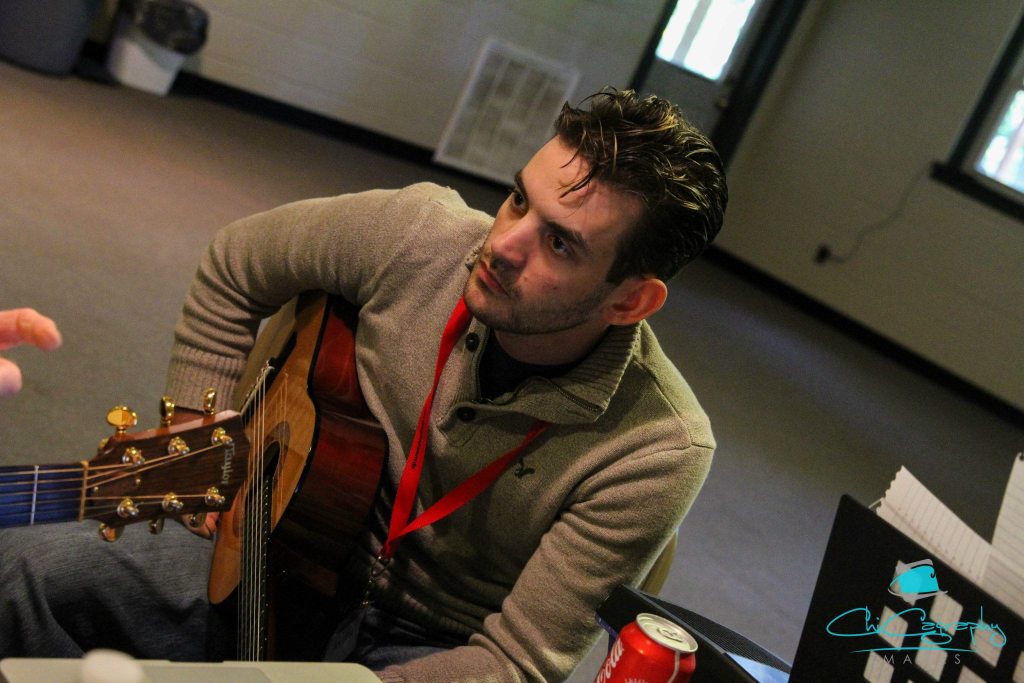
Spurred by the struggles we saw of the veterans on campus and their families, encouraged by veterans who’d enrolled in social work courses to help out, I enlisted the help of another veteran, one who was enrolled at APSU to earn a social work degree. We spent the next few months listening to military and their families. One huge problem was that soldiers were not seeking needed counseling because of the stigma and potential harm to their military careers; The intensity of the ongoing wars also drove soldiers to avoid counseling because they did not want the rest of their company to be redeployed without them; the loyalty to the others in their units too often overshadowed much needed care. In response, we began a counseling program that was free to all who had served and their families. That program, originally called the Lazarus Project, became Soldiers and Families Embraced (SAFE).
This Veteran’s Day, you can thank a veteran for their service, you can offer them a free meal, or you can help them heal by educating yourself about the struggles of those who have gone to war for us and by donating to programs that continue the work of healing well after the veteran has returned. SAFE
In creating this program, we sought out other counseling programs in the mid-state area: there were few if any counselors outside of those in the military who were serving this demographic at the time. The program has also worked closely with APSU to provide internships to help prepare social work students (many of them veterans or family members themselves) with training and supervision. Since 2011 SAFE has helped double the number of counselors in the area. In addition to counseling, SAFE has offered or partnered with a variety of programming in addition to counseling, including weekend retreats for healing, music and storytelling and a War Garden, for example. SAFE still offers services, support and hope today.

Since 2011, advertised mostly by word of mouth, SAFE has provided free, professional counseling to military and their families and now first responders.
One response to “Because every veteran needs a mission.”
-
Jodi, once again you overwhelm me with your ability to succinctly convey breathtaking stories. My initial reaction is sadness, then realized hope for what you worked hard to provide for these needy vets. God bless you for the effect you have on people. Hugs and love, Anne
LikeLike



 Emptying The Backpack
Leave a comment