Because every veteran needs a mission.

The rain was relentless. And aggressive. Errant drops ricocheted off the railing and sprayed me and my companion as we stood on the stoop of the aging A-frame building. I would have struggled in that moment to offer a hopeful assessment of the continued usefulness of that building. Housing the United Methodist Campus Ministry at Austin Peay State University in Clarksville, Tennessee, the fifty-year old A-frame’s faux-wood siding was turning gray, the third story was sagging and the tired building was just begging to be torn down. Though I didn’t realize it as I stood on the stoop, this building, the one real asset that came with the position of campus minister, would be remodeled, revisioned and revamped over the next few years to accommodate the mental health needs of combat veterans, student interns and counselors in newly-carved out counseling rooms.

At that moment, though, I was painfully aware that three adults could huddle intimately on that stoop, but only if they were very friendly. My companion, whom I knew only as Sergeant Major, and I’d only very recently met; we had joined forces because we each felt called to ministry with the hurting military men and women and their families who were connected to Fort Campbell, Kentucky. Sitting adjacent to Clarksville for decades, the fort was home to the 5th Special Forces and the 101st Airborne Division. At that moment, as we shook off the drops beginning to run down our marginally waterproof jackets, our two worlds were connected awkwardly, like our perch on that stoop, by one dirty little secret: there was still a war – actually more than one – going on, still soldiers coming home injured and still families being destroyed, but few if any other people outside that geographic locale even noticed. 
The war in Iraq (2003-2011) was nearing its end but the war in Afghanistan (2001-2021) was going strong. Over the years the 101st Airborne became one of the Army’s repeatedly deployed divisions. Just the year before, in 2010, the President ordered a surge to roll back the Taliban. For the 101st, the year had been deadly both on the field of battle and at home. Many never made it back and the Fort became infamous for the number of suicides among active duty soldiers. Suicides of active duty and veterans, in fact, outpaced combat deaths, to some accounts by four to one. Clarksville and Fort Campbell were reeling and many of those veterans, especially those injured, took their discharge and their GI Bill benefits and enrolled in APSU.

Outside of the immediate community, though, the wars and the pain felt by families and soldiers and the pastors and community around them was a well-kept secret. I was certainly guilty of having put the ongoing wars on a back burner when I was sent to be the campus minister a couple of years earlier as my first full time appointment after seminary. Like most of the country, I was oblivious, in part because the War on Terror was being fought by only about 2% of our nation, the 2% who volunteered to serve, many after witnessing the planes flying into the World Trade Center. While the college and Clarksville had lived with the military in their midst for decades, these wars were different. Too many soldiers deployed into combat two, three, or more times, usually for a year at a time. There was little time for any kind of healing in between wheels down and the subsequent wheels up. Far too many of the wounds were invisible like Traumatic Brain Injuries, usually inflicted by an evil known as the IED (Improvised Explosive Device); these bombs usually were remotely detonated and inflicted brain injuries even hundreds of yards away – think football fields. The brain is shaken inside the skull even though no projectile or weapon actually touched the soldier, which also meant no diagnosis or treatment, just damage that caused otherwise “good soldiers” to struggle with symptoms like unexplained anger issues, loss of peripheral vision and/or the inability to process commands. 

 As Sergeant Major and I stood on the stoop that day, we were part of those trying to respond when APSU realized that these impatient, angry, injured recently-discharged combat veterans made up nearly 20 percent of its student body without warning or preparation. One of those struggling veterans watched us from the cab of his scratched and dented Ford F150. 

The irony of this moment did not escape me, though I did not share it with my companion. While I was an Army veteran myself, I did not have fond memories of my time in service, did not hold a particularly favorable opinion of most military and, in fact, was quite proud of two anti-war bumper stickers on my car. On the front bumper, a bright yellow sticker read, “You cannot simultaneously wage war AND peace,” and on the back, a dark blue with white letters declared “Military Intelligence is an oxymoron.” (I’d been a 98G, Military Intelligence, when I served, so I always felt like I was within my rights to sport that last bumper sticker.) The decision to attach those bumper stickers to my car had been capricious, a joke mostly, and, I thought, innocent at the time. Today, I’d say it was more intentional than I realized. I’d been, I believe, like most of the country, unconscious to the fact that our country was still at war because it did not affect me or anyone I knew. 

Until I was sent to APSU. 

I proudly possessed, at the time, a number of anti-war stickers and posters, most of them left-over from the Vietnam War.

Once it became clear to me that our campus ministry needed to recognize the veterans on our campus as part of our ministry, I remember sitting in my car, waiting to drive onto Fort Campbell for a conference called “Healing the Hidden Wounds.” I was arguing with God. “I don’t like military people. I really don’t want to do this. They won’t want to work with me either, you know! Have you seen my bumper stickers! Seriously?” Within the next few months, however, through no fault of my own, I would need to replace both bumpers and thus lose both bumper stickers. One of God’s little jokes, I believe, and I am still annoyed.  

I had met Sergeant Major at the conference and a few days after we met, he brought Eddie G. to my campus ministry. Eddie had been recently demoted to sergeant for not understanding and following even some of the simple orders he’d been able to follow months earlier. At age 28, he had already been deployed into combat as an engineer three times. 

“Got any work our guy can help with?” Sergeant Major asked. The rain had finally stopped and Eddie stood by his truck across the parking lot, out of earshot, smoking.

“Well, I was needing to make this entrance nearer the parking more accessible,” I offered, nodding to the young vet leaning against his truck. Seems Eddie had taken to sleeping in his truck. He was not allowed to see his daughter or go home. Sergeant Major was running out of ideas and Eddie was only one of thousands of combat vets in crisis at the time but he was the one Sergeant Major brought to see me that day.

“You need something built; Eddie’s your man,” said Sergeant Major. Eddie had been building bridges for combat transport. Never having done that, I did not at the time realize the frustration and grief of building a bridge to transport your unit into or away from combat only to watch your hard work be destroyed in minutes, often at the cost of the lives of your buddies. 

“He just needs a mission.”

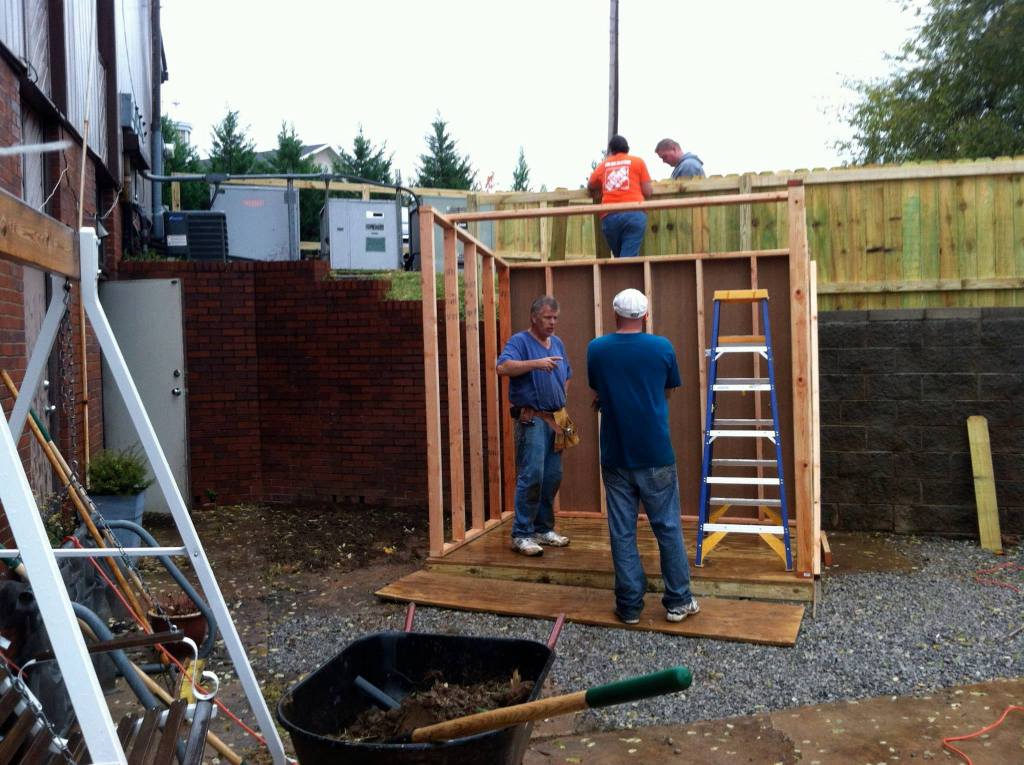
And just like that, a hurting vet was building a ramp for our campus ministry. Eddie showed up the next morning at an ungodly hour in the pouring rain – my students living in the building called me to complain – and, for the next four days, he worked silently and alone with the supplies I provided. Our only conversation was me asking him if he wanted a cup of coffee or something to eat. He never needed anything but the coffee. He mostly worked silently. Alone. In the rain. For four days. Didn’t need any help. Didn’t want to talk to anyone much. I watched him so much those four days, I felt like a voyeur, but I was struggling to know how our fledgling military ministry could help him. After the third or fourth foray into the parking lot each day, I gave up on my saturated rain gear and just stood to one side, under the eaves, feeling lame but praying he’d offer an opening. Eddie may have taken up space next to me but he was clearly not “there;” he was somewhere I’d never been, somewhere I could not go. I didn’t know what to do except to faithfully show up early each morning with coffee and wait for him to leave at the end of the day so he would not feel alone. 

I felt lame and useless, though, so, on the third day, I called an older veteran I knew. As I watched Eddie work from inside my office, I said I was looking for suggestions, for ways we could help this guy who worked so methodically, silently, almost prayerfully to build a ramp to make our building accessible but who was so inaccessible, even it seemed, to himself.

“Just let him build,” my friend said. 

“I promised Sergeant Major I would help, though.” 

“Leave him alone,” he repeated slowly. “You ARE helping him.” 

 I said goodbye, as discouraged as I had been when I dialed the phone. 

For four days, Eddie worked in the rain, silently, taking only the occasional break to smoke a cigarette and stare at the ramp as it took shape. The day he finished, almost magically, the rain stopped. He sat for a couple of hours, I guess, in his truck, smoking and staring silently at the finished ramp.
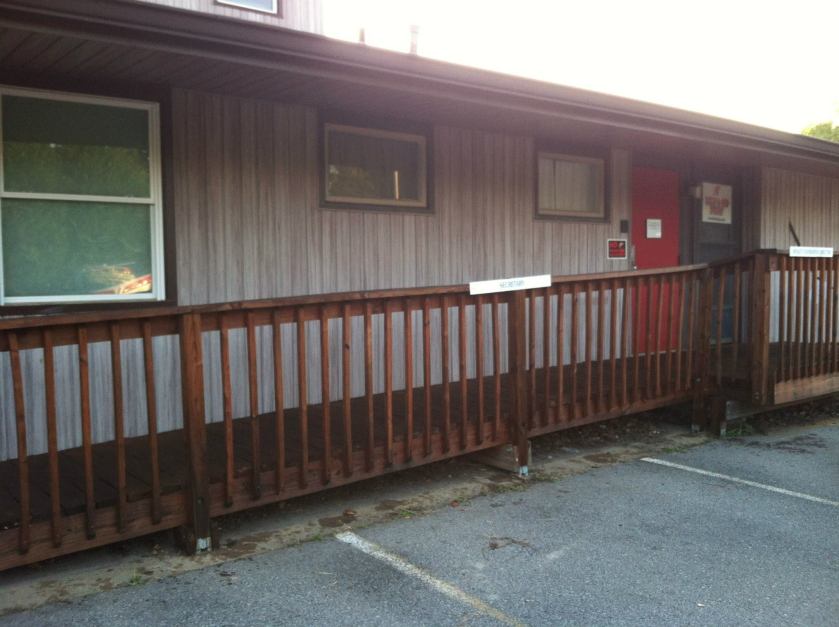
I was afraid to let him leave, afraid he needed so much more, but painfully aware I didn’t know what that might be or if he wanted or needed anything from us. After a couple of hours, I took one last cup of coffee out to the parking lot, and took some pictures of the finished ramp. Eddie said I could send them to Sergeant Major and he’d get them. I said thank you and he stabbed his cigarette out, shook my hand and said goodbye. As Eddie turned to leave, though, he stopped, adding so quietly I almost didn’t hear it. “At least nobody is gonna blow this up,” he said, then he nodded at farewell and drove away.

He left the military not long afterwards and Sergeant Major came by to tell me he’d lost track of him, too. That conversation would be repeated too many times over the next decade; combat veterans returning physically from war didn’t seem to need to circle back and report on progress to counselors or pastors. Many did figure out, though, how to live with what they’d seen, done, and learned. I just hope Eddie was one of them. Often, all it seemed we could do was offer them a ramp. I hope he found his.


Soldiers And Families Embraced
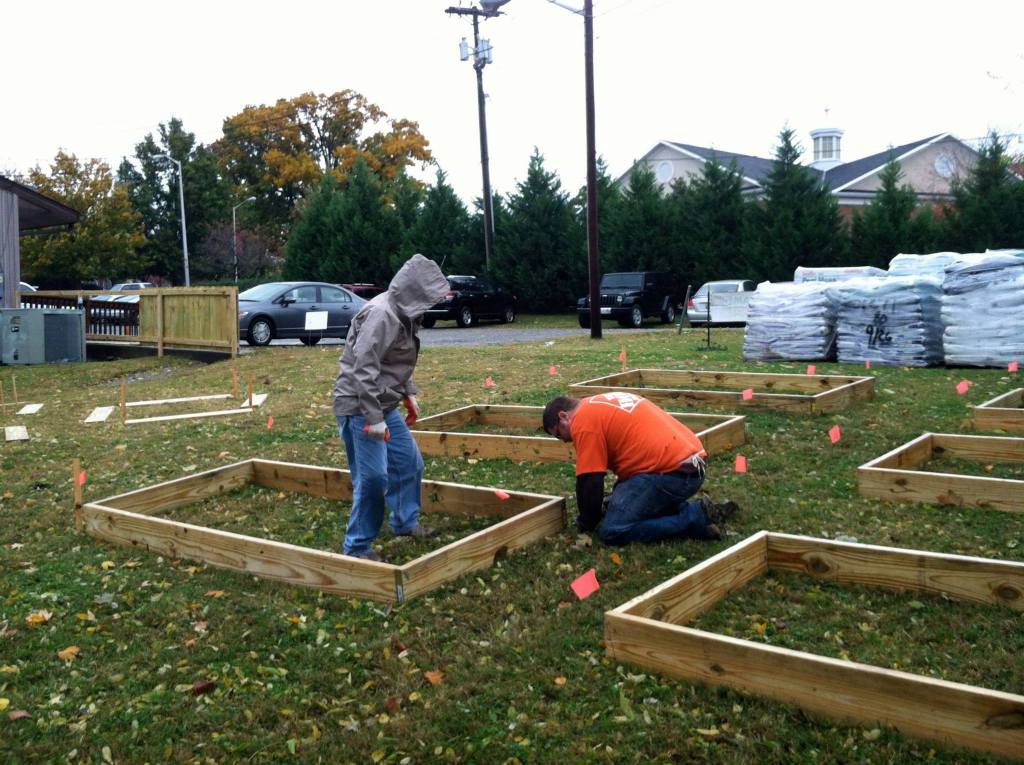
Spurred by the struggles we saw of the veterans on campus and their families, encouraged by veterans who’d enrolled in social work courses to help out, I enlisted the help of another veteran, one who was enrolled at APSU to earn a social work degree. We spent the next few months listening to military and their families. One huge problem was that soldiers were not seeking needed counseling because of the stigma and potential harm to their military careers; The intensity of the ongoing wars also drove soldiers to avoid counseling because they did not want the rest of their company to be redeployed without them; the loyalty to the others in their units too often overshadowed much needed care. In response, we began a counseling program that was free to all who had served and their families. That program, originally called the Lazarus Project, became Soldiers and Families Embraced (SAFE).

This Veteran’s Day, you can thank a veteran for their service, you can offer them a free meal, or you can help them heal by educating yourself about the struggles of those who have gone to war for us and by donating to programs that continue the work of healing well after the veteran has returned. SAFE

In creating this program, we sought out other counseling programs in the mid-state area: there were few if any counselors outside of those in the military who were serving this demographic at the time. The program has also worked closely with APSU to provide internships to help prepare social work students (many of them veterans or family members themselves) with training and supervision. Since 2011 SAFE has helped double the number of counselors in the area. In addition to counseling, SAFE has offered or partnered with a variety of programming in addition to counseling, including weekend retreats for healing, music and storytelling and a War Garden, for example. SAFE still offers services, support and hope today.

Since 2011, advertised mostly by word of mouth, SAFE has provided free, professional counseling to military and their families and now first responders.

One response to “Because every veteran needs a mission.”

  1. Anne Avatar
    Anne

    Jodi, once again you overwhelm me with your ability to succinctly convey breathtaking stories. My initial reaction is sadness, then realized hope for what you worked hard to provide for these needy vets. God bless you for the effect you have on people. Hugs and love, Anne

    Like

Leave a comment

Here Lies Jimmie’s Arm: A Pastor’s Tale of Smalltown Challenges

(Includes an excerpt)

With your support and encouragement, Here Lies Jimmie’s Arm, my first book, is out and ready for consumption.

Click here to go to my Amazon author page. From there you can Follow the Author and be the first to hear about new books.

Or, point your phone’s camera to this QR code to be taken to the book’s page. (Available in paperback or Kindle download.)

Be sure to leave me a review if you liked what you read!

An excerpt:

From “The Women’s Kitchen Jug Band.”

Lela, Rebecca, Molly and Sally were all part of this impressive gaggle of hardy women who had lived long enough and worked hard enough to say they didn’t really care what anyone else thought any more, though they were not shy about telling you what they thought. What they “thought” often and vocally was that “Mildred was goin’ to hell.” That was because Mildred, who lived across the street from Lela, never let the shadow of the steeple at church fall across her path, even though she was mobile and still drove when she wanted. 

The first time I tried to visit Mildred, I called to ask if she’d mind a visit and she proceeded to cuss me out and tell me with every imaginable expletive why I needed to leave her the #*#* alone! Then she stopped and took a breath, but before I could apologize for bothering her, she asked, “Now, who IS this?”

“Your new preacher,” I offered. 

“Well, damn.”

Like many of the elderly I visited, Mildred, who was even tinier than Rebecca, and even more impatient with the younger folks around her, complained about the same issues every time. She also told me about her “constitutional.” Her need for me to know her bowel habits was, strangely, not unusual for this congregation which was, admittedly, mostly populated with folks old enough for regularity to be an issue. Nevertheless, I never knew so many people in one congregation who needed their pastor to know they were regular. I was not prepared for that. I expected they’d share what they were ashamed of or when they’d strayed from the straight and narrow, but not this. If I’d had a bingo board to take to every visit, “regular bowel movement” would have been the center spot. Mildred was no different. 

I learned quickly to move to another topic in those visits. If I’d been willing, I could have shared what was working or not working for others in the congregation and even wondered if I needed to copy those old timey door-to-door peddlers and carry with me a big black valise filled with stool-softeners, laxatives and Pepto-Bismol. I decided instead that this line of conversation was simply a warped reminder of my responsibility to keep boundaries and not share what was not mine to share. I chose not to take the bait in those conversations.  

All of these women, at different times, worried me to no end, and the challenge was to try to talk them down off those ladders at their age. Mildred prided herself on a perfect lawn, and no one could do it as well as she could. She was so tiny, though, that the brand new “Yardman” riding mower she bought would not start for her because she was not heavy enough for the seat to register that she was actually riding the mower. Undeterred, she doctored the spring system and drove around her steep and hilly lawn at least twice a week during the warmer months while the neighbors cringed and begged her to let one of their sons help her out. Her own son would not help, however, so she was damned if she would let someone else’s son show him or her up. She would not stop mowing, not even after she tipped the mower because she found a new gopher hole. One tire dropped into the hole but kept going even after Mildred fell off. Thankfully, it did not get far before it rested against a small tree and burned itself out. The jolt sent Mildred tumbling and she found herself stuck, headfirst, in a hole. It wasn’t a tight hole and her head had fallen into it so she hadn’t gotten hurt too badly. She would have easily been capable of extricating herself from the offending hole except she didn’t have the arm strength to push herself back upright and so she had to wait, head first in that hole, listening to her precious mower burn itself out against the silver maple tree until one of the neighbors smelled the engine burning and came over to see what was what. That neighbor got cussed out, too. Mildred was nothing if not consistent.

A couple of years later, Mildred died, still alone, and still cussing out anyone in her way, but also still quite regular. All she wanted was a short graveside service and that was certainly her choice except that she died during the coldest February I could remember. Only the Kitchen Band ladies attended and, as was to be expected, each dressed “to the nines” to send Mildred off to her fiery eternal home. Because the only people who would be attending on that frigid morning were these ladies in their nineties, I was grateful the funeral home was prepared with a small tent and some space heaters. I assured the Directors I would keep things brief, and only included a prayer and Proverbs 31. “Who can find a virtuous woman?” In retrospect, I had to admit Mildred had only sparsely shared about her past issues so talking about her as an excellent wife might have seemed disingenuous to the women who knew her well. At the time, though, we all were simply grateful to recite the 23rd Psalm and The Lord’s Prayer and be done with it. Unfortunately, as I took a flower from the pall and broke it up to crumble onto her casket, while I prayed, “Ashes to ashes,” a foul and acrid smell made me choke. I looked up to see one funeral director frantically trying to swat sparks while the other gagged. Rebecca, who’d ventured too close to the heater, had decided friends don’t die every day, so she would celebrate the occasion by resurrecting her fox fur stole, its head hanging where a nice brooch ought to have been. The beady eyes of the dead fox haunted me throughout the short service, but it was the smell that was most memorable. It was not just the smell of hair burning, which is foul enough; it was seventy-year-old fox hair we were smelling, an odor that stayed with me for days. I know, as we moved as fast as we could to get the ladies back into their cars, Mildred was either cussing up a storm or, perhaps, cackling gleefully. Maybe both.


Not convinced? How about some advance reviews?

“Here Lies Jimmie’s Arm is a treasure of a book, especially if you have ever attended a small church. The author describes her experiences growing up and becoming a pastor with much humor and great style. The reader is drawn into the dramas of small towns, small churches and in some cases small minds. How she survives and thrives and laughs along the way is truly brilliant and entertaining.” ~ Nancy B. 


“Very readable. And engaging. These pieces welcome the reader into this country setting, with all its charms, peculiarities and characters. The author juxtaposes the troubled histories of her parishioners with her own, inviting readers  into a novice pastor’s inner thoughts, worries and fears. Should be required reading for all would-be pastors.” ~ Charlie M

D-Day Promises, Guilt and Forgiveness – Eighty Years Later

Because coming home is just the beginning….

In a previous post, (“You Can Have My Seat on the Mourner’s Bench,”) I introduced James, (not his real name), who struggled mightily with ongoing guilt and grief about his past actions. For years, I didn’t have a clue what those might be.

I did not know what troubled James, only that he was miserable, but when the Lady Preacher came by, he focussed on how I wasn’t preaching or leading worship in a way that would help him feel like he’d “been to church.” Apparently, as I explained in that eariler post, he was convinced that IF that Lady Preacher could dish up some good old-fashioned confession, that would fix things for him, at least temporarily.

My job, as he saw it, was to offer him a chance to relieve his guilt (for at least a week) through confession and some time on that mourner’s bench. There was no mourner’s bench at Wartrace UMC by the time I was sent there as pastor, though, and, unfortunately for James, I was not on board with the kind of spiritual bloodletting he seemed to want.

Wartrace United Methodist Church circa 1850
where a split log bench wih no back was reportedly the “mourner’s bench.”

Sadly, though, James, perhaps more than anyone at Wartrace needed his Preacher to see how guilty he believed he was, to convict him and then to help him leave that guilt on there, even if he never actually graced the church with his presence. I tried a few times to reprise my sermon from my perch on a sticky metal kitchen chair on his back porch, but the sad truth was that even if James had been able to feel forgiven by God every week, even if he had felt Scriptural preaching wash over him every Sabbath morning, he was in grave danger of never being able to forgive himself.

For years, I was unaware this was what he felt he needed. I would visit him regularly but we were not speaking the same spiritual language for the longest time. Until I preached about D-Day.

Wartrace United Methodist Church,
Greenbrier, Tennessee
(Photo Property of Rev Jodi McCullah) 2023

I finally learned why James was continually unhappy with my preaching on a sticky Sunday afternoon in June when I was directed to lift some old blankets and newspapers and take a seat on a sagging recliner in the corner of the porch at James’ house, a corner too dark and hidden even to be seen before. James had decided I was to be trusted finally, not because I had finally made him feel like the worm he thought he was; rather, on that sweltering Sunday in June, his son had called right after worship let out to tell Daddy that the Preacher Lady had shared a D-Day story in her sermon.

D-Day Promises

I had told the story of Rev. Herman Yates, a retired pastor connected to the church; he and his wife had moved there a few months earlier. He had never preached at Wartrace, not even in revivals, and he and his wife were homebound, too, but Wartrace claimed him because he’d grown up in the area. He was on my list of shut-ins to visit, and he had given me permission to share his story on the first Sunday in June. Herman, a sergeant in the United States Army on D-Day sixty years before, had joined other NCO’s who strapped on flimsy orange and white vests with large crosses on them in order to lead their platoons’ landing crafts and soldiers onto the shore. Eyes and throat burning from the acrid smoke, trying to drown out the screams, they were halted time and time again by the force of nearby explosions. Herman and the other Sergeants moved methodically forward, though, careful to move slowly enough for their men to follow and, of course, he said, slowly enough to be a perfect target. When I met him, Herman was able to tell the story calmly after relating it hundreds of times from pulpits across the area. He told powerfully of how he had bargained with God that day that, should he survive, he would dedicate the rest of his life to preaching. God took him up on the deal.

For those unfamiliar with World War II, “The D-Day operation of June 6, 1944, brought together the land, air, and sea forces of the allied armies in what became known as the largest amphibious invasion in military history,” according to the Eisenhower Presidential Library. “The operation, given the codename OVERLORD, delivered five naval assault divisions to the beaches of Normandy, France. The beaches were given the code names UTAH, OMAHA, GOLD, JUNO, and SWORD. The invasion force included 7,000 ships and landing craft manned by over 195,000 naval personnel from eight allied countries. Almost 133,000 troops from the United States, the British Commonwealth, and their allies, landed on D-Day. Casualties from these countries during the landing numbered 10,300.” Combat would continue for nearly another year in Europe. (eisenhowerlibrary.gov)

Knowing what little I do about the massive undertaking that was D-Day, I have long been amazed at the instructions Herman received that morning before the terrifying landing began. “If you make it to the beach,” Herman’s orders had been to “go to the ‘big’ tree, turn right and meet up a mile down.” Herman and at least a few of his platoon somehow safely made their way onto the beach, somehow found some trees still standing on that battlefield, and somehow chose the right big tree from among many. Herman always knew how all that happened and how he had survived the rest of the war. He went on to serve churches for some forty years.

James was proud, he said that Sunday, proud I’d shared Herman’s story. For the first time since I’d arrived at Wartrace, sitting in the old recliner, I did the math and realized James was shaking because he’d been there as well. Tragically, though, James’ story was neither heroic nor admirable.

“I sent them all out there,” he said with litte introduction, “out there to die.” He paused and looked at the flickering television screen, his only constant companion for years. “One by one,” he continued, “the boats went out. We heard and we knew. We were wishing them a safe journey. We knew though. We didn’t know how many, but we knew, we knew. We were safe, right where we were.” He wasn’t in danger but he was painfully certain that his actions were killing soldiers – his own soldiers – on that beachhead as brutally as any bullet or exploding shell. After he shared his story, his voice trailed off and he mumbled to himself for a bit before I made a pitiful attempt to be helpful.

An estimated 20 percent of all combatants historically suffer from the effects of “combat trauma.”

Soldier’s Heart

nostalgia

“to be broken”

shell shock

“The affliction (Post-Traumatic Stress Disorder) has had many names over the centuries, demonstrating that it is a condition accompanying not just modern wars but all wars. Its cluster of symptoms was first diagnosed as ‘nostalgia’ among Swiss soldiers in 1678. German doctors at that time called the condition Heimweh, and the French called it maladie du pays; both mean homesickness. The Spanish called it estar roto, ‘to be broken.’ Civil War Americans called it soldier’s heart, irritable heart, or nostalgia. In World War I, it was called shell shock; in World War II and Korea, combat fatigue. ‘Soldier’s heart’ indicates that the heart has been changed by war. ‘Nostalgia’ and ‘homesickness’ bespeak the soldier’s anguished longing to escape from the combat zone and return home. Estar roto describes the psyche’s condition after war—broken.”

(War and the Soul: Healing our Nation’s Veterans from Post-Traumatic Stress Disorder, by Edward Tick, Ph.D, p. 99)

I doubt James heard anything I said that afternoon. I’d like to believe I offered him some kind of relief from his guilt but I’m pretty sure my words were wasted. I couldn’t do what he wanted, couldn’t agree with him that he should feel guilty, couldn’t acknowledge that he was indeed as guilty of killing Allied soldiers as any German bullet, bomb or soldier. I toyed with the idea of offering him one of the confessions we regularly used from the hymnal on Communion Sunday, but not one word I could think of was gonna do.

In every house of worship in the nation, veterans of wars are in the pews. Many have spent decades grappling with grief from their wartime experiences. Few of them feel like their part was heroic or admirable. Maybe they “won,” but too often, they are leary of telling us how ugly the “winning” was.

Evidently, James had been needing to visit that mourner’s bench for decades, so maybe telling Herman’s D-Day story created a space for James, as if we gave him permission to risk sharing the shame he felt. Perhaps being able finally to tell his story out loud was the confession James craved. Like too many combat veterans, though, he needed not only to share but also to not be shunned.

Years later, I would sit in a veteran’s retreat and listen to veteran after veteran tell their combat stories, usually with trepidation. So many were like the Iraq war veteran who shared his story of killing “anything that moved” from the helicoptor he piloted. That veteran believed himself to be a “monster” and was certain he should no longer be allowed in our midst. Like this combat veteran and so many others, James needed to tell his story and not have anyone, as one veteran feared, “run screaming from the room.” He needed to know I didn’t see him as a monster and that I would still visit, still speak to him, still consider him part of the flock. He had been needing to visit that mourner’s bench for decades, and telling Herman’s D-Day story gave him permission, at least in his mind, to risk telling his story out loud. Maybe Herman knew what would happen when I shared his D-Day story. God certainly did.

Leave a comment

D-Day Promises, Guilt and Forgiveness

Because coming home is just the beginning….

In a previous post, (“You Can Have My Seat on the Mourner’s Bench,”) I introduced James, (not his real name), who struggled mightily with ongoing guilt and grief about his past actions. For years, I didn’t have a clue what those might be.

I did not know what troubled James, only that he was miserable, but when the Lady Preacher came by, he focussed on how I wasn’t preaching or leading worship in a way that would help him feel like he’d “been to church.” Apparently, as I explained in that eariler post, he was convinced that IF that Lady Preacher could dish up some good old-fashioned confession, that would fix things for him, at least temporarily.

My job, as he saw it, was to offer him a chance to relieve his guilt (for at least a week) through confession and some time on that mourner’s bench. There was no mourner’s bench at Wartrace UMC by the time I was sent there as pastor, though, and, unfortunately for James, I was not on board with the kind of spiritual bloodletting he seemed to want.

Wartrace United Methodist Church circa 1850
where a split log bench wih no back was reportedly the “mourner’s bench.”

Sadly, though, James, perhaps more than anyone at Wartrace needed his Preacher to see how guilty he believed he was, to convict him and then to help him leave that guilt on there, even if he never actually graced the church with his presence. I tried a few times to reprise my sermon from my perch on a sticky metal kitchen chair on his back porch, but the sad truth was that even if James had been able to feel forgiven by God every week, even if he had felt Scriptural preaching wash over him every Sabbath morning, he was in grave danger of never being able to forgive himself.

For years, I was unaware this was what he felt he needed. I would visit him regularly but we were not speaking the same spiritual language for the longest time. Until I preached about D-Day.

Wartrace United Methodist Church,
Greenbrier, Tennessee
(Photo Property of Rev Jodi McCullah) 2023

I finally learned why James was continually unhappy with my preaching on a sticky Sunday afternoon in June when I was directed to lift some old blankets and newspapers and take a seat on a sagging recliner in the corner of the porch at James’ house, a corner too dark and hidden even to be seen before. James had decided I was to be trusted finally, not because I had finally made him feel like the worm he thought he was; rather, on that sweltering Sunday in June, his son had called right after worship let out to tell Daddy that the Preacher Lady had shared a D-Day story in her sermon.

D-Day Promises

I had told the story of Rev. Herman Yates, a retired pastor connected to the church; he and his wife had moved there a few months earlier. He had never preached at Wartrace, not even in revivals, and he and his wife were homebound, too, but Wartrace claimed him because he’d grown up in the area. He was on my list of shut-ins to visit, and he had given me permission to share his story on the first Sunday in June. Herman, a sergeant in the United States Army on D-Day sixty years before, had joined other NCO’s who strapped on flimsy orange and white vests with large crosses on them in order to lead their platoons’ landing crafts and soldiers onto the shore. Eyes and throat burning from the acrid smoke, trying to drown out the screams, they were halted time and time again by the force of nearby explosions. Herman and the other Sergeants moved methodically forward, though, careful to move slowly enough for their men to follow and, of course, he said, slowly enough to be a perfect target. When I met him, Herman was able to tell the story calmly after relating it hundreds of times from pulpits across the area. He told powerfully of how he had bargained with God that day that, should he survive, he would dedicate the rest of his life to preaching. God took him up on the deal.

For those unfamiliar with World War II, “The D-Day operation of June 6, 1944, brought together the land, air, and sea forces of the allied armies in what became known as the largest amphibious invasion in military history,” according to the Eisenhower Presidential Library. “The operation, given the codename OVERLORD, delivered five naval assault divisions to the beaches of Normandy, France. The beaches were given the code names UTAH, OMAHA, GOLD, JUNO, and SWORD. The invasion force included 7,000 ships and landing craft manned by over 195,000 naval personnel from eight allied countries. Almost 133,000 troops from the United States, the British Commonwealth, and their allies, landed on D-Day. Casualties from these countries during the landing numbered 10,300.” Combat would continue for nearly another year in Europe. (eisenhowerlibrary.gov)

Knowing what little I do about the massive undertaking that was D-Day, I have long been amazed at the instructions Herman received that morning before the terrifying landing began. “If you make it to the beach,” Herman’s orders had been to “go to the ‘big’ tree, turn right and meet up a mile down.” Herman and at least a few of his platoon somehow safely made their way onto the beach, somehow found some trees still standing on that battlefield, and somehow chose the right big tree from among many. Herman always knew how all that happened and how he had survived the rest of the war. He went on to serve churches for some forty years.

James was proud, he said that Sunday, proud I’d shared Herman’s story. For the first time since I’d arrived at Wartrace, sitting in the old recliner, I did the math and realized James was shaking because he’d been there as well. Tragically, though, James’ story was neither heroic nor admirable.

“I sent them all out there,” he said with litte introduction, “out there to die.” He paused and looked at the flickering television screen, his only constant companion for years. “One by one,” he continued, “the boats went out. We heard and we knew. We were wishing them a safe journey. We knew though. We didn’t know how many, but we knew, we knew. We were safe, right where we were.” He wasn’t in danger but he was painfully certain that his actions were killing soldiers – his own soldiers – on that beachhead as brutally as any bullet or exploding shell. After he shared his story, his voice trailed off and he mumbled to himself for a bit before I made a pitiful attempt to be helpful.

An estimated 20 percent of all combatants historically suffer from the effects of “combat trauma.”

Soldier’s Heart

nostalgia

“to be broken”

shell shock

“The affliction (Post-Traumatic Stress Disorder) has had many names over the centuries, demonstrating that it is a condition accompanying not just modern wars but all wars. Its cluster of symptoms was first diagnosed as ‘nostalgia’ among Swiss soldiers in 1678. German doctors at that time called the condition Heimweh, and the French called it maladie du pays; both mean homesickness. The Spanish called it estar roto, ‘to be broken.’ Civil War Americans called it soldier’s heart, irritable heart, or nostalgia. In World War I, it was called shell shock; in World War II and Korea, combat fatigue. ‘Soldier’s heart’ indicates that the heart has been changed by war. ‘Nostalgia’ and ‘homesickness’ bespeak the soldier’s anguished longing to escape from the combat zone and return home. Estar roto describes the psyche’s condition after war—broken.”

(War and the Soul: Healing our Nation’s Veterans from Post-Traumatic Stress Disorder, by Edward Tick, Ph.D, p. 99)

I doubt James heard anything I said that afternoon. I’d like to believe I offered him some kind of relief from his guilt but I’m pretty sure my words were wasted. I couldn’t do what he wanted, couldn’t agree with him that he should feel guilty, couldn’t acknowledge that he was indeed as guilty of killing Allied soldiers as any German bullet, bomb or soldier. I toyed with the idea of offering him one of the confessions we regularly used from the hymnal on Communion Sunday, but not one word I could think of was gonna do.

In every house of worship in the nation, veterans of wars are in the pews. Many have spent decades grappling with grief from their wartime experiences. Few of them feel like their part was heroic or admirable. Maybe they “won,” but too often, they are leary of telling us how ugly the “winning” was.

Evidently, James had been needing to visit that mourner’s bench for decades, so maybe telling Herman’s D-Day story created a space for James, as if we gave him permission to risk sharing the shame he felt. Perhaps being able finally to tell his story out loud was the confession James craved. Like too many combat veterans, though, he needed not only to share but also to not be shunned.

Years later, I would sit in a veteran’s retreat and listen to veteran after veteran tell their combat stories, usually with trepidation. So many were like the Iraq war veteran who shared his story of killing “anything that moved” from the helicoptor he piloted. That veteran believed himself to be a “monster” and was certain he should no longer be allowed in our midst. Like this combat veteran and so many others, James needed to tell his story and not have anyone, as one veteran feared, “run screaming from the room.” He needed to know I didn’t see him as a monster and that I would still visit, still speak to him, still consider him part of the flock. He had been needing to visit that mourner’s bench for decades, and telling Herman’s D-Day story gave him permission, at least in his mind, to risk telling his story out loud. Maybe Herman knew what would happen when I shared his D-Day story. God certainly did.

Leave a comment

For Combat Veterans, Memorial Day is No Picnic

For those who survive combat and return home, the duty to keep the memory alive of the ‘true heroes’ can become a lifelong, sacred mission lived out daily.

Conversations with veterans of war will teach you one thing quickly: for many, the only true “hero” is the one who didn’t come home. Thus, for so many combat veterans who have lost a battle buddy, a friend, even an enemy, in war, the duty to keep the memory of the “true heroes” alive can become a lifelong, sacred mission lived out daily.

Sadly, Survivors’ Guilt is one of the main contributors to veteran suicides that continue to plague this country. Living with the fact that you survived when so many others did not then means Every Day Becomes Memorial Day. 

For many combat veterans, the survivor’s guilt, or the belief that you have done something wrong by surviving a traumatic event when others did not, can be debilitating and disturbing. Survivors of all sorts of traumas will question, feel guilty, and often even begin to believe their survival makes them somehow responsible for the other person’s death. 

“Why did I survive?” 

“I stepped one way and my buddy went another. He took the bullet.”

“I switched seats with another pilot and he was killed. It should have been me.”  

“If I’d leaned forward, I would have been the one hit, not him.” 

The grief of losing those under your command or knowing that another person died saving you is a particularly heavy burden. Especially plaguing for so many combat veterans is the reality that they were responsible for taking the life of a child, whether a combatant or just an innocent bystander.

Even just returning when so many others did not, though, can feel like too much to bear. Thus, remembering and honoring the “real” heroes with some kind of meaningful ritual or task that honors the fallen then becomes the new mission.  

Eddie G.

His Sergeant Major brought Eddie G. to my campus ministry one rainy day in 2011. He’d already deployed into combat as an engineer three times and he was only 25-years-old.

“Got any work our guy can help with?” Eddie stood by his truck across the parking lot, out of earshot.

“Well, I was needing to make this entrance accessible. Probably a ramp….” I nodded to the young vet leaning against his truck.

Seems Eddie was sleeping in that truck. He was not allowed to see his daughter or go home. Sergeant Major was running out of ideas and Eddie was not the only vet in crisis in Clarksville, which is adjacent to Fort Campbell, Kentucky, home to the 5th Special Forces Group and 101st Air Assault. At that time, the base was dealing with more active duty suicides than any other U.S. military base. Eddie was just one of many vets in crisis but he’s the one Sergeant Major brought to see me that day.

“You need something built; Eddie’s your man,” said Sergeant Major. Eddie had been building bridges for combat transport. Never having done that, I could not and did not at the time realize the frustration and grief of building a bridge to transport your unit into combat only to watch them be destroyed almost immediately. Too often at the cost of the lives of your buddies. “He just needs a task. To be useful. Helpful.”

And just like that, a hurting vet was building a ramp for our campus ministry. He showed up at an ungodly hour the next morning in the pouring rain. For the next four days, our only conversation was me asking him if he wanted a cup of coffee or needed anything. He never needed anything but the coffee. I’d stand out there with him, attempting to make some small talk but everything I said seemed pretty lame.

He worked silently. Alone. In the rain. For four days. Didn’t need any help. Didn’t want to talk to anyone much. I watched him a lot those four days, wondering about how we could help him. I called another, older veteran I knew and asked him for suggestions, ways we could help this guy who worked so methodically, silently, almost prayerfully to build a ramp to make our building accessible.

“Leave him alone, and let him build,” my friend said. “You ARE helping him.”

For four days, Eddie worked in the rain, silently, taking only the occasional break to smoke a cigarette and stare at the ramp as it took shape. The day he finished, he sat for a couple of hours, I guess, in his truck, smoking and looking at the finished ramp.

I was afraid to let him leave, afraid he needed so much more, but painfully aware I didn’t know what that might be. I went out and took some pictures and he said I could send them to Sergeant Major and he’d get them. I said thank you and he stabbed his cigarette out, then said goodbye. As he turned to leave, though, he added so quietly I almost didn’t hear it: “At least nobody is gonna blow this up.” I never saw him again. I pray he found another project.

“Survivor’s guilt is a complicated kind of grief and treating it needs to be very individual,” says counselor and combat veteran Lantz Smith, former Executive Director of Soldiers And Families Embraced (SAFE), a free counseling program near Fort Campbell.

Often, he says, the kind of complicated grief carried by war survivors is never finished. Certainly, he says, there seems to be no straight progression through the many stages of grief, and little hope of the grief ending neatly with any sense of closure.  

“Quite often,” Smith says, “survivors of combat are more afraid of forgetting than anything else. Their fear is that NOT feeling grief intensely is dangerously close to forgetting, and forgetting would be unforgivable.”   

Ask any combat veteran and they will tell you whose memories they personally are keeping alive.

In his invaluable book, “Warriors Return,” Dr. Edward Tick of Soldier’s Heart explains, “Survivors shape their lives and suffer their nightmares as ways to not break faith with the fallen. Canadian Lt. Colonel John McRae’s World War I poem, ‘In Flanders Fields,’ reads, ‘If you break faith with us who die / We shall not sleep…’” 

Poppies are still reminders of those who have fallen in conbat.

“Civilians taking oaths of military service become bound to serve and sacrifice no matter what is asked of them, even unto killing or being killed,” says Tick. “Combat also binds, producing an intense intimacy between brothers-and sisters-in-arms and with foes. Survivors often take oaths to remain loyal forever to those with whom they have shared the experience of hell. They strain to honor the memories of their fallen, prove themselves worthy of their sacrifices, and fulfill last promises, such as delivering messages home,” he explains.

Tick, Edward, PHD, Warrior’s Return: Restoring the Soul After War, Sounds True Publications, Boulder, Colorado.

Helping these survivors find ways to remember a fellow service member’s death without constantly emotionally reliving the trauma is the challenge for trauma counselors.  

The New Mission

While many combat veterans will never finish the healing process after they return home when their brother- or sister-in-arms did not, they can find ways to make peace with and live with this new mission in life. Memorializing is one effective method, says Smith. Like Eddie G., for example, they can build something that will not be destroyed.

Memorializing means creating places and activities to hold part of the grief and help the veteran find a healthy way to keep alive the memory of those who have fallen in battle.  

One veteran, a fighter pilot, was haunted by the way he could take another life while staying “above the fray,” and be an anonymous danger to those below him. His memorial? He has loaded as many pennies as he can in a large bowl; each one represents a life lost in a bombing raid.

He regularly picks up the weighty reminder because, he says, he needs to feel a physical weight to accompany the emotional burden of those whose lives he took, who shared the hell of war with him but who did not ever see him. He feels the weight of this grief and does his part to remember the weight of war.

A sailor who cannot “unhear” the voices of those who could not be saved from drowning becomes a counselor to help those who are drowning emotionally like he once was.

Some veterans find help for the guilt of surviving by sharing it in music or stories. Ancient cultures are said to have brought warriors home and, after a time of cleansing, asked them to tell the rest of the community everything they saw and felt and all that they did. When they finished, the community then helped them carry the burden of their memories and guilt. Sharing is also a way of keeping a memory alive, of honoring the fallen.

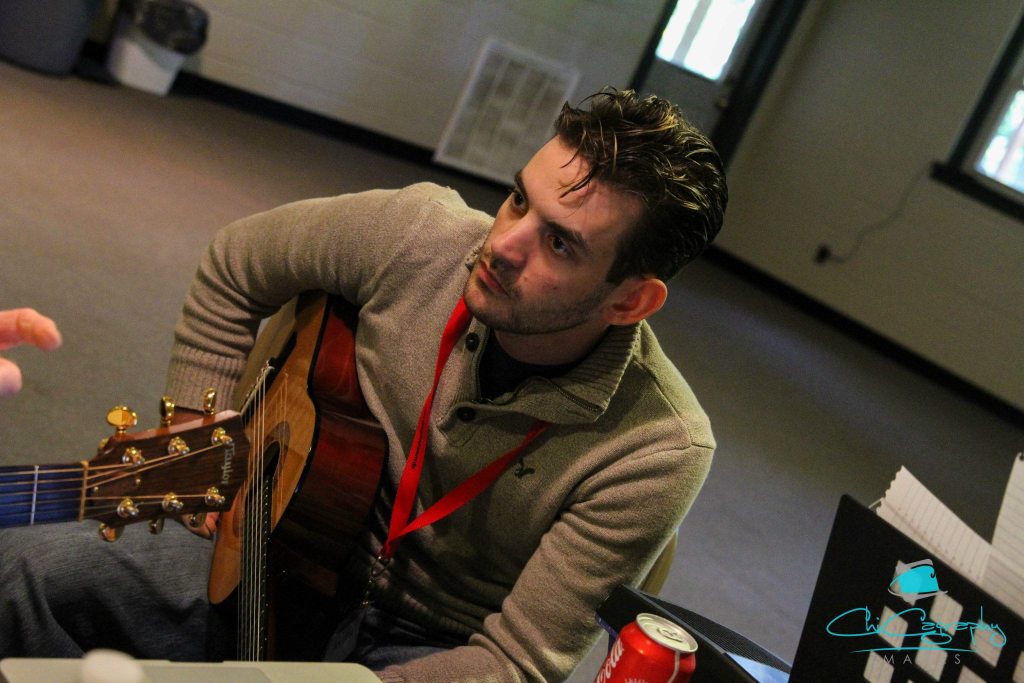
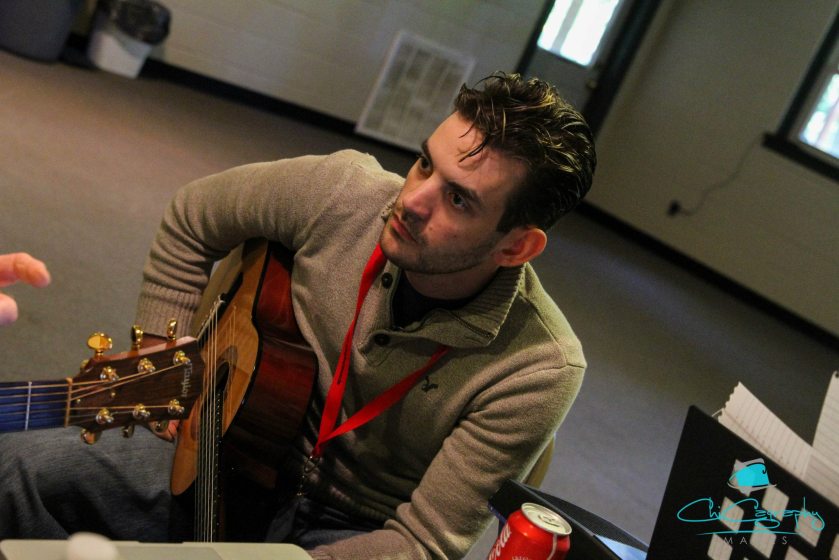
Aaron Voris, combat veteran, attending a SAFE songwriting retreat. Used with permission.

One young soldier, who was wounded himself when he returned, was haunted by the memory of having to carry the body of a small child to a burn pile after a battle. He knew nothing about her, and her family could not be found. Perhaps they did not survive either. For the longest time, that memory was disturbing and his greatest desire was to drive the pain of that moment from his mind.

With the help of a counselor, however, he chose to see the memory not as a haunting spectre but as a desire to be honored and remembered. That child – whoever she was – deserved to be honored and remembered, too, and, he realized, there might be no one else to do that. Remembering this innocent victim of war was his new mission and embracing that gave him some peace. He gave her a name and then he planted a tree dedicated to her in the field behind his home. He tends to it and hopes she is at peace as well, knowing she was remembered.

“If you break faith with us who die / We shall not sleep…’” 

Canadian Lt. Colonel John McRae’s World War I poem, “In Flanders Fields.”

These rituals will never erase the profound sense of loss or the survivors’ guilt, but they can keep the veteran from turning the grief and guilt inward in destructive ways, Smith says.

Veterans build raised gardens to provide hands on therapy “giving life,” rather than taking it .

Finding Meaning in Survival

Rituals also serve as regular reminders that survivors were likely spared for some reason. These acts and memorials become the new missions that can help combat survivors bear the duty of remembering.

I believe Eddie was deep in thought the entire time he was building our new ramp, promising his fallen buddies that each nail driven and each step taken on this ramp was a reminder that war was not all there was and that those who fell would be remembered and honored every time someone entered that campus ministry building.

Accepting their new mission, embracing this sacred duty to remember and honor, can, with the help of families, friends, counselors and ministers, ease the survivors’ guilt enough for today and help them cope with the fact that, once a combat veteran returns home from battle, every day becomes Memorial Day. 

Thank a veteran next time you see him or her but remember, they don’t think of themselves as the heroes. In fact, it may disturb them to be called a hero. “Thank you for your service” is enough. Even better, how about we all just take a minute and reflect on why we have designated a Memorial Day in the first place?


This is first of a series of posts about war, loss and healing.

I am a veteran, retired United Methodist Minister and co-founder of Soldiers And Families Embraced (SAFE), a non-profit offering free counseling to combat veterans and their families.  In 2011, at the height of the US military’s largest scale armed conflicts since the Vietnam War in Iraq and Afghanistan, I served as the campus minister at Austin Peay State University in Clarksville, Tennessee, which is adjacent to Fort Campbell, Kentucky.  At the time, more than 17,000 Soldiers were deployed into combat from the fort, which had the highest suicide rate of any other base in FORSCM.  Veterans, their spouses and their children began bringing to campus the effects of multiple, year-long combat deployments, including Post-Traumatic Stress Disorder and Traumatic Brain Injuries.  In response, with the help of a veteran studying social work, we began a free and totally confidential counseling program based on the story of Lazarus emerging from the tomb, still wrapped in the trappings of war and death.  SAFE continues today providing free counseling to those affected by all wars.

Leave a comment