
In the previous Post called The Boulder Fields of our Lives, about hiking Longs Peak and working at the YMCA of the Rockies, I ended by explaining that our summer work (and “Hikemaster” Course) were cut short not long after we scaled the 14,000+ foot Longs Peak because of a natural disaster in the canyon below us. A few days after the climb, a year’s worth of rain fell in 70 minutes and the Big Thompson River below our camp washed out nearly everything and everyone in its way.
“On July 31, 1976, the skies opened up over the Big Thompson Canyon, setting off the deadliest natural disaster in Colorado history that claimed 144 lives and caused $35 million of damages.” (https://www.coloradoan.com/story/news/2016/07/29/big-thompson-flood-killed-scores/87524858/)

Fragmented Memories
For decades now, because my memories of being just above the “500-Year Flood” are so fragmented, I have not told the story of being there, which is unusual for me. Most days, I am known to bore anyone close enough to listen with a story or two; I usually can’t help myself. The stories I have not told then generally are ones I cannot remember OR ones I do not want to remember. Only after writing about climbing Longs Peak, as I looked at the photo of me and my climbing companion, did it occur to me that the story of that summer was not complete without talking about the flood.
“The chaos along an otherwise trickling Big Thompson River killed 144 people, five of whom were never found, and carved out a chapter in the history books as Colorado’s deadliest natural disaster.”
https://www.coloradoan.com/story/news/2016/07/29/big-thompson-flood-killed-scores/87524858/
Both the hike and the flood were, for lack of a better word, watershed moments for me, but the lessons have been realized slowly and in fragments. To better remember those days, I looked at a couple of television news reports of the flood, but they were recorded decades after the flood. Strangely, the lack of technology at the time affected both the before and the after, the event and the memories. The only phones in 1976 were landlines and, so, warnings came only through emergency personnel going door-to-door; at least one first responder died trying to warn others that night. Only a few black and white photos are available as well, making attempts at remembering as cumbersome as the warning system had been. Nevertheless, I have felt driven to try to piece together a coherent memory of those days and, as I researched and read and poured over old photos online, I read the words of one Colorado disaster preparedness official. She said,”We learn the most from chaotic events.” As I have tried to remember and reflect, I think that she was right; we do learn much from chaos, but we have to work to find those lessons.
First, setting the stage for our story….
After my freshman year in college, I went to the mountains near Estes Park to work for what I thought would be a summer of fun. Once there, I was surprised to find a sense of peace that I had not expected. I was, for the first time, hopeful that I might actually be able to find a peaceful and stable home once I could support myself. I surprised myself, in fact, by making some plans to continue working at the camp in the fall.
Though I kept journals off and on, little remains of what might have been written that summer. I do remember that, on the back of placemats, during lulls in our work, I sometimes wrote letters or journal entries; most of them are lost, but the only one I have found from before the flood surprised me. I wrote:
Tuesday, July 20, 1976
“Storm clouds have mingled with the mountain peaks since sunrise; we here in the valley are enclosed, shut away from the crowds that would disturb us….peace of mind must certainly follow. Here, in my room, I am lulled into a tranquil mood by the clouds every day. Even when my work day is long and busy and even frustrating,” I wrote, “…the calm is inescapable.”
Calm was something I could not claim before that trip and safety was not a place I remembered.
At that point, the clouds covering the tops of the mountain peaks around us (The highest peak in our area was Longs Peak at more than 14,000 feet in elevation.) were benevolent. I wrote: “These clouds draw your thoughts. Constantly changing, first ringing, then entrapping the peaks, they are playing quietly and are a source of constant amusement.”


Those “playful clouds” would soon turn deadly, though. During our Hikemaster classes that summer, we learned to appreciate the danger of the storm clouds that often came up quickly in the mountains. On July 20, though, I was simply calmed by their presence and movement. I needed that calm desperately; the family life I would return to was chaotic, unpredictable, traumatic. The rules changed daily and nothing that occurred in my home could surprise me anymore. The overwhelming feeling that I had carried with me when I tried to escape to the mountains from a tumultuous family life was fear. Fear and anxiety wore me out and, I know now, the trauma, fear and stress are why so many of my memories are fragmented at best.
And now, a word about trauma….
Trauma is destructive. Like the different kinds of skin cancer, trauma can create a wound that burrows deep or spreads outside of you, like when you fear for your loved ones in such a depth as to make others question you, call you hysterical even. And yet, because you have experienced trauma, you know. Accidents DO happen. People, even people you trust, DO harm one another. Your parents did not protect you. No one saved you. Nothing, not even seeing another day, was guaranteed. All the worst, all you feared, was indeed possible, did happen. And no amount of reassurance from others can repair that trust completely; we can learn to manage the fear but we never know when some sound or smell or person or newscast will bring it all rushing back.

Like a broken mirror, trauma shatters both our sense of self and our memories. Too many of my memories lie in shards on the floor and picking through them, trying to piece them together, trying to make sense, to have some timelines or events make sense is most likely why I write.
Even the effort to capture the memory of that time is fragmented: all that remains are three pages written by that seventeen-year-old me as I tried to capture what I saw and a couple of newspaper pieces I wrote after I got a job working at the local paper and my editors learned I’d been in the “500-year Flood of ’76.”
The morning of July 20, 1976, though, I was feeling calmer than I ever had, safer, more at peace and, to my surprise, I was enjoying even the colder weather on the mountains. I have long been known to dislike the cold intensely, so as I read the words I wrote, I am struck by what I believed I had found there: a home and place where I was being trained to pay attention to my surroundings, to know my own capabilities, and how to prepare for and help others in disasters. Wanting to help others is one response to trauma. I know I was hopeful that I might at the very least return the next summer to be Hikemaster and even one day make my home near the clouds.
I wasn’t able to stay, though, and thus much of what I remember, even as I try to piece it together, still seems fragmented and lost to me. Like most of my co-workers, I went home soon after the flood, and immersed myself in college classes. I never saw any of my coworkers again and I never spoke to any of them afterwards either; those relationships simply ending undoubtedly contributed to a sense of loss.
Now, as I try to access any memories of that time, I am left with the handful of days afterwards, days when all of us above the canyon were trying to figure our what was happening below us. Even though we were aware, we did not want to talk about how we ourselves inexplicably had escaped being swept up.
That first day, though, we didn’t know what was going on below us in the canyon.
Like the many campers along the river, we were enjoying the scenery. The Big Thompson River was one of the jewels of the area, a mighty source of income because of all the tourists it drew. Most of the year, “…the water runs only a few feet deep and fifteen to twenty feet wide…happily rushes over rocks and gurgles through pools as it descends 8,000 feet from the high range to the south Platte on the prairie. The water is clear, numbing cold, and playfully sparked by the sun.” (Big Thompson: Profile of a Natural Disaster by David McComb, Pruitt Publishing Company, 1980.)
Saturday, July 31, 1976
Today is unusually rainy.
Normally, storms approached Estes Park and the YMCA camp from the south; thunderstorms, while normal, are of short duration, with clouds often enveloping peaks by 10 a.m., which was why hikers needed to climb summits of the various peaks in the range in time to skedaddle back down below the treeline or risk becoming a lightning rod. Our Hikemaster course is teaching us a great deal about safety and we are training to lead hikes, which would mean teaching tourists about safety as well. Too often, though, tourists in the park dismiss any safety preparations or climbing instructions with disastrous consequences. The tourists we met traveling up to the summit the day we climbed Longs Peak weren’t interested in safety tips. As we were headed down to the timber line, we passed, for example, a woman in a summer dress, wearing tennis shoes and carrying a purse on her arm as if she were headed to a party. They would be fine, they told us, and they waved us on. They had evidently never seen a person who’d been struck by lightning. Unprepared hikers found their way to our camp often enough though and several of our coworkers are among those trained to rescue hikers.
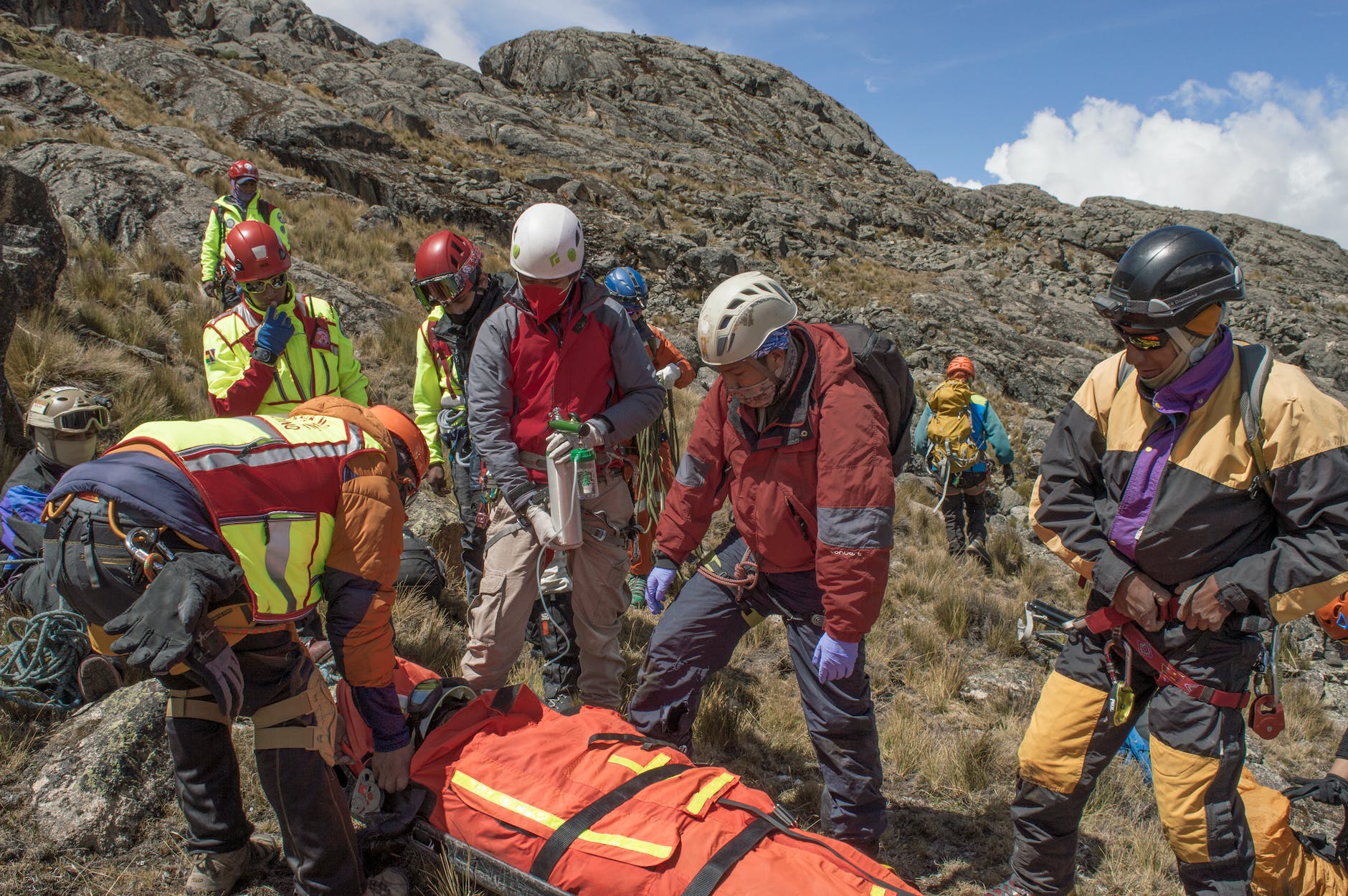
We did not know at that time that many of our Hikemaster instructors would be called upon to help flood victims the next day.
The storm was approaching from the East, though, we noticed, and it just seemed to camp above us, a thunderhead with no high westerly winds to move it. Reports were that during that Saturday evening, twelve inches of rain fell, about the normal annual rainfall amount for the area. Estes Park and the YMCA are above Lake Estes on the Big Thompson River, but, just below us, the unrelenting water from several tributaries gathered debris and swept down the canyons, both restricted by and guided by steep walls. By the time the waters reached the North Fork and the Big Thompson, there was already enough force to destroy bridges. All along the canyon, this storm surge ripped up everything in its way, including homes and campsites, swept up by a water level estimated at nearly twenty feet above the normal. Reports I read later told of at least one emergency worker dying in his attempts to go door-to-door to warn people.
We Learn from Chaos….
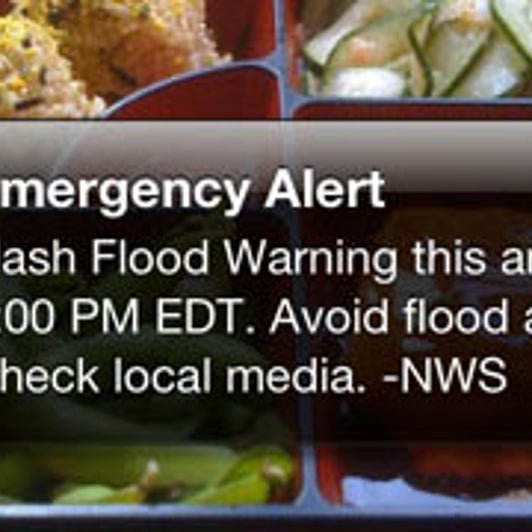
One of the innovations that came out of the Big Thompson flood was a national warning system for floods and other national disasters. That, with the advent of cell phones has greatly reduced the number of deaths in floods.
Sunday, August 1, 1976
The camp is secluded from the world as usual, except for the hymns and local newscasts being broadcast on the radio in the bakery. Rain falls steadily still and a heavy fog had settled on Big Thompson Canyon. Four of us went by van higher up into the mountains to a lodge to feed some visitors. While the lodge was only thirty feet higher than the camp, it was eerily sitting just above the clouds and driving on those narrow roads on the sides of those mountains felt even more dangerous than normal.
Sitting in the lodge’s kitchen after breakfast, we listened to the radio to learn when we could expect some sunshine. Mountain thunderstorms seldom lasted even more than an hour or two, so this second day of fog and rain was disconcerting. The announcer became somber, reading a report that surprised us: “The Big Thompson River had overflowed its banks in the narrow canyon leading to the valley and four persons were reported dead.” We became quiet, not having known that the storm was dangerous. The cook was worried about his family, knowing they lived near the flooded area. The storm, we heard, was stationary, and we could look forward to more rain.
A lightning flash warned us we needed to take the van back down the mountain before trying to drive became even more treacherous AND before the van started attracting electricity. We warned the visitors in the lodge not to drive anywhere or even to go outdoors because they’d be lightning rods.Throughout the morning, as we worked back at the bakery and kitchen, we listened to any news reports coming over the radio. We worked silently through the day as the reports began to seem unreal; the number of dead grew to more than sixty before evening. We began to slowly comprehend the devastation that was apparently just below us. No one wanted to ask if it were just dumb luck that we were above the deadly flood and others were below it. The folks in charge were not sharing much information; maybe they didn’t want us to panic. No one really was surprised to learn that our phone lines were down. That was not terribly unusual, but the announcement added to the somber mood and hushed tones all day. The frequent updates on the radio and our director forbidding us to leave the YMCA property kept us all close to the kitchen even long after our own shifts had ended. Only the maintenance crew left to take the trash but the normal 30-minute round trip took hours and they returned with widely varying reports of the flooding just 1500 feet below us. If any of my coworkers or those in charge were afraid, I did not see it.
Monday, August 2, 1976
Monday, August 2, 1976
This morning, the fog is even lower than before, which meant rescue helicopters were grounded. Several refugees have been brought into the camp in the night. So forlorn, they are wet and cold and dirty. They wait for some coffee and a blanket; dirty pillowcases in the hands hold the few belongings they were able to salvage. They are lucky, though; hundreds more are still stranded. Many more are missing and most are expected to be dead. Still there are no phone lines available and a trip to Denver, normally a couple of hours, would take six or seven and that was only if you had a four-wheel drive vehicle. Technical climbing skills are needed now for rescuers because roads are washed out in the canyon and the only way out is up over the cliffs.
Tuesday, August 3, 1976
For three days, we have heard little about what was happening below us, except by the radio. I suspect now they were trying to prevent any kind of panic; we also did not know what the rest of the world thought about our fates, either. We were surprised to find for example, that our parents had heard mostly dire reports about Estes Park and the YMCA camp above it being unreachable and even obliterated. Some men we didn’t know came to get us today and told us we were going to be calling our parents via ham radios set up. The instructions to “tell your parents you’re still alive” stopped me for a moment. I had not known nor had I had a moment to worry what they might be thinking at home.
The overriding feeling it seems was somber but also a bit bizarre. For one example, our local radio station published a newsletter/bulletin we could see every morning, and next to the names of the dead each day were that day’s baseball scores.
Rumors
Rumors abounded. One account said all manner of snakes, also apparently trying. to escape the waters, were chasing survivors up the sides of the Big Thompson River canyon.
There was one report of a baby, who became known as Baby Moses, stranded on a rock in the rushing water.
One newspaper wrote: “After it opened, the refugee center at Loveland High School became a source of personal details as survivors, some with nothing more than the clothes they had worn into the canyon, told how an evening of cards with friends was interrupted by rushing water and a mad dash to scale slippery rocks. Throughout the first days rumors were abundant. There was one report of a baby, who became known as Baby Moses, stranded on a rock in the rushing water. One national publication called to verify that the baby had been rescued by a woman who lassoed it while riding a white horse. But no one could substantiate any of it, and The Coloradoan reported it as an example of the rumors.” (Big Thompson: Profile of a Natural Disaster by David McComb, Pruitt Publishing Company, 1980.)
“We learn the most from chaotic events.”
Disaster Preparedness Official in Colorado
I Learn from Chaos
For the longest time, I realize now, I felt profoundly disillusioned after that flood; the safe home I thought I had found, in fact, was as treacherous as any place could be. I was not able to stay and create a home there that I was seeking because of the flood and damage. It took me years to acknowledge that and even longer to name the terror. I could not risk feeling that terror then; none of us could afford to name the terror that was just below us.
I certainly had seen the power and wisdom of what we had been taught while learning to hike safely on those granite peaks. I cannot necessarily agree that we “learn from chaos,” but I can admit that I learned from how others around me operated in the chaos.
Over the years since I left the camp, I know that I consciously incorporated lots of those lessons into my life. When you hike, take only pictures and leave only footsteps. When you journey, make sure someone knows where you’re going and when you should be back. When it’s cold outside, layering is the key to staying warm. If you’d asked me before what that summer taught me, I would have acknowledged all of that readily. I also spent a lot of time the next few years in jeans, hiking boots and denim shirts. I even decorated any space I inhabited with topographical maps. I started jogging in order to build up my endurance. I even tried caving because I was not near any mountains.
Mostly, trying to remember any part of that time has shown me that I had learned and incorporated lessons from the flood into my daily life much more extensively than I realized. Being just above the flood and watching how others navigated that danger, in fact, would inform and guide me for decades, if only because so much of what we’d learned in our classes had been especially effective in the midst of that chaos and tragedy.
There is wisdom and, often, survival, in choosing to be careful, and to work together. We learned to look before you step over a log or rock, make sure you pack what you need but only what you need, and, naturally, respect the power of nature and especially of water. In life lessons, those translate to being intentional, learning when enough stuff is enough and admitting to ourselves that we are not the most powerful force out there.
When my parents showed up a few days later to take me back to Missouri, they said I was different. The summer had been grueling in a number of ways, but I had learned so much that would inform every step I took from then on, would help me create the safety I craved whatever path I chose. I don’t doubt that the summer has helped me feel brave enough to continue to travel and explore new places, albeit with safety ever in mind.
Until now, I hadn’t talked or thought much about that time. I chalked it up to being forced by circumstances to abandon the path I had begun to enjoy so much. I felt for the longest time that I’d had an adventurous summer but it was over and so the memory and the possibilities were simply filed away like a summer fling; they were simply not relevant going forward. What I didn’t recognize was that I was on another trek, one that would last my lifetime and what I learned during that summer was helping me all along to find my way, help me create the safety I craved. I say “create” rather than find because all that I learned that summer helped me slowly realize that the safety I sought I had learned to carry with me. “Safety” would be wherever I found myself when I paused long enough to look up from the path.
I will continue to unpack the backpack, to try to remember the story of those days and others still dark. I can recognize one truth, though, folded neatly like a bandana in my jeans pocket: chaos and danger will be all around no matter where I travel or where I land, no matter where I make my home. Because of that training, though, I have tools, guiding principles and more confidence to continue exploring whatever path has been before me.
 Emptying The Backpack